Reviewed · TOURS
10-Day Tour to Georgia, Tbilisi: Caucasus Mountains and Black Sea
Three letters describe this trip: U-S-H. The main event is the drive to Ushguli, then the calm reward is Black Sea time right after. What makes it fun is how the route keeps switching gears, from church-steeped Tbilisi days to high, remote Svaneti towers and then seaside walks.
I especially like the small-group feel, with a guide-driver who keeps things organized and explains what you’re seeing in plain language. I also love that the trip includes real logistics, like hotel pickup and drop-off, bottled water, and a mix of breakfasts plus some dinners, so you’re not constantly recalculating your day.
One thing to consider: you need a moderate fitness level for trekking and lots of walking, and some days involve long drives with mountain weather changes. If your idea of vacation is mostly sitting, this route may feel like a lot.
In This Review
- Key moments that make this tour worth your attention
- Mountains, monasteries, and a Black Sea breather in one ticket
- Entering Tbilisi’s main sites, starting with the Holy Trinity Cathedral
- Rustaveli Avenue and Narikala views: how you get a city feel fast
- Stalin Museum, Uplistsikhe Cave Town, and a UNESCO sunset in Kutaisi
- Sataplia dinosaur footprints and Martvili Canyon boat time
- Ushguli by 4×4: Europe’s highest settled village feels remote for a reason
- The Chalaadi trek from Mestiachala: what moderate fitness really means
- Svan tower museum visits and Hatsvali cable car views
- Zugdidi palace museum, then Batumi’s sea-city energy
- Gonio Fortress and Borjgalo: Adjara culture beyond the beach
- Shekvetili mini Georgia and Vani’s 800 BC to 100 AD artifacts
- Mtskheta UNESCO day: Svetitskhoveli and Jvari with confluence views
- Price and logistics: where the value really lands
- Should you book this Georgia tour?
- FAQ
- How long is the Georgia tour?
- What is included in the tour price?
- Are meals included?
- Is pickup and drop-off included?
- What is the group size?
- Do I need to be physically fit?
- Does the tour run in bad weather?
Key moments that make this tour worth your attention
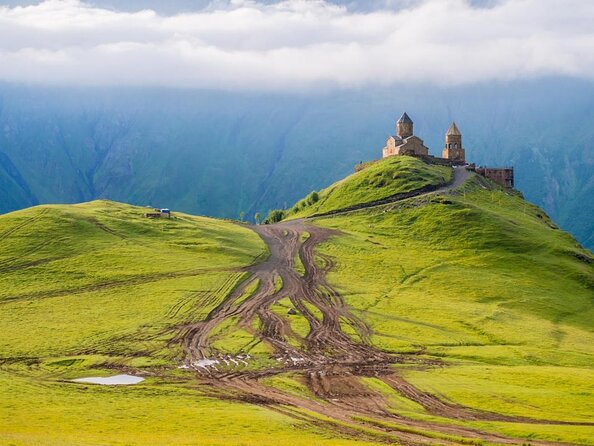
- 4×4 to Ushguli: the highest permanently settled village in Europe, reached via off-road jeep travel from Mestia
- Svaneti altitude views: a cable car ride to Zuruldi Mountain (weather permitting) plus dramatic mountain outlooks
- UNESCO hits in multiple regions: religious monuments around Mtskheta and major mountain and cathedral areas along the way
- Cave and canyon variety: dinosaur footprints at Sataplia, plus a boat ride through Martvili Canyon
- Batumi with a guided walk: Boulevard, the Ali and Nino kinetic sculpture, and the Alphabet Tower
- All-weather routing: the tour operates in all weather conditions, so dressing smart matters
Other Tbilisi tours and day trips:
- Tbilisi: Day Trip to Kazbegi, Gudauri, Gergeti, and Ananuri★ 4.9 · 3,203 reviews
- Day Trip to Kakheti Wine Region Including 9 Wine Tastings★ 5.0 · 2,774 reviews
- Highlights of Caucasus Mountains-Jinvali,Ananuri,Gudauri,Kazbegi(Group tour)★ 5.0 · 2,682 reviews
- From Tbilisi: Kakheti Wine Region Tour with 9 Wine Tastings★ 4.9 · 2,541 reviews
Mountains, monasteries, and a Black Sea breather in one ticket
This is a “see Georgia in big chunks” type of tour. You start in Tbilisi, then you work west and north into Svaneti, then you slide back down toward the sea. The pacing is the point: it helps you understand how Georgia changes from city stone to alpine valleys to seaside life.
I like that you get both guided structure and some personal downtime. There’s a half-day Batumi walk with free evening time, and you also get breaks to just wander, like in Kutaisi. It makes the trip feel less like a checklist and more like a road trip with set stops.
You’ll travel in an air-conditioned vehicle on most days, but day 8 is the exception. That matters if you run hot or if the day coincides with warmer weather, so plan for that comfort hit.
Entering Tbilisi’s main sites, starting with the Holy Trinity Cathedral
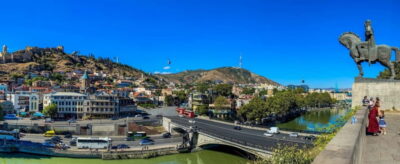
Tbilisi kicks off with the skyline-scale Holy Trinity Cathedral. It’s the highest church in Georgia, and the tour notes it as a place where thousands of children are baptized each year. Even if you’re not there for the ceremony, it gives you an immediate sense of how central Christianity and tradition are here.
Next comes Metekhi Cathedral, a 13th-century church set on a plateau above the Mtkvari River and Old Tbilisi. Then you ride up to Narikala Fortress by cable car from Europe Square. I like cable cars on city days, because you save leg energy and still get that “first real viewpoint” feeling fast.
The old-city walking stretch goes through Abanotubani, the sulfur bathhouse area, with the Fig Ravine (Legvtakhevi) and the downtown natural waterfall. You get the classic Tbilisi vibe here, low streets, stone facades, and that steam-and-stone atmosphere around the Ottoman-era bathhouses.
For church-and-legend lovers, there’s also Sioni Cathedral and Anchiskhati Basilica. The cool part is that you see several layers of sacred buildings from different centuries, rather than just one big landmark.
To balance all that stone, the day ends with a culture fix at the Georgian National Museum, specifically the Golden Treasury. Expect gold and silver artifacts and jewelry tied to pre-Christian periods from regions like Kakheti and Trialeti, plus items associated with places the country is proud of. This is the kind of stop that makes the rest of your trip feel more connected.
Possible drawback: Tbilisi is a walking city, even with organized stops. Wear shoes you trust, and don’t plan anything tiring right after dinner unless you’re the type who keeps going.
Rustaveli Avenue and Narikala views: how you get a city feel fast
After the cathedral circuit and old-town descent, you’ll have time for a long stroll on Rustaveli Avenue toward Georgian Parliament and the cultural cluster around Rustaveli Drama Theatre, the State Opera and Ballet house, and nearby museums.
This part is practical. It helps you get your bearings in Tbilisi, so later, when you see places on your own, you recognize the street geometry and the neighborhoods. You’ll also spot shopping and art galleries, which is handy if you want small gifts without turning it into a separate mission.
If you love viewpoints, Narikala is a big payoff. Getting up by cable car also means you’re not forced into an hours-long climb on day one.
Stalin Museum, Uplistsikhe Cave Town, and a UNESCO sunset in Kutaisi
The next stretch leans into history with an offbeat choice: the Stalin Museum. It holds personal items that belonged to Joseph Stalin. This isn’t everyone’s first pick, but it’s valuable context for how Georgia dealt with Soviet power and how memory gets displayed.
Then you head to Uplistsiche Cave Town, an ancient inhabited rock-cut settlement from the early Iron Ages. The experience here is the physical engineering: chambers and secret tunnels and passes cut into the rock. You come away feeling how people shaped their environment when there was no easy infrastructure.
As the trip moves west toward Kutaisi, you ride through Rikoti Pass, including the tunnel described as the largest in Georgia. These driving moments sound like logistics, but they build the mood. Mountain roads make you feel the scale of the country in a way city days can’t.
Kutaisi adds one more UNESCO-linked viewpoint moment, with sunset from the yard of Bagrati Cathedral. Even if clouds reduce the view a bit, the timing helps, because golden light makes stone feel more alive.
Possible drawback: Travel days stack up. If you hate being in a vehicle, this is the part of the trip where you’ll feel it most.
Still around Tbilisi? These come up often:
Sataplia dinosaur footprints and Martvili Canyon boat time
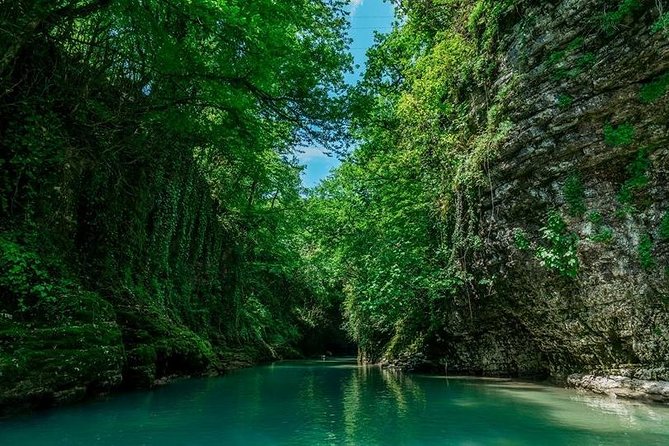
Svaneti doesn’t arrive all at once. You get a day of nature stops that are genuinely different from each other.
At Sataplia Cave and Nature Reserve, the headline is dinosaur footprints preserved in the area, plus a cave that’s described as 900 meters long. The cave itself includes stalactites and stalagmites, and the tour mentions light and audio effects that help the visit feel guided even in a low-visibility space.
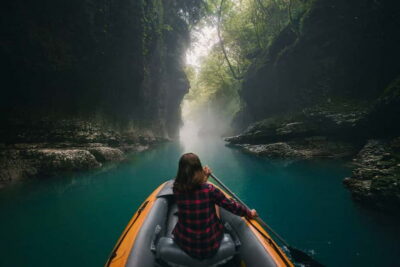
Then comes Martvili Canyon, known for waterfalls and scenery along the river Abasha. You get a boat trip, which is a key detail because it changes how you see the gorge. Walking gives you one perspective, but from the water you understand the canyon’s depth and shape.
From there, you drive north to Mestia, the heart of Svaneti, at about 1500 meters elevation. If you’ve been in Tbilisi’s warmer streets the day before, Mestia feels like a temperature shift. It also helps that the region is known for its Svan towers used for defense and dwelling, with some dating to the 9th century.
Ushguli by 4×4: Europe’s highest settled village feels remote for a reason
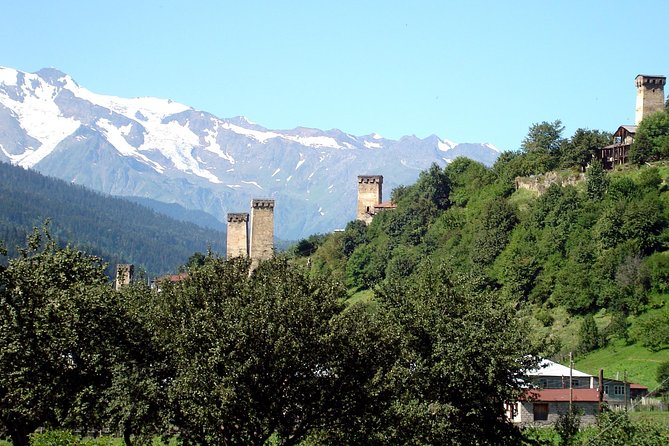
This is the highlight you’ll remember. The day includes an off-road jeep adventure in 4x4WD vehicles to Ushguli, starting from Mestia. The route runs along the Enguri River area, and that matters because the drive itself becomes part of the story.
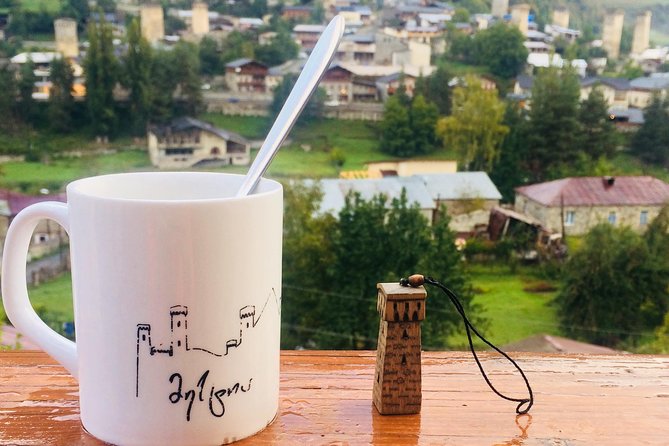
Ushguli is listed as the highest permanently settled village in Europe, at around 2200 meters above sea level. The whole area is in UNESCO World Heritage, and the village community includes four villages, which helps explain why the skyline is dotted with stone towers and church structures.
On the way, you pass other places in Upper Svaneti, including Ipari and Kala, and you visit small churches where frescoes are preserved. That “small church with old paint” detail is why you feel like you’re getting more than just a photo stop. You’re seeing what still matters to local life.
Possible drawback: Off-road travel is part of the deal. If you get motion sick in cars, plan for it. Also, high altitude and mountain weather can change fast, so dress for conditions even if the morning looks calm.
The Chalaadi trek from Mestiachala: what moderate fitness really means
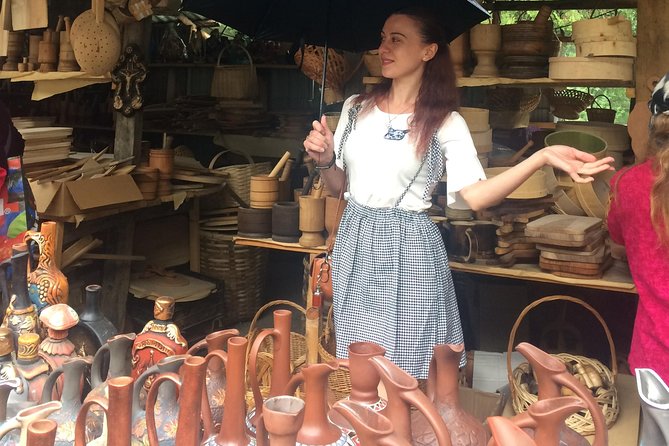
Your Mestia day includes trekking with a listed round-trip trail of 25 km and an approximate duration of 1 hour (so it’s likely paced and supported). The trail details are specific: max elevation around 1925 m, min around 1665 m, and a total climb and descent each around 337 m.
The start is at the Mestiachala river, crossing a bridge and then walking uphill through a forest. After about 1.5 km, the path shifts into a rocky zone with different stone sizes, so you need to watch your footing.
There’s also a nice orientation point: you can see Mount Chatini (listed at 4412 meters) from early on. The goal is the Chalaadi glacier, described as the final destination.
One thing I appreciate here is how the inclusion notes a local 4x4WD jeep in Mestia for this day. That means the trek isn’t a straight “walk from town, no help.” Even if you’re an experienced hiker, having that support helps you focus on the trail instead of spending energy on getting to it.
Possible drawback: “Moderate fitness” still means you should be ready for uneven terrain and a long distance. Bring layers, and take it slow on the rocks.
Svan tower museum visits and Hatsvali cable car views
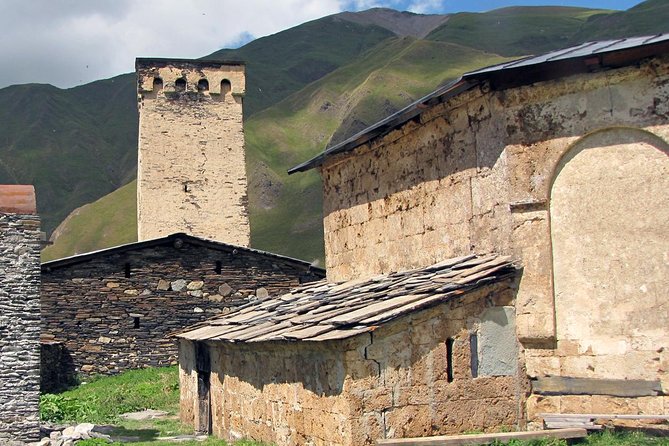
After the outdoor effort, you switch to culture and views.
At Margiani’s House Museum, you see a Svan tower from the 12th century, described as Svanetian dwelling “Machubi,” plus the Svaneti Museum. The museum includes manuscripts and gospel books from the 9th, 10th, and 12th centuries, and even chained golden and silver icons. That chained display detail is unusual and it sticks with you.
The visit also mentions the Italian photographer and mountaineer Vittorio Sella and his mountain and village photography. If you like how images shape what outsiders believe about a place, this is a thoughtful stop.
Then it’s up by cable car: Hatsvali cable car to Zuruldi Mountain at 2455 meters. The tour notes that this depends on weather. From there, you get views of Ushba and Tetnuldi, listed at 4710 meters and 4852 meters respectively, on both the south and north sides.
After that, you drive away from Svaneti toward the Black Sea and lowlands. The altitude day ends with a long shift, so it helps that you get the museum details first and the views second.
In the same area, the Mestia Museum is listed as a supplement, with a permanent exhibition that includes manuscripts, gospel books, medieval goldsmithing, and icons. This is one of those “if it’s rainy, you still win” setups.
Zugdidi palace museum, then Batumi’s sea-city energy
As the trip heads toward the coast, you stop in Zugdidi in the Samegrelo region. The Dadiani Palaces Historical and Architectural Museum is housed in the palace, and it’s associated with Prince David Dadiani. The list of items includes death masks of Napoleon Bonaparte and various Georgian cultural and archaeological artifacts, plus a nearby botanical garden.
This palace stop is a helpful gear change. It’s not mountain, it’s not seaside. It’s Georgia between Georgia’s famous poles, and that makes the coming coastal day feel grounded.
Then you arrive in Batumi for a half-day walking tour. You’ll see Batumi Boulevard, the Ali and Nino kinetic sculpture, Piazza Square, and the Alphabet Tower. After the guided walking portion, you get a free evening. I like that structure, because Batumi is the type of place where you want to linger on your own.
Possible drawback: Batumi will feel more “city paced.” If you prefer quiet villages, plan for that contrast.
Gonio Fortress and Borjgalo: Adjara culture beyond the beach
You add two cultural stops near Batumi.
First is Gonio Fortress, about 10 km from Batumi, with an excursion. Even though the time listed is short, fortress sites give you a different lens on the region, tied to strategic coastal control.
Then comes the open-air Ethnographic Museum Borjgalo, built by woodcarving master Kemal Turmanidze and his family. The description is specific: human-sized dollhouses and models of different house styles that show how people in the Adjara mountains live at home.
That model-house angle is worth it if you like daily-life details. It’s a break from monuments, and it makes “culture” feel like something lived, not just something preserved.
Shekvetili mini Georgia and Vani’s 800 BC to 100 AD artifacts
Before your second Kutaisi night, you visit Shekvetili for the Dendrological Park and Georgia in Miniatures. This is playful, and it can be a relief day after higher-altitude intensity.
Then you go to Vani Archaeological Museum. The museum focuses on development from 800 BC to 100 AD, with bronze sculptures and fragments, coins, and a jewelry collection highlighted as a main feature. If you’re the kind of person who likes seeing how early crafts survived into later styles, this stop adds weight to everything you saw in churches and towers earlier.
In the evening, you arrive in Kutaisi and you get a free walk in the city center. That’s where you can be casual and just find your own rhythm.
Mtskheta UNESCO day: Svetitskhoveli and Jvari with confluence views
Your UNESCO-focused day centers on Mtskheta, described as a holy city for centuries. The two big stops are Svetitskhoveli Cathedral and Jvari Church.
At Svetitskhoveli Cathedral, the tour notes it as a “living pillar cathedral” built in the 11th century, tied to legends from early Christian times. It’s also listed as UNESCO World Heritage, and it’s the kind of place where you feel how Georgia frames faith through architecture.
Then you head to Jvari Monastery, a 6th-century site on a hill overlooking the confluence of the Mtkvari and Aragvi rivers. If you want one view that summarizes the day, it’s that water-meets-water vantage.
Possible drawback: Two church stops back-to-back can feel repetitive for some people. For me, the payoff is the shift in setting, cathedral city gravity versus hilltop wide-angle air.
Price and logistics: where the value really lands
The price is $1,856 per person for about 10 days, with 3-star hotels (2 nights Tbilisi, 2 nights Kutaisi, 3 nights Mestia, 2 nights Batumi). For this route, what you’re paying for is not just sightseeing, it’s the transport puzzle solved.
Included highlights that matter in real life:
- Hotel pickup and drop-off
- An English speaking professional guide-driver on all days except day 8
- Bottled water
- Air-conditioned vehicle most days (day 8 not specified)
- Local 4x4WD vehicles in Mestia for Ushguli
- Local 4x4WD jeep support for the Chalaadi trekking day
- Breakfast included (9) and dinner included (3)
Also, many of the city stops list free admission, like major Tbilisi cathedrals and churches. You still need to budget for meals not included and any entrance fees not part of the plan, but the “core costs” are controlled better than on many DIY routes.
One more practical note: the tour says it operates in all weather conditions. That sounds boring until you remember the mountains can change the day’s mood quickly. Dress appropriately, and keep a flexible mindset.
Should you book this Georgia tour?
Book it if you want a single, organized route that links Tbilisi culture, Svaneti mountain towers, and Black Sea time without you planning every transfer. It’s a strong choice for couples, small groups of friends, and solo travelers who enjoy having a guide-driver keep the day running smoothly.
Skip it if you want a low-effort vacation, because the itinerary includes trekking, a long road network, and a high-altitude area with lots of walking. Also, if you dislike museum days, you may find the history stops (like the Stalin Museum and palace museum) more intense than you hoped.
If you’re okay with active days and you like variety, this is good value for what it delivers, especially the 4×4 to Ushguli and the way the tour balances mountains with coastal downtime.
FAQ
How long is the Georgia tour?
It runs for about 10 days.
What is included in the tour price?
The tour includes 3-star hotel nights (2 in Tbilisi, 2 in Kutaisi, 3 in Mestia, 2 in Batumi), an English speaking guide-driver on most days, hotel pickup and drop-off, bottled water, breakfast (9) and dinner (3), plus specific transport support like local 4x4WD vehicles for Ushguli and a jeep for the Chalaadi trekking day.
Are meals included?
Breakfast is included (9 breakfasts) and dinner is included (3 dinners). Other food and drinks are not included unless specified.
Is pickup and drop-off included?
Yes, hotel pickup and drop-off are included.
What is the group size?
The tour is for a maximum of 15 travelers, and it requires a minimum of 4 people per booking.
Do I need to be physically fit?
The tour requires a moderate physical fitness level, including a trekking day in the Mestia area and plenty of walking.
Does the tour run in bad weather?
Yes, it operates in all weather conditions, so it’s important to dress appropriately.
Newer trips around Tbilisi
- Tbilisi Private Dinner: Georgian BBQ & Fireplace
★ 5.0 · 1 review - Day trip in Kakheti-wine tour
★ 5.0 · 1 review - Tbilisi: Khinkali Tasting Lunch with Local Drinks and Pickup
★ 5.0 · 1 review - Tbilisi & Mtskheta bus tour hop on hop off
★ 5.0 · 1 review - Tbilisi: Christmas Market & Hidden Gems Guided Walking Tour
★ 5.0 · 1 review - Stalin’s Secrets: An Underground Journey Through History
★ 5.0 · 1 review
Tours, compared.

Highlights of Caucasus Mountains-Jinvali,Ananuri,Gudauri,Kazbegi(Group tour)
Read our review →
Kakheti Wine Region Tour with 9 Wine Tastings
Read our review →
Mtskheta, Jvari, Gori and Uplistsikhe Day Tour
Read our review →
Kakheti Wine Region Tour with 10 Wine Tastings
Read our review →
Tbilisi Walking Tour Including Cable Car and Traditional Bakery
Read our review →