
Reviewed · CROSS-BORDER TRIPS TO ARMENIA
11-Day Georgia and Armenia Tour from Tbilisi
Two countries, one smooth route. This 11-day Georgia and Armenia tour from Tbilisi strings together major sights like UNESCO-listed Jvari and the rock-hewn wonders of Vardzia, plus the off-road moment of reaching Gergeti Trinity Church by 4×4. I also like that the pacing feels careful, with enough time at each stop to actually see what you came for. One thing to consider is the mix of hills, steps, and uneven paths at fortresses and monastery sites, so comfortable shoes and a moderate fitness level really matter.
What makes this trip especially appealing is the human factor. The tour’s only single public review calls out guide Miss Shorena Razmadze for making the holiday memorable, and it also praises the timing, saying nothing felt rushed. If you’re the type who likes a tight itinerary but hates being stuck in long lines, you’ll likely appreciate how this one keeps you moving without turning sights into a blur.
In This Review
- Key highlights you’ll remember
- Why This Georgia and Armenia Route Starts in Tbilisi
- Tbilisi core stops: Holy Trinity Cathedral, Narikala, Chardin Street, Abanotubani
- Mtskheta and Jvari UNESCO: the spiritual Georgia that feels timeless
- Zhinvali, Ananuri, and Gudauri: scenic energy along the Georgian Military Highway
- Kazbegi by 4×4: reaching Gergeti Trinity Church at 2,170 meters
- Gori to Uplistsikhe to Borjomi: history lessons with real atmosphere
- Georgia in fortress and cave mode: Rabati, Vardzia, and Khertvisi
- From Gyumri to Etchmiadzin: Armenia’s UNESCO church circuit starts fast
- Garni, Geghard, and Yerevan: classical Armenia plus a monastery cut into stone
- Ararat-view day at Khor Virap, plus Areni wine and Noravank gorge
- Sevan and the Lori monasteries: Sanahin and Haghpat’s calmer, slower feel
- Price and value: what $2,120 buys you in practical terms
- Who this tour suits best
- Should you book this 11-Day Georgia and Armenia Tour from Tbilisi?
- FAQ
- How long is the tour?
- Where does the tour start and end?
- Is hotel pickup included?
- How much does the tour cost?
- What’s included in the price?
- What is not included?
- What group size should I expect?
- Is there a physical fitness requirement?
- What if I need to cancel or make changes?
Key highlights you’ll remember
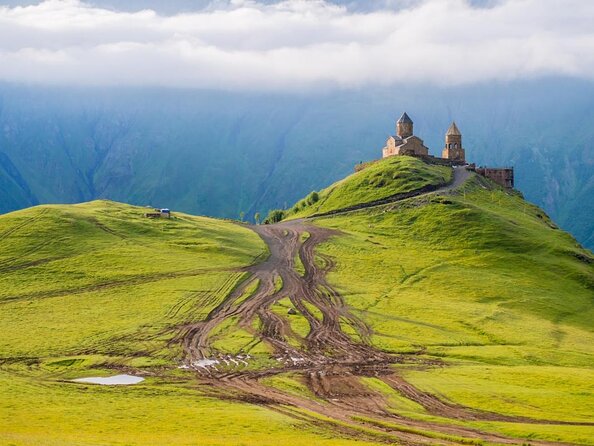
- Gergeti Trinity Church by 4×4, reaching the Kazbegi area with the kind of access most day trips cannot offer
- UNESCO concentration across both countries, from Jvari to Armenian churches like Saint Hripsime and Zvartnots (in ruins)
- Cave and rock-cut sites, including Iron Age Uplistsikhe and the multi-tier monastery caves at Vardzia
- Fortress culture in Georgia, from Narikala to Ananuri and Rabati, each with a different era and feel
- Ararat views at Khor Virap, plus a planned wine stop in Areni
- Small group size, capped at 15 people, which helps the day feel more manageable
Other cross-border trips to Armenia:
- Day Trip to Armenia Including Homemade Lunch★ 5.0 · 1,162 reviews
- From Tbilisi: Day Trip to Armenia with Homemade Lunch★ 4.9 · 310 reviews
- Discover Armenia: Tbilisi-Haghpat-Dilijan-Sevan-Yerevan-Tbilisi★ 4.5 · 162 reviews
- 1 Day Private Armenia: UNESCO, Soviet & Curated Family Lunch★ 5.0 · 106 reviews
Why This Georgia and Armenia Route Starts in Tbilisi
Tbilisi is a smart launch pad for a reason you can feel quickly. Georgia sits between Europe and Asia, and the city shows that in its mix of old churches, Persian-style streets, Soviet-era layers, and modern life along the river.
This tour also gives you a big practical win from day one: hotel pickup and drop-off plus private transportation. That means less time wrestling with buses and taxis, and more time walking straight into sights when you arrive. You’re also traveling with a maximum of 15 people, so you’re not swallowed by a huge coach crowd.
At this price point, you’re not only paying for destinations. You’re paying for the logistics to connect them across two countries, plus 10 overnights in 3-star hotels, breakfasts (10), one included dinner, bottled water, and all fees and taxes.
Tbilisi core stops: Holy Trinity Cathedral, Narikala, Chardin Street, Abanotubani
The tour starts with the sights that help you get your bearings.
Holy Trinity Cathedral is Georgia’s modern religious centerpiece. It took 7 years to complete and finished in 2003, and the scale is obvious the moment you’re near it, with a height up to 101 meters and a huge gilded cross. Inside, there are 10 churches arranged in the interior, which is a detail that makes the place feel more like a religious complex than a single building.
Next up is Narikala Fortress, set on a steep hill above Tbilisi. You get fortress views over the Kura River and the city below, and the setting also explains why fortresses here were so strategic. Narikala is split into two walled sections, with the fortress overlooking areas like the sulphur baths and the botanical gardens.
Then you slow down in the old-town texture at Jan Shardeni Street (Chardin Street). This narrow lane is short, but it’s a good place to wander art galleries and souvenir shops, and to grab a café break without losing the vibe of the area.
Finally, the tour heads to Abanotubani, Tbilisi’s historic sulphur-bath district. Even if you skip the bath itself, the neighborhood is worth visiting because it anchors the city’s identity. It’s one of those places where the architecture and the atmosphere do the storytelling for you.
Mtskheta and Jvari UNESCO: the spiritual Georgia that feels timeless
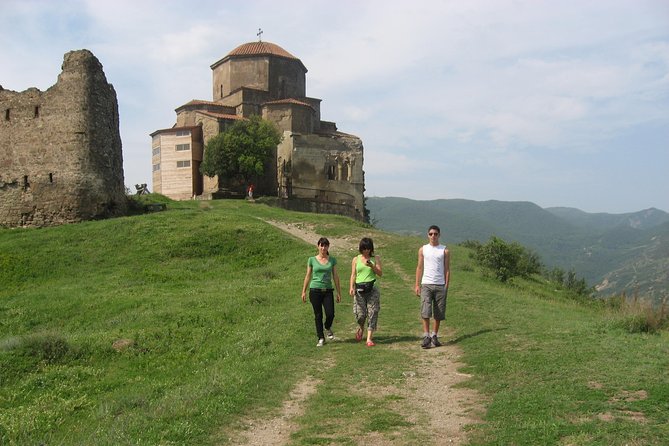
After you settle into Tbilisi, the itinerary pushes you toward the oldest religious core of the region. Jvari Church is the star UNESCO stop here. It’s a culmination of early Georgian Christian architecture and is listed as a World Heritage Site. The setting matters too, because Jvari sits above the surrounding area, so the experience is part buildings, part viewpoint.
The timing also tends to be practical. You’re not just ticking a UNESCO box and rushing away. This kind of site is one where you want to pause, look at details, and notice how the architecture fits the hilltop setting.
Zhinvali, Ananuri, and Gudauri: scenic energy along the Georgian Military Highway
You’re then on the move through mountain infrastructure and classic road scenery.
At Zhinvali Dam, you get a quick stop that breaks the day’s rhythm. The dam is on the Aragvi River and ties the trip to how the Caucasus region powers itself and shapes the valleys.
Then comes Ananuri Fortified Castle Ensemble, tied to the eristavis, a feudal dynasty that ruled this area starting in the 13th century. The castle ensemble has a “battles and borders” feel, and that helps you understand why Georgia’s fortress story runs through so many places in this itinerary.
Gudauri is listed as a full day stop, and it’s a ski resort in the Greater Caucasus range, set on a south-facing plateau along the Georgian Military Highway near Jvari Pass, at about 2,200 meters elevation. Even if your travel dates are not in ski season, the location still works for a slow scenic day, because the key experience here is the altitude, the open mountain air, and the driving views.
Other Tbilisi tours and day trips:

Kazbegi by 4×4: reaching Gergeti Trinity Church at 2,170 meters
If you like one big “wow” moment, this is it.
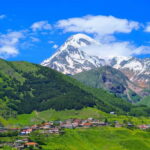
The tour includes a 4×4 vehicle transfer to Gergeti Trinity Church, near the village of Gergeti. The church sits around 2,170 meters under Mount Kazbegi, above the area by the river Chkheri. This is not the kind of place you simply pass by on a normal road trip. The off-road access is part of why the church feels like an arrival, not a quick photo stop.
You’ll likely spend about 40 minutes there. For a site like this, that’s a good chunk of time because you can take in the view, orient yourself, and then circle back to look at the church itself again from different angles.
Gori to Uplistsikhe to Borjomi: history lessons with real atmosphere
The trip continues eastward through Georgian layers.
In Gori, you stop at the Stalin Museum, a museum dedicated to Joseph Stalin, born in Gori. The listing notes that it retains Soviet-era characteristics. It’s not subtle, and it’s not trying to be. If you’re into political history and how places remember their past, it’s a fascinating contrast to the medieval Christian architecture you saw earlier.
Then the itinerary takes you to Uplistsikhe, an ancient rock-hewn town. What makes Uplistsikhe stand out in a useful way is the range of periods, from Early Iron Age to Late Middle Ages. You’ll see a unique combination of rock-cut cultures influenced by Anatolia and Iran, plus the co-existence of pagan and Christian architecture. In other words, it’s not just ruins. It’s a clue to how ideas shifted over time in this region.
After that comes Borjomi Central Park, a resort stop in the Borjomi Gorge area, near the Borjomi-Kharagauli National Park. It’s a lighter-feeling break compared with the fortress and cave energy. Even a short visit helps reset your day before Armenia.
Georgia in fortress and cave mode: Rabati, Vardzia, and Khertvisi
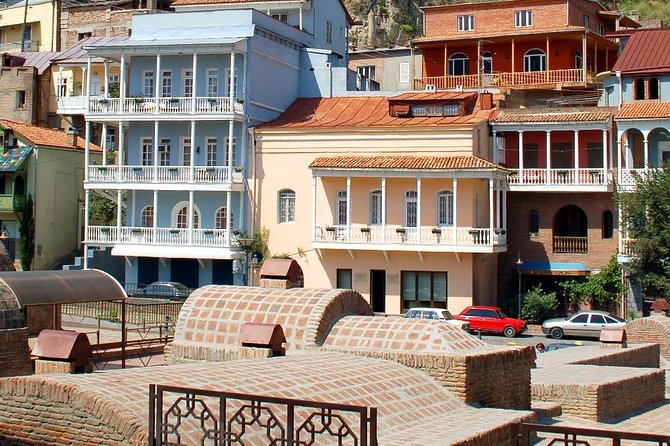
This part of the journey is where Georgia’s physical history shows its teeth.
Rabati Castle in Akhaltsikhe is a fortress originally established in the 9th century as Lomisa Castle, then rebuilt by Ottomans, with most surviving buildings dating to the 17th and 18th centuries. That mixture of eras gives you more than just stone walls. It gives you a timeline you can feel in the building style and layout.
Then you hit Vardzia, one of the big names in the “cave monastery” category. The caves were excavated from the Erusheti Mountain slopes, built mainly in the second half of the 12th century, and stretch about 500 meters along the cliff in up to 19 tiers. That “tiers” detail matters because it changes how you experience the site. You’re not looking at one level. You’re reading a cliff system.
Next is Khertvisi Fortress, listed as one of the oldest fortresses in Georgia, first built in the 2nd century BC, with a church built in 985 and walls built in 1354. There’s also a legend tied to Alexander the Great, which is the kind of story you’ll hear and then use to imagine how long this location has sat at the center of conflict and control.
From Gyumri to Etchmiadzin: Armenia’s UNESCO church circuit starts fast
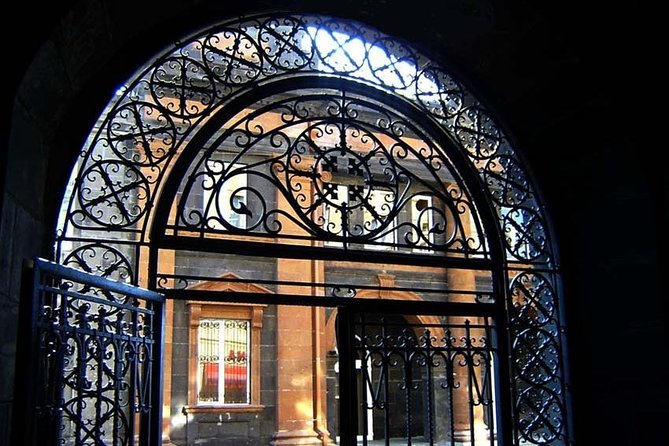
Crossing into Armenia shifts the vibe, but the itinerary keeps the momentum.
In Armenia, you start with Gyumri, the second-largest city in Armenia, serving as the administrative center of Shirak Province. You get a stop at Gyumri Main Square, which is a useful reset after Georgia’s fortresses and caves.
Then the tour moves to Vagharshapat (Etchmiadzin), where the UNESCO religious stops kick in strongly.
You visit Saint Hripsime Church, a seventh-century Armenian Apostolic church. The current structure was completed in 618 AD, and it’s known for its Armenian-style classical architecture. The UNESCO listing helps here because it frames the place as part of a wider heritage story, not just one church.
After that, you stop at Zvartnots Temple, a 7th-century centrally planned cathedral type built from 643-652, now in ruins. Visiting ruins can feel like a letdown if you expect a fully intact building. But at Zvartnots, ruins often make the structure more legible because you can trace the plan and imagine how it worked.
Garni, Geghard, and Yerevan: classical Armenia plus a monastery cut into stone
This section blends classical style, cliffside spirituality, and the capital’s daily energy.
Garni Temple is tied to the village of Garni, known for its nearby classical temple. You get an included admission here, so plan for a short but focused visit.
Then comes Geghard (Geghard Monastery), a medieval monastery partially carved out of the adjacent mountain and surrounded by cliffs. It’s UNESCO listed with enhanced protection status. You’ll feel the difference between Geghard and the Georgia cave sites because Geghard is “monastery first, cave second.” It’s built into the rock as a working sacred space, not just excavation chambers.
Finally, you spend time in Yerevan, Armenia’s capital on the Hrazdan River. Even though the stop here is listed as 30 minutes, it gives you a taste of the city as an administrative and cultural hub.
Ararat-view day at Khor Virap, plus Areni wine and Noravank gorge
This is the day for big scenery and one planned palate moment.
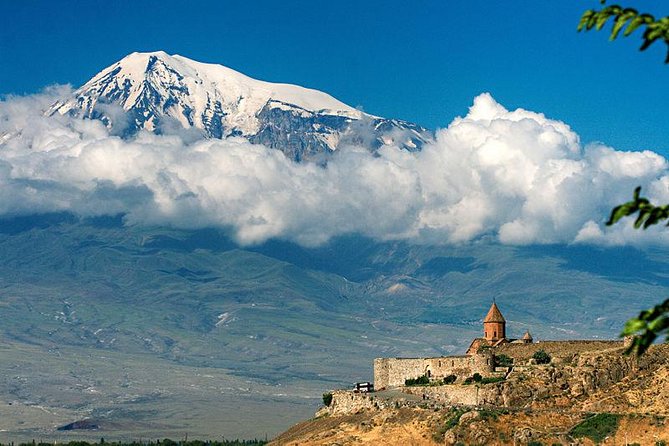
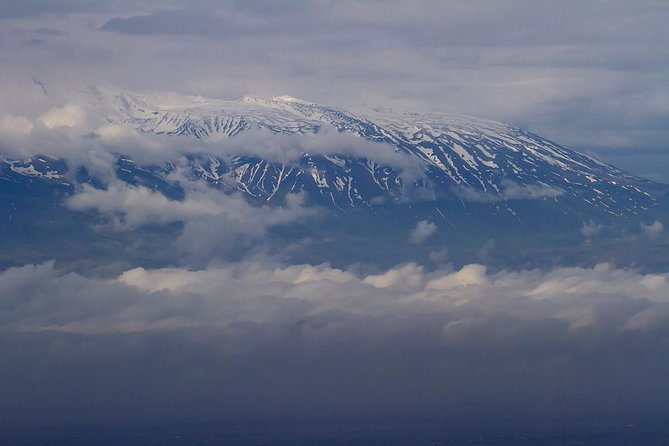
Khor Virap is located in the Ararat plain near the closed border with Turkey, about 8 kilometers south of Artashat, in Ararat Province. The tour schedule gives you around 35 minutes, which is enough time to understand why this monastery is famous and to take in the setting.
Then you visit Areni Wine Factory in the village of Areni in Vayots Dzor Province. The itinerary includes a wine tasting here. Areni is best known for wine production, and this stop gives you more than a souvenir. It’s a small, scheduled break from temples and fortresses.
After that, you go to Noravank Monastery, a 13th-century site in a narrow gorge made by the Amaghu River near Yeghegnadzor. Noravank’s cliffs are described as tall, sheer, brick-red. That description matters because it means you’re not just visiting a church. You’re moving through a canyon-like setting that shapes the light and your sense of scale.
Sevan and the Lori monasteries: Sanahin and Haghpat’s calmer, slower feel
By now, you’ve seen a lot of structure and stone. This last stretch gives you more of the monastery rhythm in Armenia.
At Lake Sevan, you’re at Armenia’s largest body of water and one of the largest freshwater high-altitude alpine lakes in Eurasia, at about 1,900 meters elevation. The stop is 30 minutes, so treat it as a viewpoint-and-walk moment, not a long beach day.
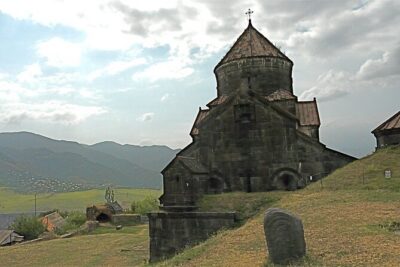
Then you visit Sanahin Monastery, founded in the 10th century in Lori Province. You’ll also stop at Haghpat Monastery (Haghpatavank), another medieval complex founded by Queen Khosrovanuysh, wife of Bagratid king Ashot III, probably in 976. The pair of Sanahin and Haghpat works well because the monasteries were built around the same period, so the comparison feels natural.
This is the kind of segment where you start to appreciate how religious architecture in Armenia often feels both strict and human, built for a long life.
Price and value: what $2,120 buys you in practical terms
At $2,120 per person, the best way to judge value is to look at what you get besides the sightseeing.
You receive:
- 10 overnights in 3-star hotels
- Breakfasts (10) and 1 included dinner
- Hotel pickup and drop-off
- Private transportation
- Bottled water
- 1 included wine tasting in Areni on day 9
- All fees and taxes
What’s not included:
- Visa fees
- Tbilisi airport transfers
- Air tickets
If you’re comparing this to piece-by-piece travel, the price often makes sense because the hard part is not museum tickets. The hard part is connecting Georgia and Armenia with comfort, predictable timing, and the included admissions.
In other words, you’re paying for reduced stress and more time at sites, not just access to places.
Who this tour suits best
This itinerary fits you best if you want:
- A guided route across Georgia and Armenia without planning each day
- A balance of big highlights and heritage stops (UNESCO churches, rock-cut towns, monastery caves)
- A schedule that tries not to waste time, with a guide who keeps things organized
It might not fit as well if you hate group days, have very limited mobility, or want lots of free time with no structure. Also note the tour states you should have moderate physical fitness, which lines up with the fortress and monastery terrain.
Should you book this 11-Day Georgia and Armenia Tour from Tbilisi?
I’d book it if you want one guided itinerary that covers the headline sights in Georgia and Armenia in a way that stays organized. The strongest reasons are practical: private transportation, small group size, and a schedule built around major UNESCO and iconic sites like Jvari, Gergeti, Vardzia, Geghard, and Khor Virap.
If you’re sensitive to lots of walking on uneven ground, build in shoe time and energy buffers. Otherwise, this looks like a good value way to experience the Europe-Asia bridge through stone, faith, and mountain scenery without spending your days arranging transport.
FAQ
How long is the tour?
The tour lasts 11 days (approximately).
Where does the tour start and end?
It starts in Tbilisi and ends back at Tbilisi International Airport, after hotel breakfast and checkout time up to 12:00 pm.
Is hotel pickup included?
Yes. Hotel pickup and drop-off are included.
How much does the tour cost?
The price is $2,120.00 per person.
What’s included in the price?
Included are 10 overnights in 3-star hotels, dinner (1), breakfast (10), private transportation, bottled water, 1 wine tasting in Areni on day 9, and all fees and taxes.
What is not included?
Not included are visa fees, Tbilisi airport transfers, and air tickets.
What group size should I expect?
The group size has a maximum of 15 travelers.
Is there a physical fitness requirement?
Yes. You should have a moderate physical fitness level.
What if I need to cancel or make changes?
This experience is non-refundable and cannot be changed for any reason.
Newer trips around Tbilisi
- Tbilisi Private Dinner: Georgian BBQ & Fireplace
★ 5.0 · 1 review - Day trip in Kakheti-wine tour
★ 5.0 · 1 review - Tbilisi: Khinkali Tasting Lunch with Local Drinks and Pickup
★ 5.0 · 1 review - Tbilisi & Mtskheta bus tour hop on hop off
★ 5.0 · 1 review - Tbilisi: Christmas Market & Hidden Gems Guided Walking Tour
★ 5.0 · 1 review - Stalin’s Secrets: An Underground Journey Through History
★ 5.0 · 1 review
Cross-Border Trips to Armenia, compared.
Discover Armenia: Tbilisi-Haghpat-Dilijan-Sevan-Yerevan-Tbilisi
Read our review →
1 Day Private Armenia: UNESCO, Soviet & Curated Family Lunch
Read our review →Tbilisi to Yerevan Private car transfer 3 Scenic stops
Read our review →
Armenia: 1 Day Soviet gems, UNESCO + Family lunch (Small group)
Read our review →
1 Day detour to Armenia from Tbilisi & Local family lunch
Read our review →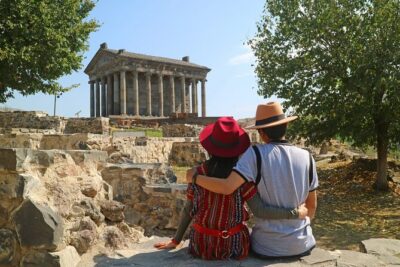
Best of Armenia: private 2-3 days tour to Yerevan w/ family lunch
Read our review →Browse the lists this tour appears in