Reviewed · PRIVATE
17 Day Private Tour through Georgia
Georgia hits hard in 17 days. I love the private guide and driver that keeps the route smooth, and I love the range from Tbilisi cathedrals to high-mountain Svaneti stone towers. The only real catch is that this is a packed program, with long drives and full days that won’t suit anyone who wants to do things slowly.
What makes this tour feel worthwhile is that it’s not just sightseeing on paper. You get 16 overnights with breakfast included, plus water and three dinners, and most entry stops are handled as part of the plan. With a maximum of 15 people, it stays small enough to feel personal, even when the country itself moves at road-trip speed.
In This Review
- Key things I’d watch for
- Why this 17-day private Georgia route makes sense
- Entering Tbilisi: Sameba, Narikala, Abanotubani, and museum time
- Kakheti wine country: Bodbe, Gremi, and cellars where you watch the work
- Mtskheta and Ananuri, then up toward Kazbegi’s mountain drama
- Gori and cave towns: Soviet-era museum stop and ancient Uplistsikhe
- Into Svaneti: Mestia, Ushguli, and Svan houses that explain daily life
- Batumi on the Black Sea: Gonio Fortress, Botanical Garden, and city stroll time
- Borjomi to Akhaltsikhe: mineral waters, Rabati Castle, and Vardzia’s rock-cut wonder
- Back to Tbilisi via Javakheti: alpine lakes, volcanic plateau, and a final free day
- Price, value, and what you’re really paying for
- Should you book this 17 Day Private Tour through Georgia?
- FAQ
- Where does the tour start, and what happens on Day 1?
- When does the tour begin each day?
- How long is the tour?
- What is the best time to take this tour?
- What is included in the tour price?
- What is not included?
- How many people are in the group at most?
- Is there an airport transfer at the end?
- What is the cancellation window for a full refund?
Key things I’d watch for
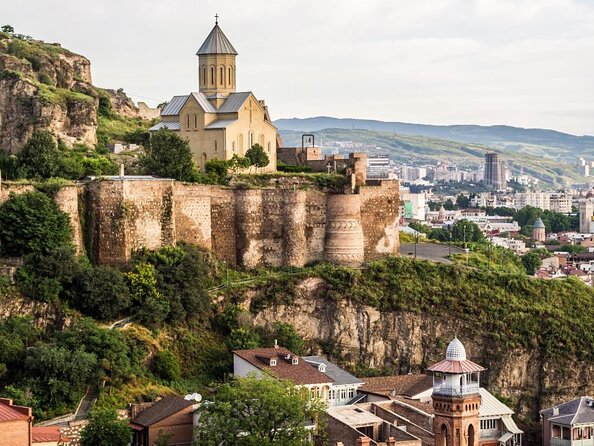
- Tbilisi orientation on Day 2: Sameba, Metekhi, Narikala cable car, sulfur-bath district, and major museums in one tight loop
- Kakheti wine cellars, not just tastings: you’ll see the process, including transparent 500-liter pitchers at Twins Wine Cellar
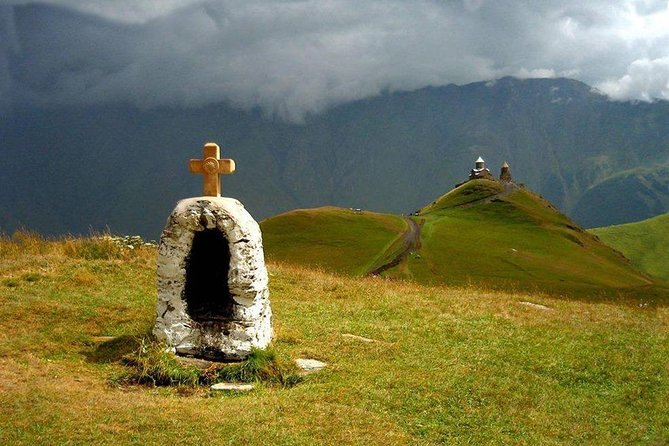
- Kazbegi views built around an easy-but-real hike: Gergeti Trinity Church takes about 2 hours each way
- Svaneti at UNESCO height: Ushguli is one of the highest continuously inhabited places in Europe, with optional glacier-walk views
- Black Sea add-on that feels historical: Roman-era Gonio Fortress plus Batumi’s Botanical Garden
Other Tbilisi tours and day trips:
- Tbilisi: Day Trip to Kazbegi, Gudauri, Gergeti, and Ananuri★ 4.9 · 3,203 reviews
- Day Trip to Kakheti Wine Region Including 9 Wine Tastings★ 5.0 · 2,774 reviews
- Highlights of Caucasus Mountains-Jinvali,Ananuri,Gudauri,Kazbegi(Group tour)★ 5.0 · 2,682 reviews
- From Tbilisi: Kakheti Wine Region Tour with 9 Wine Tastings★ 4.9 · 2,541 reviews
Why this 17-day private Georgia route makes sense
Georgia can feel huge, even when you’re only chasing a few highlights. This tour is built for people who want maximum variety without bouncing between separate day trips. You start in Tbilisi, then work outward in clear “regions,” so each area gets a full day or two before you head on.
The private format matters here. Having a professional guide and driver means you spend less time figuring out timing, routes, and where you actually should go next. It also helps on mountain days, where roads and weather can make your schedule wobble if you’re on your own.
You should still expect a fairly high pace. Many days combine a drive plus one or more sites, with walks ranging from short strolls to a couple of hours. If you like to linger, build in extra downtime on your free time day in Tbilisi at the end.
Entering Tbilisi: Sameba, Narikala, Abanotubani, and museum time
Tbilisi works best when you start with big-picture orientation. Day 1 is simple, meeting at Tbilisi National Airport and getting you to your hotel. Then Day 2 is your “get your bearings fast” day.
Holy Trinity Cathedral (Sameba) is a strong opener, and it’s not just a pretty church stop. Sameba is one of the tallest Orthodox cathedrals in the world, so you get instant scale, plus a feel for how central Christianity is in Georgian identity.
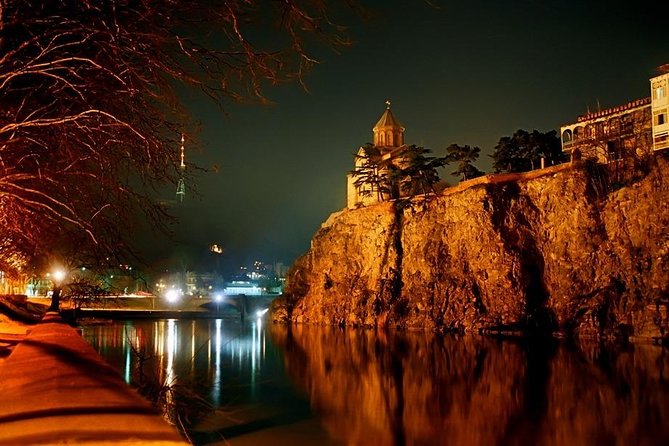
Next is Metekhi Cathedral, perched on the bank of the Mtkvari River. It’s smaller, but the setting makes it memorable. From here you ride up to Narikala Fortress with a cableway from Rike Park. The ride itself is quick, and the views over the city are the payoff. Narikala dates back to the 4th century, so you’re standing in a place that’s been guarding Tbilisi for a very long time.
Then you drop back down into the historic maze of Abanotubani, the sulfur-bath district. You’re not only looking at buildings, you’re walking through the old-town vibe, with Legvtakhevi canyon and a real mix of outdoor cafes and side streets. If you’re curious about sulfur baths, this is the area to ask your guide about what’s available and what’s extra.
The last part of Day 2 is museum heavy in a good way. The Tbilisi History Museum covers everything from Bronze Age everyday objects to weapons, textiles, and music instruments. Then you finish with the Georgian National Museum, which stretches from Paleolithic through medieval Georgia plus major ethnographic collections. If you’re the type who likes context after seeing architecture, this is a smart combination.
Practical note: This day includes several “move and walk” segments, so comfortable shoes matter.
Kakheti wine country: Bodbe, Gremi, and cellars where you watch the work
Kakheti is where Georgia shifts from cities and fortresses into a slower, flavor-focused rhythm. The tour uses two full days here, and that helps. You aren’t just stopping for a photo, you’re moving through wine landscapes and religious landmarks that shaped the region.
Day 3 starts with David Gareja Monastery in the semi-desert caves of Gareja hill. The complex is from the 6th century and includes hundreds of cave cells, churches, and living areas carved into the rock. The detail that matters for you is that some parts of the complex are on the territory of Azerbaijan. Your route stays within what’s accessible for the day, but it’s worth knowing the site spans borders.
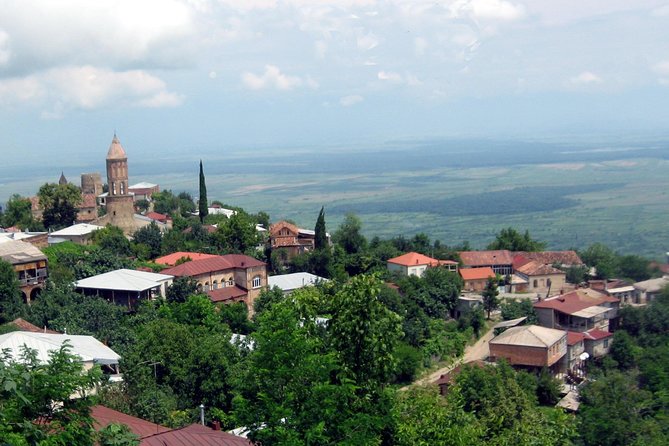
After that, you reach Sighnaghi, a small town in the eastern foothills of the Gombori range, overlooking the Alazani valley. It’s surrounded by medieval walls, so it feels like a lookout point as much as a destination.
Day 4 is the big Kakheti sweep. You begin with Bodbe Monastery of St. Nino, a major pilgrimage site tied to St. Nino. The monastery dates to the 9th century and was renovated in the 17th.
From there, you move into wine culture with a sequence that’s more educational than touristy:
- Velistsikhe and Numisi Wine Cellar Museum: one of the oldest cellars in Kakheti
- Tsinandali House Museum of Alexander Chavchavadze: residence, gardens, and a wine cellar tied to a 19th-century Georgian figure
- Napareuli and Twins Wine Cellar Museum: this is where you can watch processes using transparent 500-liter pitchers, like pressing and boiling
Then comes Gremi. The Royal Citadel and Church of Archangels are what remains from a medieval town that served as the capital of the Kingdom of Kakheti in the 16th and 17th centuries. You get stone, walls, and a sense of a time when power and wine were closely linked.
If you like the idea of pairing religion, history, and winemaking in one region, Kakheti is handled well here.
Mtskheta and Ananuri, then up toward Kazbegi’s mountain drama
Georgia’s “religious landmarks plus river views” formula shows up clearly after Kakheti. Day 5 shifts you north toward Mtskheta, where two UNESCO World Heritage sites anchor the town: Jvari Monastery and Svetitskhoveli Cathedral. Mtskheta sits at the meeting point of the Aragvi and Mtkvari rivers, so even the drive-to-stop feeling is part of the experience.
On the way, there’s a stop at Ananuri Fortified Castle Ensemble. You see the river corridor, the defensive architecture, and the way these castles helped control movement through the area.
Then you head further to Gudauri and the Cross Pass at 2395 m, where you can taste local mineral waters. This isn’t a deep culinary tour, but it’s a very Georgia moment, where geography meets daily habits.
Day 6 makes the mountains the headline. You arrive in Kazbegi (Stepantsminda) and head to Gergeti Trinity Church, a 14th-century church above the town. The walk is about 2 hours each way, described as easy, but you’ll feel the altitude. The real reward is the panorama of Kazbegi town and the Kazbegi Glacier, listed at 5047 m.
After returning, you move toward Dariali gorge and Gveleti waterfalls. This is a good counterweight to the church walk because it shifts you from “big view” to “moving water and gorge shapes.”
If you’re prone to altitude issues, take it slow on the climb and let your guide know.
More private tours in Tbilisi:


Gori and cave towns: Soviet-era museum stop and ancient Uplistsikhe
Day 7 brings a contrast that I really like: the tour doesn’t stay in one era. You leave Gudauri and drive to Gori, the birthplace of Joseph Stalin, then visit the House Museum of Joseph Stalin. It’s a short stop, but it offers a perspective on how Georgian history got pulled into 20th-century Soviet reality.
Then you go further back in time with Uplistsikhe Cave Town, dating as early as the 1st millennium BC. It’s a rock-hewn complex of chambers, tunnels, and streets that once served as a key political, economic, and religious center before Christianity. This is one of those places where you should use the guide’s explanations because the space can feel confusing on your own. If you like archaeology you’ll enjoy it; if tight cave interiors make you uncomfortable, tell your guide before you go.
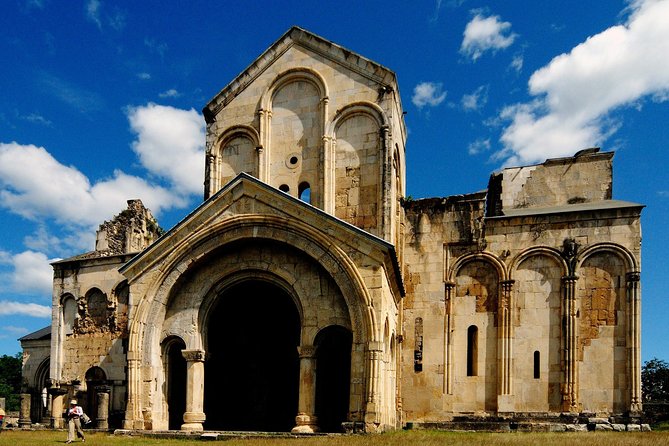
In the evening you arrive in Kutaisi, where the UNESCO sites show up again. The tour includes Gelati Academy and Monastery plus Bagrati Cathedral, associated with Georgia’s “Golden Age” period and included on the UNESCO list. Even if you don’t remember every date, the architectural rhythm makes the scale obvious.
Day 8 continues the “ancient meets nature” theme with Sataplia Cave and Nature Reserve near Kutaisi. This reserve includes relict deciduous forests, karst caves, and well-preserved dinosaur footprints. It’s a change of pace from medieval stone, and it’s a practical choice if you want outdoor movement without committing to a full-day hike.
Then you head toward the region that will take over your senses for the next stretch: Svaneti.
Into Svaneti: Mestia, Ushguli, and Svan houses that explain daily life
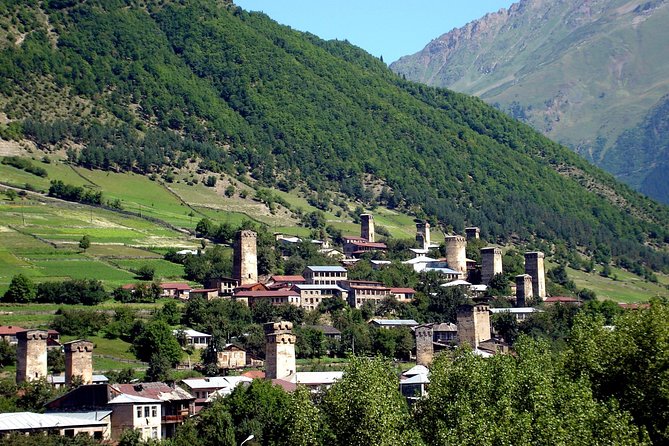
Svaneti is the part of Georgia that feels most “time capsule,” and the tour puts you there long enough to see it as more than a landmark stop.
On the way north, you pass Enguri Dam, described as one of the highest concrete arch dams in the world. It’s the kind of engineering moment that gives your eyes a break between mountain towns.
Day 9 is centered on Ushguli, a community of four villages included on UNESCO’s World Heritage list and described as one of the highest continuously inhabited places in Europe. On the drive up, you also pass through villages like Ipari and Kala, with opportunities to see churches with medieval frescos and murals. If you’re into art and devotion, this is one of the best ways to understand Svan architecture beyond just tower views.
You’ll also have an option for an easy hike toward the foothills of Shkhara Glacier, the highest mountain peak in Georgia. Even if you don’t reach the glacier edge, you get the mountain scale instantly.
That evening, you return to Mestia and visit Margiani’s House Museum, housed in an ancient Svan dwelling. This matters because it’s not only “look at the scenery,” it’s “learn how people lived.” The museum focuses on authentic Svan lifestyle and home structure.
Day 10 is a lighter village day near Mestia, including Latali and Lemjeri, known for churches with medieval frescoes and murals. It’s a good day to go slow, take photos, and let your brain digest what you saw in Ushguli.
Day 11 wraps the Svaneti segment with Svaneti Museum of History and Ethnography. You’ll see ethnographic and archaeological artifacts, old Georgian manuscripts, and Orthodox icons painted in a Svan style. After days of stone towers, this museum helps explain why the region looks the way it does.
The only real drawback in Svaneti is stamina. Even with easy walks, the altitude and steep village paths add up.
Batumi on the Black Sea: Gonio Fortress, Botanical Garden, and city stroll time
After Svaneti, Georgia pivots to sea level and a more relaxed pace. You drive to Batumi, the second-largest city in Georgia and capital of the Adjara region.
Day 11 includes a short Batumi city tour: Piazza Square and a walk along the boulevards. This isn’t an all-day urban immersion. It’s more like a gentle transition day.
On Day 12, you head to Gonio Fortress, about 10 km from Batumi. The Roman layers matter: Gonio was a well-fortified Roman city in Colchis, with references to rule changes later under Byzantine control. It’s a history stop that pairs well with the sea-city atmosphere.
Then comes Batumi Botanical Gardens at the Green Cape. The gardens opened in 1912 and expanded later, and they include plants from different climate zones. It’s a smart way to rest your legs after mountain days, while still doing something active.
Batumi gives you one other gift: time to reset your schedule. If you’ve been grabbing views from every ridge, a garden day feels like a treat.
Borjomi to Akhaltsikhe: mineral waters, Rabati Castle, and Vardzia’s rock-cut wonder
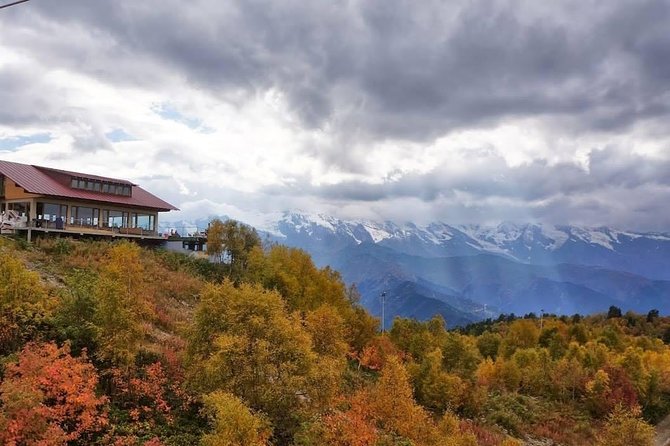
Day 13 pushes you inland to Borjomi, a spa-resort town. The plan includes a walk in Borjomi Park and tasting the mineral waters from springs that have been famous since the early 19th century, exported to more than 40 countries.
Then you continue to Akhaltsikhe, the administrative center of the Samtskhe-Javakheti region. Day 14 is your fortress-and-monastery deep day.
You start with Rabati Castle, a complex with a 14th-century castle plus multiple religious structures: churches, a mosque, and a synagogue, and a museum with manuscript, book, photo, archaeological, and numismatic collections. The key value here is variety. You get different faith architecture in one place, which helps explain this corner of Georgia.
Next is Khertvisi Fortress ruins for a short stop, located along the route toward Vardzia.
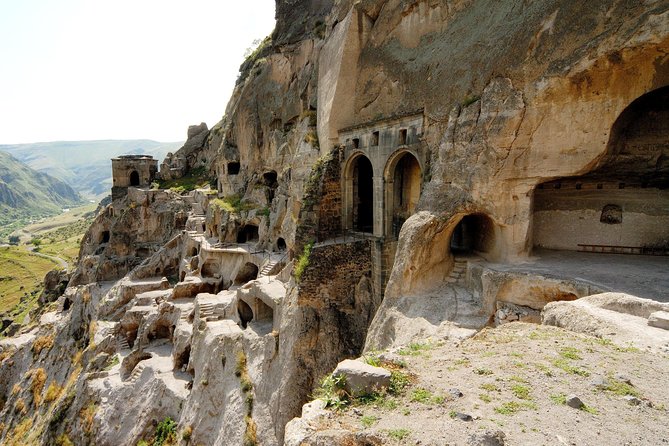
Then you reach Vardzia, described as a 12th-century rock-cut monastery complex founded during Queen Tamar’s reign. It’s cut into the rock along the Mtkvari River, with many chambers, cave dwellings, churches, and chapels stacked on multiple floors. This is the kind of site where you can spend more time just walking corridors. Your visit is around an hour, so let your guide point out how the tiers work so you don’t feel lost.
If you hate enclosed spaces, keep that in mind. Vardzia is built into rock.
Back to Tbilisi via Javakheti: alpine lakes, volcanic plateau, and a final free day
Day 15 turns into a scenic driving day with sightseeing “along the way.” You travel back to Tbilisi, passing the Javakheti volcanic plateau and making stops at Sagamo and Paravani alpine lakes, plus the Tsalka reservoir, described as Georgia’s largest artificial lake. These stops give you a last taste of big nature without another long hiking commitment.
In the evening, you arrive in Tbilisi. Day 16 is free time in the city, which is exactly what you want at the end. Use it for a slower walk in old Tbilisi, another museum if you want one more fix, or just a long meal with zero transportation stress.
Day 17 ends with breakfast, check-out, and a transfer to Tbilisi International Airport.
Price, value, and what you’re really paying for
The price is $4,219 per person for a 17-day private tour. That number looks high at first glance, but you’re buying more than driving. In the included section, you get 16 overnights, 16 breakfasts, and three dinners, plus water and all fees and taxes. Also, the tour is structured around a professional guide and driver, which is usually the most expensive part of long, region-hopping trips.
You’re also getting a lot of “time saved” value. Instead of stitching together separate guides, transport, and tickets, the schedule is already built around the route. That matters most on days like Kazbegi and Svaneti, where one wrong turn or missed timing can snowball.
What’s not included is clear: flights, insurance, visa fees, and meals unless mentioned. So you should plan on covering your lunch most days.
If you want a straightforward rule: this is a good value if you want a guided, door-to-door plan across multiple regions, and you’re comfortable with a full schedule.
Should you book this 17 Day Private Tour through Georgia?
Book it if you want the “Georgia in one gulp” experience: churches and cathedrals in Tbilisi, monastery and wine country in Kakheti, high-mountain Kazbegi views, UNESCO sites in Kutaisi, and Svaneti villages that feel like another century. The best match is someone who enjoys context, likes walking when it’s worth it, and prefers having logistics handled.
Skip it or consider a shorter version if you hate long drives, don’t handle altitude walks well, or you want lots of unscheduled time. This tour gives you one clear reset day in Tbilisi, but most of the other days are structured.
One practical move before you go: pack walking shoes and plan for weather shifts. April through October is ideal for the route, but mountain areas can still feel cooler and more changeable.
FAQ
Where does the tour start, and what happens on Day 1?
The tour starts in Tbilisi, Georgia. Day 1 includes meeting at Tbilisi National Airport and transfer to your hotel.
When does the tour begin each day?
The start time is 9:00 am.
How long is the tour?
The duration is 17 days, approximately.
What is the best time to take this tour?
The best time listed is April to October.
What is included in the tour price?
Included details are all fees and taxes, water, 16 overnights, 16 breakfasts, and 3 dinners.
What is not included?
Not included are flight tickets, insurance, visa fees, and meals unless mentioned.
How many people are in the group at most?
The maximum group size is 15 people.
Is there an airport transfer at the end?
Yes. On Day 17 you have breakfast, check-out, and a transfer to Tbilisi International Airport.
What is the cancellation window for a full refund?
You can cancel up to 6 days in advance for a full refund, meaning you need to cancel at least 6 full days before the experience’s start time.
Newer trips around Tbilisi
- Tbilisi Private Dinner: Georgian BBQ & Fireplace
★ 5.0 · 1 review - Day trip in Kakheti-wine tour
★ 5.0 · 1 review - Tbilisi: Khinkali Tasting Lunch with Local Drinks and Pickup
★ 5.0 · 1 review - Tbilisi & Mtskheta bus tour hop on hop off
★ 5.0 · 1 review - Tbilisi: Christmas Market & Hidden Gems Guided Walking Tour
★ 5.0 · 1 review - Stalin’s Secrets: An Underground Journey Through History
★ 5.0 · 1 review
Private, compared.
Kazbegi and Gudauri Full Day Private Tour from Tbilisi
Read our review →
Old Tbilisi Tour: Private Walking Tour With Wine Tasting
Read our review →
Private Tbilisi Food Tour: 9 Tastings Walk in Bohemian District
Read our review →
Full Day Private Wine Tour in Kakheti Region with Lunch and 3 Wine Tastings
Read our review →
Kakheti – Small wineries and family-cooked lunch • Private tour
Read our review →
Kakheti All Inclusive Private Wine Tour Including Lunch
Read our review →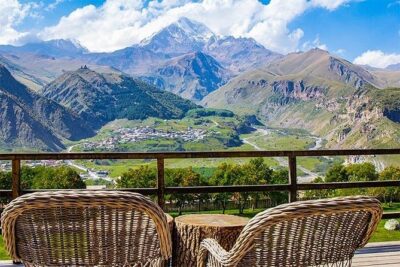
Kazbegi Full-Day Private Tour with Scenic Stops from Tbilisi
Read our review →