
Reviewed · WALKING TOURS
Alternative walking tour New Tiflis and backstreets
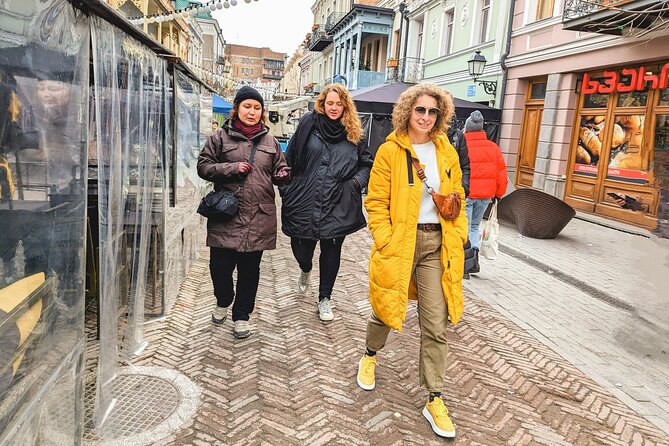
New Tbilisi beats the usual loop. This alternative walking tour strings together Liberty Square, Dry Bridge, and quiet backstreets, plus a complementary wine tasting. I especially like the Dry Bridge Flea Market stop, with its mix of antiques, Soviet-era memorabilia, and handmade art you can actually browse. I also like how the route spends real time on neighborhoods beyond the classic postcard streets. One drawback: you walk a lot in about 3 hours, so bring comfortable, non-slip shoes and be ready for some busy streets.
What makes it feel good for your day is the pace and the group size. This is capped at 10 people, so you get a chance to ask questions without feeling rushed, and the tour is offered in English. If you’re the type who loves architecture, everyday city life, and local culture (not just monuments), this route is a strong fit.
In This Review
- Key highlights worth your attention
- Why this New Tbilisi walk feels different from Old Town
- Liberty Square start at the Burberry entrance, plus the St. George symbol
- Orbeliani Square and the president’s palace area, with a flower market break
- Dry Bridge Flea Market browsing, from Soviet memorabilia to handmade crafts
- Agmashenebeli Avenue’s Art Nouveau facades and theatre culture
- Roses Park and Fabrika Tbilisi street art in the backstreets
- St. Peter and Paul Roman Catholic Church and Marjanishvili Theatre details
- Marjanishvili Square finish near the metro, plus an easy plan for dinner
- Price, group size value, and pacing that actually works
- Should you book this New Tbilisi alternative walking tour?
- FAQ
- How long is the alternative walking tour in Tbilisi?
- How much does the tour cost?
- Is the tour offered in English?
- Where do we meet, and where does the tour end?
- Is there a lot of walking?
- What is included in the price?
- Are the stops ticket-free?
- What should I do if it rains or the weather is bad?
- What is the latest the guide will wait at the meeting point?
Key highlights worth your attention
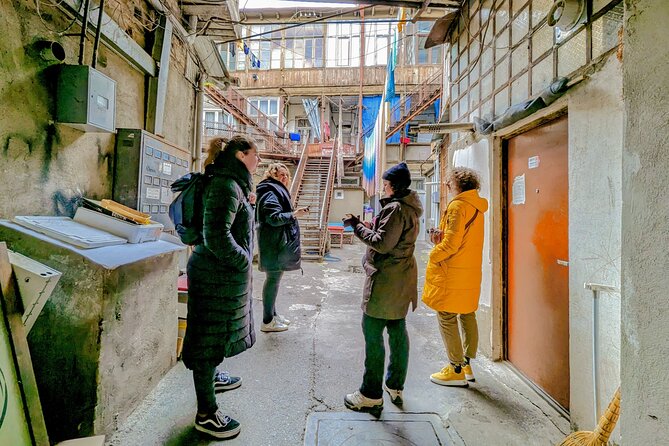
- Small group cap (up to 10 people) for a more personal walk and easier Q and A
- Complementary wine tasting included, so the tour has a built-in reset
- New Tiflis, not Old Town focus, with more local-feeling backstreets
- Dry Bridge Flea Market browsing time for vintage and Soviet-era finds, plus handmade stalls
- Street art + Soviet reuse at Fabrika Tbilisi in an easy walking stretch
- Theatre and architecture stops from Art Nouveau streets to Marjanishvili’s historic venue
More walking tours in Tbilisi:
- Tbilisi Walking Tour Including Cable Car and Traditional Bakery★ 5.0 · 1,310 reviews
- Tbilisi: City Highlights Guided Walking Tour★ 4.9 · 1,114 reviews
- Tbilisi:Evening Walking & Talking Tour with Wine & Boat Ride★ 5.0 · 572 reviews
- Tbilisi: Evening Walking Tour with Wine & Boat Ride Options★ 5.0 · 407 reviews
Why this New Tbilisi walk feels different from Old Town
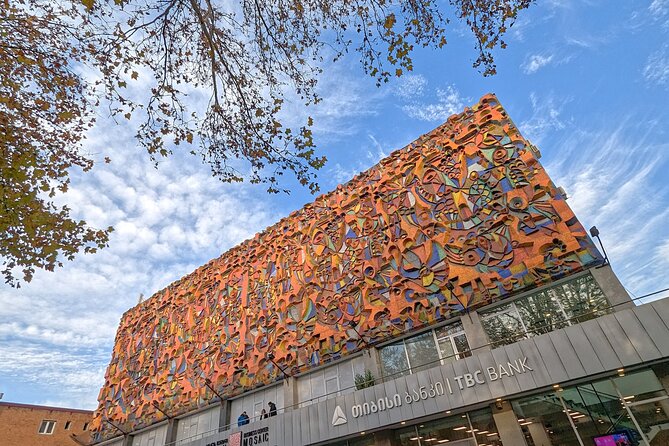
If you’ve already seen the postcard basics of central Tbilisi, this tour gives you something more useful: context. You start in major public spaces, then you peel away from the main tourist lanes and spend your time in newer, everyday areas. That matters, because it’s often the difference between remembering buildings and understanding how a city actually moves.
This walk also has a good variety mix for a 3-hour format. You’re not stuck doing only museums or only markets. You get a square with political symbolism, a president’s neighborhood vibe, a flea market where vendors trade stories, then parks and street art that show a modern Tbilisi mindset.
The main thing to plan for is walking comfort. The tour is designed for a relaxed pace around 3 km, but it still adds up. If you want to take frequent photo stops and sip wine without rushing, you’ll appreciate arriving on time and wearing shoes you trust.
Liberty Square start at the Burberry entrance, plus the St. George symbol
You’ll meet at the entrance of the Burberry store at Freedom Square (Svobody Square). It’s a smart meeting point because it’s central and easy to orient around, with the metro station nearby.
Liberty Square is one of Tbilisi’s key landmarks. In the center, the famous statue of St. George slaying the dragon ties the place to Georgia’s story of freedom and independence. Around the square you’ll see landmark buildings like Tbilisi City Hall and the Georgian National Museum, which helps you understand why this spot matters beyond just being a nice view.
There’s also a practical reason to start here: it’s a public hub that hosts demonstrations and celebrations, including New Year’s Eve and Independence Day. That gives the area a living quality even on normal days. Your guide will use it as a launching pad before you step into the less-typical streets.
Tip for your day: take a few minutes right at the start to look at the square, then plan to pack your phone for the transition to narrower backstreets. The contrast is the point.
Orbeliani Square and the president’s palace area, with a flower market break
Next you’ll head to Orbeliani Square. The centerpiece is Orbeliani Palace, known as the official residence of the President of Georgia. You don’t go inside, but you’ll get close enough to appreciate the scale and ornate details of an 18th-century building that has housed Georgian nobles and officials across different eras.
This stop works well even if you’re not hunting for interior visits. You get to read the city’s power geography from the sidewalk. Orbeliani Square also has a cafe-and-pace feeling, with places nearby where you can pause for coffee or a bite later.
A standout detail here is the famous flower market. It’s the kind of stop that turns into photos fast, with colorful blooms and fragrant herbs. Even if you don’t plan to buy anything, it gives your walk a sensory reset and a more local rhythm than a purely architectural view.
Possible drawback to note: this stop can be more about atmosphere and browsing than a structured “touring” moment. If you want strict museum-style timing every step of the way, you might wish for a bit more narration time focused on fewer stops. Still, it’s a nice change of pace.
Dry Bridge Flea Market browsing, from Soviet memorabilia to handmade crafts
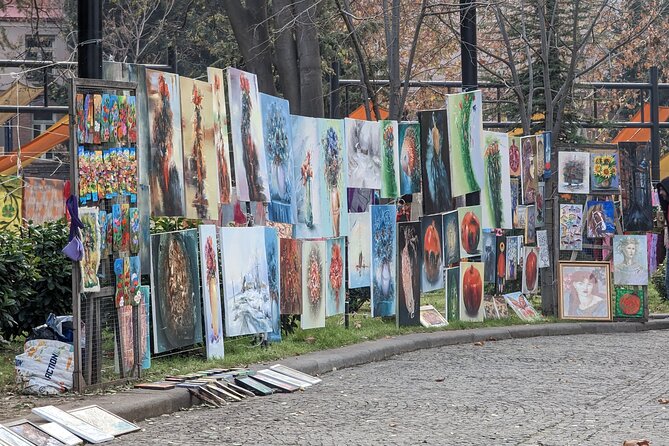
Dry Bridge Flea Market is where the tour shifts into personal exploration. You’ll spend around 30 minutes walking through stalls that range from antiques and vintage clothing to jewelry and Soviet-era memorabilia. It’s the kind of place where you can spend five minutes or fifty, depending on your shopping mood.
One reason this stop is worth it is the mix of sellers. Many vendors are artists or craftsmen, so you’ll often find handmade creations alongside older items. That makes the market feel less like a generic souvenir zone and more like a work-in-progress showroom.
If you care about details, this is also the place to ask questions. Vendors are often willing to share what an item is, or where it came from. That’s the practical value for you: you walk away with better context, not just objects.
Quick buyer advice: if you’re tempted to shop, bring small bills or keep payment options in mind. And set a clear spending limit early. Markets like this can pull you in, especially when you’re half listening to stories and half comparing textures and styles.
Other Tbilisi tours and day trips:

Agmashenebeli Avenue’s Art Nouveau facades and theatre culture
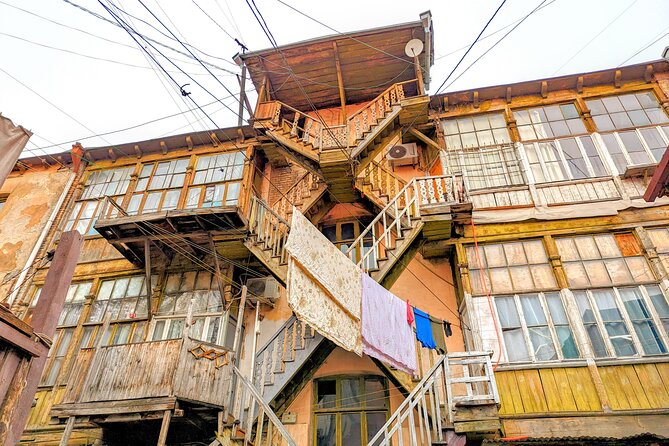
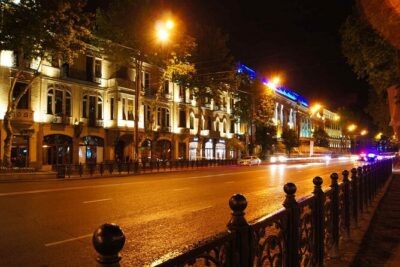
After the market, you move onto Agmashenebeli Avenue. This stretch is known for late 19th and early 20th-century architecture, with examples of Art Nouveau and Neo-Renaissance styles. The payoff is simple: the street does the decoration for you. You don’t need a single museum ticket, because the facades are the exhibit.
Two theatre landmarks anchor the culture side of this stop. You’ll get a look at Marjanishvili Theatre, an important cultural center since it opened in 1928. You’ll also see the Tbilisi Opera and Ballet Theatre at the northern end of the avenue.
Even if you don’t attend a performance that night, this part of the tour helps you understand why Tbilisi takes arts seriously. Theatres aren’t tucked away here. They sit in the city fabric, visible and connected to regular street life.
The consideration: this stretch includes some busier street segments. It’s manageable, but if you’re sensitive to traffic noise, keep an eye on your timing and plan for quick crossings. Your guide should steer you through it, but your comfort matters too.
Roses Park and Fabrika Tbilisi street art in the backstreets
This is where the tour leans into the “slow down” moments.
First comes Roses Park, tucked into quieter backstreets. The rose garden has an impressive collection of more than 200 varieties. In summer, the roses can be in full bloom and the air takes on that strong rose scent. Even outside peak bloom, it’s still a pleasant break from street-level hustle.
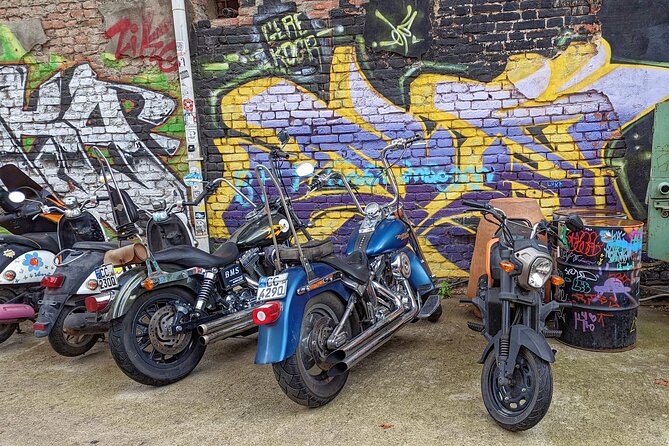
Then you head to Fabrika Tbilisi. This place started as an old Soviet sewing factory and has been transformed into a multi-use space for locals and visitors. It’s a clean example of urban renewal you can literally walk through. Instead of a museum version of history, you see history turned into a working creative hub.
The walls do the talking here. Fabrika is known for street art and murals, with colorful artwork from artists around the world. The stop feels like a visual conversation between eras: Soviet industrial roots on one side, modern creative energy on the other.
If you’re wondering whether this stop is “worth it,” here’s the practical answer. It is because it balances two things you’ll remember later: a peaceful rose garden moment and a bold street art wall where you can actually stop and look. These are the kind of pauses that make a walking tour feel human, not just efficient.
St. Peter and Paul Roman Catholic Church and Marjanishvili Theatre details
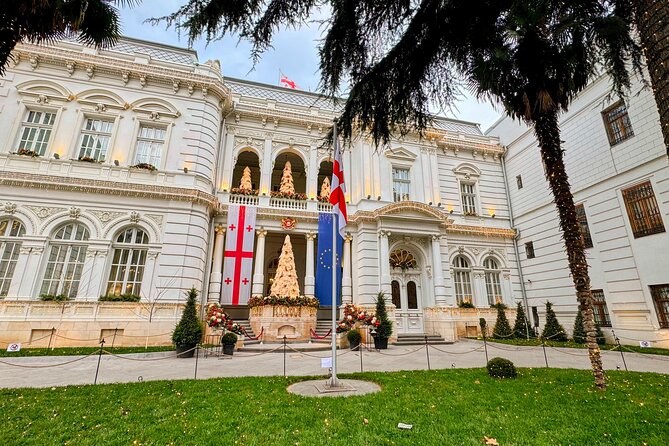
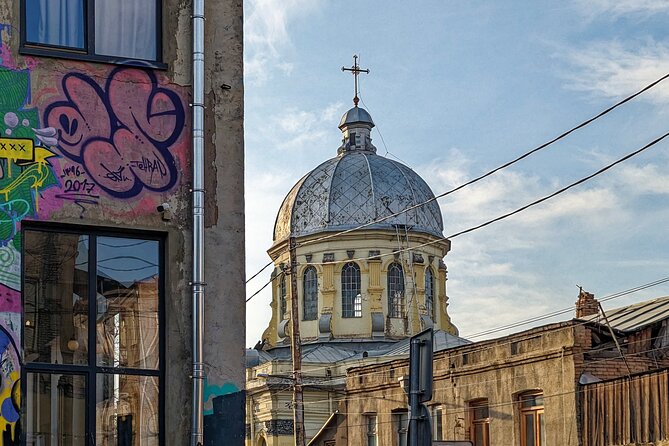
Next you visit St. Peter and Paul Roman Catholic Church, built between 1870 and 1877. The architecture is described as Baroque in style, and the facade has a striking yellow tone. The project began through K. Zubalashvili, with architect Albert Zaltsman involved in the design.
A standout detail here is the pope story. Pope John Paul II celebrated Mass at this church during a visit to Georgia in October 1999. That kind of fact changes how you look at a building. You stop thinking only about style and start thinking about why it mattered to visitors and communities.
You’ll also notice the rose window above the wooden front door. The rose window decor with floral ornaments and a dove was added after 2000. There was also a change to the original doorway, turned into a wall where the rose window now sits.
Then the walk brings you to Kote Marjanishvili State Drama Theatre. This theatre has a long-running importance in Georgia’s arts scene and operates in the same building since its move to Tbilisi in 1930. The theatre building is Art Nouveau, and it was renovated and reopened in 2006 with the premiere of Bertolt Brecht’s The Threepenny Opera.
Even if you only view the exterior, this stop adds meaning to what you saw earlier on Agmashenebeli Avenue. It connects architecture with daily cultural life, showing that theatre is not just a performance. It’s part of the city identity.
Marjanishvili Square finish near the metro, plus an easy plan for dinner
Your final destination is Marjanishvili Square, an active intersection surrounded by cafes, restaurants, and shops. It’s a good ending point because you’re not stranded after the tour. You can keep moving, snack, or sit down with a view of real street life.
If you want transit access, the metro station is nearby. Marjanishvili metro station opened in 1966 and was designed by O. Melia and O. Melkadze. It also has a high-relief bust of Kote Marjanishvili, giving you one more cultural detail to notice before you go.
This finish works especially well if you’re building your evening. You’ll leave with enough context to choose a nearby place without feeling completely lost in a new neighborhood.
Price, group size value, and pacing that actually works
At $30 per person for about 3 hours, the biggest value is that the tour is compact and structured, not just a random walk. You get guide service plus a complementary wine tasting. That means your fee covers more than route planning. It buys narrative, context, and breaks that keep the day from turning into a nonstop shuffle.
The max of 10 travelers is also a genuine quality lever. It keeps the tour from feeling crowded and makes it easier to ask questions when you want specifics about what you’re seeing. And since the tour is offered in English, it avoids the frustration of trying to interpret everything yourself.
Pacing tip for your comfort: arrive early enough that you’re not starting stressed. The guide waits up to 10 minutes after the scheduled start time, then you may need to rebook if you’re late. For walking tours, stress is the enemy. Be on time, wear good shoes, and plan a light snack beforehand if you’re prone to getting hungry.
Weather note: winter in Tbilisi can be cold, windy, and rainy. Summer can be hot, especially around midday. Dress for the season and bring sun protection in warm months. This tour keeps going unless conditions are unsafe.
Should you book this New Tbilisi alternative walking tour?
Book it if you want a New Tbilisi backstreets perspective instead of an Old Town-only script. This walk is a strong choice for architecture lovers, market browsers, and anyone who likes street-level culture, from rose garden calm to Fabrika’s Soviet-to-creative transformation.
Skip it or think twice if you dislike walking and already know you struggle with about 3 km at a relaxed pace. Also, if you’re expecting a classic monuments-only route, this one is designed for “city life and side streets,” so your expectations should match that style.
If you like guided storytelling and you want a small-group day that blends squares, markets, parks, and theatres, this tour is a smart use of your time in Tbilisi.
FAQ
How long is the alternative walking tour in Tbilisi?
It lasts about 3 hours.
How much does the tour cost?
The price is $30.00 per person.
Is the tour offered in English?
Yes, the tour is offered in English.
Where do we meet, and where does the tour end?
You meet at the Burberry entrance at Freedom Square (Shalva Dadiani Street). The tour ends near Marjanishvilis metro station at Kote Marjanishvili St.
Is there a lot of walking?
Yes. It is designed for guests who can comfortably walk around 3 km at a relaxed pace, and it includes backstreets and some busy roads.
What is included in the price?
The tour includes guide service and a complementary wine tasting.
Are the stops ticket-free?
The stops listed for the tour are marked as free admissions (no paid entry required at the points on the route).
What should I do if it rains or the weather is bad?
The experience requires good weather. If it is canceled due to poor weather, you’ll be offered a different date or a full refund.
What is the latest the guide will wait at the meeting point?
The guide waits up to 10 minutes after the scheduled start time. After that, they cannot wait longer and you may need to rebook.
Newer trips around Tbilisi
- Tbilisi Private Dinner: Georgian BBQ & Fireplace
★ 5.0 · 1 review - Tbilisi: Khinkali Tasting Lunch with Local Drinks and Pickup
★ 5.0 · 1 review - Day trip in Kakheti-wine tour
★ 5.0 · 1 review - Tbilisi & Mtskheta bus tour hop on hop off
★ 5.0 · 1 review - Tbilisi: Christmas Market & Hidden Gems Guided Walking Tour
★ 5.0 · 1 review - Stalin’s Secrets: An Underground Journey Through History
★ 5.0 · 1 review
Walking Tours, compared.
Tbilisi Walking Tour Including Cable Car and Traditional Bakery
Read our review →
Evening Walking & Talking Tour with Wine & Boat Ride
Read our review →
Evening Walking Tour with Wine & Boat Ride Options
Read our review →
Old Tbilisi Highlights walking tour with wine & 10 tastings
Read our review →
Old Tbilisi Tour: Private Walking Tour With Wine Tasting
Read our review →
Private Tbilisi Food Tour: 9 Tastings Walk in Bohemian District
Read our review →Browse the lists this tour appears in