
Reviewed · WALKING TOURS
Beyond the Old City: Tbilisi’s Hidden Gems Walking Tour
Tbilisi changes fast past the old walls. This 3-hour walk shows the capital as it grew up, not just the postcard version. I loved the Dry Bridge flea and flower market (real atmosphere, good photo angles) and the way my guide, Oksana, turned street corners into local stories you can actually use. The main trade-off is simple: it is a 3.5 km walk, and there is no voice amplification, so it is not a fit if you have mobility or hearing needs.
You start at Freedom Square, then head toward Orbeliani Plaza and the left bank of the Mtkvari River, where new styles appeared as Tbilisi modernized. I like how you get context for why buildings look the way they do, and you end around Marjanishvili Square with a sense of how the city breathes today. Also, plan to show up on time because the wait before the start is no more than 10 minutes.
This is a private group format, with a live guide speaking English, Russian, or Ukrainian. You will get insider information from a lot of archive work, including stories tied to families and specific buildings, so the walk feels personal and grounded. Bring comfy shoes, water, and your camera, because you will be on foot the whole time.
In This Review
- Key Things You Will Notice on This Walk
- Tbilisi’s Left Bank Explains the City’s Big Turning Point
- Meeting at Freedom Square, Then Getting Your Bearings the Right Way
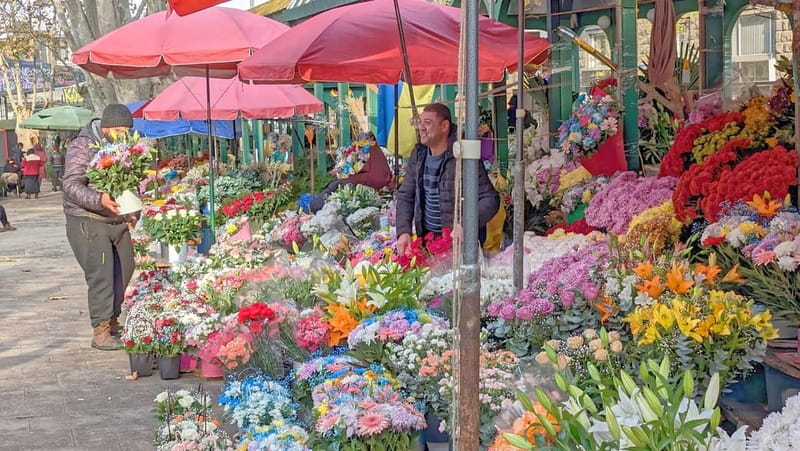
- Dry Bridge Flea and Flower Market, Where the Past Shows Up in the Mundane
- Agmashenebeli Avenue on Foot, Architecture Meets Real Life
- Backstreets, Gardens, and the Walk Toward Marjanishvili Square
- The Guide Experience, Including Oksana’s Style of Storytelling
- Timing, Route Length, and What to Bring for Comfort
- Price and Value for a Private Group Up to 2
- Who This Walk Is For, and Who Should Skip It
- Should You Book Beyond the Old City?
- FAQ
- Where does the tour start?
- How long is the walking tour?
- What is the walking distance?
- Is hotel pick-up included?
- What languages is the guide speaking?
- Is the tour accessible for wheelchair users or mobility impairments?
- What should I bring, and what is not allowed?
Key Things You Will Notice on This Walk
- Freedom Square to the left bank, where Tbilisi’s modernization story starts to make sense fast
- Dry Bridge flea and flower market, perfect for interesting objects and quick photo stops
- Agmashenebeli Avenue on foot, where architecture and daily life mix in a way the old city doesn’t
- Photo-friendly building corners, with guidance on what is worth focusing on
- Local, researched anecdotes from the guide, including family and building histories
- Private-group pacing, so you can ask questions without feeling rushed
More walking tours in Tbilisi:
- Tbilisi Walking Tour Including Cable Car and Traditional Bakery★ 5.0 · 1,310 reviews
- Tbilisi: City Highlights Guided Walking Tour★ 4.9 · 1,114 reviews
- Tbilisi:Evening Walking & Talking Tour with Wine & Boat Ride★ 5.0 · 572 reviews
- Tbilisi: Evening Walking Tour with Wine & Boat Ride Options★ 5.0 · 407 reviews
Tbilisi’s Left Bank Explains the City’s Big Turning Point
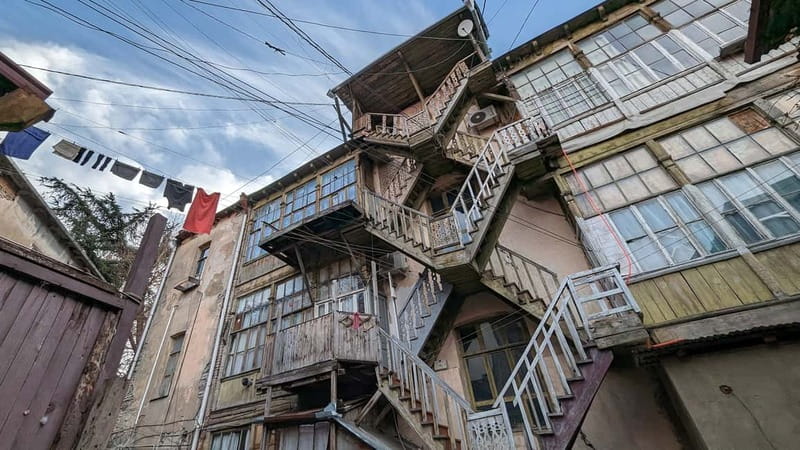
If you only know the old streets, you miss a huge part of who Tbilisi became. On this walk, the city’s story moves to the left bank of the Mtkvari River, where development accelerated from the 19th century onward. You see how new architecture arrived alongside shops, factories, and a wave of European and Russian immigrants. That combination helped shape what locals often describe as a bourgeois New Tiflis, where older traditions met newer influences in day-to-day life.
What I like about this framing is that it changes how you look at buildings. Instead of treating them like scenery, you start connecting them to time periods and social shifts. When you recognize that a facade style, a neighborhood layout, or even street activity has a reason behind it, the walk turns from sightseeing into understanding.
You also get a practical benefit: once you understand the left-bank growth pattern, the rest of Tbilisi clicks. You’ll likely find yourself spotting similar architectural details later, even on your own. That is a kind of value you can’t buy in a single museum ticket.
Meeting at Freedom Square, Then Getting Your Bearings the Right Way
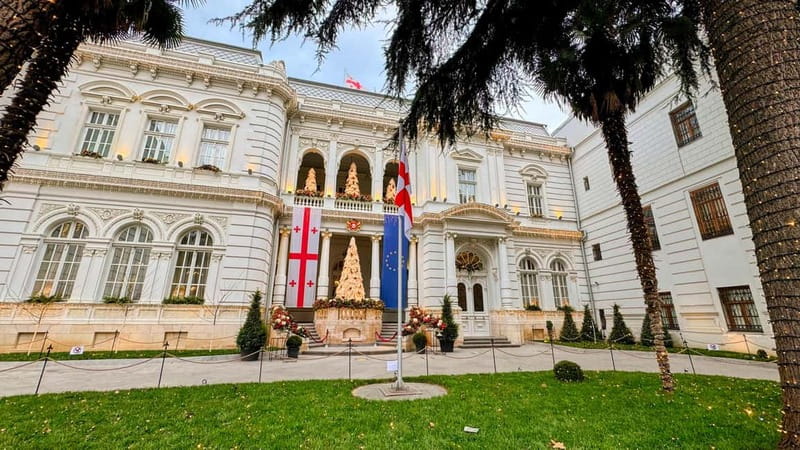
The tour starts at the entrance of the Burberry shop at Freedom Square. It is an easy landmark to find, and it helps you orient before you start walking. You are aiming for a clean start, because the waiting time before the tour begins is no more than 10 minutes, and being late means you may need to make a new booking.
From there, you head toward Orbeliani Plaza and then push into the left bank area. Early on, the guide’s job is to give you a mental map. You learn which streets matter, what each area represents historically, and what to watch for in architecture and street life.
One small thing to keep in mind: this is a walking tour with frequent stops, but the total route is about 3.5 km. That means you should settle into a steady pace. If you try to treat every stop like a long museum visit, you may feel behind. My advice is to wear comfortable shoes and keep your camera ready, because a good shot usually appears in the middle of a story, not only at the end of the stop.
Dry Bridge Flea and Flower Market, Where the Past Shows Up in the Mundane
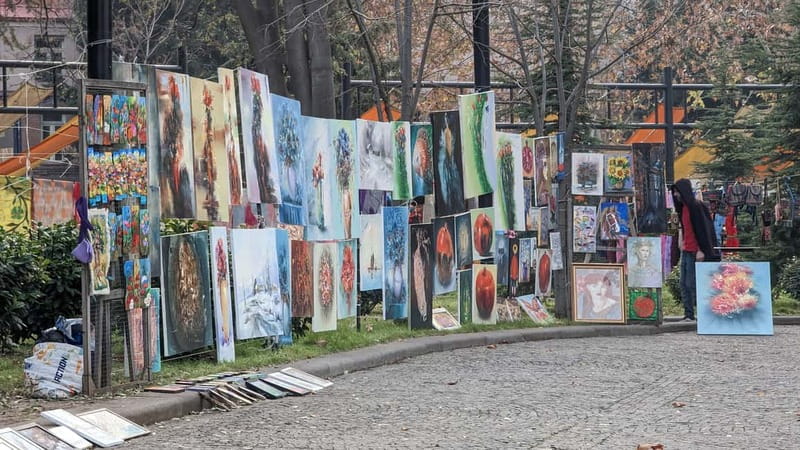
Dry Bridge is the kind of place that works whether you are a serious bargain hunter or just curious. The reason it belongs here is simple: it is not frozen in time. It is an active market area where you can spot objects that carry histories, while still watching the rhythms of everyday shopping.
On this part of the walk, you move through the Dry Bridge flea market, which is known for historical artifacts and smaller finds that feel like they come with personal stories. You also get the flower market element, which changes the mood quickly. Flowers create color and movement, and that matters for both photos and atmosphere.
What I like is how the guide connects market objects to the larger Tbilisi story you learned at the start. Instead of treating the market like random clutter, you start noticing patterns: what kinds of items appear, how people move through the space, and how the market fits into the city’s larger identity.
Photo tip: stand slightly back from the thickest crowd during your shots. The market can get busy, and you want angles where the background buildings and the market activity both show. You will get more keepers that way.
Agmashenebeli Avenue on Foot, Architecture Meets Real Life
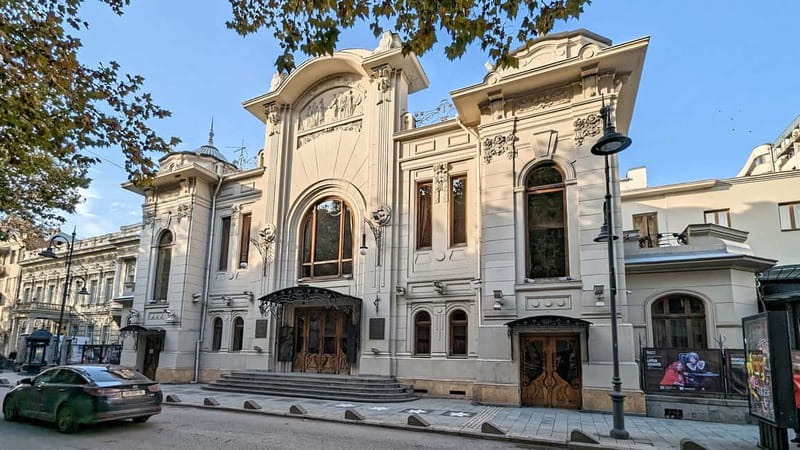
After the markets, the route shifts to Agmashenebeli Avenue. This is a pedestrian-friendly stretch and a strong example of cultural mixing. You get architectural variety here, plus the kind of street energy that comes from people actually using the space, not just passing through on tour routes.
The big value of this stop is that it shows continuity. Tbilisi modernization was not only factories and immigrants. It also meant streets designed for social life, commerce, and a mix of tastes. When the guide points out buildings in this area, you start understanding how architectural style and public life feed each other.
If you have already walked the older historic quarters, Agmashenebeli Avenue gives you a different kind of satisfaction. You are not hunting for ancient stone, you are watching a living city. You might also get food recommendations here. In one experience, Oksana pointed out architectural details and shared good ideas on where to eat, which is a practical bonus because it turns the walk into a mini plan for the rest of your day.
Photo tip: look for repeating elements like balconies, window rhythms, and corner perspectives. The guide can point out what is worth focusing on, but you can also apply your own eye. If you take photos while the guide explains context, your pictures will feel more meaningful later.
Other Tbilisi tours and day trips:

Backstreets, Gardens, and the Walk Toward Marjanishvili Square
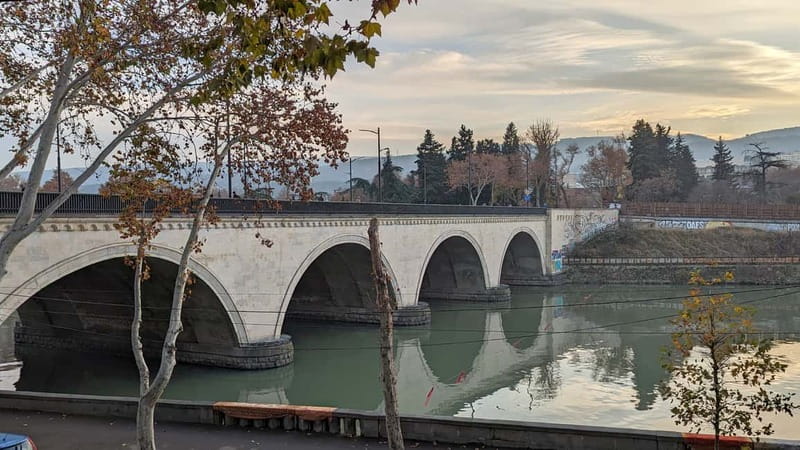
This tour is designed for people who have already done the old-city circuit and want more than the usual highlights. You spend time on quieter backstreets and through areas with greenery, which helps the city feel less like an open-air museum and more like a place people live.
Those side streets are where you often notice the details that big boulevards hide: small entrances, courtyards, the relationship between buildings and street width, and how different eras share the same block. It is also where the guide’s research becomes especially useful. Since the guide has spent time in archives, the stories attached to particular buildings and families can feel surprisingly specific, not generic city talk.
As you reach Marjanishvili Square, you get a sense of Tbilisi’s momentum. This is not just a photo stop. It is a place that helps you connect the earlier modernization story with the city’s present-day energy.
If you get tired, this is where you can also recalibrate. Sit for a minute if there are places to rest, look around, and decide what you want to explore next on your own. The walk ends with the feeling that you understand more than one neighborhood, not just a sequence of attractions.
The Guide Experience, Including Oksana’s Style of Storytelling
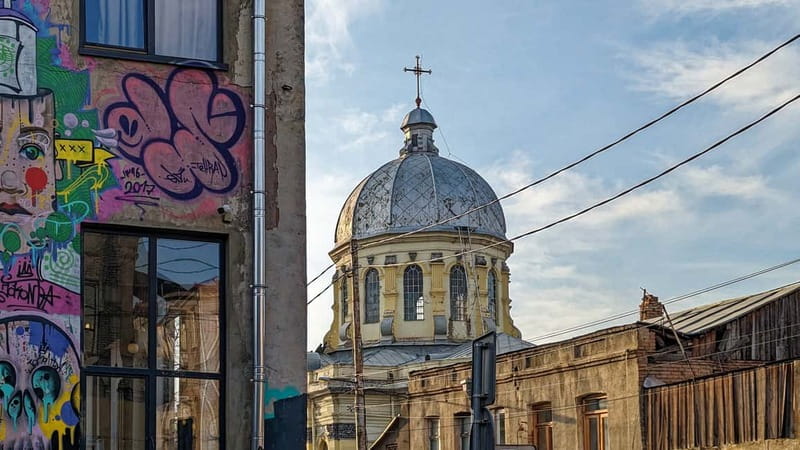
The biggest factor in whether this tour feels special is the guide. In the experiences I drew on, the common theme was that the guide is friendly, answers questions, and stays relaxed rather than performing. My own style preference is for tours that let you ask small follow-up questions, and this one fits that tone.
Oksana came through as especially attentive to individual interests. One person highlighted that she noticed architectural buildings and also offered solid food recommendations. That combination matters because it makes the tour useful after you leave. You are not just memorizing dates, you are getting guidance on what to notice and where to go.
There is also a clear research approach behind the explanations. The guide’s preparation includes archive work focused on families and buildings, which helps stories feel tied to real locations. That is how you get from history as trivia to history as perspective.
One practical note: the guide does not use voice amplifiers. That is great for keeping the street atmosphere natural, but it means you should choose a position where you can hear. If you know you rely on clear audio, keep that in mind, especially in noisy market moments.
Timing, Route Length, and What to Bring for Comfort
This walk lasts about 3 hours and covers roughly 3.5 km, with stops along the way. In practical terms, that is comfortable for a typical traveler with basic walking stamina. It is long enough to feel like a real neighborhood experience, not a quick stamp-and-go loop.
What to bring is straightforward:
- Comfortable shoes, since most of the time is on foot
- Camera, because several streets and building corners are worth photographing
- Water, especially if the weather is warm
- Weather-appropriate clothing
Also remember the rules: alcohol and drugs are not allowed during the tour. If you want a drink afterward, that is easy to plan once the walk ends.
Because it is a private group, pacing can be adjusted within reason, but it still follows the route logic. If you try to stop for long detours, you may feel pressured to catch up. For the best experience, treat it like a guided walk with photo moments, not a free-for-all roam.
Price and Value for a Private Group Up to 2
The price is $47 per group for up to 2 people, which is a key detail for value. Instead of paying per person for the same guided content, you are essentially hiring a guide for a specific walk route and time window.
At this price, the value comes from two things:
1) You are getting interpretation, not just directions. The guide ties neighborhoods to modernization, immigrant influences, and architectural choices.
2) You are getting time. Three hours is long enough to cover markets, a main pedestrian street, side streets, and a finish point without feeling rushed.
It helps that the tour includes the guide and has flexible booking options like reserve now and pay later, plus free cancellation up to 24 hours in advance. If your schedule might shift, that reduces stress.
The only cost consideration is your own comfort and fit. If you cannot handle walking 3.5 km, the tour will feel less like value and more like effort. If the tour is a good fit, the pricing feels fair because you get a personal, story-driven city orientation that you can apply for the rest of your trip.
Who This Walk Is For, and Who Should Skip It

This tour is well suited if you:
- Have already walked the old city and want a different angle on Tbilisi
- Like architecture and enjoy understanding why neighborhoods look the way they do
- Want local insight and food ideas, not only major sights
It may not be for you if:
- You have mobility impairments or use a wheelchair
- You are hearing-impaired, since the tour does not use voice amplifiers and the route includes street noise
Also, if your priority is sitting down in one place for a long time, this might not match your style. This is a walking tour through streets and market areas, so it works best when you enjoy being in motion and talking with a guide.
Finally, if you prefer very structured museum-style history with minimal wandering, you might want another type of tour. Here the city itself is the classroom, and the lesson happens on sidewalks.
Should You Book Beyond the Old City?
If you are the type of traveler who wants to see beyond the postcard old town, I think you should book this. The combination of Dry Bridge market time, left-bank modernization context, and an attentive guide with researched stories gives you something you can carry into your independent days in Tbilisi.
I would especially recommend it if you have already done the historic center and you feel like you are missing how the city became itself. The route from Freedom Square to Orbeliani Plaza, along the left bank, and finishing near Marjanishvili Square gives you a fuller picture without requiring a half-day or full-day commitment.
Before you go, be honest about two things. Can you walk about 3.5 km comfortably? And will you be able to hear the guide without amplification? If the answer is yes, this is a smart, high-value way to experience a side of Tbilisi that most short itineraries miss.
FAQ
Where does the tour start?
The meeting point is the entrance of the Burberry shop at Freedom Square, Tbilisi.
How long is the walking tour?
The tour lasts about 3 hours.
What is the walking distance?
The walking route is about 3.5 km (2.2 miles), with stops along the way.
Is hotel pick-up included?
Hotel pick-up is not included, but it is listed as an option.
What languages is the guide speaking?
The live guide offers English, Russian, and Ukrainian.
Is the tour accessible for wheelchair users or mobility impairments?
No. The tour is not suitable for people with mobility impairments or wheelchair users.
What should I bring, and what is not allowed?
Bring comfortable shoes, a camera, water, and weather-appropriate clothing. Alcohol and drugs are not allowed.
Newer trips around Tbilisi
- Tbilisi Private Dinner: Georgian BBQ & Fireplace
★ 5.0 · 1 review - Tbilisi: Khinkali Tasting Lunch with Local Drinks and Pickup
★ 5.0 · 1 review - Day trip in Kakheti-wine tour
★ 5.0 · 1 review - Tbilisi & Mtskheta bus tour hop on hop off
★ 5.0 · 1 review - Tbilisi: Christmas Market & Hidden Gems Guided Walking Tour
★ 5.0 · 1 review - Stalin’s Secrets: An Underground Journey Through History
★ 5.0 · 1 review
Walking Tours, compared.
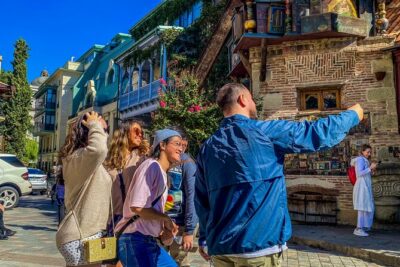
Tbilisi Walking Tour Including Cable Car and Traditional Bakery
Read our review →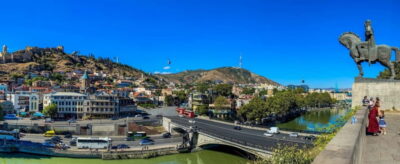
Evening Walking & Talking Tour with Wine & Boat Ride
Read our review →
Evening Walking Tour with Wine & Boat Ride Options
Read our review →
Old Tbilisi Highlights walking tour with wine & 10 tastings
Read our review →
Old Tbilisi Tour: Private Walking Tour With Wine Tasting
Read our review →
Private Tbilisi Food Tour: 9 Tastings Walk in Bohemian District
Read our review →Browse the lists this tour appears in