
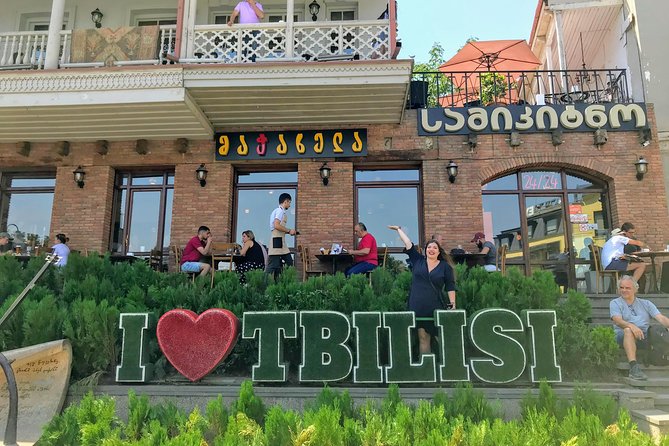
Reviewed · WALKING TOURS
Discover Tbilisi: Hidden Gems and Iconic Sights Walking Tour
Old Tbilisi makes sense fast. This walking tour strings together the city’s big symbols and quieter corners, guided in English by a local.
Two things I especially liked: the photo-friendly viewpoints (Bridge of Peace, old-town streets, Narikala outlook from the tram area) and how many major stops you cover without paying entry fees for most of them.
I also liked the small-group feel. You stay under a small cap (up to about a dozen to 15 people depending on the run), so the guide can point out details and answer questions instead of rushing you like a cattle line.
One drawback to plan for: there is a dress code for places of worship. You will need shoulders and knees covered, so pack something light, because you do not want to get turned away right when you finally reach a church or mosque.
In This Review
- Key highlights worth showing up for
- Why this Freedom Square to Old Town walk is such good value
- Timing, pacing, and where to meet (plus what to wear)
- Svobody Square, the Wall Ruins, and why the center tells old stories
- Anchiskhati Basilica and Sioni Cathedral, plus Jumah Mosque’s unusual mix
- Bridge of Peace to Shardeni Street, the views meet the street life
- Gabriadze puppets and the film and poetry statues around town
- Rike Park and the aerial tram to Narikala: the “views without a big detour” option
- Symbols of Kartlis Deda, a fortress perspective, and a statue-heavy walk
- The Great Synagogue, Meidan Bazaar, and why this tour feels like a city story
- Dzveli Tbilisi sulfur waterfall and the finish at the water level you remember
- Who this tour is best for, and who should skip it
- Should you book this Tbilisi Old Town walking tour?
- FAQ
- How long is the Discover Tbilisi walking tour?
- What is included, and what do I pay for separately?
- Where does the tour start and end?
- Is the tour offered in English?
- What is the group size?
- Is the tour mostly inside churches and museums?
- What dress code should I follow?
Key highlights worth showing up for
- Freedom Square as your orientation point, with Tbilisi’s name changes explained in plain terms
- Old Town wall ruins and 6th-century Anchiskhati Basilica, quick stops that still hit hard
- Bridge of Peace plus Shardeni Street, modern views and a pedestrian street with character
- Rike Park and the aerial tram option, for a Narikala-fortress viewpoint without locking your whole day
- A city of many faiths in one walk, including Sioni Cathedral, Jumah Mosque, and the Great Synagogue
- The Dzveli Tbilisi sulfur waterfall, yes, it is real water in the middle of town
More walking tours in Tbilisi:
- Tbilisi Walking Tour Including Cable Car and Traditional Bakery★ 5.0 · 1,310 reviews
- Tbilisi: City Highlights Guided Walking Tour★ 4.9 · 1,114 reviews
- Tbilisi:Evening Walking & Talking Tour with Wine & Boat Ride★ 5.0 · 572 reviews
- Tbilisi: Evening Walking Tour with Wine & Boat Ride Options★ 5.0 · 407 reviews
Why this Freedom Square to Old Town walk is such good value
At $9 per person, this tour is built for first-timers who want an orientation without overspending. What makes it feel like a bargain is the mix: you get iconic sights plus a lot of route variety, and most stops are free to enter.
You also get a real local guide, not just a route. In past groups, guides including Jonah, Nini, Oksana, Tamara, and Koba have been praised for telling stories in a way that connects the dots, and for recommending practical places after the walk.
And you get a mobile ticket. That small detail matters in real life, because you spend less time hunting for paperwork and more time walking, looking, and photographing.
Timing, pacing, and where to meet (plus what to wear)
This walk runs about 2 hours 30 minutes to 3 hours 30 minutes. Expect a lot of steps, plus short stops that add up, so wear shoes that can handle uneven old-street pavement.
Meeting point is Freedom Square, near Burberry on Shalva Dadiani Street (Mtawminda, 0105). The tour starts and ends back at the same point, so you are not stuck reorganizing your whole afternoon.
Dress code is the one thing that can truly derail your day if you ignore it. For churches and selected museums, you need shoulders and knees covered, no shorts and no sleeveless tops for men or women. If you tend to travel light, bring a scarf or light layer you can throw on quickly.
Also note the “good weather” requirement. If conditions are rough, the tour can be moved or refunded, so keep an eye on forecasts when you schedule your Tbilisi days.
Svobody Square, the Wall Ruins, and why the center tells old stories
Start at Svobody Square, also known historically by several names tied to different eras. The guide’s job here is not to recite a textbook. It is to help you read the city’s layers as you stand in the center.
You will likely enjoy this stop for photos because the square sits at the eastern end of Rustaveli Avenue. Even if you are not into architecture, it is a strong way to orient your brain to where you are.
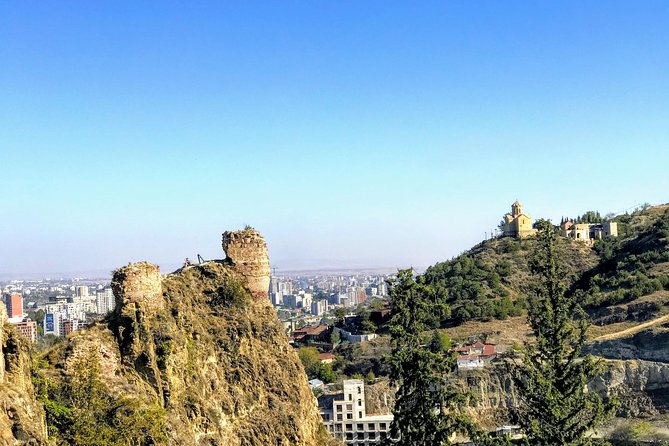
From there, you head to the Tbilisi Wall Ruins, in the older part of the city. This is the kind of stop that rewards slow looking. You are seeing remnants that explain why the old streets curve and why certain areas feel like they have been rebuilt again and again.
Quick tip: this walk is heavy on short “look now, learn now” moments. If you want the most out of it, stay close to the guide during the stops and do not drift far during transitions.
Anchiskhati Basilica and Sioni Cathedral, plus Jumah Mosque’s unusual mix
Anchiskhati Basilica of St Mary is a major stop because it dates to the 6th century. It is the oldest surviving church in Tbilisi, which means you are standing where Christianity has been part of the city’s story for a very long time.
Then the tour moves on to Sioni Cathedral of the Dormition. This one carries a naming tradition tied to Mount Zion in Jerusalem, which makes the building feel less random and more connected to a wider religious geography.
After that comes Jumah Mosque, also called the Friday Mosque. The interesting part here is not just the exterior, it is that it may not look like a mosque at first glance. The tour also highlights that Shias and Sunnis pray together there, and that visitors of all religions or beliefs can enter, as long as you follow the dress rules.
If you care about how cities work socially, this section is why. Tbilisi does not keep its identities in separate folders. Here, faiths and communities show up in the same compact old center, and the guide helps you notice how.
Other Tbilisi tours and day trips:

Bridge of Peace to Shardeni Street, the views meet the street life
Bridge of Peace opened in 2010 over the River Mtkvari, also known as the Kura River. This is where you go for modern lines and city-wide views, especially if the day is clear. It is a refreshing contrast after older stone and ruins, and it is ideal for photo ops.
Next is Jan Shardeni Street, one of the most beautiful pedestrian streets in the city. This is the moment you shift from landmarks to mood. You get courtyards, café life, small storefront energy, and that slightly theatrical feeling old streets can have when people actually use them.
Then you spend time in Old Town Tbilisi itself. You will notice restaurants and eateries, and you will also see older buildings and theater-related spots as you wander. The goal is not to “finish sightseeing.” It is to understand how the old center lives day to day.
If you like to eat while you walk, this is the most comfortable stretch. Just remember, you are on a schedule, so if you want a proper meal, do it after the tour rather than stopping for a long sit-down.
Gabriadze puppets and the film and poetry statues around town
Rezo Gabriadze Marionette Theater is a short but memorable stop. Opened in 1981, it has become part of Tbilisi’s cultural scene, and even if you do not catch a show, the setting gives you a different flavor than cathedrals and squares.
From there, you see the Sergey Paradzhanov monument. Parajanov helped bring world praise through cinema like Shadows of Forgotten Ancestors and The Color of Pomegranates, also known as Sayat-Nova. If you are a film person, you will appreciate that the guide connects his artistry to broader traditions.
Then the tour heads to the Monument of Sayat-Nova. This spot is tied to Armenian poet and musician Sayat-Nova, and it is near the northern wall of St Kevork Armenian church. The story here matters because Sayat-Nova is described as hiding during an attack in 1795 and later being killed and buried there, which makes the monument feel more personal than just decorative.
These statue stops are the kind you often skip on your own. With a guide, they become quick chapters that help you understand Tbilisi as a crossroads city, not just a scenic one.
Rike Park and the aerial tram to Narikala: the “views without a big detour” option
Rike Park sits by the river and is popular with families and tourists. It is a good reset after old-street walking, because you get open space and a sense of how the river shapes the city.
The tour then includes the aerial tramway in Tbilisi, which connects the area by Rike Park with Narikala, the fortress above the city. The ticket is not included, but the stop is still valuable because it lets you choose. If you want that fortress viewpoint, you have a clear option built into the route without planning your own transport.
Even if you skip the tram, you still benefit from this segment because you are positioned to understand Tbilisi’s vertical layout. The old town looks like a stack of neighborhoods built toward high ground for centuries.
This is also where good shoes pay off. Even short distances on slopes and stairs add up, and the Narikala area is all angles.
Symbols of Kartlis Deda, a fortress perspective, and a statue-heavy walk
Kartlis Deda is a monument on Sololaki hill, erected in 1958 for Tbilisi’s 1500th anniversary. The figure is about 20 meters tall and designed by sculptor Elguja Amashukeli, representing a woman in Georgian national dress.
You will feel this stop more if you look at it as a city message. Monuments like this often translate identity in one image, and the guide helps you connect it to how locals think about strength and hospitality.
Soon after, you see additional street monuments, including:
- Sculpture the Toaster, modeled on an ancient Colchian statuette and nicknamed tamada
- Monument to Sofiko Chiaureli, the Soviet Georgian actress
These may look like quirky extras, but they also show you how Tbilisi mixes serious and playful culture. That blend is part of the charm.
In past walks, guides like Aleksi and Gio have been praised for pointing out details you would never notice alone. On a statue-heavy route, that matters. You end up seeing the meaning behind what looks like random public art.
The Great Synagogue, Meidan Bazaar, and why this tour feels like a city story
The Great Synagogue of Tbilisi, also called the Georgian Synagogue, was built from 1895 to 1903 in an eclectic style. It reflects the community of Georgian Jews from Akhaltsikhe who migrated to Tbilisi in the late 19th century, which adds depth to what you see.
Then you reach Meidan Bazaar, a practical stop if you want to browse for souvenirs without wandering for ages. If your shopping style is quick and efficient, this is the part of the tour that fits.
Between religious sites, markets, monuments, and old streets, the walking flow keeps you from feeling stuck in one theme. This is also why the guides’ storytelling approach gets praised so often. It keeps the day from turning into disconnected snapshots.
Dzveli Tbilisi sulfur waterfall and the finish at the water level you remember
Near the end, you visit Dzveli Tbilisi Sulphur Waterfall, described as a real waterfall right in the city center. It is one of those wow moments that feels almost unfair, like the city is showing off because it knows you will be impressed.
Before that final stretch, you also see the Monument Fountain Falcon and Pheasant, which symbolizes a legend about King Vakhtang Gorgasal founding Tbilisi in the 5th century. And you pass other small culture markers like Rike Park and the river-adjacent areas that make the walk feel connected.
I also like the way the tour ends back at the meeting point. You can easily branch off for lunch, coffee, or whatever museum you still want to squeeze in that day.
Some guides in past groups have even added small extras like wine tasting at the end, depending on the group. Since it is not guaranteed in the core description, treat it as a bonus if it happens rather than a plan.
Who this tour is best for, and who should skip it
This tour is a smart first booking if you want a quick map of Tbilisi. It works especially well if you like walking but do not want to spend time researching every landmark, because the route keeps hitting the big points and the lesser-noticed bits.
You will also like it if you care about a multi-faith city and want the context explained in plain language. Seeing Anchiskhati Basilica, Sioni Cathedral, Jumah Mosque, and the Great Synagogue on one walk is a rare way to understand the city’s social mix.
Skip or reconsider if you:
- have trouble walking a few kilometers with frequent stops, because there is moderate fitness expected
- cannot follow the dress code for worship sites
- are hoping for a long, slow pace with lots of free time inside each building
Should you book this Tbilisi Old Town walking tour?
If you are trying to make the most of a short stay, yes, I think you should book it. The price is low, the guide-led format saves time, and you hit a surprising range of places in just a half-day chunk.
I would book it even if you are not a big “history” person, because the walk is also about views, streets, and everyday city life like Shardeni Street and the bazaar. And if the weather cooperates, the photo stops plus the Narikala tram option are worth it.
Book it if you want orientation on Day 1 or Day 2. Then use what you learn to pick a deeper experience later, instead of trying to figure everything out alone while you are tired and hungry.
FAQ
How long is the Discover Tbilisi walking tour?
It runs about 2 hours 30 minutes to 3 hours 30 minutes, depending on the pace of the group and conditions.
What is included, and what do I pay for separately?
A local guide is included. The aerial tramway has an admission ticket that is not included, so you may need to buy it separately if you choose to ride.
Where does the tour start and end?
You start at Freedom Square near Burberry on Shalva Dadiani Street, and the tour ends back at the same meeting point.
Is the tour offered in English?
Yes, it is offered in English. In exceptional cases, a multilingual guide may operate in English and Russian at the same time.
What is the group size?
The tour is a small-group experience, with a maximum of up to 15 travelers.
Is the tour mostly inside churches and museums?
You will visit places of worship such as Anchiskhati Basilica, Sioni Cathedral, and Jumah Mosque, plus other cultural sites. A dress code is required for entering places of worship and selected museums.
What dress code should I follow?
For places of worship and selected museums, shoulders and knees must be covered. This means no shorts or sleeveless tops for both men and women.
Newer trips around Tbilisi
- Tbilisi Private Dinner: Georgian BBQ & Fireplace
★ 5.0 · 1 review - Tbilisi: Khinkali Tasting Lunch with Local Drinks and Pickup
★ 5.0 · 1 review - Day trip in Kakheti-wine tour
★ 5.0 · 1 review - Tbilisi & Mtskheta bus tour hop on hop off
★ 5.0 · 1 review - Tbilisi: Christmas Market & Hidden Gems Guided Walking Tour
★ 5.0 · 1 review - Stalin’s Secrets: An Underground Journey Through History
★ 5.0 · 1 review
Walking Tours, compared.
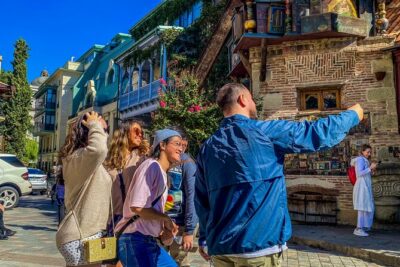
Tbilisi Walking Tour Including Cable Car and Traditional Bakery
Read our review →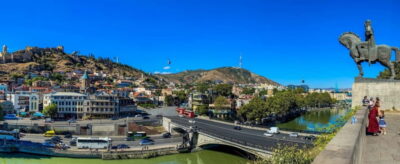
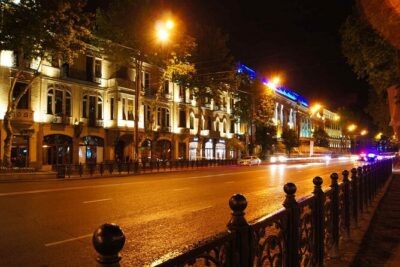
Evening Walking & Talking Tour with Wine & Boat Ride
Read our review →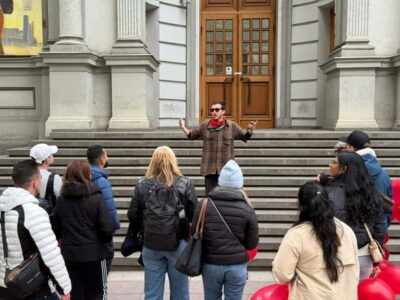
Evening Walking Tour with Wine & Boat Ride Options
Read our review →
Old Tbilisi Highlights walking tour with wine & 10 tastings
Read our review →
Old Tbilisi Tour: Private Walking Tour With Wine Tasting
Read our review →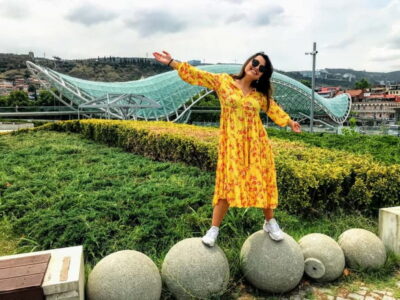

Private Tbilisi Food Tour: 9 Tastings Walk in Bohemian District
Read our review →Browse the lists this tour appears in