
Reviewed · CROSS-BORDER TRIPS TO ARMENIA
Georgia and Armenia Tour 8 Days
Georgia and Armenia in one trip feels like stepping onto a real crossroads of cultures. You get ancient churches, fortress viewpoints, cave towns, and a day-to-day mix of Georgia and Armenia highlights without feeling like you are only chasing postcards.
I especially like how the tour pairs city walking with big, scenic drives, so you see both street-level life and high mountain views. The second standout for me is the focus on Christian heritage sites in Georgia and Armenia, from Sioni Cathedral to Geghard and Etchmiadzin.
One thing to consider is that the itinerary is packed and some of the best scenery depends on weather, like the Kazbegi view from Gergeti.
In This Review
- Key highlights at a glance
- Why Georgia and Armenia together works so well
- Tbilisi: Old Town churches, sulfur baths, and Narikala fortress views
- Mtskheta and the road to Kazbegi, with 5,000m ambitions
- Uplistsiche and Rabati: cave city scale and fortress reconstruction
- Khertvisi and Vardzia: river confluence fort vibes, then a cliff monastery
- Yerevan and Etchmiadzin: museum grounding, then sacred Armenia
- Geghard and Garni: rock-cut churches, Roman-style temple, and lavash hands-on
- Lake Sevan and the final return to Tbilisi
- Price and what you truly get for $1,041.59
- Who should book this tour, and who might feel cramped
- Should you book this Georgia and Armenia 8 day trip?
- FAQ
- Where does the tour start?
- What time does the tour end?
- How big is the group?
- What kind of ticket do I get?
- What sights are included in Georgia?
- Can I cancel or change my booking?
Key highlights at a glance
- Small group size of up to 12 travelers, which keeps the pace manageable
- Tbilisi first day flow through Old Town churches, the synagogue, and the Georgian National Museum
- Kazbegi access by 4WD from Kazbegi to Gergeti Trinity Church at about 2,170m
- Cave and fortress variety at Uplistsiche, Vardzia, Khertvisi, and Rabati
- Armenian spiritual center stops at the Mother See of Holy Etchmiadzin and Zvartnots ruins
- Hands-on food moment with lavash baking at Garni Gorge
Other cross-border trips to Armenia:
- Day Trip to Armenia Including Homemade Lunch★ 5.0 · 1,162 reviews
- From Tbilisi: Day Trip to Armenia with Homemade Lunch★ 4.9 · 310 reviews
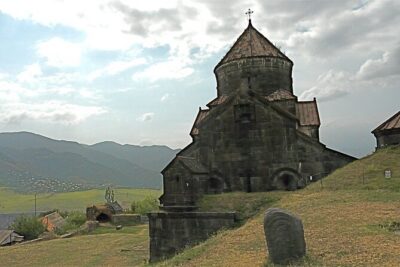
- Discover Armenia: Tbilisi-Haghpat-Dilijan-Sevan-Yerevan-Tbilisi★ 4.5 · 162 reviews
- 1 Day Private Armenia: UNESCO, Soviet & Curated Family Lunch★ 5.0 · 106 reviews
Why Georgia and Armenia together works so well
If you like travel that feels earned, Georgia and Armenia together are a smart match. Both sit on long-running routes between East and West, so you keep running into layers of faith, empire, and everyday hospitality.
I also like that this trip leans into how these places live now, not just how they looked centuries ago. You spend time walking through Tbilisi and Yerevan, then you switch to stone cities, monasteries, and fortresses that were built for defense and devotion.
Finally, it is a trip where the “wow” moments come in different styles. You get the sweep of big views, but you also get the close-up feel of rock-cut architecture at places like Geghard and the cave towns carved into cliffs.
Tbilisi: Old Town churches, sulfur baths, and Narikala fortress views
Your first real taste of Georgia comes fast in Tbilisi, starting near Old Tbilisi. You begin at Metekhi Cathedral, then move through a compact area where you can easily understand the city’s old layout before you chase bigger landmarks.
From there, the walk naturally links to the Narikala Fortress viewpoint over the Mtkvari River gorge. Even if you do not have perfect weather, Narikala is one of those places that gives you instant orientation. You see why Tbilisi grew where it did, on a river route with steep defensive ground nearby.
The tour also slows down in a good way by including multiple religious landmarks in one run. You visit the Great Synagogue of Tbilisi, Sioni Cathedral Church, and Anchiskhati Basilica. It is a simple but powerful way to understand that this city has held different communities side by side for a long time.
Then you balance the walking with a stop at the Georgian National Museum, including the treasury focused on Georgian archaeology. You do not need a lecture to enjoy it, but it does help you read what you are seeing later on, especially once you start visiting ancient sites outside the cities.
Practical note: plan for cobblestones and slopes in Old Town. Comfortable shoes matter here more than trying to dress up.
Mtskheta and the road to Kazbegi, with 5,000m ambitions
After breakfast, the trip pulls you into Georgia’s ancient religious center at Mtskheta. You start at Jvari Monastery, a 6th century site with views over the confluence area that helps you picture why this location mattered. It is the kind of stop where the setting is part of the story.
Next is Svetitskhoveli Cathedral, which the tour frames as a sacred place connected to the robe of Christ. The details about the cedar tree and how it influenced the church design make the building feel more intentional, like the architecture grew out of a specific legend, not random decoration.
Then the journey turns into road trip mode as you travel along the Georgian Military Road. On the way, you stop at Ananuri, a 17th century architectural complex with older roots. It is a useful mid-route break: you stretch your legs, get a sense of the valley rhythm, and then get back on the bus for the mountain push.
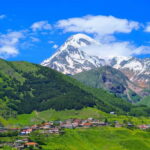
The big scenic payoff is Gergeti Trinity Church near Kazbegi. You drive from Kazbegi with 4WD vehicles through valleys and woods, then reach the church at about 2,170m. If conditions are right, you get a glimpse of Mount Kazbegi, listed at 5,047m, which is the kind of sight that makes the long drive feel worth it.
One drawback to keep in mind: high-altitude views depend on weather. Bring layers even in warmer months, and be ready for a change in cloud cover.
Uplistsiche and Rabati: cave city scale and fortress reconstruction
Daytime exploration continues with a classic Georgia combo: cave city, then fortress. At Uplistsiche, you are walking through a stone-cut world that stretches across about 4 hectares. The site includes halls, caves, theaters, altars, tunnels, prisons, and passages carved from rock, which gives you the sense of a full system, not just a single attraction.
The description of Queen Tamara’s reception hall matters here. When you stand in spaces like that, you feel how power and ritual were built into the rock itself, and how the city served trade routes rather than being an isolated shrine.
Later you shift to Rabati Castle in Akhaltsikhe. This fortress sits on a small hill by the Potskhovi River, and the tour notes that it has seen destruction, sieges, and cultural mixing over centuries. The good news is that the site feels current in a way some ruins do not. After reconstruction in 2012, it functions more like a lively town-within-a-town.
If you like history but you also like structure, Rabati gives you that. It helps you picture what the fortress might have been like as a working space, not only a collapsed memory.
Other Tbilisi tours and day trips:

Khertvisi and Vardzia: river confluence fort vibes, then a cliff monastery
The next Georgia leg leans into fortifications and monumental rock architecture. Khertvisi Fortress is tied to the confluence of two rivers, and that geography helps explain the fort’s strength. The complex is described as functional from the 2nd century BC era through later periods, and you also get a sense of continuity with walls built in different centuries.
One detail I like is the mention of tunnels from the eastern wall, one for water supply and one for communication. When a site like this includes practical infrastructure, it stops being just scenic ruins and becomes a real-world defensive design.
Then you move to Vardzia, the cave monastery complex cut along a cliff for about 500 meters, with up to 19 tiers. The scale is the headline here. Even without a guide constantly pointing things out, the tiers create a natural “from small to huge” viewing effect.
The tour also mentions early habitation dating back to the Bronze Age, which adds depth. And the note about Alexander the Great damaging the site is exactly the kind of story that makes you wonder how many hands and armies touched the same stone through time.
After that, the trip transfers you toward Armenia and into Yerevan, with check-in and rest time built in.
Yerevan and Etchmiadzin: museum grounding, then sacred Armenia
In Yerevan, you start at the State History Museum of Armenia. The tour says it covers culture and history dating back about 1 million years, which gives you perspective fast. If your brain likes context, this museum stop is the tool you need so the later religious architecture feels connected to a wider story.
The plan also includes an open-air lunch stop around the Hrazdan River gorge area, which is a nice change from museum walls. It is also practical. After long drives, sitting outdoors for a meal helps reset your attention before the church sites.
Next comes the spiritual center: the Mother See of Holy Etchmiadzin. The tour describes it as the seat of the Supreme Patriarch and Catholicos of All Armenians. You also get an explanation of the location’s significance, including St. Gregory the Illuminator choosing the site based on a vision tied to the Miatsin.
Then you head to the ruins of Zvartnots Temple on the way back to Yerevan. Ruins can feel less dramatic than intact monuments, but Zvartnots works because you can still sense the original scale and importance. After that, the tour leaves room for your evening at open-air cafes, which is when Yerevan feels most relaxed.
Geghard and Garni: rock-cut churches, Roman-style temple, and lavash hands-on
The Armenia highlight shift keeps a strong pace but offers variety. First stop: Geghard Monastic Complex. This is rock-cut architecture in an amphitheater-like cliff setting, described as cut from the mountainside over a wide span of centuries.
A key detail is the Holy Lance connection, said to have been kept here for about 500 years. Even if you do not treat religious relic stories as history in the modern academic sense, it still affects how you read the site. You can see why this place would attract attention and protection.
Then you go to Garni Temple, dated to the 1st century and described as Roman-style architecture. Nearby, you explore ancient baths with five rooms and a mosaic floor, plus natural monuments called Symphony of Stones, created by lava flows.
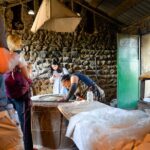
From there, the most practical and fun moment arrives at Garni Gorge, where the tour says you can take part in a real ritual of baking national lavash with local villagers. I like moments like this because you stop being a spectator. You learn through hands-on steps, even if you only do part of the process.
The day also includes an open-air lunch stop. That is important in Armenia, where many sites are spread out, and you need energy to keep appreciating details without getting tired.
Lake Sevan and the final return to Tbilisi
The last big scenic hit is Lake Sevan, described as one of the highest fresh-water lakes in the world at about 1,900m. You reach the Sevan Peninsula, where the tour promises full views of the lake and adjacent mountain chains.
The tour notes Sevan’s origin as volcano-tectonic, which adds a helpful scientific angle without turning the day into a lecture. When you stand at the viewpoint, it is easier to imagine how the lake and mountains relate.
Then you head back toward Tbilisi, with the tour finishing around 15:00 Tbilisi time, either at the international airport or at Freedom Square. That timing matters because it lets you plan a final night without feeling rushed for a midnight airport scramble.
Price and what you truly get for $1,041.59
At $1,041.59 per person, this is not a bare-bones budget trip, but it also does not feel like a luxury-only route. The value comes from how many distinct big sites you touch in 8 days, and the fact that the day structure keeps you moving between Georgia and Armenia without you needing to piece together connections on your own.
A few practical factors support the price:
- Max 12 travelers keeps things from turning into a slow, chaotic herd.
- You get admission coverage on selected stops, including the Georgian National Museum treasury and entries noted as included at Uplistsiche, Rabati Castle, and key Armenian sites like the State History Museum and Garni Temple.
- Mobile ticket means you avoid paper scavenger hunts.
What you pay for, in a human sense, is reduced decision stress. You show up, get routed, and spend your energy on the sites themselves. For places like Vardzia and Geghard, that matters, because you want your attention on the architecture and setting, not on figuring out the basics.
If you are someone who hates long drives, you might feel the schedule. But if you can handle a full day outdoors and on the bus, the pricing feels more fair than you might expect.
Who should book this tour, and who might feel cramped
This trip is a good fit if you love:
- Churches and monasteries, especially ones tied to specific legends and historical timelines
- Fortresses, cave cities, and rock-cut architecture
- A mix of city walking and countryside driving
- Small group travel with a structured plan
It may feel cramped if:
- You need lots of free time in each city to wander at your own speed
- You dislike altitude or cold mornings around mountain regions
- You only want one or two “big day trips” rather than several back to back
One more personal tip: plan for weather swings. You can get amazing views, but you cannot count on clear skies all the time in the Caucasus.
Should you book this Georgia and Armenia 8 day trip?
I think you should book it if your dream is to connect Georgia’s city texture with Armenia’s sacred architecture in one logical route. The mix of Tbilisi churches, mountain stops near Kazbegi, cave scale at Uplistsiche and Vardzia, and then the signature Armenian sites at Geghard, Etchmiadzin, and Garni is exactly the kind of itinerary that makes the two countries feel linked rather than separate.
Skip it if you want a slow travel pace, or if you cannot handle long days and a lot of driving. The success of some viewpoints depends on weather, so you need a flexible mindset for that.
If you do book, pack layers, wear real walking shoes, and keep water handy for days that go from city pavements to mountain altitude.
FAQ
Where does the tour start?
The tour starts at Hotel Astoria Tbilisi, 12 Shio Chitadze St, Tbilisi, Georgia, with a start time of 2:00 pm.
What time does the tour end?
The tour ends in Tbilisi around 15:00 Tbilisi time, either at the international airport or at Freedom Square.
How big is the group?
This tour/activity has a maximum of 12 travelers.
What kind of ticket do I get?
The tour includes a mobile ticket.
What sights are included in Georgia?
The tour includes stops such as Metekhi Cathedral, Narikala Fortress, the Great Synagogue of Tbilisi, Sioni Cathedral Church, Anchiskhati Basilica, the Georgian National Museum, Jvari Monastery, Svetitskhoveli Cathedral, Ananuri, Gergeti Trinity Church, Uplistsiche Cave Town, Rabati Castle, Khertvisi Fortress, and Vardzia.
Can I cancel or change my booking?
No. The experience is non-refundable and cannot be changed for any reason.
Newer trips around Tbilisi
- Tbilisi Private Dinner: Georgian BBQ & Fireplace
★ 5.0 · 1 review - Tbilisi: Khinkali Tasting Lunch with Local Drinks and Pickup
★ 5.0 · 1 review - Day trip in Kakheti-wine tour
★ 5.0 · 1 review - Tbilisi & Mtskheta bus tour hop on hop off
★ 5.0 · 1 review - Tbilisi: Christmas Market & Hidden Gems Guided Walking Tour
★ 5.0 · 1 review - Stalin’s Secrets: An Underground Journey Through History
★ 5.0 · 1 review
Cross-Border Trips to Armenia, compared.
Discover Armenia: Tbilisi-Haghpat-Dilijan-Sevan-Yerevan-Tbilisi
Read our review →
1 Day Private Armenia: UNESCO, Soviet & Curated Family Lunch
Read our review →Tbilisi to Yerevan Private car transfer 3 Scenic stops
Read our review →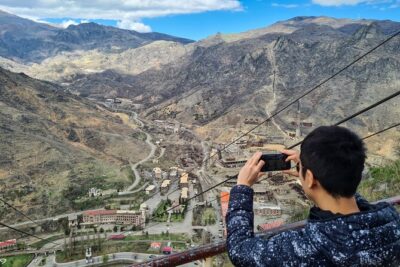
Armenia: 1 Day Soviet gems, UNESCO + Family lunch (Small group)
Read our review →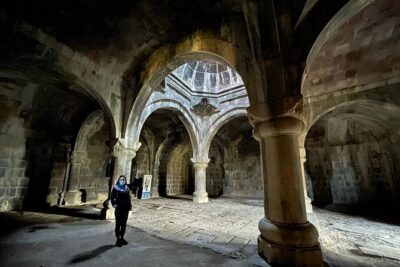
1 Day detour to Armenia from Tbilisi & Local family lunch
Read our review →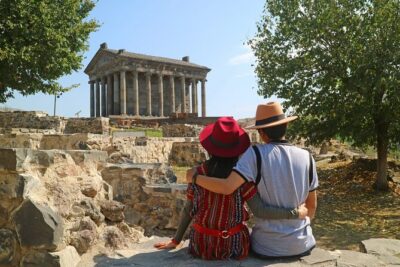
Best of Armenia: private 2-3 days tour to Yerevan w/ family lunch
Read our review →Browse the lists this tour appears in