
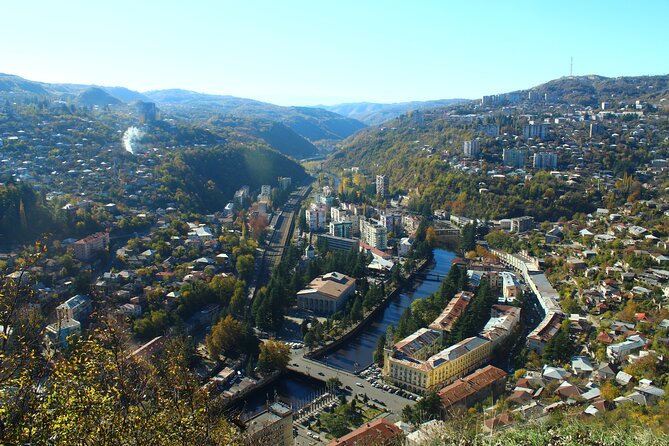
Reviewed · 7-DAY EXPERIENCES
Georgian Essence: Cultural Immersion in a week
A week in Georgia can feel like a blur. This one works because it’s a private tour with a real guide like Irakli and a route built around culture, food, and big scenery. You move through monasteries, fortresses, and mountain viewpoints without the usual scramble.
I especially like the balance here: you get iconic UNESCO-style stops like Jvari and cave monasteries like Vardzia, plus smaller, hands-on moments like bread and cheese in Badiauri. You’ll also eat well, with breakfasts and lunches designed to highlight Georgian flavors, not just whatever is closest.
The main drawback to consider is that the schedule depends on good weather, and there’s a lot of ground covered in 8 days. If you hate long driving days, you might feel the pace.
In This Review
- Key highlights to look for
- A private Georgian Essence week that feels like your own road trip
- Day 1 in Kakheti: from David Gareja caves to Signagi love-streets
- Day 2: qvevri making, Kvetera church details, then Shatili fortress-village life
- Day 3: Ananuri fort views, the Friendship Monument, then Gergeti Trinity Church
- Day 4: Jvari and Svetitskhoveli, plus Stalin’s House Museum and a Mtskheta cooking lunch
- Day 5: Diamond Bridge Canyon to Vardzia, then Rabati Castle’s mixed styles
- Day 6: Goderdzi Pass views, Makhuntseti waterfall and King Tamar’s Bridge, ending in Batumi
- Day 7: Shekvetili greenery, Martvili canyon boat time, Prometheus Cave, then Kutaisi UNESCO stops
- Day 8: Gelati, Motsameta, Katskhi Pillar, Chiatura rope roads, and Mgvimevi’s cliff monastery
- Price, lodging comfort, and what the $2,200 per person buys you
- Who should book this private Georgia week, and who might want a different style
- Should you book Georgian Essence? My take
- FAQ
- How long is the Georgian Essence private tour?
- Is this a private tour or a group tour?
- Do they offer pickup, and is a mobile ticket used?
- Are admission tickets included for the stops?
- What is the cancellation policy?
- What happens if weather is poor?
- When do I get confirmation?
Key highlights to look for
- A true private setup with only your group, plus pickup offered
- Food that leads the route, from shotis puri and aged cheese to a home-cooked Mtskheta lunch
- UNESCO sites plus strange, old places, like Uplistsikhe and the cave monasteries
- Guide-led mountain moments, including Gergeti Trinity Church and mountain pass viewpoints
- Black Sea contrast in Batumi, then back inland to Kutaisi and Gelati
- One-of-a-kind engineering and ritual sites, like Chiatura’s rope roads and Katskhi Pillar
Other Tbilisi tours and day trips:
- Tbilisi: Day Trip to Kazbegi, Gudauri, Gergeti, and Ananuri★ 4.9 · 3,203 reviews
- Day Trip to Kakheti Wine Region Including 9 Wine Tastings★ 5.0 · 2,774 reviews
- Highlights of Caucasus Mountains-Jinvali,Ananuri,Gudauri,Kazbegi(Group tour)★ 5.0 · 2,682 reviews
- From Tbilisi: Kakheti Wine Region Tour with 9 Wine Tastings★ 4.9 · 2,541 reviews
A private Georgian Essence week that feels like your own road trip
This tour is set up as an 8-day, private experience in Georgia, starting from Tbilisi. Since it’s private, you are not sharing the route with strangers. That matters because you can spend extra minutes at a viewpoint, step back when it’s crowded, or move at the rhythm you want.
The reviews make the guide factor hard to ignore. Names like Irakli come up again and again for being supportive, friendly, and focused on the details that make places click: history, architecture, geography, and even local wine and food. One thing I’d watch for is the difference between a driver who knows roads and a guide who connects dots. The praise here leans strongly toward the second type of person.
You’ll also see practical touches built in, like mobile tickets and the option for pickup. “Near public transportation” is listed too, which is useful if you’re meeting the group or coordinating your own timing before the day starts.
Day 1 in Kakheti: from David Gareja caves to Signagi love-streets
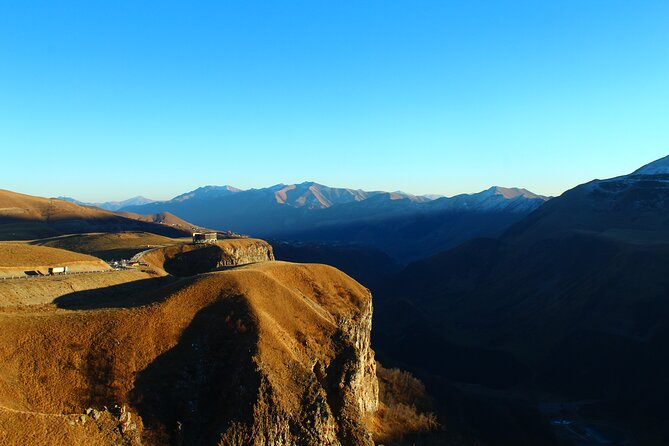
Day 1 is a classic Georgia opener: start with spiritual rock-cut history, then shift quickly into wine-country towns and food.
First stop is David Gareja Monastery. This is one of those places where the setting is part of the message. The complex sits on rugged terrain along the border area, with multiple rock-hewn chapels and caves dating back to the early Christian era. You’re not just looking at a building. You’re walking through a whole monastery system cut into the desert stone, famous for frescoes and long-running religious significance. Expect uneven ground and lots of photo angles.
Next you stop in Badiauri, known for fresh bread and aged cheese. You’ll smell the shotis puri from the clay oven area before you see it clearly. The point of this short stop is simple: Georgian cooking is not abstract. It’s hands, time, and technique. Even with only 15 minutes listed, it’s a strong “taste of place” moment.
After that comes Bodbe Monastery of St. Nino. This is a pilgrimage site tied to the tradition of Saint Nino and the Christianization of Georgia. If you like quieter, reflective stops, this one usually lands well because of the still setting and the meaning attached to it.
Then you head to Signagi, often described as the City of Love for its romantic vibe and hilltop views. The town is small, with preserved architecture, cobblestone lanes, and balconies that frame the valley and vineyards. For many people, Signagi is the “slow down” moment of the day. You can browse shops, step into viewpoints, and soak up the Alazani Valley view line.
Finally, you reach Telavi, the administrative center of Kakheti. You’ll see a mix of old town landmarks and winemaking tradition. The listed highlights include Batonis Tsikhe and the Palace of King Erekle II, plus a bazaar atmosphere where local life feels close to the surface. It’s an effective ending because it ties the earlier wine-country theme together.
Day 2: qvevri making, Kvetera church details, then Shatili fortress-village life
Day 2 leans into craft and remote mountain culture. It’s where the tour starts to feel more like “Georgia with texture” rather than “check the famous sites.”
You begin at Vardisubani, with a focus on qvevri making. If you care about wine beyond tasting, this is a big reason to pick this tour. You’ll see artisans work with clay into the iconic vessels used in traditional Georgian winemaking. The UNESCO mention in the tour description matters because it frames qvevri craft as cultural heritage, not a gimmick.
Next is Kvetera Fortress, Church, a 10th-century religious site with ecclesiastical architecture, stone carvings, and fresco notes. What you should watch for here is the “how Georgia built faith” feel. It’s not just a place to pass through. It’s a visual lesson in how churches were shaped by the region’s style and stonework.
Then comes Shatili, a UNESCO World Heritage medieval fortress village in Khevsureti. This stop is all about defensive towers, stacked stone houses, and the reality of mountain life in an older era. You’re visiting a place designed for protection, and the surrounding rugged setting is part of the story. This is also where good shoes help, because these villages do not always mean flat sidewalks.
Day 3: Ananuri fort views, the Friendship Monument, then Gergeti Trinity Church
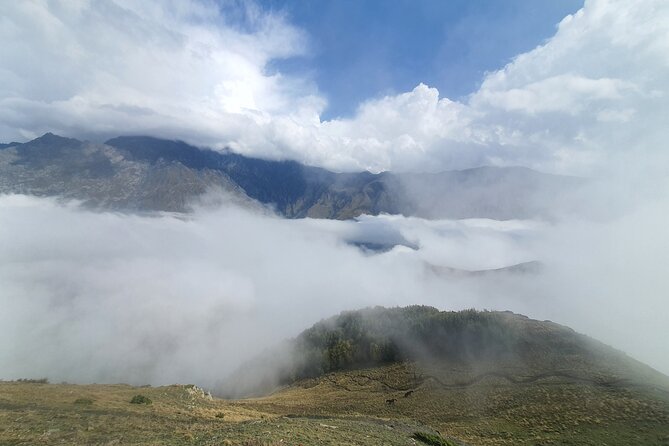
Day 3 is built around mountain valleys and religious icons with big sightlines.
First is Ananuri Fortified Castle Ensemble, in the Aragvi River Valley. Dating to the 17th century, it mixes Georgian and Islamic-influenced design elements. You’ll see ornate facades and fresco references, but the key draw is the setting and the fortress feel. If you like walking in layered history, you’ll appreciate how the complex reads as a stronghold, not just a church complex.
After that you visit the Russian-Georgian Friendship Monument in the mountains, a 1980s era structure with mosaic panels. It’s one of those stops that can feel politically loaded depending on your perspective. Still, it’s valuable as a look at how history and symbolism were placed into the landscape. Plus, the viewpoint factor is strong.
Then you end at Gergeti Trinity Church, perched high above the Kazbegi area. The 14th-century church is known for its iconic framing with mountains in the background. Practical note: you’ll want time for weather and light. Even if the path is short, conditions can change quickly up high.
Other Tbilisi trips people compare
Day 4: Jvari and Svetitskhoveli, plus Stalin’s House Museum and a Mtskheta cooking lunch
Day 4 hits the “core Georgia” zone around Mtskheta and nearby archaeology, then brings it back to food and story.
You start with Jvari Church, a UNESCO World Heritage site near Mtskheta. It’s associated with early Christianity and the tradition of Saint Nino. The location on a hill gives it a clear panoramic advantage, and inside you can spot fresco scenes. This is an important stop because it shows early Christian art in a simple, direct form, not an overdecorated one.
Then comes Stalin House Museum in Gori. This is not everyone’s favorite topic, but it’s part of modern Georgia’s layered history. The museum covers items, documents, and photographs tied to Joseph Stalin’s life and years leading from Georgia to the Soviet Union. If you prefer museums that explain ideology with artifacts, this will suit you. If politics makes you tired, just treat it as one stop in a longer day.
Next you go underground, with Uplistsiche Cave Town. This ancient rock-hewn settlement, from the Iron Age, gives you cave dwellings and rock-cut structures with a street-like layout. It’s archaeological thinking made physical. Expect climbing stairs and moving between chambers.
Back near Mtskheta, you visit Svetitskhoveli Cathedral, a major medieval Georgian religious site tied to kings and pilgrimage. The description highlights its 11th-century architecture, stone carving, and fresco presence, plus the tradition about the robe of Jesus Christ. Even if you know only a little, it’s a strong stop because it’s designed to feel ceremonial and important.
After the big spiritual and historical stops, you get to Mtskheta cooking class and lunch hosted by a local family. This is one of the most practical-feeling experiences in the whole week because you learn recipes and then eat what you made. The tour description includes khinkali and other Georgian dishes, so you’ll leave with flavors you can actually recreate at home. This is also where the day becomes human again, not just monumental.
Finally, back in Tbilisi, you visit Chronicles of Georgia, the huge 30-meter sculptural ensemble by Zurab Tsereteli. It’s a visual narrative of key moments in Georgian identity. Even if you do not read every detail, the scale and storytelling design make it worth time.
Day 5: Diamond Bridge Canyon to Vardzia, then Rabati Castle’s mixed styles
Day 5 is about geology and strong “wow” stops.
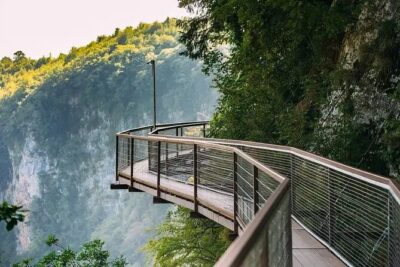
Start with Dashbashi Canyon and the Diamond Bridge. The bridge has a diamond-shaped design over the canyon, and the walking experience is the attraction. You’ll get canyon cliffs and a river view that looks unreal when the light hits it right. The tour’s value here is that it mixes nature with quick engineering drama.
Then you head to Vardzia, a 12th-century cave monastery carved into a cliff. This one is longer on your senses because it’s labyrinth-like: rock-cut chambers, chapels, and frescoes. The reason this stop matters is that it shows how monks used the environment for defense, living, and worship. It’s not one room, it’s a whole hillside system.
After that comes Rabati Castle in Akhaltsikhe. It’s a fortress with renovations across centuries, and the style is a mix of medieval, Ottoman, and European influences. The site also includes multiple religious structures within its walls. This stop helps balance the day because it moves from natural rock to man-made power.
Day 6: Goderdzi Pass views, Makhuntseti waterfall and King Tamar’s Bridge, ending in Batumi
Day 6 brings mountain air and then the Black Sea change of pace.
First stop is Goderdzi Pass, listed around 2,025 meters. The tour description highlights panoramic views, plus hiking in summer and ski potential in winter. Even if you only have a short stop, the point is to get that high-altitude Georgian perspective, with peaks, forests, and valley views.
Next is Makhuntseti Waterwall and King Tamar’s Bridge in Adjara. The waterfall view is the main show, and the bridge adds a historic walking layer. This is a good day balance because it mixes a natural scene with an older structure you can actually cross.
Then you arrive in Batumi, Georgia’s Black Sea city. The tour notes modern skyline architecture alongside a more traditional Old Town feel. You’ll walk Batumi Boulevard, explore cobblestone Old Town streets, and find plenty of places to eat Georgian food. Batumi is also strong for a culture day if you want it, with theaters, museums, and art galleries listed in the description.
Day 7: Shekvetili greenery, Martvili canyon boat time, Prometheus Cave, then Kutaisi UNESCO stops
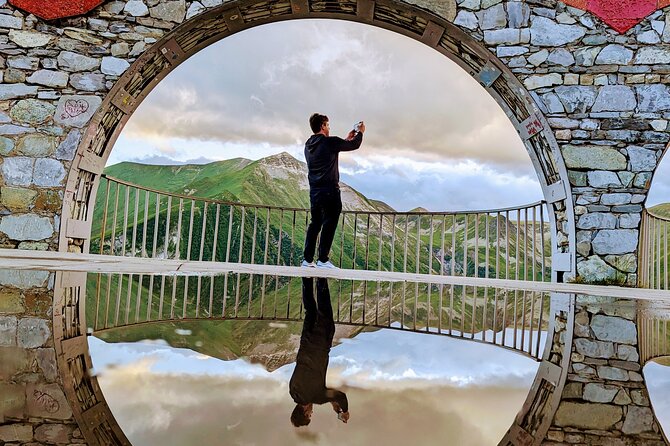
Day 7 keeps the variety high, moving from plants to water to underground wonders.
Start in Shekvetili Dendrological Park, covering over 100 hectares with plant species from around the world. If you want a mental reset after lots of stone and history, this is it. Expect shaded walking paths, ponds, and viewpoints. It’s also a good place to take it slower without feeling like you are falling behind.
Then you go to Martvili Canyon, known for turquoise water and cliffs. The listed highlight is a boat ride along the emerald river through narrow gorges and near waterfalls. This is one of the rare stops where you’re not just walking and reading plaques. You’re seeing the canyon from the waterline, which changes the scale fast.
After that is Prometheus Cave, an underground attraction with stalactites, stalagmites, and an underground river. The lights are part of the experience in the tour description, which means the cave is set up for viewing, not just exploration. It’s a fun contrast to the cave monasteries earlier in the week.
Next you visit Bagrati Cathedral in Kutaisi, a UNESCO World Heritage site built in the 11th century with ongoing restoration mentioned. This gives you a more “live history” feel. Even partly restored, the cathedral’s hilltop location and architecture make it visually satisfying.
Finally, you spend time in Kutaisi itself. The description mentions the city’s ancient roots, plus streets for cafés, markets, and shops, along with nearby attractions like Prometheus Cave and Okatse Canyon. Even with limited time, Kutaisi often feels more local than the tourist hubs, and that’s a good thing.
Day 8: Gelati, Motsameta, Katskhi Pillar, Chiatura rope roads, and Mgvimevi’s cliff monastery
Your last day is packed but built around a clear theme: Georgia’s faith sites and unusual terrain.
Start at Gelati Monastery, another UNESCO World Heritage site. Founded in the 12th century by King David the Builder, the complex is known for ornate frescoes and a church with richly decorated interiors. The academy building is also part of the tour description, which hints at learning and not only worship.
Then you head to Motsameta Monastery, near Kutaisi, perched on a rocky cliff with views over the Rioni River below. The name connects to the Martyrs tradition and the idea of candle lighting and prayer in a sacred space. The visit is short but spiritually focused based on the description.
Next is the striking Katskhi Pillar, a limestone monolith about 40 meters high with a small medieval monastery on top. The access is by narrow ladder, and the reward is a panorama view. If you like unusual combinations of nature and faith, this is one of the most memorable spots in the whole week.
Then comes Chiatura, a historic mining town famous for its cable car system, called rope roads in the tour description. You’ll get Soviet-era architecture, a museum option, and a ride that gives you views over cliffs and valleys. This is travel value because it’s both transportation and a local story.
Finally, you visit Mgvimevi Monastery, remote and carved into limestone cliffs dating to the 13th century. It’s a quieter end point, with cave-like chapels and a sense of solitude. It’s a nice final note after the busier tourist icons.
Price, lodging comfort, and what the $2,200 per person buys you
At $2,200 per person for about 8 days, this is not a budget trip. The good news is that the tour description spells out what you’re paying for: private transportation, personalized attention, hand-picked hotels, and meals like breakfasts and lunches.
That combination is the real value. You are not coordinating between stops across Georgia, and you are not guessing timing for ticket lines or drive logistics. In a private format, one small delay does not turn into a chain reaction of missed sights. That’s where the guide support, especially someone like Irakli from the reviews, becomes more than “nice to have.”
Still, consider who this cost fits. If you want independence and you enjoy planning yourself, you could do segments on your own. If you want maximum culture time with less stress, this package is built for you.
Who should book this private Georgia week, and who might want a different style
This tour fits best if you:
- Want a structured route that still feels private
- Care about religion and architecture, including cave monasteries and major cathedrals
- Like food experiences tied to place, especially qvevri-related wine craft and the Mtskheta cooking lunch
- Enjoy moving between regions, from Kakheti to the mountains to Batumi and Kutaisi
You might want to think twice if you:
- Hate long travel days, since the itinerary covers many regions in 8 days
- Get frustrated when weather changes plans, because the tour notes that good weather is important
Should you book Georgian Essence? My take
Book it if you want an efficient, high-touch route through Georgia’s biggest cultural signals, guided by someone like Irakli who brings places to life with history, food, and practical pacing. The mix is strong: monasteries and fortresses, cave towns, wine craft, and then the Black Sea contrast in Batumi.
If you want a slow, single-region vacation, or if you plan to spend most days offline and self-guided, this setup may feel too packed. For the right traveler, though, this is an excellent way to see a lot of Georgia without feeling lost in logistics.
FAQ
How long is the Georgian Essence private tour?
It is listed as 8 days (approx.) in Tbilisi, Georgia, with an itinerary spread across Day 1 through Day 8.
Is this a private tour or a group tour?
This is a private tour/activity, and only your group will participate.
Do they offer pickup, and is a mobile ticket used?
Yes. Pickup is offered, and the tour uses a mobile ticket. It also notes that it is near public transportation.
Are admission tickets included for the stops?
It varies by stop. The itinerary marks some stops as Admission Ticket Included, and others as Free.
What is the cancellation policy?
Free cancellation is offered, and you can cancel up to 24 hours in advance for a full refund. If you cancel less than 24 hours before the experience’s start time, the amount paid will not be refunded.
What happens if weather is poor?
The experience requires good weather. If it is canceled due to poor weather, you will be offered a different date or a full refund.
When do I get confirmation?
Confirmation is received at the time of booking. The tour notes that most travelers can participate.
Newer trips around Tbilisi
- Tbilisi Private Dinner: Georgian BBQ & Fireplace
★ 5.0 · 1 review - Day trip in Kakheti-wine tour
★ 5.0 · 1 review - Tbilisi: Khinkali Tasting Lunch with Local Drinks and Pickup
★ 5.0 · 1 review - Tbilisi & Mtskheta bus tour hop on hop off
★ 5.0 · 1 review - Tbilisi: Christmas Market & Hidden Gems Guided Walking Tour
★ 5.0 · 1 review - Stalin’s Secrets: An Underground Journey Through History
★ 5.0 · 1 review
7-Day Experiences, compared.
Private 7-Day Tours & Transfers from Tbilisi to Top Georgia Spots
Read our review →
The Best of Georgia 7 Days Private Jeep Tour from Tbilisi
Read our review →
Amazing All inclusive Tour for 7 Days From Tbilisi
Read our review →
Georgia in 7 Days: A Haven for Nature and Sea Lovers
Read our review →

7-Day Georgian Wine and Culinary Private Tour with Cooking Class
Read our review →
7-day hiking expedition to Tusheti through the Atsunta pass
Read our review →
Amazing Trip to Svaneti – 7 days for 1-4 person
Read our review →Browse the lists this tour appears in