Reviewed · FULL-DAY
Medieval Kingdom of Georgia Full Day Private Tour from Tbilisi
Southern Georgia packs a lot. This long, private day trip takes you from the capital into the medieval heart of the country, with high-altitude views, cave churches, and big stone forts. I especially like how the stops are spaced so you get time to look, not just rush through.
Two things I really like: hotel pickup and drop-off so you are not wrestling with transport, and a guide focused on history and art, with live commentary during the drive. Vardzia is the headline, but you also get great context for the smaller stops like Poka St. Nino, which adds more depth than most day tours manage.
One consideration: it is a long day (12 to 14 hours) with driving on countryside roads and some walking at Khertvisi and during the Vardzia short hike. Also, the big sites have entrance fees that are not included, so budget a bit extra once you see what you want to pay for.
In This Review
- Key things to know before you go
- Why this southern Georgia day feels worth the money
- Morning start in Tbilisi: Giant Bicycle to the road south
- Tsalka and the pass country: reservoir views and settlement history
- Chikiani (Tiklatashi) Pass: the cold, volcanic-color viewpoint
- Paravani Lake at 2,100 m: volcanic calm and peak sightings
- Poka St. Nino Monastery and Convent: XI-century church style and local education
- Vardzia caves of King Tamara: where the medieval story becomes stone
- Khertvisi Fortress: the rock between two rivers
- Rabati Castle: the medieval mix of museum displays and religious buildings
- The long return through Borjomi and back to Tbilisi
- What is actually included, and what you should pay for
- Who this tour suits best
- Should you book this private southern Georgia tour?
- FAQ
- What time does the tour start and where do I meet?
- Is hotel pickup and drop-off included?
- How long is the Medieval Kingdom of Georgia private tour?
- Is this tour private or shared?
- Are entrance tickets included for Vardzia, Khertvisi Fortress, and Rabati Castle?
- Are any stops free of charge?
- Is there walking during the tour?
- What does the price include?
- Can I cancel for a refund?
Key things to know before you go
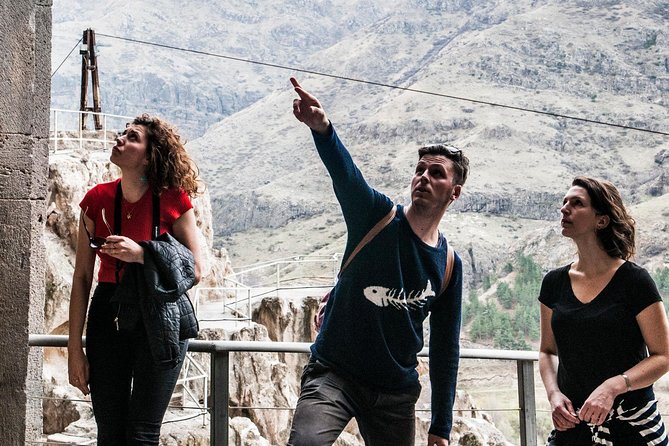
- Private guide and art historian style commentary with live narration during the drive
- Vardzia cave complex plus a short hiking round trip inside the site
- High-altitude stops around Javakheti, including Paravani Lake at about 2,100 m
- Rabati Castle’s mix of religious buildings and museum-style exhibitions
- Tsalka Reservoir and German and Greek settlement stories that explain the region’s unusual demographics
- Free photo-stop style breaks at multiple viewpoints, with some time for exploring on your own
Other Tbilisi tours and day trips:
- Tbilisi: Day Trip to Kazbegi, Gudauri, Gergeti, and Ananuri★ 4.9 · 3,203 reviews
- Day Trip to Kakheti Wine Region Including 9 Wine Tastings★ 5.0 · 2,774 reviews
- Highlights of Caucasus Mountains-Jinvali,Ananuri,Gudauri,Kazbegi(Group tour)★ 5.0 · 2,682 reviews
- From Tbilisi: Kakheti Wine Region Tour with 9 Wine Tastings★ 4.9 · 2,541 reviews
Why this southern Georgia day feels worth the money
You are paying $277.64 per person for a private full-day route, not a group bus. That price makes sense here because you are covering a lot of ground, and the tour includes transport by air-conditioned minivan plus a private vehicle throughout the day, along with bottled water and a guide.
The value is in the combination: serious landmarks (Vardzia, Khertvisi Fortress, Rabati Castle) plus the “in-between” places that explain the region. When a day trip only hits the famous sites, you often end up with pretty photos and thin context. Here, the pacing and the guided stories give you a clearer sense of why these places mattered in the medieval kingdom of Georgia.
The other big win is that the tour starts with convenience. You meet at the Giant Bicycle monument in central Tbilisi at 8:00 am, and pickup is offered from your accommodation, then you are dropped back at the end.
Morning start in Tbilisi: Giant Bicycle to the road south
The day begins at the Giant Bicycle monument near Rose Revolution Square. From there, you drive out of Tbilisi with countryside scenery and long stretches of road that connect the middle and south of Georgia.
The first major feeling you get is scale. This is not a half-hour hop to a nearby town. You are traveling about 90 minutes to the first landmark area after leaving Tbilisi, heading toward Javakheti, described as the south of the Georgian medieval kingdom. It sets expectations: this is a day for big distances and big sites.
If you get car-sick, plan for it. The route is built around long drives, including higher elevations later. You will still get narration and stops, but you should be ready for a full day in the vehicle.
Tsalka and the pass country: reservoir views and settlement history
Tsalka (Khrami) Reservoir is the next stop area. The drive here takes about 60 minutes from the prior point. You rise into mountain scenery, with peaks reaching roughly 2,700 to 3,300 m altitude.
This stop has a practical reason to exist: the reservoir was built for electricity. So it is not just scenery, it is a look at how the region’s geography got tied to modern infrastructure. Around the lake are villages with multiple nationalities, including Georgians such as Javakh’s and Svan’s, plus Azerbaijanian’s, Armenian’s, and Greek communities.
The history angle is what makes this more than a view pull-over. There is also a village called Trialeti founded by German colonists in 1858. It was named Alexanderhilf, later renamed Rosenberg during Soviet times. By 1914, the account provided for these settlements is about 12,000 inhabitants across related communities in Georgia and Azerbaijan.
Then you get a “Greek ghost town” reference for the area, linked to Greek ancestry coming from the Kars region in Turkey, with settlement arriving in 1828 to 1829. Even if you do not stop in the same way every day, the tour gives you the story so you can connect what you see on the ground to why these communities formed there.
Tip for this stretch: bring a layer. Even when Tbilisi feels warm, Javakheti can cool down quickly, and the next point is a pass with winter conditions described as some of the coldest in Georgia.
Chikiani (Tiklatashi) Pass: the cold, volcanic-color viewpoint
Chikiani (Tiklatashi) Pass is next, with about 30 minutes of driving. This is one of those places where the tour description helps you understand what to notice: a wood-less cover, fields with bog volcanic blocks that shift color through the seasons, and in winter an endless whiteness.
If you like geology and raw terrain, this is a good pause. Even if you only get short time at the viewpoint area, you walk away with a sense of why the region looks the way it does.
One drawback to keep in mind: because it is a pass, weather can change the experience. The tour mentions winter conditions as very white, and it also later points out that good weather matters for seeing distant peaks from Paravani. If the day is foggy or rainy, your views may be less dramatic.
Other Tbilisi trips people compare

Paravani Lake at 2,100 m: volcanic calm and peak sightings
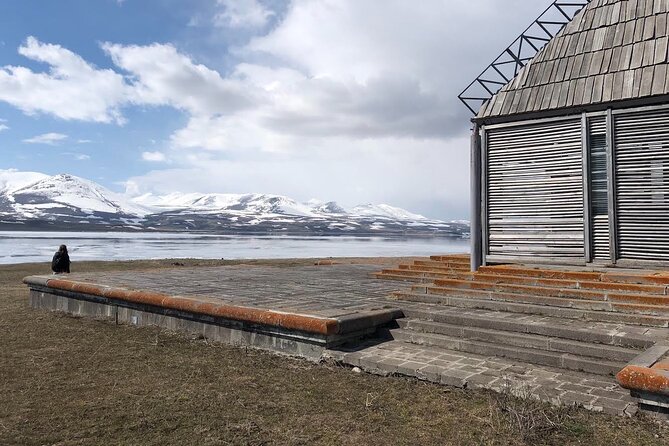
Paravani Lake is next, and it is the kind of stop that resets the day. It takes about 30 minutes to reach, and you get time to enjoy the volcanic lake on the Javakheti Plateau between the Abul-Samsari and Javakheti ranges, around 2,100 m in altitude.
This is a great photo break because you are high enough for wide sky and mountain framing. The tour also notes that in good weather you can see Mount Didi Abul from the area.
Didi Abul is a big deal in the Lesser Caucasus context, described as about 3,301 m, and visible from every side in the vicinity. That is the kind of detail that makes a viewpoint stop feel guided rather than random.
You will also learn the framing for why this is in a medieval kingdom route. Javakheti is presented as the stage where castles and monasteries stored cultural and historical wealth. Paravani is not just a scenic pause, it is the geography that those medieval powers had to live with and control.
If you are deciding between this day tour and another, I would lean toward the Paravani day if your priority is mountain scenery with real context, not just quick landmark checkboxes.
Poka St. Nino Monastery and Convent: XI-century church style and local education
After Paravani, you head to Poka St. Nino Monastery, then to Poka St. Nino Convent. The monastery stop is short, around 10 minutes, and the convent is about 30 minutes including the drive.
At the monastery, the tour connects the site to St. Nino’s arrival in Georgia. You also get guide attention around a monument, with stories shared clearly enough that you understand what you are looking at without needing a separate audio guide.
Then at the convent, you see a church described as an example of Georgian architecture of the XI century, with a hall-type church of St. Nino. The church is built from neatly cut square stone blocks, which is the kind of detail worth slowing down for, even if your time is limited.
Here is what makes this stop unusually meaningful: the convent life description goes beyond religion as a building. It notes that the nunnery contributed to education for the local non-Georgian population, with extra lessons for school pupils in Georgian language and literature, geography, and English. It also mentions attention to agriculture and animal farming in early years.
That is why I like including Poka. It gives a different angle on Georgian history, showing how communities worked, taught, and organized daily life, not only how kings built stone.
Vardzia caves of King Tamara: where the medieval story becomes stone
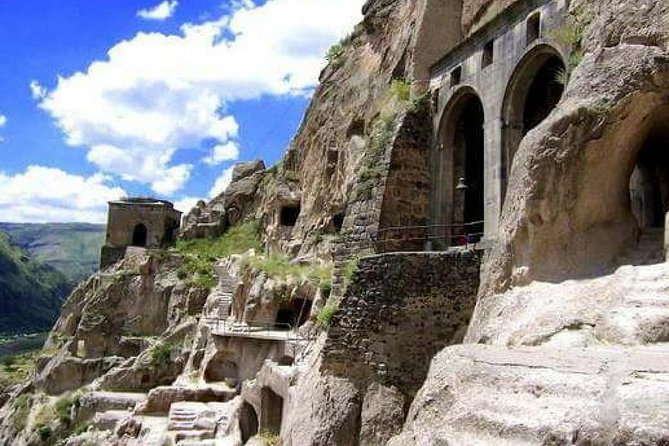
Vardzia is the main event. The tour describes it as the endowment of King Tamara, with construction in the 12th and 13th centuries, often associated with the Golden age of the Georgian kingdom. You are expected to see caves and do a short hiking round trip.
The key word here is short. This is not sold as a long trek, but there is still walking on uneven cave-site terrain, plus time to explore inside the complex. If you have knee issues, wear supportive shoes and plan for slow steps.
What you learn matters. The tour mentions monumental paintings tied to Tamara and her father during the reign period. So Vardzia is not presented as just a hole in a cliff. It is a living complex where art and royal support shaped religious life.
Time is another consideration. The tour says all road and time in this area will take about 4 hours. That is a solid chunk of the day, and it helps you feel less rushed than you might at other sites. Still, it is a long day overall, and once you leave Vardzia, the remaining stops are packed.
Khertvisi Fortress: the rock between two rivers
Khertvisi Fortress is next, with an overlook situation and a walk. The drive to the area takes about 20 minutes, and then you walk around for roughly 10 minutes.
This one is strategic by design. Khertvisi is on a rock between the Mtkvari and Paravani rivers, and the tour explains its role as a strategic control point for the south part of Georgia. Standing there, you can understand why fortifications like this were built exactly where rivers pinch routes and movement.
Entrance fees are not included here, so plan to pay on site if you want full access. Even without deep museum time, the fortress view angle is what you come for, and a guide can help you identify how the rivers and terrain feed into the fort’s purpose.
If you want photos, arrive with the mindset that this is a viewpoint plus a short walk, not a long leisurely roam.
Rabati Castle: the medieval mix of museum displays and religious buildings
Rabati Castle is the last big site. The drive here takes about 45 minutes, and the tour time allocation suggests about an hour at the castle, though the schedule notes a shorter spending time as well. Either way, you should expect to move at a steady pace.
Rabati is described as having unique museum exhibitions and religious temples, including a mosque, plus ruins of an Islamic education center. You are also told there are old manuscripts, archaeological artifacts, ethnographic objects, and a collection of old carpets.
This is one of the best reasons to choose a guided day like this: the mix of religious and cultural elements can look like a jumble if you visit alone. With a guide, you can connect the dots between the castle, the education ruins, and the museum-style displays.
One more practical point: entrance fees are not included at Rabati, so bring cash or a card and budget for what you choose to enter. Since this is the final major stop, try to stay flexible with time so you do not feel squeezed if you want a few extra minutes in the museum areas.
The long return through Borjomi and back to Tbilisi
You return to Tbilisi through Borjomi, then continue via the Tbilisi-Senaki-Leselidze highway later in the evening. The driving time on the return leg is listed as about 2 to 3 hours, and you finish back at the start point at the Giant Bicycle monument.
This is when you will feel the day in your legs. You will have done a short hike at Vardzia and a walk at Khertvisi, plus multiple standing-and-looking stops. For comfort, I recommend planning for warm layers even if you set out in mild morning weather.
If you have an evening plan that requires energy, do not schedule it too tightly. Even with a smooth driver and guide narration, you are still looking at a 12 to 14 hour day end-to-end.
What is actually included, and what you should pay for
Here is the practical breakdown of value. Included features are: private tour, hotel pickup and drop-off, transport by air-conditioned minivan and private vehicle, live commentary on board, a professional art historian guide, and bottled water.
Not included: museums entrance fees and food and drinks.
Some stops are specifically marked as free, including the Giant Bicycle monument, the early scenic points such as Tsalka, Chikiani Pass, Paravani Lake, and the Poka St. Nino Monastery and Convent stops. The big ticket sites marked as not included are Vardzia, Khertvisi Fortress, and Rabati Castle.
When I look at this setup, I see a common pattern in good day tours. You pay once for the vehicle and guiding, then pay small site fees as optional add-ons at the main heritage stops. You control how much depth you want inside each place.
Who this tour suits best
This tour fits best if you want a lot of southern Georgia in one day and you enjoy historical context tied to specific places. It is especially good for people who like medieval art and architecture, plus anyone interested in how different communities shaped Javakheti.
It is also a smart choice if you hate logistics. You are handled from pickup to drop-off, and the guide keeps the day moving with clear explanations.
If you prefer a relaxed pace with lots of free hours, this may feel like a sprint. The schedule is full, and the day is long.
The tour also notes that most travelers can participate, but that does not eliminate the need for comfortable walking shoes.
Should you book this private southern Georgia tour?
Yes, I would book it if your priority is Vardzia plus Khertvisi plus Rabati all in one organized day. The private format, art historian style guidance, and thoughtful stops like Paravani Lake and Poka St. Nino make it feel more than a checklist.
I would hesitate if you want minimal driving or if you dislike tight timing at the last stops. The day runs long, and you will be paying attention to entrance fees at the major sites.
If you do book, pack for cold mountain weather just in case, plan for paid entry at the key heritage stops, and wear shoes you are comfortable walking in for the cave-site paths and the short Khertvisi walk.
FAQ
What time does the tour start and where do I meet?
The tour starts at 8:00 am, and the meeting point is the Giant Bicycle monument at Rose Revolution Square, Tbilisi.
Is hotel pickup and drop-off included?
Yes. Hotel pickup and drop-off are included, with the tour ending back at the meeting point.
How long is the Medieval Kingdom of Georgia private tour?
It runs about 12 to 14 hours.
Is this tour private or shared?
This is a private tour. Only your group participates.
Are entrance tickets included for Vardzia, Khertvisi Fortress, and Rabati Castle?
No. Museums entrance fees are not included, and those major sites are marked as not included for tickets.
Are any stops free of charge?
Several stops are marked as free in the schedule, including Giant Bicycle monument, Tsalka, Chikiani (Tiklatashi) Pass, Paravani Lake, Poka St. Nino Monastery, and Poka St. Nino Convent.
Is there walking during the tour?
Yes. Vardzia includes a short hiking round trip, and Khertvisi includes a walk around for about 10 minutes.
What does the price include?
The price includes private tour service, hotel pickup and drop-off, air-conditioned transport, live commentary, a professional art historian guide, and bottled water.
Can I cancel for a refund?
Yes, free cancellation is available up to 24 hours before the experience starts for a full refund.
Newer trips around Tbilisi
- Tbilisi Private Dinner: Georgian BBQ & Fireplace
★ 5.0 · 1 review - Tbilisi: Khinkali Tasting Lunch with Local Drinks and Pickup
★ 5.0 · 1 review - Day trip in Kakheti-wine tour
★ 5.0 · 1 review - Tbilisi & Mtskheta bus tour hop on hop off
★ 5.0 · 1 review - Tbilisi: Christmas Market & Hidden Gems Guided Walking Tour
★ 5.0 · 1 review - Stalin’s Secrets: An Underground Journey Through History
★ 5.0 · 1 review
Full-Day, compared.

Kutaisi Canyons and Caves from Tbilisi Full Day Tour
Read our review →
Kazbegi and Gudauri Full Day Private Tour from Tbilisi
Read our review →
Full Day Private Wine Tour in Kakheti Region with Lunch and 3 Wine Tastings
Read our review →
Kazbegi Full-Day Private Tour with Scenic Stops from Tbilisi
Read our review →
Kakheti: Bodbe, Sighnaghi, and Telavi Full-Day Tour
Read our review →