
Reviewed · TBILISI TOURS & EXPERIENCES
Multi-ethnic Georgia – Yezidis
Tbilisi teaches tolerance in real street corners. This 4-hour Multi-ethnic Georgia: Yezidis tour explains who the Yezidis are, how their faith and culture survived centuries of pressure, and how Georgian society let them keep their identity in everyday life. I like that it is small-group and personal, not a rushed slideshow, and I also like the home visit element, where you get tea and a direct look at traditions and national dishes.
One consideration: this experience includes heavy topics, including persecution and genocide history. If you prefer light sightseeing only, you may want to mentally pace yourself and be ready for a serious, respectful conversation.
In This Review
- Key highlights you should know before you go
- Why Tbilisi makes sense for a Yezidi tour
- Meeting point, timing, and the small-group advantage
- What you learn first: Yezidis, language, and the cultural “how”
- Finding the neighborhoods: where Yezidis lived in Tbilisi
- Tea with a Yezidi family: traditions you can actually see
- Yezidism explained with the Temple visit at the end
- Price and value for a 4-hour Tbilisi cultural visit
- Who should book, and who might skip
- Should you book this Yezidi tour in Tbilisi?
- FAQ
- How much does the Yezidis tour in Tbilisi cost?
- How long is the tour?
- Where does the tour start and end?
- What is included during the tour?
- What group size is this tour limited to?
- Does the tour include a visit to a temple?
- Can I cancel for free?
Key highlights you should know before you go
- A small group (max 7) means you can ask real questions and keep the pace human.
- Tea or coffee in a Yezidi family home turns culture into something you can taste and see.
- A visit to the Temple of the Yezidis of Georgia closes the tour with practical context on faith.
- Script, language, and folklore get explained in plain terms, not academic-only language.
- Where Yezidis lived in Tbilisi helps you connect stories to specific city life in the 19th and 20th centuries.
Other Tbilisi tours and day trips:
- Tbilisi: Day Trip to Kazbegi, Gudauri, Gergeti, and Ananuri★ 4.9 · 3,203 reviews
- Day Trip to Kakheti Wine Region Including 9 Wine Tastings★ 5.0 · 2,774 reviews
- Highlights of Caucasus Mountains-Jinvali,Ananuri,Gudauri,Kazbegi(Group tour)★ 5.0 · 2,682 reviews
- From Tbilisi: Kakheti Wine Region Tour with 9 Wine Tastings★ 4.9 · 2,541 reviews
Why Tbilisi makes sense for a Yezidi tour
Tbilisi is one of those cities where you feel layers of people living together. It is not just a slogan. The city has long hosted many faiths and ethnic communities, and the mix shows up in neighborhoods, courtyards, and local routines. That is the right backdrop for learning about Yezidis, because the story here is about survival, adaptation, and cultural continuity in a place that offered safety.
What I find especially useful is that the tour does not treat Yezidism as a museum topic. Instead, it frames how modern realities shaped where Yezidis settled, how they managed daily life, and how they kept their language, culture, and religion as something living. You also get the wider context: mass migration to the South Caucasus around the late 1800s and early 1900s, and the pressure that followed in surrounding regions.
The tour also touches on a big, debated claim: it presents the idea that some modern researchers consider the Yezidis descendants of the Sumerians. That is not something you should treat like a courtroom verdict. Still, it shows you how communities connect identity to ancient narratives, and why cultural memory matters.
Meeting point, timing, and the small-group advantage
Your tour starts at Freedom Square in Tbilisi at 12:00 pm, and it ends back at the same spot. The total time is about 4 hours, which is a good length for a focused neighborhood-based experience without feeling like you have to give up your whole day.
This is a mobile ticket tour, and it runs with a maximum of 7 travelers. For me, that small size is more than a comfort perk. It changes the vibe. You can ask follow-up questions when something feels unclear, and the guide can adjust the pace based on what you actually care about.
The experience is run by Georgian Promenade, and one review specifically praised the professionalism and responsibility of Valeri and his team. That matters, because tours dealing with religion and persecution need more than facts. They need careful handling, clear explanations, and a calm tone.
You will also have bottled water and tea or coffee included. That sounds minor, but it helps you stay present during an emotional topic. Small practical comforts reduce the risk that you mentally check out before the important parts.
What you learn first: Yezidis, language, and the cultural “how”
The tour begins by setting identity in context. You learn who the Yezidis are, how they have preserved their religion through major historical shocks, and how their culture carried forward even when survival was the main daily goal.
A key early topic is script and language. The tour aims to explain what their script is and what language they speak. You do not need to be a linguist to follow. The value here is that language is not treated like a trivia fact. It is tied to daily life, education, and keeping community memory intact.
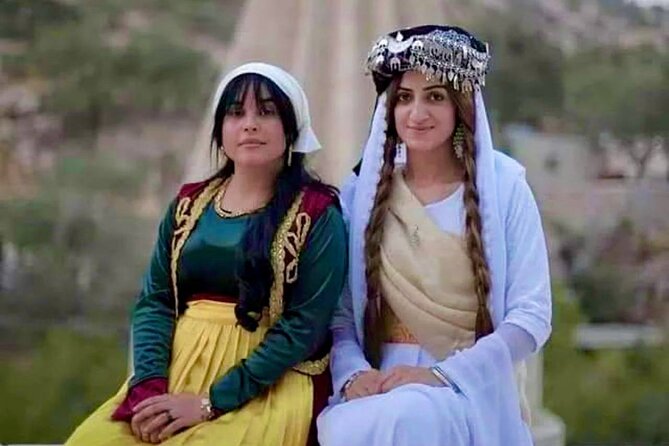
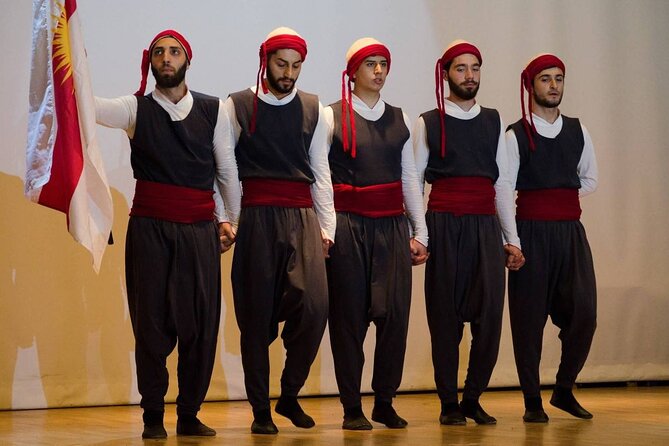
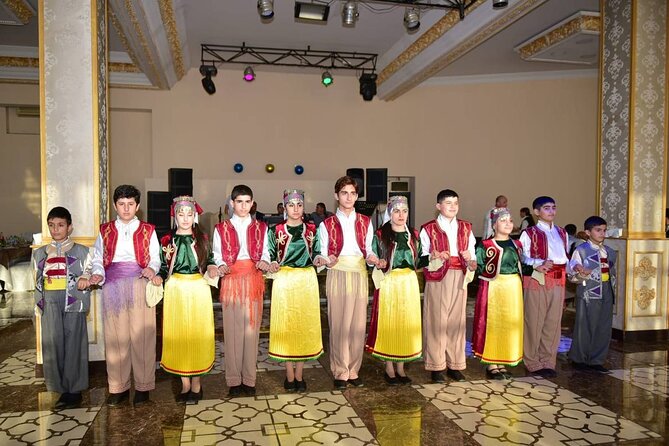
Then you shift into something more visual and human: national clothes and Yezidi folklore. This part is not just about outfits. It is about symbolism, identity markers, and how tradition stays recognizable even in a new country. If you have ever wondered why immigrants and minority groups often protect certain clothing styles or storytelling traditions, this gives you a grounded way to understand it.
And because this tour is in Tbilisi, you will gradually connect those cultural elements to the urban reality of where people actually lived.
Finding the neighborhoods: where Yezidis lived in Tbilisi
One of the most practical and meaningful parts is learning which quarters of Tbilisi Yezidis inhabited and what living conditions looked like in the 19th and 20th centuries. The tour describes how Yezidis adapted to modern realities, and where they found room to set down roots after migration.
You also learn about the main occupation tied to that period. I appreciate when a tour includes work and daily routines, because it stops the conversation from staying at a purely symbolic level. People need livelihoods, social ties, and practical spaces to live.
Even when the exact neighborhood details are new to you, the learning outcome is easy to use later. As you walk around Tbilisi on your own, you can notice how city life is structured and imagine how different communities carved out their own rhythm.
This is also where the tour’s theme of tolerance becomes tangible. The message is not that everything was perfect. The message is that Yezidis, along with other ethnic groups in Georgia, were able to feel safe and, for most, become full-fledged citizens. That is a real difference in daily life, not just a feeling.
Still around Tbilisi? These come up often:


Tea with a Yezidi family: traditions you can actually see
The home visit is the heart of the experience. You will visit a Yezidi family, and tea or coffee is included. This is where you stop thinking about Yezidis as a distant concept and start seeing the culture as everyday practice.
The tour touches on centuries-old traditions and national dishes. Because you are in a home, the explanation tends to feel grounded. You are more likely to understand the logic behind traditions, like how food fits community gatherings and how customs get passed down without being turned into performance.
A practical tip for you: go in with a curious but respectful mindset. Ask questions only when you feel you understand the basics the guide just explained. For topics like religion and identity, tone matters more than you think.
Also, you get to enjoy tea or coffee in a setting that makes the historical content feel personal. That is the difference between reading about culture and meeting it in a room where it is still lived.
Yezidism explained with the Temple visit at the end
Near the end of the tour, you visit the Temple of the Yezidis of Georgia in Tbilisi. That timing is smart. By the time you arrive, you already understand the background: migration patterns, the challenges minorities faced, and how the community protected its language and beliefs.
Inside, the guide covers main religious topics regarding Yezidism. You will not only hear definitions. You should expect explanations that connect beliefs to community identity, continuity, and the way religious practice persists even after forced disruption.
The tour also mentions famous Yezidis in the post-Soviet space. That part is useful for two reasons. First, it places Yezidis in modern life, not only in historical struggle. Second, it gives you names and reference points you can remember long after you leave the temple.
I like the structure because it mirrors how people learn in real life. You start with identity and language. You move through social and neighborhood life. Then you arrive at the place where faith is formally practiced and described.
Price and value for a 4-hour Tbilisi cultural visit

At $110 per person, this is not the cheapest way to spend half a day in Tbilisi. But it is also not overpriced for what you get. You are paying for a focused, small-group experience with a licensed guide, bottled water, and tea or coffee included. You are also paying for access that most sightseeing options do not provide, especially the family visit and the temple stop.
The value gets stronger when you compare effort. For one day of city walking, you get multiple layers: explanation of script and language, discussion of folklore and clothing, historical context about migration and survival, and a real visit connected to tradition and religion. That is a lot for four hours, particularly with a group size capped at 7.
What is not included is also clear: dinner and alcoholic beverages are not part of the price. If you plan to eat afterward, you will want to budget time for a meal near the center. If you are thinking of turning this into your only stop before evening plans, keep that in mind.
Overall, I see this as good value for travelers who want depth without doing a full-day commitment. It is a high-quality cultural exchange, not a checklist tour.
Who should book, and who might skip
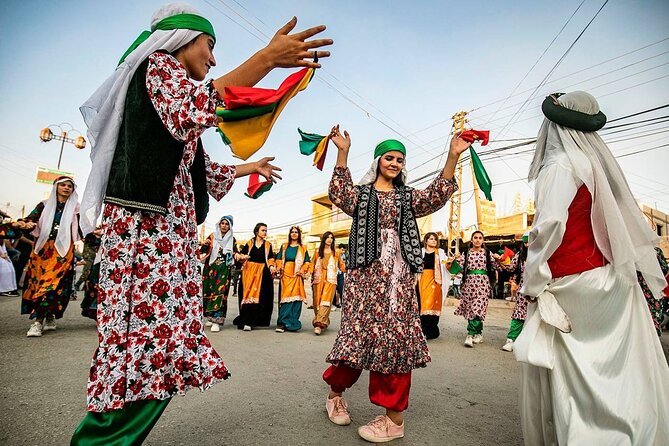
Book this if you want authentic Tbilisi context beyond cathedrals and balconies. It fits you if you care about how minority communities preserve identity, how tolerance works in daily life, and how religion and culture show up in neighborhoods, homes, and temples.
It also fits you if you like structured learning but hate rushed lectures. The small group and conversational pace help, and the home visit keeps it grounded.
Skip it if you only want light entertainment, because the tour includes difficult history, including persecution and genocide references. Even so, the tone matters. This experience is presented with sensitivity, and if you are okay with serious content, it is exactly the kind of half-day that can change how you see a city.
Should you book this Yezidi tour in Tbilisi?
Yes, I think you should book it if you want a meaningful, compact experience that combines explanation, neighborhood context, and a family visit. The inclusion of tea or coffee, plus the temple visit and the small-group limit, makes it feel more human than many standard walking tours.
Just go in prepared for thoughtful, serious topics. If you can handle that, you will leave with a clearer understanding of Yezidi identity and why Georgia, particularly Tbilisi, has been able to host and protect community life.
FAQ
How much does the Yezidis tour in Tbilisi cost?
The price is $110.00 per person.
How long is the tour?
The tour lasts about 4 hours.
Where does the tour start and end?
It starts at Freedom Square, Tbilisi, Georgia, and ends back at the same meeting point.
What is included during the tour?
You get tea and/or coffee in a Yezidi family, bottled water per participant, and an accompanying guide throughout the event.
What group size is this tour limited to?
The tour has a maximum of 7 travelers.
Does the tour include a visit to a temple?
Yes. Near the end, you can visit the Temple of the Yezidis of Georgia in Tbilisi.
Can I cancel for free?
Yes. You can cancel up to 24 hours in advance for a full refund.
Newer trips around Tbilisi
- Tbilisi Private Dinner: Georgian BBQ & Fireplace
★ 5.0 · 1 review - Tbilisi: Khinkali Tasting Lunch with Local Drinks and Pickup
★ 5.0 · 1 review - Day trip in Kakheti-wine tour
★ 5.0 · 1 review - Tbilisi & Mtskheta bus tour hop on hop off
★ 5.0 · 1 review - Tbilisi: Christmas Market & Hidden Gems Guided Walking Tour
★ 5.0 · 1 review - Stalin’s Secrets: An Underground Journey Through History
★ 5.0 · 1 review
Tbilisi Tours & Experiences, compared.

Day Trip to Kazbegi, Gudauri, Gergeti, and Ananuri
Read our review →
Day Trip to Kakheti Wine Region Including 9 Wine Tastings
Read our review →
Highlights of Caucasus Mountains-Jinvali,Ananuri,Gudauri,Kazbegi(Group tour)
Read our review →
Kakheti Wine Region Tour with 9 Wine Tastings
Read our review →
Mtskheta, Jvari, Gori and Uplistsikhe Day Tour
Read our review →
From Tbilisi to Kazbegi, Ananuri, Gudauri & Gergeti
Read our review →
Kakheti Wine Region Tour with 10 Wine Tastings
Read our review →