Reviewed · PRIVATE
Private Abastumani Tour from Tbilisi with Medieval Monasteries & Observatory
Churches, stars, and sulfur pools in one day. This private Abastumani tour from Tbilisi strings together Sapara Monastery’s 9th-century carvings and frescoes with the Georgian National Astrophysical Observatory founded in 1932, plus a stop at the Abastumani resort area known for hot sulfate-sodium chloride springs.
I also like how the pacing gives you real time at each site, roughly 30 minutes per monastery, then a longer 1 hour for the observatory. The main drawback is simple: it is a long day with a 7:00 am start and a big road trip feel, since the total driving distance is listed at 555 km.
In This Review
- Key highlights you should care about
- A long day road trip that earns its keep
- The monastery circuit, Sapara to Zarzma
- Stop 1: Sapara Monastery, carved stone in a forest canyon
- Stop 2: Zarzma Monastery of the Transfiguration, the domed church and the vault
- Chulevi Monastery and the waterfall pause
- Stop 3: Chulevi Monastery of St. George, history plus a short hike
- Queen Tamar’s Bridge, a quick look with big medieval credentials
- Abastumani Observatory, science in mountain air
- Stop 4: Georgian National Astrophysical Observatory, founded in 1932
- Abastumani resort springs, spa culture tied to real treatment history
- Stop 5: Abastumani, hot springs and a therapeutic reputation
- Your two tour options: standard lunch stop vs bath day
- Standard tour, no lunch included in the price
- Tour with Lunch and Soviet Bath option, bring swimwear
- What the private format does for you (and for your photos)
- Dress code and church etiquette you should plan for
- Timing tips so the day feels smooth
- Price and value: is $147.50 per person fair?
- Who should book this tour, and who might prefer something else
- Should you book the Abastumani day trip?
- FAQ
- What time does the tour start?
- How long is the Abastumani tour?
- Do you visit Sapara Monastery, Zarzma Monastery, and Chulevi Monastery?
- How much time do we spend at each main stop?
- Is lunch included in the standard tour?
- What is included in the Tour with Lunch & Soviet Bath option?
- Do I need to bring anything for the sulfur bath?
- Are admission tickets included?
- Are there dress rules for churches?
- Is this tour private?
- What happens if weather is bad?
Key highlights you should care about
- Sapara Monastery in a green canyon with 9th-century carvings and frescoes
- Zarzma Monastery’s underground burial vault beneath the church, tied to monastic remains
- Chulevi Monastery, St. George church, and a short hike to reach the waterfall
- Georgian National Astrophysical Observatory on Mount Kanobili at about 1650 to 1700 m
- Abastumani springs with sulfur-sodium chloride waters used for tuberculosis treatment
- Optional lunch plus a Soviet-style sulfur bath if you want the spa part to be more than a photo stop
Other Tbilisi tours and day trips:
- Tbilisi: Day Trip to Kazbegi, Gudauri, Gergeti, and Ananuri★ 4.9 · 3,203 reviews
- Day Trip to Kakheti Wine Region Including 9 Wine Tastings★ 5.0 · 2,774 reviews
- Highlights of Caucasus Mountains-Jinvali,Ananuri,Gudauri,Kazbegi(Group tour)★ 5.0 · 2,682 reviews
- From Tbilisi: Kakheti Wine Region Tour with 9 Wine Tastings★ 4.9 · 2,541 reviews
A long day road trip that earns its keep
This is a full-day private outing, not a quick “hit the highlights” tour. You start early, around 7:00 am, and you spend a lot of the day in the vehicle because Abastumani is out in the southern Caucasus hills. The total drive is listed as 555 km, so think of it as a road trip with a purpose.
The payoff is variety in a way that actually makes sense. You do medieval church architecture in three different settings, then you go from religious stonework to science at a high-altitude observatory, then you wrap with Abastumani’s famous hot springs. If you like mixing past and present, plus a nature break, the structure works.
You also get a true private setup, meaning it is just your group. That matters in churches, because timing and dress code can be fussy. With your own group, you are less likely to feel rushed or squeezed.
The monastery circuit, Sapara to Zarzma
Stop 1: Sapara Monastery, carved stone in a forest canyon
Sapara Monastery is a 9th-century site you reach in a green, forested canyon setting. The main draw is visual: carved details and frescoes on monastery structures that feel made for close viewing, not just a quick glance from a distance.
You get about 30 minutes here, and admission is included. That time box is usually enough to look around, take photos, and slow down over the carving and painting surfaces without feeling like you are being marched through.
Practical tip: church sites often mean uneven stone paths and small steps. Comfortable shoes help, even if you are only walking short distances.
Stop 2: Zarzma Monastery of the Transfiguration, the domed church and the vault
Next is Zarzma Monastery of the Transfiguration, built in the 8th century. The centerpiece is the domed church, plus a belfry described as one of the largest in Georgia. This is where the tour leans into the dramatic.
The big unique feature is the underground burial vault beneath the church, with remains of monks located in that vaulted space. It is the kind of detail that makes the monastery feel more human and grounded, not just an impressive building.
Again, you get around 30 minutes, and admission is included. One consideration here is that vaulted spaces can feel cool compared to the outside air, so it can help to wear layers you can adjust.
More private tours in Tbilisi:

Chulevi Monastery and the waterfall pause
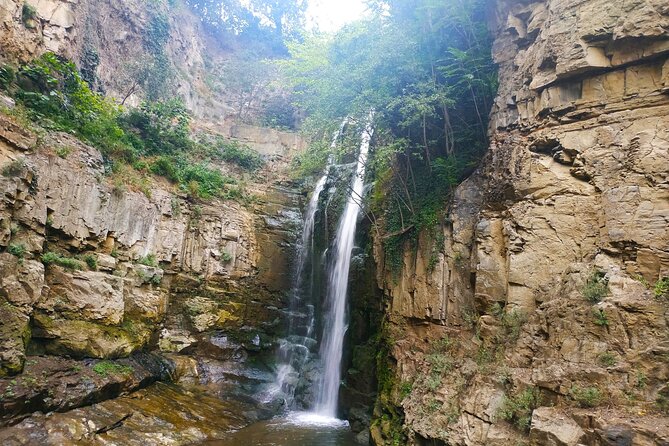
Stop 3: Chulevi Monastery of St. George, history plus a short hike
Chulevi Monastery of St. George has roots as far back as an 11th-century monastic community, though the current church edifice dates to the 14th century. That blend of older roots with a later building style is often what you want on a day like this: you are seeing continuity, not a single frozen moment.
You will also get a waterfall stop. The itinerary notes a small waterfall with a 5-minute hike to reach it. You have about 30 minutes total at the monastery area, and admission is included.
This is a nice balance after the heavier stone and religious focus at Sapara and Zarzma. It breaks the visual rhythm and gets you out into open air, even if it is just briefly.
Practical tip: if it has rained recently, the hike to a waterfall can be slippery. Closed shoes and careful footing keep this easy.
Queen Tamar’s Bridge, a quick look with big medieval credentials
The tour summary includes Queen Tamar’s Bridge from the 12th century. Even if you treat it as a quick roadside stop or a short viewing moment, it is a helpful palate cleanser between monasteries and the science stop.
Queen Tamar is tied to a major chapter in Georgian medieval life, and the bridge adds a different kind of history. It is not a church, and it is not a resort, so it keeps the day from feeling like the same category of sight over and over.
Abastumani Observatory, science in mountain air
Stop 4: Georgian National Astrophysical Observatory, founded in 1932
The highlight for many people on this kind of itinerary is the Abastumani Astrophysical Observatory. You visit the Georgian National Astrophysical Observatory founded in 1932 by Academician Evgeni Kharadze on Mount Kanobili near the Abastumani resort.
The location matters for science. The observatory is at about 1650 to 1700 m altitude, and the description notes distance from air pollution and artificial sky illumination. Add in a hilly landscape covered with coniferous forest, and you have conditions that researchers value. Weather is described as stable, without harsh and sudden changes.
You spend about 1 hour here, with admission included. For most visitors, it is not just seeing buildings. It is getting a sense that this spot is chosen for practical atmospheric reasons, not just because it looks dramatic.
Practical tip: mountain altitude can feel brisk, even when the city is warm. Bring a light layer so you do not feel cold during your hour.
Abastumani resort springs, spa culture tied to real treatment history
Stop 5: Abastumani, hot springs and a therapeutic reputation
After the observatory, you shift to the Abastumani resort area. Admission here is free, and the visit is about 30 minutes.
Abastumani is described as a climatic resort on the southern slopes of the Meskheti Range in the Lesser Caucasus. The climate is described as moderately dry, with summer humidity around 50%. Average temperatures are listed at roughly 6.4 to 6.5 °C in January, and about 17.2 °C in July.
The main reason people come is the hot springs. Abastumani has three hyperthermic springs, roughly 39 to 48.5 °C, described as little mineralized but rich in sulfate-sodium chloride waters. The waters have long been used in the treatment of tuberculosis.
That last point is the one that gives the spa story weight. This is not only about relaxation. It is also about how the water has been used historically for medical purposes.
Consideration: if you only have the standard stop (about 30 minutes), you will likely see the resort area more than you will truly experience the bathing. If the hot springs are the reason you picked this tour, the bath option is worth thinking about.
Your two tour options: standard lunch stop vs bath day
Standard tour, no lunch included in the price
If you book the standard version, lunch is not included. The itinerary notes you will stop in a restaurant for lunch. So you can choose what you eat and how you pace it, which some people prefer.
One thing to keep in mind: since you are on a tight schedule, your lunch choice might be limited by what the stop offers and how long you get there.
Tour with Lunch and Soviet Bath option, bring swimwear
If you pick the Tour with Lunch and Sulfur Bath option, you get tasting of local traditional cuisine plus sulfur baths. It is the version that turns Abastumani from a “look at the springs” stop into an actual spa experience.
The operator notes you should bring a swimming costume and a towel for the bath option. That is a small detail, but it changes your comfort level a lot. If you forget, you might end up with an awkward purchase or limited bathing time.
Dietary restrictions also matter. The information says you should let them know about dietary needs if you booked the lunch plus bath option, so they can offer a lunch that fits.
What the private format does for you (and for your photos)
Because this is private, you are not stuck with the pace of strangers. That can make a big difference at monasteries, especially when you are trying to actually read carvings or look at fresco surfaces closely.
It also helps in places where you might want to slow down. Sapara and Zarzma both reward slower looking. Chulevi’s waterfall stop is short, and your guide can help you make the most of that brief hike without feeling like you are sprinting.
For the observatory, one-hour time is fixed, but private groups often move with less friction. You can ask questions, and you are not trying to hear your guide over a crowd.
Dress code and church etiquette you should plan for
Church rules can feel minor until you run into them. The tour info is clear: ladies need headscarves and dresses in Georgian Orthodox churches. Short trousers for men are forbidden. Scarves and dresses can be found near some church entrances.
I would not rely on finding everything at the last second. If you already have a light scarf and something more modest for church, you will feel calmer walking in. Even if the operator can help with supplies at entrances, having your own outfit avoids last-minute stress.
Timing tips so the day feels smooth
Start early, plan for a lot of riding, and keep your expectations realistic. A 14-hour day with multiple stops means you will not have time to wander far away from the route. That is normal and not a problem as long as you come for the structure.
What helps:
- Bring water for the long drive stretches.
- Wear shoes that handle stone paths and the short waterfall hike.
- Pack a light layer for the observatory area, where mountain air can feel cooler.
- If you booked the bath option, pack your swimsuit and towel where you can reach them fast.
Price and value: is $147.50 per person fair?
At $147.50 per person, this tour sits in the “private day trip” category, so you are paying for transport, timing, and guide attention rather than a ticket-only entry.
Here is what you should view as value:
- Admission tickets are included for Sapara, Zarzma, Chulevi, and the observatory.
- Abastumani resort admission is free.
- You get private group time, so you are not sharing the day with random pacing.
- You get clear themed stops, monasteries plus science plus spa culture.
Lunch changes the equation. Standard does not include it, but you do stop in a restaurant for lunch. The bath option adds lunch and sulfur baths, which is more expensive for a reason. If you care about the springs experience itself, the add-on often feels like the point of paying the extra money.
If you only want one thing, like monasteries but not the baths or the observatory, you might feel like the day is packed. If you like the mix, the price starts to make sense.
Who should book this tour, and who might prefer something else
This tour is a strong fit if you:
- Enjoy medieval churches and want more than one monastery stop
- Like science stops with a real reason behind the location, altitude, and weather stability
- Want Abastumani’s springs story and are open to adding a sulfur bath if you book that option
- Are okay with a long day and early pickup
You might pass if you:
- Prefer short, low-driving itineraries
- Hate tight time windows at each stop
- Want only one type of sight, like only churches or only spa time
Should you book the Abastumani day trip?
If you are building a Georgia itinerary that includes both culture and atmosphere, this one day does a lot of work. The monastery circuit gives you carved frescoes at Sapara, major domed architecture and a burial vault at Zarzma, then a waterfall walk at Chulevi. After that, the observatory stop is a clear shift that feels purposeful, not random.
My call: book it if you can handle the early start and long drive in exchange for a day that mixes faith, nature, and science. If the hot springs experience is the reason you came to Abastumani, pick the Lunch and Soviet Bath option and pack your swimsuit so you actually get to enjoy the spa part.
FAQ
What time does the tour start?
The tour starts at 7:00 am.
How long is the Abastumani tour?
It is listed as about 14 hours.
Do you visit Sapara Monastery, Zarzma Monastery, and Chulevi Monastery?
Yes. The itinerary includes Sapara Monastery, Zarzma Monastery of the Transfiguration, and Chulevi Monastery of St. George.
How much time do we spend at each main stop?
Sapara, Zarzma, and Chulevi are each about 30 minutes. The Abastumani Astrophysical Observatory is about 1 hour, and Abastumani is about 30 minutes.
Is lunch included in the standard tour?
No. The standard tour does not include lunch, but you will stop in a restaurant for lunch.
What is included in the Tour with Lunch & Soviet Bath option?
That option includes lunch tasting of local traditional cuisine and enjoying sulfur baths.
Do I need to bring anything for the sulfur bath?
Yes. You should bring a swimming costume and a towel if you choose the lunch and sulfur bath option.
Are admission tickets included?
Admission tickets are included for Sapara, Zarzma, Chulevi, and the observatory. Admission for Abastumani is free.
Are there dress rules for churches?
Yes. Ladies need headscarves and dresses in Georgian orthodox churches. Short trousers for men are forbidden. Scarves and dresses can be found near some church entrances.
Is this tour private?
Yes. It is private, and only your group participates.
What happens if weather is bad?
This experience requires good weather. If it is canceled due to poor weather, you will be offered a different date or a full refund.
Newer trips around Tbilisi
- Tbilisi Private Dinner: Georgian BBQ & Fireplace
★ 5.0 · 1 review - Tbilisi: Khinkali Tasting Lunch with Local Drinks and Pickup
★ 5.0 · 1 review - Day trip in Kakheti-wine tour
★ 5.0 · 1 review - Tbilisi & Mtskheta bus tour hop on hop off
★ 5.0 · 1 review - Tbilisi: Christmas Market & Hidden Gems Guided Walking Tour
★ 5.0 · 1 review - Stalin’s Secrets: An Underground Journey Through History
★ 5.0 · 1 review
Private, compared.
Kazbegi and Gudauri Full Day Private Tour from Tbilisi
Read our review →
Old Tbilisi Tour: Private Walking Tour With Wine Tasting
Read our review →
Private Tbilisi Food Tour: 9 Tastings Walk in Bohemian District
Read our review →
Full Day Private Wine Tour in Kakheti Region with Lunch and 3 Wine Tastings
Read our review →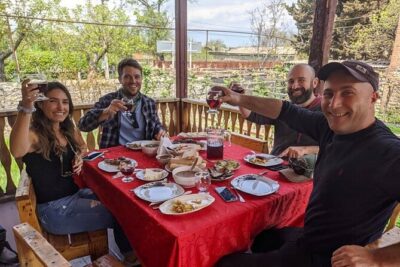
Kakheti – Small wineries and family-cooked lunch • Private tour
Read our review →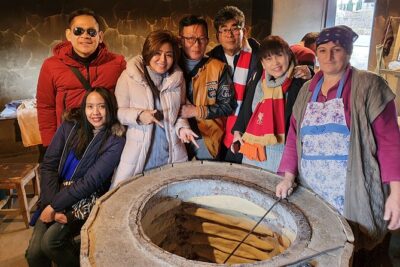
Kakheti All Inclusive Private Wine Tour Including Lunch
Read our review →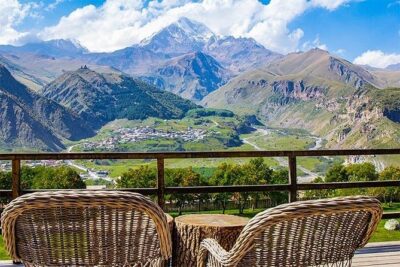
Kazbegi Full-Day Private Tour with Scenic Stops from Tbilisi
Read our review →