
Reviewed · KAKHETI WINE TASTING TRIPS
Private Wine Tour in Kakheti with Wine Tastings
A clay-vessel wine day in Kakheti is magic. You start with Shuamta Monasteries and Gremi’s Kakheti kingdom landmarks, then spend real time tasting Georgian wines and learning how the traditional method uses clay vessels. I especially liked the mix of stone, stories, and samples, and the fact that the tastings are built into a clear, full-day route rather than a rushed stop-and-zoom.
The main drawback is simple: no food is included. It’s a long day (about 9 to 10 hours), with set time blocks, so you’ll want to plan snacks or a lunch stop on your own.
You also get an easy format. This is a private setup with pickup, air-conditioned driving, and bottled water, which matters when you’re bouncing between monasteries and wineries outside Tbilisi.
In This Review
- Key highlights you should care about
- A full private Kakheti day, without the chaos
- Old Shuamta Monastery: 5th to 17th century churches in one compact place
- Akhali Shuamta: brick church, preserved portraits, and a bell tower
- Gremi Citadel and the Church of the Archangels: Silk Road power, then loss
- Khareba Tunnel Winery: why 7.7 kilometers underground changes the tasting
- Georgian clay-vessel winemaking: what to listen for during tastings
- Price and value: what $123.08 buys you in Kakheti
- Comfort, timing, and smart prep from Tbilisi
- Who this tour fits best, and who should reconsider
- Should you book this private wine tour in Kakheti?
- FAQ
- How long is the Private Wine Tour in Kakheti with Wine Tastings?
- What locations are included on the tour?
- Do you get pickup from Tbilisi?
- Is the tour private?
- What is included in the price?
- Is food included?
- Is admission free at the monastery and citadel stops?
- What is special about Khareba Tunnel Winery?
- Does the tour include wine tastings?
- What is the cancellation policy?
Key highlights you should care about
- Old and New Shuamta in one smooth loop, with free admission and distinct church styles
- Gremi Citadel and Church of the Archangels, tied to Kakheti’s Silk Road era and a dramatic 1615 fall
- Khareba Tunnel Winery, a 7.7-kilometer underground cellar with controlled conditions
- Hands-on wine learning, with tastings and visits that focus on clay-vessel winemaking
- Comfort-first private transport, with bottled water and air-conditioning for the long drive
More Wine Tours in Tbilisi
- Day Trip to Kakheti Wine Region Including 9 Wine Tastings★ 5.0 · 2,774 reviews
- From Tbilisi: Kakheti Wine Region Tour with 9 Wine Tastings★ 4.9 · 2,541 reviews
- Tbilisi: Kakheti Wine Region Tour with 10 Wine Tastings★ 5.0 · 2,160 reviews
- Tbilisi: Mtskheta Jvari Bazaar, Chronicles of Georgia & Wine★ 5.0 · 1,088 reviews
A full private Kakheti day, without the chaos
This is the kind of day trip that works because it stays organized. You’re in a private vehicle with air-conditioning, so the drive from Tbilisi to Kakheti feels practical rather than stressful. Pickup is offered, and bottled water is included, which helps on a long day where the schedule is fixed.
Timing is the key here. You have two stops at Shuamta, each planned for about 30 minutes. Then you go to Gremi for about 30 minutes. The wine centerpiece is your time at Khareba Tunnel Winery, at about 1 hour and 30 minutes. With those blocks, the day adds up to roughly 9 to 10 hours.
What I like is that the stops are long enough to get the idea, but not so long that you lose momentum. You’re not just ticking boxes. You’re seeing how the region layers together faith, politics, and farming, all before you even settle into the tastings.
One more practical note: since food is not included, you should treat this as a schedule with gaps you’ll need to manage yourself. If you’re prone to low energy without meals, plan ahead.
Old Shuamta Monastery: 5th to 17th century churches in one compact place
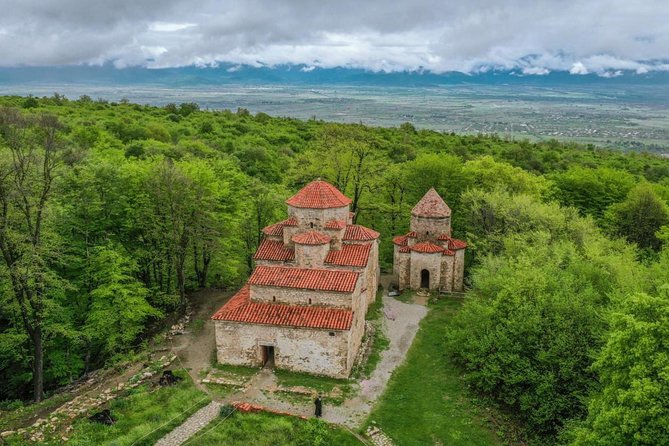
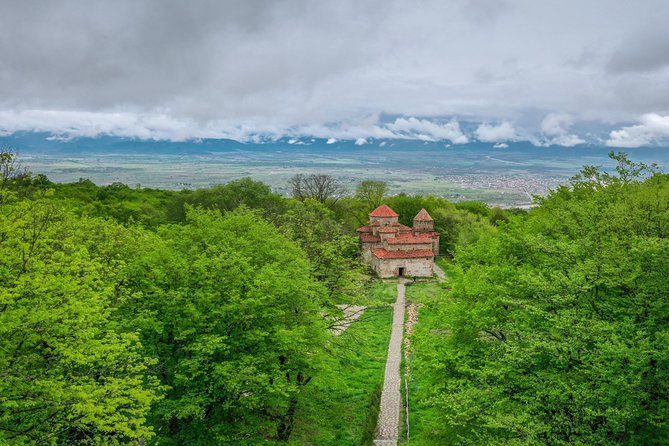
Shuamta is set about 7 kilometers from Telavi, and the site feels like a stone-and-time museum. You start with Old Shuamta (Dzveli Shuamta), which is described as an architectural ensemble built across centuries. The key churches are close together, so even with a 30-minute visit, you can understand what you’re looking at.
You’ll see a 5th-century basilica, presented as one of the more curious examples of Georgian Christian architecture. Then there’s a 17th-century domed church, compared to the type near Mtskheta Jvari Church but smaller, with a more pronounced dome drum and specific design differences in the tromps. The tromps are those architectural features that help shift from square space to dome shape, and spotting that kind of detail makes the building feel less random.
There’s also a small 7th-century domed church with a cross design in plan, but without corner rooms and with equal axes. The materials matter here, too. The church was built of cobblestones, with corners faced in hewn stones. That contrast is worth watching, even if you only have a short stop.
There’s a good reason the site feels layered rather than chaotic. Old Shuamta was abandoned in the 16th century, so the history is already built into the setting. One moment you’re looking at early Christian forms, the next you’re absorbing the fact that the complex didn’t stay active forever.
Admission here is free, so you can focus on the walk and the views instead of budgeting time and money for tickets.
Akhali Shuamta: brick church, preserved portraits, and a bell tower
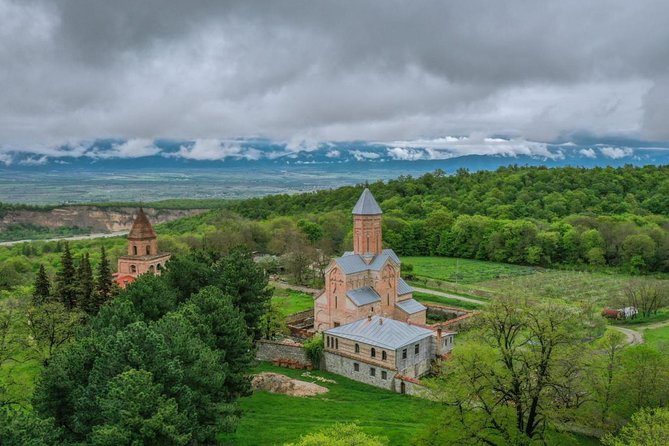
Then you move to New Shuamta (Akhali Shuamta), built by Tinatin Gurieli, the wife of King Levan II (1520 to 1574). That name alone gives you a clue about the tone: this is a later period, and the architecture shifts.
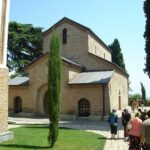
The Church had a dome and was designed in the form of a cross in plan. It was built of brick, and the interior walls were decorated with paintings. Some of the founder portraits have been preserved, which is exactly the kind of detail you can miss if you rush. Even with a 30-minute slot, try to slow down for the interior elements if your guide allows time to stand close.
Akhali Shuamta was restored by Irakli II. Restoration matters because it can mean the site still carries recognizable marks instead of becoming only rubble. The complex also includes a bell tower and some minor buildings, so you’re not just looking at one isolated church. You’re seeing a functioning religious complex, even if you’re visiting centuries later.
One more detail I like for context: a Chavchavadze was buried here. That gives the place a personal, family-level connection, not only a political timeline.
Admission is free again. So if you want to photograph, wander a little, and just breathe for a moment, this is one of your easiest stops to do it without feeling like you’re wasting a paid segment.
Gremi Citadel and the Church of the Archangels: Silk Road power, then loss
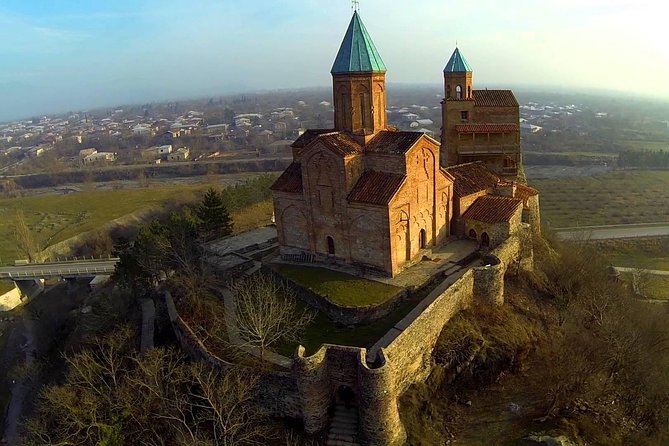
After Shuamta, you head to Gremi, the medieval capital of the Kingdom of Kakheti in the 16th and 17th centuries. This is a stop that packs a story into a small walking area, which is ideal when your schedule is tight.
The town was founded by Levan of Kakheti and functioned as a lively trading center on the Silk Road and as a royal residence. You can feel the “capital” idea in the layout of the citadel and church complex, even though much of it is now in ruins.
Here is the dramatic turning point: in 1615, the town was razed to the ground by the armies of Shah Abbas I of Persia. That’s not just a date. It changes the entire mood of the visit. You’re looking at a place that once had a strong political and economic role, then lost it abruptly.
The story doesn’t end with destruction. Kakheti kings transferred the capital to Telavi in the mid-17th century. So Gremi becomes both a reminder of what came before and a reason Telavi mattered more afterward.
Your planned time is about 30 minutes, and admission is free. With that timing, you should focus on two things:
- Get oriented quickly, then walk the main areas around the Church of the Archangels and citadel space.
- Keep your expectations realistic. This is a ruins-and-structure stop, not a fully restored palace.
If you prefer sites where every room is intact, you might find the ruins less satisfying. But if you like understanding how power shifts, Gremi is one of the strongest story-based stops of the day.
Other Kakheti wine tasting trips:

Khareba Tunnel Winery: why 7.7 kilometers underground changes the tasting
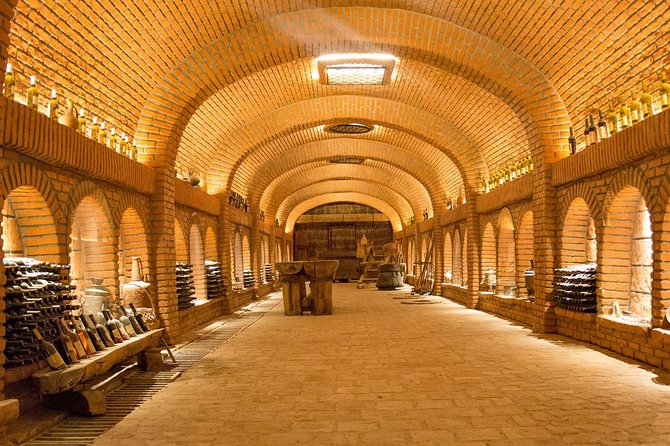
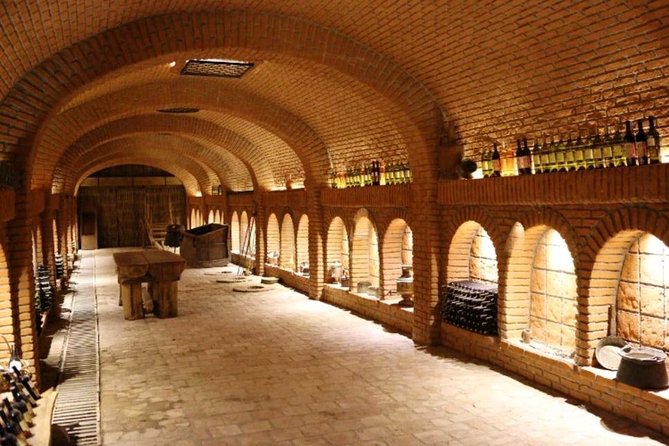
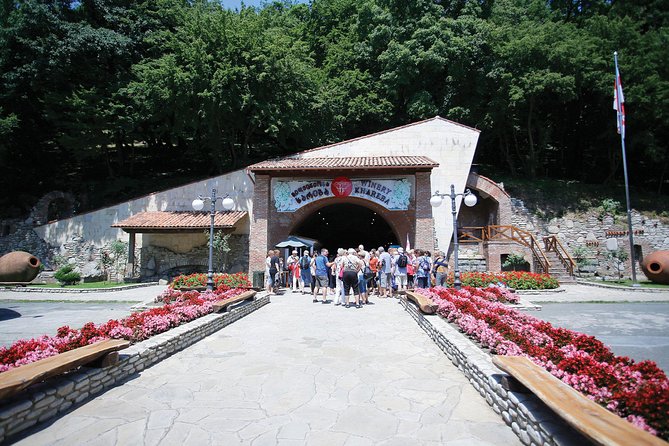
Your wine anchor is Tunnel Winery Khareba’s in Kvareli, in the Alazani Valley. This is where the tour earns its reputation. The cellar is carved inside the Caucasus mountains and opened in 1962 for the OIV World Congress. That detail alone tells you the scale of the project and why it became a known destination.
The tunnel is 7.7 kilometers long. It is built as two main sections with 13 interconnecting tunnels, each about 500 meters. That kind of engineering is hard to picture until you’re there, but the big idea is easy: you’re tasting wine connected to a purpose-built aging environment, not a random storeroom.
The storage conditions are exactly what you’d want if your goal is consistent aging. The tunnel preserves a natural temperature of 12 to 14 degrees Celsius and humidity rate of 70 percent. Those numbers are practical, not fancy. They help protect wines over decades, and the tour describes the best wines of Kakheti stored and aged there for decades.
You can also see the scale of the inventory. The visitor area lets you see more than 25,000 bottles of Winery Khareba premium wines aging in the tunnel. Then there’s an inside shop where you can buy wines.
The time here is about 1 hour and 30 minutes, and admission is included. So you’re not stuck outside waiting while the tour group shuffles paper. You get time to walk through the concept, then settle into tastings and purchase options if you want.
One practical consideration: underground spaces can feel cooler, even when it is warm outside. Bring something light, just in case. Your comfort matters if you’re doing multiple short walks afterward.
Georgian clay-vessel winemaking: what to listen for during tastings
This tour is specifically built around learning the traditional Georgian way of making wine in clay vessels, and it does that through visits and tastings at several wineries. You may also hear how different producers interpret that tradition.
Since the schedule includes multiple tasting stops, your job is to make comparisons. Don’t just chase labels. Focus on what changes from winery to winery when they talk about the clay-vessel method. You can do that by asking simple, on-the-spot questions like:
- How does the clay-vessel approach shape the wine style they are serving today?
- What do you want me to notice in the aroma or the finish?
- Which wine is most representative of their clay-vessel process?
If you’re new to Georgian wine, this structure helps. You’re not overwhelmed with ten unfamiliar things at once. Instead, you get a guided sequence where you learn a theme, then test it through tasting.
If you’re already into wine education, you’ll still like it because it connects a cultural technique to actual bottles. Tastings are the proof, and the clay-vessel focus gives the day a coherent center.
Price and value: what $123.08 buys you in Kakheti
At $123.08 per person, this private Kakheti day is priced like a thoughtful day trip, not like a casual DIY outing. The value comes from what’s included and what’s not.
Included:
- Air-conditioned vehicle and private transportation
- All fees and taxes
- Bottled water
- Admission ticket included for Tunnel Winery Khareba’s
- Monastery and citadel admission is free at the stops that list it as free
Not included:
- Food
So your money mostly covers the logistics and the organized wine component. For a 9 to 10 hour itinerary with multiple stops, that convenience is real. You avoid the stress of arranging transport, navigating between locations, and finding tasting rooms on your own.
The private element also matters. Even without a detailed group-size statement, the setup is private, meaning it’s only your group. That often translates to a smoother pace, fewer waiting moments, and more flexibility when it comes to asking questions.
One thing to keep in mind: because food is not included, your total trip cost might creep up if you buy lunch and snacks during the day. Still, if you prefer controlling what you eat, this can be fine.
Overall, I’d call the price fair for the combination of guided stops, private driving, and the major tunnel winery experience with included admission.
Comfort, timing, and smart prep from Tbilisi
This day is long enough that your small choices matter. Here’s what I’d do to make it easier from start to finish.
First, wear shoes you can walk in on uneven ground. Monastery areas and citadel zones tend to have cobbles and rough surfaces. Even if you only walk for 30 minutes at a time, you want stability.
Second, bring a small layer. Churches and tunnels can be cooler than you expect. The tunnel winery’s aging space is specifically temperature-controlled, and it may feel noticeably cooler than outdoors.
Third, plan your eating strategy. Since food isn’t included, you have two options:
- Eat before pickup and then treat lunch as an add-on during the day.
- Bring snacks if your group prefers a lighter meal approach.
Fourth, use the mobile ticket. It’s listed as available, which should reduce hassle once you arrive for included segments.
Finally, trust the driving plan. One highlight you should value is that the driving is described as safe and comfortable. With that kind of route, you want a smooth ride, especially when you’re focusing on wineries and viewpoints instead of watching the road.
Who this tour fits best, and who should reconsider
This tour is a great fit if you want a single day that connects Georgian faith sites with wine culture, without turning the schedule into a frantic list. You get multiple landmark stops, free entries at key cultural sites, and a focused wine experience at Khareba Tunnel Winery.
You’ll also like it if you enjoy structured tastings that support learning. The clay-vessel theme gives the tastings a purpose, not just a sip-and-smile routine.
It might not be ideal if you strongly prefer food included, or if you want a slower pace with longer time at fewer sites. With the fixed time blocks, you should be comfortable with a compact itinerary.
Based on how the experience is organized, and the kind of guidance you get, it suits people who value organization and comfort, especially on a day that starts early and runs long.
Should you book this private wine tour in Kakheti?
If your goal is one high-quality Kakheti day that mixes Shuamta, Gremi, and a standout wine setting underground, I think you should book. The private transport, included bottled water, and included tunnel winery admission make it feel built for your time rather than dependent on luck. Plus, if you want to learn the clay-vessel side of Georgian wine in the context of tastings, this route gives you that thread from start to finish.
I’d only hesitate if you hate long days or you want lunch handled for you. If you’re fine planning snacks and staying flexible with timing, this is a strong way to see Kakheti in one go.
FAQ
How long is the Private Wine Tour in Kakheti with Wine Tastings?
The tour lasts about 9 to 10 hours.
What locations are included on the tour?
The itinerary includes Shuamta monasteries (Old and New), Gremi Citadel and the Church of the Archangels, and Tunnel Winery Khareba’s, in the Kvareli area.
Do you get pickup from Tbilisi?
Pickup is offered.
Is the tour private?
Yes. It is a private tour, meaning only your group participates.
What is included in the price?
Included items are air-conditioned vehicle, private transportation, all fees and taxes, and bottled water. Admission for Tunnel Winery Khareba’s is included as well.
Is food included?
No, food is not included.
Is admission free at the monastery and citadel stops?
The Shuamta monastery stops and Gremi are listed as admission ticket free.
What is special about Khareba Tunnel Winery?
It is a wine cellar tunneled inside the Caucasus mountains, 7.7 kilometers long, with a natural temperature of 12 to 14 degrees Celsius and humidity of 70 percent. It also has a visitor and shop area.
Does the tour include wine tastings?
Yes, the tour includes wine tastings and learning about Georgian winemaking in clay vessels through visits and tastings at wineries.
What is the cancellation policy?
You can cancel for a full refund up to 24 hours in advance of the experience start time. Free cancellation is available, and changes less than 24 hours before the start time are not accepted.
Newer trips around Tbilisi
- Tbilisi Private Dinner: Georgian BBQ & Fireplace
★ 5.0 · 1 review - Tbilisi: Khinkali Tasting Lunch with Local Drinks and Pickup
★ 5.0 · 1 review - Day trip in Kakheti-wine tour
★ 5.0 · 1 review - Tbilisi & Mtskheta bus tour hop on hop off
★ 5.0 · 1 review - Tbilisi: Christmas Market & Hidden Gems Guided Walking Tour
★ 5.0 · 1 review - Stalin’s Secrets: An Underground Journey Through History
★ 5.0 · 1 review
Kakheti Wine Tasting Trips, compared.
Day Trip to Kakheti Wine Region Including 9 Wine Tastings
Read our review →
Kakheti Wine Region Tour with 9 Wine Tastings
Read our review →
Kakheti Wine Region Tour with 10 Wine Tastings
Read our review →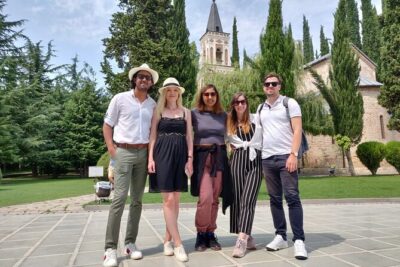
Kakheti Wine Region: Signagi and Bodbe Tour with 10 Wine Tastings
Read our review →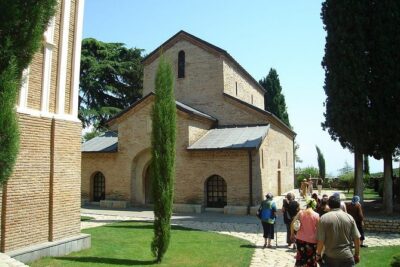
Kakheti;City of Love Sighnaghi, Bodbe. KTW. Wine House Group tour
Read our review →
Kakheti: Bodbe, Sighnaghi, Telavi Wine Tour from Tbilisi
Read our review →
Full Day Private Wine Tour in Kakheti Region with Lunch and 3 Wine Tastings
Read our review →Browse the lists this tour appears in