
Reviewed · WALKING TOURS
Revolutionary Tbilisi Walking Tour
Revolution comes alive between church and palace. This walking tour zooms in on Tbilisi during the 1900 to 1921 revolutionary years, when Georgian politics helped steer major currents in the Russian Empire. You’ll move from Pushkin Square to key power buildings and public symbols, then finish in 9 April Park, with the story tied together by English guide Giorgi.
I especially liked how Giorgi connects the dots between monuments and the messier human stories behind them. Two things I’d highlight are his excellent English and his habit of answering follow-up questions in plain language, and the way the route uses buildings like Tiflis Spiritual Seminary, Tiflis City Hall, and Viceroy’s Palace as evidence, not just backdrops.
One consideration: this is not a casual stroll for everyone. It is not suitable for children under 12 or wheelchair users, and the rules are strict about no alcohol or drugs, and no bare feet.
In This Review
- Key Highlights You Will Actually Care About
- Where This Tour Fits in Tbilisi (and Why You Might Miss It)
- Meet Giorgi, the Guide Who Makes the Period Feel Understandable
- Pushkin Square Start, Then Straight Into Political Geography
- Tiflis Spiritual Seminary: The School Behind Famous Revolutionaries
- Tiflis City Hall and the State Duma Story (Plus Repression)
- Viceroy’s Palace Through Tsarist, Menshevik, and Soviet Eras
- Alexander’s Park and the Stone for the Fallen Heroes
- The Optional Underground Illegal Printing Press Museum (Worth Budgeting)
- A Tour That Treats Labor and Urban Change as Part of the Story
- Price and Value: Is $30 Actually Fair?
- What to Wear and Bring So You Don’t Slow Anyone Down
- Who This Tour Suits Best (and Who Might Want Something Different)
- Should You Book the Revolutionary Tbilisi Walking Tour?
- FAQ
- How long is the Revolutionary Tbilisi Walking Tour?
- Where does the tour start and where does it finish?
- Is the tour offered in English?
- What sights are included?
- Is the Underground Illegal Printing Press included?
- Do I need to use the metro?
- Is it suitable for children and people using wheelchairs?
- Are there any on-tour rules about what I can bring or wear?
Key Highlights You Will Actually Care About
- A rare focus on 1900 to 1921 and how Georgian social democrats shaped events beyond Georgia.
- Giorgi’s storytelling and strong Q&A, with clear explanations in English.
- Imperial power shown through real architecture, including repression tied to institutions like the State Duma.
- Three-era interpretation of Viceroy’s Palace, spanning Tsarist, Menshevik, and Soviet periods.
- A political symbolism route across Alexander’s Park and the stone dedicated to fallen revolutionary heroes.
- Optional Underground Illegal Printing Press Museum, usually worth planning for if you can pay the add-on.
More walking tours in Tbilisi:
- Tbilisi Walking Tour Including Cable Car and Traditional Bakery★ 5.0 · 1,310 reviews
- Tbilisi: City Highlights Guided Walking Tour★ 4.9 · 1,114 reviews
- Tbilisi:Evening Walking & Talking Tour with Wine & Boat Ride★ 5.0 · 572 reviews
- Tbilisi: Evening Walking Tour with Wine & Boat Ride Options★ 5.0 · 407 reviews
Where This Tour Fits in Tbilisi (and Why You Might Miss It)
Tbilisi has plenty of walking tours that hit the classic photo spots. This one takes a different angle. Instead of focusing on beauty alone, it asks what power looked like, how people organized, and what kinds of repression followed when ordinary workers and political groups tried to change the system.
What makes the topic work on foot is the way the city is layered. The streets, squares, and institutions still carry traces of the Tsarist era and the political shake-ups that came after. You don’t just hear a timeline. You learn how to read the city like a document, where architecture, parks, and monuments hint at who ruled and who fought back.
Meet Giorgi, the Guide Who Makes the Period Feel Understandable
A lot of history tours are just dates and titles. This one leans on people and motivations, and that is where Giorgi shines. He is described as well prepared, with English that comes through cleanly, even when the subject gets complicated.
You’ll also notice his style: he doesn’t toss facts at you and rush on. The pattern is question-friendly. If you ask something specific, he tends to connect it to the broader political split that shaped Georgia in the early 1900s: Bolsheviks versus Mensheviks. That makes the tour feel interactive in a good way, not like a lecture where you can only listen.
Pushkin Square Start, Then Straight Into Political Geography

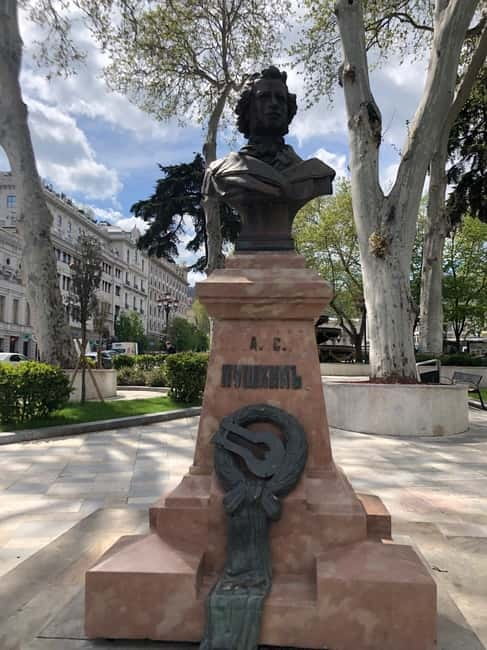
The tour begins at Tbilisi Pushkin Square, which is a smart starting point if you want context fast. It helps you orient to the central city before you start zooming into the institutions tied to state power.
From there, the route turns into a guided walk through buildings and public spaces where political life used to happen. Think less about grand speeches and more about the machinery of politics: who had authority, who was watched, and how dissent moved when open protest was not safe.
Timing can vary depending on your exact booking slot, so keep a flexible mindset. The experience is sold as a 2-hour tour, and the walking portion is listed as a longer block, so check the start time you select and go with the flow once you meet the group.
Tiflis Spiritual Seminary: The School Behind Famous Revolutionaries
One of the first big stops is Tiflis Spiritual Seminary. This is not just a school you pass by. It is presented as the kind of place that produced famous revolutionaries, which is a strong reminder that educational institutions can be breeding grounds for political thought.
What you should take from this stop is the contrast. A seminary is supposed to train minds toward religion and discipline. In the early 1900s, those same structures could also feed critical thinking and networks. The tour uses this to set up the bigger story: revolutionary movements did not appear out of nowhere, and they did not only come from the poorest corners of society.
Other Tbilisi tours and day trips:



Tiflis City Hall and the State Duma Story (Plus Repression)
Next up is Tiflis City Hall. The tour connects it to the history of the State Duma and what it meant in the late Tsarist period. The important part is not memorizing names. It’s understanding the environment: when political systems shift on paper, people can still face violence and repression in real life.
The tour’s framing focuses on how those pressures helped shape revolutionary strategy. When the system is not responsive, political groups start to think differently about organizing, persuasion, and resistance. If you like history that explains consequences, not just causes, you’ll enjoy this segment.
Viceroy’s Palace Through Tsarist, Menshevik, and Soviet Eras
Then you hit Viceroy’s Palace, and this is one of the most talked-about stops for a reason. The building is treated as a kind of political chameleon, tied to multiple eras: Tsarist, Menshevik, and Soviet.
Here’s what I like about the approach: you get to see how control of the same physical space can signal a change in ideology. The palace is not just a pretty structure. It becomes a symbol of imperialism and administration, then later a stage for new authority.
Also, the tour handles the Menshevik versus Bolshevik split with care. You’ll hear how the groups differed in approach and what those policies meant on the ground, including consequences that fed conflict rather than resolving it. If you tend to think of this era as one uniform Soviet story, this stop helps unbundle it.
Alexander’s Park and the Stone for the Fallen Heroes
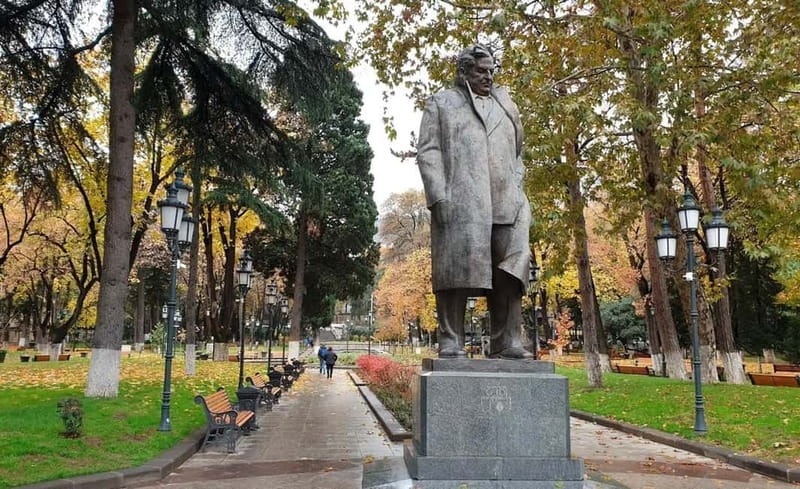
After the palace segment, the route moves to Alexander’s Park and the stone dedicated to the fallen heroes of the revolutions. This part is about memory, and memory is political.
It’s easy to look at monuments and assume they’re just commemorations. This tour pushes you to ask a better question: what story is the monument trying to preserve, and what did it leave out? You get symbolism around imperial power, repression, and revolutionary sacrifice in a form you can actually read while walking.
The park also works as a mental pause. By the time you reach it, you’ve already heard about factional splits and harsh realities. Standing in a public space dedicated to fallen revolutionaries gives the story a human center, not only an institutional one.
The Optional Underground Illegal Printing Press Museum (Worth Budgeting)
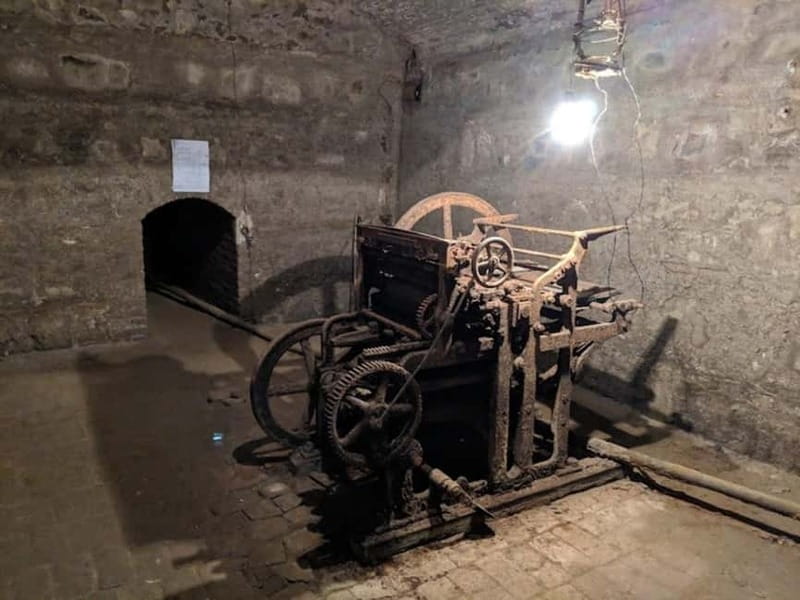
For an additional cost, you can extend the tour to the Underground Illegal Printing Press Museum. This is directly tied to the tour’s focus on the illegal activities of revolutionaries, especially how ideas were spread when official channels were blocked.
If you do one add-on, make it this one. The value is that it turns politics from slogans into logistics. Printing is work. Work means coordination, secrecy, risk, and networks. That’s a very different angle from what you might get just from buildings and monuments.
There is also a practical element. Transportation is not included, and the metro is mentioned as part of the connection to the underground site. So if you add this option, plan for your own metro ride cost.
A Tour That Treats Labor and Urban Change as Part of the Story
One of the subtler strengths is how the tour frames socioeconomic events in late Tsarist Caucasus, including how revolutionary groups emerged in Georgia and split into major factions. It’s not just politics as an argument. It’s politics as a response to social conditions.
The way this plays out in the streets matters. Giorgi’s interpretation ties workers, institutions, and city space together, and he keeps it from turning into nostalgia. Instead of saying the past was better, he shows how labor and politics shaped the city, and how that footprint can get ignored or erased over time.
That is the kind of perspective that makes a walking tour feel more useful after you go home. You start spotting what stories a city chooses to emphasize, and which ones it smooths away.
Price and Value: Is $30 Actually Fair?
At $30 per person for a roughly 2-hour guided experience, this tour lands in a reasonable range for the amount of specialized content you get. You are paying for two big things: a guide who can explain a complicated period in English, and a route that includes major institutions and monuments tied to revolutionary history.
What you should note is what is included versus optional. The core route covers the main sights, while the Underground Illegal Printing Press Museum is extra. Transportation is also not included, so if you add the underground stop, you’ll want to budget for the metro.
My advice: if you care even a little about how movements spread ideas, plan the extra printing press visit. It turns the story from theory into technique.
What to Wear and Bring So You Don’t Slow Anyone Down
This is a walking-focused tour, and the rules are clear. No alcohol or drugs, and bare feet are not allowed. Also, it is not suitable for wheelchair users, and it is not for kids under 12.
If you’re choosing shoes, prioritize comfort and traction over style. The tour spends time outdoors and relies on you being able to move between stops without constant breaks.
Who This Tour Suits Best (and Who Might Want Something Different)
This tour is ideal if you want modern Georgia history with political context, and especially if you like the under-taught period between 1900 and 1921. It’s also a great fit if you enjoy asking questions and getting direct answers, because Giorgi’s approach invites them.
You might prefer a different type of walk if you’re looking mainly for scenery and general sightseeing, because this one is intentionally focused and topic-heavy. The payoff is higher when you show up curious about how revolution actually worked in practice, from factions to institutions to printing.
Should You Book the Revolutionary Tbilisi Walking Tour?
Book it if you want a Tbilisi tour that treats history like something you can still read in the city. The combination of Giorgi’s well-prepared English, his willingness to answer questions, and the route through power sites, monuments, and the optional underground printing press makes this a standout choice for anyone who likes political history with real locations.
Skip it if your idea of a perfect day is light and breezy, or if you need wheelchair access or want a tour aimed at children under 12. For everyone else, this is a smart way to spend a couple hours understanding the revolutionary currents that shaped the region long before the slogans you might hear elsewhere.
FAQ
How long is the Revolutionary Tbilisi Walking Tour?
The tour is listed as a 2-hour experience, and the walking portion is described as 3 hours in the itinerary. When you book, check the exact starting time and duration shown for your slot.
Where does the tour start and where does it finish?
It starts at Tbilisi Pushkin Square and finishes at 9 April Park.
Is the tour offered in English?
Yes, the live tour guide provides the tour in English.
What sights are included?
The tour includes the planned sights, except for the Underground Illegal Printing Press option.
Is the Underground Illegal Printing Press included?
No. The Underground Illegal Printing Press Museum is an optional extension and not included in the base tour price.
Do I need to use the metro?
Transportation is not included. If you add the underground printing press, the tour info notes a metro connection (about 15 minutes), so you’ll need to handle that yourself.
Is it suitable for children and people using wheelchairs?
It is not suitable for children under 12 and it is not suitable for wheelchair users.
Are there any on-tour rules about what I can bring or wear?
The tour rules say no alcohol and drugs, and bare feet are not allowed.
Newer trips around Tbilisi
- Tbilisi Private Dinner: Georgian BBQ & Fireplace
★ 5.0 · 1 review - Tbilisi: Khinkali Tasting Lunch with Local Drinks and Pickup
★ 5.0 · 1 review - Day trip in Kakheti-wine tour
★ 5.0 · 1 review - Tbilisi & Mtskheta bus tour hop on hop off
★ 5.0 · 1 review - Tbilisi: Christmas Market & Hidden Gems Guided Walking Tour
★ 5.0 · 1 review - Stalin’s Secrets: An Underground Journey Through History
★ 5.0 · 1 review
Walking Tours, compared.
Tbilisi Walking Tour Including Cable Car and Traditional Bakery
Read our review →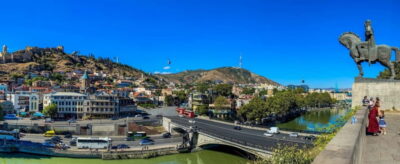

Evening Walking & Talking Tour with Wine & Boat Ride
Read our review →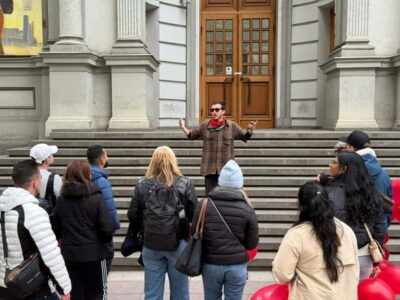
Evening Walking Tour with Wine & Boat Ride Options
Read our review →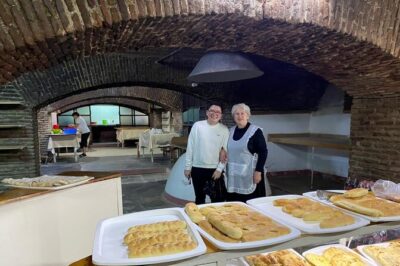
Old Tbilisi Highlights walking tour with wine & 10 tastings
Read our review →
Old Tbilisi Tour: Private Walking Tour With Wine Tasting
Read our review →

Private Tbilisi Food Tour: 9 Tastings Walk in Bohemian District
Read our review →Browse the lists this tour appears in