Reviewed · TOURS
Tbilisi: Abandoned Cinema Tour
Abandoned cinemas still tell stories. On this Tbilisi tour, I love how the bas-reliefs and stone carvings make the lobby feel meant for close-up looking. Led by English guide Tinatin Goguadze, it is a 1-hour visit into a rare piece of early film tech gone to ruin.
I also really like the way the interior decoration hangs on, with wall paintings, floor mosaics, and golden ceilings that keep stealing the spotlight. Even in decay, the workmanship is the main event.
One consideration: this experience is not set up for wheelchairs, and it is a decaying structure, so bring comfortable shoes and expect some uneven ground.
In This Review
- Key highlights you will feel in your photos
- A 1909 Electronic Cinema Ruin, Up Close and Personal
- How the Tour Flows from Metro Marjanishvili to Nadzaladevi
- Photo Stop and Orientation Before You Enter the Cinema Details
- The Grand Lobby: Bas-Reliefs and Stone Carving as the Main Attraction
- 1909 Interior Decoration: Wall Paintings, Mosaics, and Golden Ceilings
- Metal Engravings and the Remnants You Can Actually Interpret
- The Story in Decay: Reading the Building Like a Film Scene
- What the 1-Hour Format Means for You
- Photography Allowed, So Bring Your Best Viewing Habits
- Who This Tour Is Best For (and Who Might Skip It)
- Price and Value: Is $55 Fair for This 1-Hour Experience?
- Should You Book the Tbilisi Abandoned Cinema Tour?
- FAQ
- How long is the Abandoned Cinema Tour in Tbilisi?
- Where does the tour start and end?
- Where does the guide meet me?
- Is there an English-speaking guide?
- Is this a private group tour?
- What sights are included during the visit?
- Is photography allowed inside the cinema?
- What should I bring?
- Is the tour suitable for wheelchair users?
- Is alcohol allowed?
Key highlights you will feel in your photos
- Bas-reliefs and stone carvings that frame the lobby like sculpture
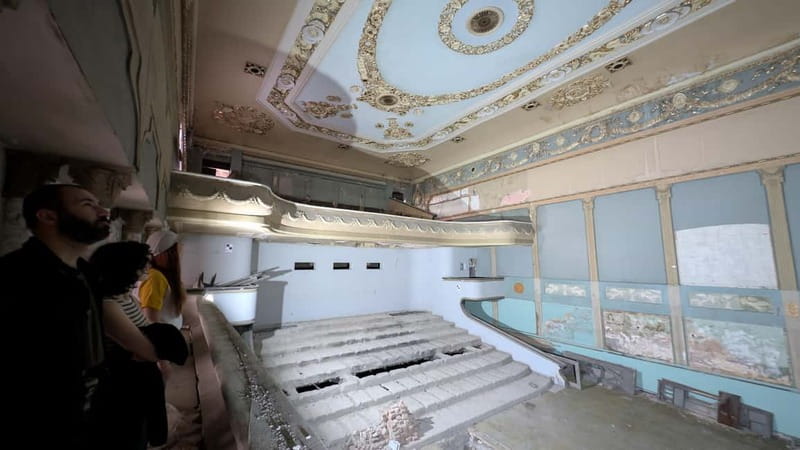
- Wall paintings, floor mosaics, and golden ceilings inside a 1909 masterpiece
- Metal engravings and cinema remnants that hint at how the place functioned
- A short, guided 1-hour experience with photo time and independent looking
- English private tour with Tinatin Goguadze, built for questions
- Photography allowed, so you can document textures and details
Other Tbilisi tours and day trips:
- Tbilisi: Day Trip to Kazbegi, Gudauri, Gergeti, and Ananuri★ 4.9 · 3,203 reviews
- Day Trip to Kakheti Wine Region Including 9 Wine Tastings★ 5.0 · 2,774 reviews
- Highlights of Caucasus Mountains-Jinvali,Ananuri,Gudauri,Kazbegi(Group tour)★ 5.0 · 2,682 reviews
- From Tbilisi: Kakheti Wine Region Tour with 9 Wine Tastings★ 4.9 · 2,541 reviews
A 1909 Electronic Cinema Ruin, Up Close and Personal
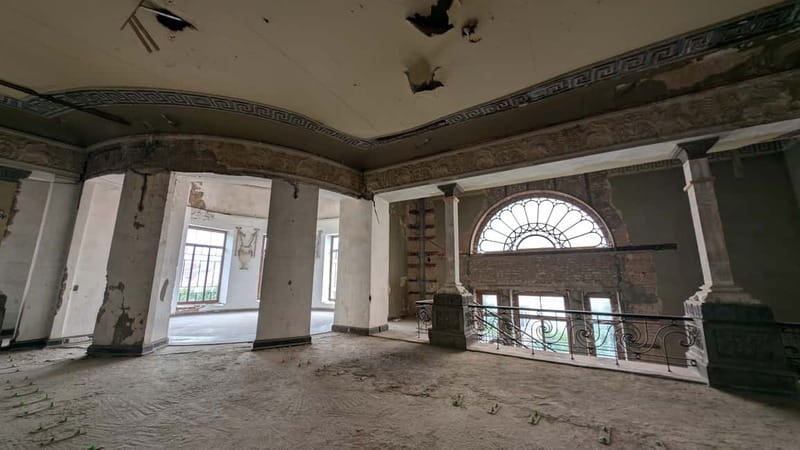
This is not a museum-style walkthrough where everything is pristine and labelled. It is an abandoned cinema, described as Tbilisi’s first electronic cinema, and tied to a 1909 masterpiece. That matters, because you are seeing craftsmanship meant for a public entertainment space, not just an old building.
What makes the experience click is the sheer focus on materials. You are there for intricate stone work, wall art, mosaics, and gold-toned ceiling details. When you get close, you start reading the building like a visual script, with each detail doing a job.
You are also in a setting that feels specific to Tbilisi. A cinema that early and that detailed is a rare survival, described as one of only a few of its kind in the world. If you like places that still carry personality, this kind of ruin can be surprisingly moving.
How the Tour Flows from Metro Marjanishvili to Nadzaladevi
The practical setup is simple, but it is worth paying attention to the meeting point. The guide meets you at the entrance of Metro Station Nadzaladevi. At the start and end of the experience, you are tied back to Metro Marjanishvili.
That means you should plan to arrive with enough buffer to find the correct metro entrance. Since the guide can be reached by message to adjust contact details, bring your phone battery and make sure you can message if needed.
Time-wise, the experience is listed as 1 hour. That is short enough to fit into a busy day, but long enough for a real guided viewing. You will get a photo stop plus guided time, with extra freedom to look and take pictures.
Photo Stop and Orientation Before You Enter the Cinema Details
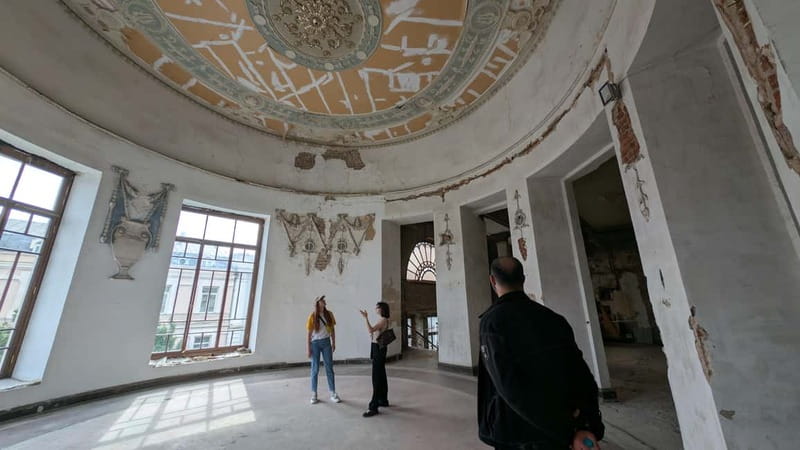
The tour begins around Metro Marjanishvili with a photo stop and then your guided visit. For me, the value of that first pause is quick orientation. You get a sense of what kind of details you are about to hunt for, so you are not just walking in and hoping you notice everything.
Then the guide brings you into the building space and sets the tone: this is Tbilisi’s first electronic cinema, and the decoration is part of the story. You will be encouraged to look beyond the obvious decay and focus on the crafted surfaces.
A short start like this is also a mental trick. If your eyes know what to search for, you get more from your time inside, even if the building is only partially intact.
The Grand Lobby: Bas-Reliefs and Stone Carving as the Main Attraction
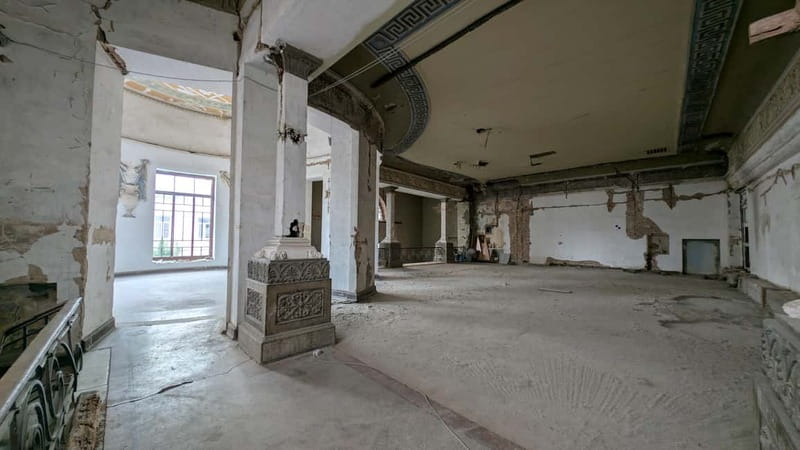
If you love architecture, this is where the tour delivers. The highlight is the lobby area, framed by intricate bas-reliefs and stone carvings. These are not random decorative bumps and swirls. They are deliberate, worked forms that still show fine craft even after years of neglect.
For your camera, this is good news. Bas-reliefs and carvings create shadows. Shadows mean texture. Texture reads well in photos, especially if you shoot from a couple angles rather than straight on.
This is also where the tour feels most “worth paying for.” Many abandoned sites are interesting because they are atmospheric. This one is interesting because it is still visually dense with design.
Still around Tbilisi? These come up often:


1909 Interior Decoration: Wall Paintings, Mosaics, and Golden Ceilings
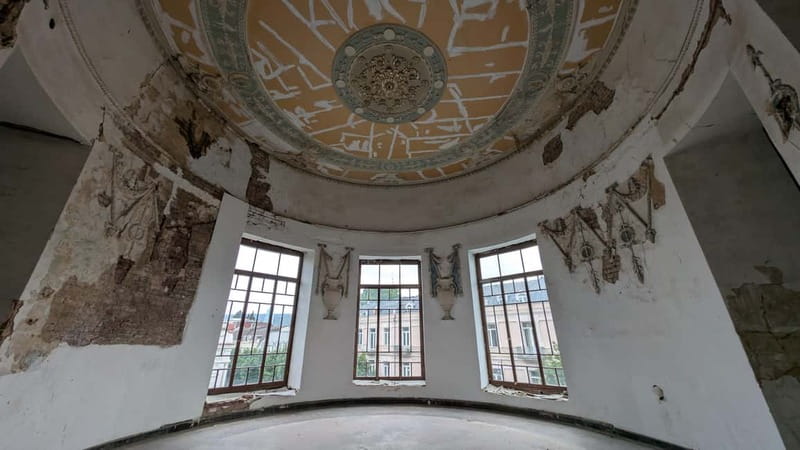
Inside, you are guided through the cinema’s rich interior decoration. The specific features mentioned are wall paintings, floor mosaics, and golden ceilings. That mix is important, because it reflects how theaters tried to impress people before modern screens.
Wall paintings give you storytelling clues, mosaics give you pattern and geometry, and golden ceiling elements give you that sense of grand scale. Even if parts look tired or worn, you can still see the ambition behind the design.
When you are standing there, ask yourself what this space was for. A cinema is not just a room to watch a film. It is a pre-show experience, a status symbol, a place to dress up and be seen. You can feel that purpose in the effort lavished on surfaces.
Metal Engravings and the Remnants You Can Actually Interpret
One of the most intriguing parts is the mention of metal engravings. Even without a lot of “hands-on” description, metal details tend to be easier to recognize as original features. Stone can crumble, paint can fade, but metal work can still read as purposeful.
That helps you connect the dots between what you see and what the space likely was. An early electronic cinema was built around the idea of technology and spectacle. You are not only looking at decoration. You are also seeing fragments of how the place functioned as a public entertainment machine.
My practical tip here: spend a few extra minutes on close viewing rather than rushing. If you only glance, you will miss the way materials catch light differently. Take one corner and work it slowly. Your photos will look better too.
The Story in Decay: Reading the Building Like a Film Scene
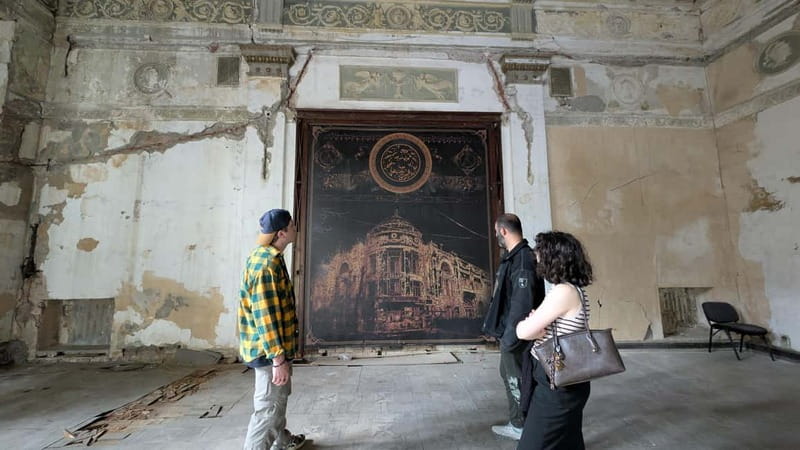
The tour focuses on stories etched into the grand, decaying structure. That is the heart of the experience, because ruins can be a little tricky. If you treat them like sightseeing, they can feel like nothing more than broken walls.
But this tour pushes you to treat the building as a narrative. Where the decoration continues, you can guess what the original priorities were. Where craft is concentrated, you can feel where people would have looked. Where the layout still holds together visually, you get clues about the flow of the space.
This is also where the “only a few of its kind” angle matters. If a place is rare, the details become more significant. A common building can be replaced. A rare one is a one-time learning moment.
What the 1-Hour Format Means for You
At 1 hour, this is not a slow, all-day architectural dig. It is a focused hit of details, guided interpretation, and enough freedom to take photos without feeling rushed the whole time.
Because it is private group, the pace can feel more conversational. A smaller group also tends to make it easier to stop for photos and questions. That matters here because the best views are on the surfaces, not in wide scenery.
You should still plan on walking a bit, plus standing and looking closely. That is why comfortable shoes are specifically recommended. If you are hoping for a relaxed sit-down museum experience, this is probably less your style.
Photography Allowed, So Bring Your Best Viewing Habits
Photography is allowed, which is great because the textures are the point. The carvings, the wall paintings, the floor mosaics, and the golden ceiling details all reward careful framing.
Here is how I would use your time well: shoot one wide view to capture the whole room effect, then shoot 5 to 8 detail photos. Bas-reliefs and carvings especially look best with raking light, meaning light hitting at an angle.
Also, give yourself one “slow minute” before you take your best photo. Ruins can be visually busy. If you rush, you will photograph the wrong angle. If you pause, you start photographing the story.
Who This Tour Is Best For (and Who Might Skip It)
This tour is a strong fit if you like architecture, design details, and early entertainment culture. It is also a good match for people who enjoy urban exploration with guidance, where someone explains what you are looking at.
It is likely less ideal if you need full accessibility. The information says it is not suitable for wheelchair users. It is also not listed as a guided walking tour, so do not expect a long, route-based trek. Think “guided inspection” more than “walk and roam.”
If you are in Tbilisi for a short stay and want one memorable, distinctive experience, this can work well. You get a compact timeframe plus a big visual payoff.
Price and Value: Is $55 Fair for This 1-Hour Experience?
At $55 per person for a 1-hour private guided tour, the value comes from the combination of access and explanation. You are paying for a guided visit to Tbilisi’s first electronic cinema and a focused look at specific interior features: bas-reliefs, stone carvings, wall paintings, floor mosaics, golden ceilings, and metal engravings.
You are also paying for the rarity factor. The experience is described as one of only a few of its kind in the world. Rare sites are rarely cheap, but they are also rarely “replaceable” later. If you want to see this kind of place at all, doing it with an English live guide can save you a lot of guesswork.
Where $55 might feel heavy is if you mostly want open-air views and wide landmarks. This is detail-driven and indoors-focused, with time for photos and guided stories. If that is your taste, it reads as fair value. If not, consider whether your interests match the subject.
Should You Book the Tbilisi Abandoned Cinema Tour?
Book it if you enjoy close-looking at stonework and decorated interiors, and you want a short, guided private experience with an English guide named Tinatin Goguadze. The bas-reliefs, wall paintings, floor mosaics, and golden ceilings are exactly the kind of details that make a 1909 masterpiece feel tangible.
Skip it if accessibility is a must for your group, since the tour is not suitable for wheelchair users. Also skip if you hate uneven, decaying environments and want everything polished and level.
If you are the kind of traveler who loves old craft and can appreciate a building even when it is broken, this tour can be a smart, time-efficient choice in Tbilisi.
FAQ
How long is the Abandoned Cinema Tour in Tbilisi?
The tour lasts 1 hour.
Where does the tour start and end?
The tour starts and ends at Metro Marjanishvili.
Where does the guide meet me?
The guide meets you at the entrance of Metro Station Nadzaladevi. You can message to change contact details.
Is there an English-speaking guide?
Yes, there is a live tour guide in English.
Is this a private group tour?
Yes, it is listed as a private group.
What sights are included during the visit?
You will tour Tbilisi’s first electronic cinema and see intricate bas-reliefs, stone carvings, wall paintings, floor mosaics, golden ceilings, and metal engravings, along with history and stories.
Is photography allowed inside the cinema?
Yes, photography is allowed.
What should I bring?
You should bring comfortable shoes.
Is the tour suitable for wheelchair users?
No, it is not suitable for wheelchair users.
Is alcohol allowed?
No alcohol and drugs are allowed.
Newer trips around Tbilisi
- Tbilisi Private Dinner: Georgian BBQ & Fireplace
★ 5.0 · 1 review - Tbilisi: Khinkali Tasting Lunch with Local Drinks and Pickup
★ 5.0 · 1 review - Day trip in Kakheti-wine tour
★ 5.0 · 1 review - Tbilisi & Mtskheta bus tour hop on hop off
★ 5.0 · 1 review - Tbilisi: Christmas Market & Hidden Gems Guided Walking Tour
★ 5.0 · 1 review - Stalin’s Secrets: An Underground Journey Through History
★ 5.0 · 1 review
Tours, compared.

Highlights of Caucasus Mountains-Jinvali,Ananuri,Gudauri,Kazbegi(Group tour)
Read our review →
Kakheti Wine Region Tour with 9 Wine Tastings
Read our review →
Mtskheta, Jvari, Gori and Uplistsikhe Day Tour
Read our review →
Kakheti Wine Region Tour with 10 Wine Tastings
Read our review →
Tbilisi Walking Tour Including Cable Car and Traditional Bakery
Read our review →