Reviewed · TOURS
Tbilisi: (All-inclusive Tour) Top 5 Highlights of Dumplings
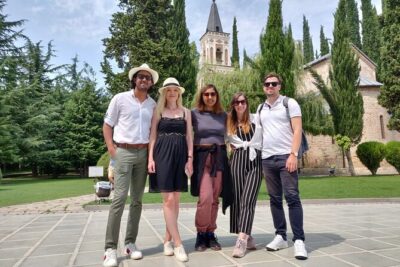
If you like food tours, this one is very straightforward: khinkali first, sightseeing second. I really like how you get at least 5 khinkali flavors across different spots, not just one restaurant repeat. I also like that the stops are paired with real Tbilisi streets and photo moments, so you’re eating and learning at the same time, including a glass of local wine. One consideration: 3 hours is short, so you’ll need to keep a steady pace, especially if you’re not used to eating several dumplings back to back.
What makes this tour feel different is the guide, George. In a small group, he comes across as warm and easy to talk with, and he shares enough context to make the food feel tied to Georgian life, not just a checklist meal.
You’ll get hotel pickup and drop-off, plus lemonade to keep things comfortable between tastings. The whole flow works best when you arrive properly hungry and ready to slow down for a few photo stops.
In This Review
- Top 5 Highlights You’ll Actually Feel in Your Meal
- Khinkali Is the Hook, But the Real Talent Is the Pacing
- From Tusheti and Pshavi to Tbilisi: Why Khinkali Feels Like More Than Food
- The Dumpling Crawl: Multiple Spots, Different Styles, Real Comparisons
- George Makes It Feel Local, Not Just Touristic
- Wine and Lemonade: The Simple Trick for Enjoyable Bites
- The City Walk: From Aghmashenebeli Avenue to Liberty Square
- What $65 Buys You in Real Terms
- Who This Tour Fits Best
- Should You Book This Khinkali Tour?
- FAQ
- How long is the Dumplings tour in Tbilisi?
- How many types of khinkali (dumplings) will I taste?
- Is local wine included?
- Does the tour include hotel pickup and drop-off?
- What languages are the guides available in?
- Are vegetarian options available?
- What is the price per person?
Top 5 Highlights You’ll Actually Feel in Your Meal
- Five-plus khinkali tastings across multiple well-chosen spots, so you can compare styles fast
- A local wine sip plus lemonade, built into the schedule for real pacing
- A Tbilisi walking route that mixes markets and major viewpoints without turning into a marathon
- Mountain-origin khinkali context (Tusheti and Pshavi claims) so each bite makes sense
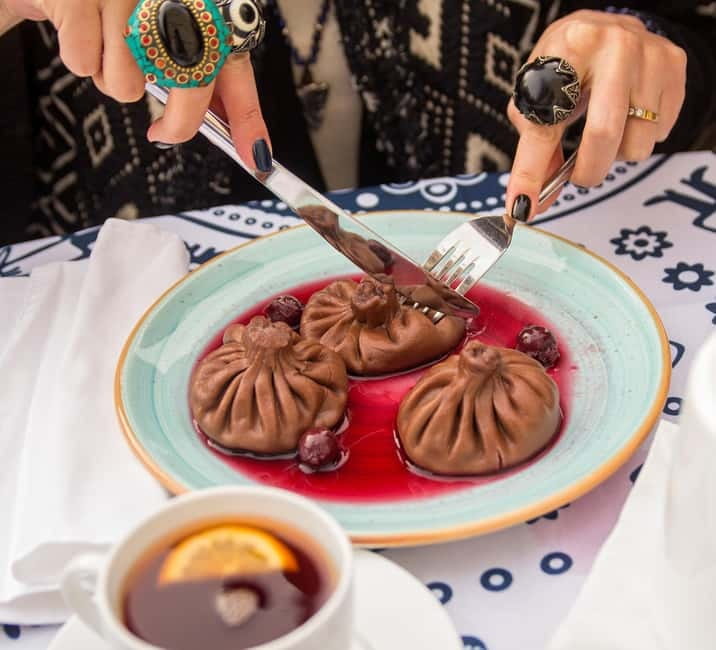
- Hands-on style at the end, where you can shape khinkali your way, then try a wine-herb soup and a sweet version
Other Tbilisi tours and day trips:
- Tbilisi: Day Trip to Kazbegi, Gudauri, Gergeti, and Ananuri★ 4.9 · 3,203 reviews
- Day Trip to Kakheti Wine Region Including 9 Wine Tastings★ 5.0 · 2,774 reviews
- Highlights of Caucasus Mountains-Jinvali,Ananuri,Gudauri,Kazbegi(Group tour)★ 5.0 · 2,682 reviews
- From Tbilisi: Kakheti Wine Region Tour with 9 Wine Tastings★ 4.9 · 2,541 reviews
Khinkali Is the Hook, But the Real Talent Is the Pacing
Tbilisi has plenty of food you can chase on your own, but this tour wins because it controls two things that often go wrong with dumpling days: timing and variety. In only 3 hours, you’re not just “eating until full.” You’re sampling flavors in a planned order, with breaks that also function as sightseeing.
Here’s the practical upside: when you start with multiple khinkali styles early, you actually learn what you like. Then later, you can focus on the standouts instead of being too full to notice texture and seasoning. The tour also sprinkles in a city walk, so you’re not stuck at tables the whole time.
If you prefer slow, sit-down dining with one long meal, this may feel busy. But if your goal is tasting and getting your bearings quickly, it’s a smart match.
From Tusheti and Pshavi to Tbilisi: Why Khinkali Feels Like More Than Food
The story around khinkali’s origin is part of why it’s such a national dish. The common tale connects it to rugged mountain communities north of Tbilisi, with both Tusheti and Pshavi regions claiming they invented it. Today, every region makes khinkali with its own twist, and even within one city you’ll see differences.
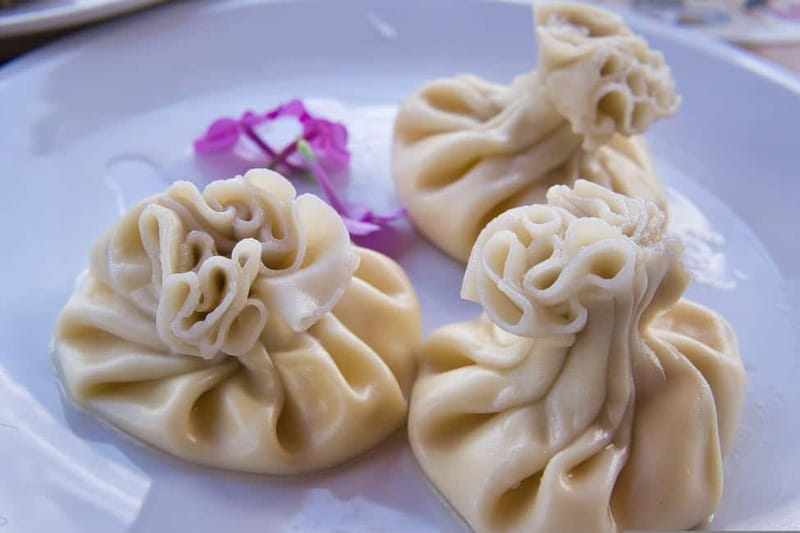
That’s exactly what you’re setting yourself up to notice on this tour. The dumplings you’ll try are described as having thin dough and simple but deeply satisfying fillings. That matters, because khinkali isn’t supposed to be a heavy, doughy blob. The dough should be delicate, and the filling should carry the flavor.
You’ll also see how Georgian dumplings can shift from savory to surprising. The menu doesn’t just stick to classic forms. You’ll get a soup of khinkali cooked with wine and fresh herbs, plus a dessert version made with Nutella and cherry. That sweet end point is not an afterthought. It’s there to show how playful Georgian food culture can be, even when the dish itself feels traditional.
Vegetarian eaters are not an afterthought here, either. The tour includes vegetarian varieties, so you don’t have to hunt for “the plain option” while everyone else enjoys the tastings.
The Dumpling Crawl: Multiple Spots, Different Styles, Real Comparisons
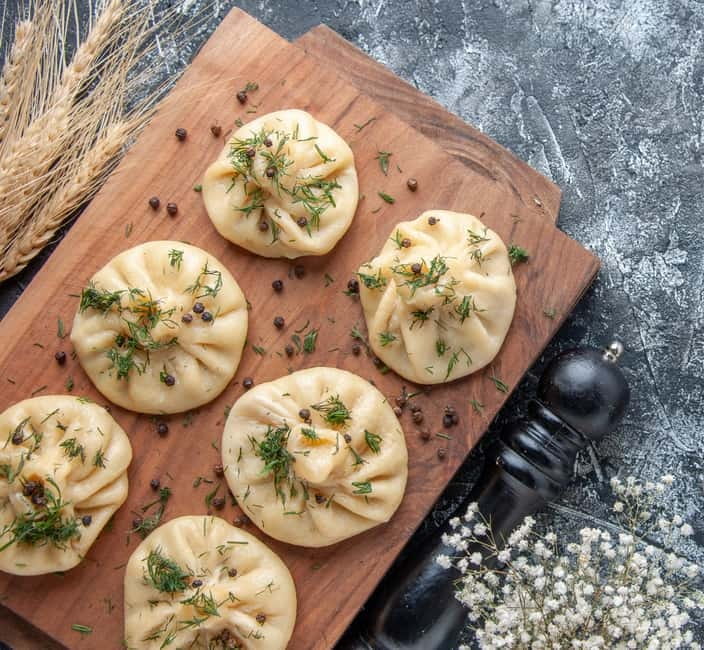
One thing I love about this tour format is that it’s not built around one restaurant trying to impress you. It’s built around comparison. You start with a famously good khinkali place, then you move on, so you can taste how dough thickness, filling style, and flavor balance change from stop to stop.
First stop: a well-known khinkali restaurant that’s easy to miss if you’re not looking for it. It’s described as a hidden boho brick-lined basement on the Mtatsminda hillside. That kind of setting matters because it usually signals a place focused on food over polish. In other words, you’re likely getting the kind of dumpling obsession that leads to thin dough and deeply satisfying fillings.
Second stop: a design cafe concept that started with khinkali on Sundays only. The idea was customer-driven, and once people tasted it, the popularity pushed the dish into a daily rhythm. The key for you is that this stop helps show how khinkali fits into modern city life without losing its identity. It also gives you another reference point for how flavors can differ even when the dish looks similar.
Final part of the food crawl: you don’t just watch. You get a more interactive finish where you can create khinkali for your taste. Then you try the wine-and-herb khinkali soup and cap it off with the sweet dessert dumpling.
A small practical note: with multiple tastings, it helps to eat slowly at each stop. Pay attention to the dough feel, the seasoning, and how the filling tastes when it’s first bitten versus when it settles on your palate. That’s how you’ll figure out which style you’d actually seek out later for dinner.
George Makes It Feel Local, Not Just Touristic
A food tour lives or dies by the guide, and here the name that keeps coming up is George. In the way he’s described, he’s friendly, and he explains things in a way that connects Georgian life to what’s on your plate.
That is a big deal. Anyone can line up dumplings and call it a day. But the tours that feel best answer questions like:
- Why does khinkali matter here?
- What should I notice about the dough and filling?
- How does this food connect to everyday Georgian culture?
If you want more than a meal, this is the right energy. It’s also a good fit if you didn’t come to Tbilisi to cook at home. The tour approach gives you the local version of the experience, without the hassle of sourcing ingredients or guessing at technique.
George’s presence also helps with pacing. When you’re eating often in a short time, you don’t want silence. You want light commentary that keeps you engaged, plus reminders so you don’t miss a tasting or forget to ask for a vegetarian option if you’re eating that way.
Still around Tbilisi? These come up often:



Wine and Lemonade: The Simple Trick for Enjoyable Bites
This tour includes 1 glass of local wine and local lemonade. That combination is practical. Wine adds flavor context, while lemonade gives you something refreshing to reset between tastings. It’s a smart pairing for a short dumpling sprint because it keeps your palate from feeling flat.
Even if you don’t plan to drink much, the wine matters. You’re likely to be tasting khinkali versions that use wine in some way, including the soup cooked with wine and fresh herbs. Having that context while you eat makes the flavors click faster.
For some people, wine is the highlight. For others, it’s just a bonus. Either way, the presence of lemonade keeps the tour comfortable, especially if you’re trying different dough and filling combinations in quick succession.
The City Walk: From Aghmashenebeli Avenue to Liberty Square
Food tours can feel like a blur of doorways and plates. This one balances the eating with a walk through Tbilisi that helps you build a mental map.
Along the way, you’ll pass or stop by:
- Aghmashenebeli Avenue, good for quick street scenes and atmosphere
- Dry Bridge Market, where you’ll have time to look around and take photos
- 9 April Park, a scenic break in the middle of landmark spotting
- The National Gallery and the Georgian Museum of Fine Arts areas, which are handy if you want culture nearby without planning ahead
- Kashueti St. George Church, where you also get time that can include shopping and sightseeing
- Parliament of Georgia and Liberty Square, big focal points that instantly make Tbilisi feel like a capital
- The Monument of St. George, Rustaveli Avenue, and major performance buildings like the Rustaveli Theatre and the National Opera and Ballet Theater area
Here’s why that sightseeing pairing works: when you’re eating khinkali, you’re focused on taste. When you’re walking between stops, you’re absorbing the city’s layout. That gives you a fuller sense of place, so later in your trip you can find your way without feeling lost.
Practical tip: wear comfortable shoes. Even if the pace isn’t described as intense, the tour is still built around walking and multiple photo moments. If your feet get cranky, your enjoyment drops.
What $65 Buys You in Real Terms
At $65 per person, you’re paying for more than food. You’re paying for three forms of value that add up fast:
- Guided stops with an English professional guide
- Hotel pickup and drop-off, which saves time and hassle
- Multiple tastings, including at least 5 types of khinkali, plus 1 glass of local wine and local lemonade
If you tried to recreate this on your own, you’d need to pick restaurants, solve transport, and hope you found enough variety without wasting time on mismatched places. Here, the tour builds variety into the schedule, which is the hardest part to do solo when you’re short on time.
The value is strongest if you want tasting plus city orientation in one go. If you’re already planning to spend several evenings eating out and you only care about one favorite dumpling style, you might decide to skip. But if you like comparing and learning quickly, $65 starts to feel reasonable.
Who This Tour Fits Best
This “Top 5 Highlights of Dumplings” tour is ideal for:
- Food lovers who want to try khinkali without making it yourself
- First-time visitors who want to learn the city while eating
- People who like guided context, especially explanations from a friendly local guide like George
- Travelers who want vegetarian options included, not treated as a special request
- Anyone who wants a short, high-yield experience in 3 hours
It’s less ideal if you dislike dumplings or if you have a very sensitive stomach and prefer to stick to one restaurant. Also, because you’re sampling multiple types, it’s not the best choice if you want a slow, leisurely meal with long pauses between courses.
Should You Book This Khinkali Tour?
I’d book it if you want a fast, flavorful start to Tbilisi, with at least 5 khinkali tastings, a sip of local wine, and a guided walk that gets you oriented. This is the kind of tour that works as a first day plan, or a mid-trip reset when you want something social and taste-driven.
Skip it if khinkali does not excite you, or if you’d rather spend 3 hours fully relaxing in one place. But if you’re hungry, curious, and want to feel like you’re seeing the city through local food, this tour is a strong pick.
FAQ
How long is the Dumplings tour in Tbilisi?
The tour lasts 3 hours.
How many types of khinkali (dumplings) will I taste?
You’ll have at least 5 types of khinkali during the experience.
Is local wine included?
Yes. You receive 1 glass of local wine.
Does the tour include hotel pickup and drop-off?
Yes. Hotel pickup and drop-off are included.
What languages are the guides available in?
The tour guide is available in English and Russian.
Are vegetarian options available?
Yes. Vegetarian varieties of khinkali are included.
What is the price per person?
The price is $65 per person.
Newer trips around Tbilisi
- Tbilisi Private Dinner: Georgian BBQ & Fireplace
★ 5.0 · 1 review - Tbilisi: Khinkali Tasting Lunch with Local Drinks and Pickup
★ 5.0 · 1 review - Day trip in Kakheti-wine tour
★ 5.0 · 1 review - Tbilisi & Mtskheta bus tour hop on hop off
★ 5.0 · 1 review - Tbilisi: Christmas Market & Hidden Gems Guided Walking Tour
★ 5.0 · 1 review - Stalin’s Secrets: An Underground Journey Through History
★ 5.0 · 1 review
Tours, compared.

Highlights of Caucasus Mountains-Jinvali,Ananuri,Gudauri,Kazbegi(Group tour)
Read our review →
Kakheti Wine Region Tour with 9 Wine Tastings
Read our review →
Mtskheta, Jvari, Gori and Uplistsikhe Day Tour
Read our review →
Kakheti Wine Region Tour with 10 Wine Tastings
Read our review →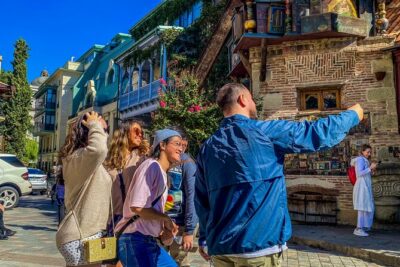
Tbilisi Walking Tour Including Cable Car and Traditional Bakery
Read our review →