
Reviewed · FOOD & DRINK
TBILISI: Authentic Georgian Cheese Tasting Experience
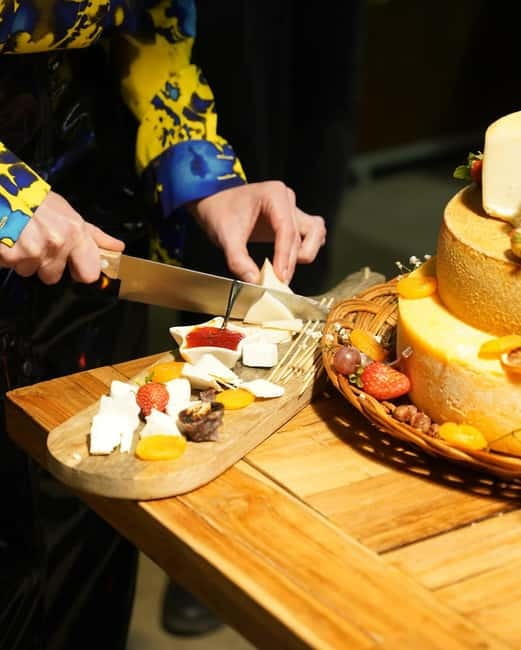
Cheese tasting in Tbilisi, without the guesswork. In just 40 minutes, you get a focused crash course in Georgian cheese culture, paired with wine and served in a small group setting.
I especially like the way this experience lines up four distinct local cheeses so you can taste real variety, not just one style stretched out. I also like that the plan includes two glasses of Georgian wine plus water, so you are not doing the boring math in your head while you decide what to sip.
One consideration: this experience is not suitable for people with lactose intolerance, since cheese is the main event and you will be sampling multiple types.
In This Review
- Key highlights you will notice right away
- A 40-minute Georgian cheese tasting that actually feels focused
- What those four cheeses teach you about Georgian dairy
- Sulguni, for elasticity and mild flavor
- Imeruli, the closest cousin to mozzarella-style cheese
- Brynza, for salty and crumbly bite
- The rest of the board, for regional variety
- Wine pairing: how the included red and white shape the tasting
- How the host and small group format improve the whole experience
- Price and value: is $45 fair for cheese plus two wines?
- Practical details that affect your day in Tbilisi
- Who should book this Georgian cheese tasting
- Should you book this cheese tasting in Tbilisi?
- FAQ
- How long is the Georgian cheese tasting in Tbilisi?
- How much does the experience cost?
- What cheeses are included in the tasting?
- Is wine included?
- Is lunch included?
- What group size should I expect?
- What languages are available?
- Is this suitable for lactose intolerance?
- Is there free cancellation?
Key highlights you will notice right away

- Four cheeses in one session, including styles like sulguni, imeruli, and brynza
- Red and white Georgian wine included, with water to pace yourself
- Small group size up to 6, which keeps questions and explanations from getting lost
- English or Russian instruction, so you can follow the tasting talk clearly
- Mountain and remote-village selection, aiming for authentic regional variety
Other food tours in Tbilisi:
- Tbilisi:Mtskheta,Jvari,Bazaar,wine tasting,Chronicles of Georgia★ 5.0 · 730 reviews
- Old Tbilisi Tour: Private Walking Tour With Wine Tasting★ 5.0 · 273 reviews
- Private Tbilisi Food Tour: 9 Tastings Walk in Bohemian District★ 5.0 · 227 reviews
- Tbilisi Food Tour in a Local Family★ 5.0 · 113 reviews
A 40-minute Georgian cheese tasting that actually feels focused
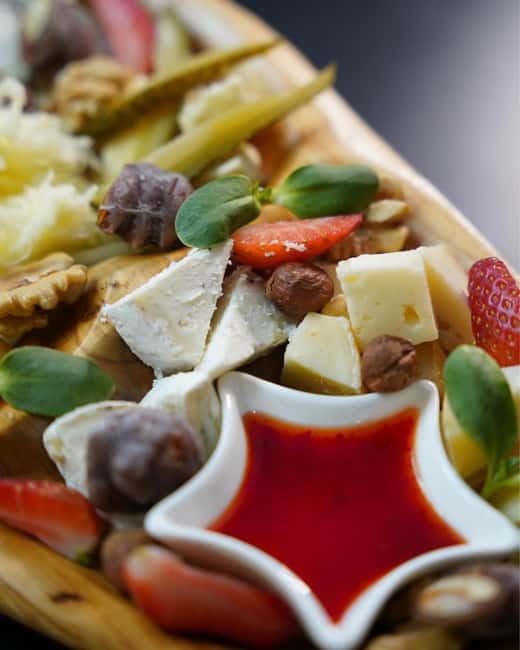
If you want Georgian food culture in Tbilisi, cheese is a smart place to start. Dairy is not a side dish here. It is part of everyday life, and it shows up in farms, mountain traditions, and local markets. This experience takes that big topic and shrinks it into something you can finish even on a busy day.
The timing matters. Forty minutes is long enough to taste, compare, and ask questions, but short enough that you are not sitting through a lecture while your appetite quietly disappears. The format is also built for a smooth flow: a host leads you through the cheeses, you taste in an order designed for comparison, and you get included drinks to help you notice texture, salt, and richness.
You will likely spend most of your time at a specialty cheese bar in the city, working through a board of samples while the host connects each cheese to what makes it Georgian. And because the group is small, the experience does not feel like a factory line.
What those four cheeses teach you about Georgian dairy
Georgian cheese is not one thing. It is a whole family of styles made from cow, sheep, or goat milk, sometimes blended. Even when cheeses are served on the same board, they can be wildly different in texture and flavor. That is the point, and it is why you should pay attention as the tasting begins.
Here is the kind of variety you can expect in the tasting lineup:
Sulguni, for elasticity and mild flavor
Sulguni is often described as mild and elastic. In practice, that usually means a cheese with a gentle taste that stretches or bends rather than shattering. When you try it, focus on the texture first, then the flavor. If you like cheese that does not overwhelm your palate, this one is often the gateway.
Imeruli, the closest cousin to mozzarella-style cheese
Imeruli can feel familiar if you have had mozzarella, because it is often similar in style. But Georgian versions usually have their own character depending on the milk source and how it is handled. This is a good cheese for noticing how chew and salt balance together.
Other Tbilisi tours and day trips:

Brynza, for salty and crumbly bite
Brynza is known for being salty and crumbly. That texture difference is useful. After something elastic or stretchy, a crumbly cheese changes how it hits your mouth. It can also make pairing decisions easier because salty cheeses tend to react strongly to wine.
The rest of the board, for regional variety
Beyond these named examples, the tasting is designed around high-quality Georgian cheeses collected from mountain regions and remote villages. That matters, because you are not only sampling one method or one flavor profile. You are tasting the idea that Georgian cheese making varies by place and tradition.
Tip for your tasting: do not treat each sample as a separate snack. Instead, compare across the board. Try to answer: Is this one softer or firmer? Does it melt-like feel different from crumbly? Does the salt level change what the wine tastes like after each bite?
Wine pairing: how the included red and white shape the tasting
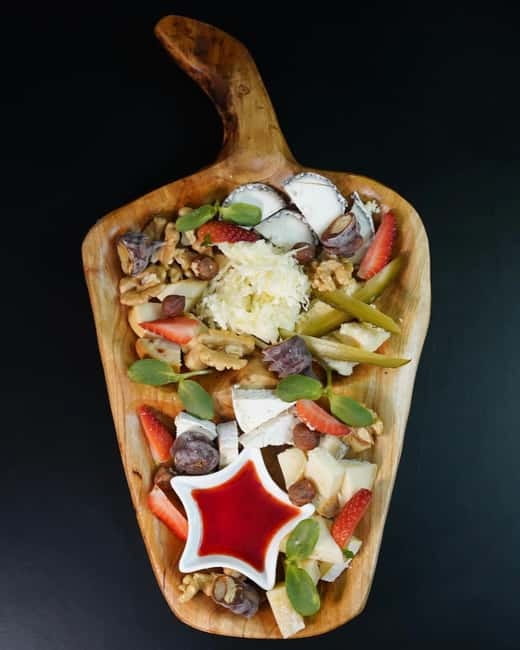
This experience includes two glasses of local wine, one red and one white. You can think of this as palate training. Cheese often has fats and salt, and wine is a clean way to reset your mouth between tastes.
A practical way to approach it:
- Start by tasting cheese before you decide what the wine is doing.
- Then take a sip and ask whether the wine makes the cheese feel more mellow, sharper, or rounder.
- Finish with another taste of the cheese to confirm what you think changed.
Because you are not paying extra for drinks, you can focus on the pairing instead of turning it into a budget exercise. And since the experience also includes water, you can pace yourself like a sane person rather than a hero with zero hydration.
If you are a wine beginner, this still works. The host is there to guide you, in English or Russian, so you are not left googling tasting notes on your phone mid-session.
How the host and small group format improve the whole experience
Group size is listed as limited to 6 participants. That is a big deal for this kind of food event. With a larger group, tasting becomes a performance you watch rather than a lesson you participate in. With a small group, you get time to ask questions and get answers that actually fit your curiosity.
You also benefit from having a host present for the full session. The host can explain why the cheeses differ, how they are typically made, and what to notice while tasting. The experience is described as organized and led by very nice people, and that kind of friendly competence makes food tastings more enjoyable. You feel cared for, not processed.
If you have never tried Georgian cheeses before, this format can help you avoid the awkward stage where you think you are missing something. The goal is not to test you. It is to help you taste with understanding.
Price and value: is $45 fair for cheese plus two wines?
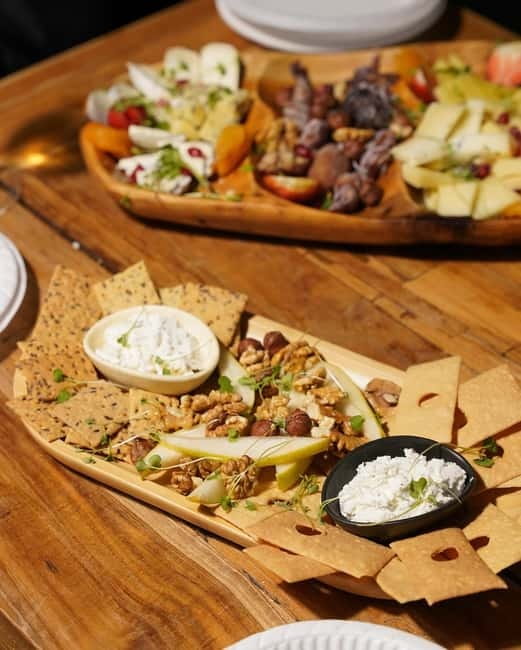
At $45 per person for a 40-minute tasting, the question is whether you get enough food and drink for the money. Here is what is included: a host, a tasting of 4 different local cheeses, two glasses of Georgian wine (one red, one white), and water.
For a short food experience, that is solid value if you would otherwise pay for a cheese board and drinks separately. The biggest value win is that you get guidance plus pairing, not just a random assortment of cheese.
Also, the small group experience reduces the chance you feel rushed or lost. You are paying for a structured tasting, not only for the products on the table.
What is not included is lunch. So plan for this to be a snack-sized activity or a supplement to meals, not your full meal plan. If you are hungry, eat beforehand or plan for food after.
Practical details that affect your day in Tbilisi
This is designed for people who want to fit something meaningful into a tight schedule. With a 40-minute duration, you can usually slot it between walking blocks or market time.
Language options are English and Russian, which makes the experience easier to follow, even if your Georgian food vocabulary is zero. The activity is also listed as having instructor-led guidance and a host, which usually means you will not be left guessing what each cheese is supposed to taste like.
And since it is not suitable for lactose intolerance, if you are sensitive to dairy, skip this one. Cheese is central to the entire format, so substitutions are not mentioned.
Who should book this Georgian cheese tasting
I think this experience fits best if you want:
- A quick, structured intro to Georgian cheese variety in Tbilisi
- Included red and white wine without extra planning
- A small-group setting where you can ask questions and get real explanations
You might skip it if:
- You cannot eat dairy, since it is explicitly not suitable for lactose intolerance
- You want a longer, multi-course meal experience, because this is 40 minutes and focused on tasting
It is also a nice choice for couples, food lovers on a schedule, and travelers who like learning by tasting rather than reading.
Should you book this cheese tasting in Tbilisi?
Based on what is included and how the tasting is structured, I would book it if you are in Tbilisi and you want Georgian dairy culture in a single, well-timed stop. The value is in the combination of four cheeses, two wine pairings, and a host guiding you through the differences. The small group size also makes the experience feel more personal than a typical stop-and-serve food event.
Only hold off if you need lactose-friendly options or if you are specifically hunting for a full meal. If not, this is exactly the kind of practical, authentic tasting that helps you understand what makes Georgian food feel different from the first bite.
FAQ
How long is the Georgian cheese tasting in Tbilisi?
The experience lasts 40 minutes.
How much does the experience cost?
The price is $45 per person.
What cheeses are included in the tasting?
The tasting includes 4 different local cheeses. Examples mentioned include sulguni (mild and elastic), imeruli (similar to mozzarella), and brynza (salty and crumbly).
Is wine included?
Yes. You get 2 glasses of local wine, including 1 red wine and 1 white wine, plus water.
Is lunch included?
No. Lunch is not included.
What group size should I expect?
It is a small group limited to 6 participants.
What languages are available?
The host/instructor offers English and Russian.
Is this suitable for lactose intolerance?
No. It is not suitable for people with lactose intolerance.
Is there free cancellation?
Free cancellation is available up to 24 hours in advance for a full refund.
Newer trips around Tbilisi
- Tbilisi Private Dinner: Georgian BBQ & Fireplace
★ 5.0 · 1 review - Tbilisi: Khinkali Tasting Lunch with Local Drinks and Pickup
★ 5.0 · 1 review - Day trip in Kakheti-wine tour
★ 5.0 · 1 review - Tbilisi & Mtskheta bus tour hop on hop off
★ 5.0 · 1 review - Tbilisi: Christmas Market & Hidden Gems Guided Walking Tour
★ 5.0 · 1 review - Stalin’s Secrets: An Underground Journey Through History
★ 5.0 · 1 review
Food & Drink, compared.
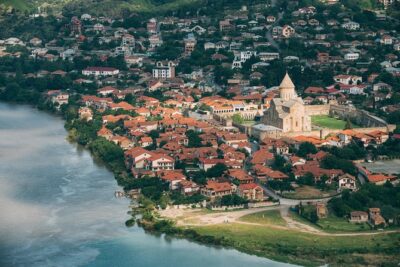
Mtskheta,Jvari,Bazaar,wine tasting,Chronicles of Georgia
Read our review →
Old Tbilisi Tour: Private Walking Tour With Wine Tasting
Read our review →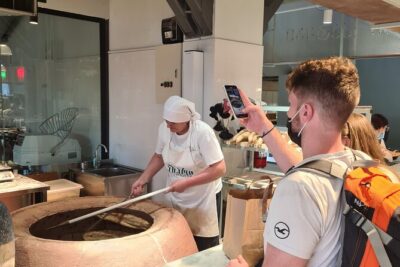
Private Tbilisi Food Tour: 9 Tastings Walk in Bohemian District
Read our review →
Private Wine Tasting in Prince Karalashvili Wine Cellar. Tbilisi
Read our review →
Private Wine tasting in Historic Karalashvili Wine Cellar
Read our review →
Private Tour From Tbilisi to Kakheti Sighnaghi with Wine Tasting
Read our review →
Full-Day Kakheti & Sighnaghi Tour with Wine Tasting
Read our review →Browse the lists this tour appears in