Reviewed · TBILISI TOURS & EXPERIENCES
Tbilisi ‘Dive into the Past’
Stairs, sulfur, and stories in one tidy walk. This 4-hour Tbilisi history-style private tour strings together the city’s oldest bathing sites, fortress views, old-town churches, and a couple of charming detours like a marionette stop that you might catch. I like the way the day feels local-minded, not just a checklist of postcard spots.
Two things I genuinely like: first, you get admission tickets included at every listed stop, so you are not doing the math on entry fees while you are already walking. Second, the route mixes major sights like Narikala with more human-scale moments, like the marionette theater windows and the plain, real stair-and-street rhythm of Betlemi Street.
One drawback to plan for up front: this is a walking tour with a lot of stairs and a long up-and-down stretch, plus it runs only in good weather.
In This Review
- Key things to know before you go
- The 10:00 a.m. meeting point and why the route feels efficient
- Stop 1: Tbilisi Antique Archaeological Museum and the oldest sulphur baths
- Stop 2: Narikala Fortress, the hilltop big moment
- Stop 3: Betlemi Street Stairs, where shoes matter more than selfies
- Stop 4: Dzveli Tbilisi Sulphur Waterfall for a quick sensory breather
- Stop 5: Rezo Gabriadze Marionette Theater and the tiny windows thrill
- Stop 6: Anchiskhati Basilica, Tbilisi’s oldest basilica stop
- Stop 7: Tbilisi Wall Ruins, V-century remnants you can actually picture
- What makes this tour feel worth $25 per person
- Practical tips to make the day easier (and more fun)
- Who this tour suits best
- Should you book Tbilisi Past?
- FAQ
- How long is the Tbilisi walking tour?
- What time does the tour start, and where does it meet?
- Is the tour offered in English?
- Is this a private tour or a group tour?
- What does the tour price include?
- Do I need to print a ticket?
- Is it a walking tour with stairs?
- Are service animals allowed?
- What if the weather is bad or I need to cancel?
Key things to know before you go
- Oldest sulfur bath area, with entry included, giving you a strong sense of Tbilisi’s bathing tradition
- Narikala Fortress stop that centers big views and the feel of a strategic hilltop
- Betlemi Street Stairs built into the route, so wear shoes you trust
- Dzveli Tbilisi Sulphur Waterfall as a quick, refreshing breather before the next leg
- Rezo Gabriadze Marionette Theater with a short chance to see Georgian marionettes at tiny windows
- Anchiskhati Basilica and V-century wall ruins, for that grounded, older-than-your-day feeling
Other Tbilisi tours and day trips:
- Tbilisi: Day Trip to Kazbegi, Gudauri, Gergeti, and Ananuri★ 4.9 · 3,203 reviews
- Day Trip to Kakheti Wine Region Including 9 Wine Tastings★ 5.0 · 2,774 reviews
- Highlights of Caucasus Mountains-Jinvali,Ananuri,Gudauri,Kazbegi(Group tour)★ 5.0 · 2,682 reviews
- From Tbilisi: Kakheti Wine Region Tour with 9 Wine Tastings★ 4.9 · 2,541 reviews
The 10:00 a.m. meeting point and why the route feels efficient
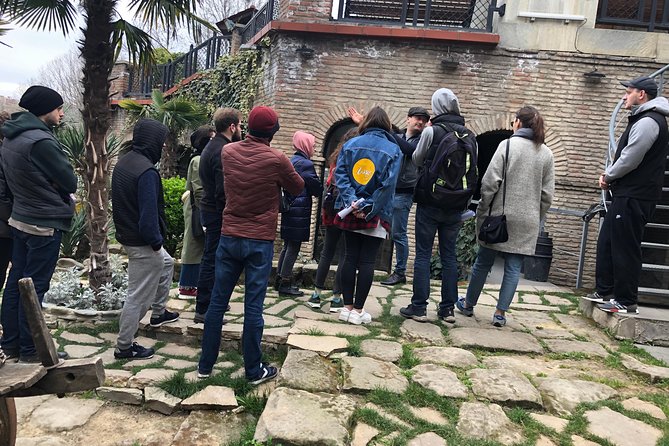
You start at Sayat Nova Sculpture (MRQ5+WHF) in Tbilisi, and the tour ends back at the same meeting point. The start time is 10:00 am, and the whole experience runs about 4 hours.
For me, the best part is how the pacing is broken into short, purposeful chunks. You do not have to “power through” one huge attraction for hours, because the stops refresh the view, the footing, and the vibe.
Stop 1: Tbilisi Antique Archaeological Museum and the oldest sulphur baths
The first stop is Tbilisi Antique Archaeological Museum, where you can see the oldest sulphur baths discovered right in the old-town center. Even if you are not a museum person, sulfur baths are such a core part of Tbilisi identity that this opening gives you instant context for why the city smells the way it does, and why people keep coming back to bathing culture.
This is also a smart warm-up. Instead of immediately throwing you into the steepest stair sections, you get a contained start point where you can settle in, read, and understand what you are about to see.
One practical note: museum entry is included here, so you can treat this stop like a scheduled reset rather than a future ticket task.
Stop 2: Narikala Fortress, the hilltop big moment

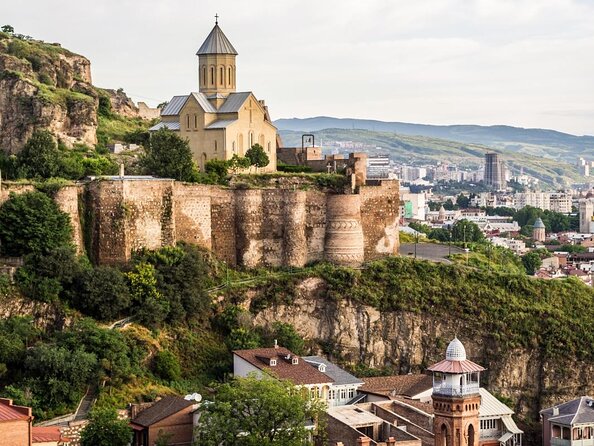
Next up is Narikala Fortress, described as the main fortress for many centuries. This stop is short on the clock but big on atmosphere, because fortress sites naturally come with views and a sense of geography. You get the kind of “oh, so that is how the city sits” feeling that makes the rest of the walk easier to understand.
This is where the route starts to reward your attention. As you look around, you will notice how hills and walls shape where people could live, defend, and trade.
Because the museum was your footing-and-brain warm-up, Narikala becomes the payoff. You get a clear visual anchor before you move deeper into the old-town stairs.
Stop 3: Betlemi Street Stairs, where shoes matter more than selfies
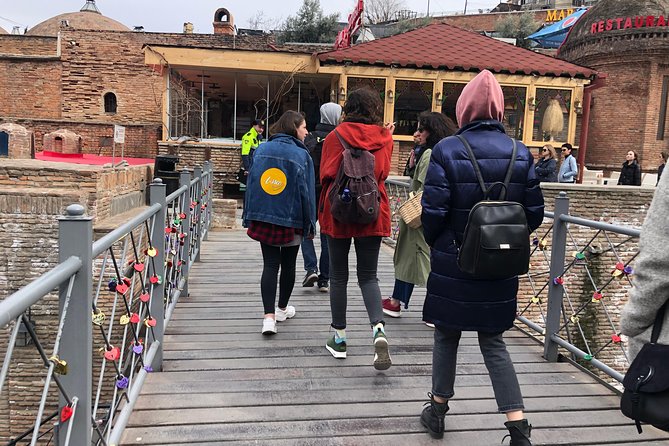
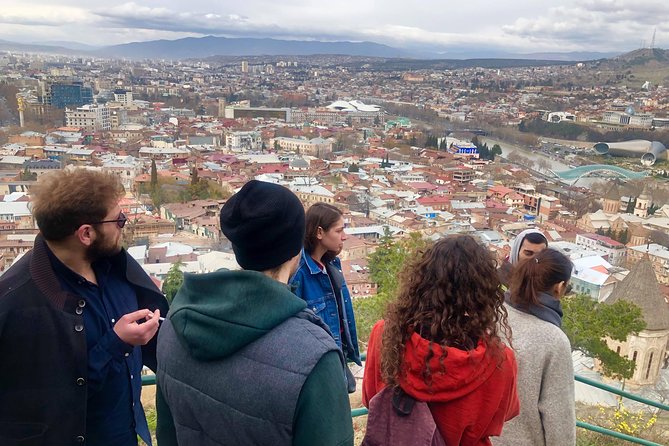
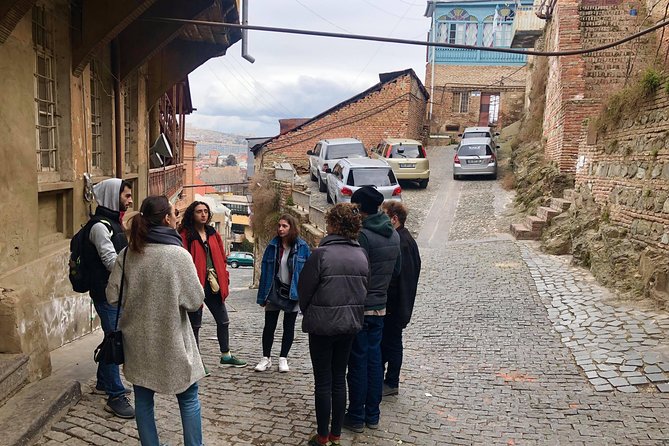
Then comes the longest leg: Betlemi Street Stairs. You will spend about 1 hour walking up and down through the old-town, and the tour description is very honest about it: expect a long walk with lots of stairs.
This is the part where I recommend you treat your body like it is part of the experience. Tight shoes, slippery soles, and a phone held too high all make this segment harder than it needs to be. If you can, go slow, take a breath on the turns, and keep your eyes open for old-town details along the way.
There is also a quiet benefit to this section. Once your legs get moving, the old-town itself starts to feel like a series of connected scenes, not separate sights. The stairs turn the walk into a lived-in route instead of a rapid photo sprint.
Still around Tbilisi? These come up often:


Stop 4: Dzveli Tbilisi Sulphur Waterfall for a quick sensory breather
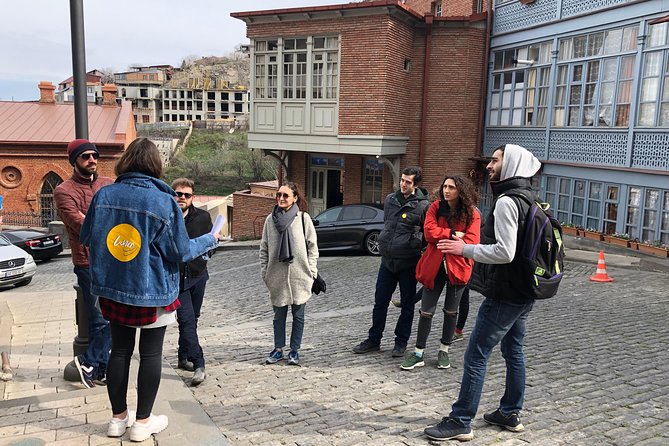
After the stair effort, the tour includes Dzveli Tbilisi Sulphur Waterfall for about 15 minutes. This stop is framed as a place where people feel so fresh and clean just by stopping by, and even on a brief visit, that idea makes sense in a city where sulfur is everywhere in the background.
Think of this as your reset. The day has been history-heavy and uphill-heavy, and this is the moment where you get a different kind of “Tbilisi feeling,” more sensory than scholarly.
The admission ticket is included, which keeps the flow smooth. You do not want to lose energy later in the route to ticket lines or last-minute add-ons.
Stop 5: Rezo Gabriadze Marionette Theater and the tiny windows thrill
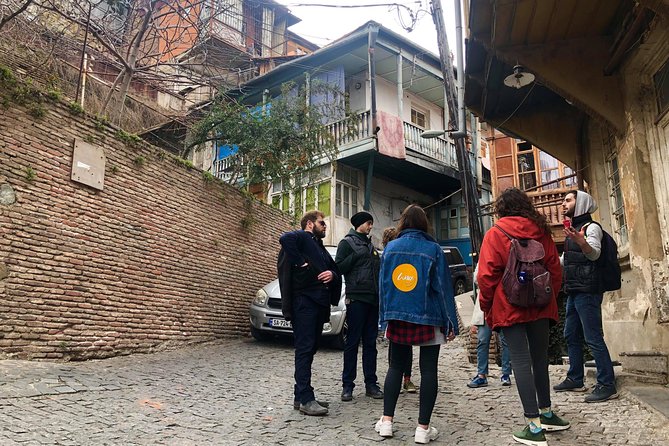
Next is Rezo Gabriadze Marionette Theater, with a 10-minute stop. The key detail here is that you might get lucky and see Georgian marionettes coming out from the theater’s tiny windows.
So yes, this one has a bit of chance built in. But that is also part of why it works on a walking tour, because it is short, light, and different from what you have been doing. You get a quick cultural moment without committing to a long performance schedule.
If you want value here, keep your expectations flexible. Even if you do not catch the windows show, you still get the sense of place, and the stop breaks up the longer sightseeing stretches.
Stop 6: Anchiskhati Basilica, Tbilisi’s oldest basilica stop
The itinerary then shifts to Anchiskhati Basilica, described as the oldest basilica in Tbilisi. This is a great move at this stage of the walk, because after stairs and sulfur stops, a church visit gives you a calmer pace to look, read, and slow down.
This stop is short at 10 minutes, so you will not have time for a deep study session. But that is okay. You are using the basilica as a historical and spiritual anchor, and then you are moving onward while the day still feels fresh.
If you like architecture and atmosphere, this is one of the easiest places to appreciate the “older Tbilisi” feeling without needing a long time commitment.
Stop 7: Tbilisi Wall Ruins, V-century remnants you can actually picture
The final sight is Tbilisi Wall Ruins, described as V century wall ruins. This is a subtle but meaningful capstone. You move from a functioning sacred space at Anchiskhati to a set of remnants, and that contrast helps you understand the city’s layers of change.
It is only 10 minutes, but ruins are visual teachers. Once you see fragments of older fortification, it becomes easier to imagine what Narikala’s long-term defensive role might have meant in practice.
At this point, you will likely feel the day in your legs, but the route finishes strong by giving you something that lingers in your mind, not something that disappears instantly.
What makes this tour feel worth $25 per person
The price is $25.00 per person, and it lasts about 4 hours. For that amount, the most important value point is that admission tickets are included for every listed stop, not just the big attractions.
That matters because it protects your budget. Walking tours can turn expensive when each pause demands a new entry ticket. Here, the pricing is set up so your money goes toward the whole experience, including the museum, fortress, sulfur sites, theater stop, basilica, and wall ruins.
Also, this is a private tour, so you are not competing for guide attention or getting rushed by a larger group’s pace. If you travel with family, friends, or even just your own preferred speed, private formats tend to feel more human.
Finally, the guide team is described as friendly, and the tour approach focuses on making you feel Georgia as more than a sightseeing label. That is exactly the kind of “why am I here” value I look for in a short walk.
Practical tips to make the day easier (and more fun)
This is offered in English and uses a mobile ticket, which keeps things simple at the meeting point. It is also described as near public transportation, so you are not stuck planning a complicated arrival.
But the biggest practical factor is the stairs. This tour is very clear that it is a walking route with lots of stairs and includes a long up-and-down stretch. Plan for it like you plan for a hike, even if it is not a mountain climb.
Here are a few easy moves that will help:
- Wear shoes with grip, because old-city stone can be slick.
- Bring water, because the stair section can surprise you even on a cool morning.
- Dress for weather, since the experience requires good weather.
If you are traveling with service animals, service animals are allowed, which is helpful to know before you go.
Who this tour suits best
This works especially well if you want Tbilisi history without sitting on a bus all day. It is built for active visitors who like walking, reading short stop-by-stop context, and collecting a set of places that tell one connected story.
It is also a strong choice if you already know the main sights and want a route that feels more local and less generic. The stops are specific enough to feel curated around sulfur bathing culture, fortress geography, and older layers of the city.
If you hate stairs or you want a very relaxed pace with minimal walking, you might not love it. The stair-heavy middle section is the tradeoff that gives the walk its character.
Should you book Tbilisi Past?
Yes, I think you should book this tour if you want a short, well-priced way to get real context across Tbilisi’s old layers. The admission included at every stop plus the private format make it a tidy deal, especially when you want more than a quick photo circuit.
Book it when you have decent weather and you can handle a lot of stairs in the old town. If that sounds like your kind of day, this is a solid $25 route that gives you sulfur history, fortress views, church atmosphere, and a playful marionette moment, all without turning your schedule into a mess.
FAQ
How long is the Tbilisi walking tour?
It runs for about 4 hours (approx.).
What time does the tour start, and where does it meet?
It starts at 10:00 am at Sayat Nova Sculpture (MRQ5+WHF, Tbilisi, Georgia). It ends back at the same meeting point.
Is the tour offered in English?
Yes, it is offered in English.
Is this a private tour or a group tour?
This is a private tour or activity, and only your group will participate.
What does the tour price include?
Admission tickets are included for each listed stop.
Do I need to print a ticket?
No. You receive a mobile ticket.
Is it a walking tour with stairs?
Yes. It includes a lot of stairs, including a long walk up and down in the old town.
Are service animals allowed?
Yes, service animals are allowed.
What if the weather is bad or I need to cancel?
The tour requires good weather. If it is canceled due to poor weather, you will be offered a different date or a full refund. You can cancel for a full refund up to 24 hours in advance.
Newer trips around Tbilisi
- Tbilisi Private Dinner: Georgian BBQ & Fireplace
★ 5.0 · 1 review - Tbilisi: Khinkali Tasting Lunch with Local Drinks and Pickup
★ 5.0 · 1 review - Day trip in Kakheti-wine tour
★ 5.0 · 1 review - Tbilisi & Mtskheta bus tour hop on hop off
★ 5.0 · 1 review - Tbilisi: Christmas Market & Hidden Gems Guided Walking Tour
★ 5.0 · 1 review - Stalin’s Secrets: An Underground Journey Through History
★ 5.0 · 1 review
Tbilisi Tours & Experiences, compared.
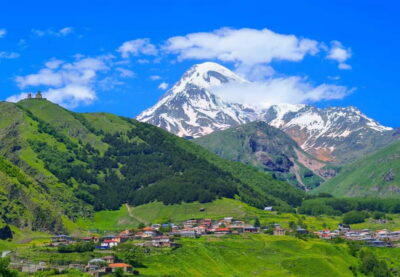
Day Trip to Kazbegi, Gudauri, Gergeti, and Ananuri
Read our review →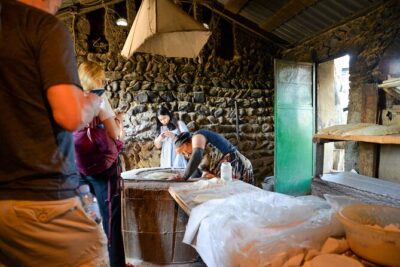
Day Trip to Kakheti Wine Region Including 9 Wine Tastings
Read our review →
Highlights of Caucasus Mountains-Jinvali,Ananuri,Gudauri,Kazbegi(Group tour)
Read our review →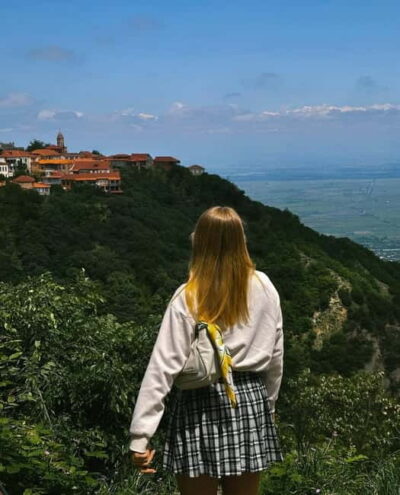
Kakheti Wine Region Tour with 9 Wine Tastings
Read our review →
Mtskheta, Jvari, Gori and Uplistsikhe Day Tour
Read our review →
From Tbilisi to Kazbegi, Ananuri, Gudauri & Gergeti
Read our review →
Kakheti Wine Region Tour with 10 Wine Tastings
Read our review →