
Reviewed · TUSHETI & KHEVSURETI HIGHLAND TRIPS
Discover the Untouched Beauty of Tusheti with Local Guides
Tusheti feels like a different world, and this trip is the fast track to it. You start with a stomach-flutter crossing over Abano Pass, then spend the next days among stone-tower villages like Omalo and Shenako, with forts, churches, and local museum time.
What I like most is the mix of action and culture, not just drive-and-photos. I also love how the route slows down in villages so you can actually look at the places, from medieval defensive towers to painted house fronts in Shenako. The one thing to consider is that this is a serious road and mountain itinerary, so you want good weather and you should be ready for long days on the move.
In This Review
- Key highlights at a glance
- Abano Pass to Omalo: where the adventure starts
- Omalo, Keselo Fortress, and the Visitor’s Center
- Shenako and Diklo: painted houses, church streets, and quiet corners
- Dartlo and the valley hikes: watchtowers and meadows
- Parsma towers and Girevi Fortress: the payoff climbs
- Bochorna at 2,345 m and Dochu’s stone streets
- Horse riding and hiking: how active is this trip?
- Price and value: is $537.37 a smart spend?
- Group size, start times, and what they mean for you
- What to expect on the road in Tusheti
- Should you book this Tusheti 3-day adventure?
- FAQ
- What is the start time and meeting point?
- Where does the tour end?
- How long is the experience?
- What is the group size?
- What kind of tickets do I receive?
- What activities are included?
- Which places and villages will we visit?
- Are admission tickets included?
- What if the weather is bad?
- How flexible is cancellation?
Key highlights at a glance
- Abano Pass off-road road time for dramatic views and real mountain driving
- Omalo village core plus Keselo Fortress and the local Visitor’s Center
- Shenako’s painted houses and church streets for easy wandering
- Dartlo, Kvavlo, and Parsma towers with plenty of time to walk between old watchpoints
- Girevi Fortress hike for panoramic payoff
- Bochorna and Dochu for high-altitude village life and quiet stone streets
Other Tusheti and Khevsureti highland trips:
- 3 Day Tusheti Tour Explore Unspoiled Wilderness★ 5.0 · 28 reviews
- Tusheti Thrill: Limited-Time Mountain Escape 3 day tour★ 5.0 · 26 reviews
- day trip to Shatili, Khevsureti, Mutso, Ananuri.★ 5.0 · 21 reviews
- Five days tour to Khevsureti (Abudelauri lakes) & Kazbegi with hikes.★ 5.0 · 14 reviews
Abano Pass to Omalo: where the adventure starts
The first morning is all about timing and momentum. You meet at Rose Revolution Square in Tbilisi at 7:00 am, then you’re soon pointed toward the Tusheti side of the Caucasus, where the road stops feeling like a road.
The big opener is the Abano Pass crossing, known for its dramatic scenery and challenging terrain. Even before you reach Tusheti’s villages, this is the kind of drive that makes you pay attention to your surroundings, because the views and turns are part of the experience. You’ll feel it in your shoulders and your stomach in a good way, and when you finally roll into Omalo, you understand why people chase remote places.
You’re in the region long enough to not just pass through. After arriving in Omalo, you settle into your accommodation and then step out to explore on foot, which is where Tusheti really starts to make sense.
Omalo, Keselo Fortress, and the Visitor’s Center
Omalo is the main village base, and it works well as your “home ground.” It’s not just a place to sleep, it’s where you orient yourself, figure out what you’re seeing, and learn the basic cultural logic behind these mountain settlements.
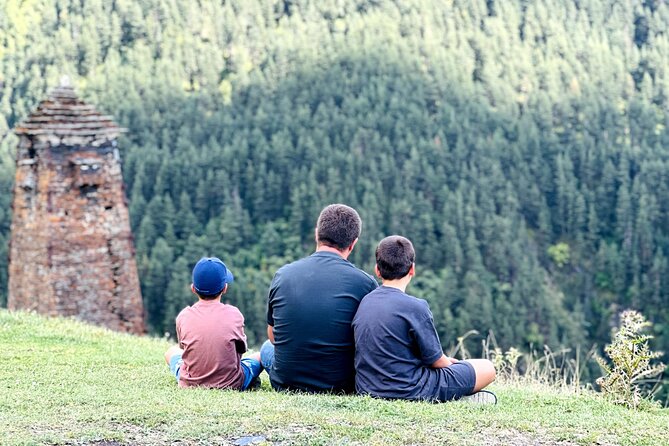
One of my favorite early stops is Keselo Fortress, a medieval defensive tower you can visit for wide views. The tower isn’t there for decoration. Its whole purpose was strategy, and standing there makes it easier to imagine why people built vertically, guarded routes, and kept watch over who came and went.
Right after that, you’ll spend time at the local museum at the Visitor’s Center. This is a smart move because it gives context before you head deeper into smaller villages. Even if you only catch the main ideas, you’ll start recognizing themes like defense, isolation, and local traditions that shape daily life in the high country.
Shenako and Diklo: painted houses, church streets, and quiet corners
After exploring Omalo, the route continues toward Shenako, and this is where you see Tusheti’s village charm up close. Shenako is known for beautifully painted houses, and when you walk the narrow streets, it’s easy to understand how art and identity sit side by side with mountain practicality.
The local church is part of the stroll. It’s not a big museum stop with a strict script. It’s the kind of place where you can take your time, look carefully, and interact naturally with villagers if things are friendly.
Then you push farther to Diklo, a more remote mountain village. This stop is valuable because it changes the pace again. Instead of just enjoying views, you get a glimpse of how life can look when a place is tucked away, not trying to impress anyone.
This pairing, Shenako then Diklo, balances “pretty and walkable” with “remote and reflective.” It’s a good mix for anyone who likes both photo moments and slower observation.
Dartlo and the valley hikes: watchtowers and meadows
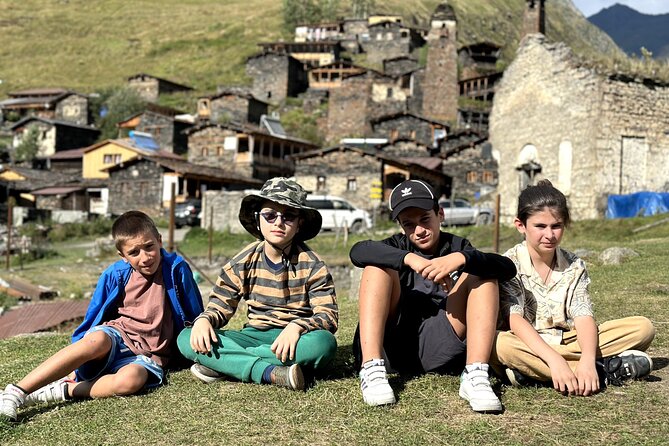
Day two starts with a drive to Dartlo, a village set among the hills and known for its traditional stone towers. The towers here feel like a repeating pattern, like you’re seeing the same architectural answer to different terrain. It’s not a random collection of stones, it’s a system for surviving mountain life.
Then comes the easy-to-moderate hiking time through surrounding valleys. The route area includes ancient watchtowers and meadows, so your walk is about more than distance. You’ll be moving through the same kinds of spaces people have used for generations to travel, watch, and connect with neighboring villages.
If you’re the sort of person who enjoys hiking with a purpose, this day has that. You’re not just chasing a summit. You’re following a human map across the hills, and the forts and towers make your direction feel meaningful.
You’ll also visit neighboring Kvavlo, with historic architecture and cultural sites. It’s the kind of stop where you can wander, pause, and look at how houses sit in relation to the valley. Details matter here, and the slower village pace helps you notice them.
Other Tbilisi tours and day trips:

Parsma towers and Girevi Fortress: the payoff climbs
Later in day two you explore Parsmа, where you’ll see ancient towers and defensive walls described as a strategic stronghold. Standing near old defenses is one of those experiences that changes how you see the whole region. You start imagining the sightlines, the safe routes, and what a community needed to protect.
From Parsma, the trip continues toward Girevi, positioned at the foot of the Caucasus Mountains. Then you hike up to the Girevi Fortress for panoramic views. This is your “shoulder-to-views” moment, where the effort feels worth it.
Panoramas in Tusheti hit differently. The area isn’t just wide. It looks layered, with ridges, villages, and high-altitude terrain folding into each other. If you pause at the right spots on the hike, you’ll see why these towers were built where they were.
Back in Omalo, the day finishes with a traditional Georgian supra, with local dishes and wine. It’s not just a meal to fill time. It’s a cultural reset, and it pairs nicely with the day’s walking and stone-tower observations. You’ll have the energy to talk about what you saw, not just race through it.
Bochorna at 2,345 m and Dochu’s stone streets
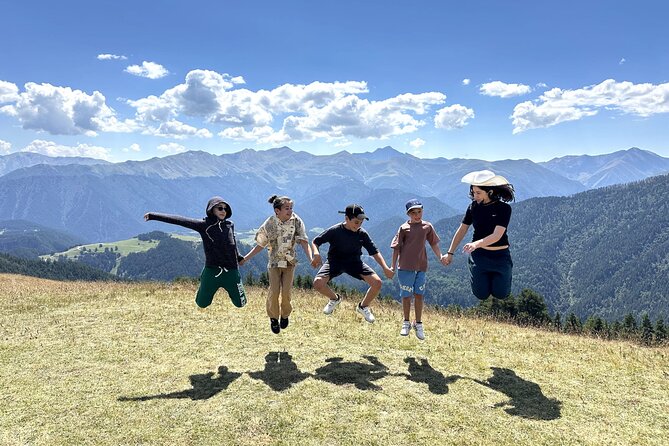
Day three shifts from village visiting and hikes into a “how high can village life go” storyline. You drive from Omalo toward Bochorna, described as the highest inhabited village in Europe at 2,345 m. The setting is rolling hills and mountain meadows, and the altitude alone makes the air and views feel sharper.
Bochorna is a great stop if you like quiet places that aren’t trying to be anything else. You’re not there for big crowds or a packaged performance. You’re there to understand what settlement looks like when the landscape and climate are part of everyday life.
After that, you head to Dоchu, a charming village where time seems slower, shaped by ancient stone towers and centuries-old houses. Dochu’s value is the feel of it. You can take your time reading the village layout, noticing how stone work holds up in the mountain environment.
After lunch, you drive back to Tbilisi, ending the trip back at the meeting point. The timing works because you’re not rushed into a last-minute sprint through the region. You finish while the experience is still fresh, not after it’s worn you down.
Horse riding and hiking: how active is this trip?
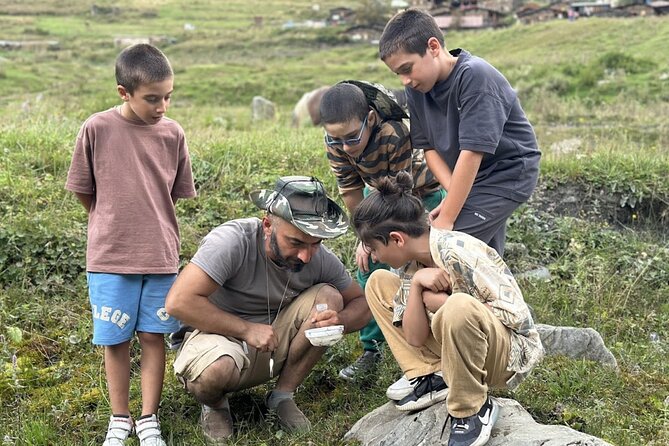
The tour experience is built around both horse riding and hiking, with options that fit different comfort levels. The region offers trails that range from easier valley walks to harder high-altitude passes, so you can match your day to your energy.
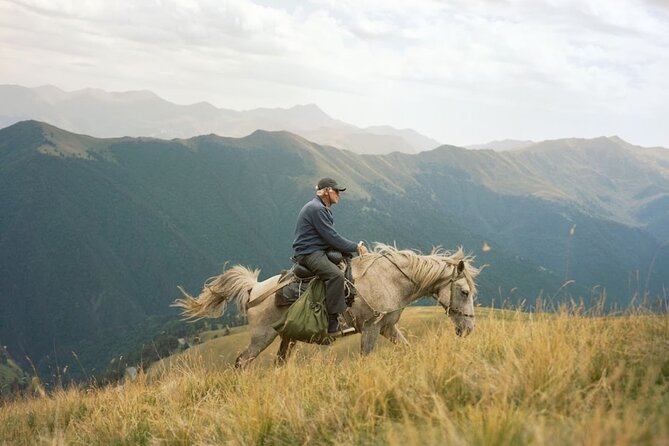
Here’s how I think about the activity balance. Off-road driving gives you mountain drama without needing technical skills. Horse riding adds that Tusheti “rugged trails” feel, and hiking is what connects you to the towers and fort routes on foot.
If you’re worried about fitness, focus on this approach: plan to walk consistently on uneven ground, and expect that at altitude you’ll feel the effort more quickly. Your best win on this trip is to go slowly on the first hike and let the body settle in.
Price and value: is $537.37 a smart spend?
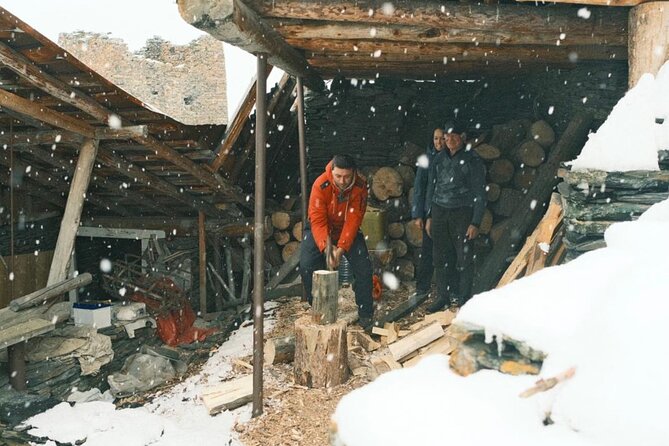
At $537.37 per person for about 3 days, the price makes sense if you care about getting to remote Tusheti efficiently. This isn’t a self-drive weekend where you chart dangerous mountain roads on your own. The value here is local expertise, safe driving, and the time to do multiple villages instead of a single highlight stop.
The route also packs in several distinct experiences that normally cost extra when you do them separately: guided time in the Visitor’s Center, multiple village and fortress stops like Keselo Fortress, and a full day of hikes including Girevi Fortress. Plus, you end day two with a traditional supra with local dishes and wine, which many people would otherwise pay for as an add-on.
Two practical notes that help you judge value:
- The group size cap is 14 people, which usually means a calmer pace than big buses.
- Admission tickets are listed as free for the itinerary stops, which reduces surprise costs.
So the money is going toward transportation over tough terrain, time with local guidance, and getting you into the places you probably would not manage alone. If that’s your goal, the price is a fair trade.
Group size, start times, and what they mean for you
The tour runs with a maximum of 14 people, which I like because you’re more likely to feel like a group that moves together, not a crowd that has to constantly reassemble.
The 7:00 am start matters more than it sounds. You’ll feel it on day one especially, but the early departure is what makes it possible to cross Abano Pass and still reach villages with enough daylight to explore.
Also note the end time structure: the activity ends back at the meeting point, which keeps the trip neat and reduces logistical stress. You’re not forced to figure out transport at the end, which is a big deal in remote regions.
What to expect on the road in Tusheti
Tusheti is famous for its remoteness, and that remoteness includes road conditions that can feel intense. The experience is built around professional local drivers, and that’s not a small detail. It changes the whole feeling of the trip from risky to controlled.
I recommend you take comfort seriously on this kind of itinerary. Bring layers for changing mountain temperatures, plan for uneven ground during village walks, and keep your patience for slow travel moments. When you do, the ride stops being stressful and starts feeling like part of the adventure.
Because this is a mountain region, the experience is also weather-dependent. The trip requires good weather, and if it’s canceled due to poor conditions, you’ll either get offered a different date or a full refund.
Should you book this Tusheti 3-day adventure?
Book it if you want a real Tusheti experience, not a quick drive-by. This itinerary gives you the best mix of driving the big pass, village wandering through places like Omalo and Shenako, and hiking with fortress payoff like Girevi Fortress.
Don’t book it if you hate long travel days or you’re not comfortable being active at altitude. Also, if you only want a mild, easy day, this trip can feel like a lot because it’s built around movement, towers, and multiple villages.
If you’re the type of traveler who likes off-the-main-road routes and wants local guidance that prioritizes safety, then Tusheti Travel’s 3 days are a strong choice.
FAQ
What is the start time and meeting point?
The tour starts at 7:00 am at Rose Revolution Square in Tbilisi, Georgia.
Where does the tour end?
The tour ends back at the same meeting point.
How long is the experience?
It’s listed as 3 days (approx.) and each day is shown as 12 hours.
What is the group size?
The tour has a maximum of 14 travelers.
What kind of tickets do I receive?
You receive a mobile ticket.
What activities are included?
You’ll do off-road driving through Abano Pass, spend time in Tusheti National Park, go on hiking, and there is horse riding included as part of the experience.
Which places and villages will we visit?
You’ll visit Omalo, Shenako, Diklo, Dartlo, Kvavlo, Parsma, Girevi, Bochorna, and Dochu, plus key sites like Keselo Fortress and Girevi Fortress.
Are admission tickets included?
The itinerary indicates admission ticket free.
What if the weather is bad?
The tour requires good weather. If it’s canceled due to poor weather, you’ll be offered a different date or a full refund.
How flexible is cancellation?
Cancellation is free. You can cancel up to 24 hours in advance for a full refund, and cancellations made less than 24 hours before the start are not refunded.
Newer trips around Tbilisi
- Tbilisi Private Dinner: Georgian BBQ & Fireplace
★ 5.0 · 1 review - Tbilisi: Khinkali Tasting Lunch with Local Drinks and Pickup
★ 5.0 · 1 review - Day trip in Kakheti-wine tour
★ 5.0 · 1 review - Tbilisi & Mtskheta bus tour hop on hop off
★ 5.0 · 1 review - Tbilisi: Christmas Market & Hidden Gems Guided Walking Tour
★ 5.0 · 1 review - Stalin’s Secrets: An Underground Journey Through History
★ 5.0 · 1 review
Tusheti & Khevsureti Highland Trips, compared.
3 Day Tusheti Tour Explore Unspoiled Wilderness
Read our review →
Tusheti Thrill: Limited-Time Mountain Escape 3 day tour
Read our review →
day trip to Shatili, Khevsureti, Mutso, Ananuri.
Read our review →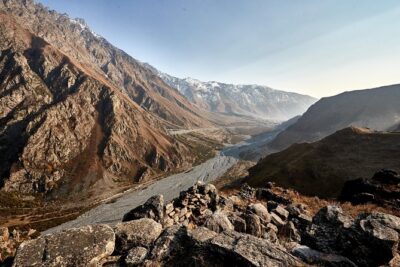
Five days tour to Khevsureti (Abudelauri lakes) & Kazbegi with hikes.
Read our review →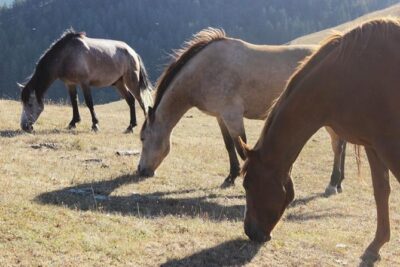
Trekking Tour from Tusheti to Khevsureti via Atsunta Pass
Read our review →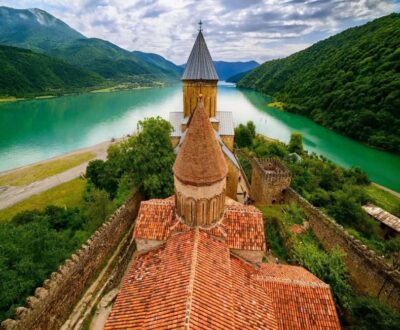
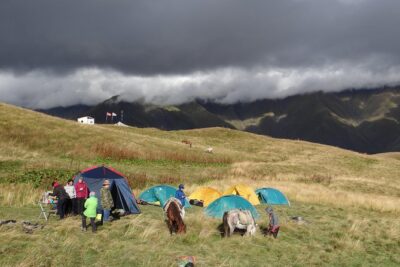
7-day hiking expedition to Tusheti through the Atsunta pass
Read our review →
Browse the lists this tour appears in