
Reviewed · MTSKHETA ANCIENT CAPITAL TOURS
Tbilisi: The Chronicles of Georgia, Jvari & Mtskheta Tour
Three UNESCO stops in five hours, with time to breathe.
This tour strings together the UNESCO sites at Jvari and Svetitskhoveli, plus the huge Chronicle of Georgia monument near the Tbilisi sea, and it does it at a smart morning pace. My favorite part is the built-in free time in Mtskheta, so you can shop, snack, or just soak up the old-town streets. The only drawback to plan around is walking and outdoor time, especially at the hilltop viewpoint where wind and cold can sneak up.
I like that the route is not just drive-by sightseeing, it includes guided walking where it counts. You get an English-speaking guide, an air-conditioned vehicle, and short, well-timed stops that still leave you enough space to take photos and ask questions.
One more consideration: this is not a good choice if you need wheelchair-friendly access or have mobility limits, because churches and old streets involve walking.
In This Review
- Key highlights worth booking
- Entering The Day: a 5-hour Tbilisi-to-Mtskheta hit list
- Getting picked up at 9:20 or 9:30, and why that timing helps
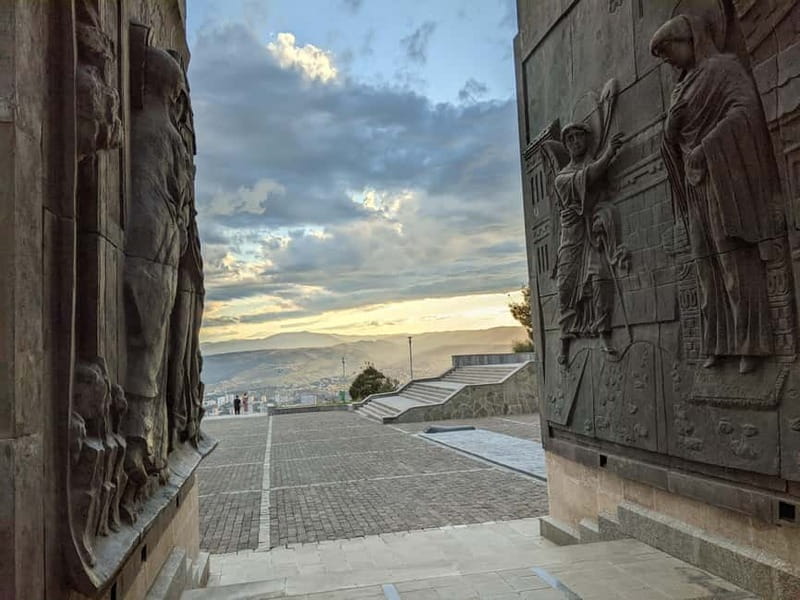
- Chronicle of Georgia: the monument you can actually read
- Jvari Monastery: 6th-century stone and a real viewpoint
- Mtskheta: the hour you control (and how to use it well)
- Svetitskhoveli Cathedral: UNESCO, the relic location, and quick guided focus
- Guide and group size: how the day stays friendly
- Transport comfort and logistics that keep you sane
- Price and value: what $18 buys you in real terms
- What to bring (and what can trip you up)
- Should you book this tour?
- FAQ
- How long is the tour?
- How much does it cost?
- Where are the pickup locations?
- Is there a guide, and what language is it in?
- Do I get free time in Mtskheta?
- Is food included?
- What should I bring for church visits?
- Is the tour suitable for wheelchair users or limited mobility?
- Are pets allowed?
Key highlights worth booking
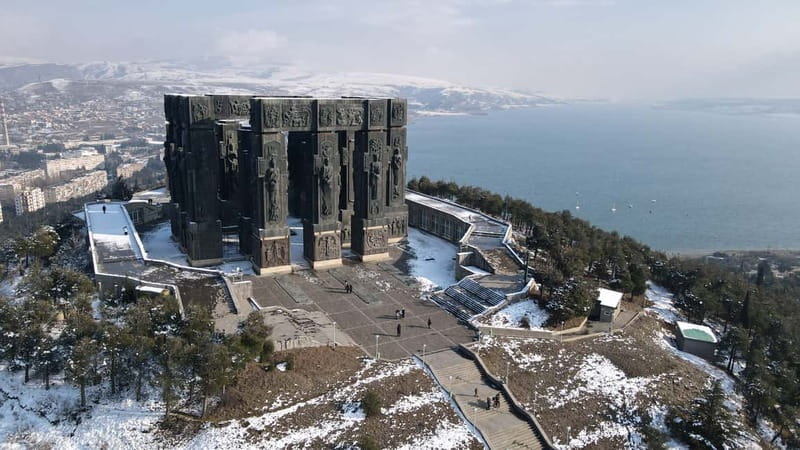
- Chronicles of Georgia photo stop on a hill near the Tbilisi sea, with guided context
- Jvari Monastery UNESCO visit with a viewpoint over Mtskheta
- Svetitskhoveli Cathedral UNESCO stop at the famous relic site location
- Free time in Mtskheta for shopping, sweets, and a wine stop if you want one
- Small-group feel (up to 10) with easier questions and better pacing
- Air-conditioned transport and parking handled for a smooth half-day
Other Chronicles of Georgia monument trips:
- Tbilisi: Mtskheta Jvari Bazaar, Chronicles of Georgia & Wine★ 5.0 · 1,088 reviews
- Tbilisi:Mtskheta,Jvari,Bazaar,wine tasting,Chronicles of Georgia★ 5.0 · 730 reviews
- Mtskheta-Jvari-Uplistsike-Chronicle of Georgia, PRIVATE Trip★ 5.0 · 105 reviews
- Tbilisi: The Chronicle of Georgia Express Guided Tour★ 5.0 · 89 reviews
Entering The Day: a 5-hour Tbilisi-to-Mtskheta hit list
If you only have half a day in Tbilisi, this is a very efficient way to see what makes central Georgia tick. You are not doing a long bus crawl or a rushed checklist. Instead, you get a morning flow built around three major religious sites, plus a real block of independent time in Mtskheta.
At just about five hours total, it is a good match for first-timers who want the big names first. It also works if you already know you want to explore more later, because this tour helps you understand the layout and themes before you go deeper on your own.
Getting picked up at 9:20 or 9:30, and why that timing helps
Pickups run from two convenient Tbilisi start points. You meet your guide at 9:20 am at Vakhtang Gorgasali Square (look for the guide in front of restaurant Machakhela, with the I Love Tbilisi sign). The second pickup is at 9:30 am at Rose Revolution Square, where you wait in front of the big statue of a bicycle.
The big advantage of the morning start is photo timing. The day is planned so you reach Mtskheta earlier, when light is better for those red-roofed streets and church silhouettes. You are also less likely to feel trapped by midday crowds at the sites, since your main walking and visits happen in the earlier window.
Practical tip: if you hate being late, arrive a few minutes early. The group is small, so there is less waiting time built in than on giant tours.
Chronicle of Georgia: the monument you can actually read
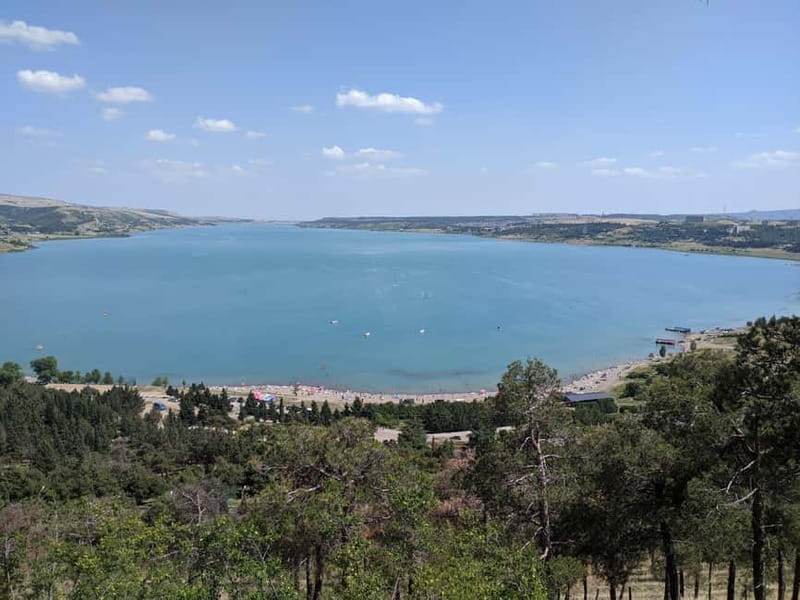
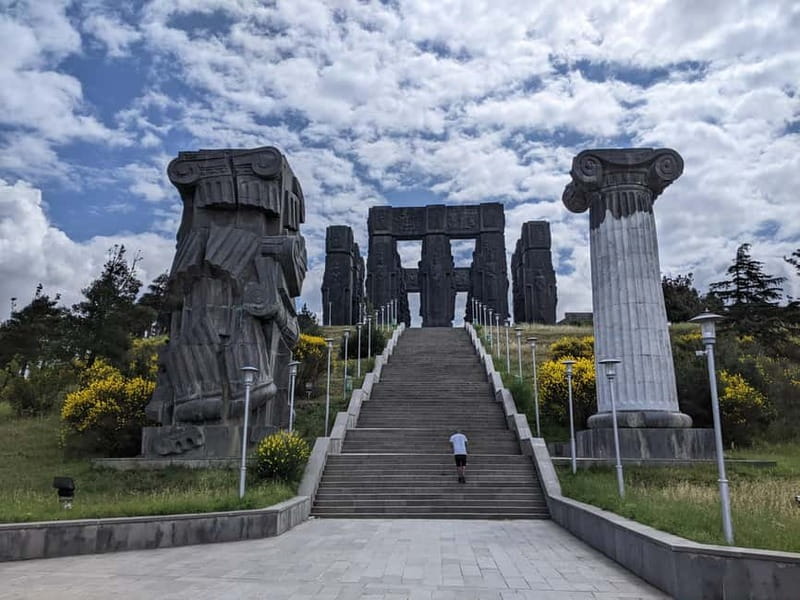
The first major stop is the Chronicle of Georgia, a large monument on a small hill near the Tbilisi sea. You get a photo stop and then a guided visit, plus time for a walk and sightseeing nearby.
What makes this stop special is that it is not just a sculpture you pass by. It depicts religious and historical events of Georgia, which means your guide can give you the story behind what you are looking at. That matters because it turns a landmark into something you can understand in a few minutes, instead of a random photo spot.
Time on site is about 45 minutes, including the visit and the walking. That is enough to take photos from a couple angles and still feel like you experienced it, not just skimmed it.
Consideration: this is an outdoor hill location. Dress like you are going to be outside longer than you planned, because wind is real. Comfortable shoes matter because you will be walking on paths that do not always feel like they were designed for smooth sandals.
Jvari Monastery: 6th-century stone and a real viewpoint
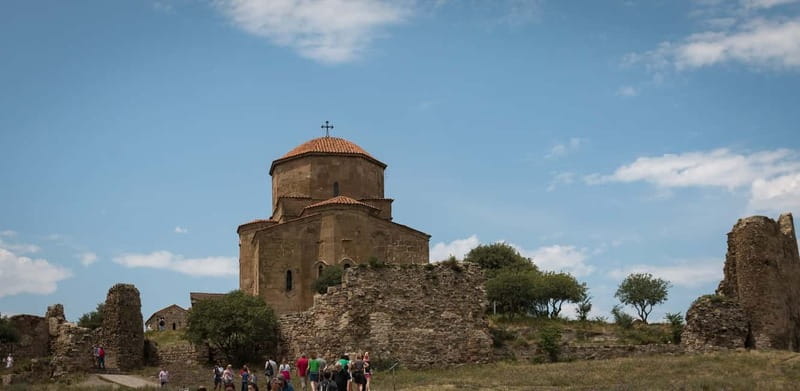
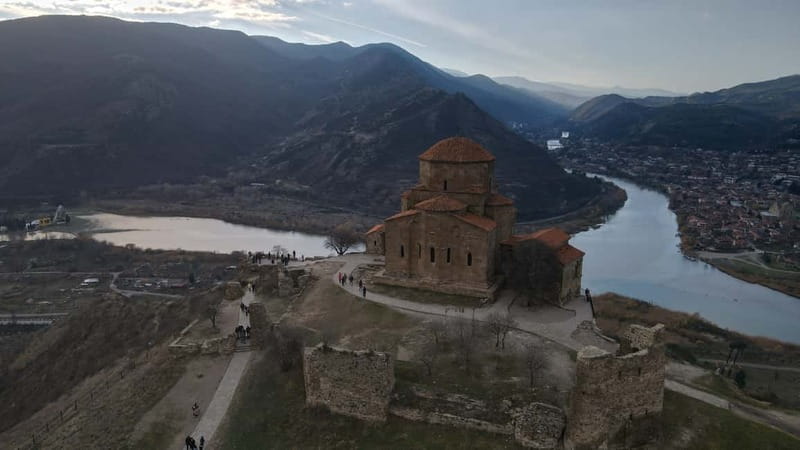
Next comes Jvari Monastery, a UNESCO World Heritage Site dating to the 6th century. You will stop for photos, then join the guided visit and walk/sightseeing time. You also get about 40 minutes here, which is a decent amount for both understanding the place and taking in the view.
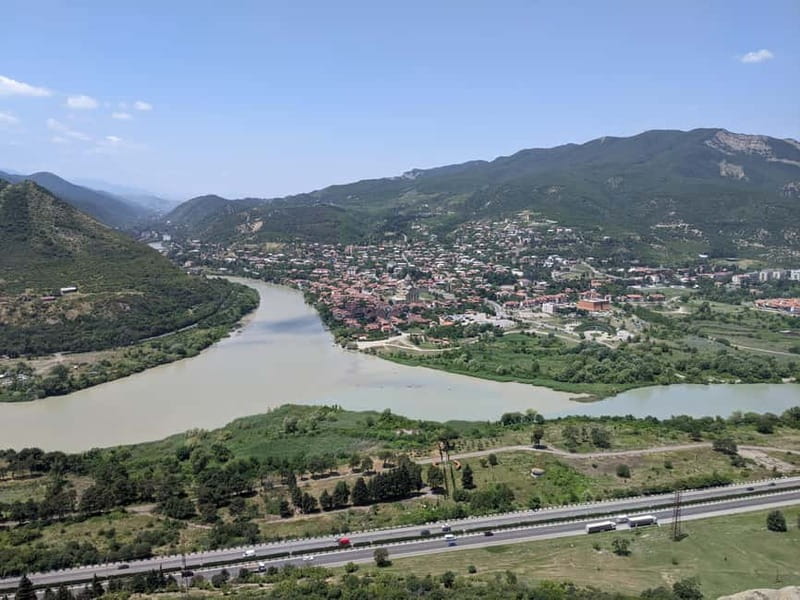
Jvari is all about perspective. From here, you can look over Mtskheta and connect the physical geography to the spiritual importance of the site. The monastery’s architecture is part of the appeal, but the view is what makes the visit feel earned. Even if you are not a big church-history person, the combination of stone details plus the panorama helps you pay attention.
Small-group pacing helps at this stop. With fewer people, your guide can point out what to notice, and you are less likely to feel like you are constantly being pushed along.
Practical note: church visits often mean slower movement and more respectful behavior. Plan to slow down, look up, and take your time with the details.
Other Mtskheta and Jvari trips:
Mtskheta: the hour you control (and how to use it well)
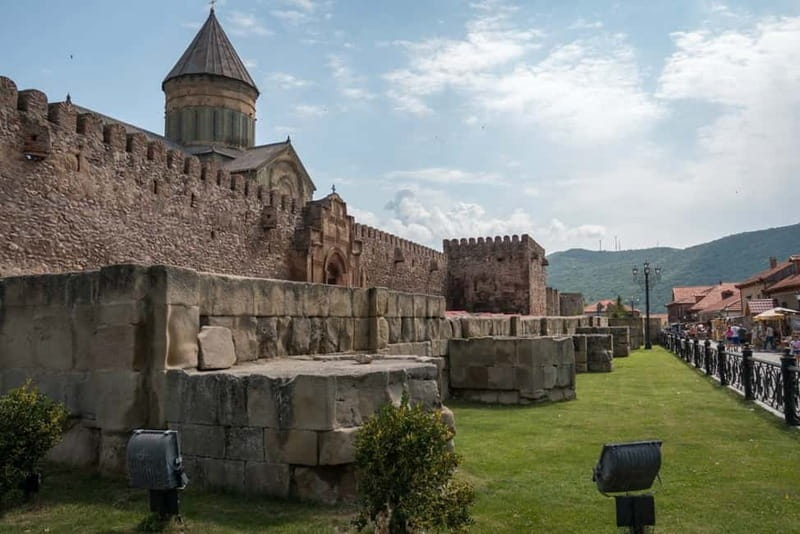
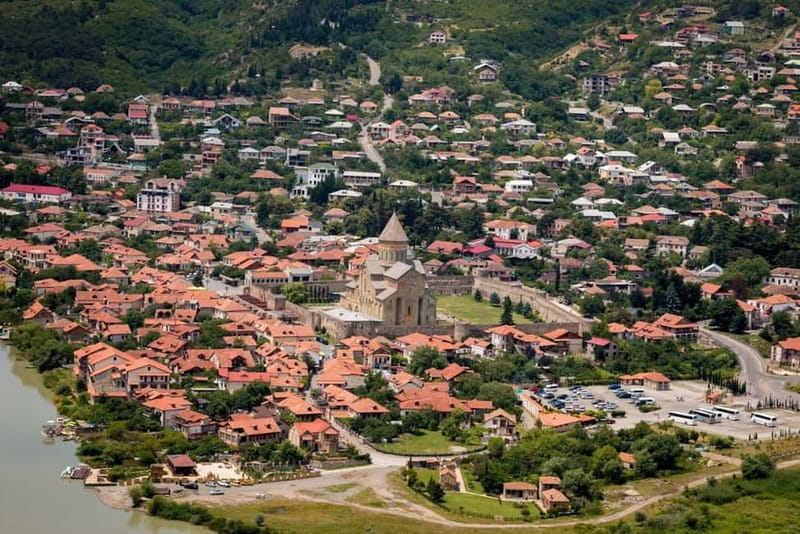
Mtskheta is where the day gets personal. You get a break and about one hour of free time. This is your chance to shop, grab lunch, and snack on sweets or wine if you want. The city is known for its old-town vibe, and this stop includes a walking excursion through streets lined with red-roofed houses.
Here is how I like to use this kind of free-time window: pick one simple goal before you arrive. For example:
- If you want souvenirs, decide what you will buy before you wander.
- If you want food, choose one place and give yourself permission to stop there.
- If you want photos, circle back to the best viewpoint you saw earlier, then move on.
Because the tour has guided time earlier, this free hour feels like a reward instead of time you do not know what to do with. Use it to eat something local, try Georgian tea, or browse small shops for gifts. And if you just want to wander without thinking, that works too.
One more thing: if you are hoping to taste wine or sweets, this is the slot. The timing is built for you to do that without feeling like you are missing the next church stop.
Svetitskhoveli Cathedral: UNESCO, the relic location, and quick guided focus
The final big religious stop is Svetitskhoveli Cathedral, another UNESCO World Heritage Site from the 11th century. You get a guided visit and sightseeing time, with about 25 minutes on site.
This cathedral has a specific story that your guide can connect for you. It was built on the site where the robe of Jesus Christ is kept, which gives the building a layer of meaning beyond architecture alone. The guided focus is valuable here because it helps you understand why people consider this place important.
Because the time is shorter than at Jvari, you should come ready to absorb efficiently. Look for the big architectural features first, then let your guide explain the significance. If you spend your whole time only taking photos, you might miss the context that makes this site feel unforgettable.
Practical tip: churches can be cool and dim compared to the street. Plan for that temperature shift, especially if you started the day outside.
Guide and group size: how the day stays friendly
This tour runs as a small group, limited to 10 participants. That matters more than it sounds. With smaller numbers, it is easier to hear your guide, ask questions, and move at a comfortable pace during walking segments.
The English guide is a big part of the value. You get guided storytelling at each major stop, not just a description from the van. In particular, guides on this route have a reputation for mixing history and humor, and for helping with practical needs like photo moments.
Also, you are not stuck trying to figure out the pickup points yourself. Communication is supported via WhatsApp, which is useful in a city where street details can be confusing when you are tired or jet-lagged.
Transport comfort and logistics that keep you sane
You ride in an air-conditioned vehicle, which is a real quality-of-life boost during warmer months and still helpful even in shoulder season. Parking fees are included, so you are not worried about extra costs or delays caused by finding a spot.
Tour duration stays tight, about five hours total. That is long enough to see the core sites and walk, but short enough that you can still plan an easy evening in Tbilisi.
This is also one of those trips where small details matter: comfortable shoes, water or a simple snack you bring yourself, and a hat or sunglasses. If you show up prepared, you feel relaxed instead of rushed.
Price and value: what $18 buys you in real terms
At $18 per person, this is priced like a budget-friendly half-day. The value comes from the mix of things included:
- English guide service at multiple stops
- Air-conditioned transport
- Parking fees
- Guided visits and walking segments
- A full hour of free time in Mtskheta
The big trade-off is food. Food is not included, so you need to plan your own lunch or snacks. I treat tours like this as a framework: I budget for the meal I want in Mtskheta, then I enjoy the guided part as the part I would not want to research on my own.
Another value point is the pacing. The stops are short enough that you stay energized, but long enough that each site feels real. That balance is what makes the price feel fair.
What to bring (and what can trip you up)
Come prepared for a day that mixes outdoor viewpoints with church interiors. You should bring:
- Comfortable shoes for walking
- Sunglasses
- A sun hat (and in colder months, layers for wind)
Headscarves are available for women in churches, but it is better to bring your own just in case. It saves time and helps you feel more comfortable.
Not allowed: pets.
Accessibility note: this tour is not suitable for people with mobility impairments or wheelchair users. Walking in old streets and church areas is part of the experience, so if you have any mobility constraints, you will likely feel stressed.
Weather matters too. If it is chilly or windy, the hilltop Chronicle of Georgia stop can feel colder than you expect. Layer up, protect your ears, and bring a hat that actually stays put.
Should you book this tour?
Book it if you want a fast, structured introduction to Georgia’s major Christian heritage sites without spending most of your day in transit. It is especially smart for a first trip to Tbilisi or for anyone short on time who still wants guided context at real UNESCO locations.
Skip or reconsider if you need wheelchair-friendly access, or if walking outdoors and around churches is difficult for you. Also think twice if you hate meal planning, because food is not included and you will be using your Mtskheta free time for eating.
If you are comfortable with a half-day schedule, bring layers and good shoes, and you will enjoy how the day connects monuments to meaning, then lets you breathe in Mtskheta on your own.
FAQ
How long is the tour?
The tour lasts 5 hours.
How much does it cost?
It costs $18 per person.
Where are the pickup locations?
You can be picked up at Vakhtang Gorgasali Square (9:20 am) or Rose Revolution Square (9:30 am).
Is there a guide, and what language is it in?
Yes. The live guide service is in English.
Do I get free time in Mtskheta?
Yes. You get 1 hour of free time in Mtskheta.
Is food included?
No. Food is not included.
What should I bring for church visits?
Comfortable shoes, sunglasses, and a sun hat are recommended. Headscarves are available for women in churches, but it is better to bring your own.
Is the tour suitable for wheelchair users or limited mobility?
No. It is not suitable for people with mobility impairments or wheelchair users.
Are pets allowed?
No, pets are not allowed.
Newer trips around Tbilisi
- Tbilisi Private Dinner: Georgian BBQ & Fireplace
★ 5.0 · 1 review - Tbilisi: Khinkali Tasting Lunch with Local Drinks and Pickup
★ 5.0 · 1 review - Day trip in Kakheti-wine tour
★ 5.0 · 1 review - Tbilisi & Mtskheta bus tour hop on hop off
★ 5.0 · 1 review - Tbilisi: Christmas Market & Hidden Gems Guided Walking Tour
★ 5.0 · 1 review - Stalin’s Secrets: An Underground Journey Through History
★ 5.0 · 1 review
Mtskheta Ancient Capital Tours, compared.
Mtskheta, Jvari, Gori and Uplistsikhe Day Tour
Read our review →
Mtskheta Jvari Bazaar, Chronicles of Georgia & Wine
Read our review →
Mtskheta,Jvari,Bazaar,wine tasting,Chronicles of Georgia
Read our review →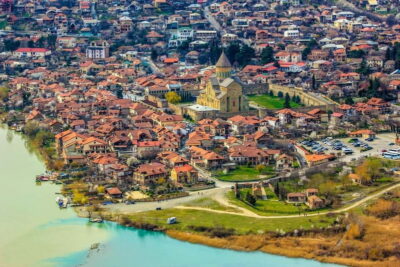
Browse the lists this tour appears in