
Reviewed · MTSKHETA ANCIENT CAPITAL TOURS
From Tbilisi: Jvari Monastery, Uplistsikhe & Mtskheta Tour
Stone cities and Stalin, in one day. This Tbilisi trip strings together UNESCO Jvari Monastery views and a guided walk through Uplistsikhe cave town, then adds the curveball of Gori’s Stalin Museum. It is a fast way to cover a lot of Georgia beyond the usual old-town routine.
I especially love the big, hilltop feeling at Jvari Monastery, where the 6th century stonework sits above the confluence of the Mtkvari and Aragvi rivers. And I also really like how Uplistsikhe is explained with a guide, so those rock-hewn rooms, tunnels, and dwellings start to make sense instead of feeling like random caves. The one thing to consider is that it is a full 9 hour day with meals and entrance tickets not included, so you will want to budget time and money for snacks.
In This Review
- Key things to know before you go
- How this Tbilisi day trip fits together
- Jvari Monastery: 6th century stone above the rivers
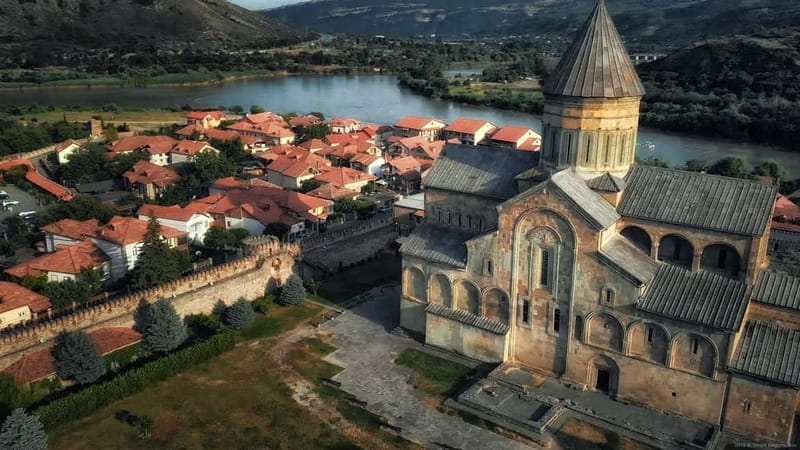
- Mtskheta and Svetitskhoveli Cathedral, where Georgia’s kings were remembered
- Gori’s Stalin Museum: history up close in one stop
- Uplistsikhe cave town: walk an ancient rock city
- The countryside in between stops
- Price and value: is $15 worth it?
- What to bring for a smooth 9 hour day
- Who should book this tour, and who might skip it
- Quick practical notes on pacing and planning
- FAQ
- FAQ
- Where does the tour start?
- How long is the tour?
- What is included in the price?
- Are entrance tickets included?
- Which places will I visit?
- What languages is the live guide available in?
- Is the tour wheelchair accessible?
- Can I cancel for a refund, and do I pay immediately?
- Should you book this tour?
Key things to know before you go
- Hilltop UNESCO at Jvari: A 6th century monastery perched above two rivers, with photo stops that actually earn their salt.
- Uplistsikhe with a guide: Rock-hewn chambers and tunnels become a story when someone walks you through them.
- Mtskheta and Svetitskhoveli: One of Georgia’s oldest religious centers, including a UNESCO medieval cathedral.
- Gori’s Stalin Museum: Exhibits about his rise to power plus the modest house where he was born.
- A long day with extra costs: Transportation and guide are included, but lunch and entrance tickets are not.
Other Gori and Uplistsikhe cave-town trips:
- Tbilisi: Mtskheta, Jvari, Gori and Uplistsikhe Day Tour★ 4.9 · 2,396 reviews
- Day Trip to Mtskheta Gori and Uplistsikhe★ 5.0 · 1,801 reviews
- From Tbilisi : Mtskheta, Jvari, Gori & Uplistsikhe Day Trip★ 4.8 · 432 reviews
- From Tbilisi: Mtskheta, Jvari, Gori, Uplistsikhe Guided Tour★ 4.7 · 354 reviews
How this Tbilisi day trip fits together
This is a Shida Kartli day trip that covers four major stops: Jvari Monastery, Mtskheta (with Svetitskhoveli Cathedral), Gori’s Stalin Museum, and Uplistsikhe. You start in Tbilisi at Vakhtang Gorgasali Square near Meidan Bazaar, then ride out into the countryside where vineyards, rolling hills, and distant Caucasus mountains show up between stops.
The best part for me is the mix. You get two UNESCO sites that are very different from each other, then you get a museum that is not usually paired with monastery visits. If you like travel days that stay interesting, this one does.
The route also makes sense geographically, with the monastery and cathedral tied to Georgia’s spiritual story, and Uplistsikhe connected to early Iron Age life. Then Gori adds a hard historical thread that is less about stone beauty and more about people and power.
Jvari Monastery: 6th century stone above the rivers
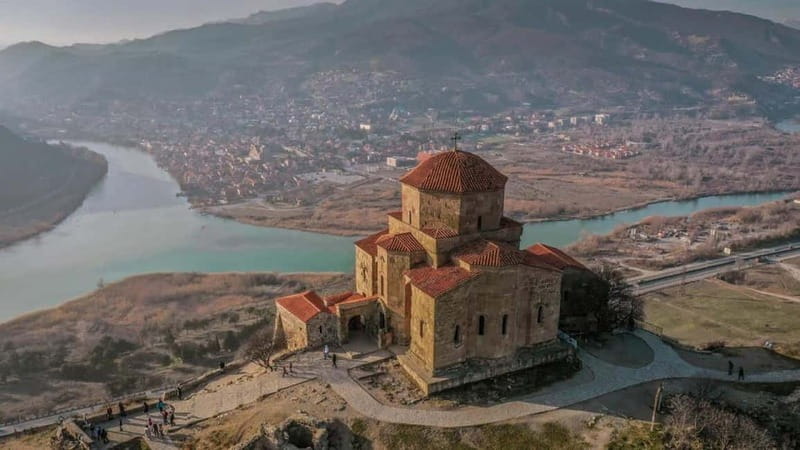
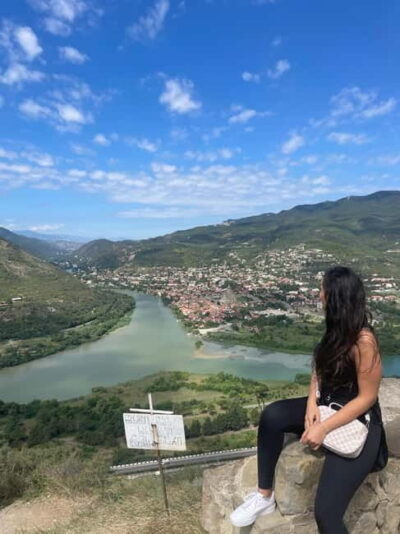
Jvari Monastery is the kind of place where you feel the setting before you even read the details. It sits high on a hill overlooking the confluence of the Mtkvari and Aragvi rivers, so when the group pauses for photos, you get a view that makes the architecture feel even more dramatic.
The monastery itself dates back to the 6th century, and the guided tour focuses on the intricate stonework and the spiritual atmosphere. Even if you are not a church-architecture expert, you can see why UNESCO cares here. The structure looks designed for both worship and prominence, like it was meant to be seen from far away.
Practical tip: wear shoes with good grip. Hilltop grounds can be uneven, and you will likely be moving for photos and short walks. If it is sunny, you will also want sunscreen and a hat, because this stop is exposed.
Mtskheta and Svetitskhoveli Cathedral, where Georgia’s kings were remembered
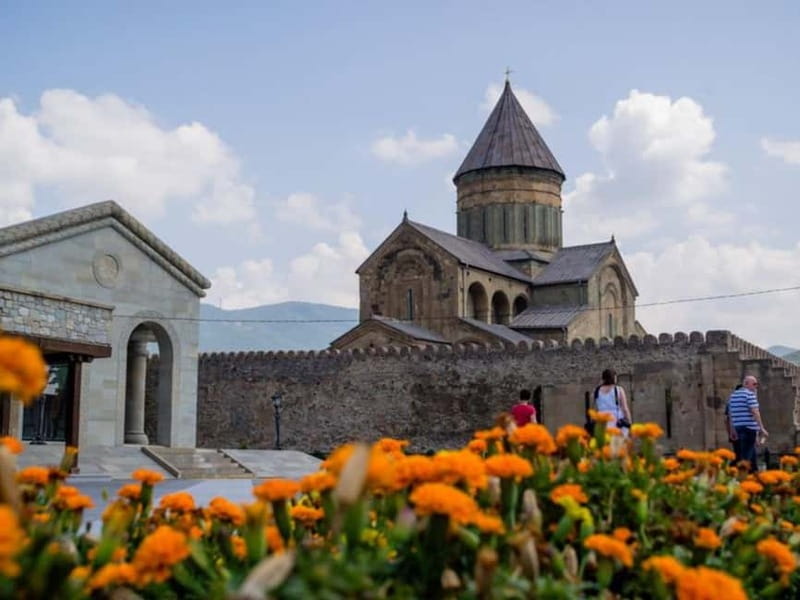
Next comes Mtskheta, one of Georgia’s oldest cities and a long-time cultural and religious center. The tour includes time in Mtskheta with a guided visit, and the main sight here is Svetitskhoveli Cathedral.
Svetitskhoveli is UNESCO listed, and it is the kind of medieval Georgian architecture that rewards slow looking. You get to see frescoes and stone carvings, but the story matters too. The cathedral is described as the burial site of Georgian kings, which changes how you experience the building. It stops being just pretty stone and turns into a monument to national identity and memory.
When you are there, I suggest you do two passes. First, stand back and take in the overall form. Then move in enough to notice the carvings and surfaces. A guided explanation helps a lot here, because medieval churches can feel like visual puzzles when you do not know what to look for.
If you are the type who enjoys religious sites for history, not only faith, this is a strong stop. It is also one of the most “real Georgia” moments of the day, since Mtskheta is lived-in and historical at the same time.
Gori’s Stalin Museum: history up close in one stop
From Mtskheta, the tour heads to Gori for the Stalin Museum. This is where the day becomes a bit more tense and human.
The museum experience focuses on Joseph Stalin’s life and legacy. You see exhibits covering his rise to power, and you also visit the modest house where he was born. That last part is striking because it contrasts sharply with the massive impact he later had. You are not asked to admire him, but you are given context about how a person starts out and how power changes the world.
A balanced way to approach it: treat it like historical evidence, not a propaganda movie. If you go in with an open mind and a willingness to sit with uncomfortable ideas, the museum can add real depth to the day’s mix of spirituality and ancient city life.
Practical note: museums are indoor time, which can be a relief if you are getting sun tired. But it also means you will want to keep water handy for the rest of the day, since outdoor walking continues after.
Other Mtskheta and Jvari trips:
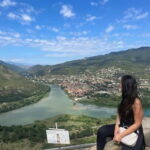
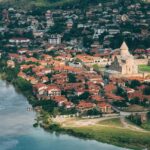
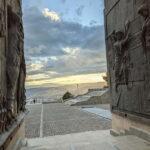
Uplistsikhe cave town: walk an ancient rock city
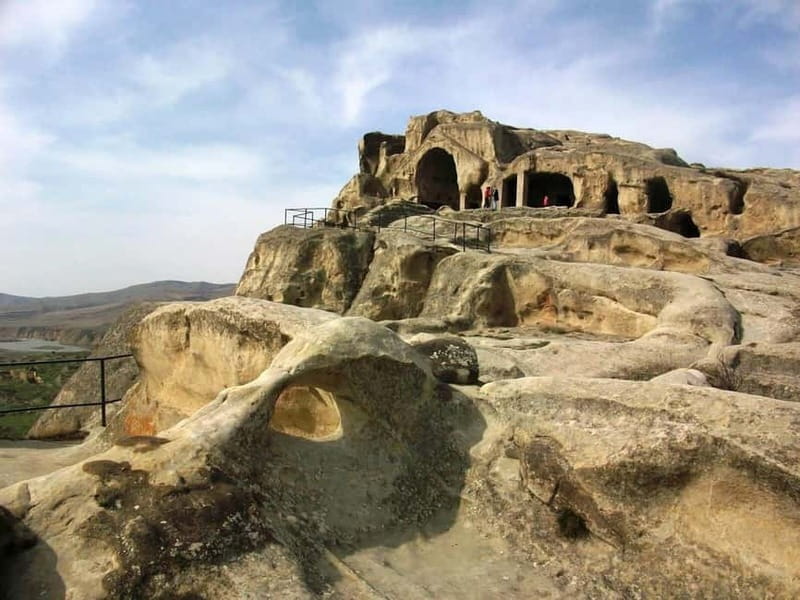
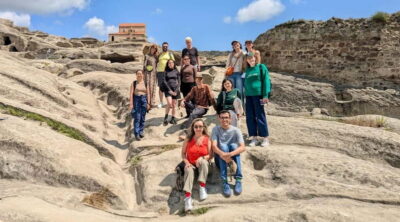
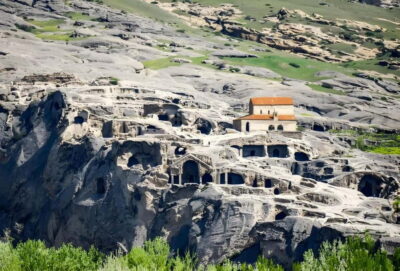
Then comes the big rock-hewn highlight: Uplistsikhe. This UNESCO World Heritage site is known as a cave town, basically an ancient settlement carved into stone, overlooking the Mtkvari River valley.
What I like most is that Uplistsikhe is not just about seeing a few rooms. You wander through an early Iron Age city made of rock-hewn chambers, tunnels, and dwellings. With a guide, it is easier to picture daily life, because you learn what different spaces were likely used for and how the settlement worked as a community.
There is something special about how the terrain shapes the architecture. The cliffs and rock surfaces create natural boundaries, and you can feel how people adapted to the land rather than changing it completely. It is a very different kind of “ancient Georgia” than the churches and monasteries, and it helps the day feel cohesive instead of random.
Practical tip: bring comfortable shoes and watch your step. Even when paths look firm, rock-cut areas can be slick or uneven. Also, plan on some sun exposure. This is not the place to forget your hat and water.
The countryside in between stops
Between each major site, you get classic Georgian day-trip scenery: vineyards, rolling hills, and in the distance, the Caucasus mountains. This is not just visual filler. The countryside helps the UNESCO sites feel connected to a real region instead of isolated museum pieces.
I find it helps to use the ride time well. If you want photos, take them from the bus when the light changes. If you want better site photos, listen for when the guide says, for example, this is your best angle at Jvari. Good local guidance turns ordinary travel time into part of the experience.
Price and value: is $15 worth it?
At $15 per person, the value is strong, mainly because the price includes transportation and a guide service for a full 9 hour day. In practice, that means you are paying for convenience plus interpretation.
What is not included is also clear: restaurants and entrance tickets. And because the tour hits multiple major sights, those entrances can add up. If you want the best deal, check what you are planning to pay on arrival for each site and bring extra cash or a card you can use easily.
Still, compared with the cost of doing this day independently in a taxi plus paying for separate guided explanations, the bundled format is a good deal. You are basically buying one guided circuit through Shida Kartli: religious history, ancient rock city life, and modern political history, all in the same day.
What to bring for a smooth 9 hour day
This tour is long enough that small items matter. Use the basics, and you will be happier at every stop.
Bring:
- Comfortable shoes (non-negotiable for rock-hewn areas)
- Hat and sunscreen (outdoor time is significant)
- Camera (the river views and carved stone are photo friendly)
- Water (you will want it on Uplistsikhe and during countryside rides)
If you get motion sickness, consider a light snack before you leave Tbilisi. The itinerary is active, and you do not want low energy to ruin your attention at the sites.
Also, if you care about cathedral and museum details, bring a pen or use your phone notes so you can jot down what the guide points out while you are still there.
Who should book this tour, and who might skip it
This tour suits you if:
- You want a high-coverage day trip from Tbilisi that still includes guided context
- You like UNESCO sites but do not want only one theme, like castles or only churches
- You enjoy history that ranges from medieval religious sites to early Iron Age settlements to a 20th century museum
You might skip it if:
- You hate long days or prefer slow travel with more free time
- You are hoping for a “food tour” vibe, because lunch is a stop but restaurants are not included
- You are sensitive to outdoor walking and rough terrain, since Uplistsikhe involves uneven rock areas
One more fit check: the guide is available in English and Russian, and the tour is listed as wheelchair accessible. If you rely on mobility support, it is worth asking how the guide handles routes and stops on the day, especially at the stone and rock sections.
Quick practical notes on pacing and planning
This is scheduled as a full day. You will do photo stops and guided visits back to back, so do not expect long unstructured wandering.
If you are a photography person, aim to be ready right when you arrive at each main site. The best light and the easiest angles do not always wait for late arrivals.
If you have a strong interest in one specific stop, you can still enjoy the others by treating them as supporting chapters. For example, if you really care about medieval Georgia, Svetitskhoveli and Jvari are your main anchors, while Stalin Museum and Uplistsikhe act as contrast.
FAQ
FAQ
Where does the tour start?
Meet at Vakhtang Gorgasali Square near Meidan Bazaar in Tbilisi.
How long is the tour?
The duration is 9 hours.
What is included in the price?
Transportation and guide service are included.
Are entrance tickets included?
No, entrance tickets are not included.
Which places will I visit?
You will see Jvari Monastery, Mtskheta (including Svetitskhoveli Cathedral), the Stalin Museum in Gori, and Uplistsikhe cave town.
What languages is the live guide available in?
The tour guide is available in English and Russian.
Is the tour wheelchair accessible?
Yes, the tour is listed as wheelchair accessible.
Can I cancel for a refund, and do I pay immediately?
You can cancel up to 24 hours in advance for a full refund. You can also reserve now and pay later.
Should you book this tour?
If you want a focused day trip that hits multiple UNESCO sites plus a real historical museum, I think it is an easy yes. Jvari and Uplistsikhe are the big standouts, and Mtskheta with Svetitskhoveli adds strong medieval context. The Stalin Museum in Gori gives the day a different angle, and that mix makes it more memorable than a one-theme outing.
Just go in ready for a long, active day, with shoes, sun protection, and water. And budget a bit extra for entrance tickets and your meals. If that works for you, this is a good value way to see Shida Kartli in one shot.
Newer trips around Tbilisi
- Tbilisi Private Dinner: Georgian BBQ & Fireplace
★ 5.0 · 1 review - Tbilisi: Khinkali Tasting Lunch with Local Drinks and Pickup
★ 5.0 · 1 review - Day trip in Kakheti-wine tour
★ 5.0 · 1 review - Tbilisi & Mtskheta bus tour hop on hop off
★ 5.0 · 1 review - Tbilisi: Christmas Market & Hidden Gems Guided Walking Tour
★ 5.0 · 1 review - Stalin’s Secrets: An Underground Journey Through History
★ 5.0 · 1 review
Mtskheta Ancient Capital Tours, compared.
Mtskheta, Jvari, Gori and Uplistsikhe Day Tour
Read our review →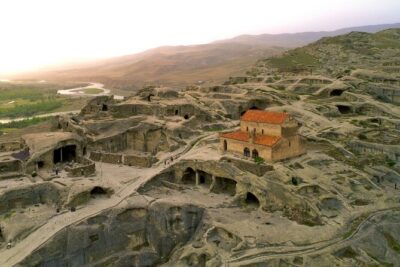
Mtskheta Jvari Bazaar, Chronicles of Georgia & Wine
Read our review →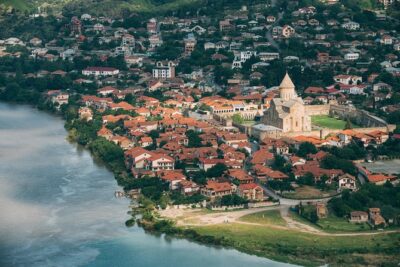
Mtskheta,Jvari,Bazaar,wine tasting,Chronicles of Georgia
Read our review →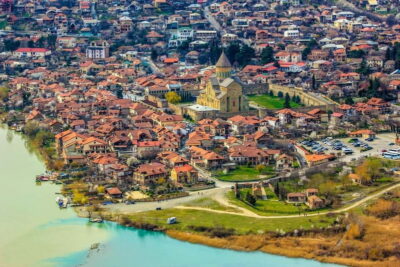
The Chronicles of Georgia, Jvari & Mtskheta Tour
Read our review →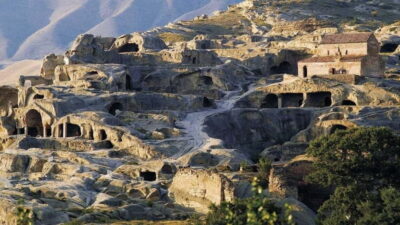
Browse the lists this tour appears in