
Reviewed · MTSKHETA ANCIENT CAPITAL TOURS
From Tbilisi: Mtskheta, Uplistsikhe, Gori Day Trip
Few stops hit 3,000 years in one day.
This private day trip from Tbilisi strings together Uplistsikhe rock-cut streets, Mtskheta’s spiritual landmarks, and Gori’s heavy Soviet-era stories, all with a real sense of cause and effect. I especially love the way the tour frames what you see, from the Iron Age carved into stone to the 20th century built in steel and concrete. You’ll also get a standout photo moment from Jvari Monastery, where the view of the two merging rivers actually helps you understand why these places became sacred. One drawback to plan for: it’s a long day, and the cave city involves uneven ground and stairs, so you should be ready for walking.
The upside is that you’re not just moving between monuments. You’re getting a guided story that connects pagan roots, Christian meaning, and Soviet power, without turning any stop into a hurried checkmark. It’s also practical, with hotel pickup and drop-off, bottled water, and a guide who can answer the questions that pop up when history gets complicated.
In This Review
- Key Points You Should Know Before You Go
- Uplistsikhe’s Rock-Cut City, Where Iron Age Life Still Feels Tangible
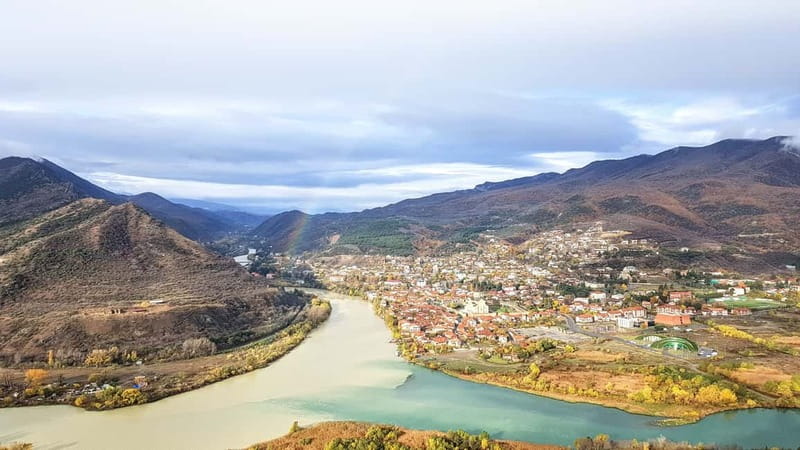
- Mtskheta and Jvari Monastery: The River View That Explains the Sacred Geography
- Gori: Stalin’s Bulletproof Train Carriage and a Less Simple Chapter
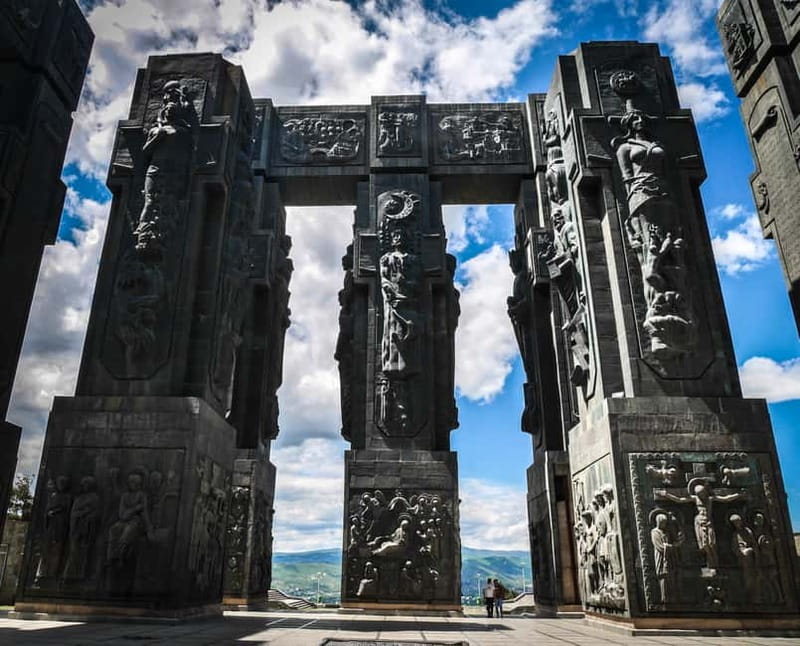
- The Chronicle of Georgia: Brutalist Monument, Massive Scale, Real Perspective
- Lunch in Gori: A Local Break at Your Own Pace
- Timing, Comfort, and Getting the Most From a Long Day
- Price and Value: Why $152 Can Make Sense Here
- Tour Style and Guide Quality, Based on Real Feedback
- Who Should Book This Day Trip?
- Should You Book This Tbilisi Mtskheta Uplistsikhe Gori Day Trip?
- FAQ
- How long is the Mtskheta, Uplistsikhe, and Gori day trip?
- Is this tour private?
- Do I get hotel pickup and drop-off in Tbilisi?
- What is included in the price?
- Are entrance fees included?
- Are meals included?
- What languages does the guide speak?
- What should I bring for the day?
- Is there a dress code for churches?
- Is the tour suitable for children or mobility impairments?
Key Points You Should Know Before You Go
- Uplistsikhe cave city: walk through a pagan city carved into rock, including tunnels and wine-cellar style spaces.
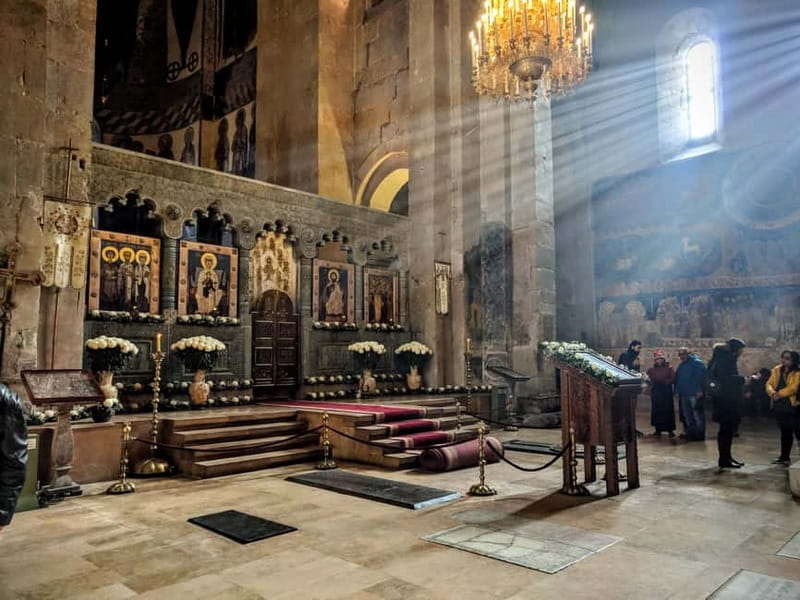
- Jvari and Svetitskhoveli: river-confluence views plus a major medieval cathedral tied to the burial of kings and the robe of Christ.
- Gori’s Stalin sites: see the bulletproof train carriage and the hometown house for a more balanced look at the person and the era.
- Chronicle of Georgia: a massive, Soviet-era style monument overlooking the Tbilisi Sea that many short tours skip.
- Dress and comfort matter: churches require a head scarf, and Uplistsikhe has uneven steps and ascents.
More Day Trips in Tbilisi
- Tbilisi: Day Trip to Kazbegi, Gudauri, Gergeti, and Ananuri★ 4.9 · 3,203 reviews
- Day Trip to Kakheti Wine Region Including 9 Wine Tastings★ 5.0 · 2,774 reviews
- Day Trip to Kazbegi and Gudauri★ 5.0 · 2,009 reviews
- Day Trip to Mtskheta Gori and Uplistsikhe★ 5.0 · 1,801 reviews
Uplistsikhe’s Rock-Cut City, Where Iron Age Life Still Feels Tangible
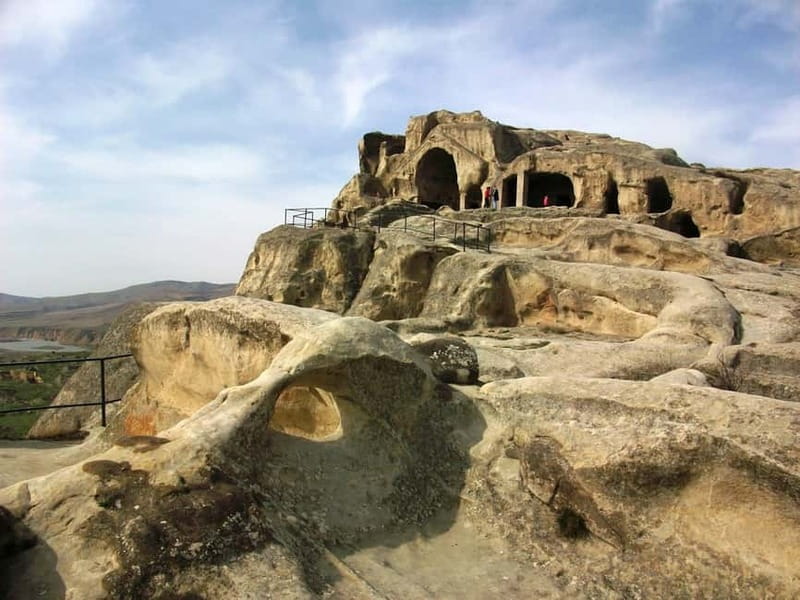
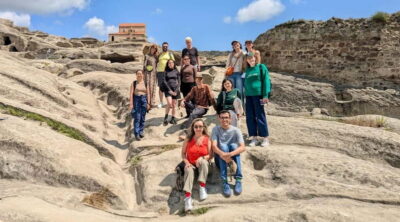
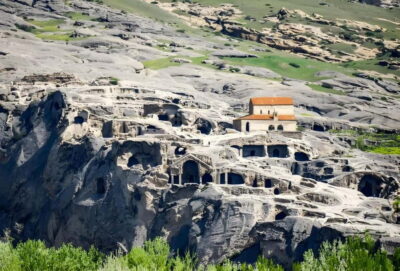
If you like history that you can literally walk inside, Uplistsikhe is the star of the day. This is an ancient cave city, carved into stone, where the streets feel worn in by centuries of feet. Instead of distant ruins, you’re moving through rock-hewn spaces that suggest daily life: passageways, small rooms, and areas that bring to mind how a community functioned when travel trade routes mattered.
Your guide’s job here is the big difference. The tour format focuses on context, so the “what” becomes the “why.” As you wander, you’ll get explanations that link the city to the wider Georgian story, including its role as a Silk Road hub. You may see wine-cellar type spaces and rock-cut structures that help you imagine more than just architecture. It’s not a museum behind glass. It’s a working feeling of space.
Practical note: Uplistsikhe is uneven. There are natural steps, ascents, and sections that can feel slippery if the ground is wet. If you have knee or hip issues, you’ll want to take that seriously. Avoid high heels. Also, the site is not a good match for toddlers, since it’s active walking on irregular surfaces.
Mtskheta and Jvari Monastery: The River View That Explains the Sacred Geography
Mtskheta is where the spiritual tone of Georgia becomes obvious fast. The drive there sets you up for a change in pace, and then the day gives you two big “mindset shifts.”
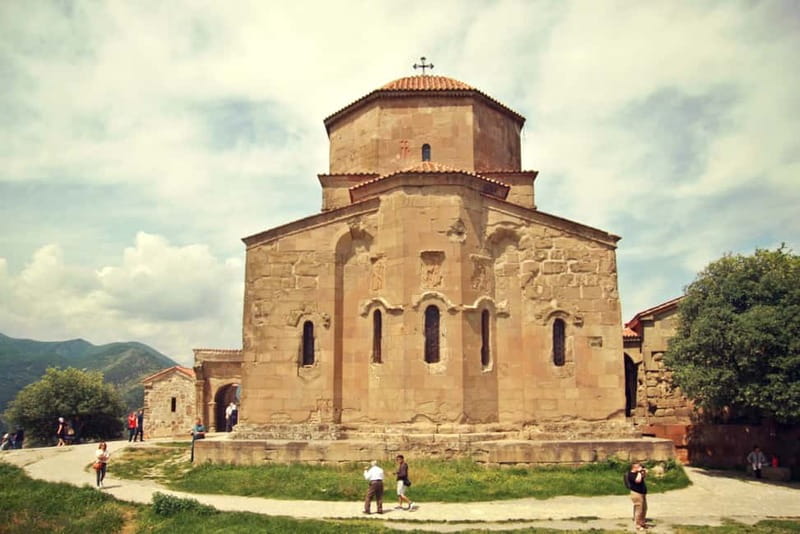
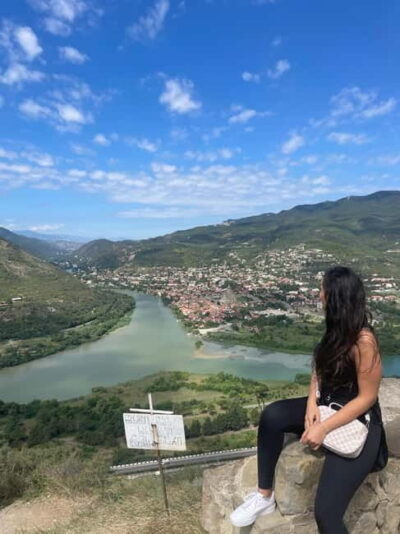
First, Jvari Monastery delivers an iconic viewpoint: you’ll look out over the scene of the two rivers merging. That view is more than pretty scenery. It’s one of those natural features that helps you understand how places become meaningful. Standing there, the landscape and the faith history connect in a way that’s hard to get from photos.
Then you go to Svetitskhoveli Cathedral, a medieval masterpiece that feels weighty in both story and craftsmanship. The tour focuses on why it matters: it’s tied to the burial site of kings, and it’s also connected with the legendary robe of Christ. Even if you’re not a detail person, these are the kinds of anchors that let you follow the local Christian narrative without feeling lost.
Dress code matters here. Orthodox churches prohibit shorts and short dresses and require women to wear a head scarf. You can borrow one at the church entrance, but bring your own headscarf if you want it to be comfortable. Also expect a bit of walking within church grounds, so plan for shoes you can trust.
One more thing to keep expectations realistic: the cathedral area can feel organized for visitors. That’s not a problem, but it’s good to know if you were hoping for a totally untouched, remote vibe.
Gori: Stalin’s Bulletproof Train Carriage and a Less Simple Chapter
Gori is where the tour turns dramatically from spiritual Georgia to Soviet Georgia. This is Joseph Stalin’s hometown, and the day doesn’t treat that era as one-note propaganda.
You’ll see Stalin’s personal bulletproof train carriage, a strange, heavy object that makes the idea of power feel physical. It’s the kind of thing that stops you mid-step because it’s hard to imagine what life looked like around it. The tour also includes time beside his birth house, which brings a more human scale to the story. Standing in that contrast, you start to feel why guides emphasize a balanced approach. It’s not about condoning, it’s about understanding how a complicated person lived and how a system turned into policy.
There’s also a Soviet-era sight described as a massive Stonehenge-like structure overlooking the Tbilisi Sea. That viewpoint does a lot in one shot: it shows how monumental government design tried to dominate space, and it gives you a sense of what the region looked like from the outside of Tbilisi’s daily rhythm.
Museum stops have entrance fees. The tour lists entrance costs for the cave town and the Gori Stalin museum at around €7 per person, not included in the base price.
If you want your history day to have a real emotional range, Gori delivers it.
The Chronicle of Georgia: Brutalist Monument, Massive Scale, Real Perspective
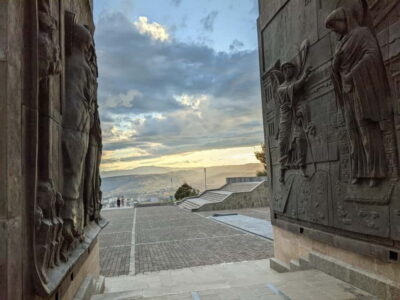
Most standard routes from Tbilisi aim at the obvious church views. This itinerary adds the Chronicle of Georgia, a colossal monument overlooking the Tbilisi Sea area. If you love big architecture that looks like it came from a different mindset than today, you’ll probably enjoy this stop.
This is not subtle. It’s the Soviet-era style of communication through scale: massive forms meant to be read from far away. Up close, you get a better sense of how the state wanted people to feel. Whether you love it aesthetically or not, it gives you an important lens for the rest of the day.
It also works as a reflection point. After the cave city and the cathedral, this monument brings you into the 20th century again, but with a different angle than the train carriage. The day ends with a calmer, reflective mood, which is exactly what you want after a full schedule of meaning-dense stops.
Other Gori and Uplistsikhe cave-town trips:
Lunch in Gori: A Local Break at Your Own Pace
Lunch is one of the best practical parts of the day. The tour includes a relaxed midday break in Gori, but lunch is at your own expense. That’s a good setup if you like ordering what you actually want instead of being steered into one fixed meal.
The tour also keeps you away from crowded tourist highway buffets. If you want a taste of real comfort food, you’ll be in the right place. Examples include Gori cutlets and clay-pot beans. Your guide can help you pick and order, which is a real time saver when you want to eat locally without stress.
Because the day runs long, I’d treat lunch as fuel, not an afterthought. Take the time to sit, sip water, and slow down before you get back on the route.
Timing, Comfort, and Getting the Most From a Long Day
This is a full-day private excursion, scheduled for about 8.5 to 11 hours depending on starting time. With hotel pickup and drop-off in Tbilisi included, the logistics are simple, but you still need to accept that it’s one packed itinerary.
The tour also runs with a team of local experts and an English-speaking guide, and Russian may be available too. In other words, the guide can answer questions as you go, not just hand you a script.
Here’s how to make the day easier on your body and brain:
- Wear comfortable shoes you can walk on uneven surfaces in.
- Bring a head scarf for church stops, since shorts and short dresses are prohibited.
- Think layers, because wind and temperature can shift, especially when you’re at viewpoints and monuments.
- Pace yourself in Uplistsikhe. If you rush, the stairs will feel worse.
Also, it’s listed as not suitable for mobility impairments, and children under 4 aren’t a good fit. If that’s your situation, you might want a shorter version of the route or a different day plan.
Price and Value: Why $152 Can Make Sense Here
At $152 per person, this isn’t the cheapest way to hit the highlights. But it can be very good value if you care about context and you want a private guide who helps you connect the dots.
Here’s what the price includes:
- Hotel pickup and drop-off
- English-speaking guide (Russian also available)
- Bottled water
What costs extra:
- Entrance fees for Uplistsikhe and the Gori Stalin museum, about €7 per person
- Meals (lunch in Gori is your call)
So, the money is really paying for the full structure of the day: transportation, private guiding, and the time needed to move between sites that each tell a different part of Georgia’s story. Doing this yourself would take planning, arranging guides, and figuring out sequence and timing. Here, you get a clean, guided route that aims to cover about 3,000 years of change in one long stretch.
If you’re the type who likes “why this matters,” not just “what to photograph,” this price starts to look fair fast.
Tour Style and Guide Quality, Based on Real Feedback
One of the strongest parts of this experience is the guide approach. Feedback highlights guides who are friendly, responsive with photos, and good at explaining church sites in a way that makes the details feel meaningful.
You may meet guides like David or Saba, names that have come up in quality feedback. The thread is consistent: you get informed storytelling, plus practical help so you’re not left standing there guessing what you’re looking at.
That matters in places like Svetitskhoveli Cathedral or around Soviet monuments, where the symbolism can be confusing if you only have a brochure.
Who Should Book This Day Trip?
This is a great match if you:
- Want a single-day storyline that moves from pagan roots to Christian meaning and then to Soviet-era power
- Enjoy guided explanations more than fast photo stops
- Prefer a private format where you can ask real questions
It may not be the best match if you:
- Need a very low-walking day, since Uplistsikhe has uneven surfaces and stairs
- Have mobility impairments, because the tour specifically notes it is not suitable
- Travel with very young children, since it’s not suitable for kids under 4
- Plan to wear church-inappropriate clothing, since shorts and short dresses are prohibited, and head scarves are required for women
Should You Book This Tbilisi Mtskheta Uplistsikhe Gori Day Trip?
If you want one day that feels like a guided lesson with strong setting changes, I think it’s worth booking. Uplistsikhe gives you rock-cut wonder you can walk through. Jvari and Svetitskhoveli give you spiritual context tied to real local legends and royal burial meaning. Gori adds the heavy side of the story with Stalin’s bulletproof train carriage and his birth house, and then the Chronicle of Georgia gives you a massive Soviet-era closing viewpoint.
I’d book it if you can handle long walking and stairs, and if you’re okay dressing for Orthodox churches. If you’re looking for an easy stroll with minimal effort, you might want a lighter itinerary instead.
FAQ
How long is the Mtskheta, Uplistsikhe, and Gori day trip?
The duration is listed as 8.5 to 11 hours.
Is this tour private?
Yes, it is a private group.
Do I get hotel pickup and drop-off in Tbilisi?
Yes, pickup and drop-off are included from your hotel or holiday apartment in Tbilisi.
What is included in the price?
Included items are hotel pickup and drop-off, an English-speaking guide, and bottled water.
Are entrance fees included?
No. Entrance fees for Uplistsikhe cave town and the Gori Stalin museum are about €7 per person and are not included.
Are meals included?
Meals are not included. Lunch in Gori is at your own expense.
What languages does the guide speak?
The tour lists English and Russian.
What should I bring for the day?
Bring comfortable shoes and a headscarf.
Is there a dress code for churches?
Yes. Orthodox churches prohibit shorts and short dresses. Women are required to wear a head scarf, which can be borrowed at the entrance.
Is the tour suitable for children or mobility impairments?
It is not suitable for children under 4 years and it is not suitable for people with mobility impairments.
More 1-Day Tours in Tbilisi
- Day Trip to Armenia Including Homemade Lunch
★ 5.0 · 1,162 reviews - From Tbilisi: Diamond Bridge and Dashbashi Canyon Day Trip
★ 4.9 · 740 reviews - Day Trip to Gudauri and Kazbegi Including 4WD
★ 5.0 · 673 reviews - Day Trip to Rainbow Mountains and David Gareja
★ 5.0 · 408 reviews
Other Mtskheta & Jvari Trips
- Tbilisi: Mtskheta Jvari Bazaar, Chronicles of Georgia & Wine
★ 5.0 · 1,088 reviews - Tbilisi:Mtskheta,Jvari,Bazaar,wine tasting,Chronicles of Georgia
★ 5.0 · 730 reviews - Tbilisi: The Chronicles of Georgia, Jvari & Mtskheta Tour
★ 5.0 · 307 reviews - From Tbilisi: Mtskheta, Jvari, Gori & Uplistsikhe Cave Tour
★ 4.7 · 296 reviews
Newer trips around Tbilisi
- Tbilisi Private Dinner: Georgian BBQ & Fireplace
★ 5.0 · 1 review - Tbilisi: Khinkali Tasting Lunch with Local Drinks and Pickup
★ 5.0 · 1 review - Day trip in Kakheti-wine tour
★ 5.0 · 1 review - Tbilisi & Mtskheta bus tour hop on hop off
★ 5.0 · 1 review - Tbilisi: Christmas Market & Hidden Gems Guided Walking Tour
★ 5.0 · 1 review - Stalin’s Secrets: An Underground Journey Through History
★ 5.0 · 1 review
Mtskheta Ancient Capital Tours, compared.
Mtskheta, Jvari, Gori and Uplistsikhe Day Tour
Read our review →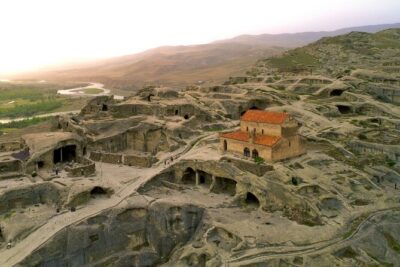
Mtskheta Jvari Bazaar, Chronicles of Georgia & Wine
Read our review →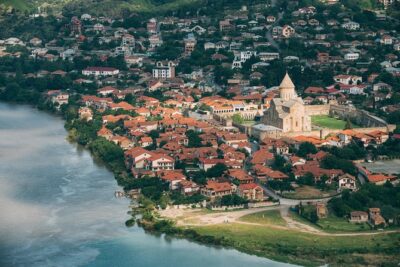
Mtskheta,Jvari,Bazaar,wine tasting,Chronicles of Georgia
Read our review →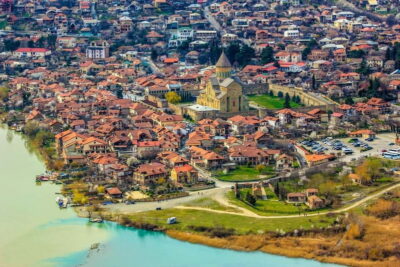
The Chronicles of Georgia, Jvari & Mtskheta Tour
Read our review →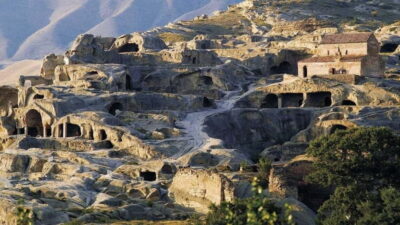
Browse the lists this tour appears in