
Reviewed · MTSKHETA ANCIENT CAPITAL TOURS
Group Day Tour of Mtskheta,Jvari,Samtavro
A hilltop church, a cathedral legend, and a monastery for kings. This group tour strings together three major Mtskheta sights in a tidy 3 to 4 hours, and I like how it covers UNESCO-level architecture without turning your day into a headache. You’ll spend real time at Jvari and Svetitskhoveli, with admission tickets folded into the price. The only thing to consider is that it is a fast-paced route, so if you want long, quiet wandering, you may wish you had more hours in Mtskheta.
What makes this feel like good value is the mix of guided context and practical comfort: an air-conditioned vehicle, onboard WiFi, and a professional guide who helps you connect what you are seeing to why it matters. For about $19, you get the full story behind Georgia’s early Christianity, from Saint Nino’s wooden cross location to royal tombs in Samtavro.
In This Review
- Key highlights to look for on this tour
- How a 3 to 4 hour loop gives you the core of Mtskheta
- Jvari Monastery: the hilltop views and the Saint Nino origin story
- Svetitskhoveli Cathedral: where Georgian stonework meets a famous relic tradition
- Samtavro Church and Monastery: royal tombs and frescoes in a compact stop
- Mtskheta town stop: use the time to get your bearings
- Comfort and logistics that actually matter for this price
- What you will likely take away from these three sites
- Who this tour suits best
- Should you book this Mtskheta, Jvari, Samtavro group tour?
Key highlights to look for on this tour
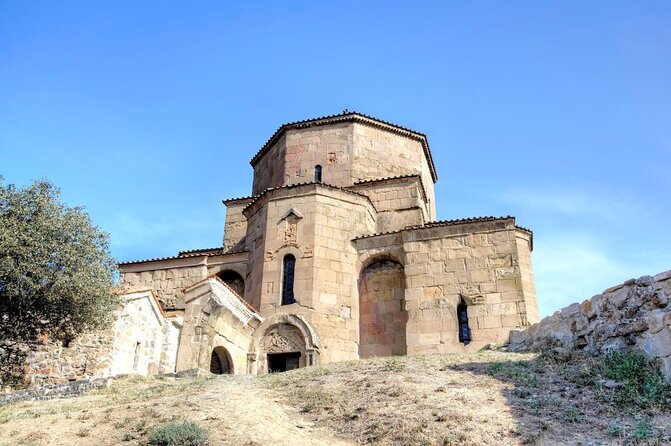
- UNESCO at Jvari: a 6th-century hilltop church tied to Saint Nino and a famous 4-apsed design
- Svetitskhoveli Cathedral tickets included: intricate stonework and frescoes, plus the tradition of the Robe of Christ
- Samtavro Monastery focus: frescoes, ornamented details, and tombs of Georgian kings and queens
- Real Mtskheta time: a short town stop so you can get your bearings in Georgia’s old capital
- Small group size: up to 15 travelers, so questions and pacing stay manageable
Other Mtskheta and Jvari trips:
- Tbilisi: Mtskheta, Jvari, Gori and Uplistsikhe Day Tour★ 4.9 · 2,396 reviews
- Day Trip to Mtskheta Gori and Uplistsikhe★ 5.0 · 1,801 reviews
- Tbilisi: Mtskheta Jvari Bazaar, Chronicles of Georgia & Wine★ 5.0 · 1,088 reviews
- Tbilisi:Mtskheta,Jvari,Bazaar,wine tasting,Chronicles of Georgia★ 5.0 · 730 reviews
How a 3 to 4 hour loop gives you the core of Mtskheta
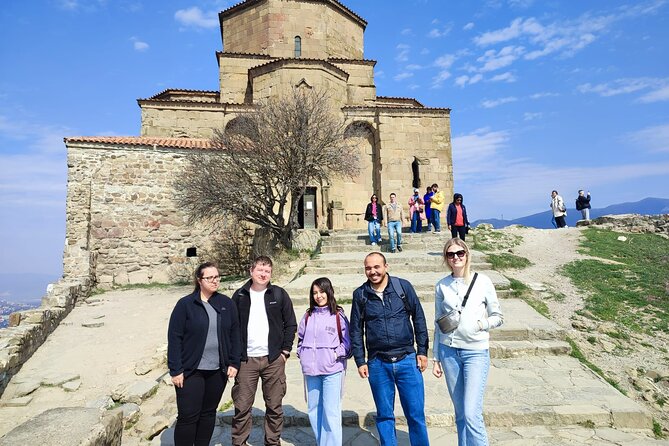
This is a compact half-day plan. The total duration is listed as 3 to 4 hours, and it already includes the time spent moving between stops. That matters because the drive from Tbilisi to Mtskheta can eat up your day if you are doing everything solo. Here, you get an organized sequence: Jvari first, then Svetitskhoveli, then Samtavro, and finally a brief look around Mtskheta.
The route also makes sense historically. You start with an early, iconic Christian site at Jvari, then move to Svetitskhoveli, known for its long building story and its famous religious relic tradition. You finish with Samtavro, where the focus shifts to Georgian royal tombs and monastery life. In one morning or midday block, you get three different angles on the same spiritual and cultural center.
Practical win: the day tour is offered in English and you use a mobile ticket. That reduces friction when you are juggling a new city. The group size caps at 15, which generally feels less rushed than larger buses, especially when guides are explaining details that you might miss if you are just following signs.
Jvari Monastery: the hilltop views and the Saint Nino origin story
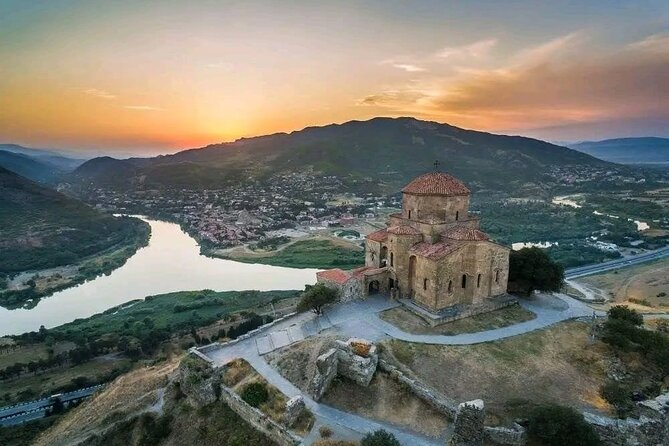
Stop one is Jvari Monastery (Jvari Church), a UNESCO World Heritage site overlooking Mtskheta. The big reason this stop matters is simple: it is one of Georgia’s earliest surviving church landmarks, built in the 6th century on the site connected to Saint Nino, the woman evangelist credited with bringing Christianity to Georgia. The story goes that she erected a wooden cross there before the church appeared, and the current structure grew from later expansion and renovations over the centuries.
Architecturally, you will want to pay attention to the layout. The church is known for a unique four-apsed design, and the structure you see today reflects a mix of Georgian, Armenian, and Byzantine influences. That blend is part of the charm. You can stand and realize this is not one single style frozen in time. It is a building that kept being used, repaired, and shaped as Georgia’s religious world evolved.
Because it sits on a hilltop, you might encounter steps and uneven ground on site. Nothing unusual for a monastery setting, but it is worth wearing shoes you can move in comfortably. Also, plan for the fact that you are there for about 40 minutes, including admission time. That is enough to see the main points and absorb the guide’s explanation, but it is not a long sit-and-stay option.
Svetitskhoveli Cathedral: where Georgian stonework meets a famous relic tradition
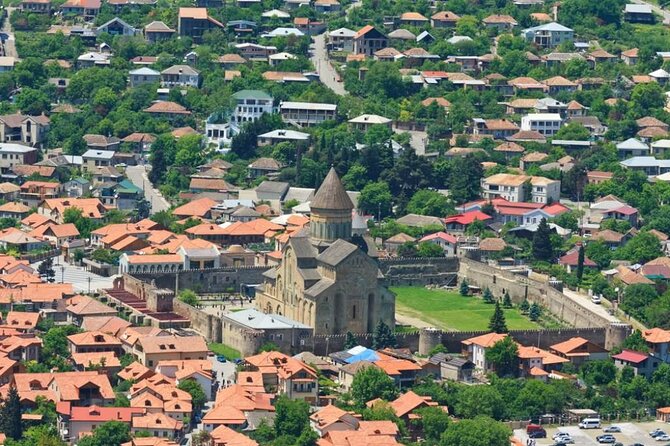
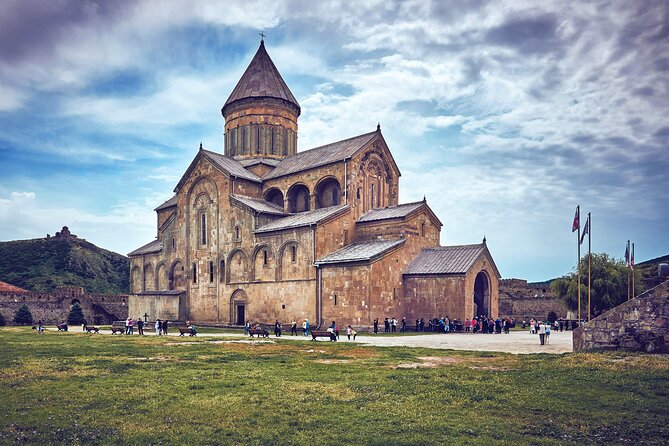
Next up is Svetitskhoveli Cathedral, the big name in Mtskheta. The site’s story stretches back to the 4th century, but the current structure dates to the 11th century, after numerous rebuilds and renovations. That layered timeline is part of the experience. You are not just visiting a pretty church. You are walking into a place that has repeatedly survived and been redefined.
Svetitskhoveli is known for intricate stonework and ornate decoration, plus frescoes that add a different kind of texture to the interior space. If you like when a guide points out why certain details are there, this is the stop where that pays off. The building mixes Georgian, Byzantine, and Persian influences, which is a clear clue that Georgia’s cultural connections were never one-note.
The cathedral is also famous for housing the Robe of Christ, described as a seamless garment said to have been worn by Jesus during crucifixion. Even if you approach it with a mix of curiosity and respect rather than certainty, the tradition gives the cathedral extra emotional weight. It is one of those stories that helps explain why the site attracted pilgrims and why it remains a focal point in the religious landscape.
You will have about 1 hour here, with admission ticket included. That timing is good. It gives you room to see the key areas without feeling like you are being marched through. If you are the type who wants to linger over details, you will have to choose where to focus, but you will still leave with the “main idea” of Svetitskhoveli.
Samtavro Church and Monastery: royal tombs and frescoes in a compact stop
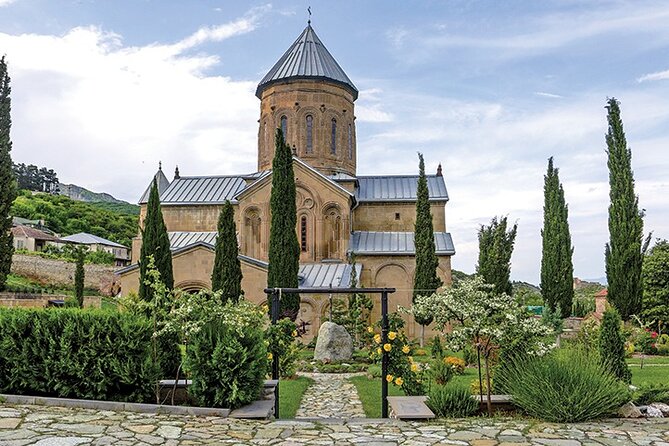
Stop three is Samtavro Church, part of Samtavro Monastery in Mtskheta. The monastery is described as founded in the 4th century, then rebuilt and renovated many times over the centuries, with the current structures dating back to the 11th century and reflecting Georgian, Byzantine, and Persian influences.
This stop is shorter, about 30 minutes including admission. So I treat it as a “big hits” visit. You are there for the frescoes, intricate stonework, and ornate decoration, but you also come for the royal connections. Samtavro houses the tombs of Georgian kings and queens. One specific name you will hear is King Mirian III, who is credited with converting Georgia to Christianity in the 4th century.
That makes Samtavro feel like a bridge between the two earlier stops. Jvari ties directly to Saint Nino and the origins of Christianity in Georgia. Svetitskhoveli brings the grand cathedral scale and a famous relic tradition. Samtavro anchors it in leadership and legacy, using tombs to show how religion and state history overlapped.
Because the stop is only 30 minutes, the biggest practical tip is to enter with a small focus. Decide you will look for fresco details and spend your time reading the guide’s explanation of the royal tomb connection. If you try to absorb everything equally, you might feel rushed.
Other Tbilisi tours and day trips:
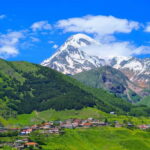


Mtskheta town stop: use the time to get your bearings
After the religious sites, you get about 30 minutes in Mtskheta itself. The town stop is free time, so it is not built around a ticketed venue. Think of it as a chance to connect the dots between the monuments you just saw and the place they sit in.
Mtskheta is described as one of the oldest continuously inhabited cities in the world and it was the former capital of Georgia. That means the streets around you carry a long timeline even if you do not stop at a museum. In a short slot, I use this time to do three simple things: locate where the main sights are relative to each other, note where you would return later if you have time, and take in the general vibe.
Because you have limited time, I do not recommend trying to squeeze in an extra stop on your own unless it is very close. The tour sequence already hits the main landmarks, and the day tour returns you to the meeting point at the end. If you want more walking after the tour, you can plan that once you know what direction you want to go.
Comfort and logistics that actually matter for this price
Let’s talk value, because this is priced at $19 per person for a 3 to 4 hour group tour. That is not much money in a city where transfers and guided explanations can quickly add up. The price also includes the key items people usually forget to budget for: admission tickets at Jvari, Svetitskhoveli, and Samtavro.
Included features make a difference for comfort and ease:
- air-conditioned vehicle
- WiFi on board
- professional guide
- mobile ticket
- English offered
Not included: meals. So you should treat this like a sightseeing block, not a lunch plan. If you are doing it around midday, I suggest eating before you go, or bringing a snack if you are the type who gets hungry during tours.
Timing is also worth noting. The start time is listed as 12:00 pm, and the tour ends back at the meeting point. You start at 15 Abano St in Tbilisi. That centralized meeting style helps you avoid extra public transit steps.
Group size stays at a maximum of 15. That number matters because it influences how quickly you move, how much the guide can explain without repeating, and how easy it is to ask questions without losing your place.
What you will likely take away from these three sites
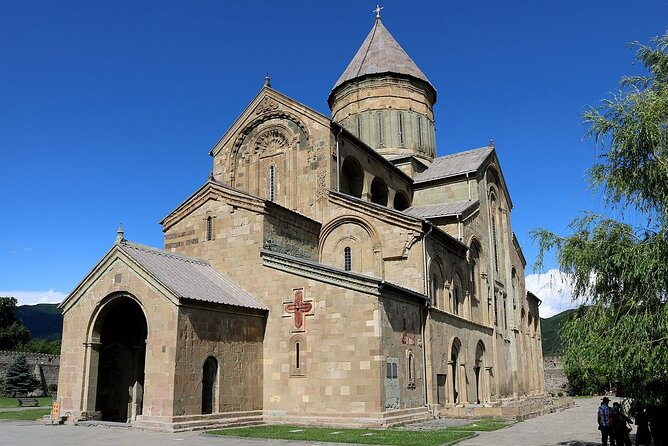
This route works because it shows you how Georgia’s early Christian story gets layered into buildings over centuries. At Jvari, you see the origin link to Saint Nino and the architectural design that makes the church visually memorable. At Svetitskhoveli, you get the 11th-century cathedral form built on older foundations, plus the famous religious relic tradition that gives the place extra meaning. At Samtavro, you see how monastery spaces connect spirituality to royal history, using tombs like those of King Mirian III to make the past feel personal.
In other words, you are not just looking at churches. You are learning how one town became a spiritual center. That context is what makes the time feel “worth it,” even when the stops are not long.
One more point: the tour is a group day tour, so you get a rhythm. You arrive, see the key pieces, listen, and move on. If you like structure and hate decision fatigue, this will feel satisfying. If you crave total freedom, you might prefer a self-guided day, but you would likely spend more time working out transport and tickets.
Who this tour suits best
This fits best if you:
- want a focused introduction to Mtskheta without planning each step
- prefer guided explanations in English
- like architectural and religious landmarks more than museums and markets
- want a small-group experience instead of a huge bus tour
It is also described as suitable for most travelers. If you have specific mobility needs, the one thing to watch is that church and monastery grounds often include stairs or uneven surfaces, especially at hilltop locations like Jvari. The time at each stop is limited, so you are not stuck for long periods in one place, but you still need to be comfortable moving around religious sites.
Should you book this Mtskheta, Jvari, Samtavro group tour?
I would book it if you want the best “core hits” of Mtskheta in a short window, with admission tickets included and a guide who helps you connect the architecture to the story. At $19, this is the kind of deal that lets you spend your money on time well spent, not on piecing together tickets and rides.
I would think twice if you are the type who hates time limits and wants long stays in one location. This tour gives you appreciation, not lingering. It is designed for motion and understanding, not for slow wandering.
If you have only a few hours in Tbilisi and you want to see Georgia’s early Christian landmarks with minimal stress, this is a solid choice.
Newer trips around Tbilisi
- Tbilisi Private Dinner: Georgian BBQ & Fireplace
★ 5.0 · 1 review - Tbilisi: Khinkali Tasting Lunch with Local Drinks and Pickup
★ 5.0 · 1 review - Day trip in Kakheti-wine tour
★ 5.0 · 1 review - Tbilisi & Mtskheta bus tour hop on hop off
★ 5.0 · 1 review - Tbilisi: Christmas Market & Hidden Gems Guided Walking Tour
★ 5.0 · 1 review - Stalin’s Secrets: An Underground Journey Through History
★ 5.0 · 1 review
Mtskheta Ancient Capital Tours, compared.
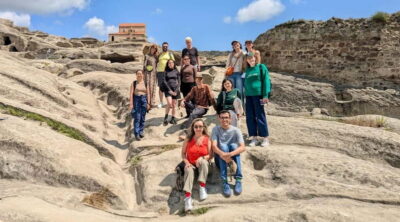
Mtskheta, Jvari, Gori and Uplistsikhe Day Tour
Read our review →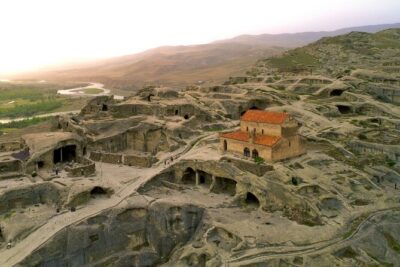

Mtskheta Jvari Bazaar, Chronicles of Georgia & Wine
Read our review →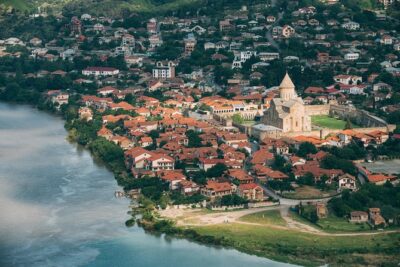
Mtskheta,Jvari,Bazaar,wine tasting,Chronicles of Georgia
Read our review →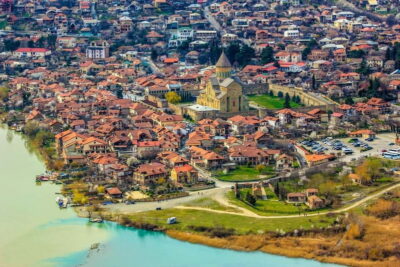
The Chronicles of Georgia, Jvari & Mtskheta Tour
Read our review →
Browse the lists this tour appears in