
Reviewed · MTSKHETA ANCIENT CAPITAL TOURS
Mtskheta: Day Tour to Oldest City in Georgia
Mtskheta is where Georgian faith turns into stone. In just 4 hours, this tour hits UNESCO sites tied to the acceptance of Christianity in 317, then tops it off with the dramatic river views from Jvari Monastery. What I like most is how the route feels efficient, and how the guide’s live commentary turns big church names into real stories you can picture. One drawback to consider is that it is very church and monastery focused, so if you want more time wandering the town shops and streets, this may feel a bit tight.
You will also get a smart mix of stops: Svetitskhoveli Cathedral for the Silk Road pilgrimage connection and the famed robe burial tradition, plus Samtavro Monastery for the royal tombs linked to King Mirian III and Queen Nana. If you’re visiting during monastery time, plan ahead with a scarf for head covering, especially for ladies, and bring a little patience for a busier, highlight-style pace.
In This Review
- Key things you’ll really remember
- Mtskheta in 4 hours, and why it is a smart short trip
- Meeting at Kote Abkhazi Street 44, then following the pace
- Jvari Monastery, the Monastery of Cross, and the river confluence view
- Svetitskhoveli Cathedral, the robe burial legend, and Silk Road pilgrimage
- Samtavro Monastery complex and the royal connection to early Christianity
- The wine tasting stop, a welcome break from church focus
- Price and value, what you get for about $41
- Who should book this tour
- Practical tips so your day goes smoothly
- Should you book the Mtskheta highlights tour?
- FAQ
- How long is the Mtskheta day tour?
- How much does the tour cost?
- What sites will we visit during the tour?
- Is food included?
- What languages are the live guides available in?
- What should I bring for monastery visits?
Key things you’ll really remember
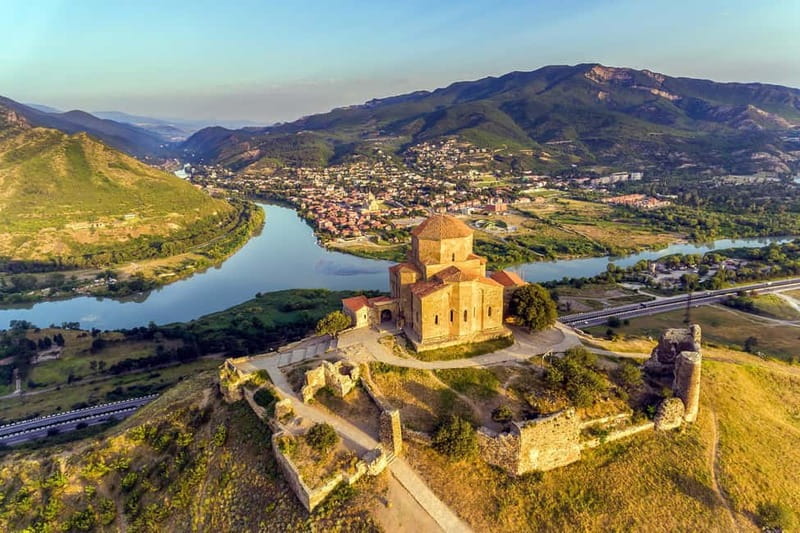
- Jvari Monastery’s hilltop viewpoint over the confluence of Aragvi and Mtkvari rivers
- Svetitskhoveli’s long, sky-reaching cross shape and its role in Silk Road pilgrimage
- Samtavro Monastery graves connected to Mirian III, Queen Nana, and Georgia’s early Christianity
- UNESCO World Heritage sites in one compact route, ideal for a short stay near Tbilisi
- Wine tasting stop so the day is not only churches and history
Other Mtskheta and Jvari trips:
- Tbilisi: Mtskheta, Jvari, Gori and Uplistsikhe Day Tour★ 4.9 · 2,396 reviews
- Day Trip to Mtskheta Gori and Uplistsikhe★ 5.0 · 1,801 reviews
- Tbilisi: Mtskheta Jvari Bazaar, Chronicles of Georgia & Wine★ 5.0 · 1,088 reviews
- Tbilisi:Mtskheta,Jvari,Bazaar,wine tasting,Chronicles of Georgia★ 5.0 · 730 reviews
Mtskheta in 4 hours, and why it is a smart short trip
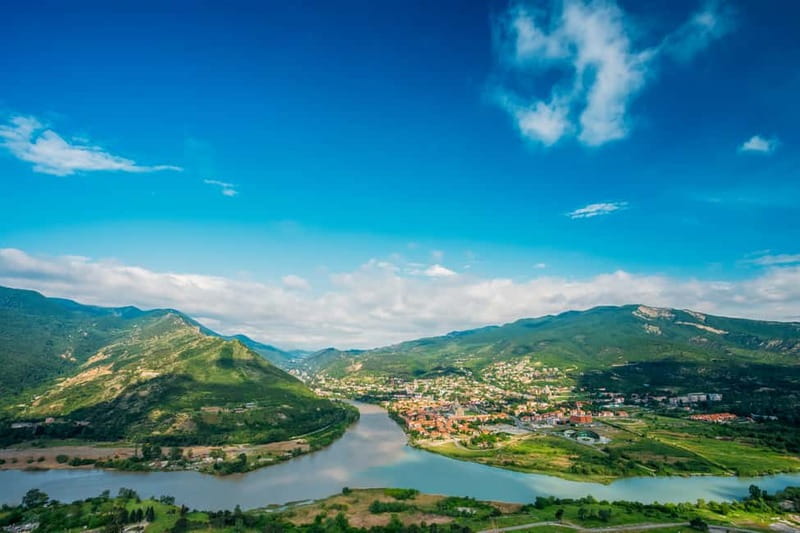
Mtskheta sits near Tbilisi and is one of the oldest cities in Georgia. It served as the capital of the early Georgian Kingdom of Iberia from the 3rd century BC until the 5th century AD, so even before you get to the churches, the setting already has weight.
This is a short, highlight-style tour at 4 hours. That matters because the main draw here is seeing multiple UNESCO sites without losing half a day on logistics. You get a fast education on why this place is religiously important to Georgians, and you also get the kind of views that make the drive worthwhile even if you are not a hardcore church architecture fan.
And the key theme running through the day is timing. You are looking at buildings from several centuries, but the stories connect them back to early Christianity, including the moment when Georgians accepted Christianity as official religion in 317. You come away feeling like the faith and the geography are tied together, not just separate facts.
Meeting at Kote Abkhazi Street 44, then following the pace
The tour meets at Kote Abkhazi Street 44. From there, you will spend the time moving between key sights around Mtskheta, guided by a live English or Russian-speaking guide.
This format is practical if you have limited time in Georgia. It is also good if you like structure. You get commentary while you travel, so you are not staring at maps and trying to figure out which door is the right one or which viewpoint matters most.
That said, a highlight tour can feel “hands on churches, hands off the town.” One person noted the idea of adding time to walk the town, pop into local stores, and grab lunch somewhere local instead of focusing only on religious sites. If that sounds like you, consider pairing this with extra free time on your own later, so you can slow down and experience Mtskheta beyond the main monuments.
Transport comfort is another practical variable. I suggest you plan for a busier ride, since some groups have mentioned the vehicle felt uncomfortable or dusty. Pack accordingly: closed-toe shoes for uneven spots near monasteries, a layer for weather shifts, and a small personal towel or wipes if you are sensitive to dust.
Jvari Monastery, the Monastery of Cross, and the river confluence view
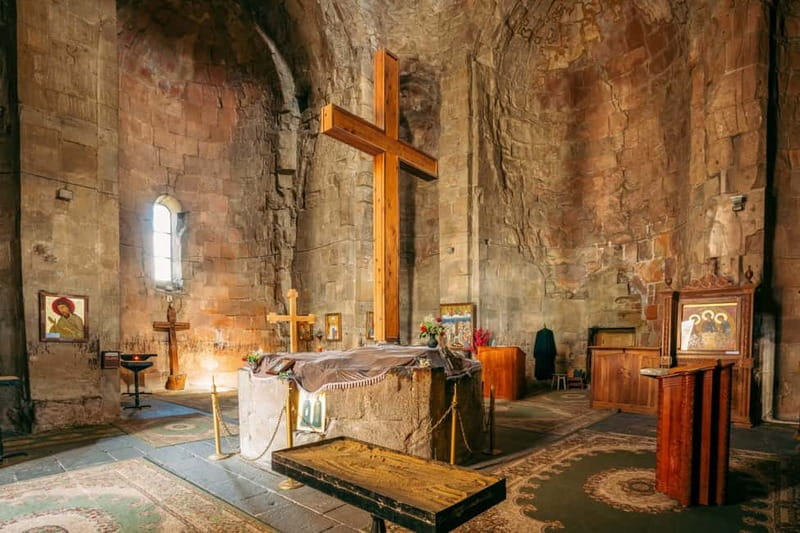
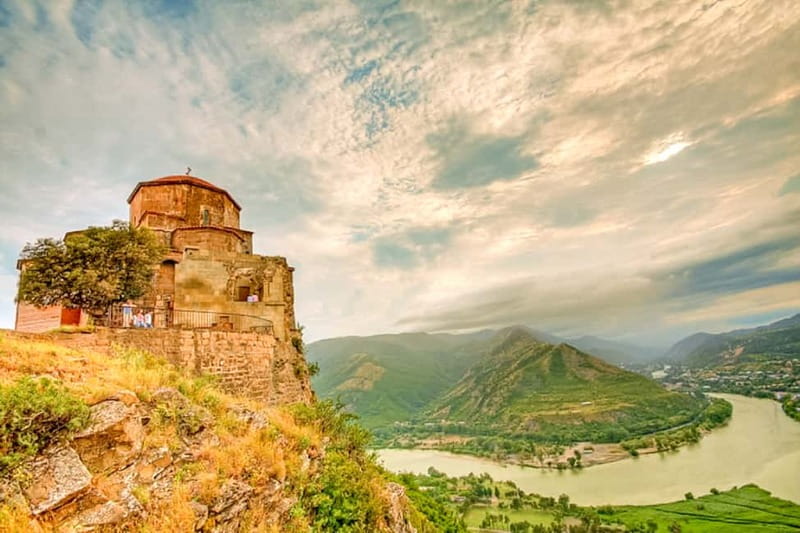
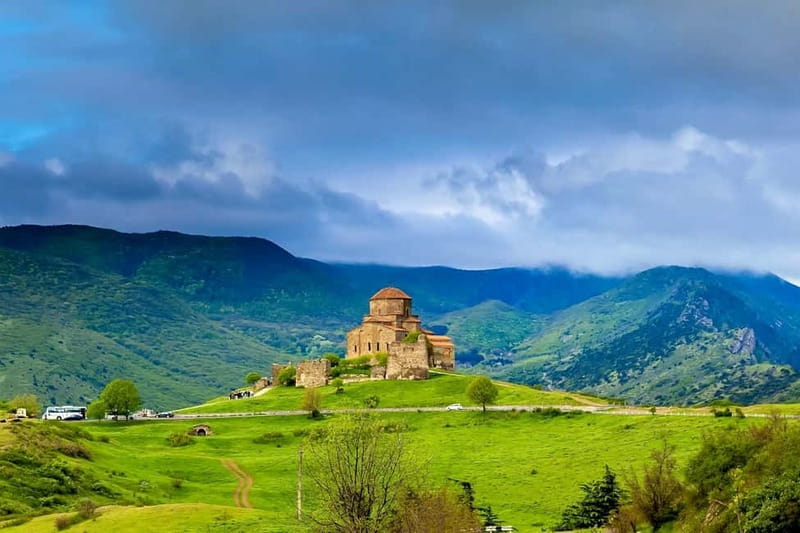
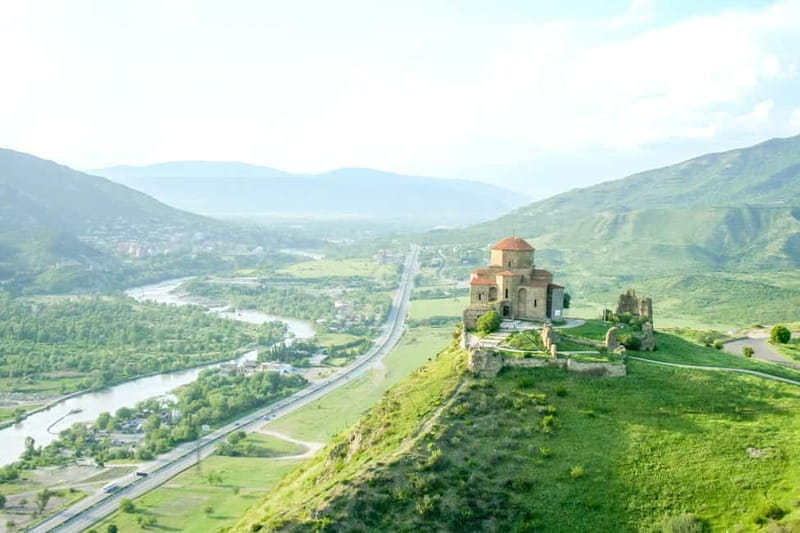
Jvari Monastery is a Georgian Orthodox site dating to the 6th century, and its name translates to the Monastery of Cross. It is also a UNESCO World Heritage Site, so it has that “this is important” label, but the real reason it hits is the location.
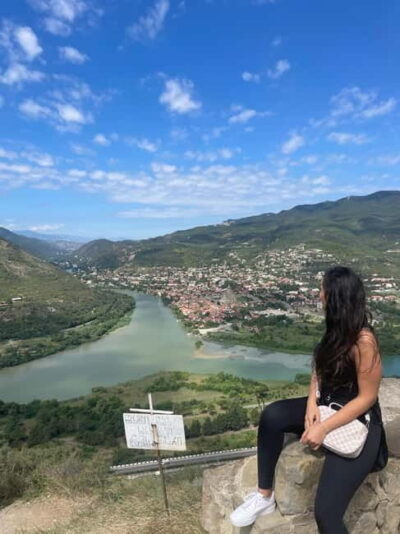
You will reach it near Mtskheta and look out over the confluence of the Aragvi and Mtkvari rivers. From the hill, the church feels like it belongs to the land, not just the skyline. Even if you are not religious in a traditional way, the architecture and the setting make it easy to understand why people have long traveled here.
The guide’s live commentary is especially useful at Jvari because it is not only about seeing a building. It is about understanding why it became a kind of peak example of Georgian church architecture. One major reason the monastery stands out is that its design represents the peak of a specific architectural typology, so you get a “why this shape matters” explanation instead of a quick photo stop.
Practical note: monasteries can have stricter dress expectations than city churches. Plan for head covering. If you are a lady, bring a scarf you can quickly put on for entry.
Svetitskhoveli Cathedral, the robe burial legend, and Silk Road pilgrimage
Next up is Svetitskhoveli Cathedral, one of the most important stops in the entire region. The church you see is built in the 11th century, but the sacred site underneath is even older, dating back to the early 4th century. That layering is part of the awe here. You are not just looking at one era of faith, you are standing on a place that has mattered for a very long time.
This is also where the tour’s big historical claims turn into vivid details you can picture. Svetitskhoveli has an elongated cross shape that looks like it reaches toward the sky. It is a strong visual, and the guide’s explanations help you understand it as more than style.
One of the most memorable stories tied to the cathedral is the tradition of the burial place of Christ’s robe. The site is also described as the tomb place of Georgian kings, so it connects everyday pilgrimage with royal history and high religious meaning. On top of that, it was a main pilgrimage place on the Silk Road, which is a key detail if you care about Georgia as a crossroads, not just a destination.
Svetitskhoveli is listed as UNESCO along with other historical monuments of Mtskheta. The cathedral is also noted as the second largest church building in Georgia. Even if the interior details are not what you expected, the size and the overall presence help you grasp how central this place was for visitors coming from far away.
If you want to make the most of this stop, take a moment to slow down, look back at the church from different angles outside, then go in and let the guide’s context do its work. This is one of those sights where facts matter, but the space also matters.
Other Tbilisi tours and day trips:


Samtavro Monastery complex and the royal connection to early Christianity
Samtavro Monastery complex is another UNESCO-listed experience in the Mtskheta cluster. It dates to the 11th century, and it is closely tied to some of the central figures connected to Georgia’s early adoption of Christianity.
Inside the complex, you will see the grave of Queen Nana and Mirian III, as well as the King of Iberia who established Christianity as an official religion in Georgia. That link between leadership and faith is a big deal in the story the tour tells. It helps explain why Mtskheta did not just become a religious site, it became a religious center.
You will also learn about another notable burial connected to Georgian monastic tradition: the famous monk Gabrieli is buried inside the Samtavro church. That gives the stop a different flavor than the larger cathedral. You feel a more personal, devotional side of the history, tied to individuals rather than only to monuments.
This is a good stop for you if you like the human scale of places. Cathedrals can feel grand and distant. Samtavro tends to feel closer to daily faith, even if the history is still ancient. The live commentary helps you place each grave and name into the broader timeline, especially the story around 317.
As with the other monastery visit, dress and head covering rules apply. Bring that scarf and use it without fuss. It will save time and help you feel comfortable in the space.
The wine tasting stop, a welcome break from church focus
At some point in the tour, there is a wine tasting stop, listed as Wine Degustation. The idea is simple: you get tastes of Georgian wine and you can also buy bottles if you want a souvenir that actually relates to everyday culture, not only monuments.
This is a nice counterweight to the heavy, sacred tone of the day. Wine does not replace history, but it adds a different kind of Georgian flavor. After walking church courtyards and absorbing the story of faith across centuries, the chance to taste something local helps the day feel balanced.
If you are sensitive to strong flavors, pace yourself and take water breaks. And if you plan to buy a bottle, think about how you will carry it back to your hotel or your next transport leg.
Price and value, what you get for about $41
The price is listed at $41 per person for a 4-hour tour with live commentary. For a short day trip, that price feels most fair if you value expert guidance and a tight route.
Here is what you are paying for, in plain terms:
- A guided loop through multiple key UNESCO sights around Mtskheta
- Live commentary in English or Russian, so the names and dates turn into context instead of trivia
- A highlight-level pacing, meaning you spend your time efficiently rather than searching on your own
What is not included is food and drinks. That is not a dealbreaker, but you should plan around it. If you need lunch, either eat before the tour starts or plan to eat right after. Since you might spend time outdoors at viewpoints, snacks can also make the day more comfortable.
So, is $41 a good deal? Yes, if you are the kind of traveler who wants the biggest hits in one go and likes getting explanations as you go. If you are the kind of traveler who wants hours to wander a town slowly, this pricing model may feel more like a quick museum tour than a full cultural day.
Who should book this tour
I think this tour is a great match if you:
- Have limited time near Tbilisi and want UNESCO highlights
- Like places where architecture, faith, and early Georgian history connect
- Prefer a guide to handle logistics and narration, with live commentary throughout
- Want a short, structured experience without planning every step
You might want to skip or modify your plan if you:
- Want a lot more free time to roam Mtskheta’s streets, shops, or local restaurants
- Dislike religious history as a main theme
- Are very sensitive to vehicle comfort, since comfort and dust level can be an issue for some people
Practical tips so your day goes smoothly
Bring a scarf for head covering if you are visiting monasteries as a lady. It is specifically flagged as needed, and it is the easiest way to avoid stress at the entrance.
Wear shoes you can trust on uneven surfaces. Even if you are not climbing a mountain, monastery grounds and viewpoints can be slippery or gritty depending on weather.
Hydration matters. Food and drinks are not included, so bring water if you think you will want it. A small snack can also help you avoid running low energy after multiple stops.
One more practical move: ask your guide early in the route what the next stop timing looks like, and where to meet if you step away for photos. Some groups have found that meeting points and time explanations can be unclear, so a quick clarification helps you stay calm.
Finally, if you can, add a little independent time before or after the tour. Even if the tour is efficient, Mtskheta feels more rewarding when you get a chance to linger beyond the main monuments.
Should you book the Mtskheta highlights tour?
If you want the fastest way to see Mtskheta’s UNESCO core and understand why this city matters for Georgian Christianity, I’d book it. The 4-hour length is a sweet spot, and the live commentary is the difference between collecting photos and actually understanding what you are seeing at Jvari, Svetitskhoveli, and Samtavro.
If you crave a long, free-form wander through local neighborhoods, pair this tour with extra time on your own. That way you get the guided monuments without sacrificing the chance to experience everyday Mtskheta too.
Overall, it is strong value for a short day near Tbilisi, especially if you show up with the right mindset: you are here for big historical and religious landmarks, plus one pleasant cultural break with Georgian wine.
FAQ
How long is the Mtskheta day tour?
The duration is 4 hours.
How much does the tour cost?
The price is $41 per person.
What sites will we visit during the tour?
You will visit Mtskheta’s main historic religious landmarks, including Jvari Monastery, Svetitskhoveli Cathedral, and the Samtavro Monastery complex, plus a stop for wine tasting.
Is food included?
No. Food and drinks are not included.
What languages are the live guides available in?
The live tour guide is available in English and Russian.
What should I bring for monastery visits?
Ladies should bring a scarf to cover their heads when visiting the monasteries.
Newer trips around Tbilisi
- Tbilisi Private Dinner: Georgian BBQ & Fireplace
★ 5.0 · 1 review - Tbilisi: Khinkali Tasting Lunch with Local Drinks and Pickup
★ 5.0 · 1 review - Day trip in Kakheti-wine tour
★ 5.0 · 1 review - Tbilisi & Mtskheta bus tour hop on hop off
★ 5.0 · 1 review - Tbilisi: Christmas Market & Hidden Gems Guided Walking Tour
★ 5.0 · 1 review - Stalin’s Secrets: An Underground Journey Through History
★ 5.0 · 1 review
Mtskheta Ancient Capital Tours, compared.
Mtskheta, Jvari, Gori and Uplistsikhe Day Tour
Read our review →
Mtskheta Jvari Bazaar, Chronicles of Georgia & Wine
Read our review →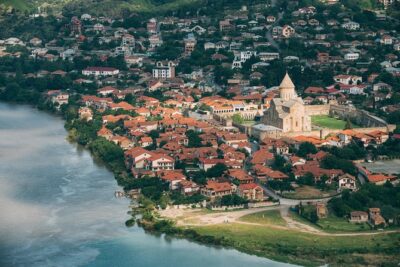
Mtskheta,Jvari,Bazaar,wine tasting,Chronicles of Georgia
Read our review →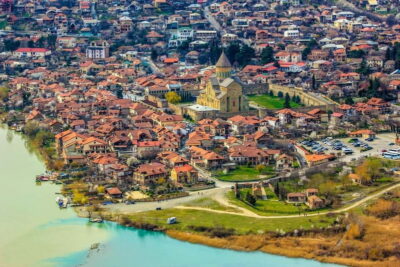
The Chronicles of Georgia, Jvari & Mtskheta Tour
Read our review →
Browse the lists this tour appears in