
Reviewed · MTSKHETA ANCIENT CAPITAL TOURS
Mtskheta-Jvari + Gori-Uflistsikhe Private tour
Three sites in one day. Big Georgian vibes.
This Mtskheta-Jvari and Gori-Uplistsikhe private tour strings together mountain monasteries, UNESCO streets in Mtskheta, and the Soviet story in Gori.
I like how the day starts high above the rivers at Jvari Monastery, then shifts into a rock-cut time machine at Uplistsikhe. I also love that the tour includes a live English guide, so you are not just staring at stones and guessing.
One consideration: this is not a comfy stroll for everyone. The cave city and mountain areas mean walking and uneven ground, so if you have mobility limits, you may want a different plan.
In This Review
- Key things I’d circle on your booking list
- Why this private 8 hour route feels like good value
- Jvari Monastery: where the river junction turns into your first wow
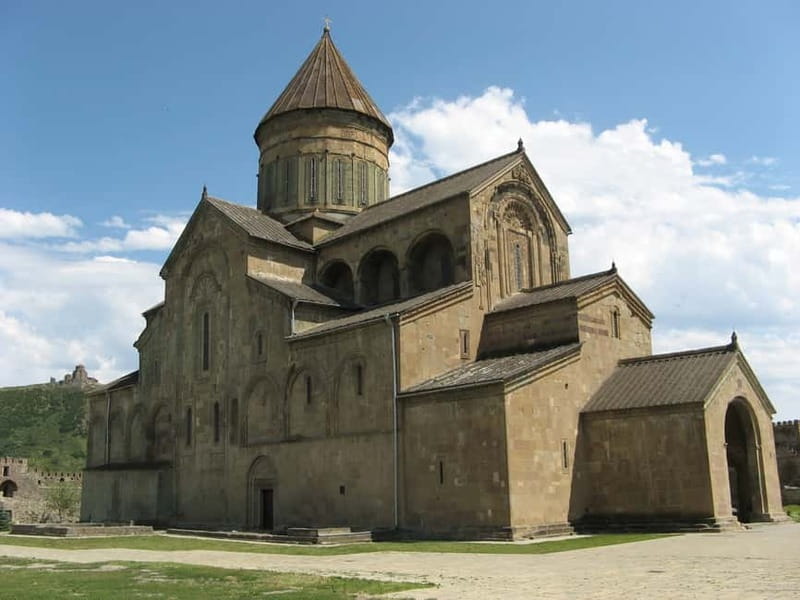
- Svetitskhoveli Cathedral in Mtskheta: UNESCO scale, big presence
- Uplistsikhe, the Fortress of God: 3,000 years carved into rock
- The mountain panoramas: your “pause and breathe” moment
- Gori’s Stalin story: museum exhibits that feel very specific
- Tickets you should budget for on the day
- Comfort and group size: the part you should check first
- Who should book this tour (and who might skip it)
- Should you book the Mtskheta-Jvari + Gori-Uplistsikhe Private tour?
- FAQ
- What is the duration of the tour?
- Is hotel pickup and drop-off included?
- Are entry tickets included?
- What language is the tour guide?
- Is WiFi available during the trip?
- Is the tour suitable for people with mobility impairments?
- What is the cancellation policy?
Key things I’d circle on your booking list
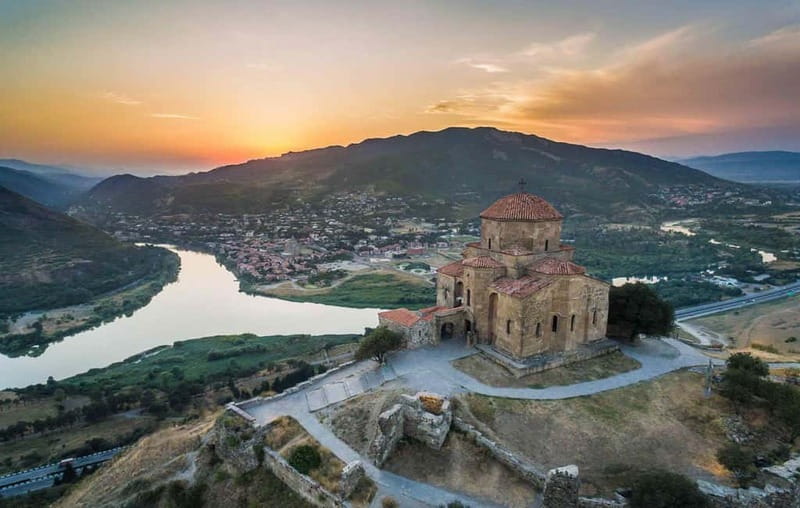
- Mountain-top views from Jvari, with the Aragvi and Kura river junction below
- UNESCO listed Mtskheta sites, including Svetitskhoveli Cathedral
- Uplistsikhe cave city, a 3,000 year old “Fortress of God” carved into rock
- Real variety at Uplistsikhe, from a sun temple to royal cave of King Tamara
- Gori’s Stalin Museum, with office and personal items like his pipe and telephone
- Private door-to-door pickup in Tbilisi, plus WiFi on board
Other Gori and Uplistsikhe cave-town trips:
- Tbilisi: Mtskheta, Jvari, Gori and Uplistsikhe Day Tour★ 4.9 · 2,396 reviews
- Day Trip to Mtskheta Gori and Uplistsikhe★ 5.0 · 1,801 reviews
- From Tbilisi : Mtskheta, Jvari, Gori & Uplistsikhe Day Trip★ 4.8 · 432 reviews
- From Tbilisi: Mtskheta, Jvari, Gori, Uplistsikhe Guided Tour★ 4.7 · 354 reviews
Why this private 8 hour route feels like good value
At $56 per person for an 8 hour private day, you are paying mainly for time and hassle reduction. You get hotel pickup and drop-off in Tbilisi, private transportation, and a live English guide. That combination matters on Georgian road trips because the sites are spread out, and self-guiding can turn into “guess, park, walk, repeat.”
This is also a smart mix of eras. You go from early Christian Georgia (Jvari and Svetitskhoveli) to ancient underground life (Uplistsikhe) and then into the 20th century through Stalin’s world in Gori. Few day trips manage that kind of timeline jump without turning into a race.
Yes, you will pay small extra entry tickets for two stops: Uplistsikhe and the Stalin Museum. But the core value is the routing, the guide interpretation, and the private comfort.
Jvari Monastery: where the river junction turns into your first wow
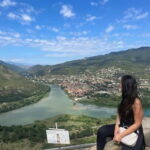
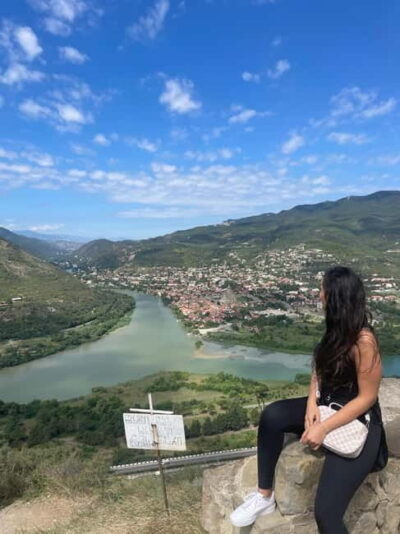
The day starts at Jvari Monastery, an ancient temple dating back to the 6th century, above the old capital area of Mtskheta. The location is the point. From here, you get a sweeping view at the intersection of the Aragvi and Kura rivers, and you immediately understand why this spot mattered so much.
Jvari sits on higher ground, which changes how everything feels. You are not just “visiting a church.” You are standing in the kind of place that controlled a view, a route, and a story. The monastery’s age gives it extra weight, and the setting makes it feel more than a photo stop.
Practical tip: wear shoes with grip. Even if you plan to take your time, you will still be moving around outside and on uneven areas as you look for the best angles.
Svetitskhoveli Cathedral in Mtskheta: UNESCO scale, big presence
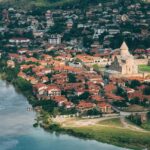
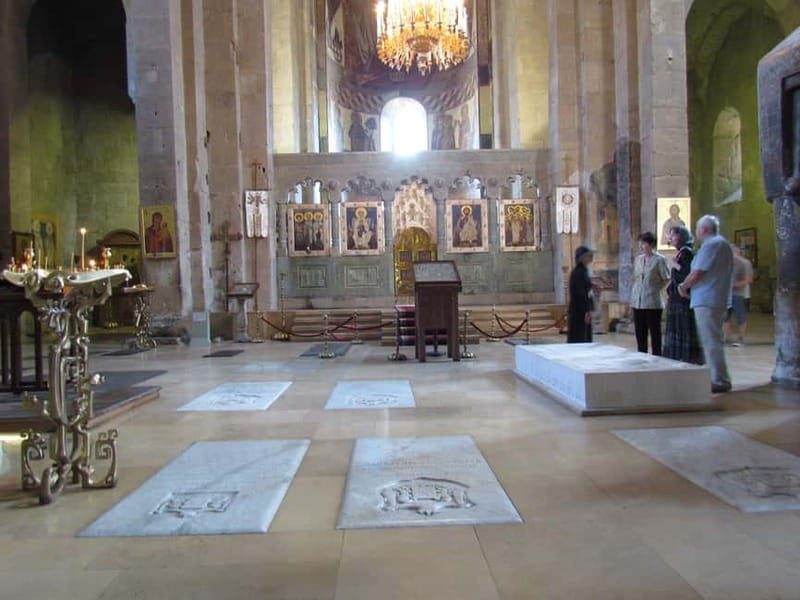
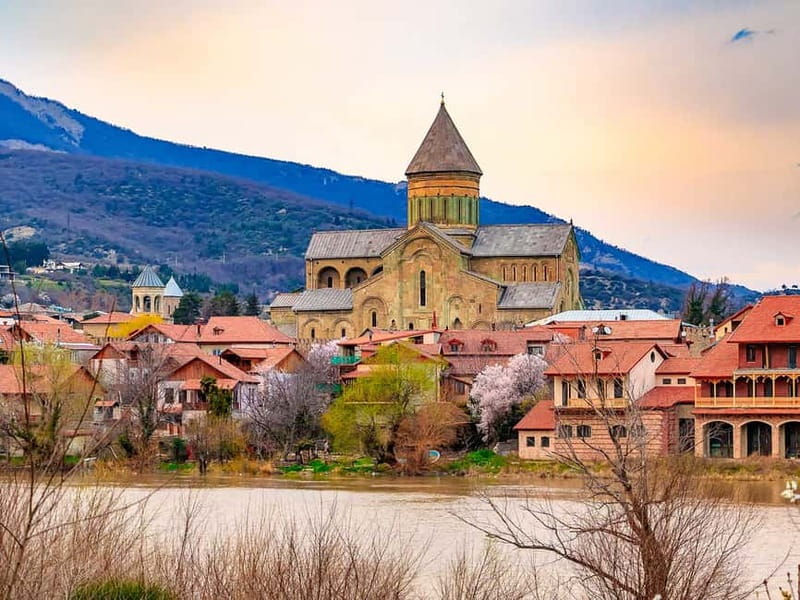
From Jvari, you move into Mtskheta’s UNESCO orbit with a visit to Svetitskhoveli Cathedral. This is one of those places that hits you with size and presence right away, especially because it pairs so well with the earlier monastery stop. Together, they help you see how Georgia’s sacred architecture developed across centuries.
What I like about adding Svetitskhoveli here is pacing. After the mountain views, you shift from open-air panorama to a monumental religious site. That contrast keeps the day from feeling repetitive, and it helps you connect the dots between landscape, belief, and power.
If you are the kind of traveler who likes to understand what you are seeing, this is where a guide helps most. A guide can point out what to look for at each stop, and how the sites connect as part of the same broader historic zone.
Uplistsikhe, the Fortress of God: 3,000 years carved into rock
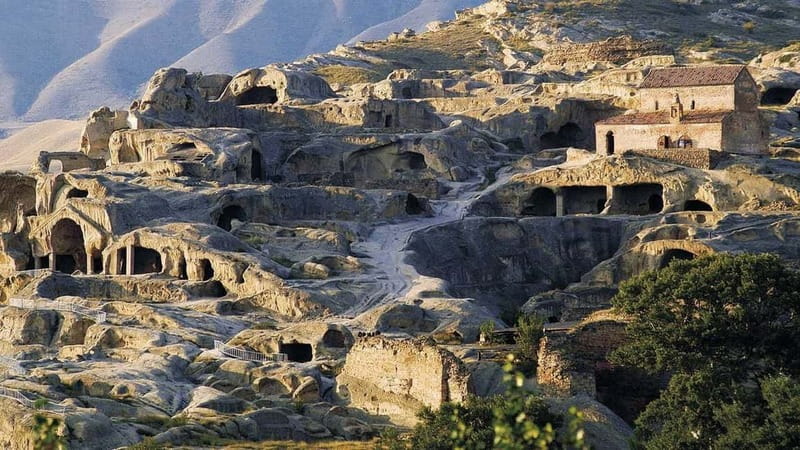
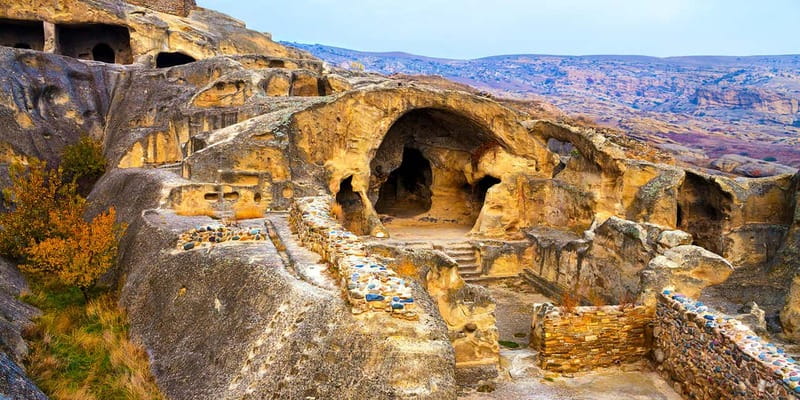
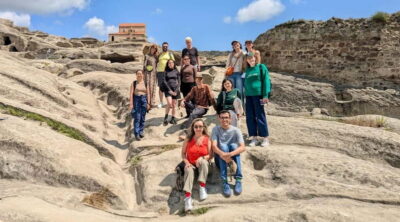
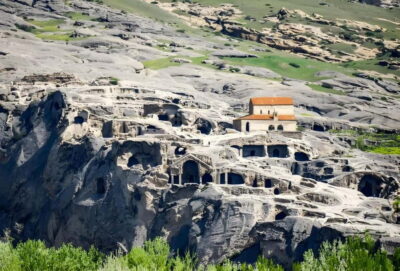
Then you head to the star of the underground show: Uplistsikhe, often called the Fortress of God. This is a cave city carved into rock and dated around 3,000 years old, with a layout that still surprises you even if you think you have seen every type of ruin.
The most useful way to think about Uplistsikhe is this: you are walking through a whole built environment, not just one carved room. The site includes about 150 caves that have survived, and the variety is the thrill. You can see a cave tunnel, an ancient sun temple, the royal cave linked with King Tamara, plus a winery, a 6th century church, and sections such as a Bibliotheca and an ancient pharmacy.
It is the kind of place where you start to notice details like how space was organized, where people gathered, and how daily life might have worked in a rocky setting. Even if you do not read every sign, the physical layout tells a story.
One thing to expect: cave city sites are cooler and darker than you think, and surfaces can be uneven. You will feel the temperature shift as you move from open areas into rock-cut spaces. That is normal, and it is part of the experience.
Other Mtskheta and Jvari trips:
The mountain panoramas: your “pause and breathe” moment
This tour does more than just park you at scenic points. The day is staged so the views act like reset buttons between heavier history stops.
That starts with Jvari. You climb to a viewpoint, you take in the rivers meeting below, and then you move on. Later, the day keeps giving you chances to look outward before going back to close-up exploring. This matters, because Uplistsikhe can get mentally “busy.” When you take a moment to look far away, your brain stops treating everything as only narrow passages and starts treating the site as part of a wider human geography.
If you plan to photograph, do it slowly. At the views, the light can change fast, and you will want stable footing before you start shooting.
Gori’s Stalin story: museum exhibits that feel very specific
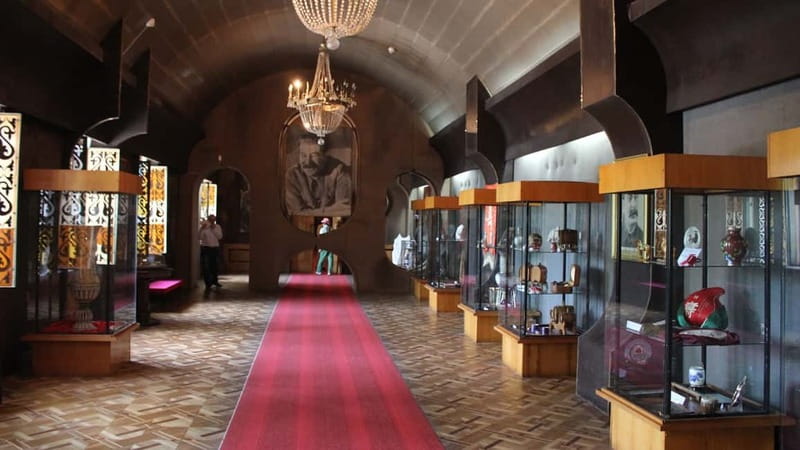
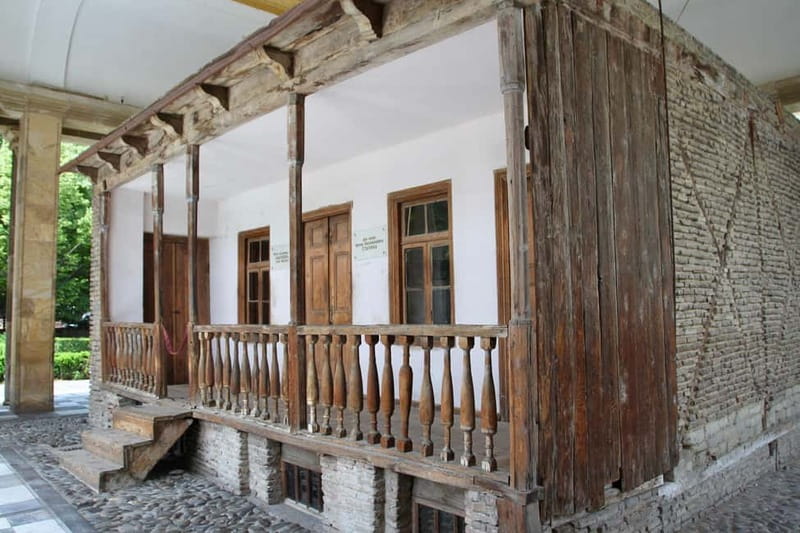
Next stop is Gori, Joseph Stalin’s hometown. The tour includes the Stalin Museum, sometimes described as part of the Stalin Home and Museum complex, where you learn about the Soviet leader’s life through objects and rooms tied to him.
What makes this visit feel real is the level of detail mentioned for what you see. You can expect to view Stalin’s office and personal items including his pipe, cigars, telephone, and even the house where he was born. That kind of specificity is useful. It turns broad history into a physical, human-scale experience.
The museum also gives you a look at Soviet-era characteristics that still remain. You are not just studying a biography in theory. You are walking through a curated set of spaces that were built to hold a particular image of power and personal routine.
Practical note: plan for more walking here than you might expect. Museums often look small, but you typically move between rooms and exhibits, and you may spend more time than you think reading labels and looking at displays.
Tickets you should budget for on the day
Two entry tickets are not included in the base price:
- Uplistsikhe entry ticket: $5 per person
- Stalin Museum entry ticket: $5 per person
So if you are booking for a group, do yourself a favor and budget that total up front. The tour price covers the big pieces you care about, private transport and guiding, while the site fees are the main extras.
Comfort and group size: the part you should check first
This is a private tour, but private does not always mean spacious. One booking experience highlighted that the car can feel small for four adults. If you are traveling with a family or a group of four, ask the operator ahead of time about vehicle size.
Also remember this day includes varied terrain: mountain steps, cave-city pathways, and museum interiors. If comfort matters to you, vehicle space helps, but so does your shoe choice and your willingness to take short breaks.
Who should book this tour (and who might skip it)
This works best for you if you:
- want a tight 1-day route that covers three major zones in Georgia
- like understanding how different periods connect, Christian Georgia, ancient rock cities, and Soviet history
- prefer private logistics and an English-speaking guide to keep the story clear
You might want a different option if you:
- have mobility impairments, since the tour is listed as not suitable for that
- prefer slow, single-site exploring over a packed day schedule
Should you book the Mtskheta-Jvari + Gori-Uplistsikhe Private tour?
If you want a day that feels efficient without feeling rushed, I’d say yes. The value comes from three things: door-to-door pickup in Tbilisi, a live English guide, and a route that moves through UNESCO-era Mtskheta, Uplistsikhe’s cave life, and Stalin’s personal world in Gori.
The only real reason not to book is comfort and mobility concerns. If you can handle walking in and around caves and mountain areas, this is a strong choice, especially for first-timers who want maximum variety in a single day.
One more practical nudge: if you are four adults, confirm the car size before you go. It is a small detail that can change your comfort level a lot.
FAQ
What is the duration of the tour?
The tour lasts 8 hours.
Is hotel pickup and drop-off included?
Yes. Pickup and drop-off are included, and you can be picked up from any hotel or address in Tbilisi.
Are entry tickets included?
No. Entry ticket to Uplistsikhe costs $5 per person, and entry ticket to Stalin Museum costs $5 per person.
What language is the tour guide?
The live tour guide provides English.
Is WiFi available during the trip?
Yes. WiFi on board is included.
Is the tour suitable for people with mobility impairments?
No. The tour is listed as not suitable for people with mobility impairments.
What is the cancellation policy?
You can cancel up to 24 hours in advance for a full refund.
Newer trips around Tbilisi
- Tbilisi Private Dinner: Georgian BBQ & Fireplace
★ 5.0 · 1 review - Tbilisi: Khinkali Tasting Lunch with Local Drinks and Pickup
★ 5.0 · 1 review - Day trip in Kakheti-wine tour
★ 5.0 · 1 review - Tbilisi & Mtskheta bus tour hop on hop off
★ 5.0 · 1 review - Tbilisi: Christmas Market & Hidden Gems Guided Walking Tour
★ 5.0 · 1 review - Stalin’s Secrets: An Underground Journey Through History
★ 5.0 · 1 review
Mtskheta Ancient Capital Tours, compared.
Mtskheta, Jvari, Gori and Uplistsikhe Day Tour
Read our review →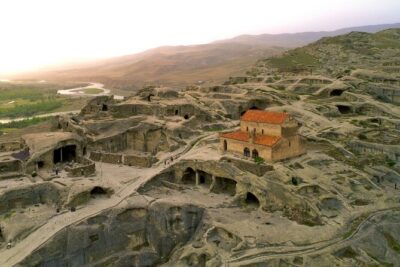
Mtskheta Jvari Bazaar, Chronicles of Georgia & Wine
Read our review →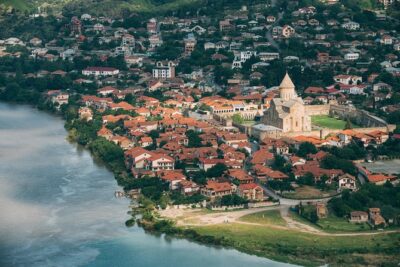
Mtskheta,Jvari,Bazaar,wine tasting,Chronicles of Georgia
Read our review →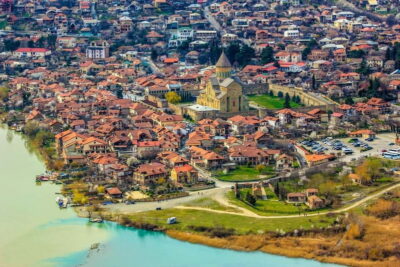
The Chronicles of Georgia, Jvari & Mtskheta Tour
Read our review →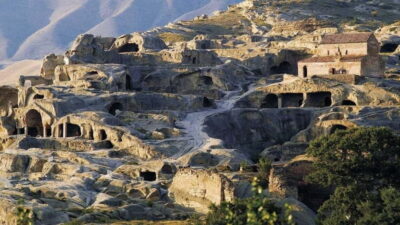
Browse the lists this tour appears in