
Reviewed · MTSKHETA ANCIENT CAPITAL TOURS
Mtskheta-Jvari-Gori-Uplistsikhe-Stalins Museum All inclusive tour
Stalin history and ancient churches in one day. This Mtskheta-Jvari-Gori-Uplistsikhe-Stalin museum tour is a long circuit out of Tbilisi that mixes cave-town Georgia, UNESCO World Heritage churches, and Soviet power in a single, well-organized plan. If you like contrasts, you will probably enjoy the way the day jumps from rock-cut rooms to holy sites, then straight to a museum built around one of the 20th century’s most famous leaders.
I like two things most: first, you get tickets included for the big, paid stops like Uplistsikhe and Stalin museum, which makes the day feel smoother and more predictable. Second, the private, air-conditioned vehicle plus pickup keeps your energy for the viewpoints instead of bus schedules. One drawback to consider is that the day runs 8 to 10 hours, and if your guide’s language clarity is not your strong suit, you may wish you could slow down or ask more questions.
In This Review
- Key things to look for before you go
- The big idea: why this route works so well
- Uplistsikhe Cave Town: Fortress of the Lord in living rock
- Stalin Museum: 60,000 exhibits, personal objects, and a train car story
- Goristsikhe in Gori: a quick fortress stop with deep roots
- Jvari Church: a hilltop monastery with river confluence drama
- Svetitskhoveli Cathedral: UNESCO power with preserved relics and a royal tomb
- Price and logistics: where the $155 really goes
- Timing and pacing: how to make the day feel relaxed
- What to pack and how to plan your mood
- Who should book this tour, and who should skip it
- Should you book this all-inclusive day trip?
- FAQ
- What time does the tour start?
- How long is the tour?
- Is pickup included?
- What is included in the price?
- Which sites require tickets?
- Is alcohol included with lunch?
- What kind of fitness level do I need?
- What is the cancellation policy?
Key things to look for before you go
- Uplistsikhe rock-hewn cave town with roots stretching back to the early Bronze Age and major settlement history reaching the 6th century
- Stalin museum scale at 60,000 exhibits, including the memorial house thought to be his birthplace
- Stalin’s personal train car used for trips to Tehran, Yalta, and Potsdam
- Gori fortress history at Goristsikhe, with fortress-era evidence reported as far back as the 1st century BC
- Jvari’s hilltop church setting across the river from Mtskheta at the confluence of Aragvi and Mtkvari
- Svetitskhoveli’s preserved relics and royal tomb including the mantles of Christ and Prophet Elijah, plus King Vakhtang Gorgasali’s tomb
Other Gori and Uplistsikhe cave-town trips:
- Tbilisi: Mtskheta, Jvari, Gori and Uplistsikhe Day Tour★ 4.9 · 2,396 reviews
- Day Trip to Mtskheta Gori and Uplistsikhe★ 5.0 · 1,801 reviews
- From Tbilisi : Mtskheta, Jvari, Gori & Uplistsikhe Day Trip★ 4.8 · 432 reviews
- From Tbilisi: Mtskheta, Jvari, Gori, Uplistsikhe Guided Tour★ 4.7 · 354 reviews
The big idea: why this route works so well
This tour is designed like a timeline you can feel. You start with an ancient settlement carved into rock, then you move to Soviet-era history, and finally you land in Georgia’s early Christian story through two major sacred sites near Mtskheta.
The flow matters. If you try to piece together Uplistsikhe, Gori, and Mtskheta on your own, it can turn into a day of taxis, waiting, and ticket lines. Here, your transport and key admissions are handled, so you can focus on walking, looking, and learning.
Also, this is a private format. That usually means fewer distractions than a crowded bus, and you can often adapt the pace if your group needs a short break.
Uplistsikhe Cave Town: Fortress of the Lord in living rock
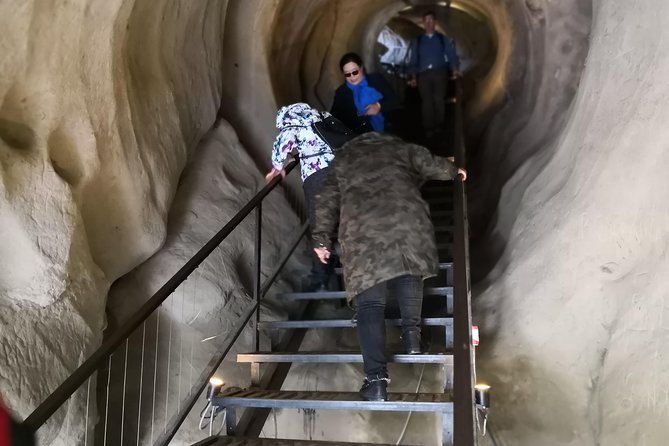
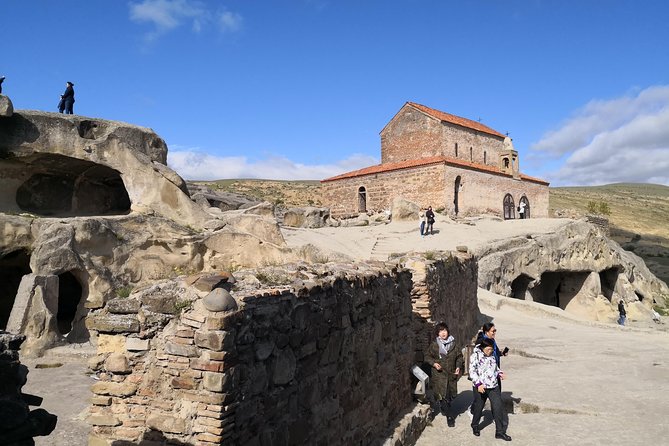
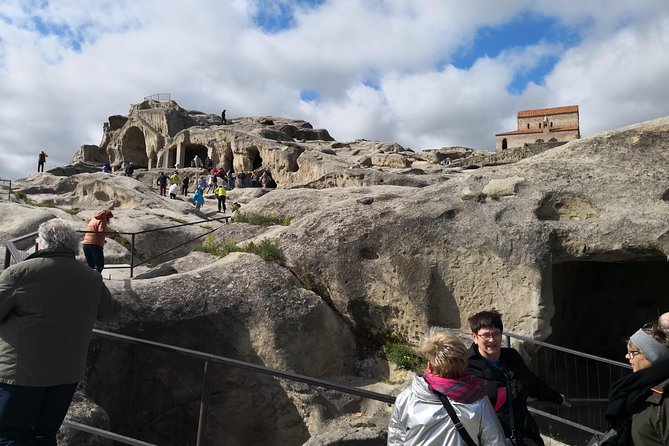
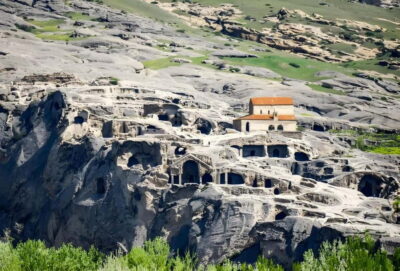
Uplistsikhe is a rock-hewn city east of Gori, on the left bank of the Mtkvari River, and it is one of the oldest settlement sites in the Caucasus area. What I love about this stop is that it does not feel like a staged ruin. You still walk through spaces that were built to function, carved and shaped by people who lived here long before the modern map of Georgia.
You will get about two hours here, and that is a good length. In that time, you can take in the layout without racing through it. You can also pause to understand what you are looking at, since the site spans a wide timeline, from early Bronze Age cultural remnants through later settlement periods that reach at least the 6th century.
What to watch for: Uplistsikhe is called a cave town for a reason. Expect some uneven ground and more walking than a flat city stroll. The tour lists moderate physical fitness as a requirement, and I take that seriously for this stop. Wear shoes with grip, and bring a light layer if you are sensitive to temperature changes in stone spaces.
One more practical point: Uplistsikhe’s admission is included, so you do not have to think about where to buy a ticket or how long that might take.
Stalin Museum: 60,000 exhibits, personal objects, and a train car story
Then you switch eras abruptly, and that is part of the point. The Stalin museum is not just a few portraits and photos. It was founded in 1937 and includes a huge collection, reported here as 60,000 exhibitions.
Your stop is about one hour, and for a museum that size, that time constraint is real. So you have to choose what matters most to you. If you want the full human scale, the museum’s memorial house believed to be Stalin’s birthplace is a strong anchor. If you want the machinery of power, the museum also includes Stalin’s personal train car, described as used for trips to Tehran, Yalta, and Potsdam.
That train car detail is the kind of thing that turns a museum visit into a story. It helps you connect Stalin as a person with Stalin as a political force, moving between meetings and decisions across major cities. It is not just history in the abstract.
The museum time can feel more intense if you are sensitive to politically charged topics. If that is you, go in with an idea of what you want to learn, not just what you want to see. One hour is enough for a focused visit, but it is not enough to read everything.
What you get for your money here: admission to Stalin museum is included, so you avoid extra costs on the day. Bottled water is also provided, which is a small thing, but on a long drive day it helps.
Goristsikhe in Gori: a quick fortress stop with deep roots
Next comes a shorter stop, about 40 minutes, at Goristsikhe. This fortress sits on a rocky hill in the center of Gori, and the ruins plus archaeological findings point to fortress activity as far back as the 1st century BC.
Later, in historical manuscripts, the site appears in the 13th century as Gori Prison. That title alone is enough to make the place feel heavy. Even if you only have a short time window, you will likely feel the contrast between how old the evidence is and how late the written references come into view.
Admission here is free, so this is a good use of time. It is not the centerpiece of the day like Uplistsikhe or Stalin museum, but it adds context for why Gori matters in the larger story.
Tip for your visit: since your time is short, focus on the top views and the most visible ruins first. If there are information plaques, read the ones that match what you are physically standing near. That is how the time compression works in your favor.
Other Mtskheta and Jvari trips:
Jvari Church: a hilltop monastery with river confluence drama
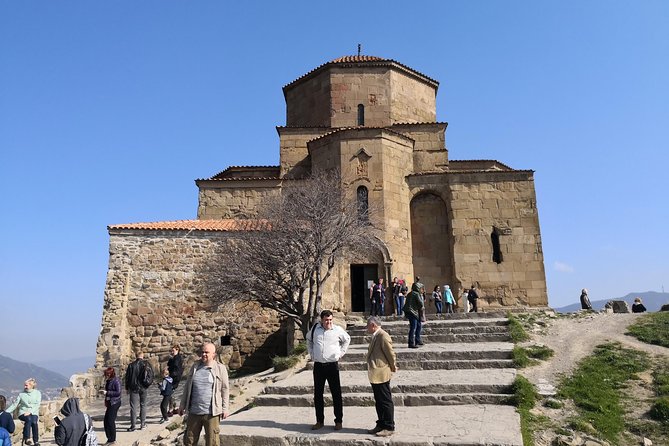
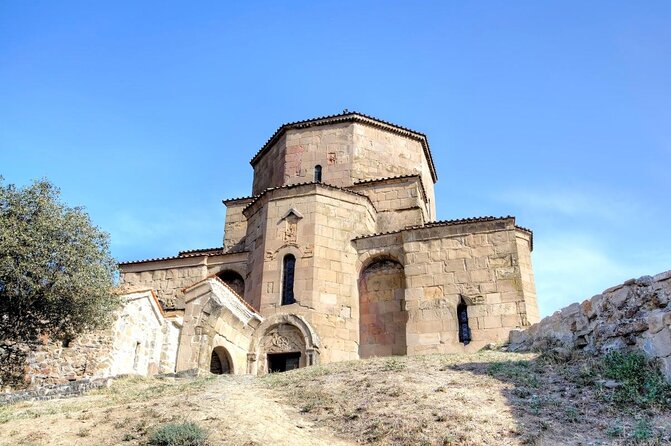
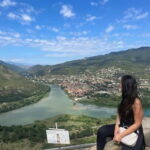
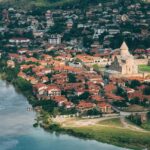
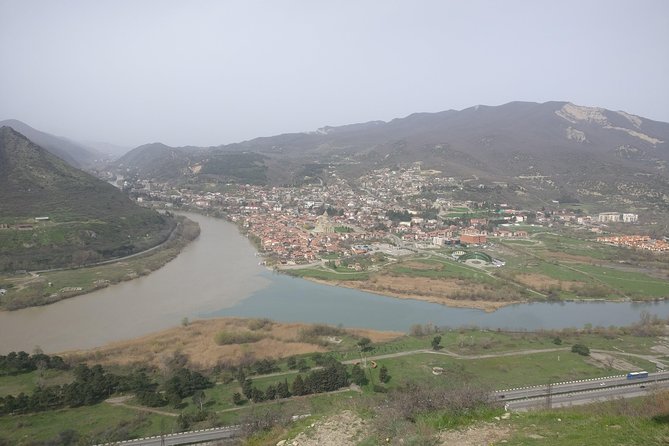
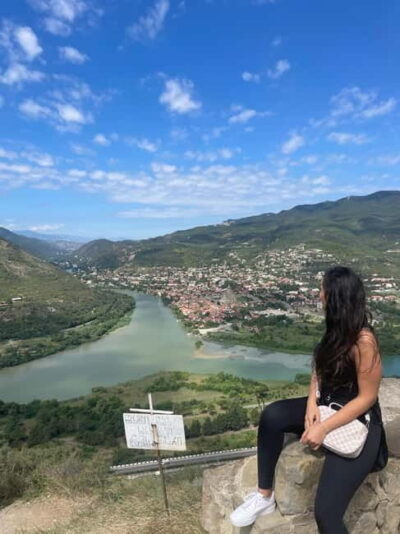
After Gori, you head toward Mtskheta and Jvari Church. Jvari is a 6th century Georgian Orthodox monastery, built on a hill opposite Mtskheta at the confluence of Aragvi and Mtkvari rivers.
This stop is one of those places where the setting is part of the lesson. The hilltop position explains why this location mattered early on. Sacred sites were often placed for visibility and symbolism, and Jvari follows that pattern.
You will hear a story with multiple layers. Shortly after the adoption of Christianity, King Mirian III erected an enormous wooden cross at this site. Then in the second half of the 6th century, Guaram, ruler of Kartli, built a small church beside the Holy Cross. Today, Jvari’s significance is tied to its early Georgian Christian architecture and UNESCO World Heritage status.
You get about 40 minutes here. That is enough time to enjoy the view and still walk at an easy pace. Also, admission is free, so you can spend your attention on the architecture rather than logistics.
What to consider: if you are visiting during a windy season, the hilltop can feel colder than expected. Bring a light jacket and be ready to pause for photos even if your group is not in a rush.
Svetitskhoveli Cathedral: UNESCO power with preserved relics and a royal tomb
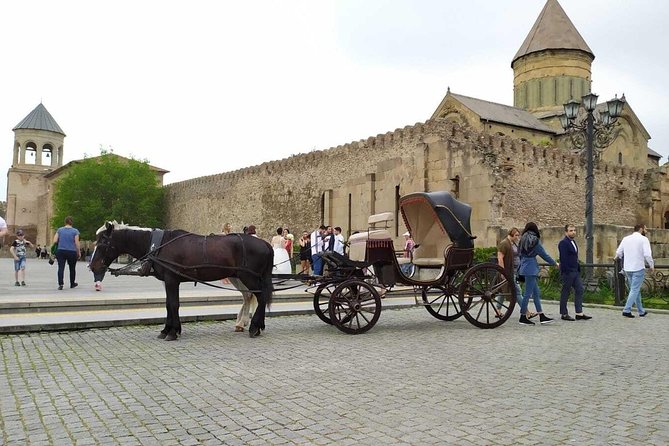
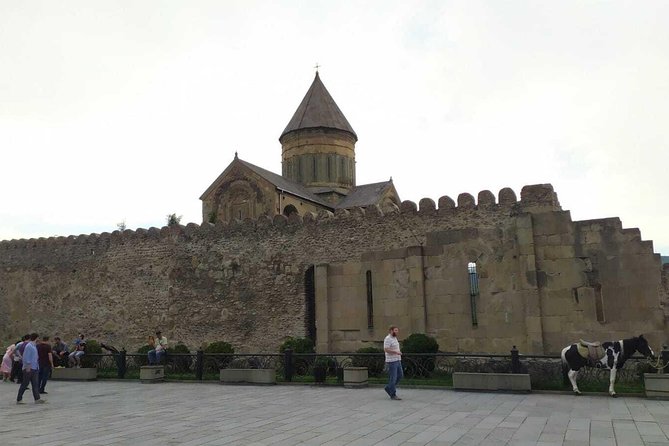
Svetitskhoveli Cathedral is the big religious anchor of this day. It dates to the 11th century and has served as the religious center of Georgia for hundreds of years.
You get about one hour, and that is a balanced amount. There is enough time to see the whole complex, not just the main church. The complex includes the church, gate, bell tower, castles, and clerical residences, so it feels like more than a single building.
What really pulls you in are the preserved items and the human history tied to them. The cathedral preserves the mantles of Christ and of Prophet Elijah. It is also said to house the tombs of King Vakhtang Gorgasali, described here as the founder of Tbilisi.
Those details make the site feel specific, not generic. Instead of visiting a cathedral that could be anywhere, you are visiting a place connected to named figures and named relics, with a long continuity of religious meaning.
As with Jvari, admission is free here. That is another reason this tour feels good for value. You are not paying to step into the biggest spiritual highlight.
Practical note: cathedrals can have quiet rules, and your group may be moving with a guide’s pace. Keep your body language respectful, and you will get a smoother experience.
Price and logistics: where the $155 really goes
At $155 per person for a 8 to 10 hour private tour, the value depends on one thing: whether you like having structure and transport handled for you.
Here is what the price covers based on the tour inclusions:
- Private transportation with fuel surcharge and an air-conditioned vehicle
- Pickup service
- Bottled water
- Lunch in a Gori restaurant
- Admission tickets for Stalin museum and Uplistsikhe cave town
- Free entry stops for Goristsikhe, Jvari Church, and Svetitskhoveli Cathedral
When you add it up, a chunk of your cost is buying time and reducing stress. Getting from Tbilisi to Gori, then bouncing between Mtskheta-area sites, and still handling admissions, can be a hassle if you travel independently.
One scheduling consideration: lunch may land later than you expect. If you are hungry early in the day, plan for that reality. Water helps, and you will likely appreciate the included lunch once you reach it.
Also note that alcoholic beverages are not included. If you want wine, cheese, or anything along those lines, you’ll need to treat it as an extra.
Timing and pacing: how to make the day feel relaxed
A long-day circuit can either feel calm or rushed. The difference is usually the guide and how your group handles breaks.
The program is fairly specific in durations for each stop, from roughly 2 hours at Uplistsikhe to about 1 hour at Stalin museum, plus shorter windows for the fortress and the churches. If your guide keeps explanations moving at a pace that works for your group, the day feels manageable, even with a full itinerary.
In particular, I like the idea that some guides may tailor the day so you have time to ask questions instead of being herded along. In one example, a guide named David was noted for giving people the time they needed, so the full schedule still felt relaxed.
A smart move for you: if you have questions, ask them early. You will get better answers when your guide is not trying to squeeze the whole story into the last few minutes of each stop.
What to pack and how to plan your mood
Because this is a mix of walking ruins and museum time, you should pack like you are doing a real day trip, not just photos.
Bring:
- Comfortable, grippy shoes for uneven rock surfaces
- A light jacket for the hilltop at Jvari
- Water bottle discipline even though bottled water is provided
- Patience for a full day, with no wasted hours
Also, keep your expectations realistic about time indoors. One hour at a museum with 60,000 exhibits is not for reading everything. Think of it as a curated route through the most important parts.
If you love Soviet history, the train car and personal objects are the kind of details that make that hour more than a quick photo stop. If you are more into architecture and sacred sites, focus on taking your time at Jvari and Svetitskhoveli, where the setting does most of the work.
Who should book this tour, and who should skip it
This tour is a great fit if you want:
- A single-day plan that covers both history and religion near Mtskheta
- Major landmarks without ticket hassles
- A private vehicle and pickup so you can rest during the drive
It is also a good match if you like odd pairings. Cave town Georgia next to Stalin museum material may sound strange, but it makes the day feel alive. You get to see how different layers of power and belief shaped the country.
Skip it if:
- You dislike long drives and want a more relaxed, slower itinerary
- You only want one type of attraction, like pure churches or pure museums
- You are extremely sensitive to content related to Stalin and Soviet rule, because the museum is a direct focus
Should you book this all-inclusive day trip?
If you like structured days and you want maximum variety without the logistics, I think this is worth considering. The biggest reason is the balance of inclusions: transport, lunch, bottled water, and key admission tickets are handled, and the free UNESCO sites mean you are not paying extra to get the heart of the experience.
My one caution is timing and language. If you are worried about understanding your guide or you have strict meal plans, plan to be flexible, and ask questions early. The best days come from guides who pace the story and give you room to absorb what you are seeing.
If that sounds like your style, book it. You will come away with a rare mix of places, from rock-carved streets to hilltop monasteries, and a Soviet museum chapter that is unlike anything you will find in a typical Georgian itinerary.
FAQ
What time does the tour start?
The start time is 9:30 am.
How long is the tour?
The duration is about 8 to 10 hours.
Is pickup included?
Pickup is offered, and the tour notes it is near public transportation.
What is included in the price?
Lunch in a Gori restaurant, private transportation in an air-conditioned vehicle, fuel surcharge, bottled water, admission tickets for Stalin museum, and admission tickets for Uplistsikhe cave city are included.
Which sites require tickets?
Stalin museum and Uplistsikhe cave city have admission tickets included. Goristsikhe, Jvari Church, and Svetitskhoveli Cathedral are listed as admission free.
Is alcohol included with lunch?
No, alcoholic beverages are not included.
What kind of fitness level do I need?
The tour notes a moderate physical fitness level is required.
What is the cancellation policy?
You can cancel for a full refund up to 24 hours in advance of the experience start time. If you cancel less than 24 hours before the start time, the amount paid is not refunded.
Other Museum Visits in Tbilisi
- Private Tour to Mtskheta Stalin Museum Uplistsikhe Caves
★ 5.0 · 16 reviews - Soviet Story – Private day trip to Chiatura, Stalin’s museum and Katskhi pillar
★ 4.5 · 15 reviews - Day Tour to Mtskheta, Gori (Stalin museum) and Uplistsikhe
★ 4.5 · 8 reviews - Museum of illusions,Digital Space and Ethnography in Tbilisi
★ 4.0 · 4 reviews
Newer trips around Tbilisi
- Tbilisi Private Dinner: Georgian BBQ & Fireplace
★ 5.0 · 1 review - Tbilisi: Khinkali Tasting Lunch with Local Drinks and Pickup
★ 5.0 · 1 review - Day trip in Kakheti-wine tour
★ 5.0 · 1 review - Tbilisi & Mtskheta bus tour hop on hop off
★ 5.0 · 1 review - Tbilisi: Christmas Market & Hidden Gems Guided Walking Tour
★ 5.0 · 1 review - Tbilisi – Gudauri Private Transfer
★ 5.0 · 1 review
Mtskheta Ancient Capital Tours, compared.
Mtskheta, Jvari, Gori and Uplistsikhe Day Tour
Read our review →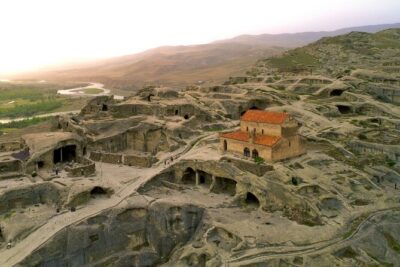
Mtskheta Jvari Bazaar, Chronicles of Georgia & Wine
Read our review →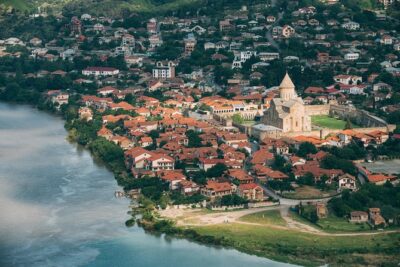
Mtskheta,Jvari,Bazaar,wine tasting,Chronicles of Georgia
Read our review →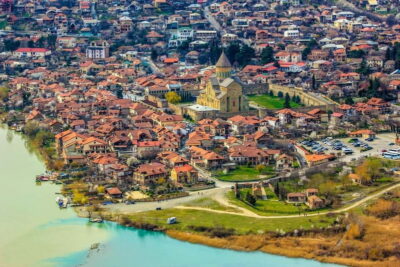
The Chronicles of Georgia, Jvari & Mtskheta Tour
Read our review →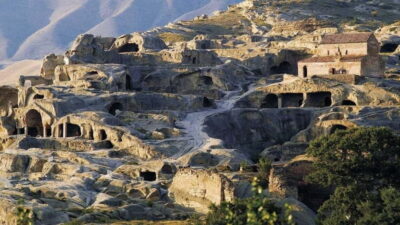
Browse the lists this tour appears in