
Reviewed · MTSKHETA ANCIENT CAPITAL TOURS
Mtskheta-Jvari Gori-Uplistsikhe
One day, four big Georgia hits, and zero stress. This tour strings together Uplistsikhe, UNESCO Mtskheta, river views from Jvari, and a stop in Gori, all with air-conditioned transport and a professional guide to keep the story making sense.
What I like most is how the day feels balanced, you get major landmarks plus scenic stops, and you also have a real shot at local food during the Uplistsikhe time. The second win is efficiency, it’s built to cover a lot of ground from Tbilisi in about 10 hours without you figuring out the logistics.
One thing to think about: lunch isn’t included, and two key entrances may cost extra, so you will want to budget for that and plan your timing.
In This Review
- Key things to know before you go
- The one-day route: Mtskheta, Jvari, Gori, and Uplistsikhe in 10 hours
- Price and value: what $70 buys you for transport and guide time
- The 9:00 AM Avlabari start and how to pace the day
- Stop 1, Uplistsikhe Cave Town: rock-cut living, and why it feels different
- Stop 2, Gori and the Stalin Museum: Soviet-era rooms tied to one birthplace
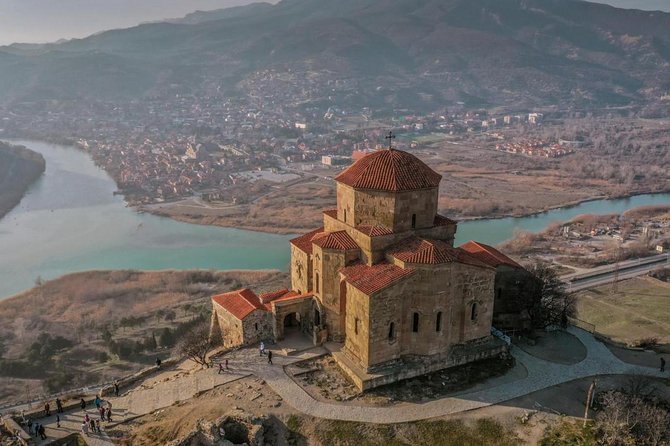
- Stop 3, Jvari Church: the Monastery of the Cross and the river-confluence view
- Stop 4, Svetitskhoveli Cathedral in Mtskheta: the Living Pillar and royal burial traditions
- Food and comfort: planning lunch without ruining the day
- Who should book this tour, and who should skip it
- Tour logistics that actually matter on the ground
- Should you book the Mtskheta, Jvari, Gori, Uplistsikhe tour?
- FAQ
- How long is the Mtskheta-Jvari Gori-Uplistsikhe tour?
- Where does the tour start, and where do you end?
- What time does the tour begin?
- Which main stops are included?
- Are entrance fees included?
- Is lunch included in the price?
- Is there a mobile ticket?
- What is the maximum group size?
- What is the cancellation policy?
Key things to know before you go
- Uplistsikhe Cave Town is the main time on the rock-hewn side, with an added chance to eat with local families
- UNESCO Mtskheta is split into two stops, Jvari for the viewpoint and Svetitskhoveli for the big cathedral
- Gori’s Stalin Museum is optional on the schedule, but it costs extra if you add it
- The tour runs about 10 hours starting 9:00 AM, so bring snacks if you get hungry
- Max 15 travelers keeps it manageable, and you are in a small group pace
- The mobile ticket approach makes check-in simpler once you have your plans set
Other Gori and Uplistsikhe cave-town trips:
- Tbilisi: Mtskheta, Jvari, Gori and Uplistsikhe Day Tour★ 4.9 · 2,396 reviews
- Day Trip to Mtskheta Gori and Uplistsikhe★ 5.0 · 1,801 reviews
- From Tbilisi : Mtskheta, Jvari, Gori & Uplistsikhe Day Trip★ 4.8 · 432 reviews
- From Tbilisi: Mtskheta, Jvari, Gori, Uplistsikhe Guided Tour★ 4.7 · 354 reviews
The one-day route: Mtskheta, Jvari, Gori, and Uplistsikhe in 10 hours
This is a classic “best of” day trip from Tbilisi, but it avoids the usual problem of cramming in landmarks with no context. The route is designed so you move from ancient rock architecture (Uplistsikhe) to a Soviet-era chapter (Gori) and then back into early Georgian religious power in Mtskheta.
If you care about seeing how Georgia’s layers stack up, you’ll like the structure. You start with a town carved from stone, then you visit a museum tied to a very specific political era, and finally you end with two major early church sites overlooking Mtskheta and its river junction. That mix is exactly why the day feels fun instead of repetitive.
Timing-wise, you should plan for a long but not frantic day. The tour is listed at about 10 hours, and the scheduled stops total roughly 3.5 hours of site time, with the rest being travel and guiding.
Price and value: what $70 buys you for transport and guide time
At $70 per person, this tour is priced like a practical day of “someone else drives, someone else explains.” What you are paying for is not just the sites, it’s the combination of round-trip transfer, a private air-conditioned vehicle, and a professional guide across multiple destinations.
Here’s where the value math gets real. Entrance costs are partially on you:
- Uplistsikhe entrance is listed as $5 per person
- Stalin Museum entrance is listed as $5 per person and is optional
- Jvari Church admission is free
- Svetitskhoveli Cathedral admission is free
So your actual “all-in” cost can be about $70 plus those small add-ons, depending on whether you pay for the museum and the cave town entry. And if you skip the optional museum, the day still hits the UNESCO sites and the cave town experience.
Also, there’s no lunch included, which is normal for tours in this category, but it matters. If you plan a decent snack and decide where you want to eat, the day stays smooth instead of turning into a hunt for food at the wrong moment.
The 9:00 AM Avlabari start and how to pace the day
You start at Avlabari, Tbilisi at 9:00 AM, and you end back at the same meeting point. That matters because it reduces the hassle of getting back into Tbilisi on your own after a long day outside the city.
You will also feel the rhythm of the schedule:
- You get your longest site block first at Uplistsikhe (about 1 hour 30 minutes)
- Then a museum stop in Gori (about 1 hour), plus optional free time to explore the city
- Then shorter, high-impact stops in Mtskheta (about 30 minutes at Jvari and about 1 hour at Svetitskhoveli)
That order is smart. Uplistsikhe is the most physically and visually “active” stop, so starting early helps. Jvari works well later because the location is tied to the viewpoint and the river confluence, so you can slow down and take in the scene.
Bring a small bottle of water and a light snack if you tend to get hungry. With 10 hours total and lunch not included, it’s the easiest way to stay relaxed.
Stop 1, Uplistsikhe Cave Town: rock-cut living, and why it feels different
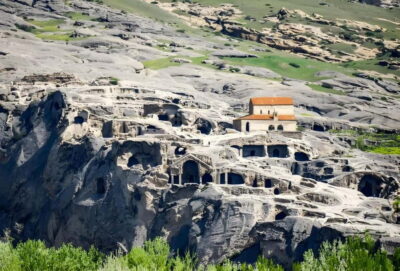
Uplistsikhe is an ancient rock-hewn town built on the left bank of the Mtkvari River. The key detail is that it spans multiple eras: from the Early Iron Age to the Late Middle Ages. You are not just walking through one period, you are seeing a layered space that evolved over time.
What makes it especially interesting is the mix of influences. The town is known for combining styles of rock-cut cultures from Anatolia and Iran, and for the coexistence of pagan and Christian architecture. That blend is why Uplistsikhe doesn’t feel like a single-theme site. It feels like a place where people adapted their beliefs and their buildings over centuries.
You’ll get about 1 hour 30 minutes here. Admission for Uplistsikhe is listed as $5 per person (not included), so check whether your guide is collecting it onsite or if you need to pay separately.
One more practical note I’d plan for: during the Uplistsikhe time, there is a unique possibility to feel more local by visiting a family and enjoying homemade traditional dishes. Even if you’re not sure how that will be arranged on your day, the tour is set up with this idea in mind, which is a refreshing alternative to only seeing monuments.
Possible drawback: it’s still a cave-town style visit. Expect uneven surfaces and lots of stone steps or narrow areas depending on where you go. Wear comfortable shoes, and if you don’t love walking on rough ground, consider taking your time instead of rushing the route.
Other Mtskheta and Jvari trips:
Stop 2, Gori and the Stalin Museum: Soviet-era rooms tied to one birthplace
In Gori, the schedule centers on the Stalin Museum. Stalin was born in Gori, and the museum is dedicated to his life, with his full name tied to the museum’s framing.
What you’re looking for here is not abstract history. The museum retains Soviet-era characteristics, and it includes Stalin’s original house and a railway carriage. That setup gives the visit a “you can see it” quality. You are not only reading about the past, you are viewing the physical artifacts associated with it.
The museum time is listed as about 1 hour, and entrance is $5 per person if you choose to add it (it’s noted as optional in the schedule). If you decide to skip paying, you still have a chance for optional free time in Gori to explore the city itself.
If you do enjoy political history, you’ll probably like the direct connection between birthplace and museum collection. If you’re more focused on medieval churches and rock sites, the museum can feel like a different mood, but that contrast is also what makes the day work.
One consideration: the museum is Soviet-focused, so it helps to go in with some curiosity. If you’re not into that chapter, treat it like a short stop and use the free time in Gori to look around.
Stop 3, Jvari Church: the Monastery of the Cross and the river-confluence view
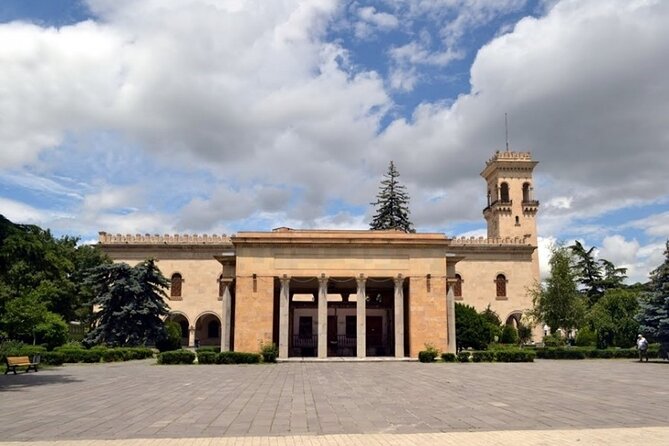
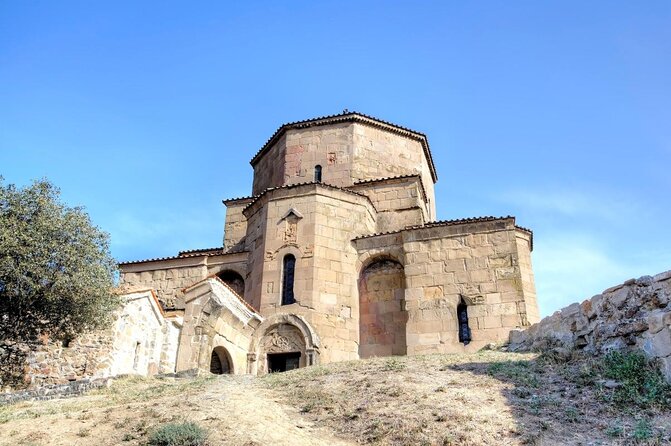
Next comes Jvari Church, translated as the Monastery of the Cross. This is a sixth-century Georgian Orthodox monastery near Mtskheta, and it is part of the UNESCO listing alongside other historic structures in the area.
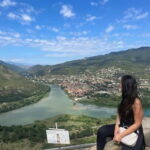
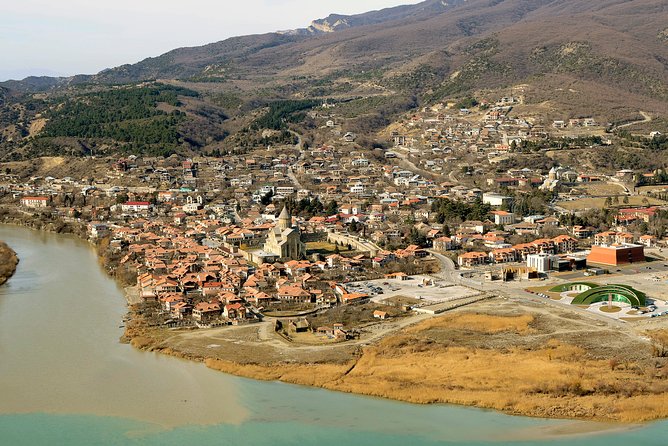
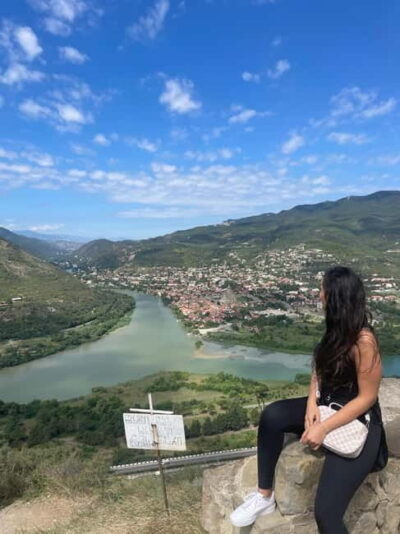
The location is the headline. Jvari sits on a rocky mountaintop at the confluence of the Mtkvari and Aragvi rivers, overlooking Mtskheta, which was formerly the capital of the Kingdom of Iberia. In plain terms, you’re going to get a big, satisfying view where the landscape explains the importance of the place.
Your time here is about 30 minutes, and admission is free. That means you can treat this stop like a viewpoint break rather than a money decision.
Possible drawback: 30 minutes goes fast if you want photos and a slow look. If you know you like to linger, you’ll want to keep your pace steady, because the day moves on.
Stop 4, Svetitskhoveli Cathedral in Mtskheta: the Living Pillar and royal burial traditions
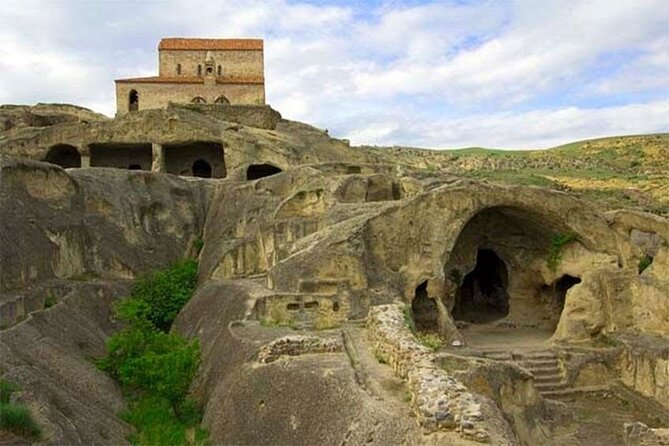
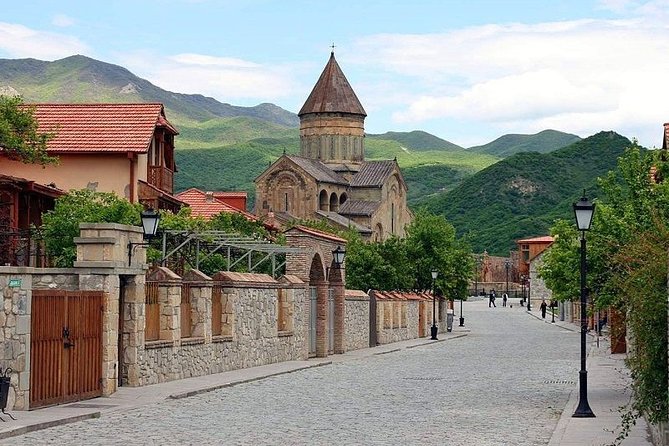
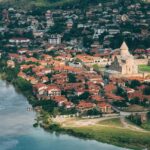
Your final main stop is Svetitskhoveli Cathedral in Mtskheta, with admission listed as free. The name translates as the Cathedral of the Living Pillar. This cathedral is currently noted as the second largest church building in Georgia after the Holy Trinity Cathedral.
Mtskheta itself is one of the oldest cities in Georgia, tied to the ancient Meschian tribes and dating the city’s major significance back to the early centuries. It became the capital of the early Georgian Kingdom of Iberia from the 3rd century BC to the 5th century AD. Even after that political era, Mtskheta kept ceremonial importance, serving as the coronation and burial place for many Georgian kings until the end of the kingdom in the 19th century.
Svetitskhoveli’s specific association is tied to the idea of the burial site of Christ’s mantle. That detail is part of why the cathedral matters beyond architecture. It’s a site that carries belief and storytelling that helped shape Georgian religious identity.
You get about 1 hour here, which is a solid amount of time for a cathedral stop. It’s long enough to look closely and to let the scale land, but not so long that you feel stuck.
Practical tip: since you started early and lunch isn’t included, you may be ready for a slow wrap-up around this time. If you can, use the cathedral time to sit for a minute, drink water, and reset.
Food and comfort: planning lunch without ruining the day
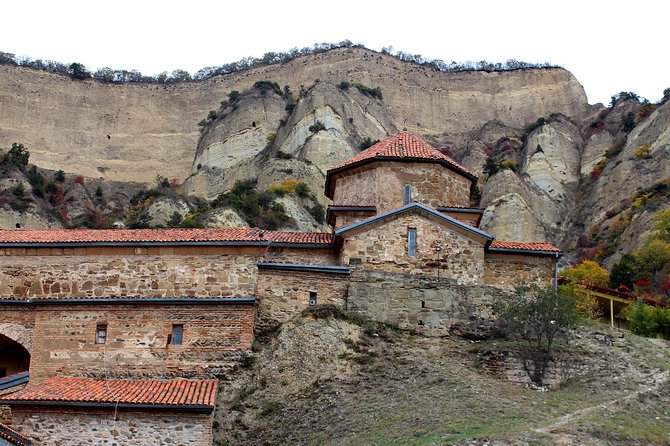
This tour does not include lunch, so you have to plan for food on your own. The good news is that the itinerary leaves space for a humane pace, especially with the early Uplistsikhe block and the shorter Mtskheta stops later.
Here’s what I’d do:
- Bring a snack for the mid-morning, especially before or during the drive to Gori
- If you get the chance to join a visit for homemade traditional dishes near Uplistsikhe, take it, because it matches what this tour is set up to offer
- Decide in advance how you want to handle lunch, either quick and casual during free time in Gori or a simple meal after the final stop
Comfort tip: the transport is air-conditioned, which helps if it’s warm. Still, you may spend time walking stone surfaces at Uplistsikhe and standing for viewpoints at Jvari, so wear comfortable shoes and think layers.
Who should book this tour, and who should skip it
This day trip is best for you if you want a guided sampler of Georgia’s big historical themes in one go:
- UNESCO sites with both architecture and landscape
- A rock-hewn site that mixes pagan and Christian elements
- A quick but memorable detour into Soviet history at Gori
- A small-group feel with a limit of 15 travelers
You might consider skipping or shortening your expectations if you:
- Hate long sightseeing days and prefer slow, single-site travel
- Get bored by museum-style exhibits and need more time outdoors
- Have trouble walking on rough or uneven ground, since cave towns and viewpoints can involve uneven surfaces
Also, it’s a smart fit for first-time visitors to Tbilisi who want to leave the city and still come back the same day with clear highlights.
Tour logistics that actually matter on the ground
The tour includes round-trip shared transfer and uses an air-conditioned vehicle, which makes a difference on a 10-hour day. You’re not just traveling, you’re also getting a guide service that ties it all together so the stops feel like part of one story.
The tour has mobile ticket delivery, which can simplify check-in. And since confirmation is provided at booking, you won’t be left guessing about whether you are on the schedule.
The group size cap of 15 travelers is another practical win. You are more likely to get questions answered, and the guide can keep everyone together without turning the day into a cattle-herd experience.
Should you book the Mtskheta, Jvari, Gori, Uplistsikhe tour?
I think you should book this tour if you want a well-paced day that hits the main Georgian power points: rock-hewn antiquity at Uplistsikhe, the UNESCO centerpiece around Mtskheta, the Jvari viewpoint, and a contrasting stop in Gori at the Stalin Museum.
It’s especially worth your time if you like tours that are more than bus windows. The schedule is built to give you real site time, and the possibility of homemade food is the kind of extra that turns a sightseeing day into something more human.
If you’re only interested in churches and cathedrals, you may find the Stalin Museum moment a bit out of your lane. But if you enjoy contrast, political history as part of the modern story, and big views from Jvari, this route is a solid value for your time in Georgia.
FAQ
How long is the Mtskheta-Jvari Gori-Uplistsikhe tour?
The tour runs for about 10 hours.
Where does the tour start, and where do you end?
It starts in Avlabari, Tbilisi, Georgia, and it ends back at the same meeting point.
What time does the tour begin?
The start time is 9:00 AM.
Which main stops are included?
The tour includes Uplistsikhe Cave Town, the Stalin Museum in Gori, Jvari Church, and Svetitskhoveli Cathedral in Mtskheta, with optional free time in Gori.
Are entrance fees included?
No. Entrance to the Stalin Museum in Gori is listed as $5 per person and is optional, and Uplistsikhe entrance is $5 per person. Jvari Church and Svetitskhoveli Cathedral are listed as free.
Is lunch included in the price?
No, lunch is not included.
Is there a mobile ticket?
Yes, it includes a mobile ticket.
What is the maximum group size?
The tour has a maximum of 15 travelers.
What is the cancellation policy?
You can cancel for a full refund if you cancel up to 24 hours in advance of the experience’s start time. If you cancel less than 24 hours before, the amount paid is not refunded.
Newer trips around Tbilisi
- Tbilisi Private Dinner: Georgian BBQ & Fireplace
★ 5.0 · 1 review - Tbilisi: Khinkali Tasting Lunch with Local Drinks and Pickup
★ 5.0 · 1 review - Day trip in Kakheti-wine tour
★ 5.0 · 1 review - Tbilisi & Mtskheta bus tour hop on hop off
★ 5.0 · 1 review - Tbilisi: Christmas Market & Hidden Gems Guided Walking Tour
★ 5.0 · 1 review - Stalin’s Secrets: An Underground Journey Through History
★ 5.0 · 1 review
Mtskheta Ancient Capital Tours, compared.
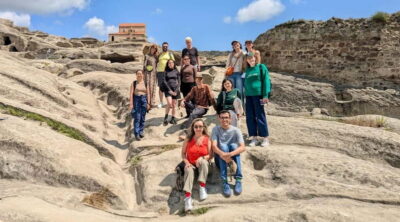
Mtskheta, Jvari, Gori and Uplistsikhe Day Tour
Read our review →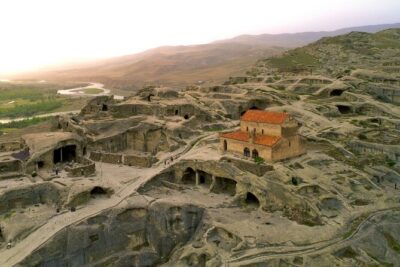
Mtskheta Jvari Bazaar, Chronicles of Georgia & Wine
Read our review →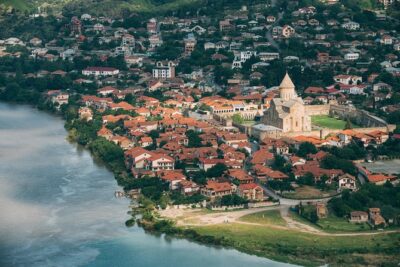
Mtskheta,Jvari,Bazaar,wine tasting,Chronicles of Georgia
Read our review →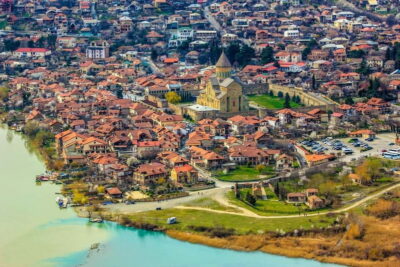
The Chronicles of Georgia, Jvari & Mtskheta Tour
Read our review →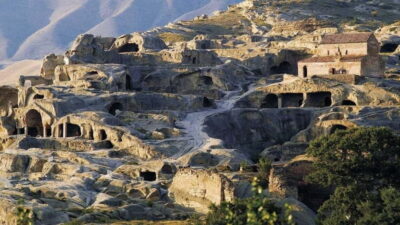
Browse the lists this tour appears in