
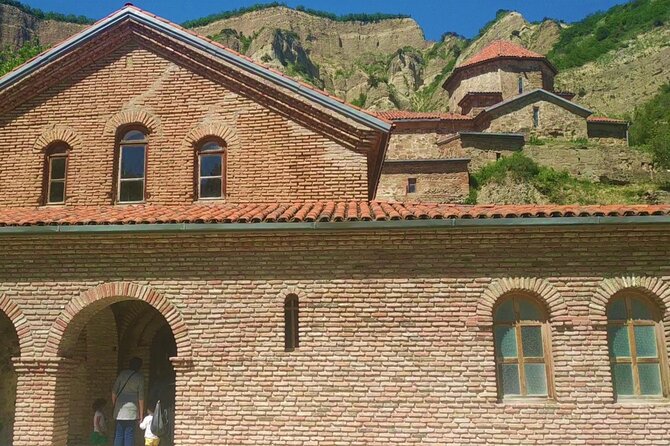
Reviewed · MTSKHETA ANCIENT CAPITAL TOURS
Mtskheta Tour with All UNESCO Sites & Ancient Ruins
Mtskheta feels like time travel. This 9-hour tour from Tbilisi strings together four UNESCO sites in one logical route, and I like how the guide connects the buildings to the early Christian story in Georgia. I also love the way Jvari Church earns your attention first, with its big sky and mountain-top setting that makes the architecture feel alive, not like a textbook.
You get hotel pickup and a private, air-conditioned vehicle, so the day starts easy and stays comfortable between stops. Each site is a free-entry monument, and the pacing leaves real moments to look, breathe, and ask questions, especially when your guide is the type who tells the story clearly, like Giorgi did for one group I spoke about.
The main thing to consider is practical: you will walk in the old town area with uneven ground and stairs, and you must follow church dress rules. Also, the tour requires good weather, so plan to be flexible if conditions are rough.
In This Review
- Key highlights worth planning for
- UNESCO Mtskheta in one day, without the chaos
- Stop 1: Jvari Church, the mountaintop that explains the setting
- Stop 2: Svetitskhoveli Cathedral and the Living Pillar story
- Stop 3: Samtavro Church and the layers of rebuilding
- Stop 4: Shio-Mgvime Monastery, plain design and a hermit’s cave
- Pace, walking, and what to wear inside churches
- Guides who actually tell the story: Giorgi and George’s impact
- Price and value: what $127.50 buys you in real time
- Who this tour is perfect for
- Should you book this Mtskheta UNESCO tour?
- FAQ
- How does hotel pickup work for this Mtskheta tour?
- Are admission tickets included for the churches and monasteries?
- Is lunch included, and what if I book the budget option?
- What should I wear for the Orthodox churches?
- What time is the tour and how long does it last?
- What happens if weather is bad?
Key highlights worth planning for
- Jvari’s mountaintop viewpoint gives you a strong first impression of where Mtskheta history really sits.
- Svetitskhoveli Cathedral’s Living Pillar legend adds meaning to what you see, including the church’s long royal connection.
- Free admission at all four main stops keeps the day feeling like real value.
- Private group comfort with pickup and an air-conditioned car makes the long day easier.
- Church dress code is part of the experience, so pack accordingly to avoid last-minute stress.
Other Mtskheta and Jvari trips:
- Tbilisi: Mtskheta, Jvari, Gori and Uplistsikhe Day Tour★ 4.9 · 2,396 reviews
- Day Trip to Mtskheta Gori and Uplistsikhe★ 5.0 · 1,801 reviews
- Tbilisi: Mtskheta Jvari Bazaar, Chronicles of Georgia & Wine★ 5.0 · 1,088 reviews
- Tbilisi:Mtskheta,Jvari,Bazaar,wine tasting,Chronicles of Georgia★ 5.0 · 730 reviews
UNESCO Mtskheta in one day, without the chaos
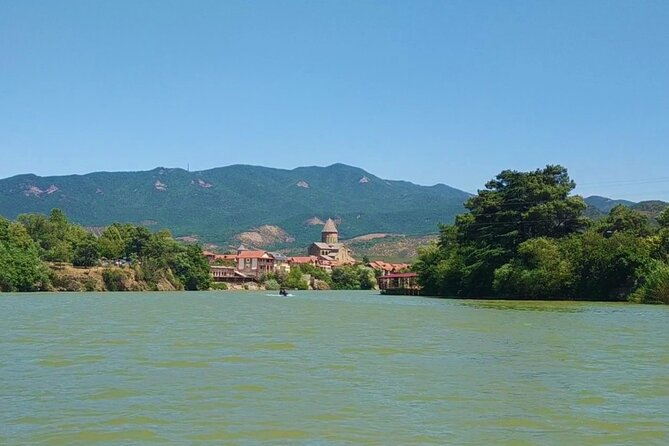
Mtskheta is Georgia’s ancient spiritual center, and seeing it as a single day trip works because the sites fit together like chapters. You start with an overview of why this area mattered early on, then you move site to site through Georgian Orthodox spaces that have shaped belief, art, and architecture for centuries.
The tour feels designed for people who want the highlights with enough explanation to actually understand what they are looking at. With pickup from your hotel and a private vehicle, you avoid the usual “how do I get there?” friction that can drain a day. And since all the main stops are admission-ticket free, your money goes into the guide, the transport, and the time, not into entry fees.
Group size stays limited to your group, which is a real perk when you want questions answered on the spot. If you travel with friends or family, it can also be worth asking about group discounts, since the tour offers them in general.
Stop 1: Jvari Church, the mountaintop that explains the setting
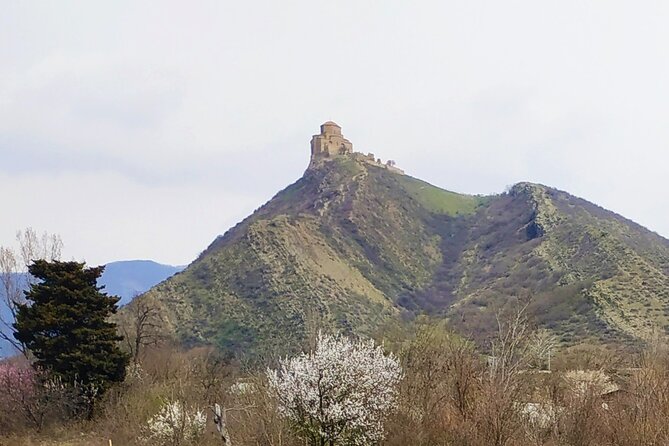
Jvari Church sits on Jvari Mount, and that location is not random. The church is known as a rare surviving example of an Early Medieval Georgian Orthodox church that remains close to its original form, and the building’s design is tied to the broader “Jvari type” of church architecture found in Georgia and Armenia.
When you reach the viewpoint, it helps to slow down and look at the surroundings before you look at the stones. From up here, you start to understand why Georgian architecture often feels like it belongs to the natural environment instead of fighting it. The church essentially teaches you how to “read” the landscape through architecture.
Jvari also has a special “first Christian era” vibe because you can see how the shape of worship and the shape of the building develop together over time. Your guide’s job is to connect the sixth-century origins to what you see today, including why the church became influential enough to define a recognizable architectural type.
Practical note: your visit window is short, about 30 minutes, so arrive ready to take photos, then ready to listen. If you tend to wander slowly, set your expectations that the group will move.
Stop 2: Svetitskhoveli Cathedral and the Living Pillar story
Svetitskhoveli Cathedral, often called the Cathedral of the Living Pillar, is one of those places where the legend makes the stones feel heavier. It sits in historic Mtskheta, and it is UNESCO listed for its importance in the Early and High Middle Ages. Today it is also one of Georgia’s largest churches, second in size only to the Holy Trinity Cathedral.
The standout thing here is that Svetitskhoveli is tied to a major religious tradition: it is associated with the burial of Christ’s mantle. Whether you look at that through faith or through cultural history, it gives you a reason to pay attention to what would otherwise seem like “just another big old church.”
The cathedral’s structure is described as a cross-in-square design completed between 1010 and 1029, credited to the medieval architect Arsukisdze. You also get a chance to appreciate how well the exterior decoration from the 11th century has been preserved. In other words, you are not only visiting a place of worship, you are visiting an example of intact medieval craftsmanship.
There is also a somber layer to the story. The site is described as an endangered cultural landmark, and some priceless frescoes were lost after being whitewashed under Russian Imperial authorities. That matters because it reminds you that preservation is not automatic, and that what survives often does so by luck, effort, and changing politics.
Your stop time is about 1 hour, which is enough to look at the space, take in the significance, and let the guide’s explanation land. If you are the kind of person who gets lost reading every inscription, this is a good place to focus on fewer details but go deeper with the story.
Stop 3: Samtavro Church and the layers of rebuilding
Samtavro Monastery is where the day slows slightly into a more intimate rhythm. It is protected by UNESCO, and it is closely linked to early Georgian Christianity. The tradition says it was founded in the 4th century by King Mirian III, when Saint Nino built a small church on the site.
What I like about Samtavro is how it shows continuity and renewal. The main temple is stylistically dated to the first half of the 11th century, and it is described as possibly built or rebuilt soon after Svetitskhoveli, connected to King George I and Catholicos-Patriarch Melchizedek I. That gives you a sense of how power and faith were intertwined during the medieval period, and how major religious projects can echo each other across the town.
Samtavro is also described as combining the Transfiguration Church and the Nunnery of St. Nino. Even if you are not focused on monastic history, the combined setting helps you understand the broader ecosystem of religious life here, not just a single cathedral.
The visit time is about 30 minutes, so treat it like a focused stop, not an extended exploration. If you want to linger, you can still do it, but don’t plan on long wandering since you will have other monasteries on the schedule.
Other Tbilisi tours and day trips:


Stop 4: Shio-Mgvime Monastery, plain design and a hermit’s cave
Shio-Mgvime Monastery brings you back to something simpler and more severe in feel. It was founded by the 6th-century monk Shio, connected to the Thirteen Assyrian Fathers who came to Georgia as Christian missionaries. That background gives the site weight for anyone interested in how Christianity spread and adapted locally.
The monastery is especially associated with a hermit tradition. St. Shio spent his last years as a hermit in a deep cave, and that image helps explain why the monastery atmosphere can feel strict and focused rather than grand or decorative.
The earliest building is described as dating to the 560s to 580s: a cruciform church with a plain, strict design. The church includes an octagonal dome covered with a conic floor, and it once housed a stone iconostasis that is now at the Art Museum of Georgia. So even though you are standing in a monastery setting, you are also watching the story of how sacred objects moved through time and institutions.
You may notice the site has been altered in later periods, including the 11th and 18th centuries. Still, the original architecture is described as largely retained, which is exactly what you want from a “heritage survival” kind of visit: change, yes, but not total replacement.
This is also where good shoes matter most. Your stop is around 1 hour, and even if the walk is not long, the surfaces and steps can add up through the whole day.
Pace, walking, and what to wear inside churches
This is a full-day route. It runs about 9 hours, and it includes walking in the old town of Mtskheta with various terrain and stairs. I recommend treating it as a “comfortable walking day” even if you are not trying to do a marathon.
Bring comfortable shoes with grip. The churches and monasteries can involve steps and uneven ground, and you will enjoy the sites more if you are not thinking about your feet every ten minutes.
Dress rules in Georgian Orthodox churches are not optional. Ladies need to wear headscarves and dresses, and short trousers for men are forbidden. The tour info also notes that scarves and dresses can be found near some church entrances, which is helpful if you forget.
This kind of requirement can feel annoying right up until you realize it changes the vibe. When everyone is dressed respectfully, the spaces feel more like actual worship sites and less like photo sets.
Guides who actually tell the story: Giorgi and George’s impact
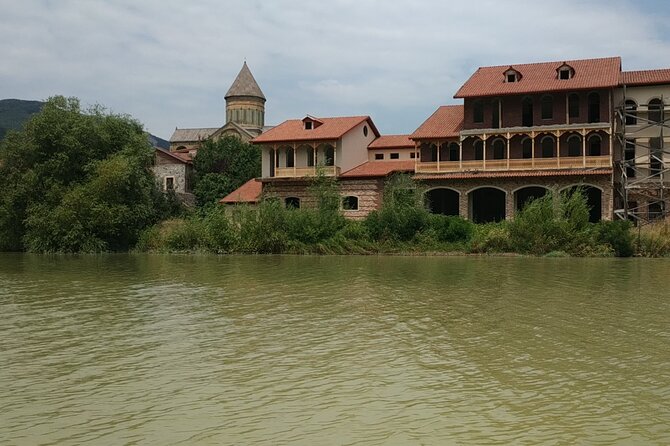
The biggest difference between a “see the monuments” trip and a “you understand the monuments” trip is the guide. In the experiences connected to this tour, the guides were specifically praised for story-telling that keeps you engaged and for making sure you get time at each stop without rushing.
Names that came up include Giorgi, who was highlighted for captivating explanations and for making sure people understood the history of the monuments. Another guide named George was praised for bringing people to the right spots for views and for keeping the day relaxed rather than frantic. Even if your guide is someone else, the lesson is clear: choose the tour because you want the human explanation, not only the photos.
Price and value: what $127.50 buys you in real time
At $127.50 per person, this tour is priced like a practical, guided UNESCO day. The value is strongest for three reasons.
First, transport and pickup are included, and you ride in a private air-conditioned vehicle. That matters in a long day because you do not want to lose energy on city logistics.
Second, the major sites are listed with free admission tickets. When the entry fees are low or zero, your spending shifts toward time and interpretation, and that often leads to a better memory of the day.
Third, the itinerary is built around meaningful pacing. The stop lengths are short enough to keep energy up, but long enough to absorb something. If you want a lot of “big names” without getting overwhelmed, this structure fits.
If you plan to eat lunch, the tour information says there is a Tour with Lunch option, and a budget tour option that does not include lunch but stops in a restaurant. So if you want that one less decision, pick the lunch option when you book.
Who this tour is perfect for
This day trip suits you if you want UNESCO highlights with real context and you like guided explanation as much as you like architecture. It is also a strong fit for first-time visitors to Georgia who want to understand why Mtskheta mattered so much early on.
You should especially consider it if you enjoy:
- Church architecture and how style changes over centuries
- Religious history and the legends attached to specific sites
- Scenic viewpoints, starting with Jvari
It might feel like too much if you dislike walking stairs, need strict accessibility accommodations, or want total free time with no guidance. The route does include walking and uneven terrain, so be honest about your comfort level.
Should you book this Mtskheta UNESCO tour?
I think you should book it if you want a structured, high-signal day with minimal friction. The mix of Jvari’s architecture and viewpoint, Svetitskhoveli’s major religious history, and the calmer monastery stops creates a satisfying arc rather than a checklist.
I would pause before booking if you know you will struggle with stairs or if your trip timing relies on perfect weather every day. Since the tour requires good weather, it helps to have flexibility.
If your priority is a guided UNESCO day from Tbilisi where you actually understand what you’re seeing, this one earns its place.
FAQ
How does hotel pickup work for this Mtskheta tour?
Pickup is offered, so you start the day with less hassle. The experience begins at 9:00 am, and you travel in a private air-conditioned vehicle.
Are admission tickets included for the churches and monasteries?
Yes. The tour info lists admission ticket free for each stop: Jvari Church, Svetitskhoveli Cathedral, Samtavro Church, and Shio-Mgvime Monastery.
Is lunch included, and what if I book the budget option?
The tour includes a lunch option if you book Tour with Lunch. If you choose the budget tour option, lunch is not included, but the tour will stop in a restaurant for you to have lunch.
What should I wear for the Orthodox churches?
Ladies need to wear headscarves and dresses in Georgian Orthodox churches. Short trousers for men are forbidden. Scarves and dresses can also be found near some church entrances.
What time is the tour and how long does it last?
The start time is 9:00 am, and the duration is approximately 9 hours.
What happens if weather is bad?
The experience requires good weather. If it is canceled due to poor weather, you will be offered a different date or a full refund.
Newer trips around Tbilisi
- Tbilisi Private Dinner: Georgian BBQ & Fireplace
★ 5.0 · 1 review - Tbilisi: Khinkali Tasting Lunch with Local Drinks and Pickup
★ 5.0 · 1 review - Day trip in Kakheti-wine tour
★ 5.0 · 1 review - Tbilisi & Mtskheta bus tour hop on hop off
★ 5.0 · 1 review - Tbilisi: Christmas Market & Hidden Gems Guided Walking Tour
★ 5.0 · 1 review - Stalin’s Secrets: An Underground Journey Through History
★ 5.0 · 1 review
Mtskheta Ancient Capital Tours, compared.
Mtskheta, Jvari, Gori and Uplistsikhe Day Tour
Read our review →
Mtskheta Jvari Bazaar, Chronicles of Georgia & Wine
Read our review →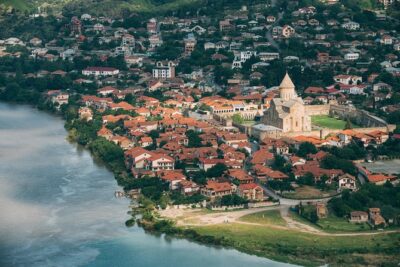
Mtskheta,Jvari,Bazaar,wine tasting,Chronicles of Georgia
Read our review →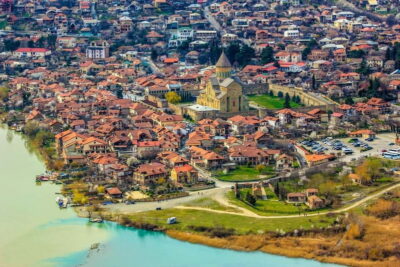
The Chronicles of Georgia, Jvari & Mtskheta Tour
Read our review →
Browse the lists this tour appears in