
Reviewed · MTSKHETA ANCIENT CAPITAL TOURS
One-day tour in ancient Mtskheta, Gori and Uplistsikhe
Georgia’s oldest crossroads hit in one day. This one-day route strings together UNESCO sites in Mtskheta, a hilltop view from Jvari Monastery, and the Soviet history of Gori, then finishes at the cave city of Uplistsikhe. I especially like how the itinerary mixes big monuments with human stories, like the legendary tunic narrative at Svetitskhoveli and the life-and-era framing inside the Stalin Museum. I also like that you get a real guide, plus an air-conditioned vehicle and bottled water for a long day. The one drawback to consider is that key entrances are not all included, so you’ll want to budget for the Stalin Museum and Uplistsikhe admissions, and lunch is not provided.
You’ll start and finish around Tbilisi with pickup offered, and the group stays small, capped at 20. That matters because the day is packed, yet you still get time to walk, look up close, and ask questions instead of just being herded through. If your guide is someone like Aleko from Evatours, the pace often feels lively, with good explanations while you’re moving between sites.
In This Review
- Key points before you go
- A smart 10-hour route through Mtskheta, Gori, and Uplistsikhe
- Jvari Monastery above Mtskheta: UNESCO views and the cross story
- Svetitskhoveli Cathedral in Mtskheta: the tunic legend at a massive scale
- Gori Fortress: Ottoman crossroads and an earthquake scar
- Stalin Museum in Gori: Soviet-era rooms and what you’ll get
- Uplistsikhe cave town, 10 km from Gori: fortress of the lord
- Price and value: what $50.13 really covers, plus the extras
- Tips for making this day feel smooth, not rushed
- Who should book this Mtskheta, Gori and Uplistsikhe day trip
- Should you book this one-day Mtskheta, Gori and Uplistsikhe tour?
- FAQ
- What is the duration of the tour?
- Does the tour include pickup from your location?
- Are tickets to all attractions included in the price?
- Is lunch included?
- What does the tour include for comfort during the day?
- Is there a mobile ticket?
Key points before you go
- Small group day trip (max 20), with pickup and an air-conditioned ride for comfort.
- UNESCO hits in Mtskheta: Jvari Monastery and Svetitskhoveli Cathedral are both World Heritage sites.
- Stalin Museum + train wagon time in Gori, giving you more than just a single room of artifacts.
- Uplistsikhe is ancient and layered, with roots reaching back to the 2nd to 1st millenniums B.C.
- Free entries for Jvari, Svetitskhoveli, and Gori Fortress, while the paid sites are mainly Stalin Museum and Uplistsikhe.
- A full 10-hour day, so plan for a long but efficient “greatest hits” loop.
Other Gori and Uplistsikhe cave-town trips:
- Tbilisi: Mtskheta, Jvari, Gori and Uplistsikhe Day Tour★ 4.9 · 2,396 reviews
- Day Trip to Mtskheta Gori and Uplistsikhe★ 5.0 · 1,801 reviews
- From Tbilisi : Mtskheta, Jvari, Gori & Uplistsikhe Day Trip★ 4.8 · 432 reviews
- From Tbilisi: Mtskheta, Jvari, Gori, Uplistsikhe Guided Tour★ 4.7 · 354 reviews
A smart 10-hour route through Mtskheta, Gori, and Uplistsikhe
This is the kind of day trip you book when you want variety without losing time. In about 10 hours, you cover three very different sides of Georgia: early Christian heritage in Mtskheta, political history in Gori, and ancient urban life in Uplistsikhe.
The value is that the included parts are doing the heavy lifting. Your ticket price comes with a professional guide, fuel surcharge coverage, bottled water, and air-conditioned transport. That takes the pressure off you to figure out timing and connections between hilltops, churches, and the cave city.
The pace is brisk but not frantic, since each main stop has a dedicated time block. Still, you should expect a lot of walking and looking up, especially at the viewpoints.
Jvari Monastery above Mtskheta: UNESCO views and the cross story
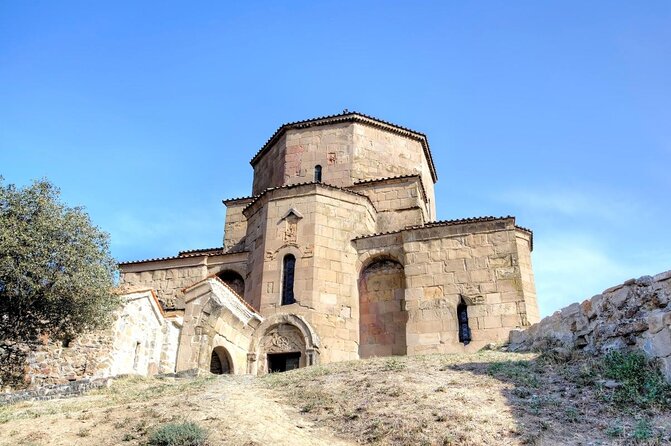
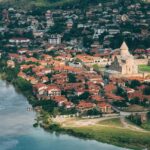
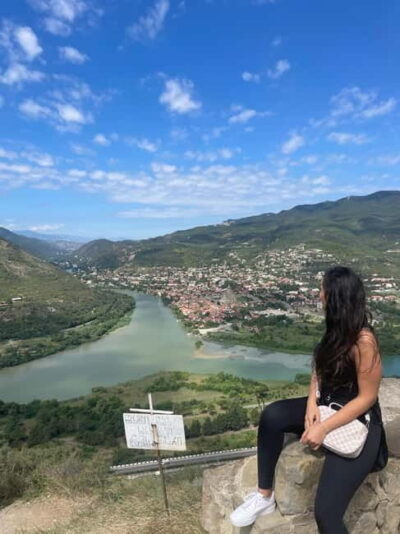
Jvari Monastery is one of those places where the setting explains the significance. It sits on a rocky hilltop near the confluence of the Mtkvari and Aragvi rivers, so the first thing you notice is the sweep of the valley and the way Mtskheta spreads out below.
This site is UNESCO-listed, and it makes sense why. You’re standing at a location tied to early Christianity in Georgia: after the adoption of Christianity, King Mirian III erected a large wooden cross here to symbolize acceptance of the new faith. In the second half of the 6th century, Guaram, ruler of Kartli, built a small church beside the Holy Cross.
That story matters because it turns the monastery from a pretty viewpoint into a milestone. You’re not just taking photos, you’re connecting geography to belief, and belief to architecture.
Practical tip: wear shoes with a solid grip. Hilltop monastery grounds can be uneven, and you’ll likely spend time standing still just to take in the views.
Svetitskhoveli Cathedral in Mtskheta: the tunic legend at a massive scale
After Jvari, Mtskheta feels more intimate. The streets and architecture are classic old-capital territory, with balcony-style facades that make you slow down without trying.
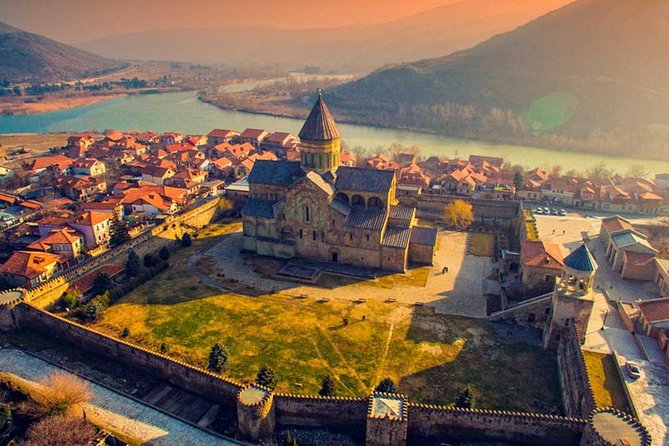
Then you reach Svetitskhoveli Cathedral, a UNESCO World Heritage site and the second-largest church building in Georgia after the Holy Trinity Cathedral. It’s an Early Middle Ages masterpiece, and even if you don’t go deep on church history, the scale hits you fast.
What keeps it human are the legends tied to the building. One story links the origins of the site to Elioz, a citizen of Mtskheta, who found the Tunic of Jesus Christ in Jerusalem. Elioz’s sister, Sidonia touched the tunic and died soon after. She was buried wrapped in it, and a cedar of Lebanon grew on her grave. Later, when Mirian decided to build a temple on the place, the meaning of the location shifted from legend into a sacred landmark.
If you like places where faith, story, and stone all overlap, this is the stop that delivers that feeling. You come away understanding why Mtskheta mattered before Tbilisi took over the political role.
Practical tip: since admission is listed as free for this stop, it’s one of the easiest wins in the day. Use that saved money to cover the later paid admissions without stress.
Gori Fortress: Ottoman crossroads and an earthquake scar
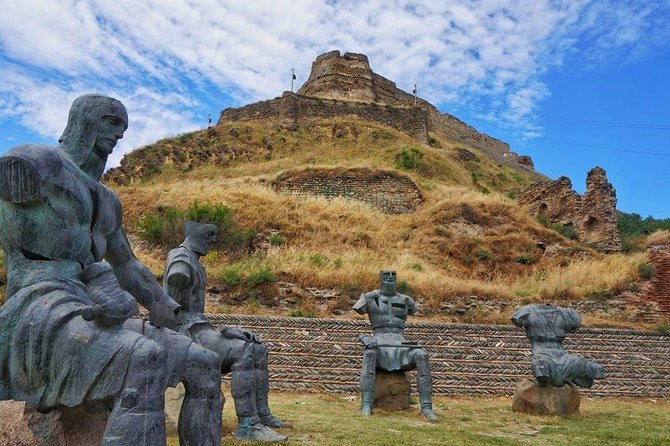
Gori is where Georgia’s timeline takes a tougher turn. The fortress sits on a hill above the city and dates to the 13th century, but the history is about change and survival.
You’ll learn how the fortress was captured by Ottomans in the 16th century, then continually traded hands between Turks, Georgians, and Persians. The building you see today reflects that layered past, since much of the structure dates from the 17th and 18th centuries.
Then comes the part that makes the hill feel real: a 6.2 magnitude earthquake in 1920 significantly damaged it. When you look at old stones in a place that’s been hit by time and weather, you realize why restoration and rebuilding are part of the story, not an interruption of it.
This stop is also useful for you because it gives context for Gori the town. After Uplistsikhe and the churches, it’s a different kind of history, but the fortress reminds you that Georgia has always been a strategic crossroads.
Practical tip: bring a light layer. Hilltop sites can feel breezy, even if it’s warm in the city below.
Other Mtskheta and Jvari trips:
Stalin Museum in Gori: Soviet-era rooms and what you’ll get
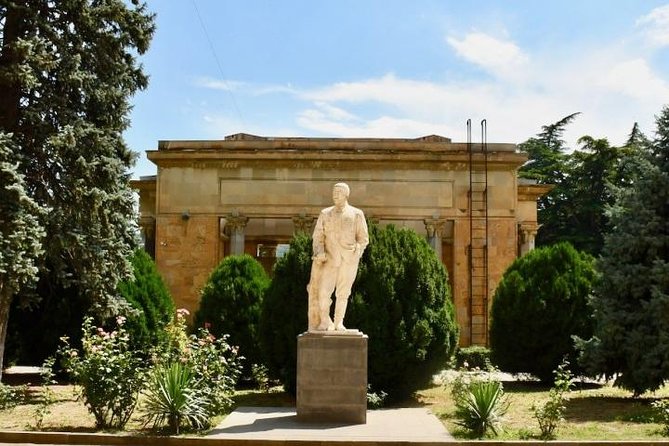
Gori is Joseph Stalin’s birthplace, and the Stalin Museum keeps that focus. The museum is dedicated to his life and retains Soviet-era characteristics, which means the vibe is part of the experience, not just the artifacts.
You’ll have around 45 minutes here, which is a solid chunk for a focused visit. The best value in this stop is how the guide frames the exhibits as a “why this matters” story, rather than only listing dates.
One key detail: the visit includes access to Stalin’s house, the museum, and a train wagon, with the local guide. That combo helps you understand the man through different lenses, a home setting, a museum setting, and a mobility setting that fits his era.
Important note for your expectations: this is not a neutral “just history” visit if you’re sensitive to Soviet themes. You’re walking through a curated portrait of a powerful leader, and you should treat it like political history, not like a gentle cultural stop.
Practical tip: if you’re visiting on a day with limited energy, this is the stop where comfortable shoes pay off. You might not get stuck for hours, but you will likely do some moving between related areas.
Uplistsikhe cave town, 10 km from Gori: fortress of the lord
Uplistsikhe is a major shift in mood. Instead of churches and museum walls, you’re dealing with rock-cut space and the logic of settlement built into a landscape.
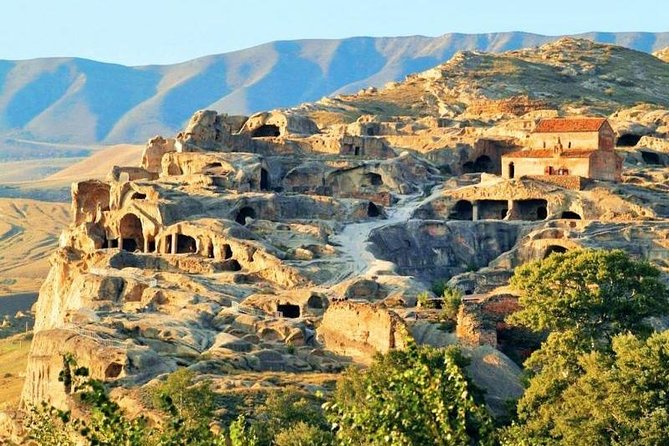
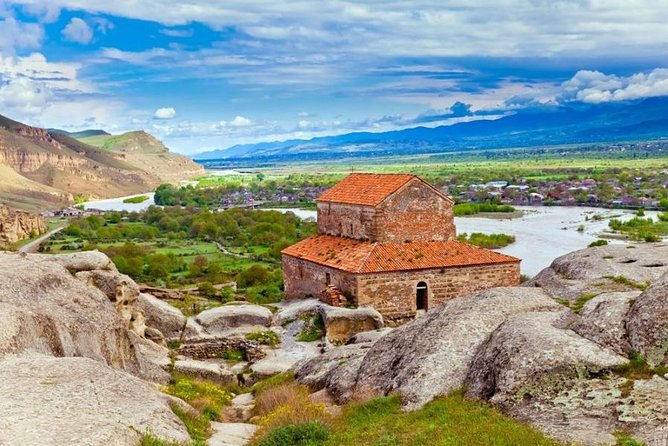
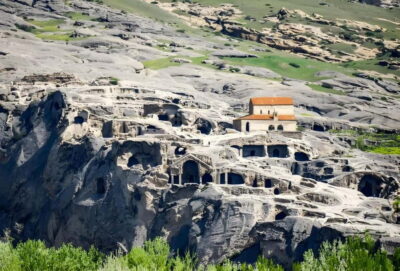
Uplistsikhe means fortress of the lord, and archaeologists identify it as one of the oldest urban settlements in Georgia. The site sits strategically in the heartland of ancient kingdom of Kartli, also known as Iberia in classical writings. Medieval written tradition even ties its origin to a mythic founder, Uplos, son of Mtskhetos and grandson of Kartlos.
The historical timeline here is long. The history goes back to the 2nd to 1st millenniums B.C. In antiquity, it was an important center of Kartli. Later, during the Middle Ages, it stood on an important trade route linking Byzantium with India and China. That detail matters because it suggests why a “cave city” could be more than a local oddity. Trade routes need infrastructure, and Uplistsikhe served as more than shelter.
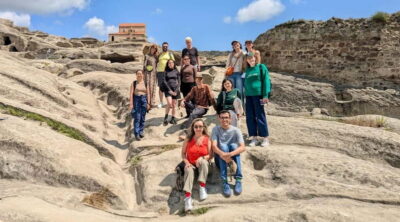
You’re allotted about 1 hour on site, which is enough to get oriented and appreciate how the town functions as a system. You might find stairs, uneven rock surfaces, and tight angles, so good grip footwear and patience help.
Practical tip: because Uplistsikhe admission is not included, plan to pay onsite or at the start of the visit as the operator directs. Bring some cash if you like, even though your tour may handle tickets through your mobile ticket experience.
Price and value: what $50.13 really covers, plus the extras
At $50.13 per person, this one-day tour sits in the “good deal if you use it fully” category. The included items are exactly what a long day needs: air-conditioned transport, bottled water, fuel surcharge coverage, and a professional guide.
You also get free entry at several major stops. Jvari Monastery is listed as free, Svetitskhoveli Cathedral is free, and Gori Fortress is free. That’s three of your five big anchors with no added ticket cost.
The main paid extras are the Stalin Museum and Uplistsikhe, plus lunch is not included. So your real out-of-pocket cost will depend on those admissions and what you choose for food during the day. The good news is that at least two big sites in Mtskheta are free, so you’re not paying entrance fees just to see the most famous landmarks.
If you’d otherwise try to do this loop on your own, you’d spend time coordinating transport between Mtskheta, Gori, and Uplistsikhe. You’d also need a way to understand what you’re looking at, because the legends and historical transitions are the point, not just the photos.
Tips for making this day feel smooth, not rushed
This trip is short on time, so your job is to make the moments count.
- Eat before you go. Lunch isn’t included, so having breakfast and maybe a snack gives you less stress later.
- Dress for churches and caves. You’re visiting active religious sites and then a cave town, so wear something comfortable for walking and standing.
- Bring a layer. Hilltop and stone sites can feel cooler in open air, even on a warm day.
- Use the guide’s timing. The value of a professional guide is in the explanations, like the King Mirian III cross story at Jvari or why Svetitskhoveli is tied to the tunic legend. Ask a question if something clicks.
- If your day turns into a smaller group, don’t panic. One booking experience described the tour changing into a solo outing when it didn’t fill as expected, without extra cost. That kind of flexibility can make the visit more personal.
Who should book this Mtskheta, Gori and Uplistsikhe day trip
This works best if you like structured sightseeing with strong context. If you’re traveling with limited time in Georgia, it’s a solid way to hit UNESCO sites and major historical themes without juggling tickets and transportation.
It’s also a good fit if you care about contrasts. Mtskheta gives you spiritual architecture and legend. Gori gives you Soviet-era history. Uplistsikhe gives you ancient urban settlement in rock.
If you’re the type who prefers slow wandering with no fixed stops, you might find the schedule tight. Still, the time per site is reasonable, and the stops are chosen so you don’t waste half your day in transit.
Should you book this one-day Mtskheta, Gori and Uplistsikhe tour?
If you want a smart “greatest hits” day from Tbilisi that combines UNESCO heritage, fortress history, and the cave-city experience, I’d say book it. The included transport and guided storytelling do real work, and you get multiple major sites with free entry, which makes the $50.13 price feel fair.
Skip it only if you strongly dislike politically heavy history tied to Stalin, or if you know you hate packed schedules. In that case, you might prefer slower, separate visits.
FAQ
What is the duration of the tour?
The tour runs for about 10 hours.
Does the tour include pickup from your location?
Yes, pickup is offered.
Are tickets to all attractions included in the price?
Admission is free for Jvari Monastery, Svetitskhoveli Cathedral, and Gori Fortress. Admission for the Stalin Museum and Uplistsikhe is not included.
Is lunch included?
No, lunch is not included.
What does the tour include for comfort during the day?
You get an air-conditioned vehicle, bottled water, and a professional guide service.
Is there a mobile ticket?
Yes, a mobile ticket is included.
Newer trips around Tbilisi
- Tbilisi Private Dinner: Georgian BBQ & Fireplace
★ 5.0 · 1 review - Tbilisi: Khinkali Tasting Lunch with Local Drinks and Pickup
★ 5.0 · 1 review - Day trip in Kakheti-wine tour
★ 5.0 · 1 review - Tbilisi & Mtskheta bus tour hop on hop off
★ 5.0 · 1 review - Tbilisi: Christmas Market & Hidden Gems Guided Walking Tour
★ 5.0 · 1 review - Stalin’s Secrets: An Underground Journey Through History
★ 5.0 · 1 review
Mtskheta Ancient Capital Tours, compared.
Mtskheta, Jvari, Gori and Uplistsikhe Day Tour
Read our review →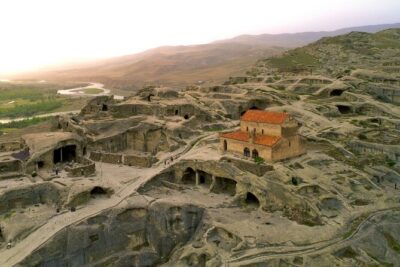
Mtskheta Jvari Bazaar, Chronicles of Georgia & Wine
Read our review →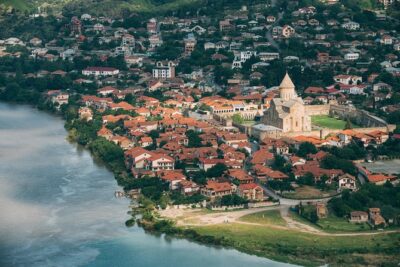
Mtskheta,Jvari,Bazaar,wine tasting,Chronicles of Georgia
Read our review →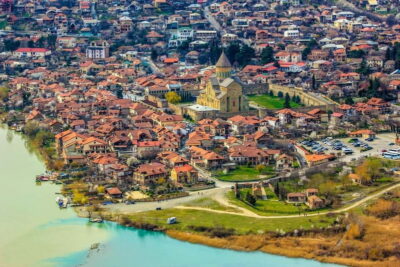
The Chronicles of Georgia, Jvari & Mtskheta Tour
Read our review →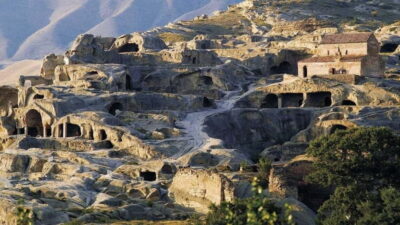
Browse the lists this tour appears in