
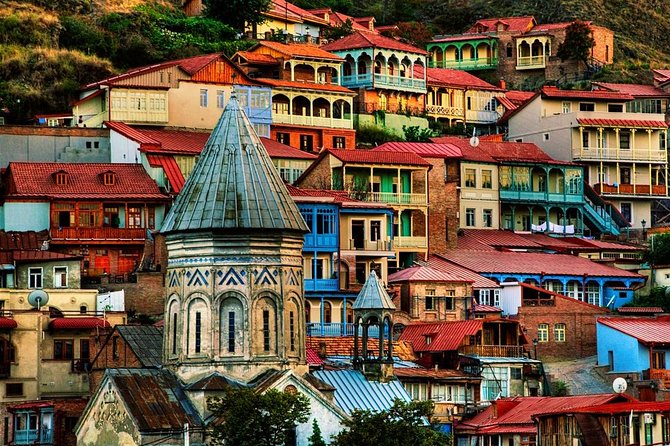
Reviewed · MTSKHETA ANCIENT CAPITAL TOURS
One day tour in Mtskheta and Tbilisi
Georgia runs on stories, and this day tour moves fast.
You get a smooth, small-group introduction to two capitals, Tbilisi (today) and Mtskheta (former), with a guide keeping the facts clear and the stops timed. I like that you ride in an air-conditioned vehicle with bottled water and snacks, so the day stays comfortable even when the city gets busy. The main drawback is the pace: with many quick photo stops, you will not linger long enough for a slow, museum-style day.
What makes it work for first-timers is the way the route builds momentum. You start with Tbilisi’s central landmarks, work your way toward panoramic viewpoints, then finish with the UNESCO sites in Mtskheta. Also, having a guide like Daviti (noted for being friendly, respectful, and flexible) can make the day feel less like a checklist and more like a guided walk where you can ask questions on the spot.
In This Review
- Key Things to Know Before You Go
- Tbilisi and Mtskheta in One Action-Packed Day
- Freedom Square to Pushkin Street: Tbilisi’s Center, Explained Simply
- Tbilisi Wall Ruins and Rezo Gabriadze’s Clock Tower: Small Stops with Big Personality
- Anchiskhati Basilica: The 6th-Century Detour You’ll Be Glad You Took
- Bridge of Peace, Rike Park, and the Narikala Cable Car Connection
- Sioni Cathedral and Shardeni Street: Faith and Nightlife in the Same Breath
- Metekhi Cathedral, the Cliff Views, and Narikala Fortress
- Kartlis Deda and Abanotubani: Iconic Statues and Sulfur Baths
- Leghvtakhevi Waterfall: A 10-Minute Nature Moment in the Middle of Old Tbilisi
- Jvari Church: UNESCO Views at the Confluence Near Mtskheta
- The City-Museum Reserve of Mtskheta: Cobblestones, Balconies, and Walking Time
- Svetitskhoveli Cathedral: The Final UNESCO Stop That Feels Like a Big Deal
- Price and Value: Is 35.90 Worth It?
- So Who Should Book This Tour?
- Should You Book This Mtskheta and Tbilisi Day Tour?
- FAQ
- How long is the tour?
- Does the tour include hotel pickup?
- What is included in the price?
- Is lunch included?
- Are admission fees included?
- Is a mobile ticket provided?
- What group size is this tour?
- What happens if the weather is poor?
Key Things to Know Before You Go
- Hotel pickup and small group size keep things organized and less chaotic than hopping between sites alone
- Freedom Square to Shardeni Street gives you a quick but meaningful view of modern Tbilisi and its older roots
- Narikala access with aerial tramway helps you get the fortress views without turning the day into a hike
- Abanotubani bath district plus Leghvtakhevi Waterfall adds a fun, unexpected nature moment inside an old neighborhood
- Mtskheta’s UNESCO core comes with context so you understand why Jvari and Svetitskhoveli matter
More Day Trips in Tbilisi
- Tbilisi: Day Trip to Kazbegi, Gudauri, Gergeti, and Ananuri★ 4.9 · 3,203 reviews
- Day Trip to Kakheti Wine Region Including 9 Wine Tastings★ 5.0 · 2,774 reviews
- Day Trip to Kazbegi and Gudauri★ 5.0 · 2,009 reviews
- Day Trip to Mtskheta Gori and Uplistsikhe★ 5.0 · 1,801 reviews
Tbilisi and Mtskheta in One Action-Packed Day
This tour is built for people who want the “big picture” of Georgia fast, without getting lost in translation or traffic. The day runs about 8 hours, and the route is paced to fit two cities into one plan.
I like that the experience stays practical. You are not expected to plan transit, map routes, or figure out where things are located. Instead, you get a structured walk-and-ride day, plus bottled water and snacks to keep energy steady.
Freedom Square to Pushkin Street: Tbilisi’s Center, Explained Simply
Your first major stop is Freedom Square, Tbilisi’s headline plaza in the middle of the city. It has changed names multiple times over about 200 years, starting from a neo-classical design with Moorish elements. You also hear the more dramatic side of the story, including a famous bank robbery in 1907 connected to Joseph Stalin, tied to the equivalent of millions of dollars today.
Then you move through nearby streets, including the area associated with Alexander Pushkin. Even if you are not a literature person, this kind of stop helps you read the city like it’s a page you can actually understand, rather than random monuments.
If you come hungry, this is not the “wait for your first snack” part of the day. It’s more like the orientation phase. You’ll walk enough to feel the city, but you won’t be stuck in a long queue or complicated tickets.
Tbilisi Wall Ruins and Rezo Gabriadze’s Clock Tower: Small Stops with Big Personality
Not every highlight needs a long visit. This tour uses a few short stops to add variety, like the old city wall ruins discovered in 2012. It’s the kind of place that makes you think, wow, the city’s layers are right here.
Next comes Rezo Gabriadze’s Marionette Theater area and his clock tower, built next to the theater in 2010. The hourly show detail is the magic trick: every hour, an angel appears with a hammer to ring the bell. There’s also a small puppet theater inside, plus scheduled performances at noon and at 7 pm for The Circle of Life.
This is one of those stops that feels fun without taking over your whole day. If you travel with kids or you just like quirky details, it lands well.
Anchiskhati Basilica: The 6th-Century Detour You’ll Be Glad You Took
The Anchiskhati Basilica stop is short but meaningful. This three-nave basilica goes back to the 6th century, built by Dachi, the son of King Vakhtang Gorgasali. The name comes from an icon connected to Anchi Cathedral in Klarjeti, which was brought to Tbilisi in the 17th century.
A quick stop like this is a smart use of time. It helps you connect your later UNESCO moments in Mtskheta to the deeper religious and architectural roots of Georgia. Even if you only catch the outside, you’ll understand what you are looking at.
Other Mtskheta and Jvari trips:
Bridge of Peace, Rike Park, and the Narikala Cable Car Connection
The Bridge of Peace is a classic photo spot, and this tour uses it for that exact job. You get a viewpoint and a chance to reset your eyes after a cluster of churches and courtyards.
From there you head to Rike Park. This area is known as one of Tbilisi’s youngest recreational spaces, and it sits on the left bank of the Kura River. The tour points out practical features you can enjoy even on a short visit: footpaths, quiet corners, and family-friendly attractions like singing and dancing fountains and a mega-chess board.
Most importantly for your day, Rike Park is also tied to the cable car that takes you up toward Narikala Fortress. So even though this stop feels light, it functions like a staging area for your next big viewpoint moment.
Sioni Cathedral and Shardeni Street: Faith and Nightlife in the Same Breath
Old Tbilisi mixes sacred spaces and social streets, and the tour uses that reality. Sioni Cathedral sits in old Tbilisi and dates to the 6th and 7th centuries, though it was destroyed and reconstructed multiple times. The current version is based on a 13th-century iteration, with changes later in the 17th to 19th centuries. It served as the main Georgian Orthodox cathedral and the seat of the Catholicos-Patriarch until the Holy Trinity Cathedral was consecrated in 2004.
After that, you walk toward Shardeni Street, famous for bars and clubs. The interesting part here is the backstory: it was once an important trading center and even earned the nickname dark row because it was roofed over. In the 20th century it was reconstructed in 1981 and renamed after French traveler Jean Chardin.
This section gives you a real sense of how Tbilisi works today. You do not just see heritage. You see how heritage sits next to daily life.
Metekhi Cathedral, the Cliff Views, and Narikala Fortress
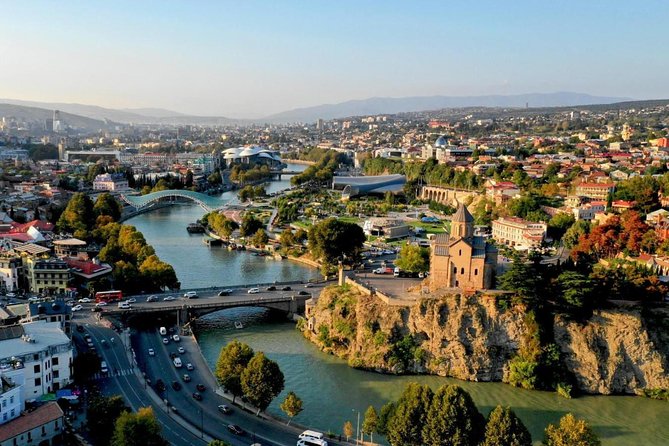
Metekhi is a district on a cliff overlooking the Mtkvari River, and it’s tied to the Church of Assumption. The church area has been destroyed and restored repeatedly, and it took heavy hits during invasions, including after the Mongol invasion and again with destruction ordered by Persians in the 15th century. Georgian kings rebuilt the church across the 16th and 17th centuries, and restoration later continued in the mid-19th century. There’s also a note in the story about surrounding fortifications being dismantled and replaced with a prison building.
Even with a short stop, the location matters. A cliffside church spot changes how you feel about the city, because you see it from the angle power used to take.
Then it’s time for Narikala Fortress, accessed by aerial tramway. Narikala’s roots go back to the 4th century as Shuris-tsikhe, a Persian citadel. The site expanded over centuries, including under the Umayyads and later by King David the Builder. The Mongols even renamed it, and much of what you can still see dates to the 16th and 17th centuries. There was also damage in 1827 from an earthquake, plus the lower court includes the restored St Nicholas church.
This fortress stop is why many first-timers remember Tbilisi. The viewpoint makes the city feel bigger and more organized, like you finally understand where the old city sits in relation to the river.
Kartlis Deda and Abanotubani: Iconic Statues and Sulfur Baths
On Sololaki Hill, you’ll see Kartlis Deda, the Mother of Georgia statue. It was erected in 1958, tied to Tbilisi’s 1500th anniversary. The sculptor was Elguja Amashukeli, and the statue is about 20 meters tall. Her left hand holds a bowl of wine for friends, and her right hand holds a sword for enemies. It’s a simple symbol, but it’s a powerful one for understanding Georgia’s storytelling style.
Then you move into Abanotubani, Tbilisi’s bath district. This is the oldest district of the city and famous for sulfuric baths. The tour shares the legend behind the hot springs: King Vakhtang Gorgasali’s falcon fell, leading to the discovery of hot springs and the founding of a new capital.
Even if you do not plan to bathe, the area is worth walking through. The steam, the old architecture feel, and the sense of ritual make it feel like a different city than the modern streets you saw earlier.
Leghvtakhevi Waterfall: A 10-Minute Nature Moment in the Middle of Old Tbilisi
Inside the bath district, you’ll spot Leghvtakhevi Waterfall. It’s 22 meters tall, and the name comes from the Georgian word for fig, because the area had fig trees nearby. This stop is short, but it’s a nice contrast. After churches, towers, and viewpoints, you get something more natural and unexpected.
If you like “surprise details” in your travel day, this is exactly the kind of stop that makes the whole plan feel more alive.
Jvari Church: UNESCO Views at the Confluence Near Mtskheta
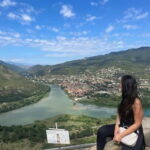
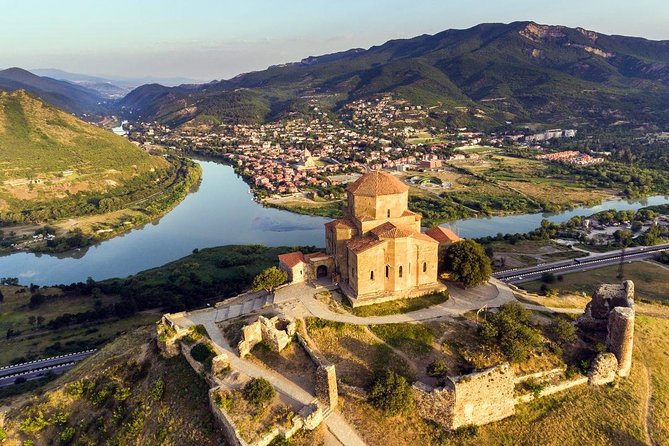
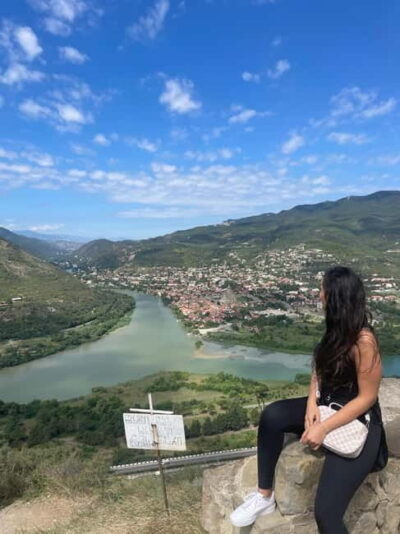
Now you shift to Mtskheta, the former capital tied to the Kingdom of Iberia. Your first major Mtskheta spiritual and UNESCO stop is Jvari Church, also known as Jvari Monastery. It sits on a rocky hilltop above the confluence of the Mtkvari and Aragvi rivers, and it is listed as a UNESCO World Heritage site.
The key story is tied to Georgia’s Christian adoption. King Mirian III erected a large wooden cross here after Christianity was adopted by Georgians. Later, in the second half of the 6th century, Guaram built a small church next to the Holy Cross.
Even with limited time, this site tends to hit hard because of location. You get the geography explained while you can actually see the rivers meeting. It makes the religious narrative feel grounded in real terrain.
The City-Museum Reserve of Mtskheta: Cobblestones, Balconies, and Walking Time
Next you explore the City-Museum Reserve of Mtskheta. This is the part where you slow down just enough to feel like you are in an old town, not just a sequence of monuments. The area is known for cobblestone streets and balconies, and it functions as a religious center with UNESCO significance.
This is also where you can breathe. You’ll have enough time for short strolls and quick photos, but not so much that you lose the thread of the day. If you want souvenirs, snacks, or a moment to just watch the town, this is the best time for it.
Svetitskhoveli Cathedral: The Final UNESCO Stop That Feels Like a Big Deal
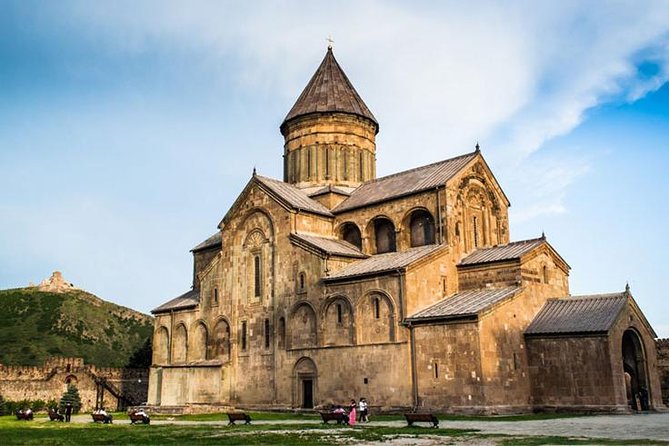
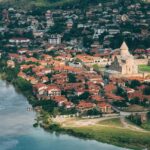
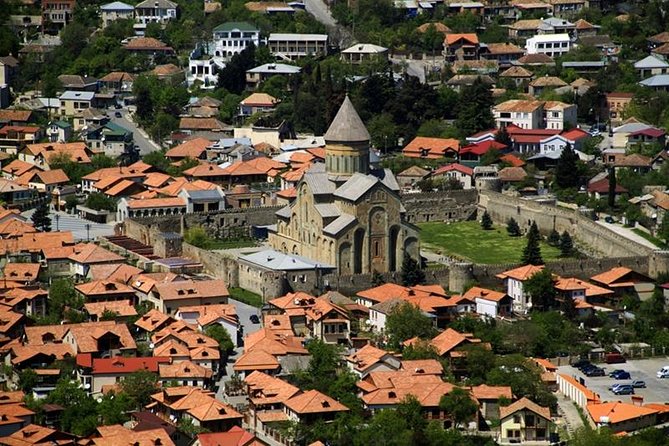
The final major site is Svetitskhoveli Cathedral, a UNESCO-recognized Eastern Orthodox church in Mtskheta. It’s considered a masterpiece of the Early Middle Ages and is currently the second largest church building in Georgia, after the Holy Trinity Cathedral.
There’s also a famous legend connected to its origin. Elioz of Mtskheta found the Tunic of Jesus Christ in Jerusalem. Elioz’s sister, Sidonia, died right after touching the tunic, and she was buried wrapped in it. Then a cedar of Lebanon grew on her grave, tying sacred history to the physical place.
This is the kind of ending that sticks. You go from smaller stops and viewpoints to a site with a scale and story that makes the day feel complete.
Price and Value: Is 35.90 Worth It?
At $35.90 per person for about 8 hours, this tour is aimed at value and convenience. You’re paying for structure, an expert guide, and transportation in an air-conditioned vehicle, plus bottled water and snacks. For many visitors, that bundle is the real cost saver, because it replaces planning time and reduces the risk of wasting time getting between sites.
Admissions at the listed stops are shown as free, so your cash outlay mainly comes down to food and personal spending. Lunch is not included, and you also should plan for no alcoholic beverages and for all fees and taxes not included.
Another reason the price feels fair is group size. With a maximum of 10 travelers, you’re more likely to get explanations you can actually hear, and you are less likely to feel lost in a massive bus crowd.
So Who Should Book This Tour?
If you want a first-timer-friendly overview of Tbilisi plus the UNESCO highlights of Mtskheta, this is a strong fit. It’s especially good if you like guided context, short walks, and seeing the key sights without dealing with route logistics.
It might not suit you if you prefer slow museum time, long church interiors, or deep self-guided wandering. The day is designed to cover a lot, and you will spend most of it moving between points.
If you do book, pack comfortable shoes and keep your camera ready. Also, aim for good weather, since the tour requires it. A cloudy day won’t ruin everything, but some viewpoints and the river confluence experience will feel less satisfying.
Should You Book This Mtskheta and Tbilisi Day Tour?
Yes, book it if you want a guided, time-efficient day that gives you real context for both cities. The combination of Tbilisi landmarks, fortress views from the Narikala area, and the UNESCO moments around Jvari and Svetitskhoveli is exactly the kind of route that helps you feel oriented fast.
Skip it if you hate group pacing or you want unhurried time inside each site. In that case, you’ll probably enjoy a longer, more flexible plan. But for a single-day hit of the best-known places, this tour delivers.
FAQ
How long is the tour?
The tour duration is about 8 hours.
Does the tour include hotel pickup?
Yes, pickup is offered.
What is included in the price?
It includes bottled water, snacks, an air-conditioned vehicle, and a professional guide.
Is lunch included?
No, lunch is not included.
Are admission fees included?
The stops listed show admission tickets as free.
Is a mobile ticket provided?
Yes, a mobile ticket is used.
What group size is this tour?
It has a maximum of 10 travelers.
What happens if the weather is poor?
The experience requires good weather. If it is canceled due to poor weather, you will be offered a different date or a full refund.
More 1-Day Tours in Tbilisi
- Day Trip to Armenia Including Homemade Lunch
★ 5.0 · 1,162 reviews - From Tbilisi: Diamond Bridge and Dashbashi Canyon Day Trip
★ 4.9 · 740 reviews - Day Trip to Gudauri and Kazbegi Including 4WD
★ 5.0 · 673 reviews - From Tbilisi : Mtskheta, Jvari, Gori & Uplistsikhe Day Trip
★ 4.8 · 432 reviews
Newer trips around Tbilisi
- Tbilisi Private Dinner: Georgian BBQ & Fireplace
★ 5.0 · 1 review - Tbilisi: Khinkali Tasting Lunch with Local Drinks and Pickup
★ 5.0 · 1 review - Day trip in Kakheti-wine tour
★ 5.0 · 1 review - Tbilisi & Mtskheta bus tour hop on hop off
★ 5.0 · 1 review - Tbilisi: Christmas Market & Hidden Gems Guided Walking Tour
★ 5.0 · 1 review - Stalin’s Secrets: An Underground Journey Through History
★ 5.0 · 1 review
Mtskheta Ancient Capital Tours, compared.
Mtskheta, Jvari, Gori and Uplistsikhe Day Tour
Read our review →
Mtskheta Jvari Bazaar, Chronicles of Georgia & Wine
Read our review →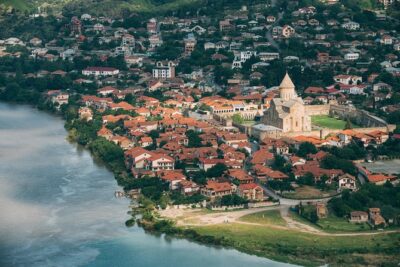
Mtskheta,Jvari,Bazaar,wine tasting,Chronicles of Georgia
Read our review →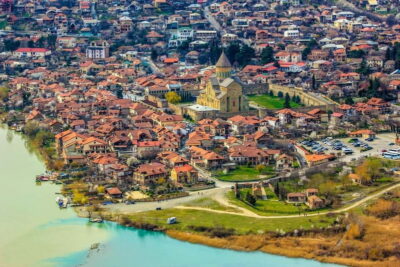
The Chronicles of Georgia, Jvari & Mtskheta Tour
Read our review →
Browse the lists this tour appears in