
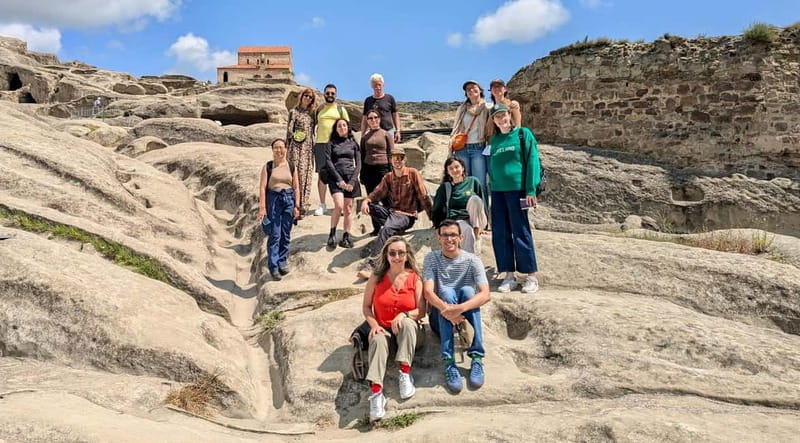
Reviewed · MTSKHETA ANCIENT CAPITAL TOURS
Tbilisi : Mtskheta, Jvari, Gori and Uplistsikhe , Day Tour.
One day in Kartli can feel like an hour in a history museum, but outdoors. This tour strings together Mtskheta’s UNESCO churches, the dramatic Jvari Monastery viewpoint, and the rock-cut world of Uplistsikhe, with Gori and Stalin added for context.
I really like how the route mixes big monuments with strange, physical places, like the cave town carved from stone. I also like that the timing gives you short photo stops plus real guided time at the main hits, so you do not just pass by. One drawback to plan for is that it is packed, so you will want comfortable shoes and patience for a full day.
In This Review
- Key highlights
- Why this Kartli day tour feels efficient (and memorable)
- Getting out of Tbilisi: viewpoints on the way to Kartli
- Uplistsikhe cave town: carved stone and cultural mixing
- Gori: Stalin’s hometown and the story behind the buildings
- Mtskheta’s UNESCO duo: Jvari Monastery and Svetitskhoveli
- Jvari Monastery: the cross-shaped viewpoint
- Svetitskhoveli Cathedral: where faith meets identity
- Timing and pacing: how the 8 hours actually feel
- Price and value: what you get for $16, and what to budget on top
- Who should book this, and who should skip it
- Should you book this Tbilisi to Mtskheta, Gori and Uplistsikhe day trip?
- FAQ
- How long is the day tour from Tbilisi?
- Where do I meet the group in Tbilisi?
- What is included in the tour price?
- Do I need to pay entrance fees during the tour?
- Is lunch provided?
- What languages is the live guide?
Key highlights
- Jvari Monastery on a rocky hill at the confluence of the Aragvi and Mtkvari rivers
- Svetitskhoveli Cathedral in Mtskheta, one of Georgia’s most venerated Orthodox sites
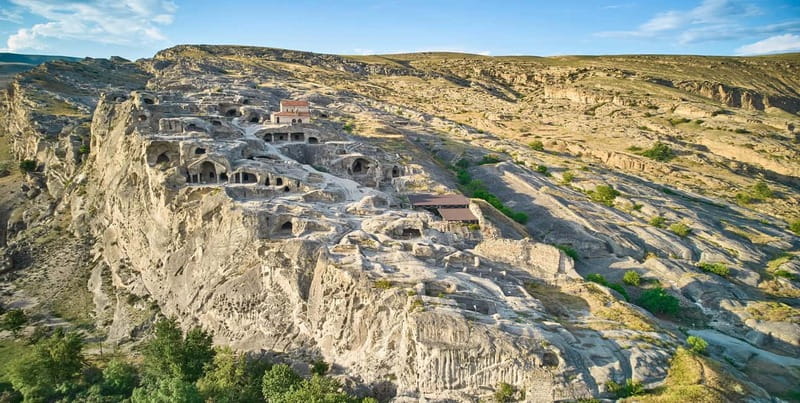
- Uplistsikhe cave town, with rock-cut structures spanning the Early Iron Age to the Middle Ages
- Gori and Stalin, including optional time at the Stalin Museum
- Panoramic viewpoints from Gudauri and Devil’s Valley on the route out of Tbilisi
Other Gori and Uplistsikhe cave-town trips:
- Tbilisi: Mtskheta, Jvari, Gori and Uplistsikhe Day Tour★ 4.9 · 2,396 reviews
- Day Trip to Mtskheta Gori and Uplistsikhe★ 5.0 · 1,801 reviews
- From Tbilisi : Mtskheta, Jvari, Gori & Uplistsikhe Day Trip★ 4.8 · 432 reviews
- From Tbilisi: Mtskheta, Jvari, Gori, Uplistsikhe Guided Tour★ 4.7 · 354 reviews
Why this Kartli day tour feels efficient (and memorable)
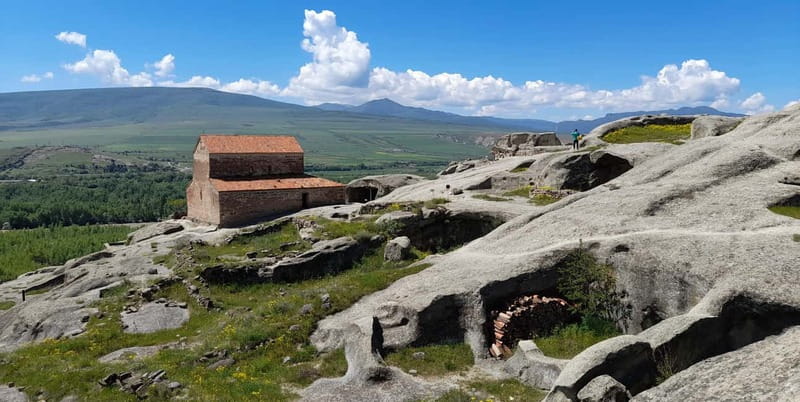
This trip is built for people who like seeing a lot, without turning the day into a blur of random stops. The geography alone helps. You start in the capital, then you move through Shida Kartli, where Mtskheta and Gori sit inside the country’s old storylines. Then you finish with Uplistsikhe, one of the most unusual places in eastern Georgia.
The UNESCO factor matters, but not in a boring, checklist way. Mtskheta is where sacred sites overlap with national identity. You are not just looking at churches, you are looking at why Georgia tells its own story through faith, stone, and geography.
And you still get variety. Uplistsikhe is not a church stop. It is a carved rock town, shaped by different cultural influences over centuries. If you like places that look like they have layers you can feel, this part is often the most surprising.
Getting out of Tbilisi: viewpoints on the way to Kartli
The day begins around Vakhtang Gorgasali Square, with the meeting point at the intersection of Kote and Abkhazian Streets on the Maidan. After you meet your certified guide and get settled into the transportation service, you start heading toward Shida Kartli.
One of the smart touches in the highlights is that you do not only chase monuments. You also get panoramic stops from Gudauri and Devil’s Valley. Even if you spend just enough time for photos, those viewpoints change how you understand the route. The mountains and valleys make the later sites feel more grounded, because you see how people historically moved through this region.
This is also where you will feel the “day tour” reality. There is travel time between stops, and the whole day is scheduled tightly. If you want a slow, unhurried pace, you might find the schedule pushes you. If you like an active day with clear structure, you will probably enjoy it.
Uplistsikhe cave town: carved stone and cultural mixing
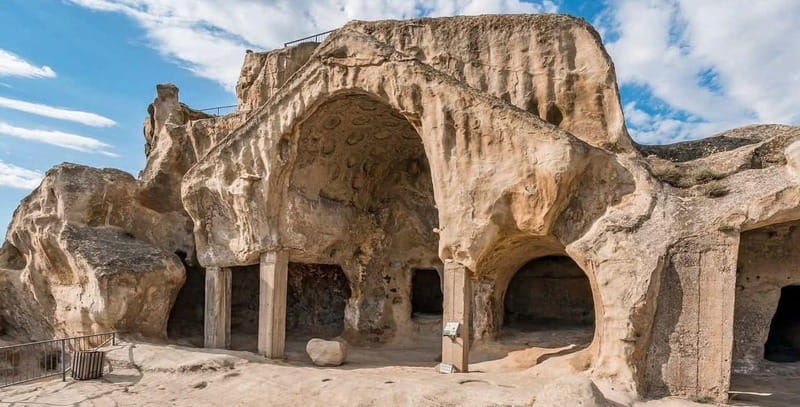
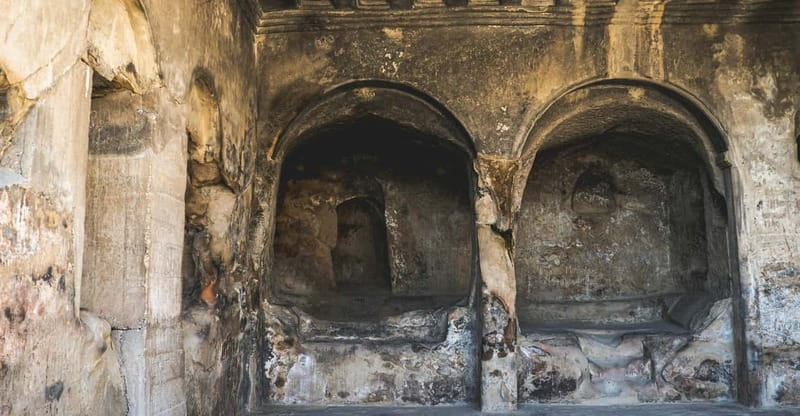
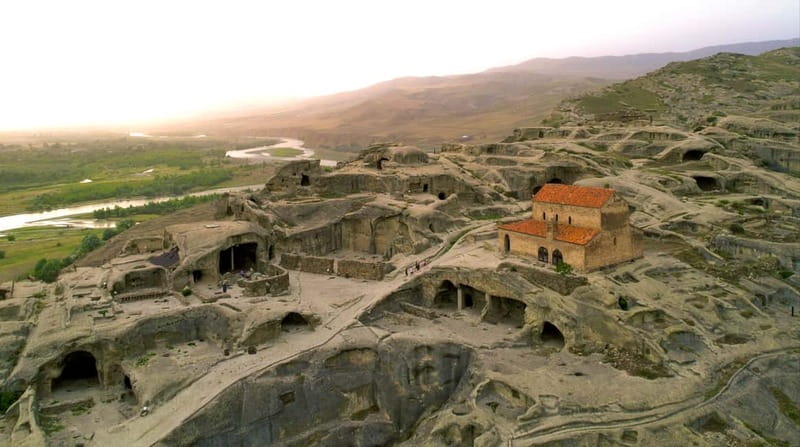
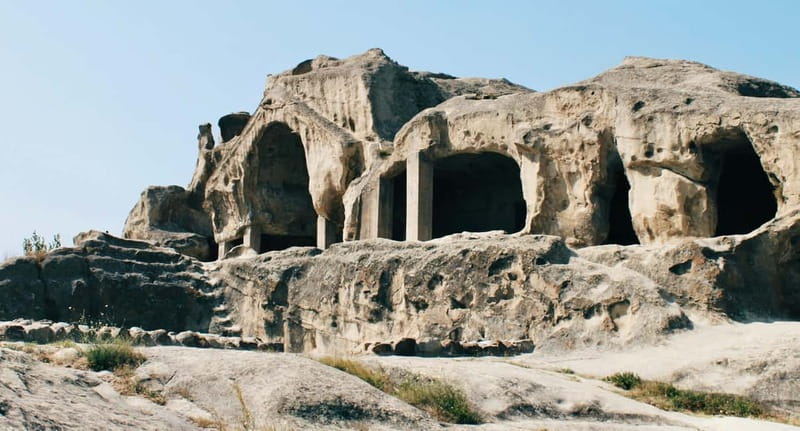
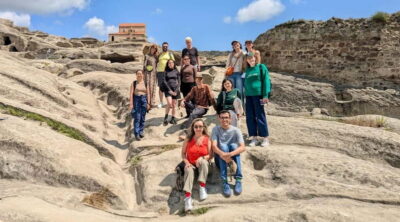
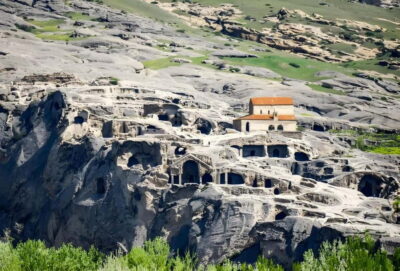
Uplistsikhe is the kind of place that makes you look up, then look sideways, then look for details in the rock. It is an antique cave town in eastern Georgia, with multiple structures dating from the Early Iron Age to the Late Middle Ages.
What I find compelling is the way Uplistsikhe is described as a mixture of rock-cut cultures. The site includes a unique blend where influences from Anatolia and Iran meet Georgian pagan and Christian architectural elements. That combination is not just academic. When you stand there, the town feels like it has been reinterpreted by different eras, not frozen in time.
In the day’s flow, Uplistsikhe comes after Gori, but you can still treat it as a main event. Your guided time here is about 40 minutes. That is enough for a first pass through the key rock-cut features without rushing so hard that you miss why the place feels different from a normal archaeological site.
A practical note: entrance to Uplistsikhe is not included. Budget 15 GEL (about 6 USD) per person. If you are trying to keep the day affordable, you can still enjoy the tour’s other stops, but paying the Uplistsikhe fee is where this itinerary earns its standout status.
Gori: Stalin’s hometown and the story behind the buildings
Gori is one of those stops where the facts are unavoidable, but the interpretation is up to you. You visit the hometown of Joseph Stalin, which is exactly why the town became part of twentieth-century history. Your guided time in Gori is about 1.5 hours, with time for a photo stop and a scheduled visit.
The tour also gives you a choice later in the afternoon. You can use your break time for more independent exploring, or you can visit the Stalin Museum, which is optional.
If you go to the museum, plan for around 30 minutes guided time. The museum keeps strong Soviet-era characteristics, and it includes things like Stalin’s original house and even a railway carriage. That mixture of personal setting and preserved artifacts is what makes the museum feel more “physical” than a typical history room.
Entrance to the Stalin Museum is not included. Budget 15 GEL (about 6 USD) if you choose it.
Here is how I would think about this stop before booking: Gori is not only about politics. It is also about a Georgian city placed under an enormous spotlight. The tour timing gives you enough context to connect Mtskheta and Uplistsikhe to the modern era, instead of treating them like separate worlds.
Other Mtskheta and Jvari trips:
Mtskheta’s UNESCO duo: Jvari Monastery and Svetitskhoveli
Now you get to the part that most people come for: Mtskheta, and specifically two UNESCO-linked monuments.
Jvari Monastery: the cross-shaped viewpoint
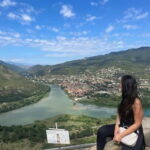
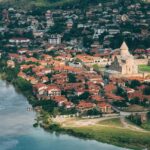
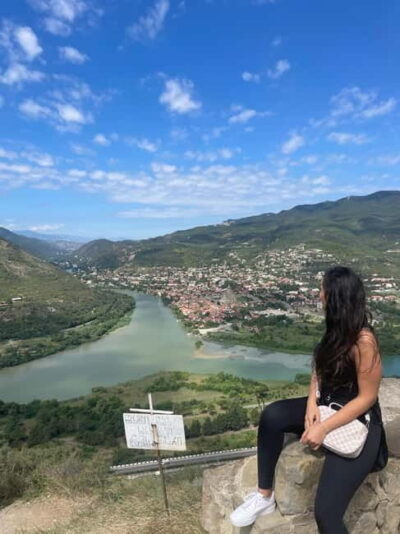
Jvari Monastery, translated as Monastery of the Cross, is a 6th-century Georgian Orthodox monastery near Mtskheta. The setting is a big reason it is famous. Jvari sits on a rocky mountaintop overlooking Mtskheta, at the confluence of the Mtkvari and Aragvi rivers.
The tour includes a photo stop and then a guided visit of about 1 hour. That length matters because the best views take a moment to understand. You should look at the rivers meeting, then look back toward the town, and then notice how the monastery’s position dominates the landscape.
This is also where the guide’s job is helpful. If you listen, you can start noticing details you would otherwise miss in a quick photo stop. Jvari is listed alongside other historic structures of Mtskheta as a World Heritage site.
Svetitskhoveli Cathedral: where faith meets identity
After Jvari, you go into Mtskheta again for the Svetitskhoveli Cathedral. The cathedral is known as a burial site of Christ’s robe, and it has long been one of the principal Georgian Orthodox churches in the region. Like Jvari, it ties into Mtskheta’s UNESCO status for its historical significance and cultural monuments.
Your time at Svetitskhoveli is shorter, about 30 minutes with a photo stop and guided tour. That is enough for a meaningful look, especially if you are respectful of the religious nature of the space. The key is to treat this stop as a moment to absorb rather than a race for pictures.
If you want to get the most out of this part of the day, arrive ready to slow down for 5 minutes at a time, even within the tight schedule.
Timing and pacing: how the 8 hours actually feel
This tour runs about 8 hours, which is long enough to feel productive but not long enough to wander. The structure is built around quick transitions and scheduled guided time.
Here is the practical rhythm to expect:
- Jvari Monastery gets about 1 hour guided time
- Mtskheta has a 1-hour segment with a photo stop and visit
- Svetitskhoveli Cathedral is about 30 minutes guided
- Gori is about 1.5 hours guided
- Stalin Museum is about 30 minutes if you choose it
- Uplistsikhe gets about 40 minutes guided time
- There is also break time in Gori for about 1 hour
If that sounds like a lot, it is. But there is a reason it works. Each stop has its own purpose in the story of Kartli: sacred power in Mtskheta, carved ancient life at Uplistsikhe, and the modern historical chapter in Gori.
Comfort helps. In the feedback, the route is described as having a small group and a comfortable car. That kind of setup makes tight scheduling feel less stressful, because you are not squeezed into chaos.
Price and value: what you get for $16, and what to budget on top
The headline price is $16 per person, and that is the part that makes the tour attractive. You are paying for a certified guide and transportation, plus visits to all the key locations on the route.
What is not included is food and drink, and the paid entrance fees for:
- Uplistsikhe: 15 GEL (about 6 USD)
- Stalin Museum in Gori: 15 GEL (about 6 USD), optional
So your realistic total depends on how you approach the day. If you pay only the Uplistsikhe entrance, you add about 6 USD. If you add the Stalin Museum too, you add about 12 USD total for both. Even with both entrances, the tour still tends to land in the “good value” zone for a one-day UNESCO and ancient-site combo with a full guided day.
My advice for budgeting is simple: set aside a small amount for entrances and plan on paying for lunch yourself. The tour notes a chance for lunch in the region after Uplistsikhe. That is helpful, but it also means you should be ready to choose and pay for your own meal.
Who should book this, and who should skip it
You should book this tour if you:
- want one day that covers Mtskheta, Uplistsikhe, and Gori without organizing it yourself
- like guided context, especially for UNESCO sites
- enjoy mixed-era history, from early Georgia through the Soviet period
- appreciate scenic viewpoints on the drive, not just buildings
You might skip it if you:
- prefer slow travel and long stays in a single place
- hate tight schedules and prefer to wander freely without time limits
- want a food-focused day, since meals and drinks are not included
Should you book this Tbilisi to Mtskheta, Gori and Uplistsikhe day trip?
If you want a structured, high-value day that hits the key sites of Shida Kartli, I think this is a strong pick. The UNESCO monuments in Mtskheta plus the cave town atmosphere of Uplistsikhe give you two very different kinds of “Georgia,” and Gori ties the ancient world to the modern era.
Also, the overall experience is powered by a certified guide and practical transportation. The vibe described in feedback is that the group can be small and the car comfortable, which makes a full day feel less tiring.
If your calendar is flexible, you will also like that you can reserve now and pay later, and cancel up to 24 hours in advance for a full refund.
FAQ
How long is the day tour from Tbilisi?
The tour duration is 8 hours.
Where do I meet the group in Tbilisi?
You meet at the intersection of Kote and Abkhazian Streets on the Maidan.
What is included in the tour price?
The tour includes a certified guide, transportation service, and visits to all listed places (entrance fees are not included).
Do I need to pay entrance fees during the tour?
Yes. Entrance fees are not included for Uplistsikhe (15 GEL) and the Stalin Museum in Gori (15 GEL, optional).
Is lunch provided?
Food and drink are not included. The tour mentions a chance to have lunch in the region after Uplistsikhe.
What languages is the live guide?
The live tour guide speaks English and Russian.
Newer trips around Tbilisi
- Tbilisi Private Dinner: Georgian BBQ & Fireplace
★ 5.0 · 1 review - Tbilisi: Khinkali Tasting Lunch with Local Drinks and Pickup
★ 5.0 · 1 review - Day trip in Kakheti-wine tour
★ 5.0 · 1 review - Tbilisi & Mtskheta bus tour hop on hop off
★ 5.0 · 1 review - Tbilisi: Christmas Market & Hidden Gems Guided Walking Tour
★ 5.0 · 1 review - Stalin’s Secrets: An Underground Journey Through History
★ 5.0 · 1 review
Mtskheta Ancient Capital Tours, compared.
Mtskheta, Jvari, Gori and Uplistsikhe Day Tour
Read our review →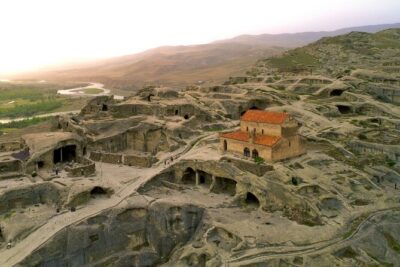
Mtskheta Jvari Bazaar, Chronicles of Georgia & Wine
Read our review →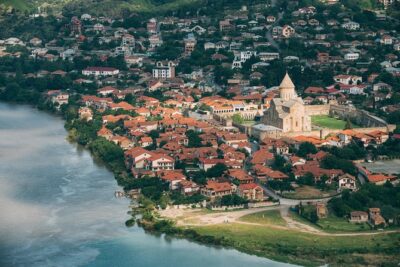
Mtskheta,Jvari,Bazaar,wine tasting,Chronicles of Georgia
Read our review →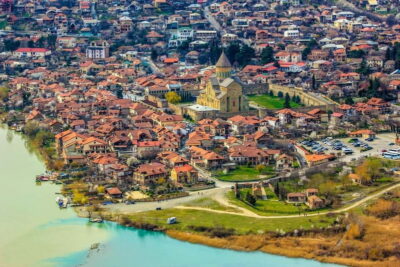
The Chronicles of Georgia, Jvari & Mtskheta Tour
Read our review →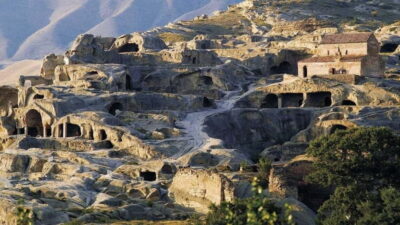
Browse the lists this tour appears in