
Reviewed · CHIATURA & TSKALTUBO SOVIET TRIPS
Brutalist Tbilisi: Urban exploration and untold stories
Brutalist buildings tell louder stories. This 4-hour, by-car urban exploration takes you into Tbilisi’s Soviet-era bones, where Brutalist Tbilisi architecture meets real daily life instead of postcard scenery. You’ll learn what these monumental structures meant for people, not just how they look.
I especially love the car-first comfort. You cover a lot of ground without turning the afternoon into a steep, never-ending walkathon, and the route is built around major sites fast. I also love the way your guide (for example, Jonah or Khatuna) connects concrete details to human stories, like how buildings shape routines and resilience.
One thing to consider: this tour includes areas tied to the city’s darker and more neglected chapters, and there are viewpoints that can feel exposed. If you’re afraid of heights or you strongly dislike abandoned spaces, you may want to skip this one.
In This Review
- Key highlights that make this tour different
- A car-first way to see raw Brutalism in Tbilisi
- How the 4-hour flow really works (and why time can shift)
- City of Students: concrete, routines, and student life
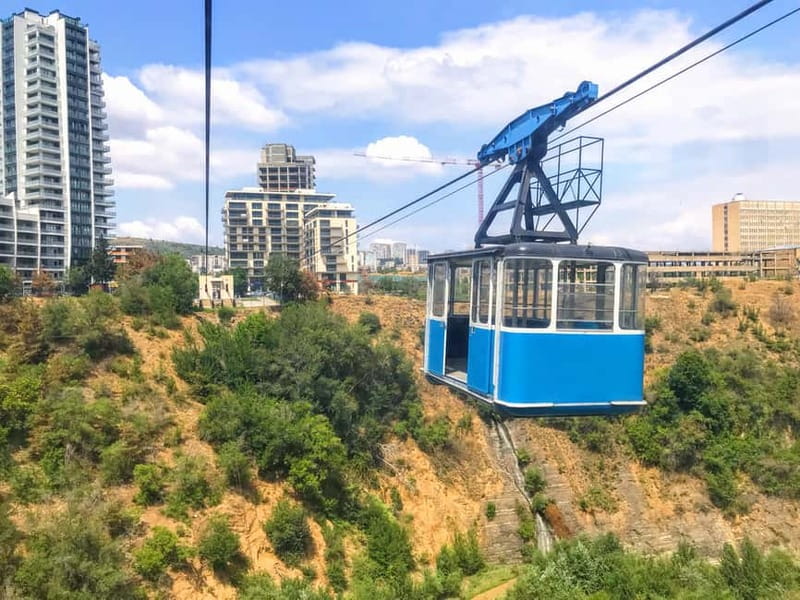
- Bagebi Cable Road: riding the old Soviet line
- Nutsubidze Skybridge: suspended paths over everyday life
- Bank of Georgia and a quick local bakery break
- More photo stops and modernist corners where the city keeps going
- Ministry of Highways of the Georgian SSR: Brutalist power you can read
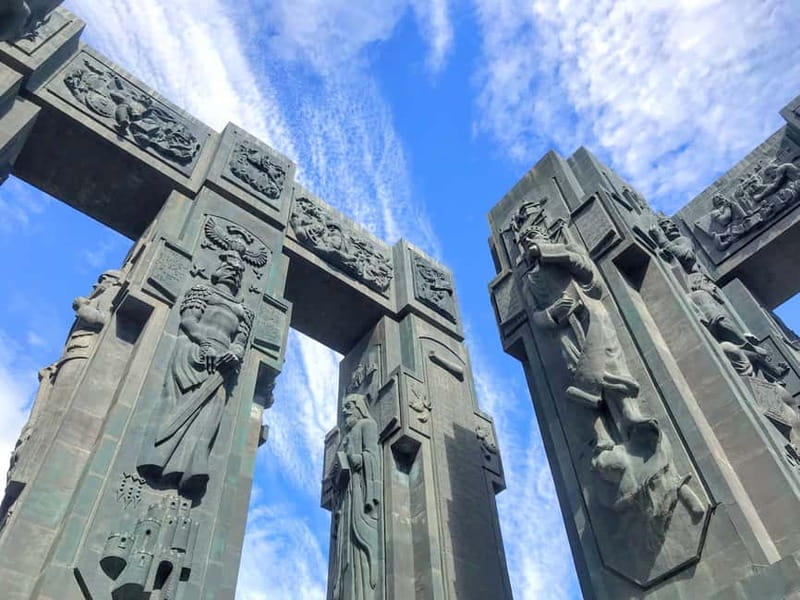
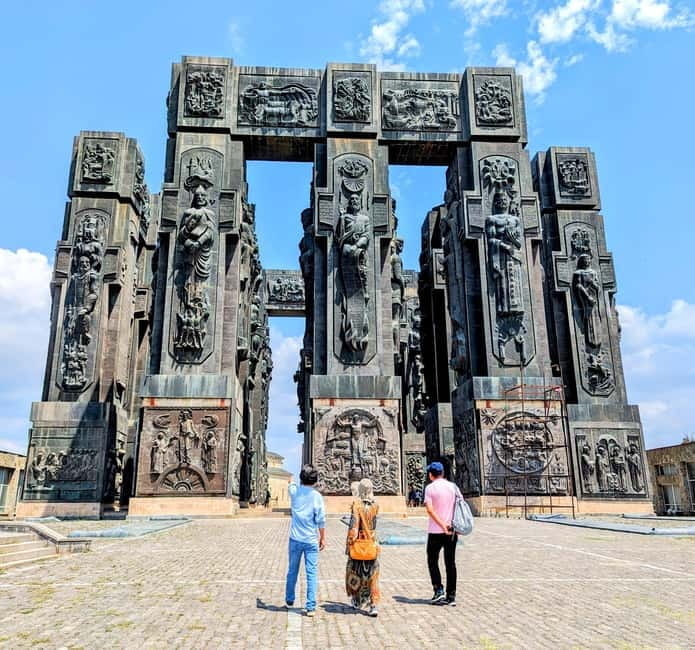
- Chronicle of Georgia: Georgian Stonehenge over the Tbilisi Sea
- Suicide Bridge and abandoned modernism: why the darker stops matter
- Price, comfort, and value at $75 per person
- Who should book this Brutalist Tbilisi tour
- Should you book this Brutalist Tbilisi tour?
- FAQ
- What is the duration of the Brutalist Tbilisi tour?
- How much does the tour cost?
- How do pickup and drop-off work?
- Is the tour walking-heavy?
- What languages is the guide available in?
- What is included in the price?
- Is lunch included?
- Are private groups available?
- Who should not book?
- What do I need to bring?
Key highlights that make this tour different
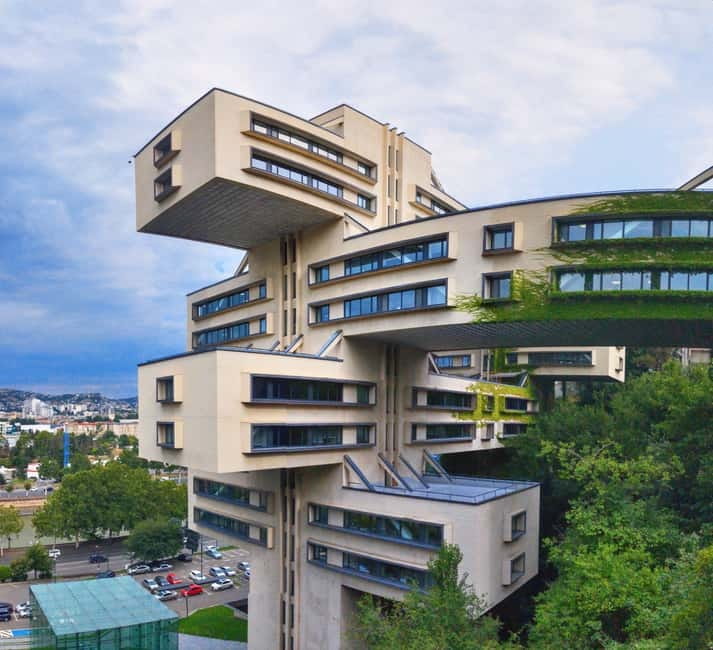
- Ministry of Highways of the Georgian SSR: iconic Brutalist monument, explained in plain terms
- Nutsubidze Skybridge: suspended, 1970s-style residential sky bridges with strong photo payoff
- Chronicle of Georgia (Georgian Stonehenge): monumental statues and a big aerial moment over the Tbilisi Sea
- Suicide Bridge: a deliberately somber stop tied to the city’s harder history
- Former Museum of Archaeology: modernist design that still hits, even in abandonment
- Bagebi Cable Road: a rare chance to experience Tbilisi’s Soviet cable-car past in motion
Other Chiatura and Tskaltubo Soviet-era trips:
- Tbilisi: The Urbex and Soviet Tour of Tbilisi★ 5.0 · 127 reviews
- 1 Day Private Armenia: UNESCO, Soviet & Curated Family Lunch★ 5.0 · 106 reviews
- Tbilisi old town & soviet heritage – Private driver-guided Tour★ 5.0 · 83 reviews
- Armenia: 1 Day Soviet gems, UNESCO + Family lunch (Small group)★ 5.0 · 68 reviews
A car-first way to see raw Brutalism in Tbilisi
If your idea of Tbilisi is curved balconies and cable cars with perfect views, this tour gives you the other half. You’ll ride through neighborhoods and monumental spaces where Soviet planning, modernism, and Brutalist shapes still dominate the skyline. The point is not to “admire from afar,” it’s to understand how the city was built and how people lived with it.
The biggest practical win is that it’s designed for comfort. You’re not stuck doing long walks between distant sites. Instead, you hop in the car, get context from your guide, stop for photos or a short visit, then move on. That matters in Tbilisi, where traffic and weather can easily stretch even a short day.
Expect a private-group feel. That means you can ask questions without waiting your turn, and your guide can adapt the flow when conditions change.
How the 4-hour flow really works (and why time can shift)
This is a half-day tour, but it’s not a rigid checklist. You’ll be moving through several stops, each with a mix of photo time, guided time, and short visits. The tour length can vary depending on traffic and weather, so I treat it like a flexible 4-hour window rather than a strict clockwork schedule.
The rhythm usually looks like this: a quick orientation from your guide, a stop where you can step out and see the architecture up close, then back to the car. In between, you’ll get moments that feel more personal than scenic, like walking a small perimeter, looking at details, or getting a better angle for photos than you’d manage alone.
One more practical note: you’ll end with two drop-off options around central Tbilisi, including Гигантский велосипед (the Giant Bicycle area). That’s helpful if you want to continue your evening without trekking back across town.
City of Students: concrete, routines, and student life
One of the early stops is the City of students, with a guided segment that runs long enough for you to actually understand the place. You start with a photo stop, then you move into a guided visit and tour for about 45 minutes.
What I like about this part is that it sets the tone. This isn’t just about famous buildings. It’s about how Soviet-era design aimed to shape everyday life, including the rhythm of young people studying, commuting, and living within a planned environment. You’ll likely notice how geometry and function drive the layout, and your guide will connect those shapes to the idea of centralized planning.
Drawback to plan for: it’s part “see it,” part “listen and look.” If you prefer only short exterior photo stops, you might wish some of this time were more freeform. Still, the extra guided time is what makes it meaningful.
Bagebi Cable Road: riding the old Soviet line
The Bagebi Cable Road stop includes time on foot for photos and a guided tour, plus a cable car ride that runs about 25 minutes. This is one of the more memorable elements because it’s not a museum story. It’s a moving piece of Tbilisi’s past.
Why it works: architecture teaches you one thing, but the way a city transports people teaches another. A Soviet cable system gives you a sense of how engineers tried to connect neighborhoods and manage terrain. And because it’s an actual ride, you get a different perspective on Tbilisi’s shape than you would from a static viewpoint.
If you’re sensitive to heights or enclosed spaces, use your judgment. You’re not strapped to a roller coaster, but cable cars do put you off the ground.
Other Tbilisi tours and day trips:

Nutsubidze Skybridge: suspended paths over everyday life
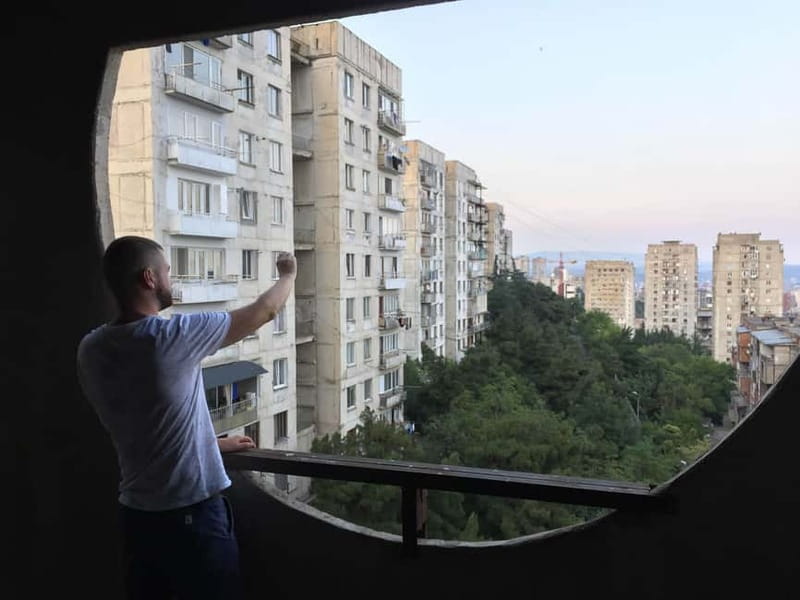
Nutsubidze Skybridge is a standout for many reasons, and the tour gives it enough time to matter. You get photo stop time, a guided visit and tour, plus scenic viewing along the way, for around 40 minutes total.
This is a 1970s residential complex with suspended sky bridges. That means you’re looking at how apartment life spills upward, literally. Instead of living only at street level, the design creates layers of movement and connection. Your guide will point out why that’s such a Soviet-style answer to dense living: build vertical pathways, make circulation predictable, and keep daily life flowing through planned routes.
Practical consideration: some viewpoints and walk sections can feel exposed. Even if you’re not “climbing mountains,” you may be looking down. If you’re afraid of heights, this is the stop that most directly tests that fear.
Bank of Georgia and a quick local bakery break
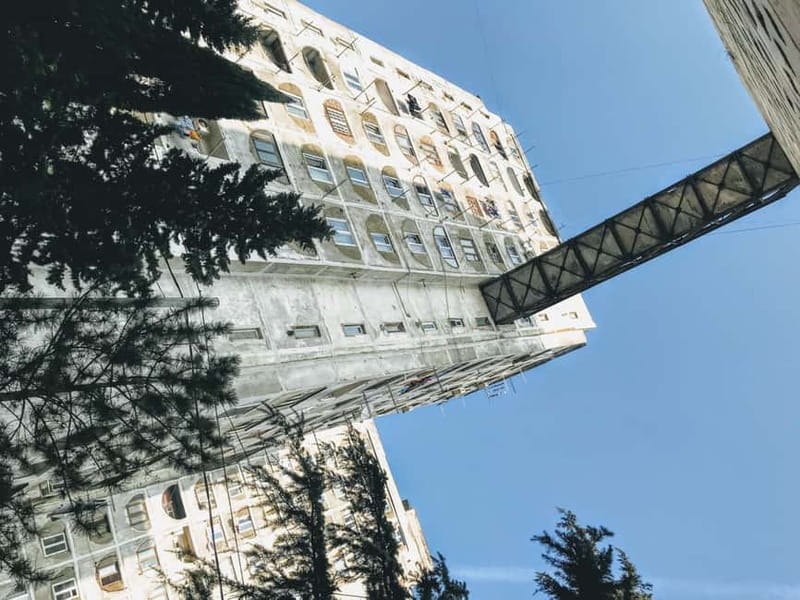
After the bigger architecture moments, the tour slows down into daily-life stops. The Bank of Georgia visit includes guided touring and some sightseeing for about 20 minutes. It’s a shorter segment, but it helps you see how monumental design thinking and civic function overlap in the city.
Then you get a local bakery stop. You’ll have a chance at street food and local snacks for about 15 minutes. Lunch is not included, so this is a smart timing tool rather than a full meal plan. If you have dietary needs, I’d prepare to choose from what’s available quickly.
My advice: treat the bakery stop like a palate break. One part of what makes this tour rewarding is that you stop seeing architecture as purely historical. Eating something local, even briefly, reminds you that Tbilisi’s present life is happening alongside its Soviet inheritance.
More photo stops and modernist corners where the city keeps going
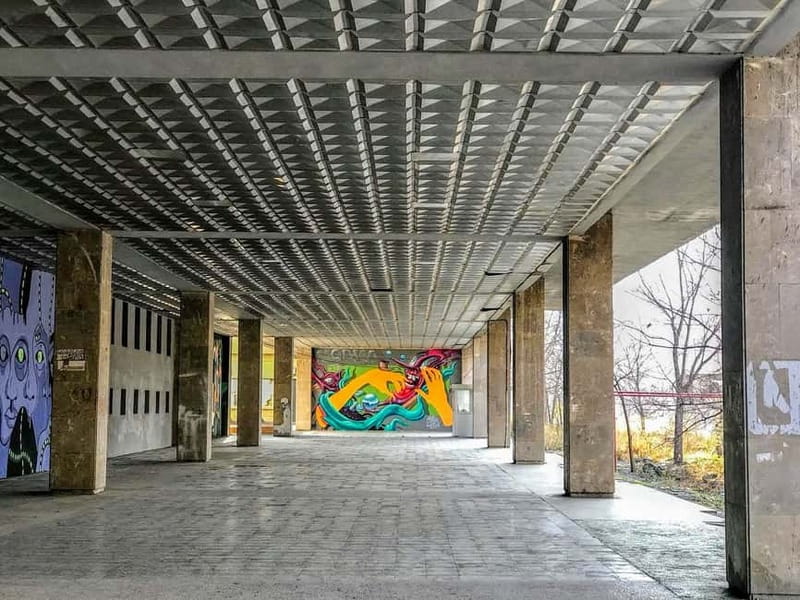
Between the named big hits, you’ll have additional photo stops and guided tours. Two of these segments are about 25 minutes and another is about 45 minutes. Since they’re not “one single attraction” you’d hunt down on your own, they work like narrative glue.
This is where guides earn their fee. They’ll point out details you’d miss: the way materials age, how buildings sit in relation to streets, and what those shapes meant for real use. You’ll also see that Brutalism and modernism are not relics. They’re still part of how people navigate and inhabit the city.
If you’re the type who wants long, uninterrupted wandering time, these segments can feel structured. But if your goal is to learn quickly and see a lot in four hours, this pacing is a smart trade.
Ministry of Highways of the Georgian SSR: Brutalist power you can read
A key highlight is the Ministry of Highways of the Georgian SSR, one of the most iconic Brutalist structures in Eastern Europe. This is the kind of building that looks like it was designed to be seen from far away, then verified up close.
In a good tour, you don’t just note the shapes. You learn how Soviet architecture tried to communicate authority, efficiency, and control. Your guide should help you “read” the building, not just look at it. You’ll hear how its form reflects institutional power and how people experienced it in daily life.
A practical note: buildings like this often sit in areas with traffic and surrounding structures. The car-first approach helps you reach it without losing time.
Chronicle of Georgia: Georgian Stonehenge over the Tbilisi Sea
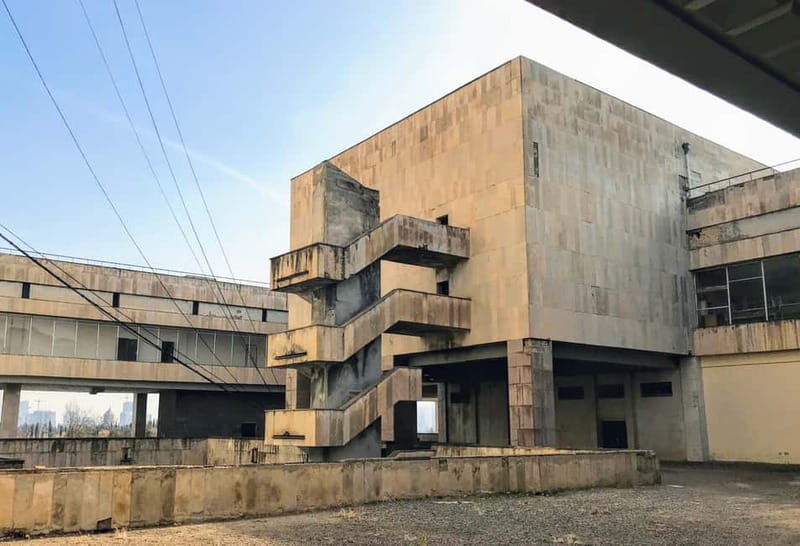
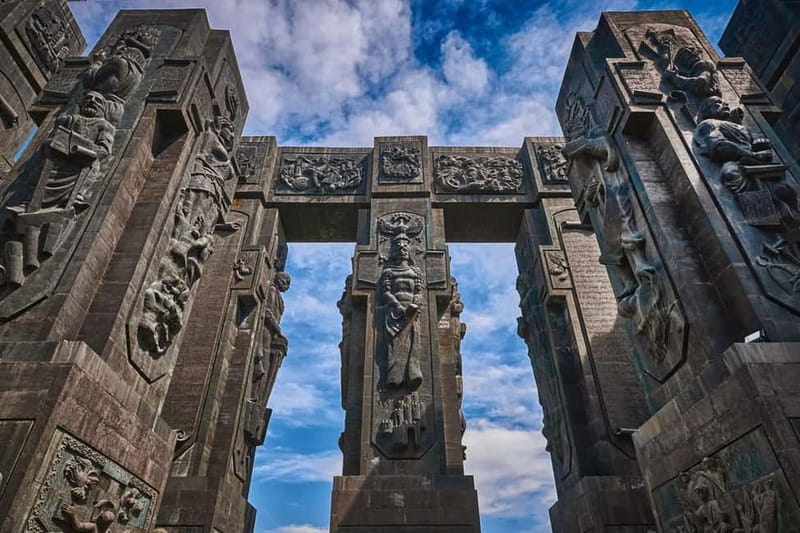
The Chronicle of Georgia stop is built for big feelings and big scale. You’ll get photo time, a guided tour, then free time for about 45 minutes, including an aerial view angle.
This is the Monumental statues overlooking the Tbilisi Sea, sometimes nicknamed Georgian Stonehenge. The name fits. It’s not a quiet memorial you drift past. It’s a presence, a skyline anchor, and a place where your brain naturally tries to connect past, identity, and landscape.
What I like here is the combination of guided context plus free time. Your guide gives you the meaning and symbolism, then you can step back and absorb it without a lecture pressure. Even if you’re not a hardcore architecture fan, this stop tends to land.
If you’re worried about heights, this stop is still a consideration. It’s not described as a climb, but you’ll likely be viewing from open areas.
Suicide Bridge and abandoned modernism: why the darker stops matter
Not every Soviet-era site is beautiful in a postcard sense. The tour includes Suicide Bridge, described as haunting and tied to the city’s darker history. It also includes the Former Museum of Archaeology, a modernist masterpiece that is now abandoned yet still powerful.
These parts can be uncomfortable, but they also make the tour honest. Soviet and post-Soviet cities are not just architectural trophies. They carry consequences: social change, neglect, and places that remain emotionally charged.
How to handle this respectfully: don’t rush. Look, listen, and let your guide explain the context without turning it into grim spectacle. If you’re sensitive to dark history, keep your expectations steady. This is part of understanding Tbilisi’s full story, not just the photogenic version.
Also, if you dislike abandoned buildings in general, know that at least one stop is explicitly that kind of site. You might still enjoy the architecture discussion, but it will be emotionally different.
Price, comfort, and value at $75 per person
At $75 per person for about 4 hours, this tour is priced like a focused private experience, not a mass sightseeing deal. Here’s what you get that makes it feel fair.
First, transportation is built in, with a car approach that reduces walking and stress. That’s not a small detail. It lets you see more, and it keeps the experience usable for people who want architecture depth without a full day of legwork.
Second, key basics are included: a local guide, entrance fees, and bottled water. Lunch is not included, so budget for that separately, but you’re not paying extra for every stop.
Third, the tour has a social layer. Part of your fee supports internally displaced people. I take that seriously because it means the experience is more than just one afternoon of photos.
Finally, there’s an award note and strong transport ratings, with many reviewers scoring the transport perfectly. In practical terms, that usually means the driving is smooth, the pickups work well, and you spend more time looking at the city instead of waiting.
Who should book this Brutalist Tbilisi tour
I’d book this if you want more than a quick highlights run. If you love architecture, Soviet history, and the idea of reading a city through its buildings, this tour matches your interests.
It’s also a good fit if you like guided storytelling and want to see places you wouldn’t casually find on your own. The stops are chosen for meaning, including student areas, major monuments, and even the darker, neglected corners.
That said, it is not for everyone:
- Children under 12 years are not recommended.
- People with mobility impairments are not suitable.
- If you’re afraid of heights, you should skip it, especially with sky-bridge and viewpoint elements.
Should you book this Brutalist Tbilisi tour?
Yes, if you’re curious about the Soviet layer of Tbilisi and you want a guided, by-car plan that hits major Brutalist and modernist landmarks in one half day. The value improves if you like architecture explanations connected to human stories, and if you want comfort without sacrificing variety.
Skip it if you only want pretty, easy sightseeing, or if you strongly dislike abandoned and darker-history stops. This tour shows Tbilisi as it really is: concrete dreams, daily routines, and the scars left behind.
FAQ
What is the duration of the Brutalist Tbilisi tour?
It runs for 4 hours. Timing can vary depending on traffic and weather.
How much does the tour cost?
The price is $75 per person.
How do pickup and drop-off work?
Pickup is included from your accommodation or another central location in Tbilisi, and there are two possible drop-off locations at the end.
Is the tour walking-heavy?
No. It’s designed for comfort by car, with visits and photo stops rather than long stretches on foot.
What languages is the guide available in?
The live tour guide speaks English and Russian.
What is included in the price?
A local guide, entrance fees, bottled water, and transport are included. Door-to-door service is available if you choose the private option.
Is lunch included?
No, lunch is not included. There is a local bakery stop for street food and snacks.
Are private groups available?
Yes, this activity is offered as a private group.
Who should not book?
The tour is not suitable for children under 12, people with mobility impairments, or people afraid of heights.
What do I need to bring?
Wear comfortable shoes. Pets, oversize luggage, strollers, and large bags are not allowed. Alcohol and drugs are also not allowed.
Newer trips around Tbilisi
- Tbilisi Private Dinner: Georgian BBQ & Fireplace
★ 5.0 · 1 review - Tbilisi: Khinkali Tasting Lunch with Local Drinks and Pickup
★ 5.0 · 1 review - Day trip in Kakheti-wine tour
★ 5.0 · 1 review - Tbilisi & Mtskheta bus tour hop on hop off
★ 5.0 · 1 review - Tbilisi: Christmas Market & Hidden Gems Guided Walking Tour
★ 5.0 · 1 review - Stalin’s Secrets: An Underground Journey Through History
★ 5.0 · 1 review
Chiatura & Tskaltubo Soviet Trips, compared.
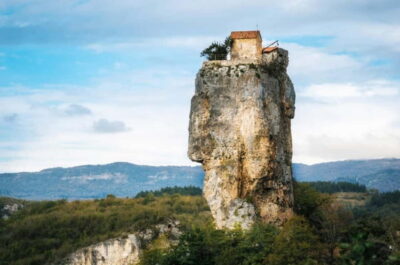

1 Day Private Armenia: UNESCO, Soviet & Curated Family Lunch
Read our review →
Abandoned sanatoriums of tskaltubo – group tour from Kutaisi
Read our review →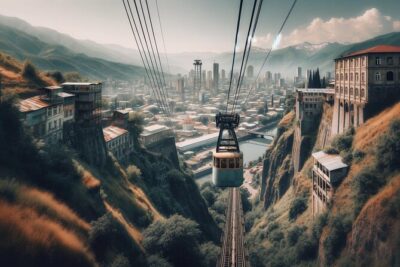
Chiatura Tour with Katskhi Pillar & Cable Car Experience
Read our review →
Tbilisi old town & soviet heritage – Private driver-guided Tour
Read our review →
Armenia: 1 Day Soviet gems, UNESCO + Family lunch (Small group)
Read our review →
Chiatura Cable Cars & Katskhi Pillar Guided Tour
Read our review →Browse the lists this tour appears in