
Reviewed · CHIATURA & TSKALTUBO SOVIET TRIPS
Abandoned sanatoriums of tskaltubo – group tour from Kutaisi
Tskaltubo feels like a time machine. This half-day group tour from Kutaisi threads thermal springs and abandoned sanatoriums into a Soviet-era health city that is now half-forgotten, half-still-used. You get guided context as you move, so the place makes sense instead of just looking eerie.
What I like most is the focus on Spring #6 and #8, two stops with very different personalities, from Soviet occupation stories to unusual architecture. I also like how the tour keeps things human, with guides like Giorgi, Toko, and Lasha described as locals or long-time insiders, bringing clear English and respectful context.
One possible drawback: the ruins are big, and 4 hours is tight. You’ll see a lot, but you won’t have hours to wander every building on your own, so plan to be selective with photo stops.
In This Review
- Key highlights to look for
- Tskaltubo Half-Day: How the 14:00 Kutaisi Start Works
- Spring #6 and the Soviet-Era Context Behind the Thermal Water
- Spring #8’s Unusual Architecture, and Why It’s a Photo Stop
- Sanatorium Gelati for Children: Playground Finds and Viewpoint Energy
- Medea and Druzhba: Reading a Former Health City One Building at a Time
- The Abandoned Tskaltubo Train Station: Where the Story Arrives
- Price and Logistics: Why $25 Feels Fair for This Route
- Practical Tips for Thermal Springs and Abandoned Ruins in One Afternoon
- Should You Book This Tskaltubo Sanatorium Tour from Kutaisi?
Key highlights to look for
- Thermal springs #6 and #8: guided stops with distinct architecture and story.
- Sanatorium Gelati for children: an old playground and a viewpoint inside the complex.
- A walking route through former health-camp giants: Gelati, then Medea, then Druzhba.
- The abandoned Tskaltubo train station: the arrival point for all those hopeful visitors.
- Transport rated highly: about 98% of people scoring it perfect, with safe, comfortable driving.
Other Chiatura and Tskaltubo Soviet-era trips:
- Kutaisi:Chiatura Tour with Katskhi Pillar & Cable Car★ 4.9 · 433 reviews
- Kutaisi:Chiatura Tour with Katskhi Pillar & Cable Car Experience★ 5.0 · 95 reviews
- Kutaisi: Chiatura Cable Cars & Katskhi Pillar Guided Tour★ 4.9 · 67 reviews
- Kutaisi: Tskaltubo Abandoned Soviet-Era Spas Tour★ 4.9 · 40 reviews
Tskaltubo Half-Day: How the 14:00 Kutaisi Start Works
The tour meets at the Budget Georgia office in Kutaisi and starts at 14:00, then heads straight to Tskaltubo for a very focused afternoon. You’re back at the same meeting point after about 4 hours, which is perfect if you want a change of pace without losing a whole day to transit and logistics.
This timing also helps your photos. The afternoon light tends to flatter weathered concrete and broken walls better than harsh midday sun. And because you are with a guide, you spend less time figuring out where to go and more time understanding what you are looking at.
The group format matters here. You will cover multiple complexes in one go, so the pacing is structured, not slow. If you want to take your time in a single building for an hour, this may feel rushed. But if you like moving through places with context, it’s an efficient way to see why Tskaltubo mattered.
Spring #6 and the Soviet-Era Context Behind the Thermal Water
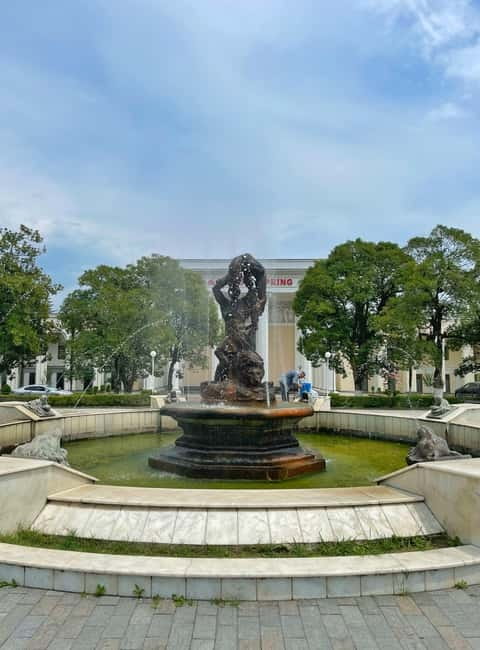
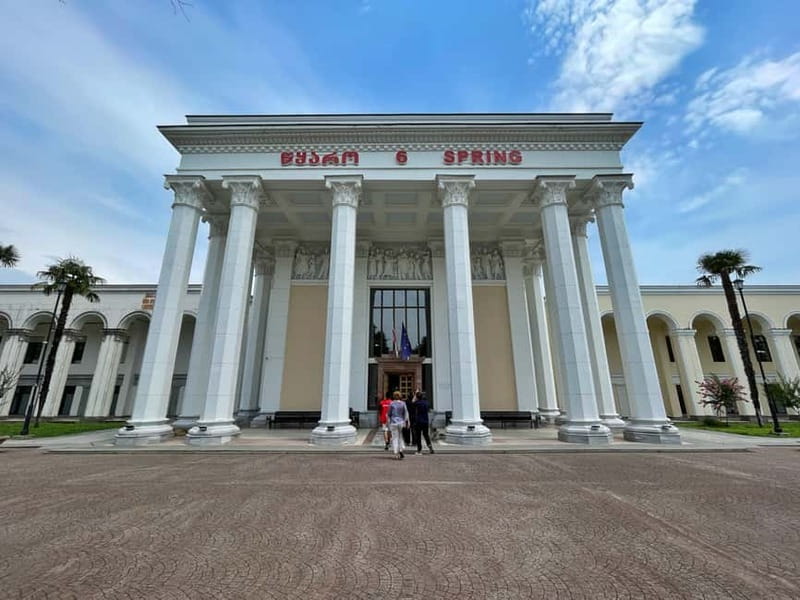
Your first major stop is Spring #6, where the guide sets the historical frame as you arrive. Thermal springs were not just a local quirk, they were part of how the Soviet-era health system operated, with Tskaltubo built around the idea of rest, treatment, and recovery.
The nice part is that you are not just standing next to a fountain and moving on. You get the background before you walk away, so the architecture around the spring starts to feel intentional, not random. You also learn how occupation and politics shaped what these towns became.
Practical angle: even if you are not planning to taste anything, the spring stop is still worth it. It anchors the tour, and it gives you the mental map for later stops where the buildings feel more dramatic and more abandoned.
Spring #8’s Unusual Architecture, and Why It’s a Photo Stop
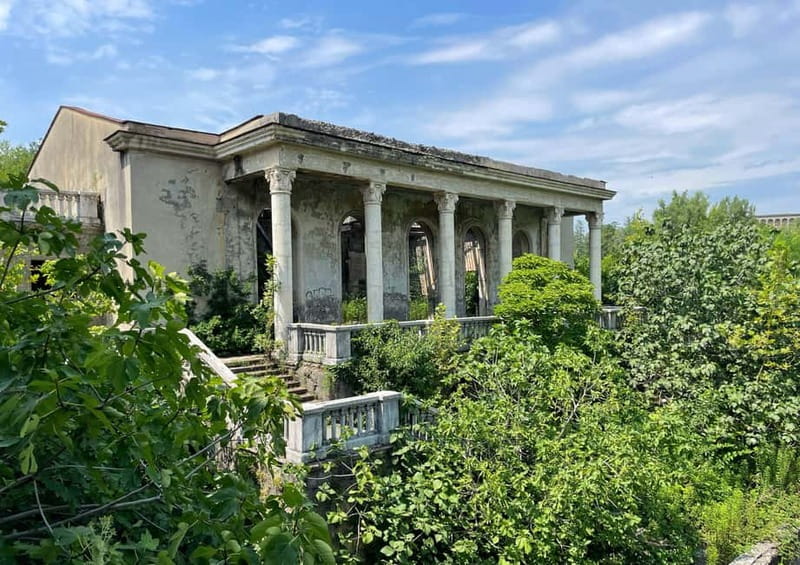
After Spring #6, you walk to Spring #8, and this is the stop people remember for its visual oddness. The architecture here is described as the most unusual among the Tskaltubo springs, which makes it a great contrast to the more story-driven start at #6.
What I like about this second spring is the way it shifts the mood. One stop gives you history through context, and the other gives you history through design. Even if you are not a Soviet architecture nerd, you can still read the choices in the building shapes and the layout.
Bring your camera and also bring your patience. This is an outdoor stop and the ground can be uneven around old infrastructure, so take your time with footing and angles. If you want the best shots, arrive ready to pause when the light hits those strange lines.
Sanatorium Gelati for Children: Playground Finds and Viewpoint Energy
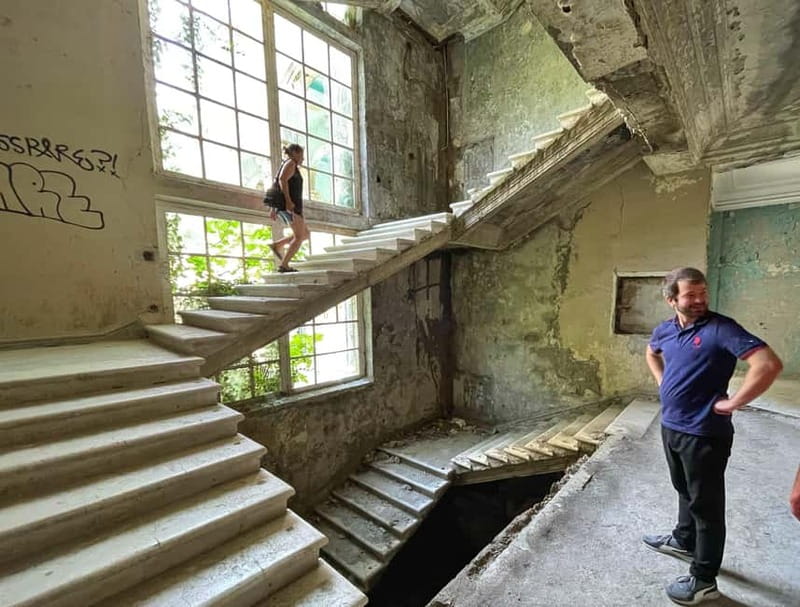
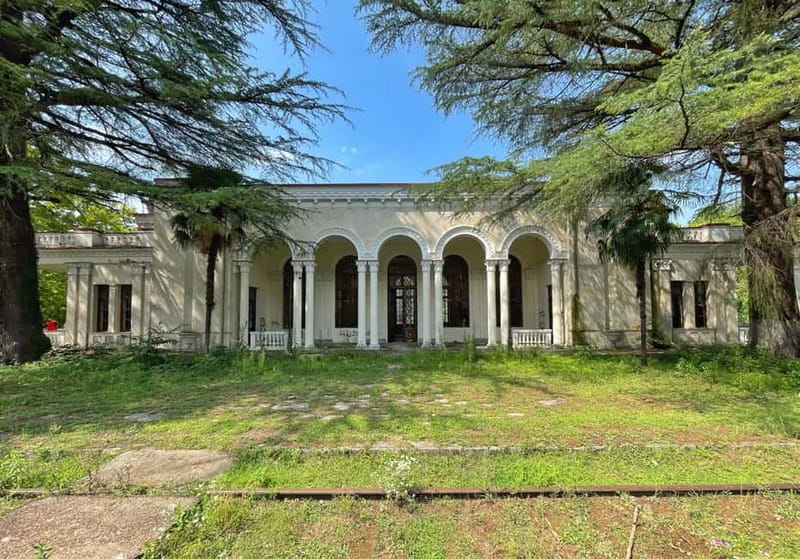
Next up is Sanatorium Gelati, and the theme here is childhood care in a place built for health. Gelati was specially built for children, and that detail changes how you look at everything you see, from the spaces that once felt more cheerful to the ways those areas now feel hushed.
One of the most tangible perks of Gelati is the presence of an old playground and a viewpoint over the inner construction. That combination does two things for you. First, it turns the visit from purely eerie into human-scale. Second, the viewpoint gives you a chance to understand the layout of the complex from above before you move deeper into the ruins.
A small but important consideration: some structures may still involve people using parts of the buildings or areas around them. Keep it respectful, stay aware of where you are standing, and do not treat every corner like it’s a film set.
Other Kutaisi tours and day trips:
Medea and Druzhba: Reading a Former Health City One Building at a Time
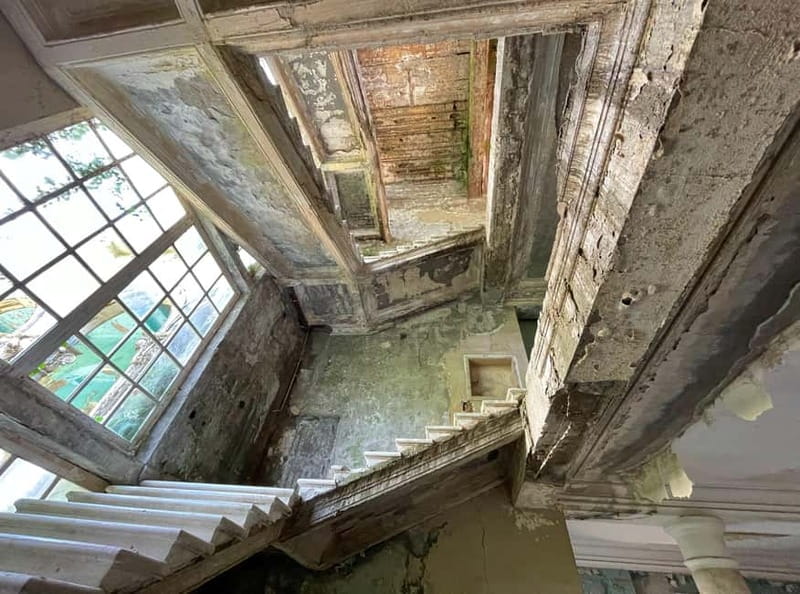
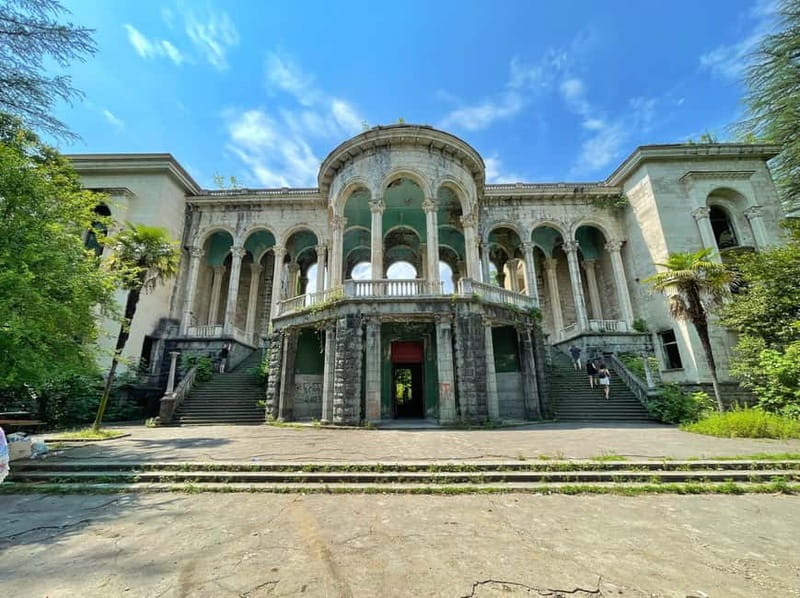
After Gelati, the tour keeps moving through sanatorium Medea and then Druzhba. These stops are not just checkboxes. They help you see patterns in how Tskaltubo was designed as a whole health-city, with multiple large complexes built for different needs and groups.
The value here is perspective. When you visit one abandoned building, it can feel like a lonely ruin. When you see several related complexes in a row, you start understanding the system behind it. The Soviet-era approach to wellness created a whole network, not a single building with a sad backstory.
You’ll also appreciate the pacing. The tour is planned so you are never far from the next point of interest, but you still have time to take pictures at the different stops and ask questions along the way. That matters because abandoned towns can be confusing if you only see the outside. With guidance, you learn what to notice as you move.
The Abandoned Tskaltubo Train Station: Where the Story Arrives
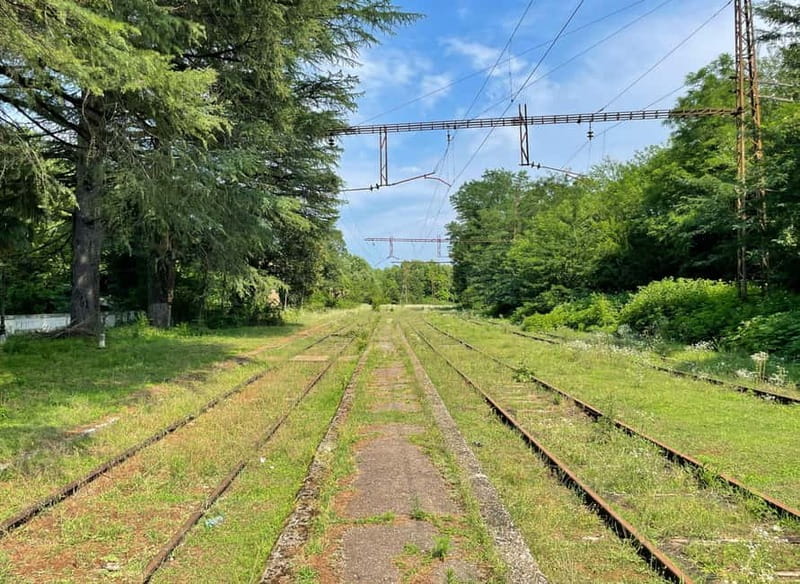
The last stop is the train station of Tskaltubo, and it lands with a special kind of mood. If the sanatoriums show what the city offered, the station shows how people got there. That link makes the whole afternoon click, because you see the full pipeline, arrival, care, and then departure.
An abandoned station can feel dramatic, but in this context it feels more reflective than scary. It reminds you that these places were built around real routines and real hopeful planning, not just grand architecture.
This is also a practical finishing point. By the time you reach the station, your feet are tired and your mind is full. The station gives you a visual ending, then the group returns to Kutaisi, so you do not end the tour feeling stuck in decision fatigue.
Price and Logistics: Why $25 Feels Fair for This Route

The price is $25 per person for a 4-hour group tour that includes transportation from Kutaisi to Tskaltubo and a live English guide through the sanatoriums and old buildings. For many visitors, the biggest hassle in places like this is not the ticket price, it’s the time cost of arranging transport and figuring out a route.
Here, you are buying convenience plus structure. You get the order of stops, guided explanations, and the movement from one complex to the next. And transport gets strong marks, with about 98% of reviewers giving it a perfect score, which usually means you can relax and enjoy the afternoon.
The downside of a set group tour is also the same reason it’s good value. The 4-hour window is designed to cover key sites, not to support deep solo exploration. If you know you want to spend hours inside one building, you might later return on your own. But as a first look, this price-to-coverage ratio works well.
Practical Tips for Thermal Springs and Abandoned Ruins in One Afternoon
You are doing two kinds of sightseeing back-to-back: thermal-spring architecture and abandoned building complexes. That means your practical choices should cover both, even if this is not a long hike.
- Wear shoes with solid grip. Old surfaces and outdoor walks can be uneven around springs and complexes.
- Take breaks for photos, but also watch your footing. The best angles often require a pause and a careful stance.
- Bring a light layer. Outdoor spaces plus old structures can feel cooler or drafty late in the day.
- Be ready for questions. Guides like Giorgi, Toko, and Lasha are repeatedly described as answering many questions in clear English, which makes the tour more than just a route.
If you care about history, the tour delivers it in a way that stays tied to what you’re seeing. You learn why Soviet occupation stories connect to the thermal-spring setup and why the sanatorium layout matters. If you care about visuals, you’ll have multiple architectural moments, especially at Spring #8 and the viewpoint at Gelati.
Should You Book This Tskaltubo Sanatorium Tour from Kutaisi?
Book it if you want a smart, structured way to experience Tskaltubo without spending your trip time on logistics. At $25 for transport plus a live English guide, it’s a strong value for an afternoon, and the stop sequence makes the city feel like one story instead of random ruins.
Skip it or consider a longer independent visit if you hate time limits. The tour is built to cover Gelati, Medea, Druzhba, and the station in 4 hours, so you will not linger forever in any one building.
If you want something different from the usual Georgia routine, this is exactly that. Thermal springs, Soviet-era remnants, and a train station ending, all in one half-day that actually feels organized.
Newer trips around Kutaisi
- Okatse Falls, Martvili Canyon and Prometheus Cave
★ 5.0 · 1 review - Private tour from KUTAISI Colourful Tbilisi, Jvari and Mtskheta
★ 5.0 · 1 review - Kutaisi uncorked: Wine Tasting at a local Family Home
★ 5.0 · 1 review - Private tour: Prometheus, Sataplia Caves Bagrati, Gelati
★ 5.0 · 1 review - Kutaisi Airport – Mestia Shared Transfer
★ 5.0 · 1 review - Tbilisi: Subaru Crosstrek 2014-2016, Rent, Self drive
★ 4.0 · 1 review
Chiatura & Tskaltubo Soviet Trips, compared.

1 Day Private Armenia: UNESCO, Soviet & Curated Family Lunch
Read our review →
Chiatura Tour with Katskhi Pillar & Cable Car Experience
Read our review →
Tbilisi old town & soviet heritage – Private driver-guided Tour
Read our review →
Brutalist Tbilisi: Urban exploration and untold stories
Read our review →
Armenia: 1 Day Soviet gems, UNESCO + Family lunch (Small group)
Read our review →
Chiatura Cable Cars & Katskhi Pillar Guided Tour
Read our review →Browse the lists this tour appears in