
Reviewed · MTSKHETA ANCIENT CAPITAL TOURS
Four Historical Places: Mtskheta-Gori-Uplistsikhe-Jvari Monastery- Private Tour
One hilltop viewpoint can tell a whole story. This private circuit ties together Jvari Monastery and Georgia’s early Christianity, plus the rock-cut Uplistsikhe caves and historic Mtskheta in one day. I especially like how the route mixes big UNESCO meaning with hands-on, walkable places, and how your guide keeps the day moving without rushing the views. The one drawback to plan for: some optional stops and add-ons can cost extra, and you may need cash on the spot.
I also like that you get private pickup from Tbilisi and a comfortable, petrol-powered car, which is a big deal when you are spending 7 to 8 hours together. The timing gives you a clear flow from high views down to cave streets and back into the historic core. If you hate any kind of museum stop, you can skip the Stalin Museum, since it is optional and depends on your interests.
In This Review
- Key highlights you should care about
- Why this Tbilisi circuit makes sense for first-time visitors
- Jvari Monastery: the hilltop viewpoint and the 6th-century church mood
- Mtskheta and Svetitskhoveli: where Georgia’s Christianity story has gravity
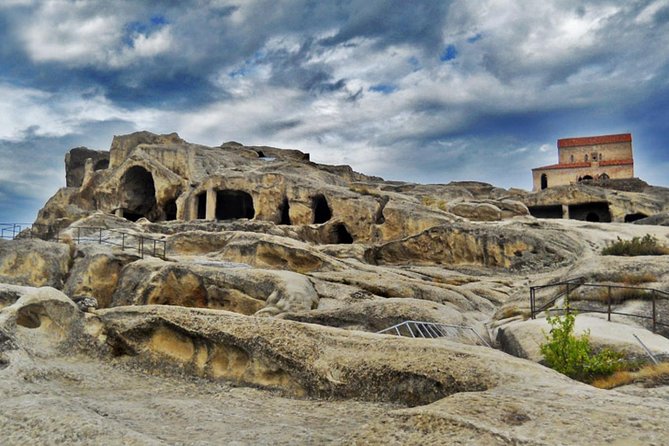
- Uplistsikhe cave town: how to think about walking through centuries
- Gori’s Stalin Museum: optional, structured, and costs to plan for
- Price and logistics: what $113 covers, and where extra money shows up
- Comfort, pacing, and who this tour fits best
- Should you book this 4 historical places private tour from Tbilisi?
- FAQ
- How long is the Four Historical Places private tour?
- Where does the tour start and do you offer pickup in Tbilisi?
- What is the price per person for this private tour?
- Is this tour private or shared with other travelers?
- What is included in the tour price?
- Are tickets included for Uplistsikhe and the Jvari stop?
- Is the Stalin Museum included?
- Do I need cash during the tour?
- Can I request vegetarian food options?
- What happens if I cancel?
Key highlights you should care about
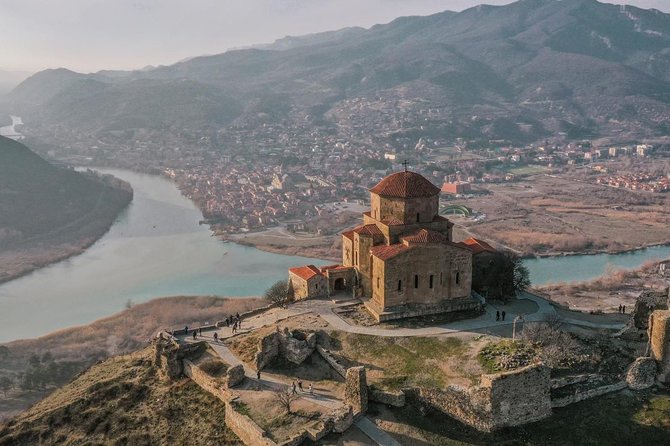
- UNESCO hilltop at Jvari above the confluence of the Mtkvari and Aragvi rivers
- Old capital context in Mtskheta, where Christianity became Georgia’s official religion in 337
- Uplistsikhe cave town tickets included, so you can focus on the walking, not the paperwork
- Optional Gori Stalin Museum, including the bulletproof train and Stalin’s birth setting
- Tbilisi hotel pickup and drop-off, handled by a private driver-guide setup
- Fresh Georgian water included, a small thing that matters on a full day
Other Gori and Uplistsikhe cave-town trips:
- Tbilisi: Mtskheta, Jvari, Gori and Uplistsikhe Day Tour★ 4.9 · 2,396 reviews
- Day Trip to Mtskheta Gori and Uplistsikhe★ 5.0 · 1,801 reviews
- From Tbilisi : Mtskheta, Jvari, Gori & Uplistsikhe Day Trip★ 4.8 · 432 reviews
- From Tbilisi: Mtskheta, Jvari, Gori, Uplistsikhe Guided Tour★ 4.7 · 354 reviews
Why this Tbilisi circuit makes sense for first-time visitors
If you only have one day outside Tbilisi, this itinerary is a smart match. You get the story of Georgia’s Christian turning point (Mtskheta and Jvari) and then switch gears to a very different kind of history at Uplistsikhe, an abandoned rock-hewn town with life stretching from around 1000 BC into the 13th century.
The private format is also the real value. Instead of lining up with strangers at each stop, you can keep a steady pace that fits your group, and your guide can explain what you are seeing while you are actually standing there. That matters with places like Jvari and Svetitskhoveli, where the meaning is tied to location, not just architecture.
Your day runs about 7 to 8 hours, so you should treat it like a proper outing. That means shoes you can walk in, water by default (you get one bottle), and a lunch plan you control, since lunch is not included.
Jvari Monastery: the hilltop viewpoint and the 6th-century church mood
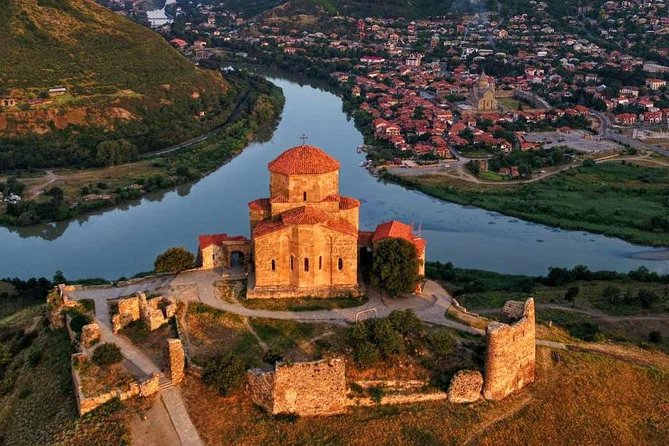
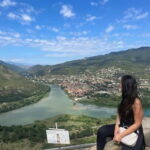
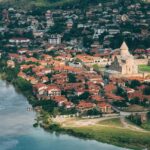
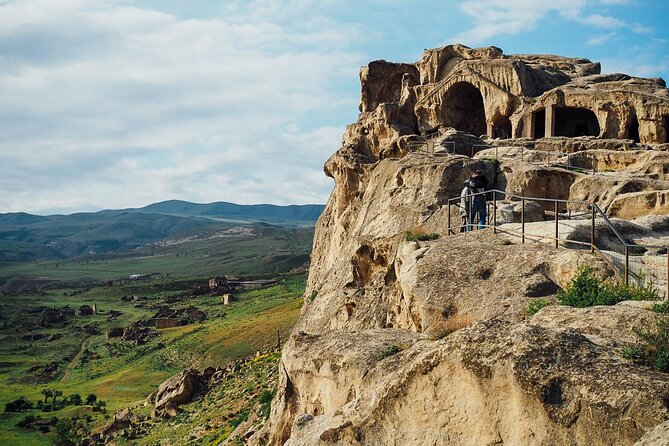
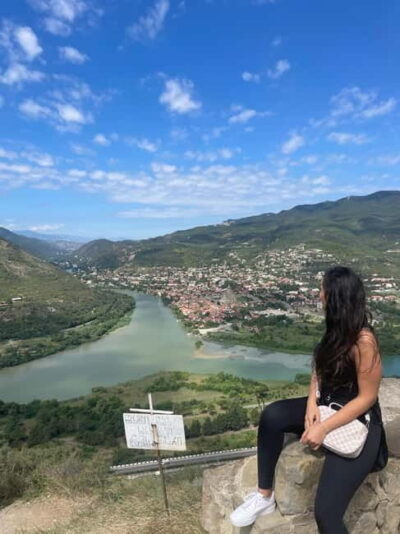
The tour starts with Jvari Monastery, a 6th-century Georgian Orthodox site that is listed as a UNESCO World Heritage place. You are not just visiting a church here. You are going to a rocky mountain top where you can look out over the town of Mtskheta and the meeting point of two rivers, the Mtkvari and the Aragvi.
This is the kind of place where your brain starts connecting dots fast. You can see why this location works: high ground, visibility, and a dramatic sense of “this matters.” Your guide will help you read the view while you are up there, so you do not just snap photos and shuffle along. The stop includes time to take in the panorama, and the entry note for this portion is admission ticket free.
Practical things I’d watch:
- Timing and light: if you can, aim to be at the viewpoint earlier rather than later, since the rivers and town look better when the sky is clear.
- Walking surface: you may be on uneven stone and rock edges near viewpoints. Good grip shoes help.
- Photos and patience: you will want to pause. This stop is one of the best “slow down” moments of the day.
One more nice touch is how the day is structured around views. That same Jvari perspective is echoed later as well when the route circles back through Mtskheta, which gives you a chance to absorb the place from slightly different angles and calmer pacing.
Mtskheta and Svetitskhoveli: where Georgia’s Christianity story has gravity
Mtskheta is described as the old capital of Kartli, stretching from the 3rd century BC to the 5th century AD. It is also tied to a major milestone: in 337, Christianity was proclaimed as the official religion of Georgia. That is big context, and it changes how you experience what you are seeing.
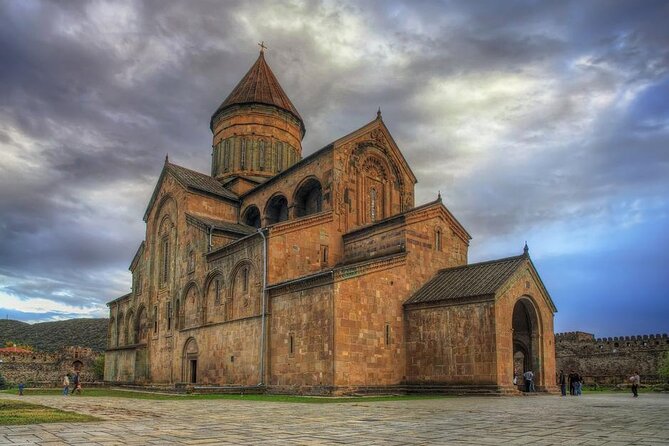
The tour includes time in the Mtskheta area, with Svetitskhoveli Cathedral as the centerpiece. This cathedral is one of the main Christian churches in Georgia, and it is tied to a famous burial tradition: the belief that Jesus Christ’s mantle is buried inside. Even if you are not a deep theology person, that kind of detail gives the building weight. It is not just “a pretty church.” It is a place with strong meaning and long memory.
How to get the most out of this stop:
- Let the guide point out what matters. Cathedral exteriors and interiors can blur together if you do not know what you are looking for. Ask your guide to explain the key elements you should notice.
- Respect the pace. Sacred spaces often have moments where the flow is slower, and it is better to work with that rhythm than to rush.
- Plan your photo strategy. You might want wide shots outside, then a few inside if allowed, then one final photo from a viewpoint if the schedule allows.
A balanced note: the cathedral stop can feel more “quiet and interpretive” than Uplistsikhe, which is more physical and hands-on. If you are the type who loves climbing around ruins, you might want to keep your energy for the cave city portion later.
Uplistsikhe cave town: how to think about walking through centuries
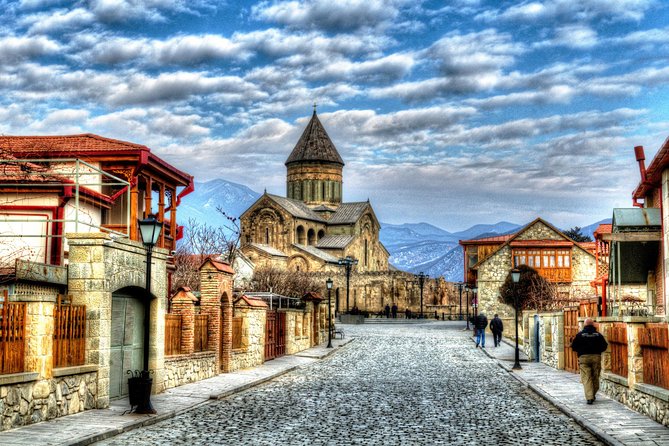
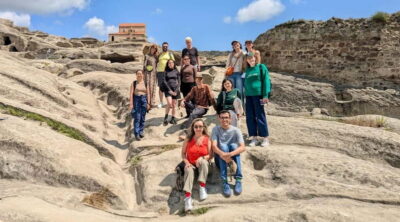
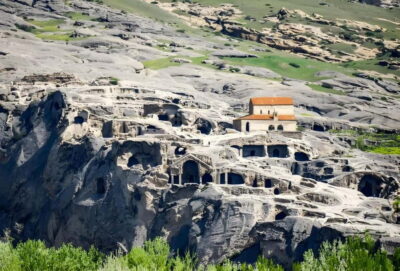
Then the tour shifts to Uplistsikhe, a rock-hewn, abandoned town sometimes called the Lord’s Fortress. The site begins in the Late Bronze Age, around 1000 BC, and it stays populated until around the 13th century AD. That is a huge span, and it is the reason Uplistsikhe feels so different from a normal set of ruins.
Tickets for the Uplistsikhe caves are included in the tour price, which is a practical win. You do not need to worry about figuring out ticket counters, cash handling, or timing. You can focus on the walk and the layout your guide explains.
What makes Uplistsikhe worth your attention is the physical feel of the place. You are looking at spaces that were carved and lived in, not just structures that were built and then left behind. The “cave town” label is accurate, but it still helps to think of it as a whole neighborhood made of rock.
To enjoy it more, I recommend:
- Wear shoes for uneven ground. Cave towns often mean slippery patches, steps, and rock textures.
- Go at a steady pace. If you sprint through everything, you lose the context of how different areas relate to each other.
- Use the guide for interpretation. Your ticket gets you in, but the guide helps you understand what you are seeing.
Another useful point: the tour includes about 2 hours here. That is enough time to wander without turning it into an endurance event, as long as you take breaks to look back and orient yourself.
Other Mtskheta and Jvari trips:
Gori’s Stalin Museum: optional, structured, and costs to plan for
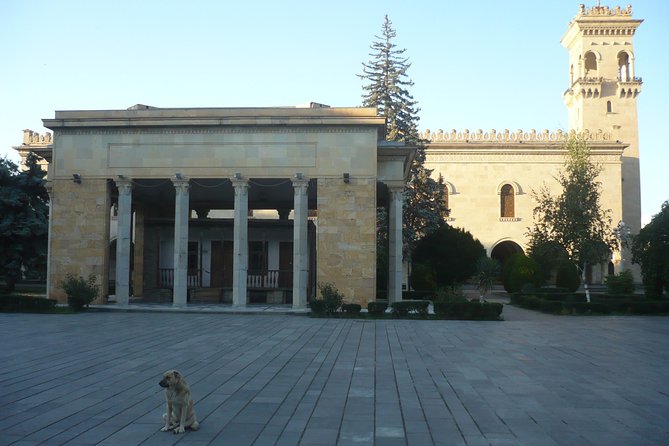
The stop in Gori is Joseph Stalin’s Museum, but it is explicitly optional. That is good, because not everyone wants a full Soviet history detour between Georgian medieval sites.
If you do choose it, you should know what is included in the museum theme. The museum focuses on Stalin’s life and setting, including his garden/home where he was born, as well as the idea of his bulletproof train. This is also where the tour description flags extra costs: the museum admission and train tickets are not included in your tour price, with a listed ticket fee of 15 Gel per person (about 6 USD).
So here is your practical decision rule:
- If you have strong interest in Soviet history, this is a short, direct way to connect a modern political figure to a Georgian birthplace.
- If you are here for churches, UNESCO sites, and ancient Georgia, you can skip it and keep your day focused.
One more thing your wallet will thank you for: the tour notes say that for additional options, payment may require cash. If the museum add-ons or related tickets are on your plan, bring some cash so you are not scrambling.
Price and logistics: what $113 covers, and where extra money shows up
At $113 per person, this tour is priced like a value-focused private day trip, not a budget group bus experience. You are paying for private transportation, a guide, planning, and car service costs, plus included entry for Uplistsikhe.
Your included items list is fairly solid:
- hotel pickup and drop-off in Tbilisi
- transport in a private air-conditioned vehicle
- petrol and car service fees
- guiding and planning
- Uplistsikhe tickets
- a bottle of fresh Georgian water
The main things not included are:
- lunch
- personal purchases (souvenirs, wine, and similar)
- Stalin museum and train ticket fees, listed at 15 Gel per person
There is also a small operational detail that helps: the tour uses clean, safe, comfortable cars and specifically notes they run on petrol, not installed natural gas. That is a comfort factor for many people, even if it is not your top priority.
If you are budgeting, plan lunch on your own or pre-arrange with your guide if that is possible during your booking. Also, bring a bit of extra cash if you think you will buy any additional options at stops.
Comfort, pacing, and who this tour fits best
This is built for people who want structure without losing flexibility. It is a private tour, meaning only your group participates. That matters for families, couples, and anyone who prefers a quieter day.
It also works for a wide range of ages because the tour says most travelers can participate. The route includes walking in and around churches, viewpoints, and cave-city areas, so you should still be realistic about mobility. If you have limited walking capacity, you might want to ask how much walking is expected at each stop when you book, but do not expect this to be fully stroller-free or wheel-friendly because of the nature of hilltop and cave surfaces.
For families: the private van setup is ideal when kids get restless. A clean, spacious vehicle helps. One review note mentions a mini van that was clean, comfortable, and roomy for a family with two children. That kind of setup is exactly what makes a long day tolerable.
For couples and friends: this is a good “history meets scenery” day. The viewpoints at Jvari and the cathedral in Mtskheta give you emotional context, while Uplistsikhe gives you physical exploration.
A slightly humorous reality check: you are going to want snacks. Lunch is not included, so eat before you start or bring something simple for later, especially if you tend to get cranky when meals slip.
Should you book this 4 historical places private tour from Tbilisi?
I think you should book it if you want one well-paced day that covers Georgia’s big cultural beats in a logical loop: Mtskheta for the early Christian story, Jvari for the hilltop viewpoint, Uplistsikhe for the rock-cut “live in the rock” feeling, and Gori as an optional modern history add-on.
Skip booking if you only want church sightseeing and dislike cave ruins, or if you strongly prefer museums to be your main focus. Also, if you hate any chance of extra onsite costs, plan around the listed 15 Gel fee for the Stalin museum and train tickets, and bring cash in case additional options require it.
My practical checklist before you go:
- bring comfortable shoes for cave and viewpoint walking
- plan lunch separately
- carry some cash for optional add-ons
- keep an open mind for both spiritual heritage and carved-stone archaeology
If that sounds like your kind of day, this is a strong value way to see Mtskheta, Jvari, and Uplistsikhe without turning your itinerary into a logistics puzzle.
FAQ
How long is the Four Historical Places private tour?
It runs about 7 to 8 hours.
Where does the tour start and do you offer pickup in Tbilisi?
Yes, hotel pickup and drop-off are included in Tbilisi.
What is the price per person for this private tour?
The price is $113.00 per person.
Is this tour private or shared with other travelers?
This is a private tour/activity, so only your group participates.
What is included in the tour price?
Transportation, guiding, planning, car service and petrol costs, Uplistsikhe tickets, and a bottle of fresh Georgian water are included.
Are tickets included for Uplistsikhe and the Jvari stop?
Uplistsikhe cave town tickets are included. The notes specify that the Jvari church/monastery admission ticket is free.
Is the Stalin Museum included?
The Stalin Museum is optional. Its admission ticket is not included, and the notes list a ticket fee of 15 Gel per person (approximately 6 USD), including train ticket-related costs.
Do I need cash during the tour?
The tour notes say that for payment of additional options, you have to have cash.
Can I request vegetarian food options?
A vegetarian option is available, and you should advise this at the time of booking.
What happens if I cancel?
The experience is non-refundable and cannot be changed for any reason.
Other History Tours in Tbilisi
- Tbilisi: Guided Walking Tour of Historic City
★ 4.9 · 156 reviews - Mtskheta, Jvari, gori, uflistsikhe, history and panorama (group tours)
★ 4.5 · 107 reviews - Tbilisi old town & soviet heritage – Private driver-guided Tour
★ 5.0 · 83 reviews - Private Wine tasting in Historic Karalashvili Wine Cellar
★ 5.0 · 60 reviews
Newer trips around Tbilisi
- Tbilisi Private Dinner: Georgian BBQ & Fireplace
★ 5.0 · 1 review - Tbilisi: Khinkali Tasting Lunch with Local Drinks and Pickup
★ 5.0 · 1 review - Day trip in Kakheti-wine tour
★ 5.0 · 1 review - Tbilisi & Mtskheta bus tour hop on hop off
★ 5.0 · 1 review - Tbilisi: Christmas Market & Hidden Gems Guided Walking Tour
★ 5.0 · 1 review - Tbilisi – Gudauri Private Transfer
★ 5.0 · 1 review
Mtskheta Ancient Capital Tours, compared.
Mtskheta, Jvari, Gori and Uplistsikhe Day Tour
Read our review →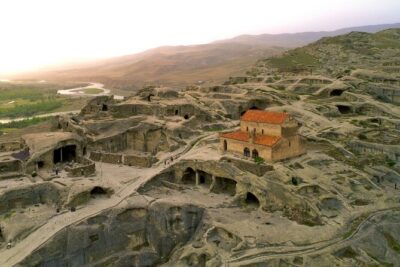
Mtskheta Jvari Bazaar, Chronicles of Georgia & Wine
Read our review →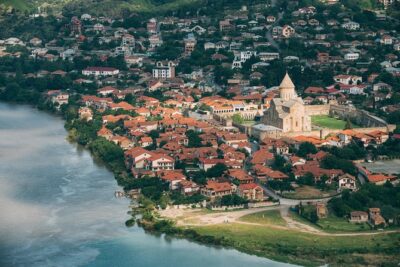
Mtskheta,Jvari,Bazaar,wine tasting,Chronicles of Georgia
Read our review →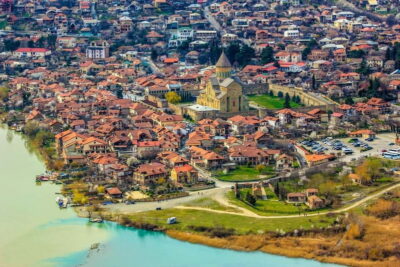
The Chronicles of Georgia, Jvari & Mtskheta Tour
Read our review →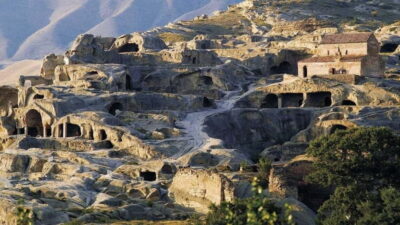
Browse the lists this tour appears in