
Reviewed · GELATI & BAGRATI UNESCO MONASTERIES
Gelati Monastery, Motsameta Monastery & Bagrati Cathedral
Small stones, big stories. This 3-hour loop strings together three major Georgian sites and explains what you’re seeing as you go. You get UNESCO-level architecture at Gelati, a mountain monastery stop at Motsameta, and the landmark silhouette of Bagrati Cathedral.
I especially like the way this tour keeps things practical: comfortable minivan for the hops, guided time for each place, and just enough walking to make the sites feel real. I also like that the guide works in English, Georgian, and Russian, so you can actually follow the details, not just stare at walls and guess.
One thing to consider: Gelati Monastery is under renovation, so you may see limited areas depending on current works. That said, the route is still a very efficient way to understand Kutaisi region heritage in a short window.
In This Review
- Key points to know before you go
- Gelati Monastery: UNESCO stonework and the David the Builder era
- Motsameta Monastery: a walled sanctuary on a rocky mountain
- Bagrati Cathedral on Uchimerion Hill: one church, big medieval meaning
- The 3-hour rhythm: van time, guided time, and what to watch for
- Price and value: why $18 makes sense for this circuit
- Guide quality and small-group comfort that actually matters
- Who should book this tour
- Should you book Gelati, Motsameta, and Bagrati with this agency?
- FAQ
- How long is the tour?
- How much does the tour cost?
- Where do we meet for the tour?
- What are the main stops on this tour?
- Is this tour mostly walking?
- What is included in the price?
- What is not included?
- What languages are the guided tours offered in?
- How many people are in the group?
- Is smoking allowed?
Key points to know before you go
- Three sites, one smooth route: Gelati, Motsameta, and Bagrati Cathedral, all in about 3 hours
- Small group energy: limited to 7 participants, so your guide can answer questions
- Guide style matters here: English, Georgian, Russian, with high praise for clear, fun explanations
- Comfort on the road: minivan transport, plus bottled water and onboard Wi-Fi
- Moderate walking: bring comfortable shoes, especially at Motsameta
Other Gelati and Bagrati monastery visits:
- Bagrati, Gelati & Motsameta monasteries tour★ 4.8 · 79 reviews
- Gelati Momastery, Prometheus Cave, Sanatoriums and winetour★ 4.9 · 58 reviews
- BAGRATI, GELATI & MOTSAMETA Group Tour from Kutaisi★ 5.0 · 39 reviews
- Kutaisi: Bagrati & Motsameta Religious Heritage Tour★ 5.0 · 29 reviews
Gelati Monastery: UNESCO stonework and the David the Builder era
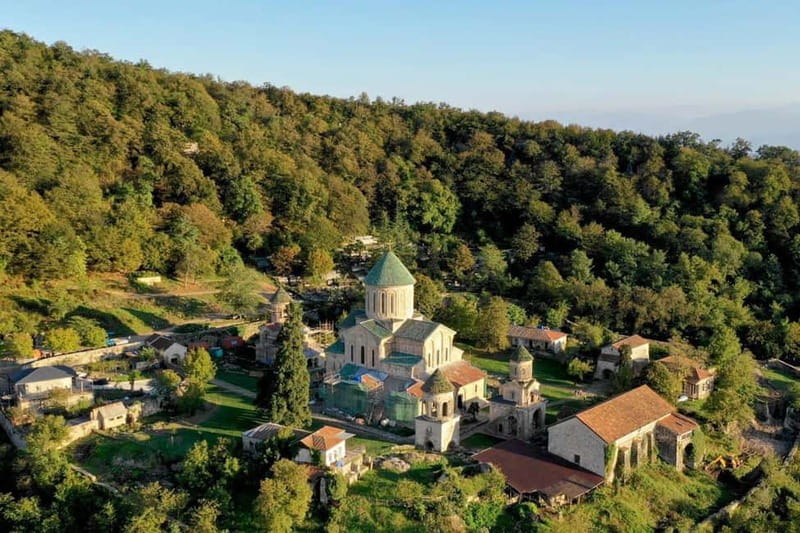
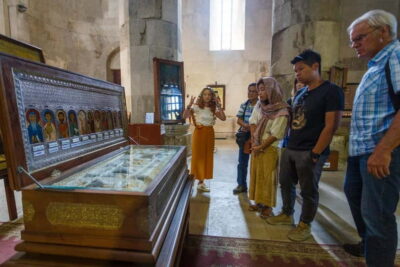
Gelati Monastery is the star of this circuit, and for good reason. It’s a UNESCO World Heritage Site, and the complex reflects multiple periods, especially the 12th and 13th centuries. When you look at the buildings, don’t treat it like one single snapshot. Treat it like a timeline made of stone.
The monastery has a clear origin story too. It was founded in 1106 by Davit Agmashenebeli, also known as David the Builder, a key figure in Georgia’s medieval golden age. That founding detail matters because it frames Gelati not as an isolated church complex, but as part of a broader cultural project: building, learning, and proclaiming authority through architecture.
What you’ll enjoy most is the layered feel of the site. Even if you’re not a scholar, you can still sense that different generations added to what came before. The guide’s job here is to help you connect shapes, dates, and symbols into something you can actually remember later.
The practical reality: Gelati may not be fully open in every direction. Some parts have been under renovation for an extended period, so plan for possible restrictions around access and viewpoints. It’s not a dealbreaker, but it’s the one drawback worth mentally budgeting for.
Motsameta Monastery: a walled sanctuary on a rocky mountain
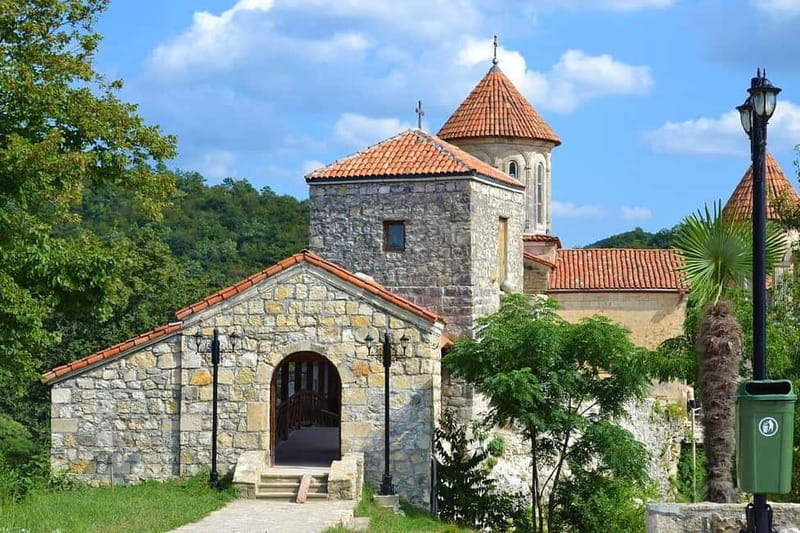
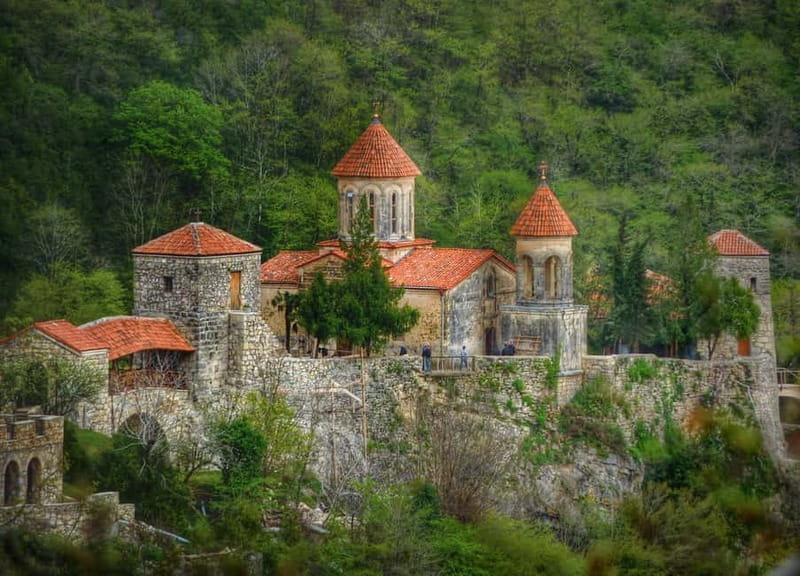
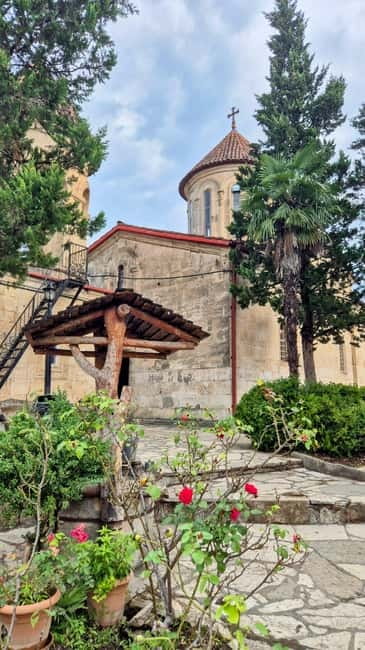
After Gelati, the mood shifts from broad historic complex to something more dramatic in setting. Motsameta Monastery is a walled monastery built on the site of a rocky, forested mountain. That description is the whole experience: walls, slope, and air that feels mountain-cool compared with the city.
Here’s the value of the stop. It breaks up the urban feel and adds variety to the day, so the tour doesn’t feel like three churches in a row. The walking time is short, but you still get the sense of arrival, and the location helps you understand why these monasteries were often placed away from the center.
Because it’s on a mountain, the site also tends to reward slow looking. You’ll likely notice how the monastery’s layout uses the terrain and how the walls frame views. If weather is good, you get a better sense of how the forested surroundings complement the sacred architecture.
One more practical note: this is a guided walk, not a long hike. Still, you’ll want comfortable shoes. The path and ground conditions can vary, and you’ll feel better if you’re not thinking about your feet every minute.
Bagrati Cathedral on Uchimerion Hill: one church, big medieval meaning
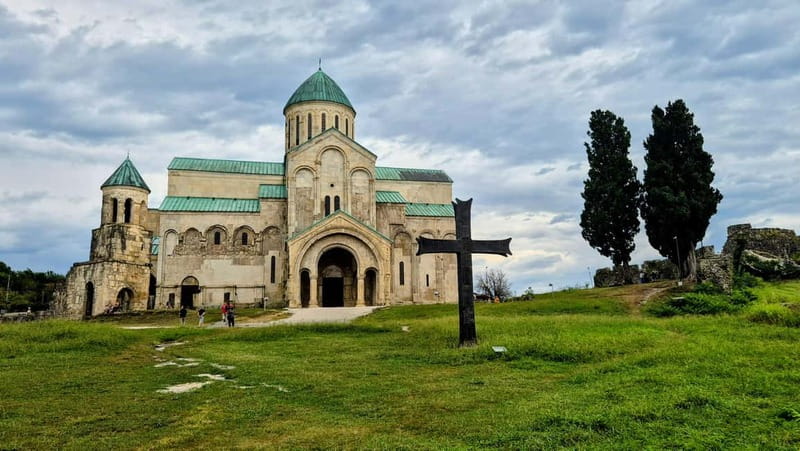
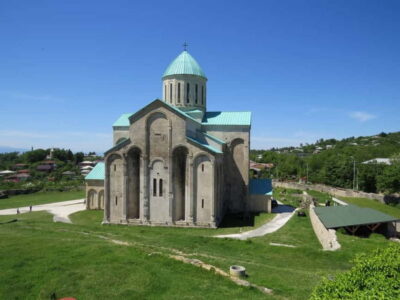
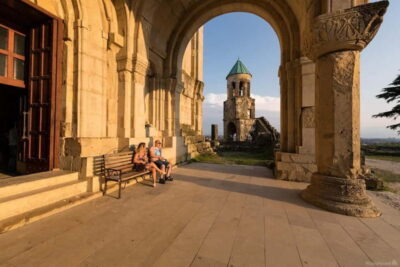
Bagrati Cathedral is where the tour lands its architectural message. You’re visiting the Assumption Cathedral, built in 1003 during the reign of Bagrat III (975 to 1014). That date isn’t just trivia. It tells you the cathedral represents an early medieval moment, when Georgian church design became a statement of power and identity.
The location is also key. Bagrati Cathedral sits in Kutaisi on Uchimerion Hill, so it often reads like a landmark even before you get close. That hill placement changes the experience from the inside out. From a distance, you see the silhouette. Up close, you can start appreciating the architectural solution and the symbolic weight tied to the site.
If you’re the kind of person who likes to know why a building is famous beyond its look, this stop is a strong one. The cathedral is described as a landmark in Georgian medieval church architecture, both for form and for historical and symbolic significance. In plain terms, it’s the kind of church where the design choices carry messages, not just decoration.
Also, Bagrati is easier to reach independently from the city. The tour’s advantage is that you get there as part of the same story arc, instead of making your day feel fragmented. It’s efficient, and it keeps you from having to solve logistics between sites while juggling limited time.
The 3-hour rhythm: van time, guided time, and what to watch for
This tour is built for people with limited time, and you can feel that in the pacing. You start from the See Georgia Tour Agency office, then you’re transferred by comfortable minivan. Each main stop includes a guided segment and a short walk, with van rides between locations to keep the day moving.
A typical flow looks like this: you reach Motsameta first for a guided visit and walk, then travel to Gelati for the longer historic highlight, and finally finish at Bagrati Cathedral. The whole thing runs right around 3 hours, including travel.
The smart part of the schedule is that it balances explanation with time to look. Too many short tours rush you through everything. Here, each site gets enough guided attention for you to understand what you’re seeing, and enough walking for the locations to register in your head.
Your best strategy is simple. During the guided portions, listen for the big idea the guide is trying to connect. Then, during the walking time, spend 3 to 5 minutes not photographing, but scanning. Look for what changed between periods at Gelati, for how the monastery walls meet the terrain at Motsameta, and for how Bagrati’s setting supports its role as a landmark.
Also, expect a moderate amount of walking. It’s not a strenuous outing, but it’s enough that dry weather and good shoes make the day feel smooth instead of tiring.
Other Kutaisi tours and day trips:
Price and value: why $18 makes sense for this circuit
At $18 per person, this is one of those deals that feels fair if you care about guidance and time efficiency. You’re paying for more than transport. You’re paying for a professional guide and a structured route that hits three major sites without you needing to plan drive times, find parking, or coordinate between locations.
Value gets better when you consider what’s included. You get transportation with a comfortable minivan, a guide, bottled water, and Wi-Fi on board. Those extras are small, but on a short day they keep you comfortable and help you stay connected if you’re mapping next steps afterward.
Then there’s the group size. It’s limited to 7 participants, and that tends to create a better conversation with the guide. Reviews highlight that the experience can feel close to a private tour when the group is small, which is exactly what you want for sites where context matters.
The main value tradeoff is the Gelati renovation factor. If you arrive when access is restricted, part of your Gelati expectations may need adjusting. Still, a guided visit to what is open can be more useful than a longer self-guided trip where you don’t know what to look for.
Guide quality and small-group comfort that actually matters
One of the most praised aspects of this experience is the guide. In particular, Archil shows up in feedback for making the topic easier to follow and more fun. That’s not just about being friendly. It’s about turning architecture, dates, and symbolism into something you can grasp quickly.
The language options help too. English, Georgian, and Russian mean the guide can tailor explanations to your comfort level. That matters when you’re dealing with medieval history, church terminology, and why certain designs were chosen.
Transport is another strength. You get a highly rated minivan experience, and comfort counts on a short day when you’re bouncing between locations. Add water and onboard Wi-Fi, and the day feels organized instead of chaotic.
And because the group is small, you’re not stuck waiting for people who move slowly or asking the guide to repeat everything. If you like asking questions, you’ll likely get space to do it.
Who should book this tour
I’d point you to this tour if you want a compact, high-impact cultural day around Kutaisi. It’s also a great fit if you like a guided approach to heritage sites, because each stop includes explanation time rather than only free roaming.
You’ll especially enjoy it if:
- you have a short window and want three major Georgian landmarks in one go
- you care about medieval architecture and want the story behind it
- you prefer a small group with personal attention
- you’re planning around travel fatigue and don’t want a long day on the move
You might skip or adjust your expectations if:
- you specifically want full access to every part of Gelati Monastery and renovation limits your preferred viewing spots
- you want a longer, slower day with more independent time at each site
Should you book Gelati, Motsameta, and Bagrati with this agency?
If your goal is to understand the Kutaisi region quickly and taste three major historical sites, I think this is a strong choice. The combination of small-group format, professional guiding, and a route that connects Gelati, Motsameta, and Bagrati Cathedral makes the experience feel efficient without feeling rushed.
Book it if you want context, not just photos. The guide’s explanations, including the kind of standout feedback you see for guides like Archil, are exactly what turns these stops into a coherent story.
Don’t overpromise yourself on Gelati. Since renovation can affect what you can see, come with a flexible mindset. Even with limitations, guided time at Gelati plus the contrast of Motsameta and the landmark framing of Bagrati Cathedral is a solid way to spend a half day in Georgia.
FAQ
How long is the tour?
The duration is 3 hours.
How much does the tour cost?
The price is $18 per person.
Where do we meet for the tour?
You meet at the See Georgia Tour Agency office.
What are the main stops on this tour?
The tour visits Gelati Monastery, Motsameta Monastery, and Bagrati Cathedral.
Is this tour mostly walking?
There is a moderate amount of walking at each site, so comfortable shoes are recommended.
What is included in the price?
The tour includes a professional guide, transportation by comfortable minivan, bottled water, and Wi-Fi on board.
What is not included?
Meals and personal expenses are not included.
What languages are the guided tours offered in?
The live guide is available in English, Georgian, and Russian.
How many people are in the group?
It is a small group, limited to 7 participants.
Is smoking allowed?
Smoking is not allowed.
Newer trips around Kutaisi
- Okatse Falls, Martvili Canyon and Prometheus Cave
★ 5.0 · 1 review - Private tour from KUTAISI Colourful Tbilisi, Jvari and Mtskheta
★ 5.0 · 1 review - Kutaisi uncorked: Wine Tasting at a local Family Home
★ 5.0 · 1 review - Private tour: Prometheus, Sataplia Caves Bagrati, Gelati
★ 5.0 · 1 review - Kutaisi Airport – Mestia Shared Transfer
★ 5.0 · 1 review - Tbilisi: Subaru Crosstrek 2014-2016, Rent, Self drive
★ 4.0 · 1 review
Gelati & Bagrati UNESCO Monasteries, compared.
Gelati Momastery, Prometheus Cave, Sanatoriums and winetour
Read our review →
BAGRATI, GELATI & MOTSAMETA Group Tour from Kutaisi
Read our review →
Kutaisi Monasteries: Bagrati, Gelati, Motsameta from Batumi
Read our review →
Kutaisi, Bagrati, and Prometheus Cave Private Trip
Read our review →Browse the lists this tour appears in