
Reviewed · CHIATURA & TSKALTUBO SOVIET TRIPS
Chiatura and Cable Cars Frozen in the Sky
Cable cars hang in midair over Chiatura. This half-day trip has that time-capsule feel, with Chiatura’s old mining story still visible in stations, neighborhoods, and views. I especially like the cable-car ride for the panoramas, and I like how the stops link industry with faith sites like Mgvimevi and Katskhi. One thing to consider: the historic cable cars are not operating, so you are riding newer lines while still getting a taste of the old system.
In a small group limited to 6, you get a guided route from Kutaisi with enough time to actually look, not just rush. The guide works in English or Russian, and you will also have bottled water and transport included. If you hate long drives between stops, you may feel the travel time, since this is a full 09:30 to 17:00 day plan.
In This Review
- Key Points That Make This Trip Worth Your Time
- Chiatura Cable Cars, a City Built Around Moving People
- Price and Time: What $41 Buys in a Real 6 Hours
- Kutaisi Pickup and the First Stop at the Monastery
- Katskhi Pillar: The “Pillar of Life” Above the Rocks
- Mgvimevi Monastery: A Rock-Cut Church With a Clear Architectural Payoff
- Entering Chiatura: Cable-Car Stations and the Pioneers Palace Feeling
- Soviet Trains Graveyard: Where Industry Shows Its Age
- Riding the New Cable Cars, Plus One Restored Car
- Chiatura Stadium and Cable Views: Best Moments for Photos
- Tskaltubo Stop: A Break Before Returning to Kutaisi
- What I Like Most About This Tour Style
- How to Plan Your Day So It Feels Easy
- Who This Tour Suits Best
- Should You Book Chiatura and Cable Cars Frozen in the Sky?
- FAQ
- How long is the tour?
- How much does it cost?
- Where does the tour start and where do you return?
- What is included in the price?
- Are entrance fees included?
- What languages is the guide available in?
- Is it a large group?
- Are the old cable cars operational?
- When is the best time to book for flexibility?
Key Points That Make This Trip Worth Your Time
- Soviet mining culture you can see, not just read about, including cable-car stations and industrial ruins
- New cable cars plus one restored car, so you get safe, working rides with a historical flavor
- Katskhi Pillar and rock-cut church stops connect the region’s faith history to the mining landscape
- Small-group pacing (up to 6) keeps the route relaxed and questions welcome
- A bonus Tskaltubo stop gives you a change of scenery before heading back to Kutaisi
Other Chiatura and Tskaltubo Soviet-era trips:
- Kutaisi:Chiatura Tour with Katskhi Pillar & Cable Car★ 4.9 · 433 reviews
- Abandoned sanatoriums of tskaltubo – group tour from Kutaisi★ 4.8 · 99 reviews
- Kutaisi:Chiatura Tour with Katskhi Pillar & Cable Car Experience★ 5.0 · 95 reviews
- Kutaisi: Chiatura Cable Cars & Katskhi Pillar Guided Tour★ 4.9 · 67 reviews
Chiatura Cable Cars, a City Built Around Moving People
Chiatura is one of those places where the “why” is written into the scenery. When huge manganese deposits were developed, the city needed a way to move workers between the valley and the hill mining settlements. That practical problem turned into an entire transit system, and it shaped the town’s neighborhoods, viewpoints, and daily rhythms.
The result is a tour that feels grounded and visual. You are not only seeing attractions. You are tracing how industry demanded infrastructure, and how people lived with it. When you look at the cable-car stations, it starts to make sense why this region became famous.
And yes, the views are part of the point. Even if you have seen cable cars before, the geometry of Chiatura is different because the routes cut through a mining-built hillside city.
Price and Time: What $41 Buys in a Real 6 Hours
The price is listed at $41 per person for about 6 hours. For Georgia day trips, that is a solid value when you factor in transport and a live guide. Also, the group size is small, so you are not just paying for a seat on a bus, you are paying for a guided plan with limited people.
Your day runs from 09:30 to 17:00, with multiple stops that give a clear sense of the region rather than a single-spot visit. The schedule is tight enough to feel efficient, but it still includes time blocks for sightseeing, including a 3-hour Chiatura section.
One practical thought: since entrance fees to local museums are not included, plan for possible extra costs if you decide to add anything ticketed at a stop.
Kutaisi Pickup and the First Stop at the Monastery
You start with pickup in Kutaisi, and your guide contacts you one day before to agree on the precise place and time. The meeting point is practical: wait at the front of your hotel or apartment so the guide can find you easily.
Before Chiatura, you have a monastery sightseeing stop (30 minutes). This early timing matters because it sets the tone of the day. You are heading into an industrial story, but Georgia’s religious architecture is part of the same landscape, and the tour uses that contrast to help you understand the region’s full identity.
Even in a short 30 minutes, this kind of stop gives you context for what you will see later at Katskhi and around Chiatura’s mining hills.
Katskhi Pillar: The “Pillar of Life” Above the Rocks
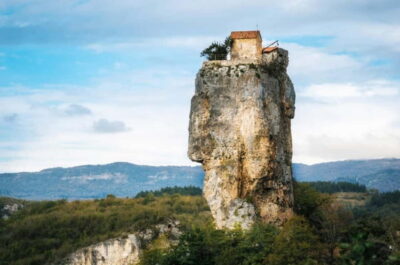
Katskhi is where the region’s spiritual identity becomes impossible to miss. As you approach the Katskhi village area, you spot a tall limestone monolith with visible church ruins at the top. The pillar is about 40 meters (130 ft) high, and the ruins sit on a surface around 150 m above the ground.
Locals venerate it as the Pillar of Life and connect it to the True Cross. That meaning is part of why this stop works on a tour like this. You are not only looking at an object, you are seeing how symbols shaped local belief long before any manganese operations put Chiatura on the map.
Practical tip: bring a steady eye for details. From road-side viewpoints you can catch the shape, but you will get the best understanding by pausing and looking for the ruined church placement near the top.
Other Kutaisi tours and day trips:
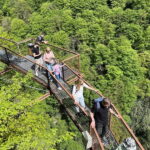
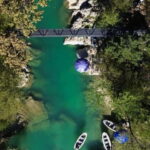
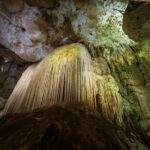
Mgvimevi Monastery: A Rock-Cut Church With a Clear Architectural Payoff
Another highlight is Mgvimevi Monastery, a site with medieval roots carved into rock. The tour notes a specific standout: a 13th-century two-nave basilica dedicated to the Nativity of the Mother of God.
A stop like this is more than a photo moment. It helps you see Georgia’s church-building tradition as something practical and local, not imported. The fact that the monastery is carved into rock also connects back to the theme of the day. Chiatura’s story is about working with the terrain, and these church sites show a different kind of adaptation.
In a half-day trip, it is a smart choice. You get a meaningful cultural anchor early, and it makes the later industrial sights feel less random.
Entering Chiatura: Cable-Car Stations and the Pioneers Palace Feeling
Once you arrive in Chiatura, you get about 3 hours for sightseeing, which is enough time to cover the core industrial neighborhoods without feeling frantic. The route includes the cable car stations, the Chiatura Pioneers Palace, and viewpoints tied to the cable system.
The Chiatura Pioneers Palace is the kind of building that helps you read the Soviet-era layer of the city. Places like this were designed for youth activities and community life, so when you see it in Chiatura, it becomes more than an artifact. It turns into a clue about what the city prioritized beyond mining, even during industrial peak years.
Then there are the cable-car stations. The key idea is to watch the system as a whole. If you only look at one station, you miss the logic. When you see multiple station areas along the route and understand they connected the city center to hill mining settlements, you start to feel the city’s “network brain.”
Soviet Trains Graveyard: Where Industry Shows Its Age
Chiatura also includes a Soviet trains graveyard stop. This is one of those sights that can feel eerie even without special effects. It is industrial history left in place, and it communicates decline in a way that clean museum displays rarely do.
Why it matters on this tour: the manganese story explained on paper becomes physical here. When you see abandoned equipment in the context of an entire transit system that once moved people daily, you get a stronger picture of the full cycle, boom to change to abandonment.
If you like history with texture, this is the kind of stop you will remember.
Riding the New Cable Cars, Plus One Restored Car
Here is the big expectation to set correctly: the tour explicitly notes that old cable cars are not operational. During the trip, you enter the new cable cars, and there is also one restored cable car you can enter.
This is important for two reasons.
First, it means you should not expect to ride the original Soviet-era cars. Instead, you are getting an operating system that continues the idea of connecting parts of the city, with better current safety and function.
Second, the restored car helps keep the historical connection. You can step inside and compare it to what you ride during the working portion. Even if it is not the full original network, it still gives you that “how it must have felt” feeling.
If you are visiting mainly for the cable cars, I think you will like this setup. You still get panoramic views, and you still get physical history. You just do not get the old system in full working condition.
Chiatura Stadium and Cable Views: Best Moments for Photos
The itinerary includes Chiatura Stadion as part of the sightseeing time. In a city like this, stadiums are not just about sports. They are high-visibility spaces, often tied to how communities organized themselves around shared life.
Pair that with the cable-car viewpoints and you get a nice mix: built environment plus a sense of how the hills and routes connect. For photos, aim for two types of shots:
- Wide views that show the cable route cutting across town
- Detail shots around stations that hint at the old network’s structure
Also, cable-car rides change your perspective fast. Even small changes in angle can make the town’s vertical layout easier to understand.
Tskaltubo Stop: A Break Before Returning to Kutaisi
After Chiatura, the tour includes Tskaltubo sightseeing for 1.5 hours. This part is a nice pacing tool. It keeps your day from being all industrial history all the way back to Kutaisi.
Tskaltubo is a different setting, so it helps you reset your eyes. You are not stuck only with steel, tracks, and stone ruins. You get some variety, and that makes the whole day trip feel more complete rather than one long theme.
What I Like Most About This Tour Style
This experience stands out because it ties the story together with variety. You start with rock-cut faith sites, move through the mining town’s infrastructure, then end with another area for sightseeing. That structure makes the cable cars feel like a logical outcome, not a separate attraction.
Two more things I value in the design:
- Small group size (max 6). You get more time at stops and fewer interruptions.
- A guide who can explain the context, not just point. The tour includes English and Russian, and that matters in a place like Chiatura where symbols and systems need translation.
One review also highlighted how enjoyable and relaxed the trip feels, and credited their guide by name, Giorgi Nikoladze, for an easy day. When a tour manages comfort and clarity like that, your sightseeing time gets better, even if the route is already ambitious.
How to Plan Your Day So It Feels Easy
This is a 09:30 to 17:00 schedule with multiple stops, so plan like a pro.
Wear shoes with grip, because older hillside areas and station surroundings can be uneven. Bring layers too. Cable-car rides and open viewpoints can feel cooler or windier than the valley streets.
For photos, give yourself a moment before boarding so you can check light angles. Cable cars put you in moving frames, and having your settings ready helps you capture the panoramas without rushing.
And since entrance fees to local museums are not included, keep a small buffer for any ticketed items you might want to add.
Who This Tour Suits Best
I think this tour is best for you if you want:
- A Soviet-era story that you can see in real space
- Cable-car views with clear historical context
- A day that mixes industrial ruins with faith architecture
- A small-group pace without big crowds
It is also a strong fit for history-curious travelers who like the practical angle. Chiatura is not abstract. The cable system exists because of manganese mining, and the city layout proves it.
If you are only after one kind of attraction, like a pure nature hike, this may feel more urban and architectural than you expect. But if you want a coherent cultural day, it hits the mark.
Should You Book Chiatura and Cable Cars Frozen in the Sky?
Yes, I would book it if you want a compact, guided way to understand Chiatura’s cable-car system and the Soviet mining city behind it. The balance of sights, the small group, and the fact that you ride new cable cars while also entering a restored car makes it a thoughtful compromise between history and what is actually possible today.
Only skip it if you dislike longer travel days or you were specifically hoping to ride fully historic cars across the entire original network. Since the old cable cars are not operational, you will be experiencing the system through today’s working lines, with historical access through the restored car.
FAQ
How long is the tour?
The tour duration is 6 hours, with an example schedule running from 09:30 to 17:00.
How much does it cost?
It costs $41 per person.
Where does the tour start and where do you return?
Pickup is from Kutaisi, and you return back to Kutaisi.
What is included in the price?
Transport and a live guide are included, plus bottled water.
Are entrance fees included?
Entrance fees to local museums are not included.
What languages is the guide available in?
The live guide is available in English and Russian.
Is it a large group?
No. It is a small group limited to 6 participants.
Are the old cable cars operational?
No. Old cable cars are not operational. You ride new cable cars during the tour, and there is also one restored cable car you can enter.
When is the best time to book for flexibility?
You can reserve and pay later, and you have free cancellation up to 24 hours in advance for a full refund.
Newer trips around Kutaisi
- Okatse Falls, Martvili Canyon and Prometheus Cave
★ 5.0 · 1 review - Private tour from KUTAISI Colourful Tbilisi, Jvari and Mtskheta
★ 5.0 · 1 review - Kutaisi uncorked: Wine Tasting at a local Family Home
★ 5.0 · 1 review - Private tour: Prometheus, Sataplia Caves Bagrati, Gelati
★ 5.0 · 1 review - Kutaisi Airport – Mestia Shared Transfer
★ 5.0 · 1 review - Tbilisi: Subaru Crosstrek 2014-2016, Rent, Self drive
★ 4.0 · 1 review
Chiatura & Tskaltubo Soviet Trips, compared.

1 Day Private Armenia: UNESCO, Soviet & Curated Family Lunch
Read our review →
Abandoned sanatoriums of tskaltubo – group tour from Kutaisi
Read our review →
Chiatura Tour with Katskhi Pillar & Cable Car Experience
Read our review →
Tbilisi old town & soviet heritage – Private driver-guided Tour
Read our review →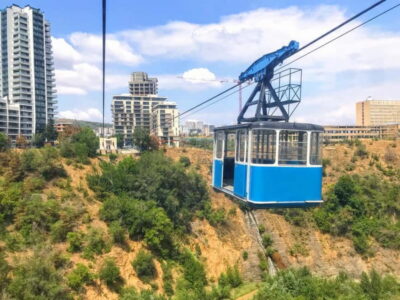
Brutalist Tbilisi: Urban exploration and untold stories
Read our review →
Armenia: 1 Day Soviet gems, UNESCO + Family lunch (Small group)
Read our review →Browse the lists this tour appears in