
Reviewed · CHIATURA & TSKALTUBO SOVIET TRIPS
Chiatura. Soviet Past in the present. + Katskhi pillar
Cable cars and a church on a cliff. This private full day is a sharp combo of Soviet-era Chiatura and the dramatic Katskhi Pillar area, and it’s great if you want more than just photos, with time for real ruins and viewpoints. I especially like the undivided attention from your English-speaking guide and the chance to see industrial relics that still connect to local mining life. One thing to keep in mind: you’ll need moderate physical fitness, since the monastery stop involves climbing steps and going through a tunnel.
You start with comfort, not chaos. Expect hotel pickup and drop-off, an air-conditioned vehicle, WiFi onboard, plus snacks and bottled water to keep the day from turning into a road-trip grind. The stops are short enough to stay efficient, but long enough to actually look, compare details, and ask questions.
In This Review
- Key highlights you will actually use
- Soviet Chiatura and Katskhi Pillar, One Focused Full-Day Run
- Price and Logistics: What You’re Really Paying For
- Chiatura: Soviet Mining Town and Cable Cars Still in Use
- Katskhi Pillar: The 40-Meter Monolith With a Monastery on Top
- Mgvimevi Monastery: Stone Carvings, Frescoes, and a Tunnel Climb
- Your Guide Matters: Mining History Explained With Names and Context
- How the Day Flows: Timing, Pacing, and Where You Can Catch Your Breath
- Practical Tips for Comfort, Photos, and Realistic Expectations
- Who Should Book This Tour, and Who Might Skip It
- Should You Book This Soviet Past and Katskhi Pillar Tour?
- FAQ
- FAQ
- How long is the tour?
- Is this a private tour?
- What language is the tour guide?
- Does the price include hotel pickup and drop-off?
- Are tickets included for Chiatura, Katskhi Pillar, and the monastery?
- Is lunch included?
- What about physical activity and walking?
- Are there snacks and water during the day?
Key highlights you will actually use
- Private guide time, so you can ask follow-ups instead of racing through the day
- Chiatura cable cars still operating for magnesium miners, not just a museum relic
- Free entry at each major stop, which helps the value of the full-day plan
- Katskhi Pillar’s 40-meter monolith with a monastery on top for sky-high views
- Mgvimevi Monastery with stone carvings, frescoes, and a climb through steps and a tunnel
Other Chiatura and Tskaltubo Soviet-era trips:
- Tbilisi: The Urbex and Soviet Tour of Tbilisi★ 5.0 · 127 reviews
- 1 Day Private Armenia: UNESCO, Soviet & Curated Family Lunch★ 5.0 · 106 reviews
- Tbilisi old town & soviet heritage – Private driver-guided Tour★ 5.0 · 83 reviews
- Brutalist Tbilisi: Urban exploration and untold stories★ 5.0 · 82 reviews
Soviet Chiatura and Katskhi Pillar, One Focused Full-Day Run
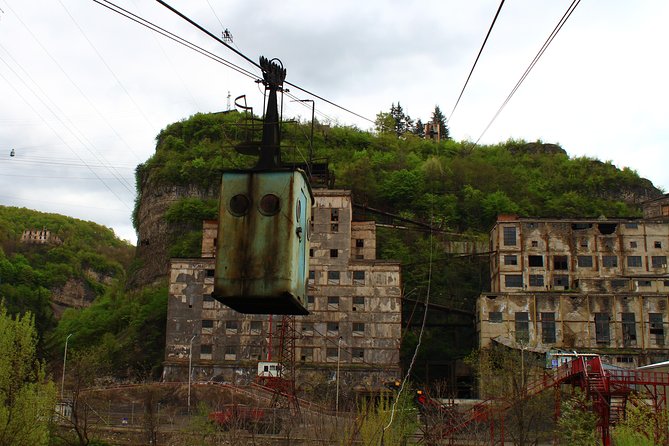
This is one of those days that feels like it has two plot lines, and both land. One side is industrial Georgia from the USSR era, with Chiatura’s cable cars, old factories, and the stark logic of a mining town. The other side is spiritual Georgia, with Katskhi Pillar and the 13th-century Mgvimevi Monastery perched in a way that makes the whole place feel remote even when you’re not far from Tbilisi.
The day is built for looking closely. You’re not just driving past viewpoints. You get enough time at Chiatura to walk around, take in the ruins, and see what’s still functioning. Then you switch gears for Katskhi Pillar, where the main event is the monolith itself and the monastery presence on top. After that, you add the Mgvimevi stop, which is where the day gets physical, but also where you get some of the most striking details, like stone carvings and frescoes.
It’s a good fit if you like history that has dents and rust, not just polished monuments. And if you’re the kind of person who enjoys a guide talking through how places worked, this route is set up for that.
Price and Logistics: What You’re Really Paying For
At $150 per person, this is priced like a proper day tour, not a budget transfer. The big value pieces are the “make the day easier” items that add up when you’re planning yourself.
Here’s what you get that matters on the ground:
- Hotel pickup and drop-off in Tbilisi, plus an air-conditioned vehicle for the full ride
- Snacks and bottled water, which helps when lunch is not included
- WiFi onboard, useful for keeping your maps and tickets sorted
- All fees and taxes included, so the final cost is predictable
- Private transportation, which means your schedule stays yours
You’ll also notice the tour is positioned as a private activity. Only your group participates. That’s not a small detail. It changes how the day feels. You can move at a pace that works for you, and you can ask questions without the awkward pressure of waiting on others.
Duration is listed as about 8 to 10 hours. The stop times are short in places, but the day is long enough to feel complete. You’ll want comfortable shoes and a camera that’s ready to shoot quickly, because the views come fast.
Chiatura: Soviet Mining Town and Cable Cars Still in Use
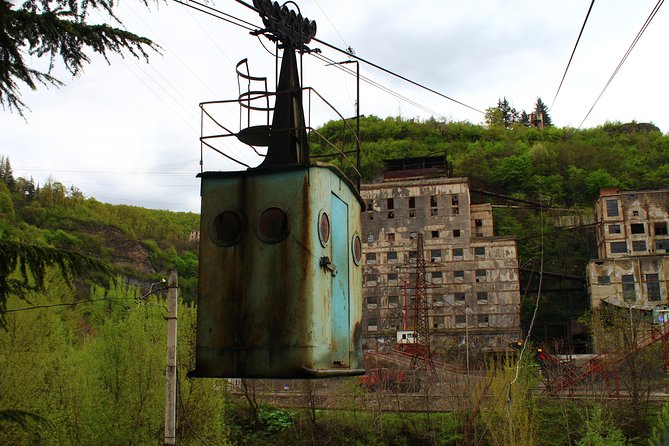
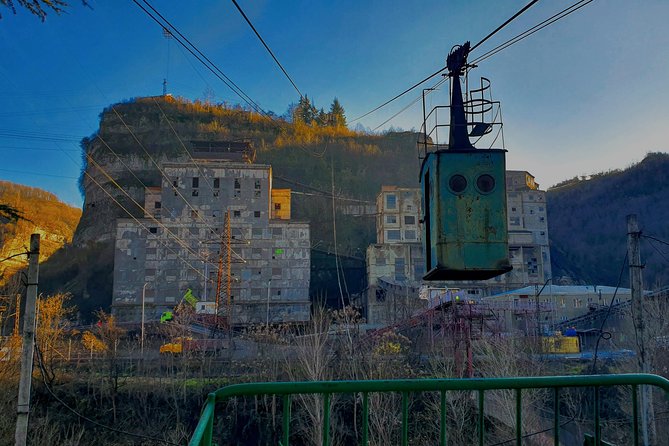
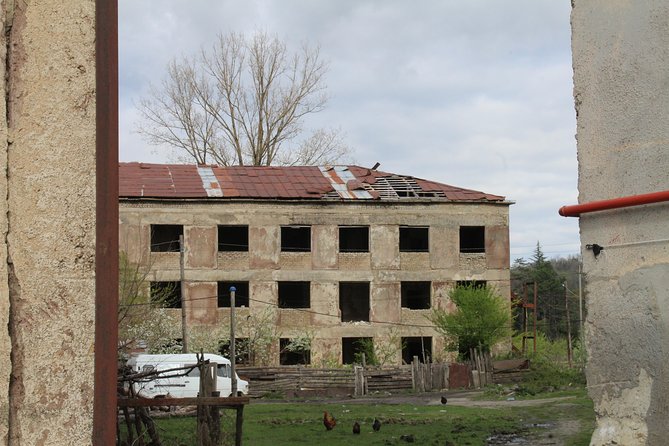
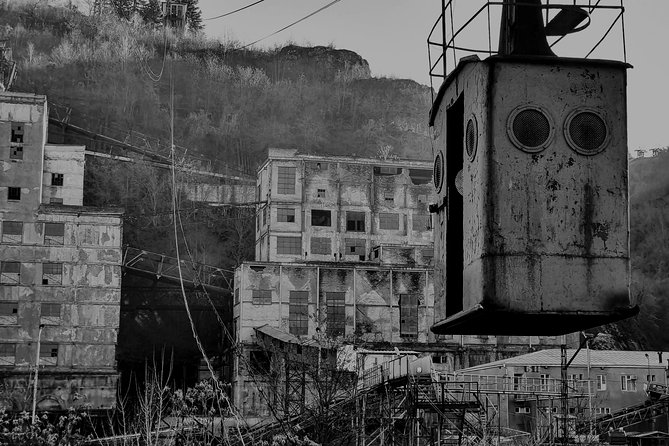
Chiatura is the heart of the “Soviet past in the present” idea. This is not a closed, quiet heritage site. It’s a real town, and the cable cars are operating for magnesium miners. That single fact makes the whole visit feel different. You’re not looking at something dead. You’re looking at something repurposed into daily work.
You’ll spend about two hours in Chiatura, and the area gives you plenty to focus on:
- Soviet-era cable car infrastructure, now tied to ongoing mining
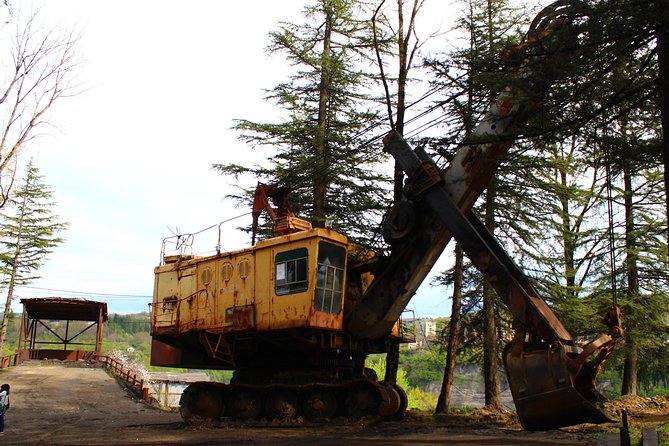
- Old factory areas where industrial history is visible in the structure itself
- The mix of industrial remains and natural surroundings, which makes the viewpoints feel sharper than you’d expect
Even without technical explanations, you can read a lot in the town layout. Cable systems like this are about moving ore efficiently, and in Chiatura you see the logic of why the cable cars were built where they were. The scale of the system and the verticality are a big part of why people come with a camera.
What to watch for during your walk
- Look for the points where the town meets the cable-car routes. Those junctions are where you’ll understand how people and materials moved.
- Take a few minutes to compare different viewpoints. The cable system looks different from different angles, and the old factory shapes can help anchor what you’re seeing.
Potential drawback to plan around
Chiatura is built around an industrial environment. That means uneven ground and practical spaces. You’ll likely want shoes with good grip and you’ll want to stay aware where you step, especially near old structures.
Katskhi Pillar: The 40-Meter Monolith With a Monastery on Top
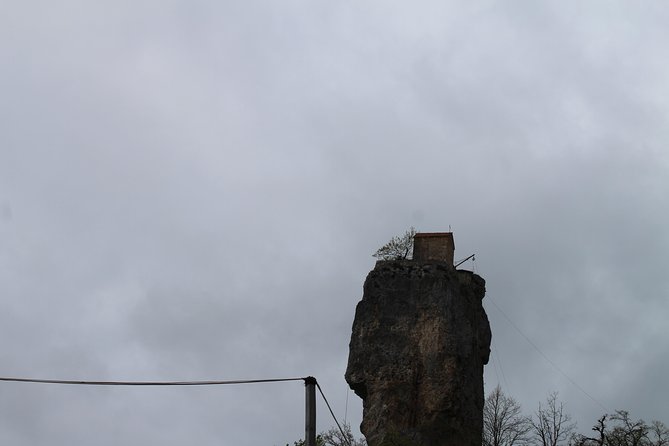
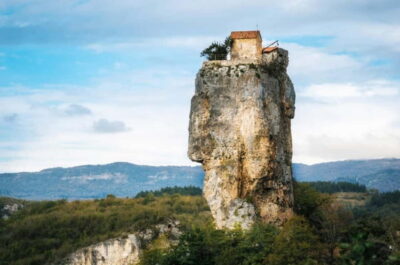
After Chiatura, the day pivots to a place that looks almost unreal at first glance. Katskhi Pillar is a natural limestone monolith, about 40 meters high, with a monastery on it. You’re not just seeing a rock. You’re seeing a vertical spiritual marker, one that gives the area a “how did they do this?” feeling.
You’ll have around 30 minutes here, and that’s just about right. You can walk around the area, take photos from a couple angles, and then spend time looking upward to understand the scale. If you’re into architecture or how religious sites use dramatic geography, you’ll probably enjoy this more than a quick photo stop.
A key detail: admission tickets for this stop are listed as free. That’s worth noting because it keeps the day affordable, especially compared with tours that charge entry at every stop.
How to get better photos in less time
- Bring a camera strap or keep your camera secured. You’ll likely be repositioning quickly for angles.
- Plan for upward framing. The pillar dominates, so compose with the sky and the base in mind, not just the monastery top.
Other Tbilisi tours and day trips:

Mgvimevi Monastery: Stone Carvings, Frescoes, and a Tunnel Climb
The last major stop is Mgvimevi Monastery, a 13th-century site that packs a lot into a short visit. You’ll have about 20 minutes, but it’s the kind of 20 minutes that moves fast because the experience includes both viewing and physical movement.
What makes this stop special is the combination of art and access:
- Stone carvings
- Frescoes
- A layout where you go up through steps and a tunnel
That last part is the one you should respect. It’s not described as dangerous or extreme, but it is a real movement component, which ties directly to the tour’s moderate physical fitness note.
If you’re someone who likes small-scale details, this is a stop where you can actually slow down. Carvings and painted surfaces reward close attention. And because you’re moving into the site through steps and a tunnel path, the experience has a built-in sense of arrival.
The main practical tip
Keep your plan simple: comfortable footwear, a steady pace, and patience. When a tunnel and steps are involved, people often rush and then end up missing details.
Your Guide Matters: Mining History Explained With Names and Context
Part of why this tour gets such strong marks is the conversation. These aren’t generic “point and shoot” explanations. Your guide is there to connect the visible sights to the human story behind them.
In feedback tied to this kind of run, guides like David and Irakli stand out for being friendly, professional, and sharply focused on Georgia’s history. That’s exactly what you want on a day like this. Chiatura can look like a collection of ruins until someone explains how the mining system shaped the town and why the cable cars are part of that bigger picture. Then Katskhi Pillar and Mgvimevi shift the topic into another kind of Georgian identity, one tied to faith and the use of extreme geography.
When your guide can talk through both industrial and religious sites in a way that makes them feel connected, the day becomes more than a checklist. You start noticing details you would otherwise miss, like how industrial infrastructure interacts with a living community.
I also like that the tour is designed for English-speaking guiding. Technical sites still have a lot of “you have to be told what to look for” moments, and language clarity makes a real difference.
How the Day Flows: Timing, Pacing, and Where You Can Catch Your Breath
The stop durations are short on purpose, but you’re not squeezed into a tiny schedule. The day is structured like a long road day with three main “look stops.”
A realistic rhythm looks like this:
- Chiatura for about two hours, enough for walking, looking, and understanding the industrial layout
- Katskhi Pillar for about 30 minutes, short and focused on the monolith and monastery presence
- Mgvimevi Monastery for about 20 minutes, the most physical stop due to steps and a tunnel
Between stops, you’re in the air-conditioned vehicle. That matters because the total day length is 8 to 10 hours. You’ll want that comfort after you’ve been standing, walking, and photographing.
Food reality check
Lunch is not included. Snacks and bottled water are included, but you should plan for a proper meal outside the tour package. If you hate decision fatigue, think about grabbing something before the tour ends so you don’t end up searching while tired.
Practical Tips for Comfort, Photos, and Realistic Expectations
If you want this day to feel enjoyable instead of tiring, set yourself up for success. Here are the practical things that matter most, based on what’s built into the experience.
- Bring your camera, and also plan for quick repositioning. Chiatura and Katskhi Pillar are both photo-heavy.
- Wear shoes with grip. You’ll be around industrial structures and a monastery area with steps and a tunnel.
- Keep expectations modest on time. Each major stop is time-boxed, so focus on quality viewing, not trying to see everything at maximum speed.
- Pack water even though bottled water is included. It’s not required, but it can reduce stress if the day runs longer.
- Eat smart before you go. With lunch not included, your energy matters, especially for the monastery climb.
For many people, the highlight isn’t one single photo. It’s the feeling of moving between two worlds. Industrial ruins that still function, then a monastery site built into vertical limestone geometry. If you go in ready to switch gears, you’ll get more out of every stop.
Who Should Book This Tour, and Who Might Skip It
This tour suits you best if you:
- Like Soviet-era sites that still feel real, not fully staged
- Want a private guide so you can ask history questions and get clear explanations
- Enjoy off-the-beaten-path routes where the story is in the details
- Are comfortable with moderate physical movement, especially steps and a tunnel at Mgvimevi
You might consider a different day if you:
- Don’t want any tunnel or step climbing at all
- Prefer long, leisurely museum-style pacing with no short stop deadlines
- Get uncomfortable with uneven ground near industrial ruins
But if you’re the type who enjoys seeing how history overlaps with daily life, this is exactly that kind of day.
Should You Book This Soviet Past and Katskhi Pillar Tour?
Yes, I’d book it if you want one efficient full day that links Soviet mining history to Georgia’s spiritual geography, with a guide who can explain what you’re looking at. The best value is not just the sights. It’s the combination of private guiding, hotel pickup, air-conditioned transport, snacks and water, and free entry at the main stops.
If you’re excited by the idea of cable cars that still operate for magnesium miners, and you’re willing to do a short steps-and-tunnel monastery visit, this tour hits the sweet spot. You’ll come away with images and, more importantly, context.
FAQ
FAQ
How long is the tour?
It runs about 8 to 10 hours, depending on timing and the day’s pace.
Is this a private tour?
Yes. It’s private, and only your group participates.
What language is the tour guide?
The tour is offered in English.
Does the price include hotel pickup and drop-off?
Pickup is offered, including hotel pickup and drop-off, with air-conditioned transfers.
Are tickets included for Chiatura, Katskhi Pillar, and the monastery?
Admission tickets are listed as free for each of the three stops, and all fees and taxes are included.
Is lunch included?
No. Lunch is not included.
What about physical activity and walking?
You should have a moderate physical fitness level, and the Mgvimevi Monastery stop includes going up through steps and a tunnel.
Are there snacks and water during the day?
Yes. Snacks and bottled water are included.
Newer trips around Tbilisi
- Tbilisi Private Dinner: Georgian BBQ & Fireplace
★ 5.0 · 1 review - Day trip in Kakheti-wine tour
★ 5.0 · 1 review - Tbilisi: Khinkali Tasting Lunch with Local Drinks and Pickup
★ 5.0 · 1 review - Tbilisi & Mtskheta bus tour hop on hop off
★ 5.0 · 1 review - Tbilisi: Christmas Market & Hidden Gems Guided Walking Tour
★ 5.0 · 1 review - Stalin’s Secrets: An Underground Journey Through History
★ 5.0 · 1 review
Chiatura & Tskaltubo Soviet Trips, compared.

1 Day Private Armenia: UNESCO, Soviet & Curated Family Lunch
Read our review →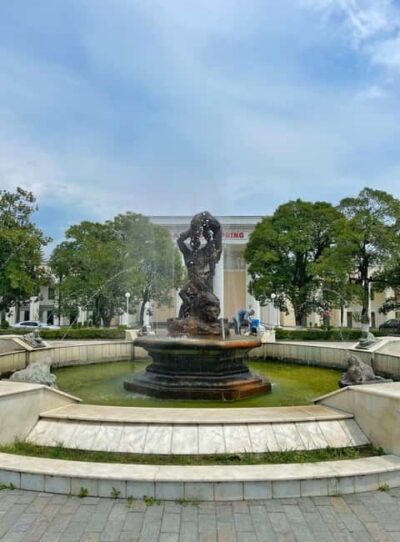
Abandoned sanatoriums of tskaltubo – group tour from Kutaisi
Read our review →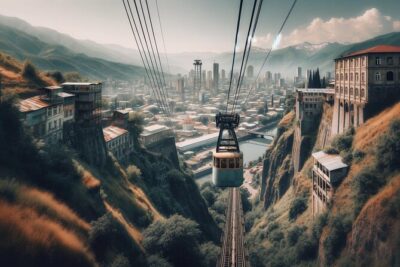
Chiatura Tour with Katskhi Pillar & Cable Car Experience
Read our review →
Tbilisi old town & soviet heritage – Private driver-guided Tour
Read our review →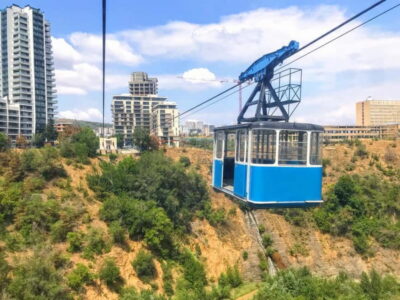
Brutalist Tbilisi: Urban exploration and untold stories
Read our review →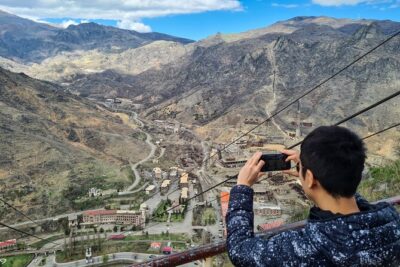
Armenia: 1 Day Soviet gems, UNESCO + Family lunch (Small group)
Read our review →Browse the lists this tour appears in