
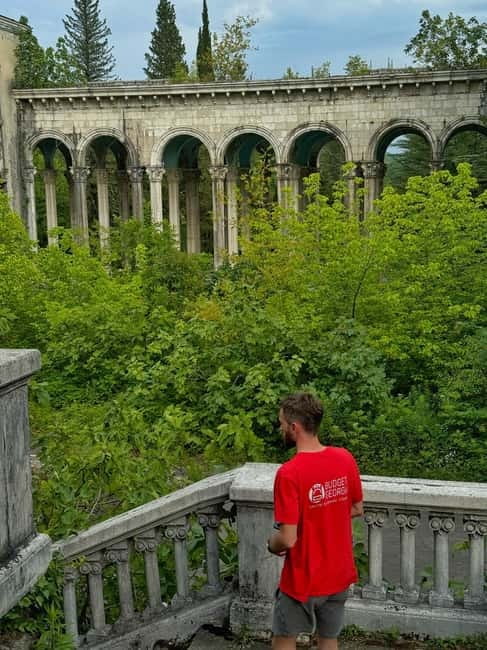
Reviewed · CHIATURA & TSKALTUBO SOVIET TRIPS
Day tour from Tbilisi to Kutaisi and Tskaltubo
Soviet ghosts meet Georgia sunshine. On this 14-hour guided day trip from Tbilisi, I love the way you combine a focused Kutaisi city walk with a guided tour of Tskaltubo sanatoriums and springs, so the architecture feels less like trivia and more like atmosphere. The main drawback is simple: it is a long day with a lot of walking, so plan for tired legs by the time you roll back into Tbilisi.
I also like that the day is organized like a story. You start in Kutaisi’s center, hit key landmarks like the Opera House area and the White Bridge zone, then you switch to Tskaltubo and let the guide explain what life under Soviet rule looked like, right in the places where it happened.
With Georgian and English live guiding, you are not left decoding everything on your own. You will still need comfortable shoes and a good camera plan, but the guide support makes the difference between watching from the outside and understanding what you are seeing.
In This Review
- Key points worth your attention
- A long day, but a smart route from Kutaisi to Tskaltubo
- 08:00 start, then straight into Kutaisi’s downtown core
- Central Park to Mon Plasir: Kutaisi landmarks you can connect
- Mtsvane Bazari stop and lunch break: eat like you are in the city
- Spring #6, Spring #8, and the Soviet occupation explanation
- Gelati, Medea, and Druzhba sanatoriums: abandoned but not random
- Tskaltubo train station: the final piece of the puzzle
- Guides like George and Giorgi, plus drivers who handle the long day
- Price and value: $61 for a 14-hour guided, round-trip day
- Who should book this tour, and who might find it too much
- Should you book this Tbilisi to Kutaisi and Tskaltubo tour?
- FAQ
- What time does the tour start and end?
- How long is the day tour?
- How much does the tour cost?
- What languages is the live guide available in?
- What does the tour include?
- Which highlights are included in the itinerary?
- Is there a cancellation option?
- Can I reserve without paying right away?
Key points worth your attention
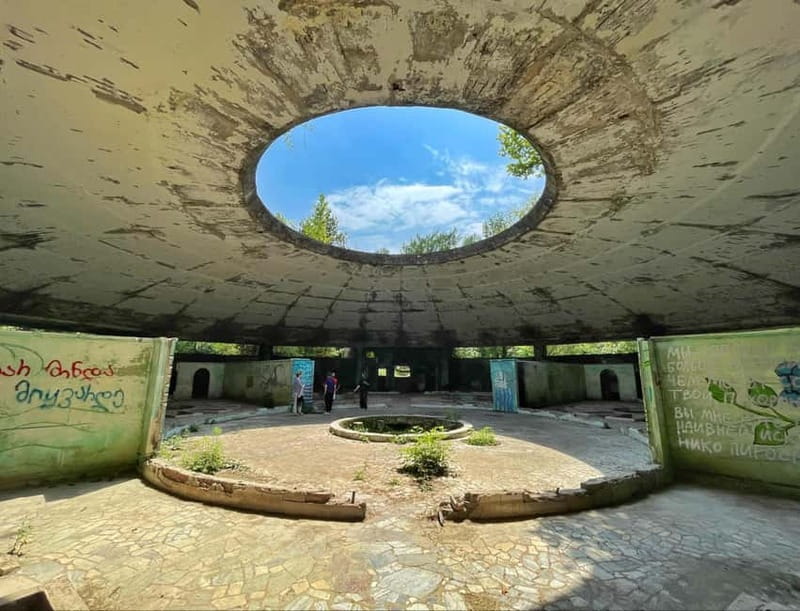
- Tskaltubo Springs #6 and #8 for that instant, weird Soviet-era design context
- Abandoned sanatorium circuit paced so you are not wandering in the dark
- Kutaisi highlights walk that includes city hall, the Opera House area, and Mon Plasir architecture
- Fountain Group, Central Park, and the 9 April memorial for the civic side of Kutaisi
- Finish at Tskaltubo train station to tie the whole sanatorium story together
Other Chiatura and Tskaltubo Soviet-era trips:
- Kutaisi:Chiatura Tour with Katskhi Pillar & Cable Car★ 4.9 · 433 reviews
- Abandoned sanatoriums of tskaltubo – group tour from Kutaisi★ 4.8 · 99 reviews
- Kutaisi:Chiatura Tour with Katskhi Pillar & Cable Car Experience★ 5.0 · 95 reviews
- Kutaisi: Chiatura Cable Cars & Katskhi Pillar Guided Tour★ 4.9 · 67 reviews
A long day, but a smart route from Kutaisi to Tskaltubo
This is not a quick taste. It is a full 14-hour rhythm that starts at 08:00 in Tbilisi and ends around 22:00 back in the city. You ride out, walk, pause, then walk again, with the guide keeping the flow tight so you spend less time figuring out logistics and more time actually looking.
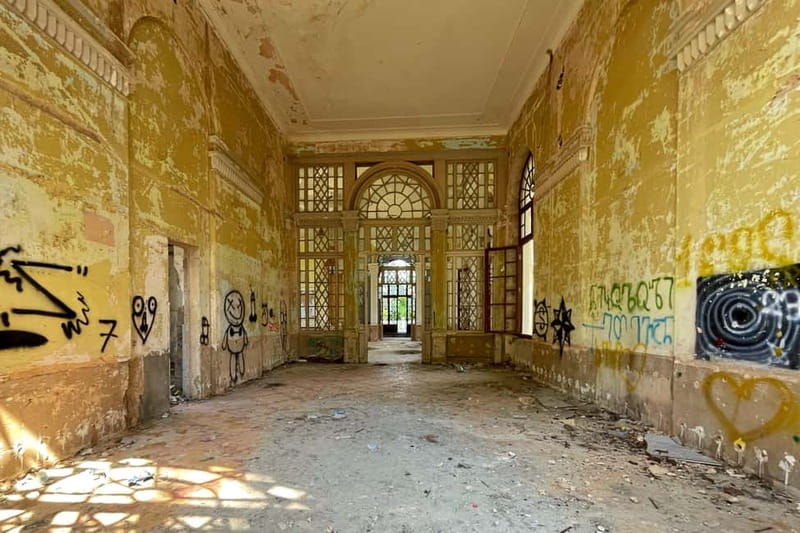
Why that matters: Kutaisi and Tskaltubo feel different the moment you arrive. Kutaisi is the “normal city” part of the day, with parks, memorials, and big public buildings. Tskaltubo is the “time capsule” part, where the abandoned sanatoriums and springs create a post-ideal version of Georgia that still shows the ambition of Soviet health tourism.
If you come with the right expectations, it works beautifully. You are not just taking photos of empty buildings. You are seeing how Soviet planning shaped towns, how people traveled for wellness, and how later abandonment turned that plan into something eerie and fascinating.
08:00 start, then straight into Kutaisi’s downtown core
Your day begins with a morning pickup from the tour office in Tbilisi at 08:00. Once you reach Kutaisi, the plan is refreshingly direct: you start with a walking tour in the downtown so you get your bearings fast.
The first stretch is about getting context and early photo stops. You will pass by and pause at the fountain group for pictures, then continue toward Central Park where the guide points out a statue of the sisters called Ishkhnelebi and the memorial of 9 April. That pairing matters. It gives you the “public memory” side of Kutaisi before the day shifts into Soviet-era architecture.
As you move, the guide also threads in broader background on Georgia and Kutaisi. Even if you already know some basics, this kind of setup helps the rest of the day click. When you later see Soviet-linked buildings and the sanatoriums, you understand them as part of a bigger story, not just random concrete.
Practical note: because this part is walking-heavy, I would show up ready for uneven sidewalks and frequent stops. The tour pace is guided, but you still need stamina.
Central Park to Mon Plasir: Kutaisi landmarks you can connect
After the Central Park stops, the route tightens around major city landmarks. You pass by Kutaisi city hall and the Opera house area, then move to Mon Plasir, an architectural stop that is often memorable because it looks like it was designed to be seen from the street.
One of the best values here is that the tour is not only about “what” you see, it is also about “why it looks that way.” The city center walking loop is built for recognition. If you glance at maps later, you will be able to place each stop where it belongs.
You then continue past the first gymnasium, reach the White Bridge area, and move through the Park of Love. After that comes Golden marquee palace. That final stretch feels like you are walking from civic Kutaisi into more symbolic, decorative Kutaisi. You are basically building a mental map of how the city presents itself.
If you enjoy architecture, public art, and places tied to cultural identity, this section is where the day really starts paying off. If you are only in it for the urbex-style sanatoriums, you might feel tempted to rush. I would resist that impulse. This Kutaisi foundation makes Tskaltubo hit harder later.
Mtsvane Bazari stop and lunch break: eat like you are in the city
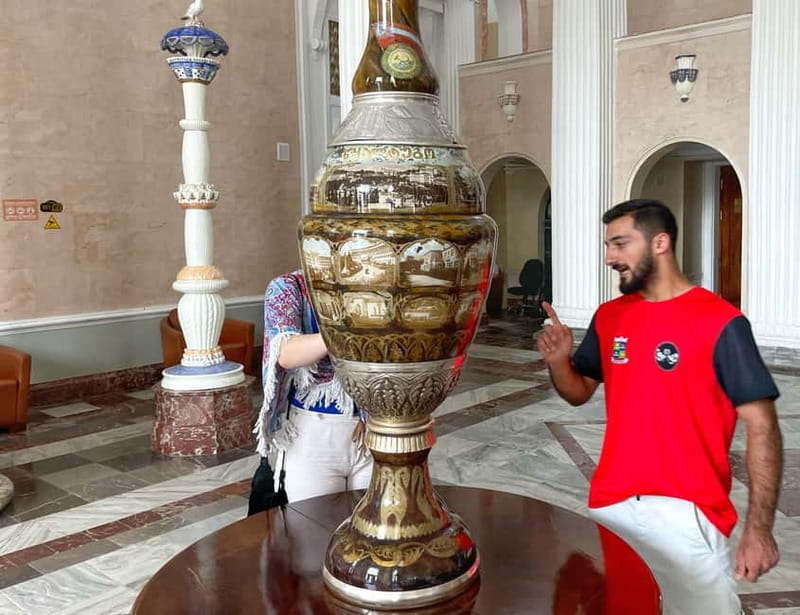
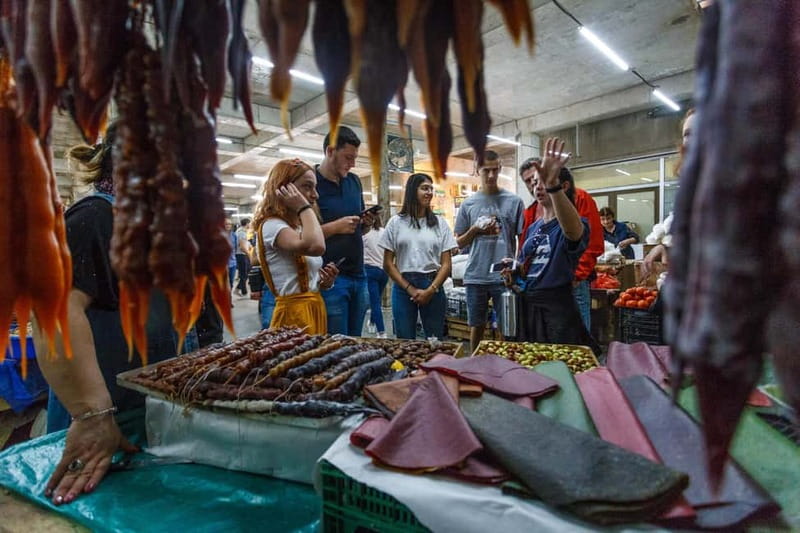
When the walking tour ends, you get a lunch break. The tour also includes time at the central grocery market called Mtsvane Bazari.
Even if you do not plan to do a deep food shopping session, markets are useful travel tools. Mtsvane Bazari helps you understand what everyday life feels like in Kutaisi. You see local produce culture, you get a sense of price levels, and it is usually easier to get something simple and satisfying without hunting for a specific restaurant.
How to use this time: keep your lunch flexible. Choose something quick, then save your energy for the Tskaltubo walking segment later in the day. If you like trying local snacks, markets are great for that, but the sanatorium part will require more focus.
One practical tip: bring cash for small purchases if you prefer buying snacks or water on the spot. The tour includes guidance and the main schedule, but a market stop is, by nature, partially on your own.
Other Kutaisi tours and day trips:
Spring #6, Spring #8, and the Soviet occupation explanation
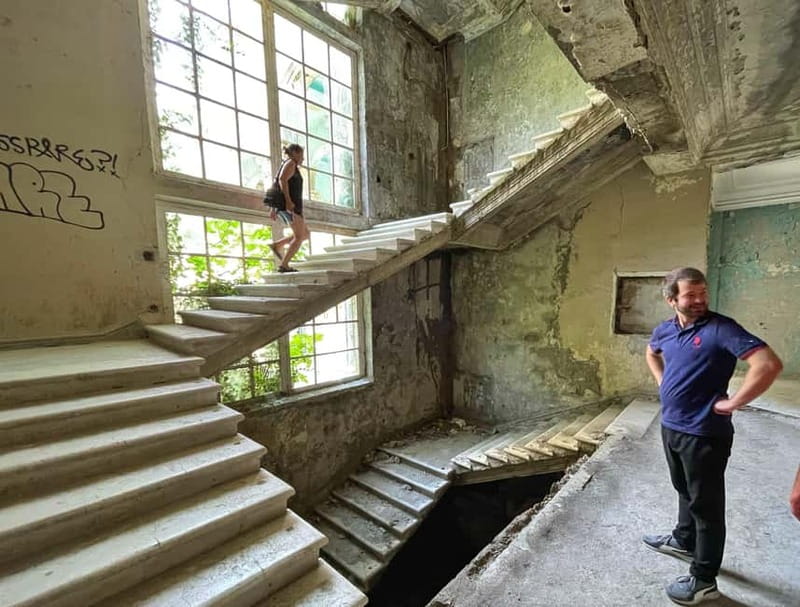
Tskaltubo is where the day shifts gears. After the drive, you start with Spring #6. This is not treated like a random fountain stop. The guide explains Soviet occupation and connects that broader political history to what you are seeing in Tskaltubo.
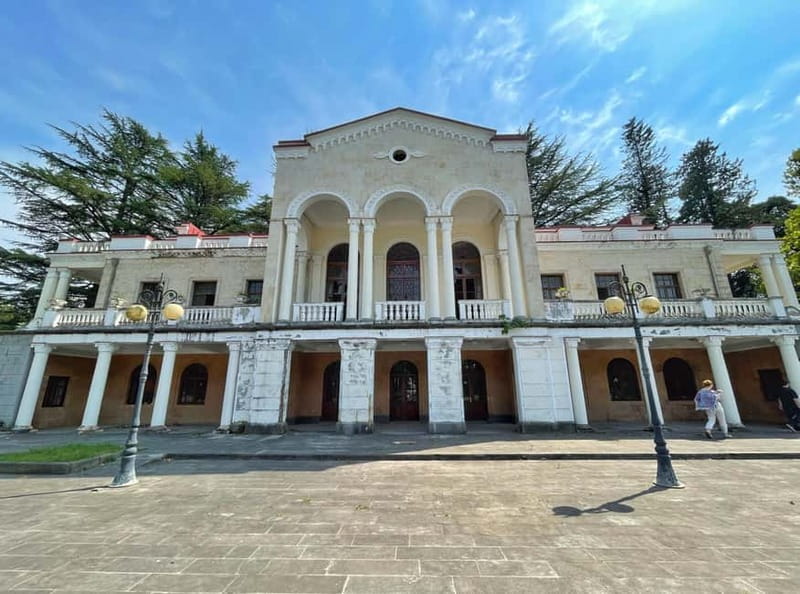
Then you walk to Spring #8, which the tour frames as having the most unusual architecture among the springs. This is one of those moments where a guide changes everything. Without context, you might treat it like a quirky photo spot. With context, the design feels like a statement about health, tourism, and how Soviet planners wanted places to function.
I recommend approaching the springs like you would a museum wing that still feels alive. Look closely at how the structures guide movement and attention. Notice how the shapes and materials behave under age and neglect. The goal is not to pretend the place is dramatic for your benefit. The goal is to read the place like evidence.
If you are the kind of traveler who likes “why this looks like this,” Springs #6 and #8 are among the most satisfying parts of the itinerary.
Gelati, Medea, and Druzhba sanatoriums: abandoned but not random
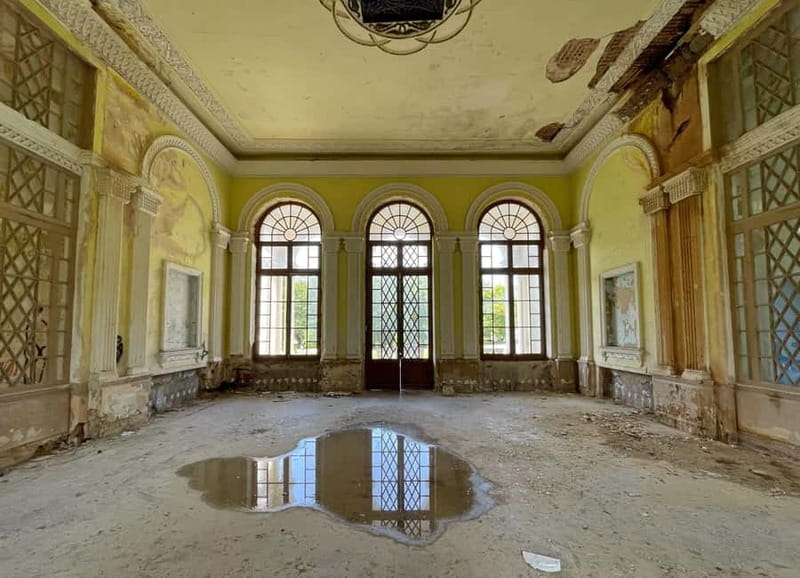
Now comes the main event. The tour focuses on abandoned sanatoriums in Tskaltubo, and the pacing is designed to keep you oriented even when buildings get huge and quiet.
First stop after the springs is Sanatorium Gelati, described as specially built for children. That detail matters because it changes the emotional tone. A child-focused sanatorium feels different than a general health facility. You are not only seeing Soviet architecture. You are seeing how the system tried to shape young lives, even in places that later fell silent.
Gelati also includes an old playground and a beautiful viewpoint over the inner construction. That viewpoint is key. It gives you scale. You start to understand the layout of the complex instead of seeing random hallways.
From Gelati you walk to sanatorium Medea, then to Druzhba. The route keeps you in “circuit mode,” which is exactly what you want for this type of outing. In places like this, it is easy to get lost or to end up looking at only one corner. A guide helps you move through multiple buildings in a way that makes the whole complex coherent.
What I love about this approach is the balance: the tour does not only chase spooky shots. It also gives you enough orientation to understand what the buildings were built to do.
Tskaltubo train station: the final piece of the puzzle
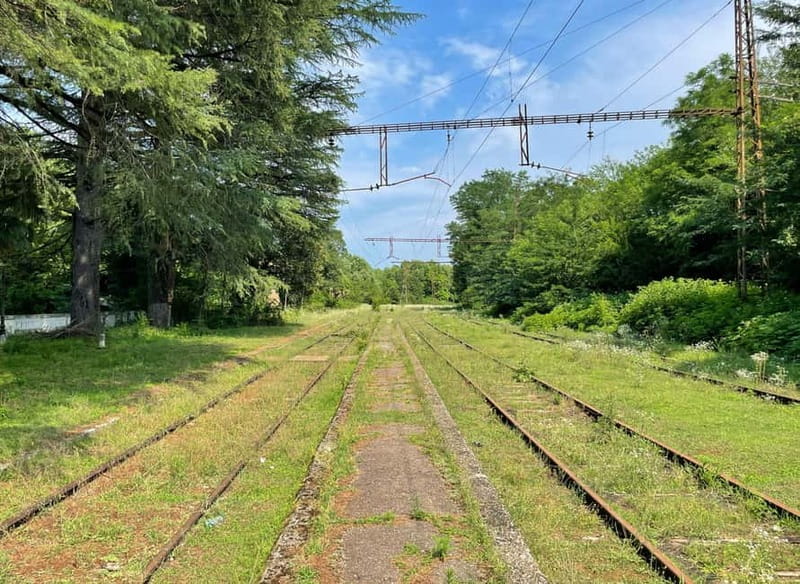
The last stop is the train station of Tskaltubo, and that is a clever ending. Sanatorium towns depended on transport. People arrived, got treated, then left. When you see the station at the end of the day, you can feel the logistics behind the whole project.
It is also a practical finish. After lots of walking and time in open-air and semi-internal spaces, a final landmark helps you close the loop before the drive back to Tbilisi.
By this point, your brain is already full of contrasts: central Kutaisi memory and architecture, then Tskaltubo springs and complex sanatorium layouts. The station stop helps tie that contrast together into one story about how Soviet wellness tourism moved people.
Guides like George and Giorgi, plus drivers who handle the long day
The most praised aspect of this experience is the guide. Names that come up often include George and Giorgi, and Lasha is also mentioned both as a guide and as a driver. The common thread is that the guides bring stories, keep things engaging, and stay objective about what they are showing you.
That matters in a place like Tskaltubo. Abandoned buildings can feel like a maze. Even if you love urbex-style exploration, you do not want to spend half the day trying to figure out where to go next. When the guide knows the flow, you learn faster and you get more meaning from each stop.
The driver support is also part of the value. Lasha, for example, is praised for safe driving and for dropping people back to their accommodation at the end of the tour. For a long day that ends around 22:00, that kind of smooth wrap-up reduces stress when you are already tired.
Price and value: $61 for a 14-hour guided, round-trip day
At $61 per person for a 14-hour day trip, you are paying for three big things: transportation from Tbilisi, live guiding, and a structured itinerary that strings together multiple sites that would be harder to coordinate on your own.
If you were to plan this independently, the biggest friction points would be the long commute and building-to-building logistics in Tskaltubo. You can certainly travel between cities on your own, but the specific stop sequence and the context from the guide are what turn it from a collection of photo stops into a real narrative day.
So yes, 61 dollars is not “cheap-cheap,” but it often feels reasonable for what you get. You are basically buying one day of someone else doing the planning, plus a guide who helps you understand the architecture and history behind the weirdness.
Who should book this tour, and who might find it too much
This tour is best for you if:
- you enjoy Soviet architecture and want to see it in real places, not just in photos
- you like city walking tours that include landmarks, parks, and memorial stops
- you are curious about Tskaltubo sanatorium culture and want context for what you see
- you are okay with a full day and a later return to Tbilisi
You might want to skip it if:
- you dislike long walking days or late finishes
- you only want the sanatoriums and would rather avoid the Kutaisi downtown portion
- you are traveling with very limited mobility, since the schedule includes walking in both cities and around the sanatorium complexes
If you are a first-time visitor to Georgia and you want one day that shows two sides of the country, this hits a good balance.
Should you book this Tbilisi to Kutaisi and Tskaltubo tour?
If your idea of a great day is a guided mix of city landmarks and Soviet-era atmosphere, I would book it. The strongest reasons are the guided approach to Tskaltubo, plus the way the Kutaisi walk gives you context before you enter the sanatorium world.
Bring comfortable shoes, plan for a full-day pace, and treat the tour like a story in chapters: downtown Kutaisi memory first, then springs and sanatoriums, then the station to close it all out. You will leave with a mental map, not just photos.
FAQ
What time does the tour start and end?
The tour starts at 08:00 in Tbilisi and finishes at 22:00 in Tbilisi.
How long is the day tour?
It lasts 14 hours.
How much does the tour cost?
The price is $61 per person.
What languages is the live guide available in?
The live tour guide is available in Georgian and English.
What does the tour include?
It includes a guided tour from Tbilisi to Kutaisi and Tskaltubo.
Which highlights are included in the itinerary?
Key highlights include visiting abandoned sanatoriums of Tskaltubo, a walking tour in Kutaisi city, and learning about Soviet architecture in Georgia.
Is there a cancellation option?
Yes. You can cancel up to 24 hours in advance for a full refund.
Can I reserve without paying right away?
Yes, reserve now and pay later is available, so you can keep plans flexible.
Newer trips around Kutaisi
- Okatse Falls, Martvili Canyon and Prometheus Cave
★ 5.0 · 1 review - Private tour from KUTAISI Colourful Tbilisi, Jvari and Mtskheta
★ 5.0 · 1 review - Kutaisi uncorked: Wine Tasting at a local Family Home
★ 5.0 · 1 review - Private tour: Prometheus, Sataplia Caves Bagrati, Gelati
★ 5.0 · 1 review - Kutaisi Airport – Mestia Shared Transfer
★ 5.0 · 1 review - Tbilisi: Subaru Crosstrek 2014-2016, Rent, Self drive
★ 4.0 · 1 review
Chiatura & Tskaltubo Soviet Trips, compared.
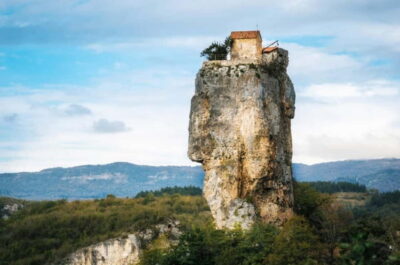


1 Day Private Armenia: UNESCO, Soviet & Curated Family Lunch
Read our review →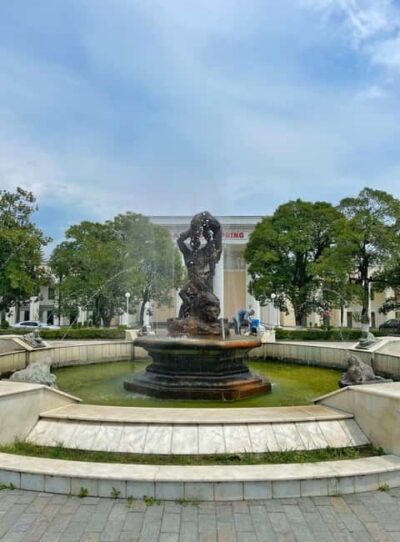
Abandoned sanatoriums of tskaltubo – group tour from Kutaisi
Read our review →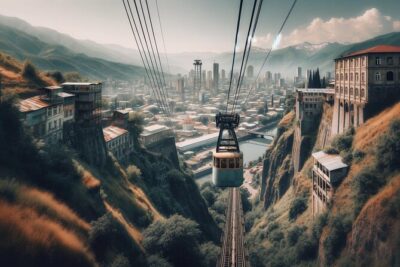
Chiatura Tour with Katskhi Pillar & Cable Car Experience
Read our review →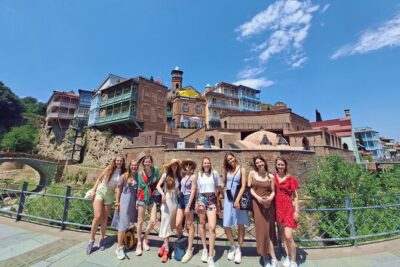
Tbilisi old town & soviet heritage – Private driver-guided Tour
Read our review →
Brutalist Tbilisi: Urban exploration and untold stories
Read our review →
Armenia: 1 Day Soviet gems, UNESCO + Family lunch (Small group)
Read our review →Browse the lists this tour appears in