
Reviewed · MTSKHETA ANCIENT CAPITAL TOURS
Georgia Day Trip: Mtskheta, Jvari, Uplistsikhe & Gori
Ancient sites in one day can feel rushed, but this route is built for momentum. You get Mtskheta and the river views from Jvari Monastery, then you switch gears to the rock-cut Uplistsikhe cave city and finish in Gori for Stalin landmarks. It is a compact day that still leaves room to breathe, take photos, and actually listen.
I especially like that the tour covers two of the country’s biggest religious anchors, Jvari and Svetitskhoveli Cathedral, in a realistic time window instead of turning everything into a drive-by. Second, the group size is kept small, max 19 in a van, which makes it easier to hear the guide and move efficiently between stops.
One thing to consider: the day is full and walking is unavoidable, especially at Uplistsikhe. Also, if your group is mixed between English and Russian speakers, you may notice some repetition because the guide covers the same ground in more than one language.
In This Review
- Key things that make this tour worth your day
- Why this Mtskheta to Uplistsikhe loop works so well in 10 hours
- Jvari Monastery: 30 minutes of river views and a 6th-century setting
- Mtskheta and Svetitskhoveli: UNESCO gravitas without feeling like a museum tour
- Uplistsikhe cave city: the labyrinth you remember, not just the facts
- Gori and Stalin: museum timing and what entrance fees change
- The Mtskheta restaurant break: how to use your 1.5 free-time window
- Transport, comfort, and the one timing rule that saves your day
- Local guides: where Konstantin and Stephane shine
- What to bring, what not to do, and who should skip this trip
- Value check: is $19 reasonable for this route?
- Should you book this day trip?
- FAQ
- How long is the Georgia day trip?
- What places are included in the tour?
- Is lunch included?
- Are entrance fees to the Stalin Museum included?
- What languages will the live guide speak?
- What should I bring for the day?
- Is smoking allowed on the tour?
- Is this tour suitable for wheelchair users or people with mobility impairments?
Key things that make this tour worth your day
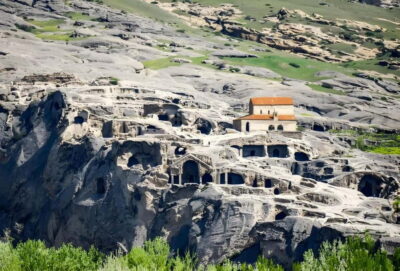
- Uplistsikhe cave-town: rock-hewn tunnels and dwellings, the kind of place where every turn feels like a new room
- UNESCO stops in Mtskheta: Jvari plus Svetitskhoveli Cathedral, both tied to Georgia’s early Christian story
- Gori for Stalin context: you see the Stalin Museum area and the preserved pieces connected to his life
- Small-van logistics: max 19 keeps the rhythm smoother and the sightseeing more personal
- Local-guide energy: guides like Konstantin and Stephane are praised for clear, lively explanations
- Plan for outdoor time: bring water and sunscreen, and wear shoes you trust on uneven ground
Other Gori and Uplistsikhe cave-town trips:
- From Tbilisi:FullDay Tour to Mtskheta,Jvari,Gori&Uplistsikhe★ 4.6 · 10 reviews
- Day trip to ancient history-Mtskheta,Gori,Uplistsikhe★ 4.7 · 7 reviews
- Jvari, Mtskheta, Gori & Uplistsikhe tour from Kutaisi★ 5.0 · 3 reviews
- Private Day Trip to Uplistsikhe, Mtskheta, Jvari & Gori★ 5.0 · 2 reviews
Why this Mtskheta to Uplistsikhe loop works so well in 10 hours
This is a classic Georgia day-trip shape, but it avoids the usual problem of either cramming too much in or skipping the details that make a place matter. You start in the Tbilisi area at Evropis Moedani, then the route steadily moves from big-view monasteries to ancient capital sites, and finally to a Soviet-era chapter in Gori.
The timing makes sense for first-timers because each stop has a clear purpose. Jvari is about location and scenery. Mtskheta is about meaning, the kind of religious landmark that makes Georgia feel different from its neighbors. Uplistsikhe is the physical wow factor. And Gori gives you a human-scale ending that contrasts sharply with the earlier centuries.
You also get comfortable transport in a minivan, capped at 19 people. That small limit matters more than you might think because it helps keep the group together, and it reduces the “who went where” chaos that can happen on longer day tours.
Jvari Monastery: 30 minutes of river views and a 6th-century setting
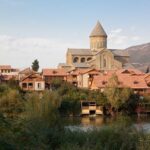
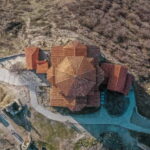
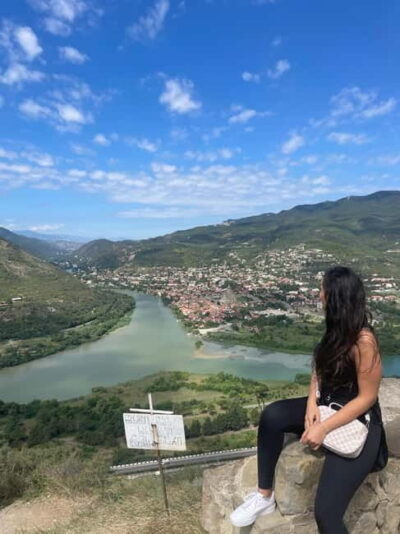
Your first sightseeing stop is Jvari Monastery. You will have a photo stop plus a guided visit for about 30 minutes. Even in a short time, Jvari delivers because it is built for viewpoints: you look over the rivers in a way that makes the landscape feel tied to the faith.
Jvari dates to the 6th century, so you are standing somewhere that has been part of Georgia’s story for an impressively long time. The guided component helps you connect what you see now with what the site meant back then, instead of just taking pictures and moving on.
Practical tip: this is not a stop where you should rely on fast shoes. Wear comfortable footwear because you will likely move on uneven ground while you find the best angles for photos.
Mtskheta and Svetitskhoveli: UNESCO gravitas without feeling like a museum tour
Next comes Mtskheta, Georgia’s ancient capital and religious center. You get a photo stop, then guided sightseeing for around 40 minutes. The star here is Svetitskhoveli Cathedral, a UNESCO World Heritage site and one of the country’s most revered landmarks.
This is one of those places where a guided explanation changes everything. Without context, cathedrals can feel like stone and candles. With context, you start to see why people treat Svetitskhoveli like a national anchor point, tied to identity as much as religion.
The time is short enough that you will still feel the day moving, not stuck. But it is long enough that you can walk around, absorb the scale, and connect the stop to what you learned earlier at Jvari.
If you care about photography, Mtskheta is a good target. You will be able to pause for pictures and not feel like you are always sprinting to the next vehicle.
Uplistsikhe cave city: the labyrinth you remember, not just the facts
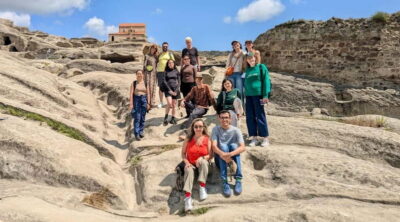
Then the tour shifts to Uplistsikhe, the ancient rock-hewn cave-town that dates back to the early Iron Age. You get about 1.5 hours, including a guided experience.
This is the stop that often makes the day click. Uplistsikhe is not a single cave. It is a whole carved environment, with cave dwellings and churches cut directly into the rock. The layout can feel labyrinth-like, which is exactly why it works on a guided tour. Your guide can point out what you are looking at and how the site functioned, instead of leaving you to guess.
What to watch for: Uplistsikhe is partly outdoor and partly carved paths. You will want comfortable shoes and a steady pace. Hat and water help because there can be sun exposure between rock areas.
Also, expect your brain to get overloaded in a good way. You will see so many cut details that it is easy to forget to look up. Slow down for a moment and check the view lines and the way the city fits into the hills. That is where the place starts feeling bigger than a list of sights.
Other Mtskheta and Jvari trips:
Gori and Stalin: museum timing and what entrance fees change
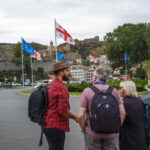
The day ends in Gori, famous as Joseph Stalin’s birthplace. You have a Stalin Museum stop that includes a photo stop and a guided visit for about 1.5 hours. Just know this: entrance fees to the Stalin Museum are not included.
That matters because if you show up unprepared, you can lose time at the exact moment you want to be inside. It is worth planning for that extra cost so you do not feel rushed once you get there.
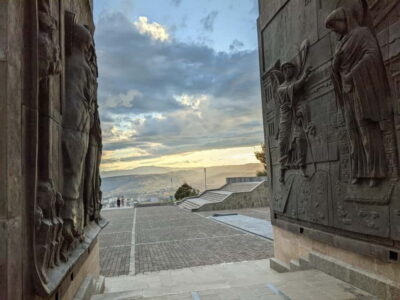
Highlights for this stop include seeing parts tied to Stalin’s life, like his original house and his railway car. The museum guidance can also vary by what staff members cover once you are inside, so if you have a specific question about Stalin’s biography, ask your guide before you head in.
One more reality check: the museum portion can be informative, but it is not always a full life story laid out start to finish. If your goal is strict history detail, come with a few topics you want answered, such as early life, rise to power, or how the museum frames the era.
The Mtskheta restaurant break: how to use your 1.5 free-time window
Midday includes a local restaurant break with about 1.5 hours total time. Lunch is not included, so this is your chance to eat on your terms.
Use the free window smartly:
- If you are hungry, order early so you do not eat while everyone else is returning to regroup
- If you want more photos, step outside the busiest spots first, then eat when the crowd energy calms down
- If you are sensitive to heat, plan shaded time before you head back out
This stretch is not just for food. It is also where your brain resets after the religious stops and before the big physical experience of Uplistsikhe and Gori.
Transport, comfort, and the one timing rule that saves your day
The tour uses transportation in a comfortable van, and the group maximum is 19. That is a big plus because you are not wedged into a tiny vehicle with strangers and then forced into long, awkward regrouping at each stop.
Still, one practical note from the real-world experience of small-van tours: the minivan can be not super comfy on longer drives, even when it is clean. Bring water, and consider what you need for a full day sitting.
The other timing factor is punctuality. If a few people are late, the group can pause longer than you expect. My advice is simple: arrive early at Evropis Moedani and be ready to board well before the start time. It protects your itinerary and keeps the day from feeling dragged.
Local guides: where Konstantin and Stephane shine
This tour’s quality often comes down to the guide. In feedback tied to this route, names like Konstantin and Stephane show up for a reason: they are described as engaging, responsive, and happy to answer questions.
That is important because these sites have layers. If the guide only reads facts, you get trivia. If the guide explains why Jvari matters, what Svetitskhoveli represents, and how Uplistsikhe was used, you get understanding.
One caution: if the group includes both English and Russian speakers, the guide may repeat the same explanations in different languages. If you are a solo English speaker joining a mixed-language group, keep your expectations flexible. If you are comfortable understanding some Russian narration, you will likely feel less repetition and more flow.
At the Stalin Museum, there can also be a different style of guiding once you are inside, including staff-led guidance that can be strongest in English. So your best strategy is to listen closely at the beginning and ask one or two pointed questions to get your money’s worth.
What to bring, what not to do, and who should skip this trip
Georgia’s day trips can look easy on paper, but this one involves walking on real terrain. Bring:
- Comfortable shoes
- Hat
- Camera
- Sunscreen
- Water
Smoking is not allowed.
As for who should consider skipping, the tour is listed as not suitable for:
- Children under 6
- Pregnant women
- People with mobility impairments
- Wheelchair users
That is mostly about walking, uneven surfaces, and the general difficulty of moving through cave and outdoor areas in a full day format. If you fall into any of those categories, it is smarter to choose a more accessible itinerary with fewer steps.
Value check: is $19 reasonable for this route?
At $19 per person, the value is mainly in the structure: you get transportation, plus guided visits to Uplistsikhe, Jvari Monastery, and Svetitskhoveli Cathedral. Those are the kinds of sites that can cost time and hassle if you do them on your own, especially if you are relying on schedules and local transport.
The two key things not included are also straightforward:
- Lunch
- Entrance fees to the Stalin Museum
So the real cost is the base price plus what you choose to spend on food and museum entry. For many visitors, that is still a good deal because you are buying a whole-day plan with minimal decision-making and a guide who ties it together.
Should you book this day trip?
Book it if you want a one-day hit of Georgia’s top themes: ancient religious landmarks, a serious cave city, and a stark historical ending in Gori. It is also a solid choice if you like guided explanations and you prefer a small group format.
Consider passing or choosing something else if you need an easy, low-walking itinerary, or if you are sensitive to long sitting and sun exposure. Also, if you are picky about language precision, remember that mixed-language groups can mean repeated narration.
If you do book, the move that pays off most is simple: show up early at Evropis Moedani, bring water and sunscreen, and wear shoes made for stone paths. Do that, and you will have the kind of day where each stop feels like a chapter, not a checklist.
FAQ
How long is the Georgia day trip?
The duration is 10 hours.
What places are included in the tour?
The tour includes visits to Uplistsikhe cave-town, Jvari Monastery, and Svetitskhoveli Cathedral in Mtskheta. It also includes a Stalin Museum stop, though entrance fees are not included.
Is lunch included?
No, lunch is not included.
Are entrance fees to the Stalin Museum included?
No, entrance fees to the Stalin Museum are not included.
What languages will the live guide speak?
The live tour guide speaks Russian, Georgian, and English.
What should I bring for the day?
Bring comfortable shoes, a hat, camera, sunscreen, and water.
Is smoking allowed on the tour?
No, smoking is not allowed.
Is this tour suitable for wheelchair users or people with mobility impairments?
No. It is listed as not suitable for wheelchair users and people with mobility impairments.
More 1-Day Tours in Mtskheta
- Tbilisi: Day Trip to Kazbegi, Gudauri, Gergeti, and Ananuri
★ 4.9 · 3,203 reviews - Day Trip to Kakheti Wine Region Including 9 Wine Tastings
★ 5.0 · 2,774 reviews - Day Trip to Kazbegi and Gudauri
★ 5.0 · 2,009 reviews - Day Trip to Mtskheta Gori and Uplistsikhe
★ 5.0 · 1,801 reviews
Newer trips around Mtskheta
- From Tbilisi: Private Jvari & Mtskheta Tour
★ 5.0 · 1 review - Private Day Trip to Uplistsikhe, Mtskheta, Jvari & Gori
★ 5.0 · 2 reviews - Tbilisi: Private Tour of UNESCO Wonders & Ancient Georgia
★ 5.0 · 2 reviews - UNESCO Gems of Mtskheta – Old Capital of Georgia
★ 5.0 · 3 reviews - Jvari, Mtskheta, Gori & Uplistsikhe tour from Kutaisi
★ 5.0 · 3 reviews - Private Mtskheta Tour: UNESCO Sites & Secret Shio-Mgvime
★ 5.0 · 4 reviews
Mtskheta Ancient Capital Tours, compared.
Mtskheta, Jvari, Gori and Uplistsikhe Day Tour
Read our review →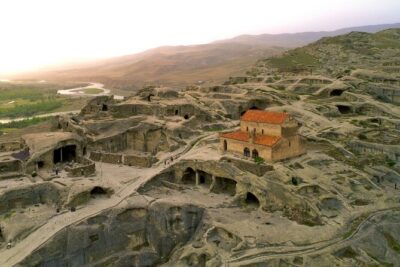
Mtskheta Jvari Bazaar, Chronicles of Georgia & Wine
Read our review →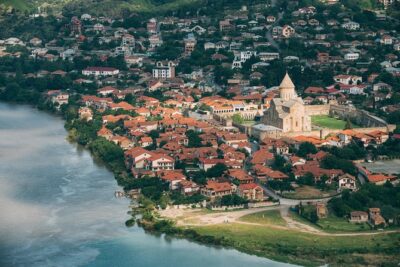
Mtskheta,Jvari,Bazaar,wine tasting,Chronicles of Georgia
Read our review →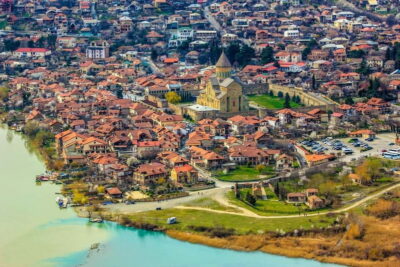
The Chronicles of Georgia, Jvari & Mtskheta Tour
Read our review →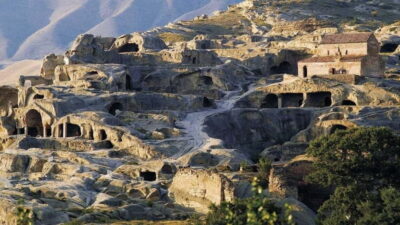
Browse the lists this tour appears in