
Reviewed · MTSKHETA ANCIENT CAPITAL TOURS
Day trip to ancient history-Mtskheta,Gori,Uplistsikhe
Jvari, Gori, and Uplistsikhe in one day? That is a lot of Georgia for $25. I love the pacing that keeps you moving without feeling rushed, and I especially like how each stop has a clear purpose, from monastery views to cave-city streets. One possible drawback: the lunch window can feel long if you are trying to keep the day tight.
What makes this tour work is the human touch behind the logistics: professional pickup, real punctuality, and a guide who tries to account for what people want in the moment. In the past, guides like Levani and George have been praised for handling English and Russian smoothly, and Misha was noted for keeping the vibe friendly and organized.
In This Review
- Key things you should notice before you go
- Jvari Monastery: the view that sets your whole day
- Gori and Stalin’s birthplace: a guided visit, not just a stop
- Uplistsikhe cave city: where stone rooms feel like a living maze
- Lunch plus tastings: food breaks that do not feel like filler
- Mtskheta and Svetitskhoveli Cathedral: the heart of the Georgian church
- Timing, transport, and who this 8-hour loop suits
- Price and value: what $25 includes, and what costs extra
- Should you book this Mtskheta, Gori, Uplistsikhe day trip?
- FAQ
- FAQ
- Where is the meeting point?
- How long is the tour?
- What is included in the price?
- Is lunch included?
- What languages are available for the guide?
- Is the tour suitable for everyone?
Key things you should notice before you go
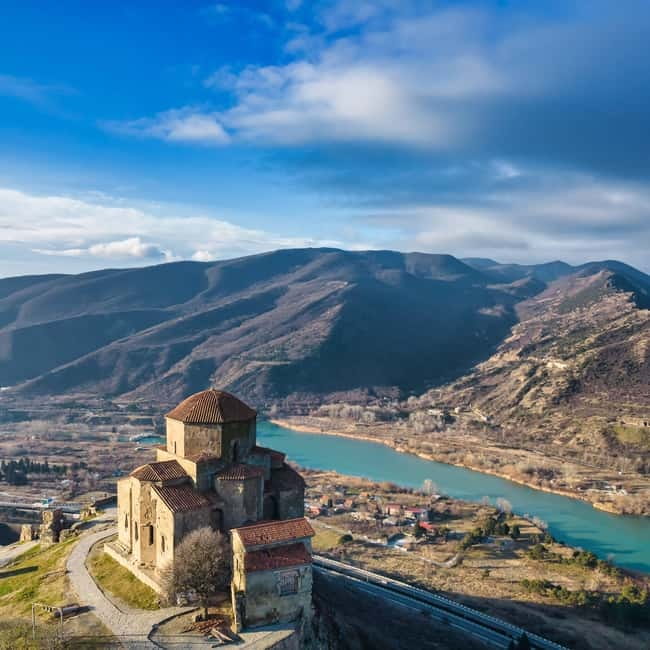
- Jvari first, so you get an instant wow moment over Mtskheta and the river view.
- Gori meets real-world history, with a guided look at Stalin’s birthplace house and his armored carriage.
- Uplistsikhe is a stone cave city, where you spend real time walking the carved rooms and corridors.
- Food and taste breaks are built in, including lunch plus stops where you can try local sweets, wine ice cream, and wine, and even spirits during the day.
- Small buffer for photos, because the itinerary includes photo stops at most major sights.
- Not for everyone, since the tour is not suitable for people with heart problems or epilepsy.
Other Gori and Uplistsikhe cave-town trips:
- Georgia Day Trip: Mtskheta, Jvari, Uplistsikhe & Gori★ 4.8 · 21 reviews
- From Tbilisi:FullDay Tour to Mtskheta,Jvari,Gori&Uplistsikhe★ 4.6 · 10 reviews
- Jvari, Mtskheta, Gori & Uplistsikhe tour from Kutaisi★ 5.0 · 3 reviews
- Private Day Trip to Uplistsikhe, Mtskheta, Jvari & Gori★ 5.0 · 2 reviews
Jvari Monastery: the view that sets your whole day
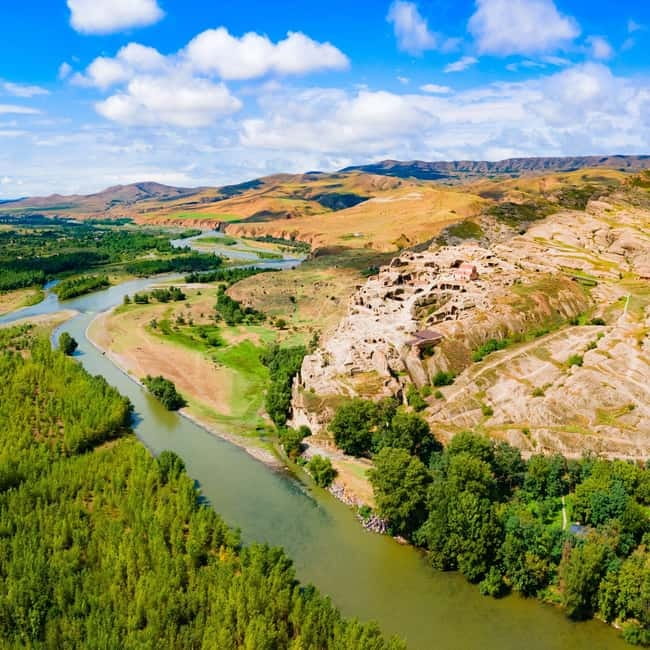
You start in Old Tbilisi at 21 Ovanes Tumaniani St, near the I LOVE TBILISI area. From there, the drive heads straight to Jvari Monastery (6th to 7th centuries), and the timing matters. The first real stop hits early enough that you feel the day before it turns into a checklist.
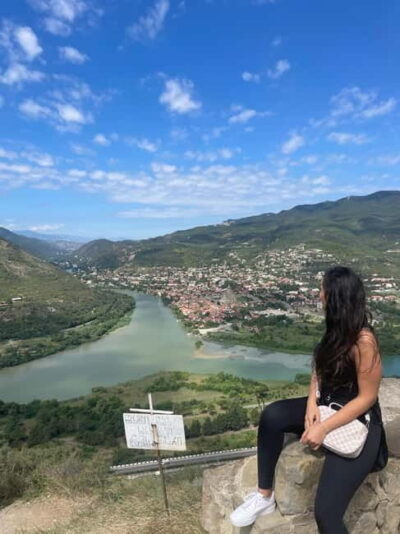
Jvari is known for two things you will feel right away: the age of the place and the view. The monastery temple sits above the city of Mtskheta, and you get a wide look over the ancient capital area. It is one of those spots where the photos almost do not do it justice, because the scale comes from standing there, seeing how the city and valley sit together.
In practice, your time here is not only about walking the grounds. You get a mix of photo time and a guided visit, plus breaks for coffee and even spirits tasting as the schedule allows. That is a smart approach if your group includes different energy levels. If you want quiet minutes, you get them. If you want a quick snack, you get that too.
Gori and Stalin’s birthplace: a guided visit, not just a stop
Next up is Gori, a smaller provincial city that has been known worldwide mainly because of I. V. Stalin (Dzhugashvili). The tour keeps expectations realistic. You are not just staring at buildings. You are going to places tied to his early life, including the house-museum where he was born, and the armored carriage.
The value here is how the guide frames the information. The day is structured so you learn while you walk, and you do not spend time guessing what you are looking at. A museum guide explains details from Stalin’s life, which helps you connect the objects to the story instead of treating them like random displays.
One word of caution: this is history with political weight. If you get uncomfortable with heavy themes, you might want to pace your emotional distance and focus on the museum context. If you are curious about how personal history connects to later events, this is exactly the kind of stop that turns a day trip into more than sightseeing.
Also, the schedule gives about two hours in Gori. That is usually enough time to see the key sites and still take a breath. If your group is moving fast, it can feel quick. If your group pauses for extra questions, your guide’s habit of trying to factor in guest wishes becomes useful.
Uplistsikhe cave city: where stone rooms feel like a living maze
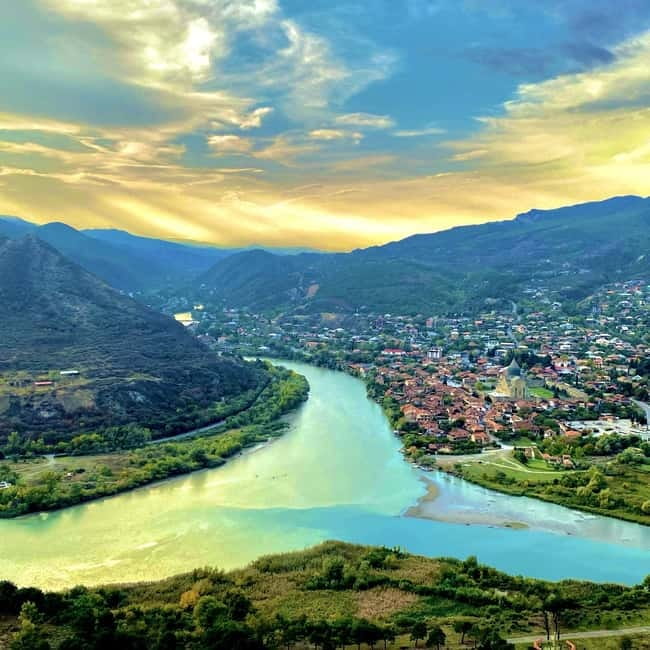
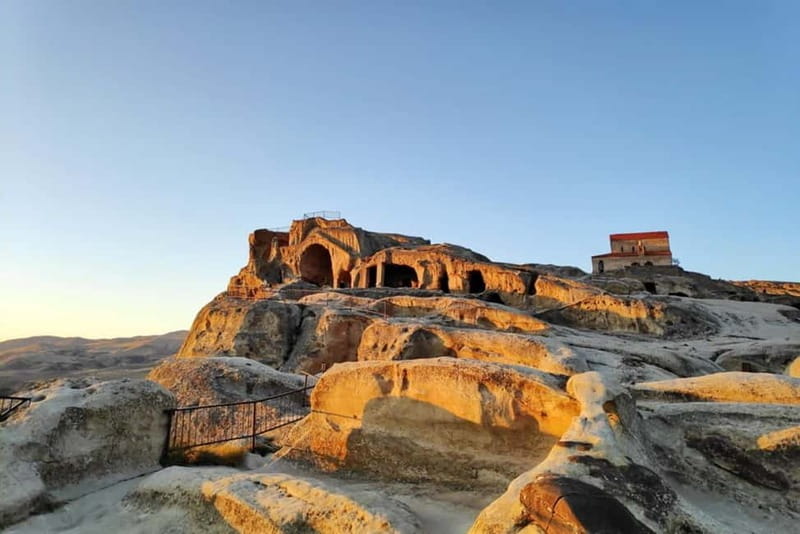
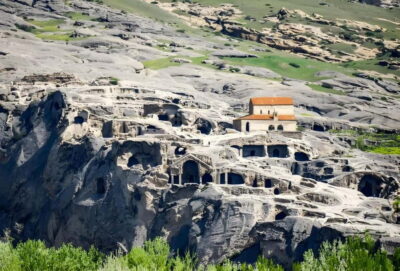
Then comes the part many people remember most: Uplistsikhe. The tour describes it as a city of priests and slaves, dating back to the first millennium before our time. Even if you do not catch every detail, the place communicates its age quickly. You are in a stone city carved into the rock, with cave grottoes that you can see and walk around.
This is not a museum room. It is an outdoor site made of carved spaces, so you feel the scale differently. The walking area can be uneven and the terrain is not designed for perfectly flat strolls, so wear shoes you can trust. The tour gives you around three hours here, which is important. Uplistsikhe rewards slow attention, because it takes time to understand how the spaces relate.
I like this stop because it breaks the pattern. Jvari is about a view. Gori is about specific historical objects. Uplistsikhe gives you a sense of daily life in a different way, through the architecture itself, the way rooms open and narrow, and the way light changes in carved areas.
Your guide will handle the narrative and point out what to look for, which helps if your brain wants a story, not just shapes in rock. And there is usually room for photo breaks and a short walk, so you can focus on what you came for, caves and stone city vibes included.
Lunch plus tastings: food breaks that do not feel like filler
After Uplistsikhe, you are invited to lunch at a cozy restaurant. Lunch is not included in the price, so plan for it in your budget. That said, the lunch stop is part of the design of the day, not an afterthought. It is placed after the cave city, so you can reset your energy before you head back toward Mtskheta.
This tour also leans into Georgia’s small pleasures. Along the way and at certain stops, you may have chances to taste wine, wine ice cream, local sweets, and pick up souvenirs. If you are the type who collects edible memories, this matters. You are not only seeing stone and churches, you are also taking home flavor.
There is also mention of spirits being offered during the day. That is a great way to try something small without committing to a big purchase. It is also a reminder that your schedule includes tastings, so if you are sensitive to alcohol, you may want to keep it light and sip rather than sample everything.
Now the one downside to note again: some people can find the lunch timing a bit long. If your ideal day is fast and nonstop, you might feel the break drifts. If you like time to regroup and chat, this kind of pause can actually make the second half of the day more enjoyable.
Other Mtskheta and Jvari trips:
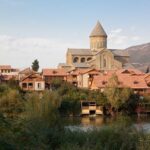
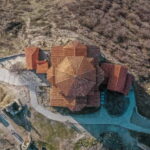

Mtskheta and Svetitskhoveli Cathedral: the heart of the Georgian church
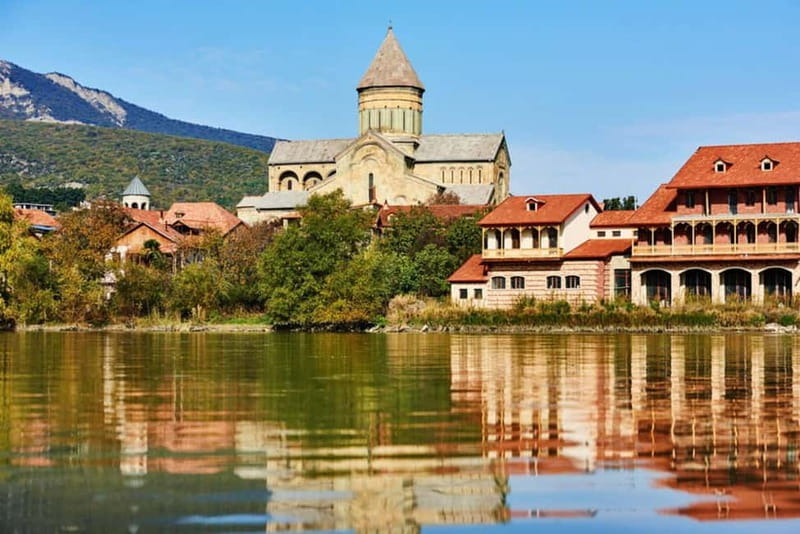
After the cave city and the food break, you head back into the spiritual and cultural center of the route. You visit Svetitskhoveli Cathedral in Mtskheta, described as the second largest temple in Georgia. More importantly, it has always been considered the heart of the Georgian church, and it remains that way today.
This stop is different from the earlier ones. At Jvari, you got a wide view. At Uplistsikhe, you got a physical sense of how a community lived. Here, you get symbolism, faith, and architecture all in one place. The guided visit helps because cathedrals like this can feel overwhelming if you do not know where to look first.
The itinerary gives you about one and a half hours at Svetitskhoveli, with time for a break and photo stop. That is usually enough to absorb the cathedral, get your bearings, and still keep the day on track for the return to Tbilisi.
One small thing I really like about how this tour is built: you end the sightseeing part near the places that connect most clearly to Georgian identity. By the time you are at Svetitskhoveli, your brain is ready to switch gears from stone city to living tradition.
Timing, transport, and who this 8-hour loop suits
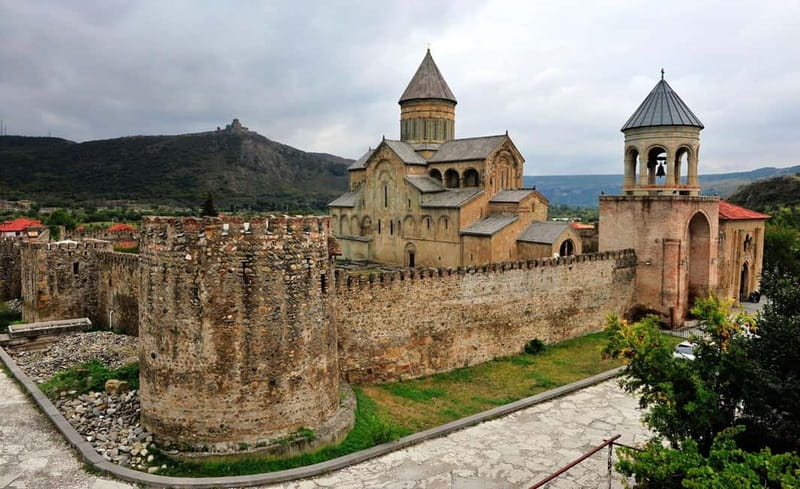
This is an 8-hour day trip that starts from Old Tbilisi at 21 Ovanes Tumaniani St near I LOVE TBILISI. You are paying for a full day of transport services plus an English-speaking guide, with mineral water (0.5 l per person) included. That mix is practical. It means you do not have to fight with timing between sites.
The itinerary is built around four major anchors: Jvari, Gori, Uplistsikhe, and Svetitskhoveli. Breaks and photo stops are layered in so the day feels human instead of mechanical. Guides like George and Levani have been praised for keeping both English and Russian guests engaged, which matters if you end up in a mixed-language group.
But there are real considerations. The tour is not suitable for people with heart problems or epilepsy. Also, Uplistsikhe is a cave city setting, so expect some walking on uneven ground and stairs or sloped areas in carved spaces. If you have mobility limits, you should ask what the walking route looks like before booking.
For best fit, this is ideal for you if:
- You want an ancient-to-20th-century story arc in one day (monastery, Soviet-era history, then cave city).
- You like guided explanations, not just free time.
- You enjoy tastings like wine, wine ice cream, sweets, and the chance to buy small souvenirs.
Price and value: what $25 includes, and what costs extra
At $25 per person for an 8-hour day trip, this tour is priced like a value play, not a luxury day. And what you get for that price is solid: transport, an English-speaking guide, and mineral water.
The two main extras are also clear:
- Lunch expenses are not included
- Museum entry tickets are not included
That is normal for day trips in Georgia, and it is also a planning advantage. You can control how you spend. If you budget for lunch and any museum fees ahead of time, the rest of the day feels straightforward.
One more value point comes from the way time is allocated. People love that each stop gets enough attention to matter, but the tour still keeps moving. That is hard to do on a full-day route, and this one tries to get it right.
The result is that your money buys organization, guidance, and transport, so you spend your mental energy on the sights instead of logistics.
Should you book this Mtskheta, Gori, Uplistsikhe day trip?
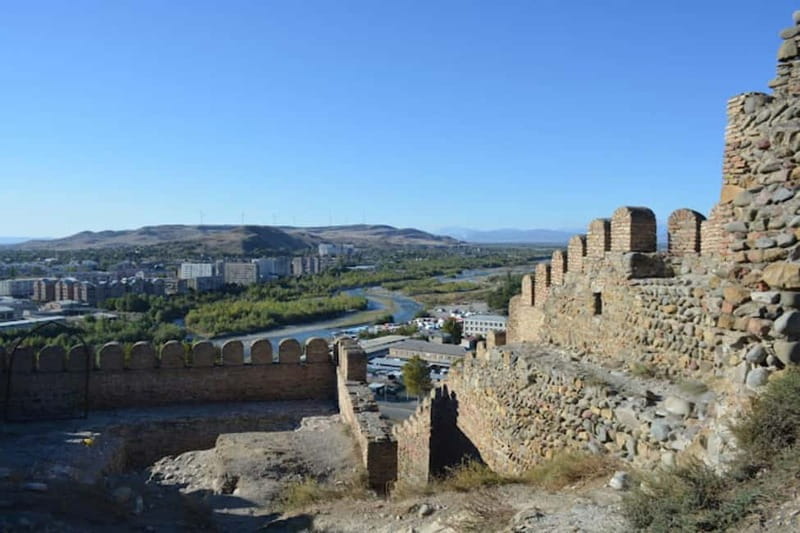
If your goal is a single-day hit of Georgia’s big themes, I think you should book it. The mix of Jvari’s monastery viewpoint, Gori’s Stalin sites, and Uplistsikhe’s cave city gives you variety you do not usually get in one day. Add Svetitskhoveli Cathedral at the end and you get a satisfying arc: view, political history, ancient stone city, then Georgian church heart.
Book it especially if you like guided storytelling and you want the day to flow with fewer decisions. The emphasis on punctuality and professionalism is a good sign if you hate time-wasting.
Skip it or ask questions first if you need step-free routes or if you have health concerns, since it is not suitable for heart problems or epilepsy. Also, if you dislike long sit-down meals, keep an eye on the lunch timing in your own pacing preferences.
FAQ
FAQ
Where is the meeting point?
The meeting point is in the heart of Old Tbilisi at 21 Ovanes Tumaniani St, near I LOVE TBILISI.
How long is the tour?
The duration is 8 hours.
What is included in the price?
The tour includes transport services, an English-speaking guide, and mineral water (0.5 l per person).
Is lunch included?
No. Lunch expenses are not included in the tour price.
What languages are available for the guide?
The tour is offered with a live guide in English and Russian.
Is the tour suitable for everyone?
It is not suitable for people with heart problems or epilepsy.
More 1-Day Tours in Mtskheta
- Tbilisi: Day Trip to Kazbegi, Gudauri, Gergeti, and Ananuri
★ 4.9 · 3,203 reviews - Day Trip to Kakheti Wine Region Including 9 Wine Tastings
★ 5.0 · 2,774 reviews - Day Trip to Kazbegi and Gudauri
★ 5.0 · 2,009 reviews - Day Trip to Mtskheta Gori and Uplistsikhe
★ 5.0 · 1,801 reviews
Other History Tours in Mtskheta
- Tbilisi: Guided Walking Tour of Historic City
★ 4.9 · 156 reviews - Mtskheta, Jvari, gori, uflistsikhe, history and panorama (group tours)
★ 4.5 · 107 reviews - Tbilisi old town & soviet heritage – Private driver-guided Tour
★ 5.0 · 83 reviews - Private Wine tasting in Historic Karalashvili Wine Cellar
★ 5.0 · 60 reviews
Newer trips around Mtskheta
- From Tbilisi: Private Jvari & Mtskheta Tour
★ 5.0 · 1 review - Private Day Trip to Uplistsikhe, Mtskheta, Jvari & Gori
★ 5.0 · 2 reviews - Tbilisi: Private Tour of UNESCO Wonders & Ancient Georgia
★ 5.0 · 2 reviews - UNESCO Gems of Mtskheta – Old Capital of Georgia
★ 5.0 · 3 reviews - Jvari, Mtskheta, Gori & Uplistsikhe tour from Kutaisi
★ 5.0 · 3 reviews - Private Mtskheta Tour: UNESCO Sites & Secret Shio-Mgvime
★ 5.0 · 4 reviews
Mtskheta Ancient Capital Tours, compared.
Mtskheta, Jvari, Gori and Uplistsikhe Day Tour
Read our review →
Mtskheta Jvari Bazaar, Chronicles of Georgia & Wine
Read our review →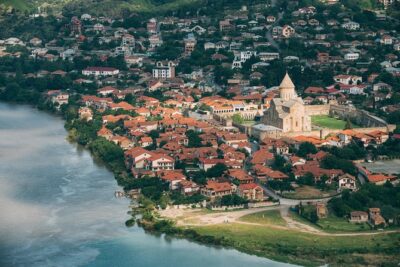
Mtskheta,Jvari,Bazaar,wine tasting,Chronicles of Georgia
Read our review →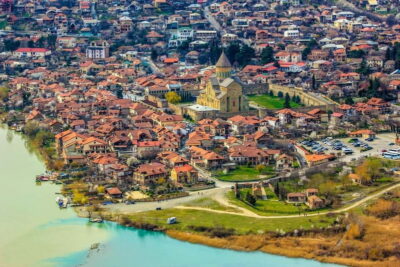
The Chronicles of Georgia, Jvari & Mtskheta Tour
Read our review →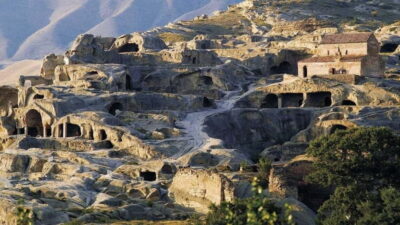
Browse the lists this tour appears in