
Reviewed · CHIATURA & TSKALTUBO SOVIET TRIPS
Group tour from Batumi to Kutaisi and Tskaltubo
Kutaisi feels like a warm-up act. Then Tskaltubo gets eerie fast. I like that the tour gives you a real Kutaisi walking route with key landmarks and photo stops, and I love how Tskaltubo focuses on the abandoned Soviet sanatoriums and springs, not just a quick glance. One thing to consider is that the day is long, and the overall timing can depend on how smoothly pickups and driving segments go.
You start at 09:00 in Batumi and roll through Kutaisi on foot with an English-speaking guide, then switch gears to Tskaltubo’s half-healed architecture and water-spring sites. The guide’s job is to connect the dots, from Georgia’s city stories to the Soviet-era occupation narrative in Tskaltubo.
By the end, you’re back in Batumi around 21:00, with plenty of walking and lots to photograph. If you want a relaxed, slow-paced day, this one might feel busy. If you like structure, photo-friendly stops, and a clear route, it’s a solid value.
In This Review
- Key things you’ll notice on this tour
- Kutaisi and Tskaltubo in one pass
- Kutaisi walking route, from fountain group to Mon Plasir arch
- Central Park icons: Ishkhnelebi and the 9 April memorial
- Market time at Mtsvane Bazari, plus the lunch reset
- The drive to Tskaltubo and why the springs matter
- Abandoned sanatoriums: Gelati, Medea, and Druzhba
- Tskaltubo central park and the train station finish
- Price and logistics: is $53 worth a 12-hour day?
- How to prepare so the day feels good
- Should you book this Batumi to Kutaisi and Tskaltubo tour?
- FAQ
- Where is the meeting point in Batumi?
- What time does the tour start and end?
- How long is the tour?
- How much does the tour cost?
- What do you do in Kutaisi during the walking portion?
- What sites are visited in Tskaltubo?
- Is lunch included?
- Is the tour guided in English?
- Can I cancel or pay later?
Key things you’ll notice on this tour
- Kutaisi downtown on foot: city hall, opera area, Mon Plasir arch, White Bridge, and more
- Central park moments: Ishkhnelebi statue and the 9 April memorial
- Market plus lunch break: time at Mtsvane Bazari and a reset before Tskaltubo
- Soviet water and stories: Spring #6 and Spring #8 with architecture details
- Sanatorium exploration: Gelati (children’s site), then Medea and Druzhba
- Easy day shape: one guided day plan, finished back in Batumi
Other Chiatura and Tskaltubo Soviet-era trips:
- Kutaisi:Chiatura Tour with Katskhi Pillar & Cable Car★ 4.9 · 433 reviews
- Abandoned sanatoriums of tskaltubo – group tour from Kutaisi★ 4.8 · 99 reviews
- Kutaisi:Chiatura Tour with Katskhi Pillar & Cable Car Experience★ 5.0 · 95 reviews
- Kutaisi: Chiatura Cable Cars & Katskhi Pillar Guided Tour★ 4.9 · 67 reviews
Kutaisi and Tskaltubo in one pass
This is a classic Georgia combo day: one city that shows you how Georgia built its civic identity, plus one resort town that shows what happens when grand health architecture gets left behind. I like that the itinerary doesn’t treat Tskaltubo as just scenery. You get guided context, including a stop where the guide talks about Soviet occupation and what the sanatorium system meant.
Kutaisi is your warm start. The walk takes you past major public buildings and bridges, then drops you into central park area symbolism. After lunch, Tskaltubo flips the mood. Springs, curving paths, and then those empty sanatorium buildings that feel frozen in time.
If you’re the type who enjoys “see it, understand it, photograph it,” this kind of day plan works well. If you prefer to wander at your own pace for hours, you might feel the schedule is tight.
Kutaisi walking route, from fountain group to Mon Plasir arch
The day begins with a downtown walk in Kutaisi. The guide explains Georgia and Kutaisi history while you cover the main sights, so you’re not just checking boxes. You’ll likely start near the fountain group, where the guide builds in time for pictures before moving on.
From there, you pass several central landmarks in sequence. Expect to go by the Kutaisi city hall and the opera house area, then continue toward Mon Plasir arch. There’s something satisfying about seeing these sites in the same order most visitors would only scatter across multiple trips. With one guide and one flow, you get the “city map” effect fast.
Two of my favorite stops on this route are the White Bridge and the park of love area. Even if you’ve seen similar bridge-and-park scenes elsewhere, Georgia’s design details make them feel local. The walk also includes the first gymnasium area, so you get a sense of how older institutions still shape the street rhythm.
A practical note: you’ll be walking continuously during the downtown portion, so wear shoes that handle uneven pavement and long stretches. This part is where you’ll earn most of your steps, before the day gets more dramatic in Tskaltubo.
Central Park icons: Ishkhnelebi and the 9 April memorial
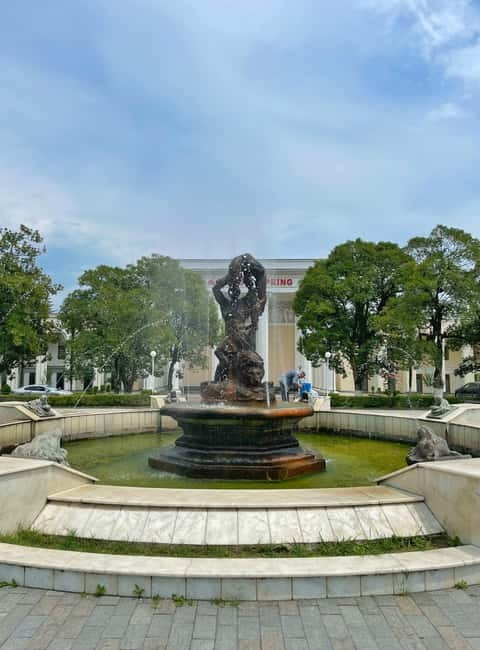
Kutaisi’s central park is more than a break in the walking. It’s where the tour slows enough for symbolism to land. You’ll visit the statue of sister Ishkhnelebi and the memorial of 9 April.
I like these stops because they shift the tour from architecture appreciation to people and memory. Even when you only spend a short time at each point, a good guide’s framing turns a photo moment into a story you can actually repeat later.
If you’re into memorials and public art, you’ll probably linger here a bit in your own way, even with the group pace. If you’re not into that, the upside is that the sights are easy to recognize and quick to understand, so you won’t feel lost or bored.
Market time at Mtsvane Bazari, plus the lunch reset
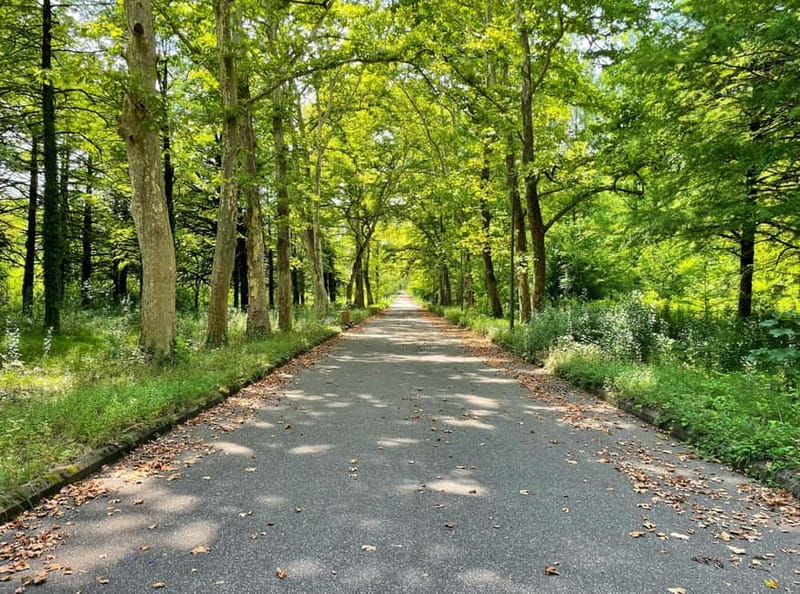
After the downtown walk, the itinerary includes a stop at Mtsvane Bazari, the central grocery market. Market visits can either feel like a distraction or a highlight, and here the timing matters. You’re already walking and sightseeing, then the market gives you a more everyday Georgia flavor before lunch.
The best way to use a market stop on a structured tour is simple: treat it as a sensory break. Look at produce, packages, and local food staples. If you want snacks, you’ll have an easy place to grab something before the drive.
Then you get a lunch break, which is important on a 12-hour day. Tskaltubo’s sanatorium circuit involves more walking and more time standing around taking in details, so you want to eat earlier rather than trying to power through on an empty stomach.
Other Kutaisi tours and day trips:
The drive to Tskaltubo and why the springs matter
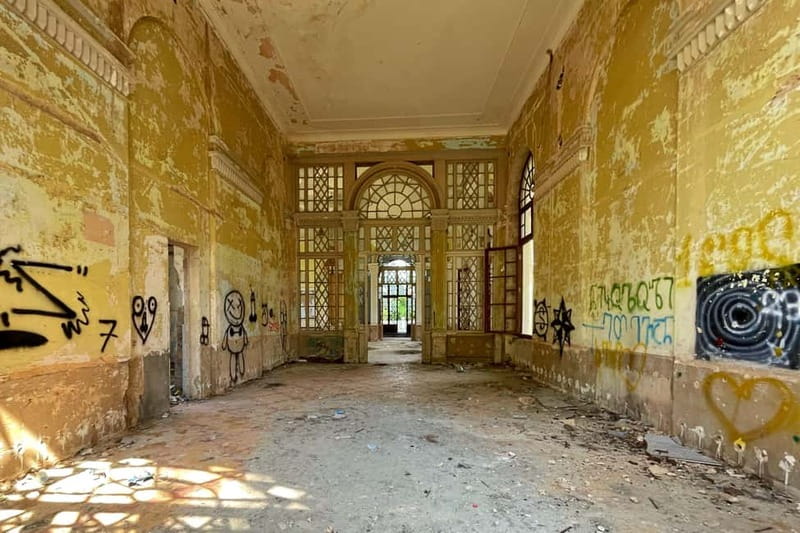
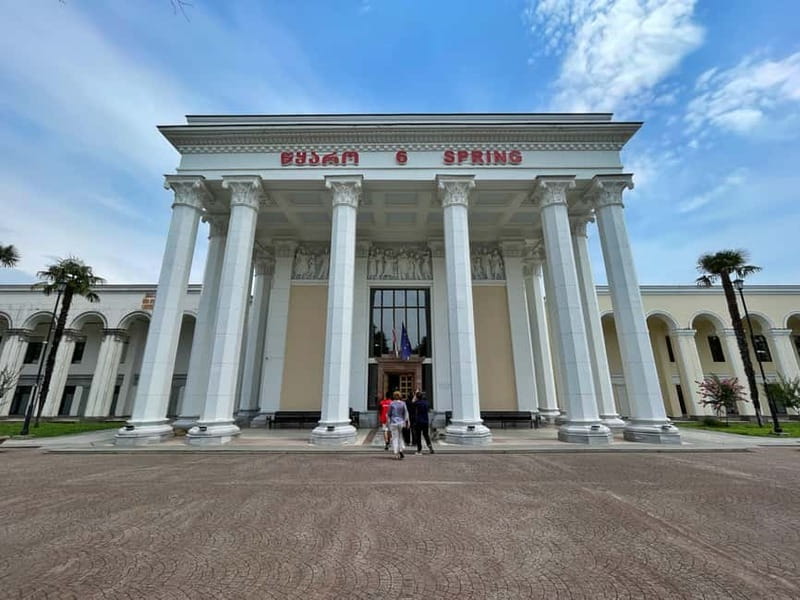
Once lunch ends, you drive to Tskaltubo. The water stops are a big part of why the town exists at all, and the tour leans into that. You’ll visit Spring #6 first, where the guide explains the Soviet occupation context. It’s a neat way to connect function to history, because these springs were not just tourist features. They were part of the health system.
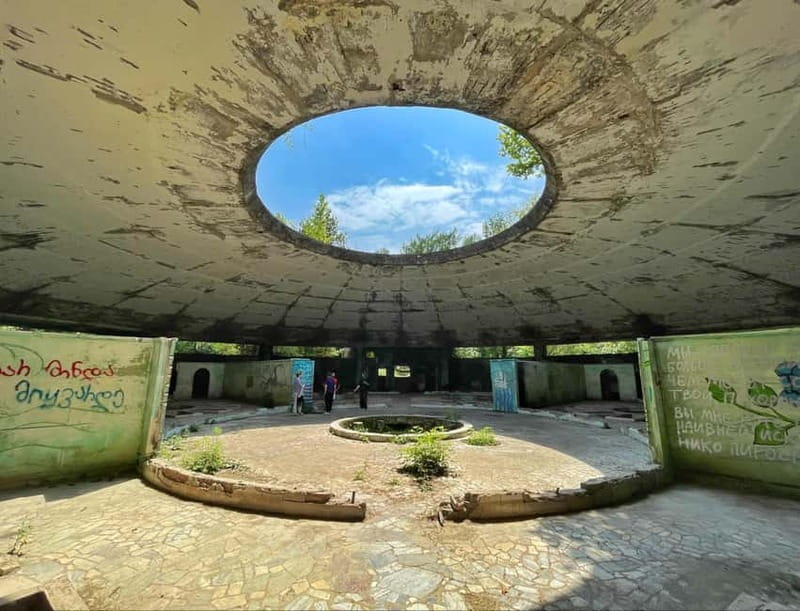
Then you move to Spring #8, known for its unusual architecture. This is where the tour becomes more visual and less lecture-driven. You’ll likely have time to pause and look up at the design language, the structure, and how the site shapes your view as you circle around.
If you’re traveling with kids, or you just like architectural weirdness, this segment tends to click. It’s not only about ruins and emptiness. It’s also about how the town was designed for ritual and recovery.
Abandoned sanatoriums: Gelati, Medea, and Druzhba
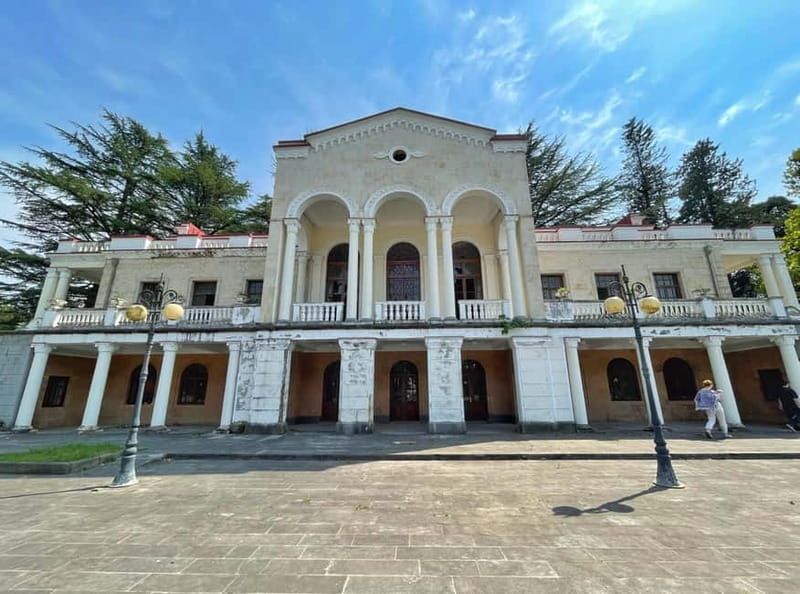
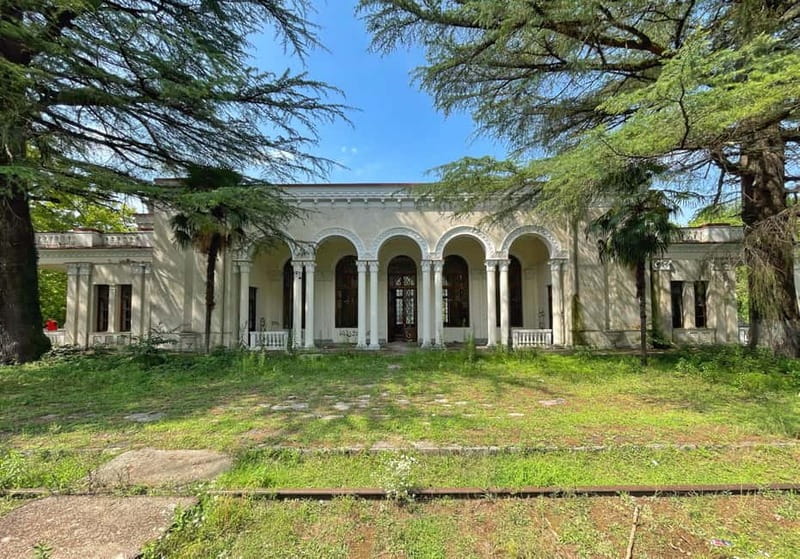
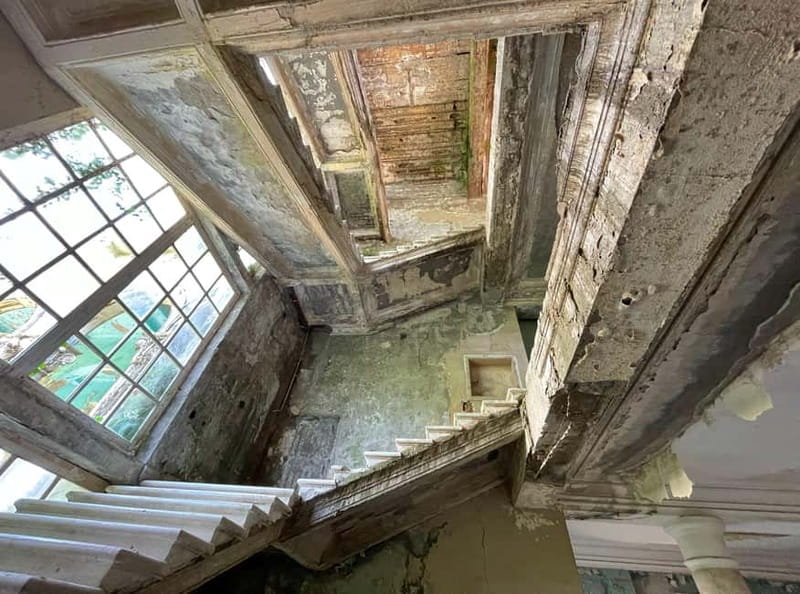
This is the core of the tour. Tskaltubo’s abandoned Soviet sanatoriums feel like a time capsule, but you don’t get stuck staring at walls. The guide keeps moving you through a sequence that builds curiosity.
You’ll start with Sanatorium Gelati, built especially for children. That detail matters. It changes your perspective. Instead of seeing it as a generic relic, you start imagining the daily life built into those spaces.
On the Gelati site, you can spot an old playground and enjoy a viewpoint over the inner construction. That inner view is often what makes this stop memorable, because it gives you depth. You’re not just looking at one façade, you’re seeing the structure’s logic from an angle.
After Gelati, you visit sanatorium Medea, followed by Druzhba. The names help, but the real value is the comparison effect: each building shows a slightly different way the Soviet health program tried to solve the same dream, better recovery, more control over wellness. Even if you don’t study architecture, you’ll sense the pattern.
A caution that’s practical rather than dramatic: ruins can be unpredictable. You’ll be walking around an abandoned area, so pay attention to where you step and keep your gear secure. If it’s wet or windy, move slowly and keep your path consistent.
Tskaltubo central park and the train station finish
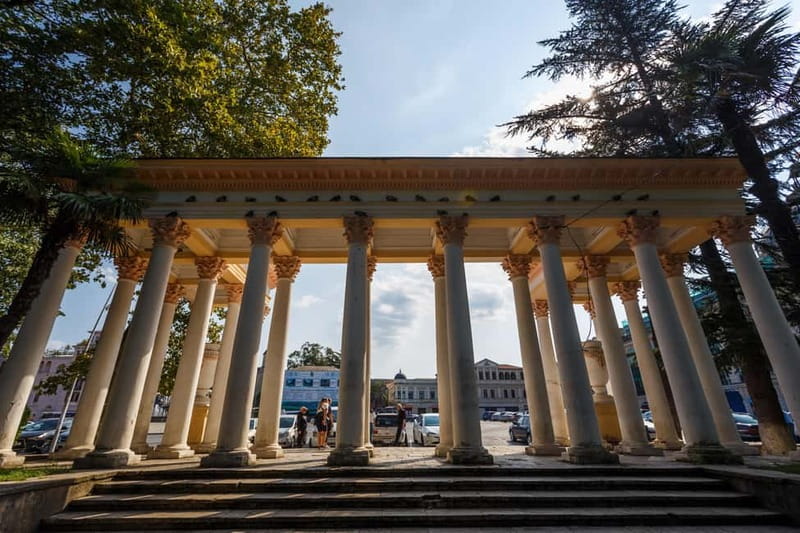
Your Tskaltubo time also includes Tskaltubo central park, listed as one of the highlights. It acts like a breather between the more haunting sanatorium exploration and the final stretch. Parks are where you can reset your eyes and let the day’s “Soviet geometry” sink in before you head to the last stop.
The final sequence is the train station of Tskaltubo. It’s a fitting end point, because the station ties back to the idea of a designed destination. This wasn’t just a place for locals. It was built for arrivals, departures, and seasonal health visits.
Then you’re back on the road to Batumi, wrapping up at 21:00. That return time matters. It’s late enough that you’ll want dinner plans on the Batumi side lined up, so you don’t waste energy scrambling.
Price and logistics: is $53 worth a 12-hour day?
At about $53 per person for a 12-hour day, this tour is priced for value, especially if you like guided structure. You’re getting two major regions in one go, and the tour includes a live English guide for the walking portions. You’re also getting dedicated time for the Soviet-era sites in Tskaltubo, which would be hard to organize yourself in a single day without local help.
Transport quality can be good, and it’s worth noting a bright spot: one guest specifically praised driver Levani for a modern, comfortable car and a smooth ride from Batumi to Kutaisi. That kind of comfort matters when your day runs long.
But the day can also be uneven. One guest reported that the driver did not speak English (only Georgian and Russian) and that there was an unexplained 45-minute stop on the way back while waiting for other passengers. Another account complained about timing slipping badly due to extra stops and delays. I can’t guarantee your experience, but I can say this: if you depend on English conversation with the driver, plan for the guide to be your main source of information.
So, is it worth it? For the right traveler, yes. If you want a guided day with clear stops, and you’re excited about Soviet sanatorium architecture plus Kutaisi city sights, the price feels fair. If you want a casual, no-rush day or you get stressed by late changes, you’ll feel the strain.
How to prepare so the day feels good
This is a walking day plus a ruin day. Your gear should match that reality.
Wear comfortable shoes you can trust on uneven surfaces, especially around abandoned sites where you’ll be stepping over old paths. Bring a light layer if the weather turns, and keep water handy during breaks. If you like photos, charge your battery and plan to shoot a lot in Tskaltubo, where the angles in and around the sanatoriums are the money shots.
Also, mentally switch modes around lunchtime. Kutaisi is classic city sights and bridges. Tskaltubo is eerie water sites and empty structures. If you try to keep the mood the same, you’ll miss the contrast. I like to treat this day as two chapters, and it makes the day feel more rewarding.
Should you book this Batumi to Kutaisi and Tskaltubo tour?
Book it if you want a high-impact day with a clear plan: Kutaisi on foot, then Tskaltubo’s springs and abandoned sanatoriums. You’ll get the kind of guided storytelling that helps you look at Soviet-era buildings with context, not just curiosity.
Consider a different option if you strongly prefer flexible pacing, or if you’re the type who hates timing changes. With any group tour, driving and pickup dynamics can shift the schedule, and communication may vary depending on the driver.
One more decision helper: if English guide clarity is important to you, this tour has a track record of strong guide performance. One guest named Giorgi as an English-speaking guide with humor, and that kind of guide energy really makes the ruins and history land.
FAQ
Where is the meeting point in Batumi?
The tour starts from the Budget Georgia office at 56 Gen. G.Mazniashvili street.
What time does the tour start and end?
It starts at 09:00 and finishes at 21:00 in Batumi.
How long is the tour?
The duration is 12 hours.
How much does the tour cost?
The price is $53 per person.
What do you do in Kutaisi during the walking portion?
You do a downtown walking tour, including stops around the fountain group, central park (with the Ishkhnelebi statue and the 9 April memorial), plus sights such as Kutaisi city hall, the opera house area, Mon Plasir arch, the White Bridge, park of love, the Golden marquee palace, and Mtsvane Bazari market.
What sites are visited in Tskaltubo?
You visit Spring #6 and Spring #8, and then explore abandoned Soviet sanatoriums including Gelati, Medea, and Druzhba, plus time around Tskaltubo central park and the train station.
Is lunch included?
Yes, there is a lunch break after the Kutaisi walking tour.
Is the tour guided in English?
Yes, there is a live tour guide in English.
Can I cancel or pay later?
You can cancel up to 24 hours in advance for a full refund, and you can reserve now and pay later.
Newer trips around Kutaisi
- Okatse Falls, Martvili Canyon and Prometheus Cave
★ 5.0 · 1 review - Private tour from KUTAISI Colourful Tbilisi, Jvari and Mtskheta
★ 5.0 · 1 review - Kutaisi uncorked: Wine Tasting at a local Family Home
★ 5.0 · 1 review - Private tour: Prometheus, Sataplia Caves Bagrati, Gelati
★ 5.0 · 1 review - Kutaisi Airport – Mestia Shared Transfer
★ 5.0 · 1 review - Tbilisi: Subaru Crosstrek 2014-2016, Rent, Self drive
★ 4.0 · 1 review
Chiatura & Tskaltubo Soviet Trips, compared.


1 Day Private Armenia: UNESCO, Soviet & Curated Family Lunch
Read our review →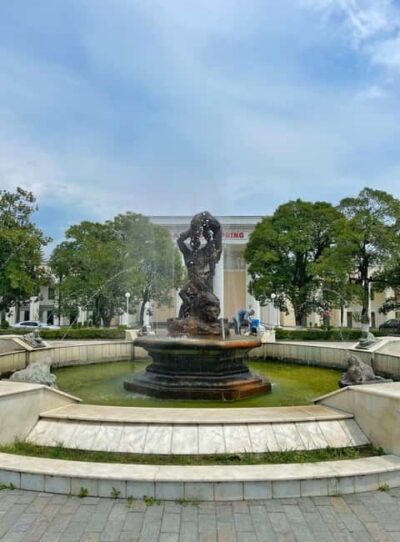
Abandoned sanatoriums of tskaltubo – group tour from Kutaisi
Read our review →
Chiatura Tour with Katskhi Pillar & Cable Car Experience
Read our review →
Tbilisi old town & soviet heritage – Private driver-guided Tour
Read our review →
Brutalist Tbilisi: Urban exploration and untold stories
Read our review →
Armenia: 1 Day Soviet gems, UNESCO + Family lunch (Small group)
Read our review →Browse the lists this tour appears in