
Reviewed · GEORGIAN FEAST & COOKING WORKSHOPS
Half-Day Famous Georgian Supra Feast
A Georgian feast in Tbilisi hits different. This half-day outing blends an old town stroll with khinkali and khachapuri cooking lessons, then turns into a full Georgian supra with wine, chacha, songs, and dance. I especially like how it’s staged in a real family setting, not a studio, and how you learn the toast flow and the drinking-from-a-horn basics. One thing to consider, if you’re picky about English throughout, is that the group can skew toward other languages, and translation may vary.
You get a tight route across iconic places, then a relaxed evening that moves at human speed. The pace is friendly for a 5:30 pm start, and the meal part feels like being brought into someone’s home rhythm. Still, at $150 per person, it’s best when you actually want both the sights and the food, not just one or the other.
In This Review
- Key highlights I’d plan around
- A Georgian supra is dinner with rules, songs, and meaning
- Old Tbilisi start: Meidan Bazaar to get your bearings fast
- Metekhi Cathedral and Rike Park: the camera goes to work
- Tbilisi Holy Trinity Cathedral: finishing with a big skyline moment
- The family winemaker house: where the atmosphere changes
- Khinkali and khachapuri masterclass: learn by doing
- The supra meal: what’s on the table and what to expect
- Wine, chacha, and learning the toast flow without pressure
- Songs, polyphony, and group dance practice
- English experience: usually great, but plan for mixed-language groups
- Price and value: is $150 per person worth it?
- Who should book this supra feast night
- Should you book the Half-Day Famous Georgian Supra Feast?
- FAQ
- Where does the tour start?
- What time does the experience begin?
- How long is the tour?
- What is included in the price?
- Is breakfast included?
- What language is the tour offered in?
- Is there a limit on the group size?
- What food and dishes are part of the meal?
- Do you learn anything, or is it only eating?
- Does the tour end back where it started?
Key highlights I’d plan around
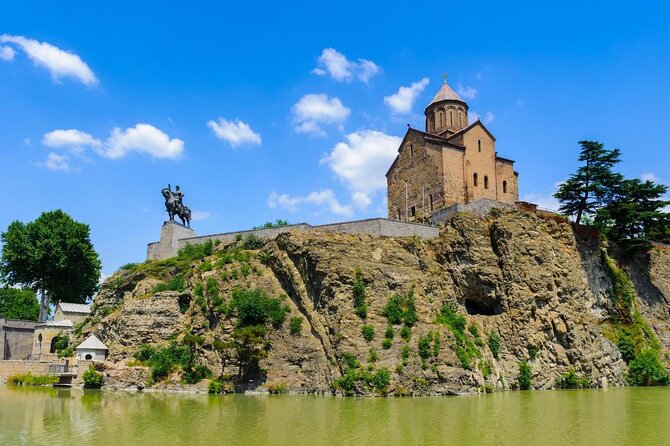
Old Tbilisi walking route with stops at Meidan Bazaar, Metekhi Cathedral, and viewpoints around Rike Park
Hereditary winemaker family visit that feels personal from the first minute
Khinkali and khachapuri masterclass plus hands-on learning you can use later
Suparules for toasts and the horn ritual explained in an easy, teach-as-you-go way
Songs, Georgian polyphony, and group dance practice to folk music (UNESCO listed)
Other Georgian feast and cooking workshops:
- Tbilisi: Georgian Cooking Class with Khinkali and Khachapuri★ 4.7 · 1,146 reviews
- Small-Group Khinkali and Khachapuri Cooking Class in Tbilisi★ 4.5 · 224 reviews
- Tbilisi: Cooking Class with a Local Family★ 5.0 · 104 reviews
- Cook True Ajarian Khachapuri and Khinkali in Highlanders Style★ 5.0 · 93 reviews
A Georgian supra is dinner with rules, songs, and meaning
A Georgian supra is not just a long meal. It’s a social system. The toastmaster sets the tone, food keeps coming, and the night follows a pattern that links conversation, gratitude, humor, and tradition. That structure matters, because it stops dinner from turning into random eating while you figure out what everyone is doing.
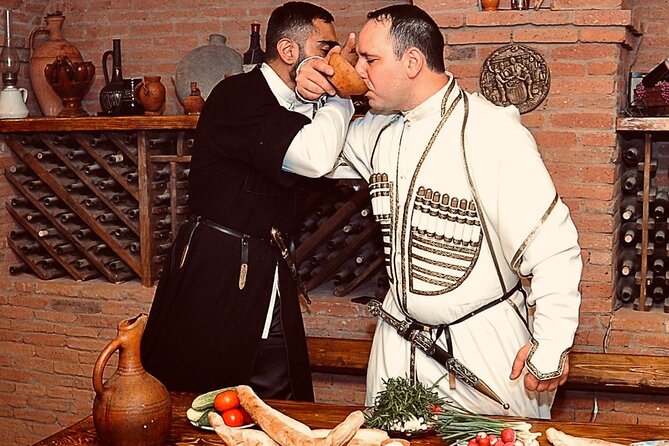
In this experience, you learn that rhythm instead of being left to guess. You’ll be taught the rules of the Georgian feast at ease, including the sequences of toasts and how to drink from a horn. It’s the kind of detail that makes you feel like an active participant, not a spectator with a plate.
Old Tbilisi start: Meidan Bazaar to get your bearings fast
The tour begins at the I Love Tbilisi sign (MRQ5+WG9). Starting near a central spot keeps you from spending the early part of the evening stuck in transit. With a 5:30 pm start and about four hours total, you’ll also catch that sweet time when daylight is fading, which makes photos around the river area look better without trying too hard.
Stop 1 is Meidan Bazaar. This is the place to understand how Tbilisi thinks in everyday life. Expect a walking introduction to old Tbilisi where your guide shares history, legends, and traditions connected to Georgian identity. You’ll also be pointed to the main sights of the capital, which helps you connect what you see later in the evening to the bigger story.
If you’re the type who likes to know what you’re looking at, you’ll enjoy this. If you prefer totally free time, you might feel a guided walk is too structured. But the payoff is that you’re not just “passing by” sights, you’re learning how they fit together.
Metekhi Cathedral and Rike Park: the camera goes to work
Stop 2 is Metekhi Cathedral. It’s one of those spots where the city’s geography suddenly makes sense. Your guide uses the setting to talk about legends and traditions, which is more interesting than a dry list of facts. And since the evening is active, you’re moving before the area gets too crowded.
Stop 3 is Rike Park. This is where the views start doing the talking. The tour time is part of the value here. By the time you get to the park, the light tends to flatter Tbilisi’s shapes, and you can take pictures that look way better than you’d expect from a short stop.
Practical tip: wear shoes you’re comfortable standing in. Even though it’s a half-day, you’ll be walking enough that stiff shoes can become annoying right when you want to focus on photos and stories.
Tbilisi Holy Trinity Cathedral: finishing with a big skyline moment
Stop 4 is Tbilisi Holy Trinity Cathedral. This is a major visual anchor for the city, and it helps you wrap your head around the scale of Tbilisi after the earlier market and river views.
What I like about this sequence is how it builds. You go from the market energy, to cathedral and river-side perspectives, to a grand final stop that reads like a “yes, this is the capital” moment. It also sets you up well emotionally, because the next part of the evening is warm, food-focused, and social.
If you’re sensitive to crowds or steep walking, keep in mind that iconic viewpoints can attract people. You don’t control the crowd level, but you can control your pace, and the guide’s timing usually helps you avoid the worst bottlenecks.
Other Tbilisi tours and day trips:

The family winemaker house: where the atmosphere changes
After the walk, you visit a Georgian family of hereditary winemakers and culinary specialists. This is the heart of the evening. The big difference is that you’re not just tasting culture, you’re meeting people who keep it alive through their work and hospitality.
From the first minutes, the experience aims for a friend-to-friend feel. That matters because a cooking class and feast are more fun when you’re relaxed. You’ll have time to inspect the territory of the house and take pictures from beautiful viewpoints. That photo break is not just sightseeing. It’s a natural transition from city walking to home evening mode.
Group size is capped at a maximum of 8 travelers, which is another value point. Smaller groups tend to get better attention, and you’re more likely to actually talk to the hosts instead of being one more plate in a line.
Khinkali and khachapuri masterclass: learn by doing

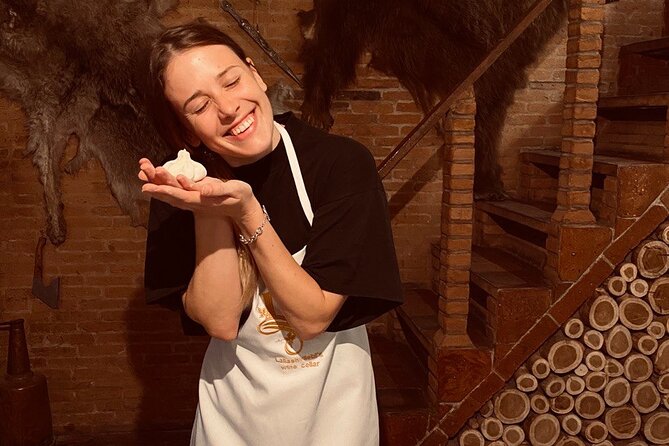
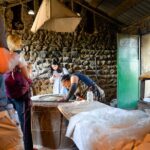
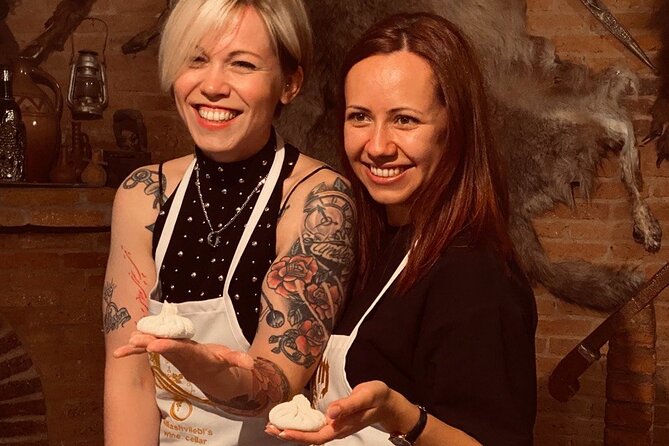
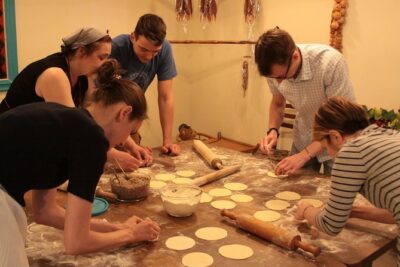
While the hosts prepare the master class, you can look around first. Then you get into the cooking lesson focused on khinkali and khachapuri. These aren’t random dishes on a menu. They’re iconic Georgian comfort food, and learning the basics changes how you understand the meal that follows.
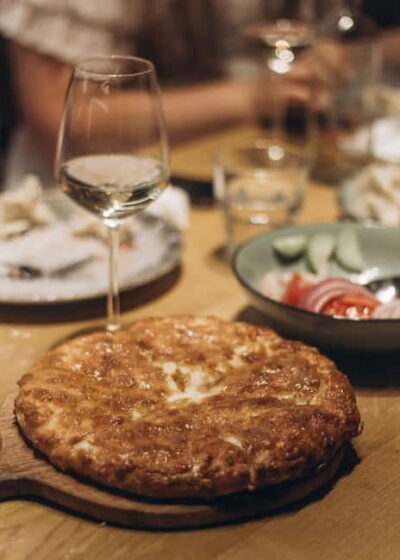
Khinkali is a dumpling, and you’ll see how the flavors and fillings fit Georgian tastes. Khachapuri, and specifically Adjarian khachapuri, is the famous boat-shaped cheese bread served hot, often with that signature egg element in the center. You’ll learn why these dishes are treated as “musts” in Georgian dining.
The lesson itself also acts like a social icebreaker. Once you’re hands-on with dough and fillings, conversation comes naturally. And when the supper arrives, you’re not eating unfamiliar food. You’re eating something you practiced.
The supra meal: what’s on the table and what to expect
Once the masterclass wraps, a generous Georgian supra awaits you: snacks and hot dishes plus homemade wine and chacha. Coffee and/or tea are included as well, which is a helpful reset after alcohol.
Here’s what you can expect to eat, based on the sample menu:
Starter: Georgian salad (cucumbers, tomatoes, herbs)
Starter: Pickles (pickled cucumbers, pickled tomatoes, sauerkraut, Colchis klekachka)
Main: Georgian khinkali (meat, mushrooms, or cheese)
Main: Aubergine
Main: Adjarian khachapuri (dough, cheese, eggs, served hot)
Main: Georgian shashlik (mtsvadi) (meat cooked on skewers and coals)
Dessert: Georgian cheese (Imeretian cheese)
Dessert: Churchkhela (grape juice and walnuts)
This menu is a big part of the value. You’re not just getting one “signature” dish. You’re getting a full sequence, from fresh and pickled starters through warm mains to sweet finishing bites.
Also, the hosts teach you the flow of the feast while you eat. That means you’ll understand when to listen for a toast, how the toastmaster’s role works, and how the horn ritual fits into the evening. It takes the mystery out of what could otherwise feel like a cultural performance where you’re watching from the side.
Wine, chacha, and learning the toast flow without pressure

Alcohol is included: homemade wine and chacha. The experience also includes coffee and/or tea, so you’re not stuck only with alcohol for the entire evening.
I like that they teach the rules rather than just letting you figure out what’s expected. When someone explains the sequence of toasts, it turns a potentially overwhelming moment into something you can follow. The horn detail is especially memorable because it gives you context for the ritual instead of making it feel random.
One caution: you’re drinking as part of a cultural event, not just on the side. If you have a low tolerance or you want to stay totally clear-headed, plan accordingly. You can still enjoy the food and music, but pace yourself.
Songs, polyphony, and group dance practice
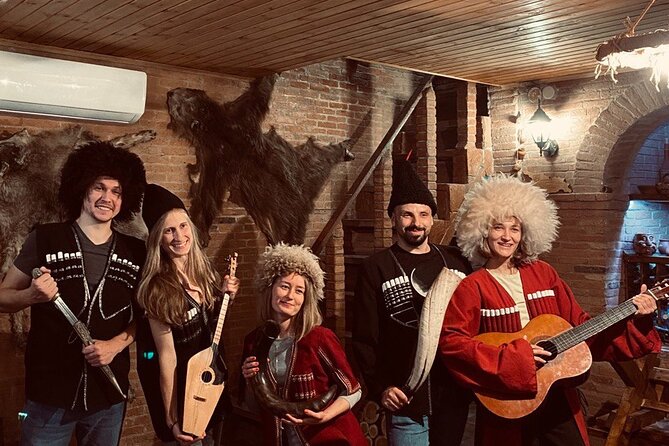
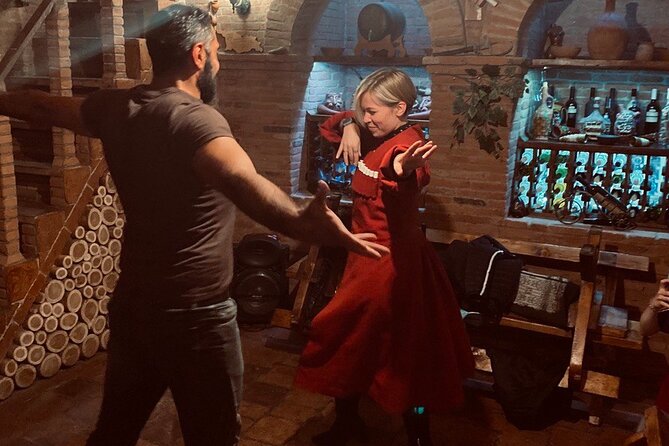
After dinner comes the fun part where the evening turns into a stage you can join. You’ll hear dances and songs, and you’ll learn basic movements in Georgian dance accompanied by professional dancers and folk music.
The tour also includes Georgian polyphony, listed with UNESCO cultural heritage. That’s not just a background soundtrack. Polyphony is central to Georgian musical identity, and being part of the performance moment makes it feel alive rather than like something you read about later.
If you’re not a dancer, you’ll still likely enjoy it. The goal here is participation at beginner level, not competing skill. Plus, group dance practice tends to break down social barriers fast, especially in a small group of up to 8.
English experience: usually great, but plan for mixed-language groups
This tour is offered in English. In one highly rated experience, the host, Tameda (toastmaster), helped create a welcoming atmosphere and also organized an English translator for the evening with flawless English and strong cultural and historical knowledge.
At the same time, one consideration came up: if the group has a lot of Russian speakers and fewer Georgian speakers, the event may run mostly in Russian with limited translation into English. That doesn’t mean the evening is any less fun, but it can affect how much you catch during the toast instruction or cultural storytelling.
My practical advice: if English is your top priority, message ahead and ask how interpretation is handled for English speakers for your date. Also, go in ready to enjoy the music and food even if every spoken detail is not perfectly translated.
Price and value: is $150 per person worth it?
At $150 per person for about four hours, you’re paying for a full package: guided old town walking, private transportation, dinner with alcohol, coffee or tea, a cooking masterclass, plus music and dance entertainment.
What makes the price feel justified is the amount of “active” time you get. You’re not just delivered to a dinner table. You walk to meaningful city sights, then you cook, then you eat a sequence of dishes, then you participate in dance and hear polyphony. The max group size of 8 also supports the idea that you’re not squeezed into a mass event.
If your ideal evening is only one thing, like food with zero sightseeing, you might think it’s expensive. But if you want a rounded Georgian night with structure and interaction, this is the sort of experience where the cost buys you access to people, teaching, and performance, not just a meal.
Who should book this supra feast night
You’ll likely love it if you:
- Want both culture and food, not just one
- Enjoy cooking lessons where you learn by doing
- Like guided city walks but don’t want a full day
- Want a small-group vibe (up to 8)
It may not be the best fit if you:
- Only want a restaurant-style dinner with no alcohol or no guided toast learning
- Need constant English translation no matter how the group composition turns out
- Prefer to travel fully independently without structured participation
Should you book the Half-Day Famous Georgian Supra Feast?
If your goal is a memorable Georgian evening, I think this is a strong yes. The combination is the point: old Tbilisi context first, then a family home meal that includes wine, chacha, and the suprarules that help you understand what you are seeing. The food spread is built to feel abundant, and the cooking masterclass gives you a reason to pay attention before the feast arrives.
My “book it” checklist is simple. If you want khinkali and khachapuri cooking, you’re okay with a hosted, small-group format, and you’re excited by music plus dance, this tour fits your evening perfectly.
FAQ
Where does the tour start?
It starts at the I Love Tbilisi sign (MRQ5+WG9) in Tbilisi, Georgia.
What time does the experience begin?
The start time is 5:30 pm.
How long is the tour?
It lasts about 4 hours.
What is included in the price?
Dinner, alcoholic beverages, coffee and/or tea, and private transportation are included.
Is breakfast included?
No, breakfast is not included.
What language is the tour offered in?
The tour is offered in English, and confirmation is received at booking.
Is there a limit on the group size?
Yes, the maximum group size is 8 travelers.
What food and dishes are part of the meal?
The sample menu includes Georgian salad, pickles, khinkali, aubergine, Adjarian khachapuri, shashlik (mtsvadi), Georgian cheese, and churchkhela.
Do you learn anything, or is it only eating?
You’ll take part in a masterclass on cooking khinkali and khachapuri.
Does the tour end back where it started?
Yes, it ends back at the meeting point.
More Half-Day in Tbilisi
- Mtskheta: Ancient Capital of Georgia Half-Day Tour
★ 4.9 · 105 reviews - From Tbilisi: Half day tour, Mtskheta, Jvari & Samtavro
★ 4.7 · 81 reviews - Ancient Mtskheta and Chronicle of Georgia half day tour
★ 5.0 · 66 reviews - Tbilisi: Christmas Tour & Glühwein, Half-Day Guided Walking
★ 5.0 · 16 reviews
Newer trips around Tbilisi
- Tbilisi Private Dinner: Georgian BBQ & Fireplace
★ 5.0 · 1 review - Tbilisi: Khinkali Tasting Lunch with Local Drinks and Pickup
★ 5.0 · 1 review - Day trip in Kakheti-wine tour
★ 5.0 · 1 review - Tbilisi & Mtskheta bus tour hop on hop off
★ 5.0 · 1 review - Tbilisi: Christmas Market & Hidden Gems Guided Walking Tour
★ 5.0 · 1 review - Stalin’s Secrets: An Underground Journey Through History
★ 5.0 · 1 review
Georgian Feast & Cooking Workshops, compared.
Georgian Cooking Class with Khinkali and Khachapuri
Read our review →
Small-Group Khinkali and Khachapuri Cooking Class in Tbilisi
Read our review →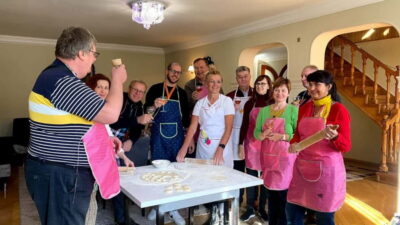
Cook True Ajarian Khachapuri and Khinkali in Highlanders Style
Read our review →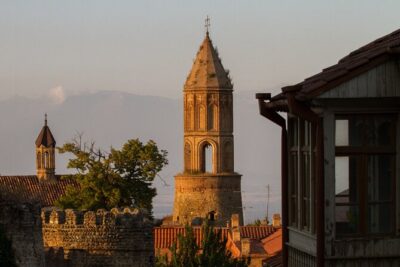
Taste of Kakheti: Wine Tour Bread Baking & Churchkhela Workshop
Read our review →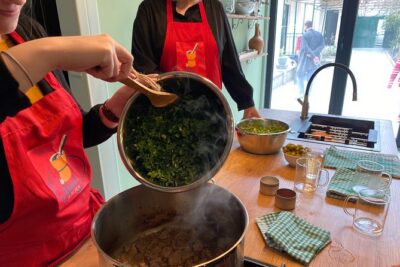
Nana’s Kitchen – traditional Georgian cooking class at real Georgian family home
Read our review →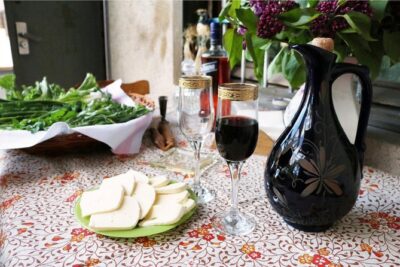
Join a Local for a Market Tour, Cooking Class and Meal in her Tbilisi Home
Read our review →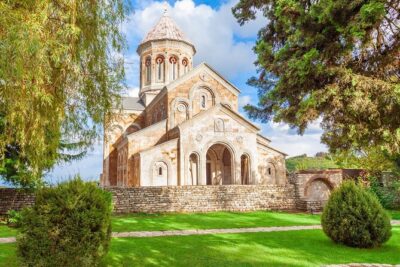
One Day Kakheti Tour with Wine Tasting and Free Churchkhela
Read our review →Browse the lists this tour appears in