
Reviewed · GEORGIAN FEAST & COOKING WORKSHOPS
Small-Group Khinkali and Khachapuri Cooking Class in Tbilisi
A steaming dumpling and a cheesy bread lesson is a very Tbilisi kind of fun. I like that this is a small-group, hands-on class focused on two icons, khinkali and Imeretian-style khachapuri. I also like the included tasting setup, with Georgian wine, salad, and a cheese platter right there as you learn. One thing to consider is the format: it happens in the restaurant hall, not the kitchen, so you will do a lot, but not every step is hands-on at a stove.
This class is also tightly timed, around 2 hours, and it stays simple even if you have never cooked Georgian food before. You meet in central downtown Tbilisi at St.Bunny31 on Griboedov Street, then cook and eat where the action is, with stories from the instructor while you work the dough. Just plan your expectations for participation time, and you will have a great afternoon.
In This Review
- Key highlights at a glance
- Why khinkali and khachapuri are a smart pair in Tbilisi
- Where you meet on Griboedov Street, and why the location matters
- The 2-hour flow: wine, cheese, salad, then dough and filling work
- How the class works when it is not in the kitchen
- Khinkali shaping, folding, and the dumpling personality
- Imeretian khachapuri: cheese bread with dough confidence
- Eating your results: wine, cheese, and a proper Georgian-style meal
- Price and value: what $27.50 buys you in Tbilisi
- Group size realities: what “small-group” feels like day to day
- Who this cooking class suits best
- Tips to get the most out of your khinkali and khachapuri session
- Should you book this Tbilisi khinkali and khachapuri class?
- FAQ
- Where is the meeting point for the cooking class?
- How long is the workshop?
- What is the group size?
- What food and drinks are included?
- Is the class held in the kitchen?
- Is there free cancellation?
Key highlights at a glance
- Downtown Tbilisi location at St.Bunny31 on Griboedov Street, easy to fit into a city day
- Hands-on khachapuri prep including dough and filling work, plus cheese spreading
- Khinkali shaping practice with instructor guidance and folding technique coaching
- Georgian wine, salad, and farm cheese included so you are not just watching
- Small-group feel with a limit of 6 participants, though session size can vary in practice
Other Georgian feast and cooking workshops:
- Tbilisi: Georgian Cooking Class with Khinkali and Khachapuri★ 4.7 · 1,146 reviews
- Tbilisi: Cooking Class with a Local Family★ 5.0 · 104 reviews
- Cook True Ajarian Khachapuri and Khinkali in Highlanders Style★ 5.0 · 93 reviews
- Taste of Kakheti: Wine Tour Bread Baking & Churchkhela Workshop★ 4.5 · 46 reviews
Why khinkali and khachapuri are a smart pair in Tbilisi
If you are trying to understand Georgia through food, start with the duo that almost everyone talks about. Khinkali are the dumplings with the signature cinched top, built for folding, texture, and a bit of ceremony. Khachapuri are the cheesy breads, and in this case the focus is on Imeretian-style, the nutty, fragrant, cheese-forward version.
What I like about pairing them in one class is how it teaches two different skills. Khachapuri leans more toward dough handling and topping prep. Khinkali is more about working the filling and shaping technique. By the time you are finished, you will not just have eaten Georgian comfort food, you will know the basic mechanics behind it.
Also, instructors often weave in the human side of Georgian eating. In reviews, teachers like Chef Vladimir, Artem, and Sewa/Seva are described as patient and funny, with step-by-step directions plus stories about Georgian feasts and local context around Tbilisi. That matters because cooking classes can feel like school. Here, the tone is closer to a lively meal with lessons.
Where you meet on Griboedov Street, and why the location matters
You start at St.Bunny31 on Griboedov St, Tbilisi. For most visitors, that location is a practical win. You are in central downtown, which means you do not need a taxi expedition just to learn to fold dumplings. It also makes the class a good “anchor” activity, something you can build the rest of your day around.
The format ends back at the meeting point, so you are not dealing with the stress of a far-away drop-off. On a day when you are hopping between churches, markets, and viewpoints, this kind of central logistics keeps things easy.
One small watch-out: the class happens inside the restaurant hall, but seating can depend on the setup that day. If you are booking in hot weather, do what you would do anyway in Tbilisi: dress for heat, bring water, and be ready for a busy restaurant atmosphere.
The 2-hour flow: wine, cheese, salad, then dough and filling work
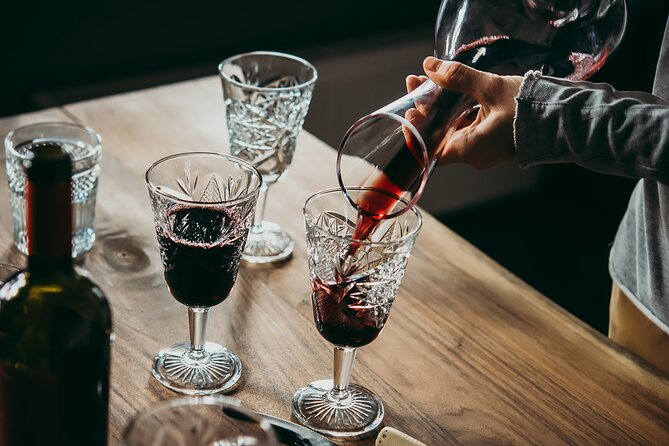
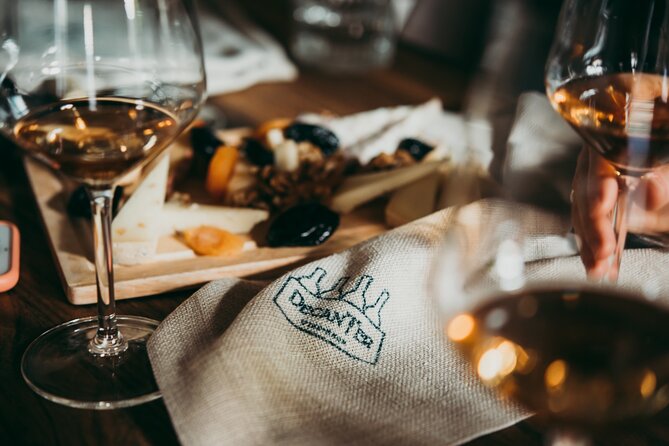
The best part of this experience is how it feeds you while it teaches you. You get Georgian wine, a vegetable salad made from tomatoes that people often describe as unforgettable, and a plate of farm cheeses. It is not a tiny “snack and learn” situation. The idea is to treat the class like an actual meal with learning attached.
Inside the workshop, the teacher gives you the core steps, then you take over. For khachapuri, you prepare the dough and the filling work, and you spread cheese and bring it to readiness. For khinkali, the instructor explains how the dough works and how the filling should be prepared and portioned. Then you get to practice shaping.
In many cooking classes, the instructor moves fast and you follow along, hoping your hands do not betray you. Here, the step-by-step focus comes up again and again in the feedback, with people appreciating how patient and clear the teaching is. Even if you are a complete beginner, you are not left stranded.
How the class works when it is not in the kitchen
One of the biggest decision points for this tour is right in the name of the experience, but it shows up in practice. The class takes place in the restaurant hall, not in the kitchen.
That is not a deal-breaker, but it changes what you should expect. You will still do a lot of real cooking tasks, like preparing components, assembling, and shaping. You should just know that the hot cooking portion is handled behind closed doors, while you focus on the parts you can safely and practically learn at your station.
In other words, you get technique and hands-on shaping, not a full behind-the-scenes cooking theater. This can be good. It keeps things tidy, and it means the class can run on time. It can also be frustrating if you pictured every participant cooking every step at a shared stove. A few comments reflect that some sessions feel more partial than expected, with dough already prepared and the most oven or stove-heavy steps happening offstage.
If you are the type who loves watching technique more than controlling heat, you will probably enjoy the format. If you want maximum flame time, you might wish the class were done fully in a kitchen. Still, the hall setup is often what makes the class feel cozy and social, not chaotic.
Other cooking classes in Tbilisi:
Khinkali shaping, folding, and the dumpling personality
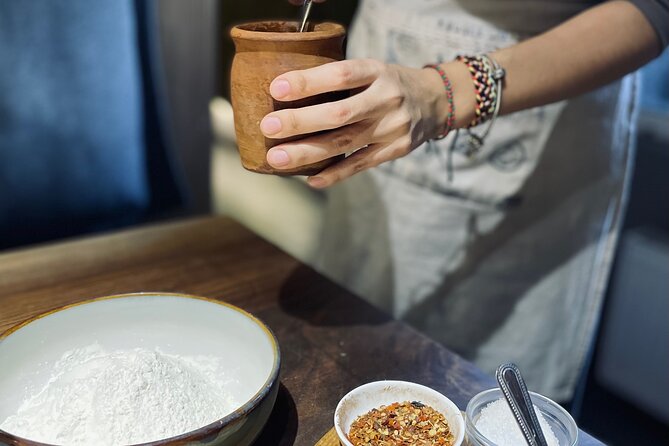
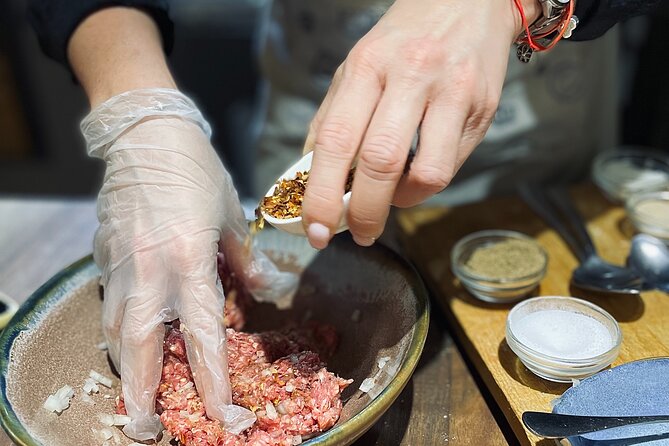
Khinkali are where the “secret techniques” live. You learn how to sculpt them into the traditional cinched ball shape, which is more than decoration. The fold helps the dumpling hold together and gives that classic look everyone associates with Georgian dumplings.
The menu options for khinkali can include veal, cheese, or mushrooms. Even if you only try one type during your meal, learning how to work with a filling texture and portion size helps you understand what makes each batch different. Veal brings a richer base. Cheese pushes toward comfort and gooey richness. Mushrooms add a deeper earthy tone.
The instructor guides you through the tricky part, the shaping. In reviews, people mention that the teacher tells stories and explains intricacies while you work, which is a nice way to keep the time moving. The folding practice is also where you get the laughs. Dumpling day is not meant to be perfect on the first try, and a good teacher makes sure you do not feel embarrassed if your folds look a little lopsided.
Also, remember the dumplings are part of a meal rhythm. You sculpt, then you eat. For many people, that is the moment it all clicks, because you can compare your own shapes with the final result served at the table.
Imeretian khachapuri: cheese bread with dough confidence
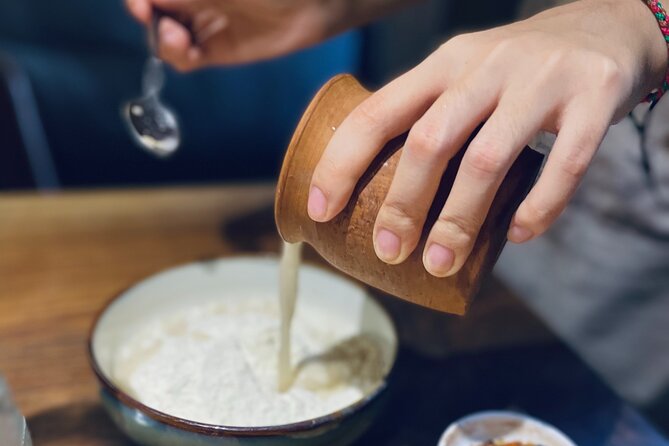
Khachapuri in this class are described as Imeretian-style, cheese-focused, and fragrant. Imereti is known for producing a particular style of comfort with plenty of cheese, and this workshop keeps that idea front and center.
You prepare dough and work on filling and cheese readiness. Spreading cheese and getting it to the right state is one of those steps that feels simple, but small differences change the result. Too thick and it can feel heavy. Too thin and you lose that cheesy stretch and flavor punch.
What you learn here is practical for later, even if you never cook Georgian food again. You will come away with a clearer sense of dough texture and assembly. That makes khachapuri less like a mystery bread and more like something you can repeat.
If you are worried about making dough from scratch, this is where a patient instructor makes the biggest difference. Reviews emphasize that the teachers step through the process slowly enough for beginners. You are not just watching, you are shaping, mixing, and assembling.
Eating your results: wine, cheese, and a proper Georgian-style meal
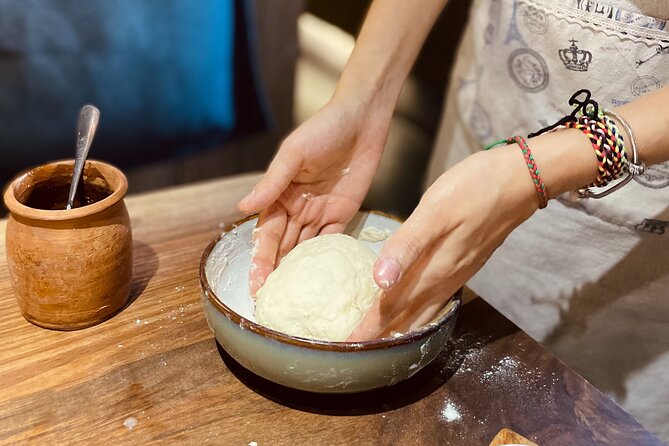
After the prep and shaping, you eat what you made. The class is structured so the tasting is baked into the schedule, not tacked on after you are done. That is one reason people describe it as a fun afternoon lunch-like experience rather than a short snack lesson.
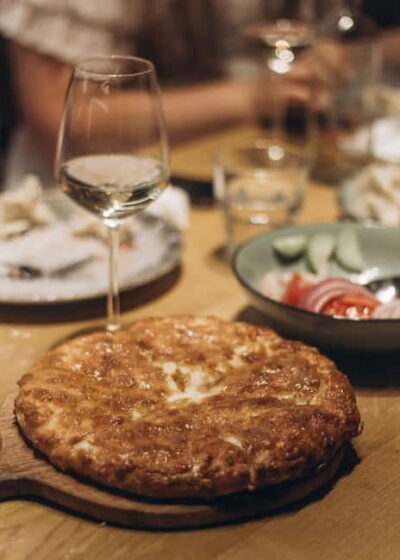
You also get a cheese platter and salad as part of the included meal. That matters because it rounds out the flavors. Khinkali are hearty and filling, while khachapuri bring salty richness. The salad, with its tomato base, adds a fresh counterpoint that keeps the meal from feeling heavy.
Wine is included as well. Do not expect fine wine tasting notes here. Think of it as part of Georgian hospitality. One consideration I would flag: a few reports mention limitations, like red wine being the only option for at least one session, and that can be disappointing if you cannot drink it. If alcohol is a concern for you, plan ahead and ask what is served, or consider choosing a day when you know you can handle the wine offered.
Price and value: what $27.50 buys you in Tbilisi
At $27.50 per person for about 2 hours, this sits in the “good value” zone for Tbilisi cooking experiences. The biggest value drivers are not just the cooking. It is the full meal setup attached to instruction.
You get:
- Two famous Georgian dishes worked on during the session
- Wine, salad, and farm cheese included
- A small-group format on paper, which usually makes learning smoother
Even if you think some steps are done partly in advance, you are still paying for guidance plus the social meal. Many people do not just want to eat khinkali and khachapuri, they want to learn a technique they can repeat later. That is what justifies the price, because you leave with a sense of confidence, not only a full stomach.
Also, booking timing matters. This experience is listed as commonly booked about 11 days in advance on average. That signals it is popular, and you should not wait too long if you have a narrow travel window.
Group size realities: what “small-group” feels like day to day
The class is listed with a maximum of 6 participants, which is exactly what you want for hands-on instruction. A smaller group means less waiting, more station time, and a better shot at personalized correction on shaping.
That said, a few experiences describe sessions that ran with more people than expected during high season. When you get a bigger group, it can affect how much each person touches the process, and it can stretch the timeline with more waiting between steps.
My practical advice: if you are aiming for the most hands-on feeling, book earlier in the day or on a quieter schedule if you have flexibility. If you are traveling solo, you may also be fine even with a larger group because you tend to get more attention, but that varies with session staffing.
Who this cooking class suits best
This is a great fit if:
- You want a low-stress, fun activity with real food results
- You enjoy hands-on cooking more than watching demos
- You like meeting new people, since the class happens as a group meal
- You want to understand Georgian comfort food basics, khinkali and Imeretian khachapuri
It may be less ideal if:
- You expect a fully kitchen-based workshop where you cook every step on the stove
- You cannot drink alcohol and need guaranteed alternatives
- You are very sensitive to group size changes during peak season
For families, it can also work well. One set of notes mentions bringing kids, with adults and a child learning together and still getting a full meal with wine for the adults.
Tips to get the most out of your khinkali and khachapuri session
Come hungry, because the class includes enough food to feel like a real meal. Also, expect dough and shaping to be messy in the best way. Wear something comfortable and plan to wash up after.
A few other practical notes:
- Pay attention during the instructor’s shaping demos, because that is what you will copy later
- If you have dietary needs beyond the standard dishes, you might want to ask in advance, since the sample menu is fairly classic
- If wine is part of your plan but you have limits, clarify what is served so you do not get stuck with something you cannot drink
The good news is the teaching style tends to be patient and humorous, which lowers the pressure and makes it easier to learn by doing.
Should you book this Tbilisi khinkali and khachapuri class?
I would book it if you want an easy, central, food-focused activity in Tbilisi that mixes instruction with a proper meal. For $27.50, you get two Georgian icons, wine and cheese and salad included, and a clear chance to practice khinkali folding and khachapuri assembly.
I would hesitate only if you are specifically searching for a kitchen-only, every-step hands-on cooking experience, or if alcohol options must be specific for you. In those cases, ask questions ahead of time and set expectations around the restaurant-hall format.
If you are here for real Georgian flavor and you enjoy learning through making, this class is a solid way to spend a couple hours.
FAQ
Where is the meeting point for the cooking class?
The class meets at St.Bunny31 Griboedov St, Tbilisi, Georgia.
How long is the workshop?
The cooking workshop runs about 2 hours.
What is the group size?
This activity is limited to a maximum of 6 travelers.
What food and drinks are included?
The experience includes Georgian wine, a vegetable salad made from Georgian tomatoes, a plate of farm cheeses, and the dishes you prepare, including khinkali and khachapuri.
Is the class held in the kitchen?
No. The workshop takes place inside the restaurant hall, not in the kitchen.
Is there free cancellation?
Yes. You can cancel up to 24 hours in advance for a full refund.
Newer trips around Tbilisi
- Tbilisi Private Dinner: Georgian BBQ & Fireplace
★ 5.0 · 1 review - Day trip in Kakheti-wine tour
★ 5.0 · 1 review - Tbilisi: Khinkali Tasting Lunch with Local Drinks and Pickup
★ 5.0 · 1 review - Tbilisi & Mtskheta bus tour hop on hop off
★ 5.0 · 1 review - Tbilisi: Christmas Market & Hidden Gems Guided Walking Tour
★ 5.0 · 1 review - Stalin’s Secrets: An Underground Journey Through History
★ 5.0 · 1 review
Georgian Feast & Cooking Workshops, compared.
Georgian Cooking Class with Khinkali and Khachapuri
Read our review →
Cook True Ajarian Khachapuri and Khinkali in Highlanders Style
Read our review →
Taste of Kakheti: Wine Tour Bread Baking & Churchkhela Workshop
Read our review →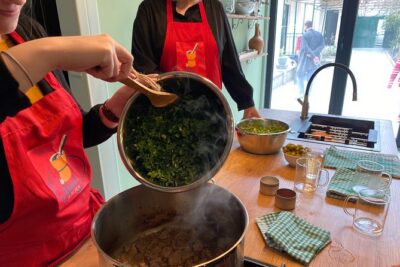
Nana’s Kitchen – traditional Georgian cooking class at real Georgian family home
Read our review →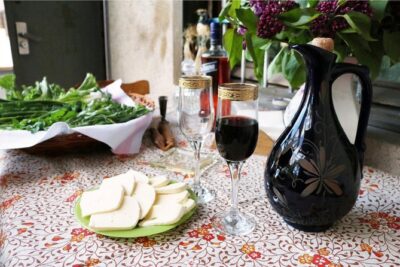
Join a Local for a Market Tour, Cooking Class and Meal in her Tbilisi Home
Read our review →
One Day Kakheti Tour with Wine Tasting and Free Churchkhela
Read our review →Browse the lists this tour appears in