
Reviewed · GEORGIAN FEAST & COOKING WORKSHOPS
Tbilisi: Georgian Cooking Class with Khinkali and Khachapuri
A hot dumpling and cheesy bread education in Tbilisi. This hands-on class at Restaurant St. Bunny mixes real cooking practice with Georgian wine and local cheeses in a courtyard-style setting. You leave knowing how to make two classics, khinkali and Imeretian khachapuri, instead of just eating them.
The only catch is that the class is not held in the kitchen, so expect a restaurant-led setup rather than a fully professional back-of-house cooking space.
In This Review
- Key highlights you will feel right away
- St. Bunny Courtyard Start, right inside Merani
- Your first plate: cheeses, tomato-cucumber salad, and Kakheti oil
- Georgian wine and Tbilisi stories during the prep
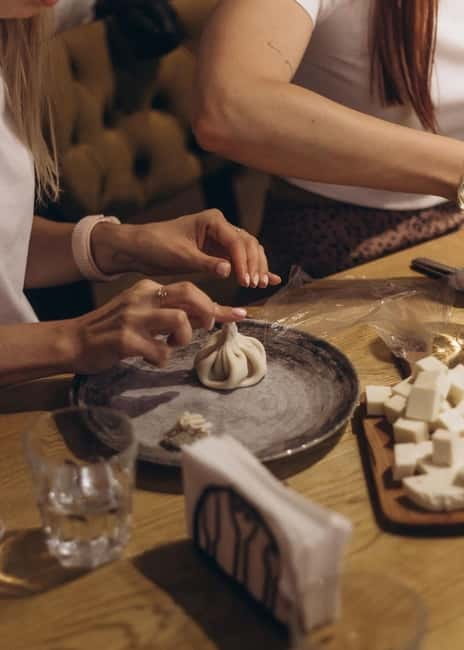
- Cooking khinkali: folding technique you can actually learn
- A small practical reality
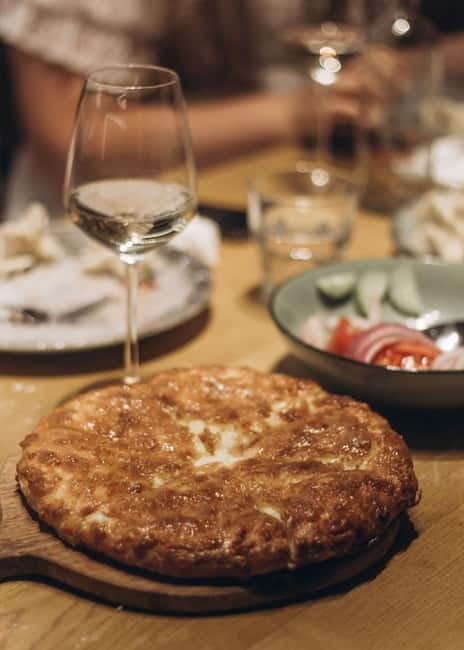
- Imeretian khachapuri: hands-on cheese bread, not a prop meal
- Expect the chef to keep you moving
- At the table: what you eat, and why it feels like Georgian culture
- Price and value: why $28 feels fair for 2.5 hours
- How to get the best results (and avoid the usual cooking-class frustration)
- Who should book this class in Tbilisi
- Should you book the Khinkali and Khachapuri class?
- FAQ
- What is the main cooking focus of this Tbilisi class?
- How long does the class last?
- Where do I meet the group?
- What food and drinks are included?
- Is extra wine or food included if I want more?
- Is the class held in a kitchen?
- What languages are offered for instruction?
- Is there a way to enter without waiting?
- Is this experience wheelchair accessible?
Key highlights you will feel right away
- Two dishes, hands-on: you prepare khinkali and Imeretian khachapuri during the session.
- Chef-led, step-by-step help: instructors guide folding, shaping, and cooking so you do not guess.
- Start with Georgian basics: a plate of local cheeses plus a salad with Kakheti aromatic oil.
- Wine tasting is included: you get Georgian homemade wine with your meal.
- Get recipes at the end: you receive recipe links so you can recreate it at home.
- Small-group energy: many sessions run with a small group, so you get more personal coaching.
Other Georgian feast and cooking workshops:
- Small-Group Khinkali and Khachapuri Cooking Class in Tbilisi★ 4.5 · 224 reviews
- Tbilisi: Cooking Class with a Local Family★ 5.0 · 104 reviews
- Cook True Ajarian Khachapuri and Khinkali in Highlanders Style★ 5.0 · 93 reviews
- Taste of Kakheti: Wine Tour Bread Baking & Churchkhela Workshop★ 4.5 · 46 reviews
St. Bunny Courtyard Start, right inside Merani
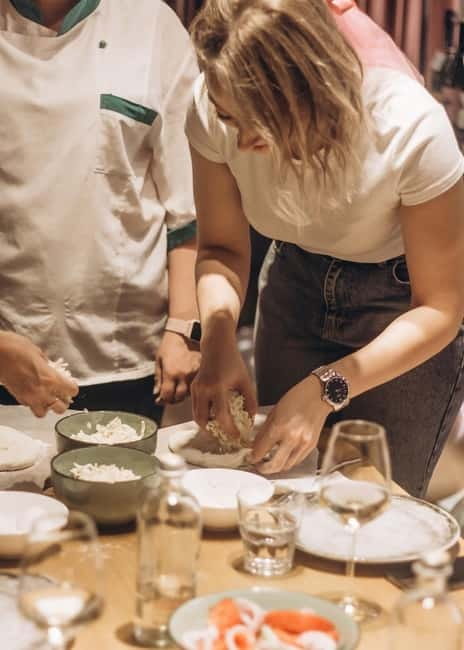
Your class begins at Restaurant St. Bunny, on the third floor of the Merani shopping center. You enter from either Rustaveli Avenue or Alexander Griboyedov Street, and you use a separate entrance to skip waiting around.
Here’s why I think this location matters for the experience. It puts you in the middle of Tbilisi life without making the day feel like a museum stop. You are not tucked away in a basement kitchen. Instead, you learn in a social restaurant setting, where the mood is part of the lesson. The experience is designed to feel relaxed and communal, not like a rushed cooking demo.
A quick note on format: the activity is not held in the kitchen. That means you should expect a restaurant-style setup for preparation and cooking, with the chef and staff coaching you at your stations. If you love the idea of watching other people work while you stand back, this probably still works. But if you want to get your hands in flour and dough the whole time, this class is built for that.
Language-wise, instruction is available in Russian and English, so you can usually match what you feel comfortable following.
Your first plate: cheeses, tomato-cucumber salad, and Kakheti oil
Before you touch dough, you get the Georgian foundation that makes the food make sense. You start with a plate of local Georgian cheeses, plus a salad of Georgian tomatoes and cucumbers drizzled with Kakheti aromatic oil.
Two things make this intro more useful than it sounds. First, it trains your palate for what comes next. Khinkali and khachapuri rely on simple flavors done well, so the cheeses and fresh salad act like a warm-up. Second, this is a real part of the meal, not just an appetizer garnish. In practice, you are shown how the ingredients fit together, and that makes the cooking step feel more connected.
There’s also a practical benefit: the salad comes with plenty of food, including plenty to take home. That is one of those small details that makes a low-stress evening afterward more likely, especially if you have plans after your 2.5-hour session.
Georgian wine and Tbilisi stories during the prep
While you settle in, you get a tasting of Georgian homemade wine. This is not an all-day drinking event. It is paired with the activity so you understand what people mean when they talk about Georgian table culture.
You also hear entertaining narratives about the city of Tbilisi. This helps you connect the meal to the place. Georgian food is not just a list of dishes. It is a social rhythm, and the stories are meant to set that context.
In a few versions of this kind of class, the tasting can feel like an afterthought. Here, it works better because it stays tied to the food. You are learning why ingredients matter, and then you get a simple taste of what locals might pour alongside a meal.
Cooking khinkali: folding technique you can actually learn
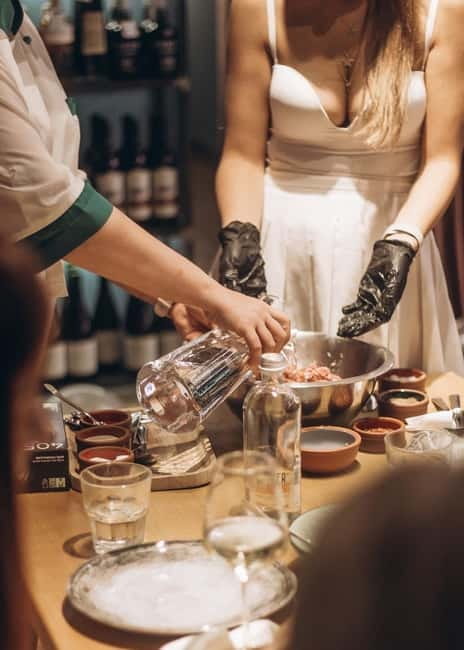
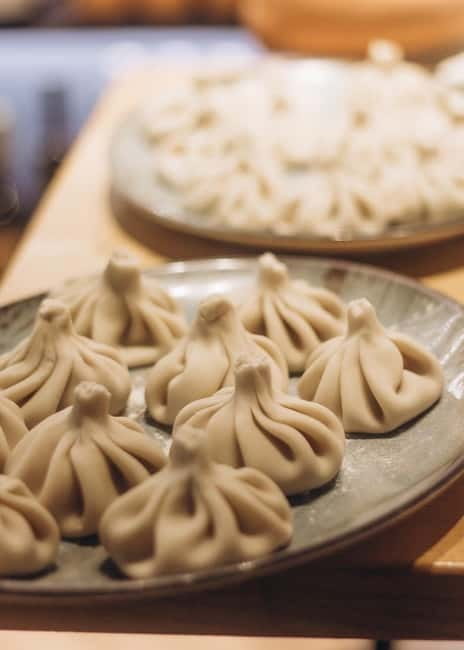
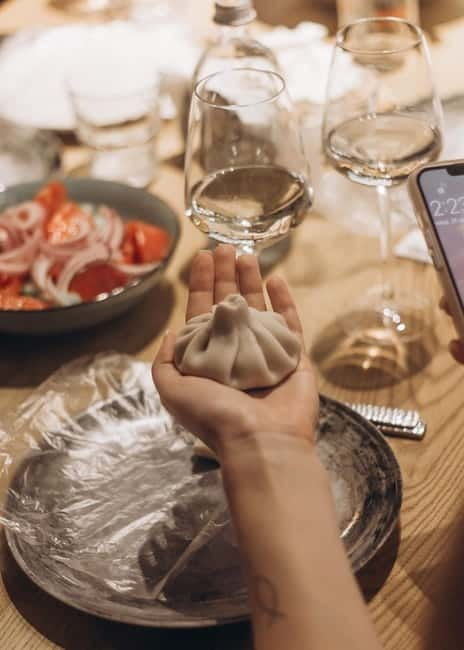
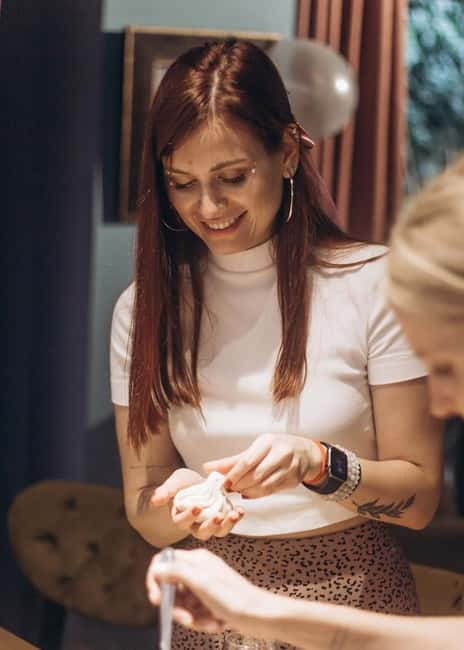
Khinkali is the star for most people, and the class treats it like the main event. You get hands-on instruction for preparing khinkali from scratch, not just assembling pre-made components.
Based on what I have seen in how these sessions run, the chef’s coaching centers on the steps that separate good khinkali from confusing khinkali. That includes working with the dough, learning how to portion the filling, and practicing the folding that forms the dumpling.
What I like about this approach is that you get feedback while you are still making decisions. When someone watches you shape and fold, you stop relying on guessing. Many sessions are described as small enough that the chef can supervise each person closely, which is how people end up with dumplings they feel proud of.
You will also eat what you make. That is a big deal. Cooking classes where you only taste a tiny sample feel like a lecture. Here, the format is designed so your khinkali is part of the feast.
Other cooking classes in Tbilisi:
A small practical reality
Khinkali and khachapuri are filling. Even if you are hungry, you might be surprised at how much food ends up in front of you. A few people have suggested the portions can be big enough that you might feel stuffed. So if you plan a late dinner afterward, consider keeping it light, or just plan to share.
Imeretian khachapuri: hands-on cheese bread, not a prop meal
Next up is Imeretian khachapuri, the Georgian cheese bread you want to learn because it is both iconic and very make-at-home friendly.
You cook it during the same 2.5-hour session, which keeps the day from dragging. The chef guides you through the steps, focusing on how to work with the dough and how to handle the cheese component so it behaves the way khachapuri should.
Khachapuri can look simple from far away. It is not always simple once you are responsible for the dough. This is where the class earns its value. The coaching helps you avoid common mistakes, like getting the dough too thick, under-seasoning the filling, or losing structure while shaping.
You also get to eat your creation at the end. That matters because khachapuri is best understood by taste and texture, not by theory.
Expect the chef to keep you moving
One theme in how people describe these sessions is how fast the workflow feels once you are in it. You do not sit around. You work, you learn, you taste, you adjust. If you hate slow classes with endless waiting, you will probably enjoy the pacing.
At the table: what you eat, and why it feels like Georgian culture
After the cooking, you enjoy your dishes in a festive atmosphere. This is one of those moments where the experience shifts from skill-building to celebration.
Your meal spread generally includes:
- the khinkali and Imeretian khachapuri you made
- the earlier cheeses and the salad with Kakheti aromatic oil
- your included Georgian homemade wine tasting
And because the class is social by design, it often becomes a conversation starter. Many people describe meeting other visitors from different places. Even if you come with friends, it is the kind of activity that makes it easy to chat without forcing it.
Chefs named in past sessions include instructors like Artem/Artëm, Nina, Nino, and George, and guides such as Nika and manager Jana show up in the story layer people remember. You should assume you will be guided by a similar team, but the names might vary by date and language group.
Price and value: why $28 feels fair for 2.5 hours
At $28 per person for about 2.5 hours, the price is only fair if the experience includes real food and real instruction. This one does.
You are not just paying for a meal. You are paying for:
- hands-on instruction for two dishes
- included ingredients and meal components, including cheese, salad, and Georgian homemade wine
- a cooked end result, meaning you eat what you make
- recipes provided at the end (people report receiving recipe links)
That package adds up quickly. Even if you only value the meal portion, you are still getting a serious amount of food for the price. Add the coaching, and it becomes a very practical souvenir, the kind you can recreate at home.
One more value point: because the class includes multiple food elements up front, you do not need to build a full plan around it. It can function as a complete “food experience” block during your Tbilisi stay.
How to get the best results (and avoid the usual cooking-class frustration)
If you want to leave confident, come with the right mindset.
- Come hungry. You will cook, then you will eat. This is not a light snack class.
- Expect hands-on mess. Dough work can be sticky, so wear something comfortable.
- Watch the chef closely for the one step that matters most. For khinkali, that is often shaping and folding. For khachapuri, it is usually dough handling and how you work with the cheese.
- Use the language option if you can. If English is offered, follow in English. If you prefer Russian, switch to that track. It makes the steps easier to remember later.
- Take the recipe links seriously. The class is designed so you can recreate the food at home, and having the link turns this into a “future dinner” plan, not a one-off memory.
Also keep your expectations aligned with the format. Since it is not held in the kitchen, you will not get the full commercial kitchen experience. Instead, you get a focused, guided restaurant workshop.
Who should book this class in Tbilisi

This class is a good fit if you:
- want a hands-on Georgian food experience without needing advanced cooking skills
- like learning from chefs in a friendly setting
- enjoy meeting other people while doing something practical
- want a “learn it, eat it, take it home” souvenir
It can also work well for couples and groups because you can cook together, compare results, and then sit down as a team. Solo travelers often enjoy this too because the activity naturally creates conversation time.
If you are the type who wants a super technical, professional kitchen course, you might find the restaurant-led structure less intense. But for most people, that is exactly the point. You get a fun, social lesson that ends with a big, satisfying meal.
Should you book the Khinkali and Khachapuri class?
Yes, if you want high value in a short window. For $28 and about 2.5 hours, you get real cooking practice with khinkali and Imeretian khachapuri, plus a meal lineup that includes cheeses, salad with Kakheti aromatic oil, and Georgian homemade wine. You also get recipe links so the class keeps paying off after your Tbilisi day ends.
Book it if you are open to a restaurant-style workshop, not a backstage kitchen tour. If you want a relaxed, tasty, and genuinely instructive way to understand Georgian food culture, this is an easy yes.
FAQ
What is the main cooking focus of this Tbilisi class?
You cook khinkali and Imeretian khachapuri, with hands-on instruction during the session.
How long does the class last?
The experience lasts about 2.5 hours.
Where do I meet the group?
Meet at Restaurant St. Bunny, located on the third floor of the Merani shopping center, with access from Rustaveli Avenue or Alexander Griboyedov Street.
What food and drinks are included?
You get an assortment of local Georgian cheeses, a salad of Georgian tomatoes and cucumbers with Kakheti aromatic oil, and a tasting of Georgian homemade wine. You also eat what you cook.
Is extra wine or food included if I want more?
No. Additional wine or food a la carte is not included.
Is the class held in a kitchen?
No, the event is not held in the kitchen.
What languages are offered for instruction?
Instruction is available in Russian and English.
Is there a way to enter without waiting?
Yes, there is a separate entrance so you can skip the line.
Is this experience wheelchair accessible?
Yes, it is wheelchair accessible.
Newer trips around Tbilisi
- Tbilisi Private Dinner: Georgian BBQ & Fireplace
★ 5.0 · 1 review - Tbilisi: Khinkali Tasting Lunch with Local Drinks and Pickup
★ 5.0 · 1 review - Day trip in Kakheti-wine tour
★ 5.0 · 1 review - Tbilisi & Mtskheta bus tour hop on hop off
★ 5.0 · 1 review - Tbilisi: Christmas Market & Hidden Gems Guided Walking Tour
★ 5.0 · 1 review - Stalin’s Secrets: An Underground Journey Through History
★ 5.0 · 1 review
Georgian Feast & Cooking Workshops, compared.

Small-Group Khinkali and Khachapuri Cooking Class in Tbilisi
Read our review →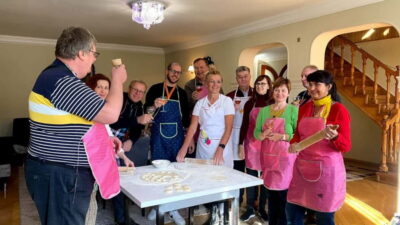
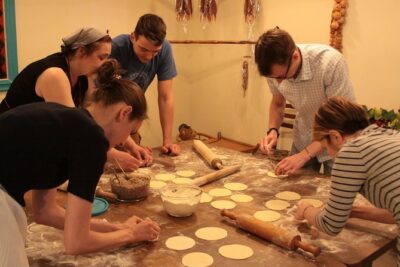
Cook True Ajarian Khachapuri and Khinkali in Highlanders Style
Read our review →
Taste of Kakheti: Wine Tour Bread Baking & Churchkhela Workshop
Read our review →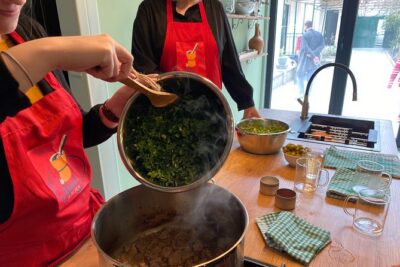
Nana’s Kitchen – traditional Georgian cooking class at real Georgian family home
Read our review →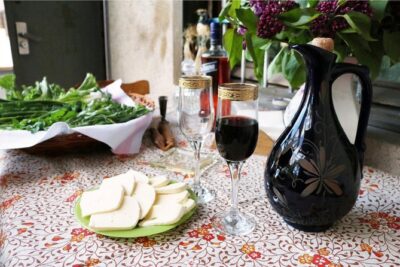
Join a Local for a Market Tour, Cooking Class and Meal in her Tbilisi Home
Read our review →
One Day Kakheti Tour with Wine Tasting and Free Churchkhela
Read our review →Browse the lists this tour appears in