
Reviewed · CHIATURA & TSKALTUBO SOVIET TRIPS
Hidden Tbilisi: A Journey Through Modernism & Brutalism
Concrete tells stories in Tbilisi. This Hidden Tbilisi tour focuses on modernism and brutalism, taking you away from the old town loops to places that feel like they were designed for ideas, not postcards. I like that the route ties each building to real people and real politics, so the city’s concrete doesn’t feel cold or random.
Second, I love how the live English guides bring the architecture down to street level, with humor and personal context that make the shapes easier to read. You may get an especially strong guide, with names like Alex, Khato, and Khatuna showing up in high praise, which is a good sign for explanation and pacing. One thing to consider up front, though: it is not suitable for wheelchair users, and you should be ready for a walking, hands-on style outing, plus some spots may be swapped if access is limited.
In This Review
- Key points to know before you go
- What this tour is really about: reading Tbilisi in concrete
- Route overview: a focused 6 hours with real walking
- Starting point energy: pickup, Skip the ticket line, and why it matters
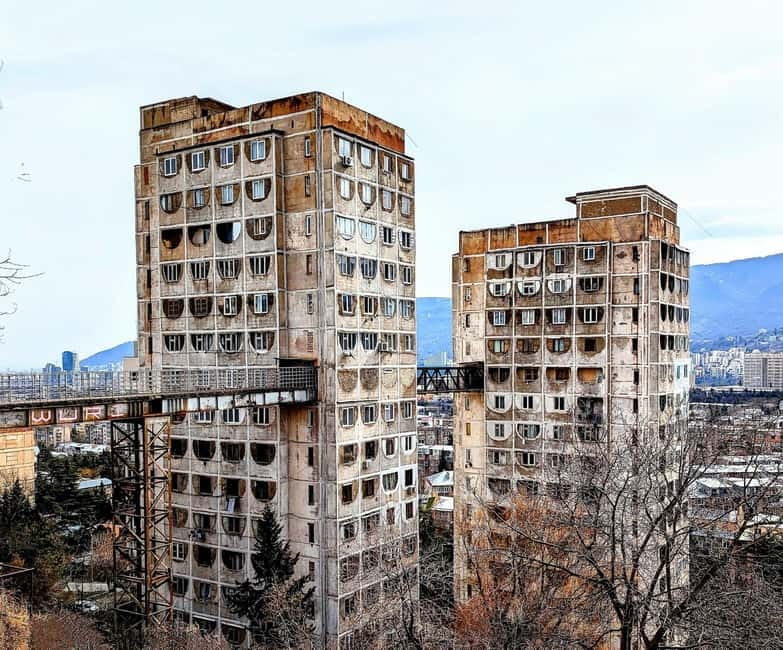
- Skybridge: aspiration and connectivity in a single view
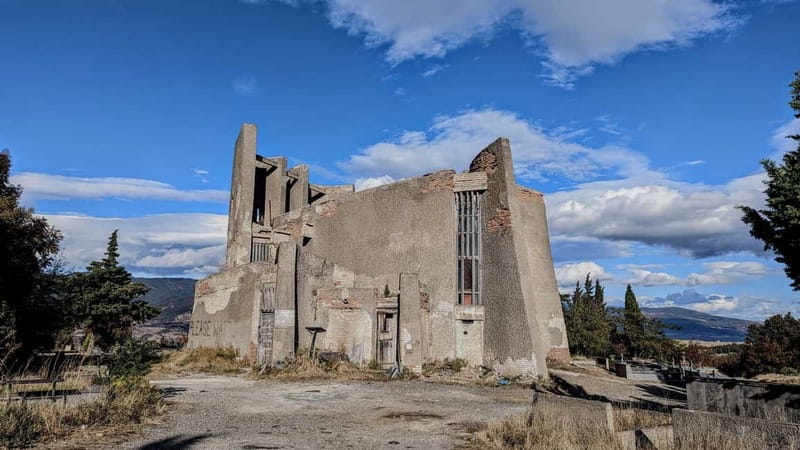
- Crematorium and the cemetery: brutal geometry with human gravity
- Wedding Palace from the outside: why you still should care
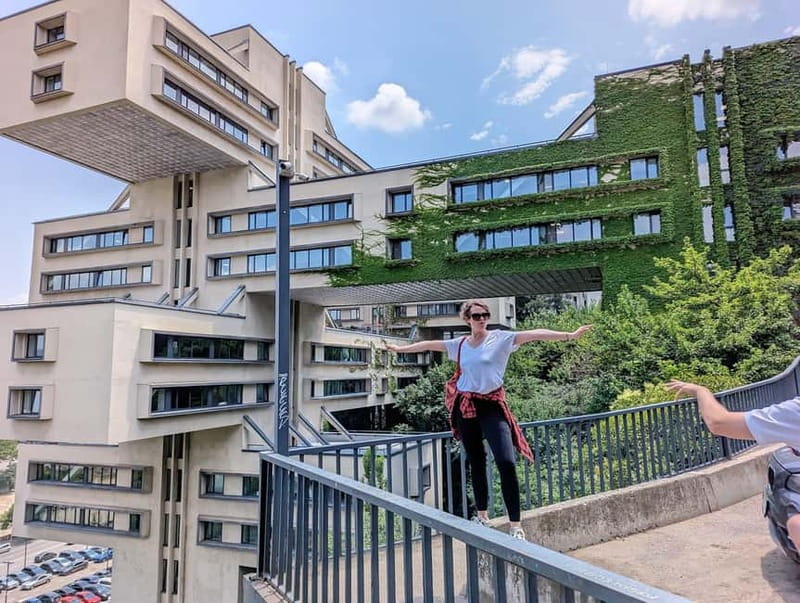
- Ministry of Roads: futuristic state ambition in building form
- Archaeological Museum and the dungeon: layers under the city
- Small but memorable: the khachapuri snack stop
- How to get the most from the guide, in plain terms
- Price and value: is $176 per group up to 2 fair?
- Who should book Hidden Tbilisi, and who should skip it
- If access changes: how to handle the real-world version of this tour
- Should you book this tour?
- FAQ
- How long is Hidden Tbilisi?
- Is this a private group tour?
- Does the tour include hotel pickup and drop-off?
- Can I enter the Wedding Palace during the tour?
- What should I bring and wear?
- Is there free cancellation?
Key points to know before you go
- Soviet-era modernism and brutalism explained through the buildings that still shape Tbilisi
- Skybridge as a practical symbol of ambition, movement, and how cities connect
- Crematorium and cemetery design you get to see as architecture, not just a stop on a list
- Wedding Palace discussed from the outside only, so plan your expectations for photos and viewpoints
- Ministry of Roads and other futuristic state projects, with the why behind the form
Other Chiatura and Tskaltubo Soviet-era trips:
- Tbilisi: The Urbex and Soviet Tour of Tbilisi★ 5.0 · 127 reviews
- 1 Day Private Armenia: UNESCO, Soviet & Curated Family Lunch★ 5.0 · 106 reviews
- Tbilisi old town & soviet heritage – Private driver-guided Tour★ 5.0 · 83 reviews
- Brutalist Tbilisi: Urban exploration and untold stories★ 5.0 · 82 reviews
What this tour is really about: reading Tbilisi in concrete
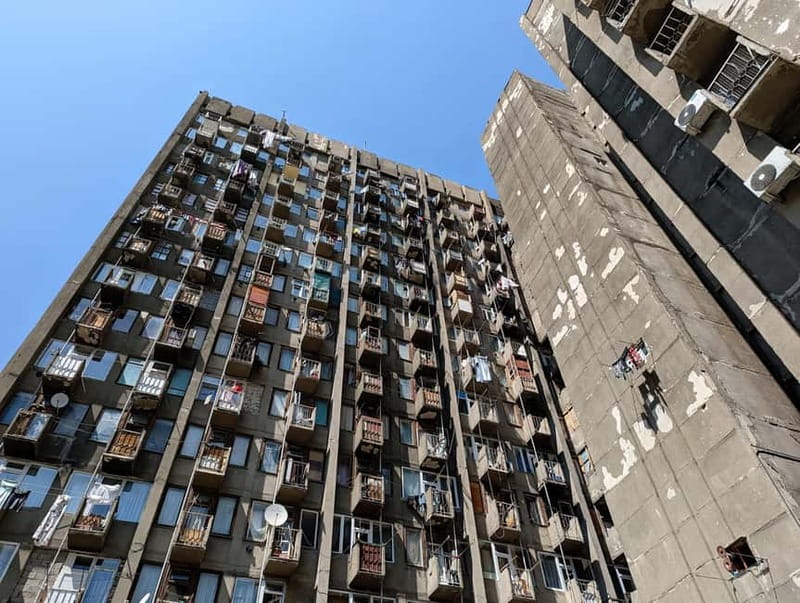
Tbilisi is easy to visit with your camera and your schedule. This experience asks for one extra skill: reading the city like a text. You’ll look at shape, scale, and materials, and you’ll hear how those design choices were tied to the Soviet push for modernization, social planning, and big promises that didn’t always land the way people hoped.
That style of architecture often gets reduced to one word, brutalism. Here, you’ll learn why it’s more than a look. Brutalism is a way of thinking. Modernism is a way of solving problems. On this tour, the buildings become evidence, showing what leaders wanted cities to be, how they tried to manage daily life, and what remains when eras change.
You also get a useful balance. Yes, you’re there for landmark buildings. But you’re not stuck in pure lecture mode. The better guides are the ones who connect form to daily experience, and multiple guides highlighted this approach, including explanations that connect the streets and the spaces people actually moved through.
Route overview: a focused 6 hours with real walking
The tour lasts 6 hours and is a private group. You also get hotel pickup and drop-off from your address, plus transportation, so you are not spending your time figuring out transit between scattered modern sites.
What I like about this format is that it removes friction. You can show up wearing the right shoes and then use the whole morning or afternoon for architectural observation. What you should watch, though, is the kind of outing it is. The tour is marked as not suitable for people with mobility impairments, and it is also listed as not suitable for people with a cold and for children under 12. If you catch colds easily, plan rest before this one.
Also, pack like you’re going to be outside and maybe a bit dirty. Bring clothes that can get dirty and comfortable clothes, plus a camera. The tour doesn’t allow luggage or large bags, so travel light.
Starting point energy: pickup, Skip the ticket line, and why it matters
You’re picked up from your Tbilisi address. That sounds simple, but it matters with architecture tours like this, because modernist buildings are often in different neighborhoods with limited parking and unpredictable access.
It also includes skip the ticket line. Even when you are not waiting for long at every stop, that saved time adds up across a half day. The whole point is to spend your energy on looking and listening, not standing in queues.
Since this is a private group, you get a smoother flow for questions. The guides are English speaking, so you can ask about how Tbilisi planning worked, or how people would have experienced these buildings in their original era.
Skybridge: aspiration and connectivity in a single view
One of the headline stops is the Skybridge, described as a symbol of aspiration and connectivity. That framing is important. You should see this not just as a structure, but as an urban idea made visible.
As you walk toward it and look around, pay attention to how it changes movement. Modernist thinking often goes beyond individual buildings, and this is a good moment to notice the bigger system. A bridge is about routes, and routes are about who can move where, how fast, and with what level of control.
If your taste runs more toward city planning than pure architectural detail, you’ll probably enjoy this stop most. It’s the kind of place where a guide can explain the intention behind the shape, and it helps you understand why Soviet-era modernization still affects everyday movement patterns.
A practical tip: bring your camera and actually take time to frame the shot from more than one angle. Bridges look different when you shift your viewpoint, and you will want at least one photo that shows the structure plus its context in the surrounding streets.
Other Tbilisi tours and day trips:

Crematorium and the cemetery: brutal geometry with human gravity
Next comes one of the most memorable segments: the crematorium and cemetery area. The design of the crematorium is praised as unique, and this is where the tour’s tone can turn more serious.
Crematoriums are not usually tourist stops, so you’ll feel a different kind of attention here. The value is in the contrast. Brutalism often gets associated with coldness, but when you put it next to an institution tied to mourning and ritual, you see the weight of what architecture communicates. You’re not just seeing concrete. You’re seeing how institutions try to manage grief, order, and public space.
The tour’s framing helps. You learn the design logic, but you also hear stories behind Soviet-era landmarks that are, as the tour description puts it, on the brink of erasure. That gives the visit urgency without turning it into spectacle.
One consideration: if you’re in a mood for light and funny only, this section can feel heavier. But if you want the real textures of a city’s history, this is the part that likely sticks with you.
Wedding Palace from the outside: why you still should care
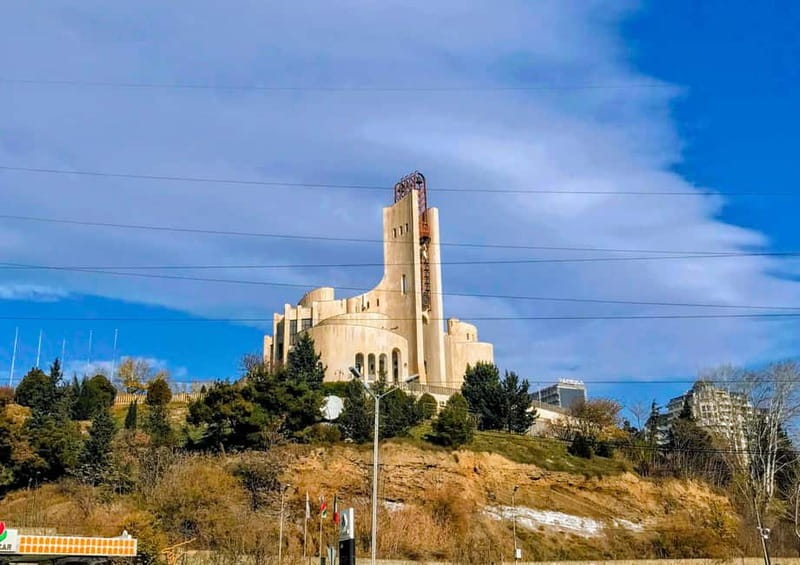
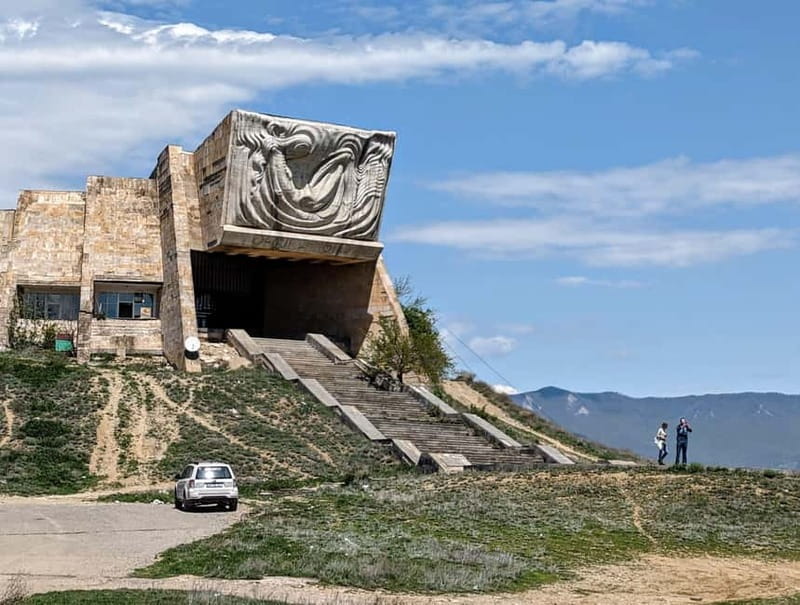
The Wedding Palace is another big architectural name on the route. The catch is stated clearly: entrance to the territory and the interior is not possible. You will observe and discuss its architectural significance from the outside.
That could disappoint someone who expects full access. But for an architecture-focused tour, outside viewing can still be the right experience. The building’s role is in its form, and you can read a lot of design choices just by studying how it sits, how it meets the street, and how its style communicates with the surrounding area.
Expect the guide to connect it back to the modernist architects of the period, including references to a local modernist genius often likened to Le Corbusier. Even if you do not know the name of every architect, you can learn the core idea. This is about function, symbolism, and pushing the boundaries of what public buildings should look like.
Practical advice: plan to spend extra minutes here if your photography matters. If the interior is off limits, your only chance to capture the full architectural statement is through outside angles. Move around. Take a wide shot, then take close-ups of the details you can reach without interfering.
Ministry of Roads: futuristic state ambition in building form
The Ministry of Roads is described as a futuristic building and part of the tour’s Soviet-era ambition theme. Road ministries may sound boring until you see the architecture they chose to represent planning power.
This stop is where you’ll likely connect the dots between design and governance. When a state invests in infrastructure, it also invests in symbols. The building is a way to show authority and future planning, and the architecture language helps sell the idea that systems can be controlled, efficient, and modern.
I like this part because it expands your view from one neighborhood to a bigger story: how a city imagines its future. You can interpret the building as a statement of who makes decisions and what kinds of projects get prioritized.
If you are the sort of person who watches cities and thinks about why certain blocks look the way they do, this is a highlight. It gives the tour its forward-leaning energy, after the more solemn cemetery segment.
Archaeological Museum and the dungeon: layers under the city
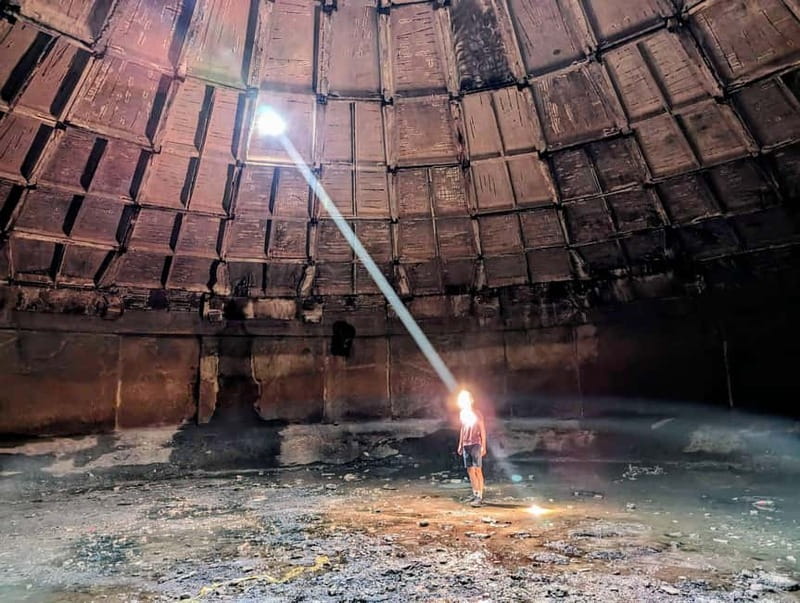
Then the tour moves into something different, the archaeological museum and its enigmatic dungeon. This stop is valuable because it reminds you that modernism and brutalism are not the start of the story. They sit on top of earlier layers, and cities like Tbilisi have always been places where different eras overlap.
The word dungeon in the description signals a specific mood and setting. Even without details added beyond that, the point is clear: you’re getting a physical sense of how history can be accessed in uneven ways. The city stores information in plain sight and in less obvious spaces, and a dungeon-like area is exactly the kind of place where you feel the “underneath” of urban life.
From a traveler perspective, this is the mental reset you need mid-tour. You leave the era of abstract design language and return to something more grounded, built and excavated. It makes your earlier architectural reading feel deeper, because you understand that buildings are only one layer of time.
Small but memorable: the khachapuri snack stop
One of the most human moments on the day is a snack break with a local bakery known for delicious khachapuri. That might sound like a routine add-on, but it matters for two reasons.
First, it gives your body a break so you can keep paying attention. Second, it ties the architecture day back to everyday Georgian life. You’re not only learning about past systems. You’re also tasting something that still runs on tradition and comfort food.
If you do this tour during colder or rainy weather, that warm, simple food can be the difference between a good day and a memorable one.
How to get the most from the guide, in plain terms
The tour succeeds when you treat it like a dialogue. Ask the guide how a building would have been used, not just what it looks like. The best moments usually come from questions that connect design to daily routine.
Recent high ratings mention guides who are friendly and humorous, and who balance architecture with local and personal history. If you get that kind of guide, you will likely feel like the tour is about more than photographs. You’ll feel like you learned a new way to see Tbilisi.
The guide styles named in top feedback include Alex, Khato, and Khatuna. Even if your assigned guide isn’t one of those names, the lesson is consistent: good brutalism tours are not just about styles, they are about interpretation.
Price and value: is $176 per group up to 2 fair?
At $176 per group up to 2, this isn’t a bargain-bin walking tour. But it is also not priced like a high-end private event with no structure. You’re paying for a focused half day with hotel pickup and drop-off, transportation, a live English guide, and the fact that it’s private.
Here’s how I think about the value:
- If you are two people who want a custom pace and the ability to ask questions, the per-group price can be fair.
- If you are solo, the private setup can still be worth it if you hate crowd logistics and want to avoid missing key modern sites.
- The architecture focus is niche. If that’s your interest, you’ll use the full 6 hours productively. If it’s not, you might feel like you could have done something similar with slower self-guided walking and a general guidebook.
Also, remember the interior limitation at the Wedding Palace. It does not make the tour bad, but it does mean part of the time is spent on outside observation. If your dream day is one with maximum museum entry and indoor access, this may not match your priorities.
Who should book Hidden Tbilisi, and who should skip it
This tour is best for:
- You like architecture, city planning, and design history.
- You want Soviet-era context and you are curious about why modernism and brutalism took the forms they did in Georgia.
- You enjoy tours where a guide connects buildings to people and daily life, not just timelines.
This tour is not a match for:
- You need wheelchair access, since it is not suitable for wheelchair users.
- You have a cold or you cannot handle a walking outdoor outing.
- You are traveling with children under 12, since it is not suitable for them.
- You have major mobility impairments, since it is listed as not suitable.
- You want something casual, with no architectural talk. It is explicitly marked not suitable for people without experience, so you should be ready to engage.
If you’re the type who likes to ask why, then you’ll likely enjoy it. If you just want scenic photos and minimal effort, you may find it too serious and too conceptual.
If access changes: how to handle the real-world version of this tour
One practical note from the tour information: some locations may not be accessible during the tour due to circumstances. If that happens, an alternative site of equal interest will be included.
That flexibility matters more than you might think. Modern sites can have access limitations, and your guide can adapt. The best mindset is to treat the day as an architecture and context route, not a strict checklist where every stop is guaranteed in the exact same way.
Should you book this tour?
I’d book Hidden Tbilisi if you want a modern Tbilisi day that feels smarter than the usual highlights. The combination of Soviet-era landmarks, brutalist design reading, and guides who can connect architecture to real human stories is the core strength. Add hotel pickup and a private group setup, and the logistics are straightforward for a niche topic.
Skip it if you want easy accessibility, mostly indoor sites, or a laid-back sightseeing tour with minimal walking. Also, if you were hoping for Wedding Palace interior access, plan for outside viewing only.
If you’re ready to look harder at buildings and ask better questions, this is a strong choice for a memorable half day in Georgia.
FAQ
How long is Hidden Tbilisi?
The tour is 6 hours.
Is this a private group tour?
Yes, it is a private group.
Does the tour include hotel pickup and drop-off?
Yes, pickup from Tbilisi at your address and drop-off are included, along with transportation.
Can I enter the Wedding Palace during the tour?
No. You cannot enter the Wedding Palace territory or interior. You will observe and discuss it from the outside.
What should I bring and wear?
Bring comfortable shoes and comfortable clothes, and clothes that can get dirty. Also bring a camera and weather-appropriate clothing.
Is there free cancellation?
Yes. You can cancel up to 24 hours in advance for a full refund.
Newer trips around Tbilisi
- Tbilisi Private Dinner: Georgian BBQ & Fireplace
★ 5.0 · 1 review - Tbilisi: Khinkali Tasting Lunch with Local Drinks and Pickup
★ 5.0 · 1 review - Day trip in Kakheti-wine tour
★ 5.0 · 1 review - Tbilisi & Mtskheta bus tour hop on hop off
★ 5.0 · 1 review - Tbilisi: Christmas Market & Hidden Gems Guided Walking Tour
★ 5.0 · 1 review - Stalin’s Secrets: An Underground Journey Through History
★ 5.0 · 1 review
Chiatura & Tskaltubo Soviet Trips, compared.

1 Day Private Armenia: UNESCO, Soviet & Curated Family Lunch
Read our review →
Abandoned sanatoriums of tskaltubo – group tour from Kutaisi
Read our review →
Chiatura Tour with Katskhi Pillar & Cable Car Experience
Read our review →
Tbilisi old town & soviet heritage – Private driver-guided Tour
Read our review →
Brutalist Tbilisi: Urban exploration and untold stories
Read our review →
Armenia: 1 Day Soviet gems, UNESCO + Family lunch (Small group)
Read our review →Browse the lists this tour appears in