
Reviewed · CHIATURA & TSKALTUBO SOVIET TRIPS
Tour to Katskhi Pillar&Chiatura from Tbilisi (Mghvimevi,Cableway, Ubisa,Tsitska)
A pillar of faith, far from Tbilisi traffic. This full-day route mixes rock-carved monasteries, the unusual mining town of Chiatura, and the dramatic Katskhi Pillar complex, with a wine and khachapuri break to keep things cheerful.
I love how the tour is built around convenience, with hotel pickup from anywhere in the capital. I also love the food moment, because you get Tsitska wine plus warm, cheesy khachapuri as part of the day.
One thing to plan for, it is a long day and lunch is not included, so you will want snacks or a meal plan.
In This Review
- Key reasons this day trip works
- Katskhi and Chiatura: why this route feels so different from the usual day trips
- Price and logistics: what you actually get for $197.50 per person
- Mgvimevi cave monastery: how a 13th-century rock-cut church still feels alive
- Chiatura mining town and its cable cars: the 1950s system you can still watch
- Didi Katskhi: hexagonal church design and the story of restoration loss
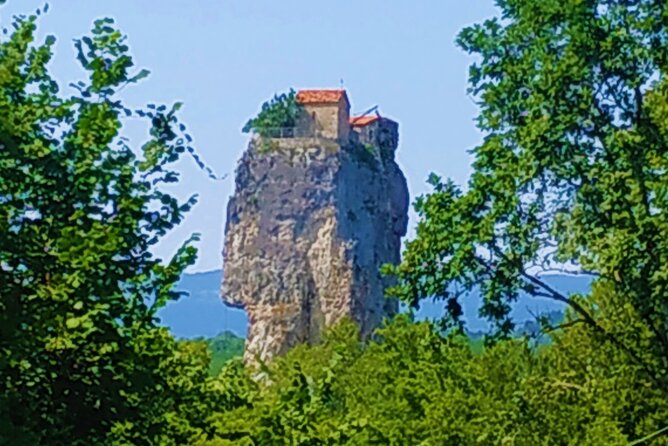
- Katskhi Pillar: the 40-meter monolith and the church complex at the base
- Ubisa Monastery frescoes: why the Last Supper is worth your time
- Wine tasting and khachapuri: the included break that actually matters
- The driving day experience: private transport, not a cattle-call
- Church dress code in Georgia: what to do before you step inside
- Photo and timing tips for a day with 30-minute stops
- Who this tour suits best, and who might feel rushed
- Should you book Katskhi Pillar and Chiatura from Tbilisi?
- FAQ
- What time does the tour start, and how long is it?
- Is hotel pickup available anywhere in Tbilisi?
- Is this a private tour?
- What food and drinks are included?
- Is lunch included in the price?
- Are admission tickets included for the stops?
- What should I wear for the monastery churches?
- What if weather conditions are poor?
Key reasons this day trip works
- Hotel pickup anywhere in Tbilisi, so you do not waste time getting organized in the morning
- Chiatura cable cars using original infrastructure from the 1950s, still in use today
- Katskhi Pillar views from the valley, plus the monastery complex at the base
- Ubisa frescoes that show a surprisingly early medieval style linked to later Renaissance ideas
- WiFi on board and an air-conditioned vehicle, helpful for a roughly 12-hour itinerary
Other Chiatura and Tskaltubo Soviet-era trips:
- Tbilisi: The Urbex and Soviet Tour of Tbilisi★ 5.0 · 127 reviews
- 1 Day Private Armenia: UNESCO, Soviet & Curated Family Lunch★ 5.0 · 106 reviews
- Tbilisi old town & soviet heritage – Private driver-guided Tour★ 5.0 · 83 reviews
- Brutalist Tbilisi: Urban exploration and untold stories★ 5.0 · 82 reviews
Katskhi and Chiatura: why this route feels so different from the usual day trips
If you already toured Tbilisi old streets, this is the kind of day trip that changes your mental map of Georgia. You shift from city life to rock-cut prayer spaces, then to a mining valley with cable cars, and finally to one of the country’s most striking religious sites.
The best part is the variety. You get monasteries with cave interiors and medieval fresco programs, plus the unusual engineering story of Chiatura’s cable system, all in one organized run out of Tbilisi. It is not just sights, it is variety of place and mood.
Price and logistics: what you actually get for $197.50 per person
At $197.50 per person, this tour is priced like a true private day, not a rushed group shuffle. You are paying for round-trip transport in a vehicle with WiFi on board, air-conditioning, and included bottled water, plus guided routing across multiple sites.
Timing matters here. Start is 8:00 am, and the day runs about 12 hours, with roughly 30 minutes at each stop. That makes the pacing feel tight but manageable, especially if you value getting a lot of Georgia in one stretch.
A small but important detail, admissions are listed as free for these stops. That helps your budget because the ticket cost is not adding up as the day goes along. The only notable food gap, lunch is not included, so you will likely want to carry something small if you get hungry.
Mgvimevi cave monastery: how a 13th-century rock-cut church still feels alive
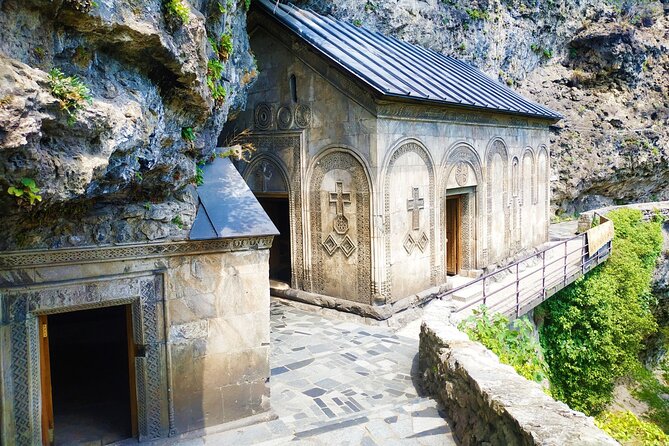
Mgvimevi, also known as the Mothers’ Monastery, is a 13th-century two-nave basilica partly carved into rock. You enter a place that feels built into the landscape rather than placed on top of it, and that difference shows up in the atmosphere.
What I would focus on during your visit:
- The complex layout, including a small hall church, bell-tower, and circuit wall
- The wooden iconostasis that depicts the Savior and Twelve Apostles, with scenes from Jesus’ life made in the 18th century
- The carved exterior details around the window area, plus monumental crosses and geometric carving
One neat historical layer is the wartime use. Small caves around the monastery served as refuges, so the site reads as both spiritual and practical. Even with a short visit, you can usually spot the “stonework story” if you take your time looking at the exterior carvings and then step inside.
Chiatura mining town and its cable cars: the 1950s system you can still watch
Chiatura sits in a mountain valley of the Qvirila River, built around manganese and iron mining. In 1879, Georgian poet Akaki Tsereteli discovered manganese, and mining quickly turned Chiatura into a major source of those materials.
Here is the twist that makes it more than a drive-by town. To solve productivity issues caused by steep walking distances to mines, a cable car system was installed in 1954. Even now, the original infrastructure remains part of what you see, with 17 cable car systems still in existence.
You will likely get a short window to take in the hub area and the general scale of the cable-car network. Because the stop is only around 30 minutes, I suggest you come prepared to do quick photography and then use your time for the visual big picture: the steep valley shape and how the cable routes fit into it.
Other Tbilisi tours and day trips:

Didi Katskhi: hexagonal church design and the story of restoration loss
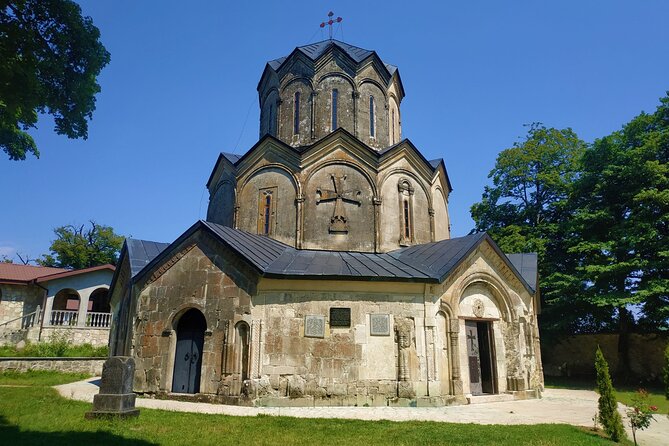
Next comes Didi Katskhi, a medieval monastery associated with the Baguashi family in the period 988 to 1014. The church is known for a hexagonal design and ornate decoration, which you can still sense even when parts are missing.
When you look at the exterior, pay attention to the three cylindrical levels that narrow as they rise. The building was richly decorated, but the decoration on the two upper tiers was lost during an 1854 restoration, which is why you may notice unevenness in the ornament.
Also keep an eye out for the south vestibule relief, the Exaltation of the Holy Cross, where a cross is supported by four angels. A pentagonal wall surrounds the church, and there is a bell tower added later, in the 17th or 18th century.
With a short stop, the trick is to do a quick “shape scan” from outside first, then return for the most important details. That way, even in 30 minutes, the monastery reads as a complete architecture story, not just a photo angle.
Katskhi Pillar: the 40-meter monolith and the church complex at the base
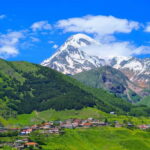
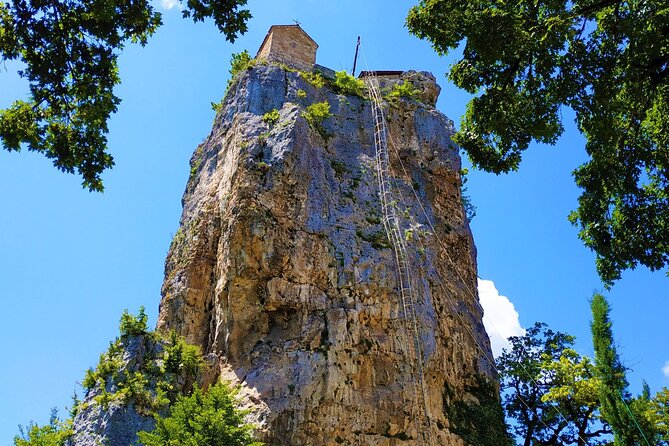
Katskhi Pillar is a 40-meter-high natural limestone monolith overlooking the Katskhura river valley. The monastery complex is dated to the 9th to 10th century, and it has that holy “pinpoint” feeling you get when devotion is tied to a hard-to-reach place.
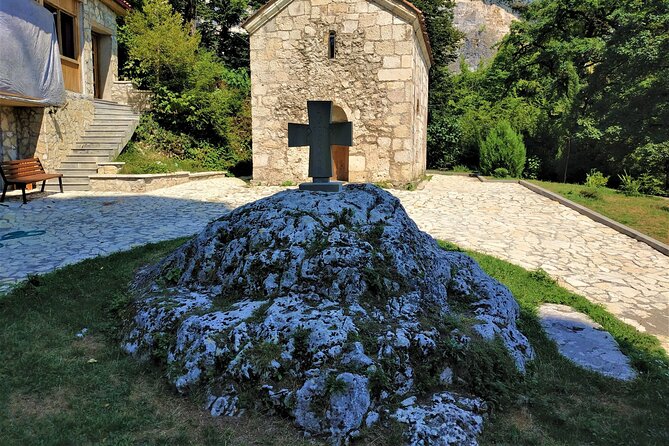
What you are looking at includes the church of Maximus the Confessor, a burial vault, three hermit cells, a wine cellar, and a curtain wall at the top of the column. At the base, there is also the newly built church of Simeon Stylites, plus ruins of an old wall and belfry, and a Bolnisi cross relief.
This is the stop with the big visual payoff, and it is no surprise it is the one people often remember most. In a recent 5-star note I saw, Giorgi stood out for making the day feel smooth and for helping the group understand what to look for, and the Katskhi views were described as breathtaking.
One detail worth carrying in your head for the visit, legends link the top of the rock to a church dome 1.5 km away using an iron chain. You do not need to treat legends as facts, but they help you understand why this pillar captured imagination for centuries.
Ubisa Monastery frescoes: why the Last Supper is worth your time
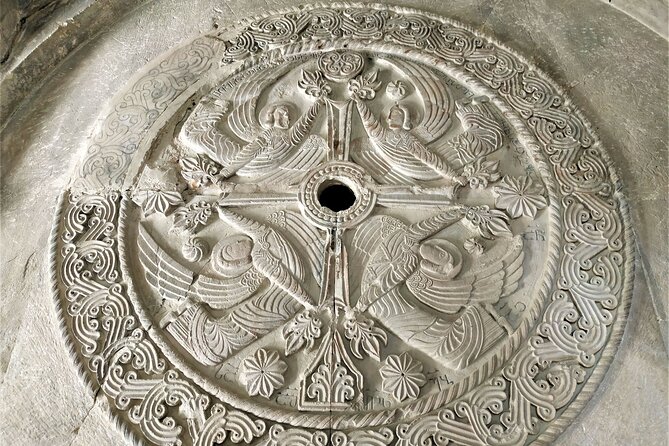
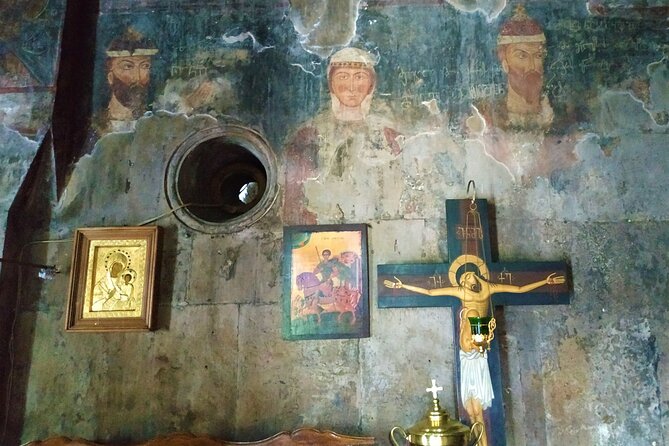
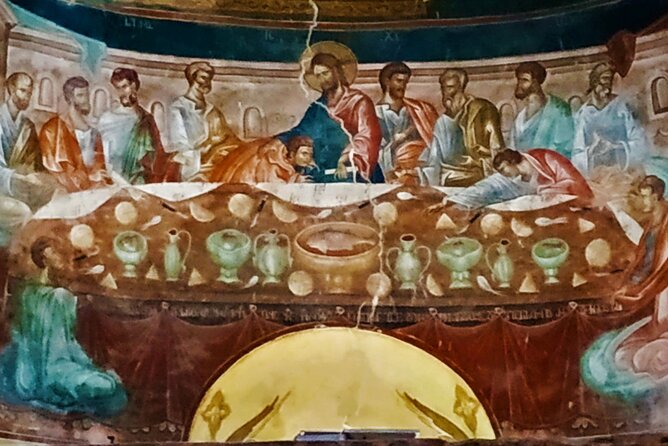
Ubisa is a medieval monastic complex founded by Grigol Khandzteli in the 9th century, later renewed by Simon Chkondideli in 1141. The main reason you want to stop here is the fresco program, especially the uniquely styled Last Supper.
In the 14th century, during the reign of George the Magnificent, the monastery’s main temple was decorated with frescoes that are known for their distinctive approach. The Ubisa Last Supper is attributed to a new style by Georgian artist Damian, with student Gerasim.
What makes the scene interesting is the comparison to later European art timing. A fish appears on the table of Ubisa’s Last Supper and the human gestures and expressions are notable. The timing is often discussed because it comes well before Leonardo’s well-known version painted in 1495 to 1498, showing that inventive figure work was happening in Georgia during the Middle Ages.
With only about 30 minutes, you need to keep your focus tight. Look for the faces and hands first, because that is what makes this fresco concept feel “alive” compared to flat, symbolic art styles.
Wine tasting and khachapuri: the included break that actually matters
This tour does not just give you a snack stop. You get a tasting of Tsitska wines and warm khachapuri, paired in the included experience.
For value, this is smart. A lot of day tours add a meal that turns into an extra cost later. Here, bottled water is included and the main comfort food moment is built in, so you can stay happy during the driving time and the quick site visits.
Practical note: wine tasting means you should keep your pace calm. If you are sensitive to alcohol or you prefer to skip it, you can still enjoy the khachapuri, and you can always plan to keep the rest of your day easy.
The driving day experience: private transport, not a cattle-call
The vehicle is air-conditioned and includes WiFi on board, with private transportation for your group. That matters on a long day because you are not trying to coordinate around other people’s bathroom breaks or delays.
Group size is also different. This is a private tour, so you only share the day with your own group. That usually makes it easier to ask questions, pause for quick photos, and handle the dress code adjustments without stress.
A small detail from a top-rated note stuck with me: Giorgi was praised for being helpful. That kind of on-the-ground support is often the difference between a day trip where you only take pictures and a day trip where you come home with a clearer story of what you saw.
Church dress code in Georgia: what to do before you step inside
Plan for clothing rules, because the monasteries are Orthodox churches. Women need head scarves and dresses, and men should not wear short trousers.
If you forget something, the info is clear: scarves and dresses are available near church entrances for people to use when entering. Still, I recommend you handle it before you arrive when you can, because it saves time and keeps the morning smooth.
Also think about comfort. You are walking in and out of rock and stone spaces, and it is easier to stay focused on the carvings and frescoes when you are not fussing with clothes.
Photo and timing tips for a day with 30-minute stops
When a day uses short stop windows, you need a fast strategy. I like to do it in two rounds: first, take wide shots to capture the site shape, and second, zoom in on details that match the place’s theme.
For Mgvimevi, look for exterior carvings, then the iconostasis inside. For Chiatura, capture the valley and the cable system context. For Katskhi, get the pillar view angle early, then spend your remaining minutes at the base complex.
And for Ubisa, prioritize fresco faces and hands. The Last Supper style is about expression and gesture, so you want to frame that before you move on.
Who this tour suits best, and who might feel rushed
This works well if you want a high-meaning cultural day that still feels varied. You like monasteries, medieval art, and the kind of offbeat Georgian engineering story you would not randomly pick on your own.
It is also a good fit for people who want comfort built in, because pickup is offered anywhere in central Tbilisi and the vehicle has WiFi and air-conditioning.
You might want to consider another option if you hate tight time windows. With about 30 minutes per stop and a roughly 12-hour day, you do not get long, slow roaming time at each site.
Should you book Katskhi Pillar and Chiatura from Tbilisi?
If you are choosing between a standard cultural day and something more unusual, I would book this. The combination of cave monastery, mining-town cable cars, and the Katskhi Pillar complex is the kind of route that makes a single day feel like a full travel story.
Book it especially if you care about medieval church art and you want a memorable viewpoint without needing to manage logistics yourself. The inclusion of Tsitska wine and khachapuri, plus hotel pickup and on-board WiFi, adds practical value to the day.
Only hesitate if you need an unhurried schedule or you know you will struggle with religious dress rules. If you can handle a full day and short stop windows, this is a smart, rewarding way to get out of Tbilisi and see another side of Georgia.
FAQ
What time does the tour start, and how long is it?
It starts at 8:00 am and runs for about 12 hours.
Is hotel pickup available anywhere in Tbilisi?
Yes. Pickup is offered from anywhere in the capital, and you are also dropped back after the tour.
Is this a private tour?
Yes. It is private, meaning only your group participates.
What food and drinks are included?
The tour includes a khachapuri tasting, Tsitska wine tasting, and bottled water.
Is lunch included in the price?
No. Lunch is not included.
Are admission tickets included for the stops?
Admission tickets are listed as free for the sites on the itinerary.
What should I wear for the monastery churches?
Women need head scarves and dresses. Men should not wear short trousers. Scarves and dresses are available near church entrances if you need them.
What if weather conditions are poor?
This experience requires good weather. If it is canceled due to poor weather, you will be offered a different date or a full refund.
Newer trips around Tbilisi
- Tbilisi Private Dinner: Georgian BBQ & Fireplace
★ 5.0 · 1 review - Tbilisi: Khinkali Tasting Lunch with Local Drinks and Pickup
★ 5.0 · 1 review - Day trip in Kakheti-wine tour
★ 5.0 · 1 review - Tbilisi & Mtskheta bus tour hop on hop off
★ 5.0 · 1 review - Tbilisi: Christmas Market & Hidden Gems Guided Walking Tour
★ 5.0 · 1 review - Stalin’s Secrets: An Underground Journey Through History
★ 5.0 · 1 review
Chiatura & Tskaltubo Soviet Trips, compared.

1 Day Private Armenia: UNESCO, Soviet & Curated Family Lunch
Read our review →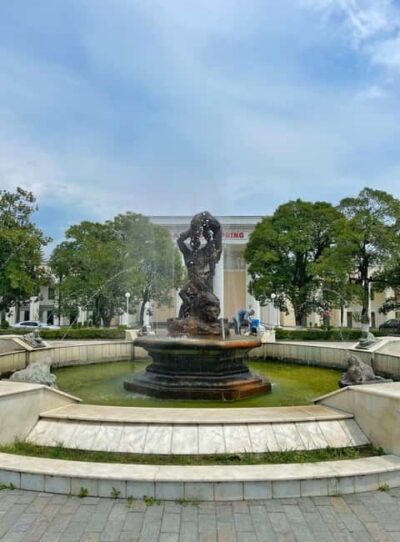
Abandoned sanatoriums of tskaltubo – group tour from Kutaisi
Read our review →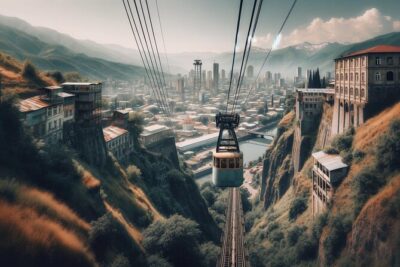
Chiatura Tour with Katskhi Pillar & Cable Car Experience
Read our review →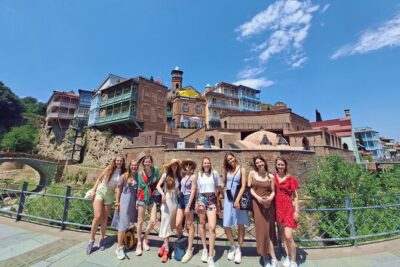
Tbilisi old town & soviet heritage – Private driver-guided Tour
Read our review →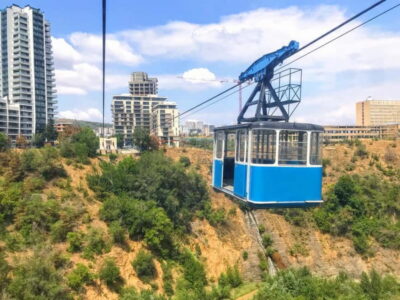
Brutalist Tbilisi: Urban exploration and untold stories
Read our review →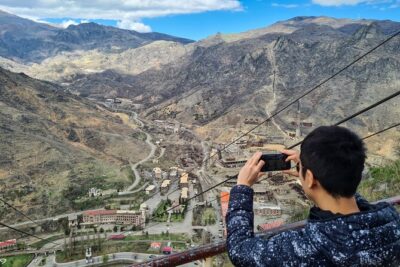
Armenia: 1 Day Soviet gems, UNESCO + Family lunch (Small group)
Read our review →Browse the lists this tour appears in