
Reviewed · CHIATURA & TSKALTUBO SOVIET TRIPS
Tskaltubo and Chiatura: 2-days urbex tour
Soviet Georgia, on a tight timetable. I like the hotel pickup and private vehicle setup, because it keeps the schedule moving and frees you up to watch the landscape change instead of decoding bus routes. This 2-day route strings together Soviet-era history and architecture across Tbilisi, Gori, Chiatura, and Tskaltubo, with built-in time for city walks and photo stops.
My favorite part is the mix of message and machinery. The Stalin Museum in Gori, opened in 1957, is a focused way to understand how the Soviet story of Stalin was presented, right down to the heavily censored lens. Then Chiatura’s cableways show the Soviet habit of using engineering to solve brutal geography, with the cable cars still in use despite a lack of maintenance.
One consideration: you will spend the night in a local guesthouse in Tskaltubo, and lunch and dinner are on you. That is not a dealbreaker, but it helps to plan your budget and energy, especially if you prefer more comfortable, fully modern accommodations.
In This Review
- Key things you will notice on this Soviet-era route
- How the 2 days are paced, and why it works
- Tbilisi’s Chronicle of Georgia: scale, water views, and a calm stop
- Gori’s Stalin Museum: what you should pay attention to
- Chiatura’s cableways: Soviet engineering you can still ride
- Walking Chiatura: markets, abandoned houses, and Soviet architecture
- Tskaltubo’s abandoned sanatoriums: springs, Soviet spa life, and urbex atmosphere
- Day 2 in Tskaltubo: radon baths, park time, and more exploring
- Kutaisi market time and the Car Factory Railway Station cable ride
- Kutaisi old town finish: lunch break and flexible end
- Price and value: is $266.67 per person fair for this route?
- Who this tour suits best, and who should think twice
- Should you book Tskaltubo and Chiatura for a 2-day Soviet urbex style tour?
- FAQ
- FAQ
- What time does the tour start?
- How long is the tour?
- What is included in the price?
- What is not included?
- Which sites are visited during the tour?
- Do I need to pay admission fees at every stop?
- Can I cancel and get a full refund?
Key things you will notice on this Soviet-era route
- Hotel pickup plus private transport means less friction and better timing between distant stops
- Stalin Museum in Gori gives you the propaganda framing, not just the headline name
- Chiatura cableways are still operating in steep manganese valleys, which makes the experience feel real
- Tskaltubo sanatoriums look and feel abandoned while still tied to the area’s famous springs
- Day 2 adds Kutaisi market time and old railway nostalgia so the trip does not end too early
- The pace is planned with long enough blocks to actually walk, not just pose and rush
Other Chiatura and Tskaltubo Soviet-era trips:
- Tbilisi: The Urbex and Soviet Tour of Tbilisi★ 5.0 · 127 reviews
- 1 Day Private Armenia: UNESCO, Soviet & Curated Family Lunch★ 5.0 · 106 reviews
- Tbilisi old town & soviet heritage – Private driver-guided Tour★ 5.0 · 83 reviews
- Brutalist Tbilisi: Urban exploration and untold stories★ 5.0 · 82 reviews
How the 2 days are paced, and why it works
This is the kind of tour where the timing matters. You start at 8:00 am, then the day is built around traveling between Soviet-linked sites that are far enough apart to waste time without a private vehicle. Instead of sprinting through every stop for a photo, you get blocks of time for each place: a quick but meaningful memorial in Tbilisi, a history stop in Gori, a longer walk in Chiatura, then a solid chunk of exploration around Tskaltubo’s sanatorium zone.
Day 2 continues with Tskaltubo first, then moves to Kutaisi for market browsing, an optional cable car ride at an old station, and a final loop through the old town before heading back toward Tbilisi. The total structure is what makes it satisfying: you get both the big names and the physical leftovers of Soviet life.
Tbilisi’s Chronicle of Georgia: scale, water views, and a calm stop
Chronicles of Georgia, sometimes called the History Memorial of Georgia, is the kind of site you appreciate once you’re standing in front of it. It sits near what is described as the Tbilisi sea, though it is really a reservoir, so you get a sense of open sky and long views along with the memorial itself. The ticket is free, and the visit is roughly 30 minutes, which is a good length for a first stop when you want to stay fresh.
What I like about this stop is that it sets context without turning into a lecture. You get the feeling of Georgia’s story being told with big Soviet-era style in mind, but in a setting that still feels local and quiet. It is also a practical mental warm-up for the rest of the trip, because it primes you to notice how Soviet design used scale and symbolism.
A possible drawback: because it is not a mainstream, high-volume tourist stop, you should go in expecting calm and open space, not crowds and a busy visitor scene. If you need lots of café options nearby, plan to snack later, since lunch is not included on the tour.
Gori’s Stalin Museum: what you should pay attention to
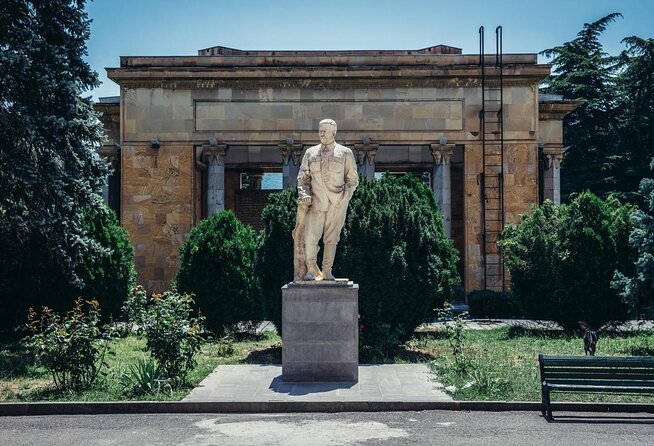
The Stalin Museum in Gori is the history anchor for the whole trip. It opened in 1957, and it has barely changed since it was designed to tell Stalin’s life through a heavily censored Soviet lens. Admission is not included, so you should budget separately for that ticket.
Even if you already know the broad story, I think this museum works best when you focus on how things are presented, not just what is being said. Look for the tone of the exhibits, the way heroism and leadership are framed, and how the narrative pushes you toward one interpretation rather than letting you compare perspectives. It is a useful counterweight to the physical sites later in the trip. When you see abandoned spas and engineered cable systems, you understand they are part of a bigger system, not just “cool old buildings.”
Consideration to keep in mind: the museum visit is about 1 hour, so if you prefer very slow museum pacing, you may want to bring patience. The tour schedule keeps you moving, and that is part of what keeps the total experience from dragging.
Chiatura’s cableways: Soviet engineering you can still ride
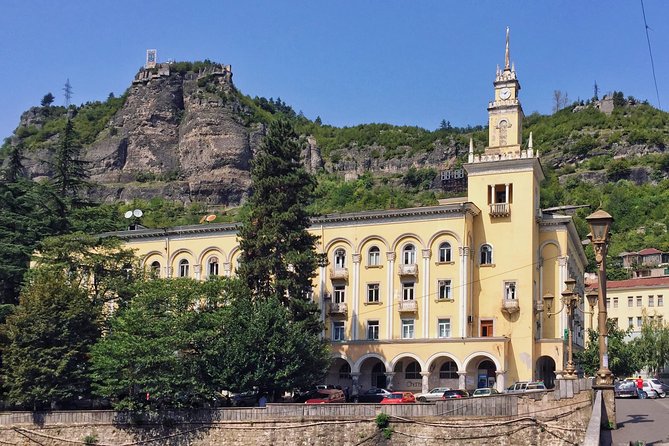
Chiatura is built into steep valleys and deep gorges, and the reason is plain: manganese. The mining created a transportation problem so nasty that walking was inefficient. So the Soviet government put in a cable car network that lets people move across terrain that looks like it should be impossible to cross.
Here is what makes this stop feel different from a typical “old town walk.” The cable cars are described as still in use, even with a troublesome lack of maintenance. That means you are not just looking at Soviet leftovers from a distance. You are experiencing the system as it exists today, which adds a real-world edge to the history.
The time block is about 1 hour, and admission for the cableways is free on this tour. That combination is great value. You get the engineering story, you get a ride, and you do not pay extra beyond what your tour already covers.
What could be tricky for some people is the nature of cable car systems and steep surroundings. This part is best for anyone comfortable with heights and with the idea of riding in a vehicle that is old and practical, not modern and cushy.
Other Tbilisi tours and day trips:

Walking Chiatura: markets, abandoned houses, and Soviet architecture
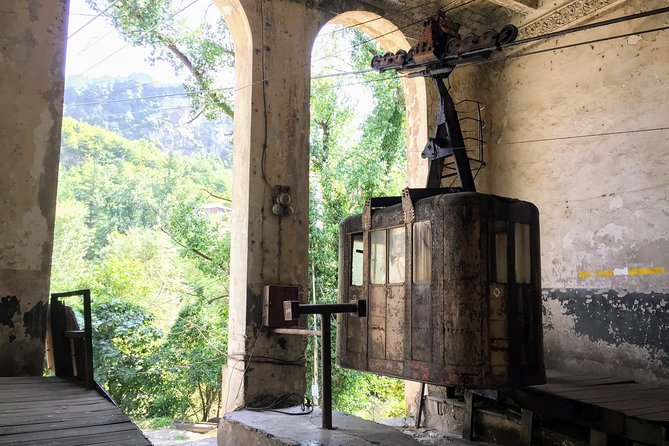
After the cableways, you shift into street level. You walk around Chiatura, checking out the local market, abandoned houses, and Soviet architecture. The schedule gives you around 2 hours here, which is long enough to do more than take a quick stroll.
This is where the trip turns from history explanation into atmosphere. You start to see how the mining economy shaped everyday life, and you notice the contrast between still-used areas like markets and the quiet emptiness of abandoned structures. Even without a big guided lecture, the visuals do a lot of work.
There is also a lunch stop described as Soviet-style. Lunch is not included, so you will pay on your own, but having a planned lunch point is helpful. It also keeps your energy steady for the next long day segment.
Tip for getting more out of Chiatura: when you stop in front of Soviet buildings, look at proportions and materials, not just the façade. The architecture carries the story of how the Soviet era tried to build “order” in harsh terrain.
Tskaltubo’s abandoned sanatoriums: springs, Soviet spa life, and urbex atmosphere
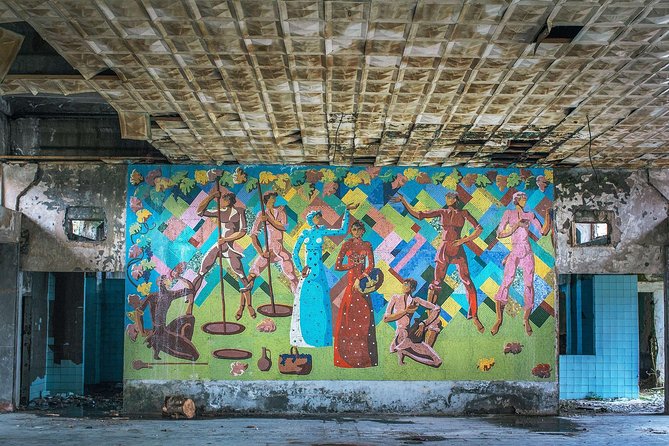
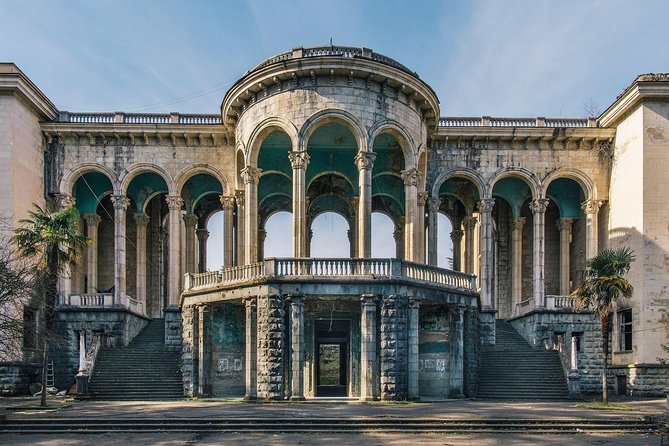
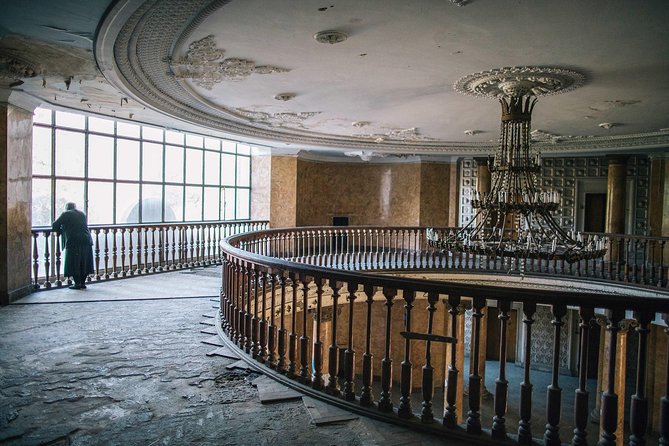
Tskaltubo is where the “urbex” feeling becomes real. In Soviet Georgia, it was a famous spa resort, tied to natural springs that emerge from limestone massifs underground. When the Soviet Union fell, the sanatoriums lost their function, and nature has moved in. The description points to vines, bushes, and weeds in places like pillared halls and bathing rooms.
If you like Soviet-era architecture with a patina of time, this is one of the strongest stops on the trip. The tour gives you time on Day 1 to visit these areas (about 2 hours), and then it returns to Tskaltubo again on Day 2 for a longer exploration including radon baths.
One reason this area feels more than just visually interesting is that it carries a layered story. The material notes a violent conflict in 1992 between government forces and separatists related to Abkhazia, which was and remains a disputed autonomous republic in northwestern Georgia. That historical note matters because it helps explain why the place did not simply “return” to a peaceful, functioning spa culture.
Possible drawback: these are abandoned sites, so you should treat them as such. Expect a more raw, less managed visitor environment than you would find in a fully operating attraction.
Day 2 in Tskaltubo: radon baths, park time, and more exploring
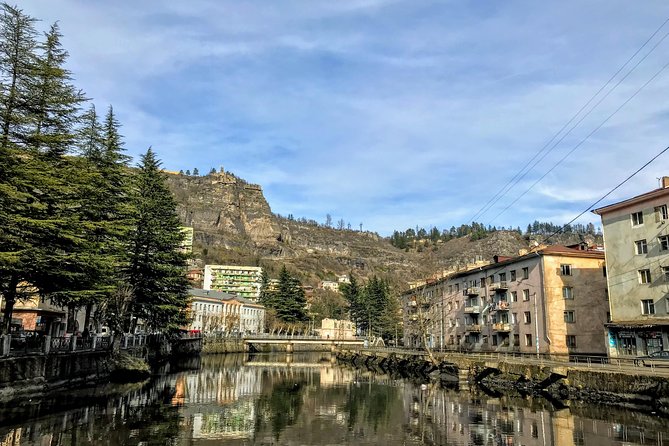
On the second day, you start again in Tskaltubo, this time with a wider set of options. You can visit the radon baths, take a walk in the park, and climb into the abandoned sanatoriums. Admission is listed as free in the tour details, and the time block is around 4 hours, which is generous.
This is a good structure for two reasons. First, it gives you variety: you are not only doing photo walks in ruined halls. Second, it allows you to decide how much you want to push into the more exploratory side of the sanatoriums. If you prefer staying near open areas and calmer spaces, you can still get a full experience with the park walk.
If you are curious about radon baths specifically, this is the tour moment to lean in. It is presented as an activity you can do during the Tskaltubo portion on Day 2, which makes it easier than trying to arrange something on your own.
For comfort planning: the tour includes a night at a local guesthouse, so you can rest between days. But the second day’s exploration is longer, so bring a mindset for movement and time outdoors, even if you stick to easier areas.
Kutaisi market time and the Car Factory Railway Station cable ride
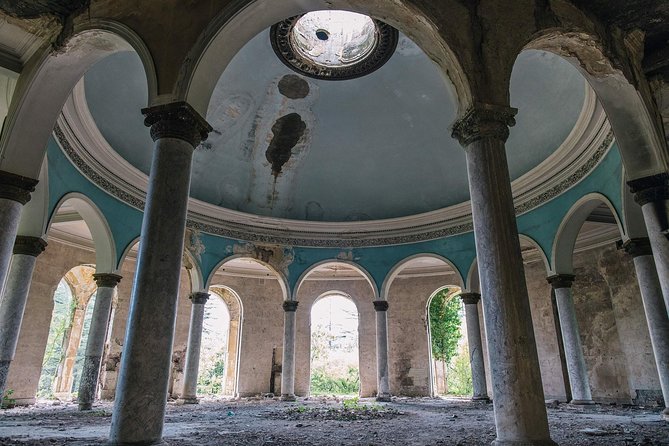
Then you shift to Kutaisi. The tour includes Kutaisi Market for about 30 minutes, with time to buy local goods or just take photos. This is short, but it works as a reset. You move from abandoned spa geometry and Soviet ruins into everyday life, and that rhythm keeps the trip from feeling like one long theme park.
You also stop at the Car Factory Railway Station, described as another old cable car. You can ride it, and in this case it is listed as included. That is a nice touch because it gives you a second cable system experience, separate from Chiatura’s manganese-mining story. This station ride also adds variety without making the schedule complicated.
The timing is about 30 minutes, so it feels like a simple add-on rather than a major time sink. You get the vibe of old transport infrastructure and can connect it back to the broader theme of how Soviet systems moved people through difficult terrain.
Kutaisi old town finish: lunch break and flexible end
Your final stop in Kutaisi is a shorter look at the old town, with time for lunch and then a return toward Tbilisi. This segment is listed at about 1 hour.
What I like here is the flexibility described: you can be left there if you want to see more or if your flight is from Kutaisi airport. That flexibility matters if you are arranging your own onward travel and do not want to be forced into a strict back-to-Tbilisi-only finish.
As with lunch earlier, dinner and lunch are not included, so plan to handle your own meal costs. The upside of a short final segment is that you are not rushed into another long exploration before you head out.
Price and value: is $266.67 per person fair for this route?
At $266.67 per person for two days, this tour is best seen as a bundle of logistics plus multiple major Soviet-linked stops.
Here is what you are paying for beyond sightseeing:
- Private transportation across Tbilisi, Gori, Chiatura, Tskaltubo, and Kutaisi. That is the big value driver, because distances make solo driving or relying on public transport more complicated.
- Hotel pickup and drop-off. This removes a lot of day-one stress, especially with a starting time of 8:00 am.
- Parking fees handled for you, which can be a small hassle but still adds up on a tight schedule.
What you should budget separately:
- Lunch and dinner are not included.
- The Stalin Museum admission is not included.
- Some other admissions are listed as free (Chronicle of Georgia, Chiatura cableways, Tskaltubo portions, and market or old town segments), and one cable ride is included at the Car Factory Railway Station, so the additional costs may not be heavy, but you should still expect some spending on site.
My take: the price is fair if you want a structured two-day hit of Soviet history and architecture without doing the planning puzzle yourself. If you have lots of time, are comfortable with independent transport, and enjoy building itineraries, you could potentially DIY parts. But if you want the route to run smoothly and keep your energy for the sites, this is the kind of deal that makes sense.
Who this tour suits best, and who should think twice
This works well if you enjoy:
- Soviet-era architecture and the physical “leftovers” of the system
- A history stop that explains framing and messaging, not just famous names
- Cable car and engineered-transport stories tied to real geography
- A mix of theme elements, from memorials to sanatorium ruins to a market finish
It may not be ideal if you:
- Want only functioning, fully maintained attractions with modern visitor infrastructure
- Need meals fully included, since lunch and dinner are on your own
- Prefer a slow, museum-heavy pace, since the schedule uses time blocks and keeps moving
Also, because this is described as a private tour/activity, it is only for your group. That usually helps you avoid the feeling of being stuck behind strangers, and it makes the pacing feel more controllable.
Should you book Tskaltubo and Chiatura for a 2-day Soviet urbex style tour?
Book it if you want a tight, practical route that gives you multiple angles on Soviet Georgia, from curated history framing at the Stalin Museum to the real engineering of Chiatura’s cableways, and then into the eerie spa-skeleton vibe of Tskaltubo.
I would especially recommend it if you value good pacing and a tour that turns history into something you can see and walk through. The strongest promise here is that you are not only collecting locations, you are also getting the context to connect them: why the cable cars existed, why the spa system mattered, and how Soviet storytelling shaped what people were meant to believe.
Skip it if you dislike abandoned sites or you want every meal and admission fully covered with minimal decisions. In that case, consider a more conventional itinerary.
FAQ
FAQ
What time does the tour start?
The tour starts at 8:00 am.
How long is the tour?
It runs for 2 days, approximately.
What is included in the price?
The tour includes private transportation, parking fees, and hotel pick-up and drop-off.
What is not included?
Lunch and dinner are not included.
Which sites are visited during the tour?
You visit Chronicles of Georgia, the Stalin Museum, cableways and the town of Chiatura, sanatoriums in Tskaltubo (plus radon baths on Day 2), the Kutaisi market, Car Factory Railway Station, and Kutaisi old town.
Do I need to pay admission fees at every stop?
Not all admissions are included. Chronicles of Georgia and cableways in Chiatura are listed as free, the Stalin Museum admission is not included, and the Car Factory Railway Station cable car ride is included.
Can I cancel and get a full refund?
Yes. You can cancel for a full refund up to 24 hours in advance of the experience’s start time.
More 2-Day Experiences in Tbilisi
- Tbilisi: 2-Day Gudauri and Kazbegi Tour with Hotel Pickup
★ 4.9 · 357 reviews - 2 Days Trip to West Georgia (Caves, Canyons, Waterfalls)
★ 4.5 · 14 reviews - 2-Day Kutaisi Tour: Caves, Canyons & Soviet Sanatoriums
★ 5.0 · 12 reviews - Tour to Yerevan Sevan Dilijan Armenia from Tbilisi 2 days
★ 5.0 · 9 reviews
Newer trips around Tbilisi
- Tbilisi Private Dinner: Georgian BBQ & Fireplace
★ 5.0 · 1 review - Day trip in Kakheti-wine tour
★ 5.0 · 1 review - Tbilisi: Khinkali Tasting Lunch with Local Drinks and Pickup
★ 5.0 · 1 review - Tbilisi & Mtskheta bus tour hop on hop off
★ 5.0 · 1 review - Tbilisi: Christmas Market & Hidden Gems Guided Walking Tour
★ 5.0 · 1 review - Stalin’s Secrets: An Underground Journey Through History
★ 5.0 · 1 review
Chiatura & Tskaltubo Soviet Trips, compared.

1 Day Private Armenia: UNESCO, Soviet & Curated Family Lunch
Read our review →
Abandoned sanatoriums of tskaltubo – group tour from Kutaisi
Read our review →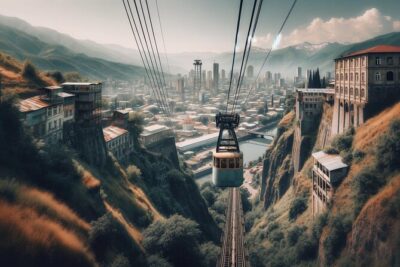
Chiatura Tour with Katskhi Pillar & Cable Car Experience
Read our review →
Tbilisi old town & soviet heritage – Private driver-guided Tour
Read our review →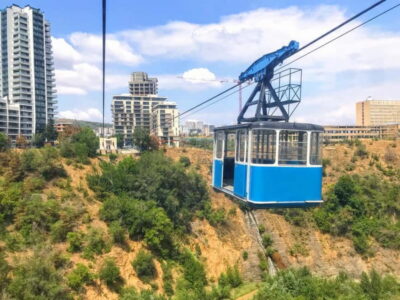
Brutalist Tbilisi: Urban exploration and untold stories
Read our review →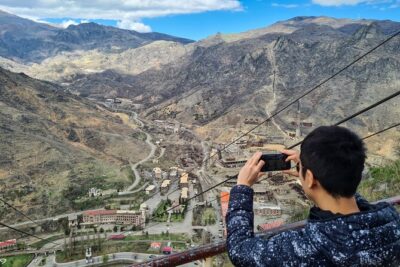
Armenia: 1 Day Soviet gems, UNESCO + Family lunch (Small group)
Read our review →Browse the lists this tour appears in