
Reviewed · GEORGIAN FEAST & COOKING WORKSHOPS
Taste of Georgia. Cooking-Class Khinkali, Khachapuri and more
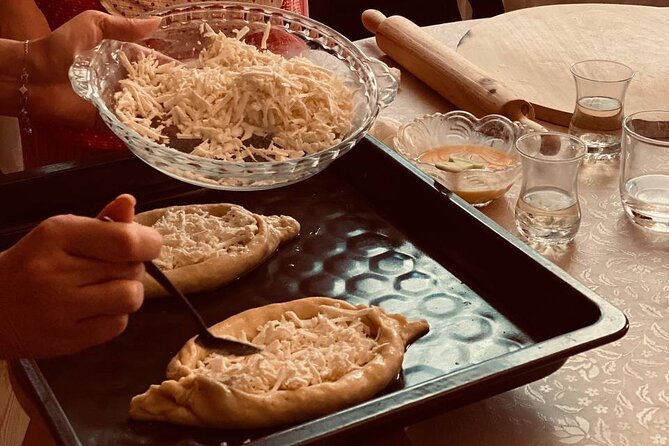
Tbilisi can taste like home. This class teaches you the hands-on techniques behind khinkali and Adjarian khachapuri in a cozy, family-style setting. You’ll learn how to get soft, elastic dough, build the filling, and fold, seal, and cook khinkali properly, then move on to stretching cheese and finishing with an egg yolk on khachapuri.
What I like most is the focus on technique you can repeat later, not just eating. I also like the small group size, up to 8 people, which means you get real attention while you cook, plus tasting of the dishes you make. One consideration: it is only about 2 hours, so if you want a long, slow meal with zero hands-on work, you might feel a bit rushed.
In This Review
- Key highlights before you go
- A family-style Tbilisi class that teaches the real mechanics
- Where you’ll meet and how the setup likely feels
- The khinkali master class: dough, filling, and the turning rule
- Dough: getting elastic, soft, and workable
- Filling: the “healing broth” idea
- The critical step: turning without breaking
- Adjarian khachapuri next: tender dough, stretchy cheese, and egg yolk
- Dough you can actually work with
- Choosing cheese and aiming for the melt and stretch
- Finishing style: arrangement and egg yolk
- What you actually eat and drink in the two-hour flow
- Price and value: why $98 can make sense here
- Tips to get the most out of your class
- Who this Tbilisi cooking class is best for
- Should you book Taste of Georgia for khinkali and Adjarian khachapuri?
- FAQ
- How long is the cooking class?
- What dishes will I cook and eat?
- Is the class offered in English?
- Are alcoholic beverages included?
- Is private transportation included?
- Can I cancel for a full refund?
Key highlights before you go
- Hands-on khinkali skills, including dough mix and how to turn them so they hold together
- Ajarian-style khachapuri focus, with dough texture, cheese melt, and egg yolk finishing
- Family-hosted, homely setup at the Georgian Cooking Classes Chakandrila meeting point
- Small group limit (8 travelers max) for better guidance during cooking
- Georgian wine included with lunch master class tasting
- English offered and a format designed for learning recipes step-by-step
Other Georgian feast and cooking workshops:
- Tbilisi: Georgian Cooking Class with Khinkali and Khachapuri★ 4.7 · 1,146 reviews
- Small-Group Khinkali and Khachapuri Cooking Class in Tbilisi★ 4.5 · 224 reviews
- Tbilisi: Cooking Class with a Local Family★ 5.0 · 104 reviews
- Cook True Ajarian Khachapuri and Khinkali in Highlanders Style★ 5.0 · 93 reviews
A family-style Tbilisi class that teaches the real mechanics
If you’ve eaten khinkali or khachapuri in Georgia and thought, I should be able to make that, this is the practical next step. The value here is that the teaching is centered on what actually changes the outcome. Dough amount, dough feel, filling balance, and cooking technique matter, and you get coaching on those choices while you work.
I like that the experience is designed around two iconic dishes with a clear workflow. You start with khinkali, then transition to khachapuri, so you’re not juggling everything at once. And because the setting is described as a Georgian family home with experienced culinary hosts, it feels less like a show and more like you’re learning at someone’s table.
The “homely environment” detail matters more than it sounds. In a place that feels comfortable, you’re more likely to ask questions and actually try the steps, including the parts that feel fussy, like shaping khinkali so they don’t fall apart.
Where you’ll meet and how the setup likely feels
Your class meets at Georgian Cooking Classes Chakandrila, 8 Merab Kostava St, Tbilisi. It also says it is near public transportation and you’ll get a mobile ticket. That means you can plan this as a straightforward part of your day without building a long logistics chain.
The experience is offered in English, and the group caps at 8 travelers. In practice, that limit usually translates into fewer people competing for a teacher’s attention. You’ll be able to ask about dough quantities, filling choices, and how to arrange khachapuri, instead of watching from the edge.
You should expect a cozy, at-home feel. The tour description emphasizes a “cozy homely environment” and hosting by experienced culinary guests. That’s the kind of setting where you’ll feel comfortable tasting, learning, and taking small notes, like what texture the dough should reach before the next step.
The khinkali master class: dough, filling, and the turning rule
Khinkali is the pride of Georgian cuisine here, and the class treats it like a skill. The instruction is split into clear stages, which is exactly what you need if you’re not already confident with dumpling dough.
Dough: getting elastic, soft, and workable
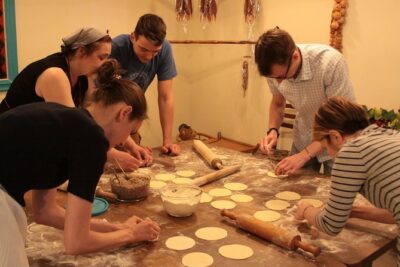
You’ll learn how to properly select quantities and mix the dough so it becomes elastic and soft. That is the difference between dough that stretches and dough that tears. It also affects how easily you can seal and fold without creating thick, uneven edges.
For home cooks, this part is gold. Many recipes fail because the dough hydration or mixing logic is vague. Here, the workshop targets the feel, meaning you learn what to correct if the dough seems too tight or too sticky.
Other cooking classes in Tbilisi:
Filling: the “healing broth” idea
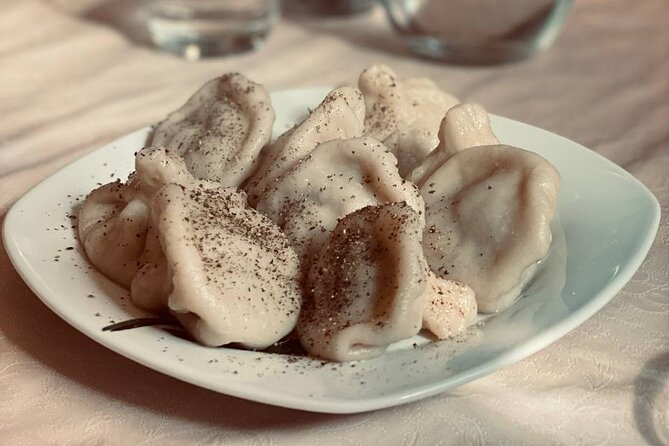
Khinkali isn’t just about stuffing. The description points out a key idea: the filling includes a healing broth that plays a major role during eating. You’ll find out what ingredients are used for the filling and how that broth factor fits into the dish.
That matters because it changes how you think about filling consistency. If the filling is too dry, you miss the signature eating experience. If it is too loose, you risk leakage or messy dumpling edges. Learning the logic behind the filling helps you reproduce the result later.
The critical step: turning without breaking
You’ll also learn how to turn the khinkali correctly so they do not fall apart when cooking. That sounds simple, but it’s one of those techniques you only learn by being shown and then trying. This is especially important if you’ve only cooked dumplings in a general way before.
Why it’s valuable for you: you’re not guessing whether the dumpling is fragile because of dough thickness, sealing, or cooking timing. You’ll get the turning method as part of the workshop, which is the kind of practical detail that improves your success rate.
Adjarian khachapuri next: tender dough, stretchy cheese, and egg yolk
After khinkali, you switch gears to Ajarian-style khachapuri. The workshop frames it as a second dish with its own set of technique wins. If khinkali teaches dough sealing and dumpling cooking, khachapuri teaches dough texture and the finishing style.
Dough you can actually work with
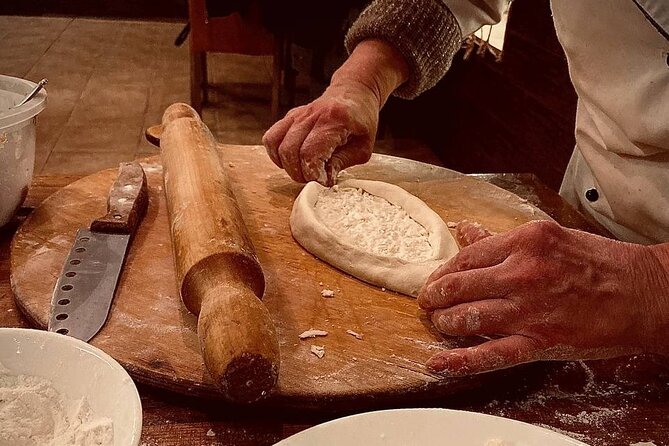
You’ll be shown how to properly prepare khachapuri dough so it turns out tender. For many people, the word tender is vague. The lesson is more useful if it teaches what to look for as the dough comes together and before it’s formed.
Choosing cheese and aiming for the melt and stretch
You’ll learn what cheese to use to get stretching melt in your mouth. That is the defining feature of this style of khachapuri, and the lesson is more specific than most general recipes.
Cheese choice is a real home-cooking obstacle. Even if you can copy the dough, getting the right melting behavior can be hard if you substitute blindly. Here, you learn the intention behind the cheese, so your substitutions (if you make them later) have a goal.
Finishing style: arrangement and egg yolk
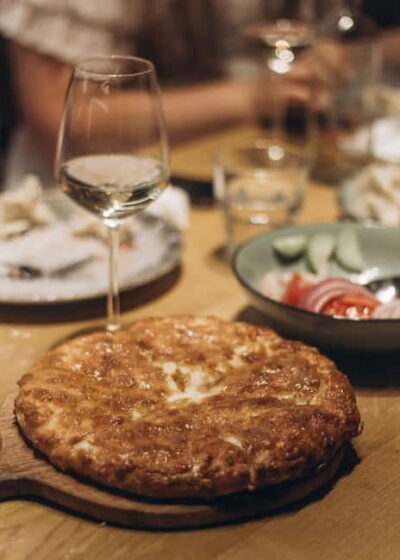
The sample menu calls out sticky cheese in dough plus an egg yolk. The workshop also teaches different ways of arranging the dish. That means you’re not just copying one plate presentation. You learn how arrangement affects the experience, especially the egg yolk finishing and the way cheese and dough interact.
When you taste your finished khachapuri as part of the master class, you’ll be able to connect what you did in the shaping and finishing to what you feel in the first bite.
What you actually eat and drink in the two-hour flow
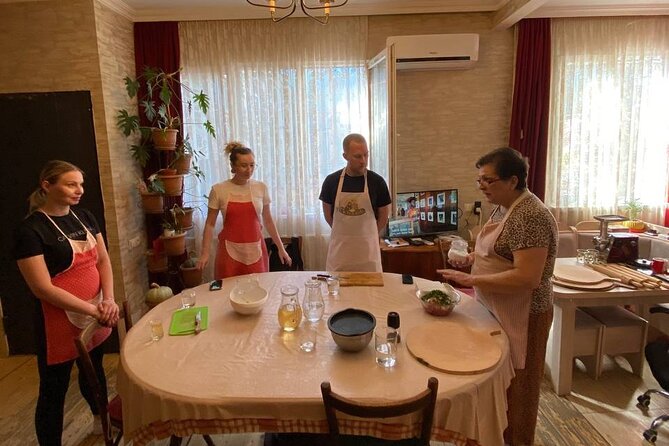
This experience is a lunch master class with cooking and tasting of the homemade dishes. The sample menu lists:
- Starter: Georgian khinkali (meat or cheese or mushrooms in their sauce wrapped in dough)
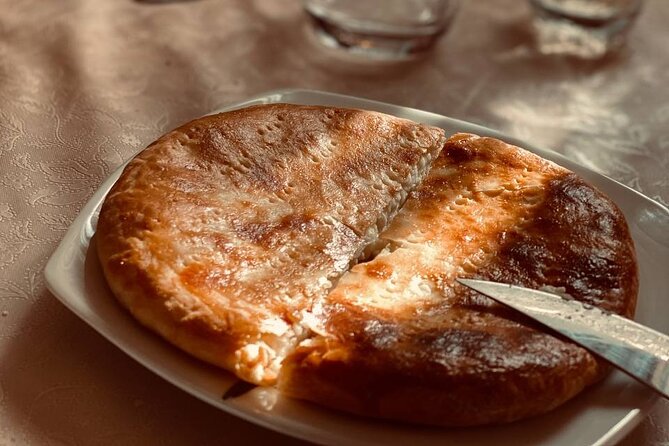
- Main: Georgian Adjarian khachapuri (sticky cheese in dough and egg yolk)
Alcoholic beverages are included. In other words, you’re not just doing a dry cooking session. You’ll likely enjoy your meal you made with wine alongside it, which fits the “perfect evening with friends” vibe described in the feedback.
The tasting portion is the practical reward. Cooking teaches technique, but tasting confirms whether you got the texture and flavor right. In this class, you get both, within about 2 hours.
One more thing I appreciate: the menu is simple and iconic, so you’re not overwhelmed. You learn two dishes with different skill sets, then eat them. That is the best structure for retention, and it makes the time feel like it earned itself.
Price and value: why $98 can make sense here
At $98 per person for roughly 2 hours, you’re paying for a guided, small-group workshop that includes:
- The lunch master class on khinkali and khachapuri
- Tasting of what you cook
- Alcoholic beverages
- English hosting
You are not paying separately for food and drink, and you are not paying for a big tour bus situation, because the group is capped at 8 travelers. The most value comes from the coaching component, especially the technique details like turning khinkali so they do not fall apart and learning the cheese and finishing style for Adjarian khachapuri.
What is not included is private transportation, so you’ll want to plan to get yourself there using public transit or by foot depending on where you’re staying.
If you are the type of traveler who likes food memories you can repeat at home, this price can be fair. If you just want to eat with no cooking involved, you might prefer a tasting-focused option instead.
Tips to get the most out of your class
Even though the workshop sounds beginner-friendly, a few choices can help you learn faster.
- Show up ready to cook, not just watch. You’ll get the best value when you’re hands-on.
- Ask about what you should do if dough feels off. The class focuses on dough feel and quantities, so it’s worth asking for the correction logic.
- If there’s a specific khachapuri style you want, ask during booking. One example from real experiences: a guest requested Imeruli Khachapuri, and the chef Grisha helped accommodate the request. That tells me communication can matter, and flexibility may be possible when you plan ahead.
- Take a few notes during the cheese and finishing part. Adjarian khachapuri relies on finishing style, including egg yolk, so write down what you observe about timing and arrangement.
Also, keep expectations realistic. Two hours is enough time to learn fundamentals and make food, but it’s not a multi-day fermentation class. Think of this as a skill starter course.
Who this Tbilisi cooking class is best for
This is a great fit if you:
- Want an authentic Georgian food experience in Tbilisi that centers on two major dishes
- Enjoy hands-on learning instead of only eating
- Like small groups where you can ask questions and get feedback
- Are traveling with friends and want a shared, practical activity
It might be less ideal if you:
- Prefer a long, leisurely meal with no cooking steps
- Get stressed by cooking tasks in a short time window
- Want transportation arranged for you, since private transport is not included
Should you book Taste of Georgia for khinkali and Adjarian khachapuri?
I think you should book if your goal is to learn how Georgian home cooking works, not just to eat it once. The strongest reason is the workshop structure: khinkali technique first, then khachapuri method, with tasting right after so the learning sticks. The small group size and English hosting also make it feel practical, not intimidating.
Consider skipping if you don’t want to cook at all, or if you have strict dietary needs not described here, since the sample menu mentions meat or cheese or mushrooms for khinkali and egg yolk for khachapuri. If you do have concerns, ask questions before booking.
If you want a memorable Tbilisi evening that ends with you eating what you made, this is the kind of class that turns into a repeatable skill. And if you’re bringing friends, the format sounds built for group fun, especially with wine on the table and a chef like Grisha helping guide the process.
FAQ
How long is the cooking class?
The experience lasts about 2 hours.
What dishes will I cook and eat?
You’ll learn to cook Georgian khinkali and Georgian Adjarian khachapuri, and you’ll taste the homemade dishes.
Is the class offered in English?
Yes, it is offered in English.
Are alcoholic beverages included?
Yes, alcoholic beverages are included.
Is private transportation included?
No, private transportation is not included.
Can I cancel for a full refund?
Yes. You can cancel up to 24 hours in advance for a full refund. If you cancel less than 24 hours before the start time, the amount paid is not refunded.
Newer trips around Tbilisi
- Tbilisi Private Dinner: Georgian BBQ & Fireplace
★ 5.0 · 1 review - Tbilisi: Khinkali Tasting Lunch with Local Drinks and Pickup
★ 5.0 · 1 review - Day trip in Kakheti-wine tour
★ 5.0 · 1 review - Tbilisi & Mtskheta bus tour hop on hop off
★ 5.0 · 1 review - Tbilisi: Christmas Market & Hidden Gems Guided Walking Tour
★ 5.0 · 1 review - Stalin’s Secrets: An Underground Journey Through History
★ 5.0 · 1 review
Georgian Feast & Cooking Workshops, compared.
Georgian Cooking Class with Khinkali and Khachapuri
Read our review →
Small-Group Khinkali and Khachapuri Cooking Class in Tbilisi
Read our review →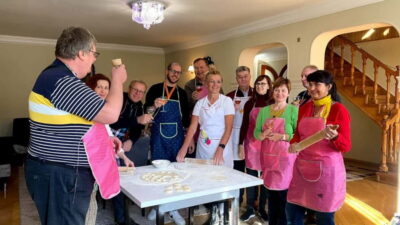
Cook True Ajarian Khachapuri and Khinkali in Highlanders Style
Read our review →
Taste of Kakheti: Wine Tour Bread Baking & Churchkhela Workshop
Read our review →
Nana’s Kitchen – traditional Georgian cooking class at real Georgian family home
Read our review →
Join a Local for a Market Tour, Cooking Class and Meal in her Tbilisi Home
Read our review →
Browse the lists this tour appears in